A baby blanket is a small layer for the crib, stroller or car seat. Sizes run from about 30 by 40 inches to 36 by 50 inches, and fabrics range from cotton knit to waffle knit blends and plush sherpa fleece. Fabric and size decide how it feels and how easily it packs.
The six blankets below cover cotton knit, cable knit, waffle knit with satin trim, cellular weave and sherpa. Sizes, fabrics and care come from each product’s listing page. We have not used these blankets ourselves. Fabric and comfort statements are the makers’ own.
As an Amazon Associate we earn from qualifying purchases. Links below are affiliate links, and they do not change the product information we give.
What to Look For
| Feature | Why it matters |
|---|---|
| Fabric | Cotton, a rayon blend and sherpa fleece feel and wash differently |
| Size | About 30 x 40 in suits a stroller; larger sizes cover more |
| Weave | Knit, cable, cellular and waffle textures differ in weight |
| Care | Machine washable blankets are easier to keep fresh |
In this guide
Specs at a Glance
| Blanket | Size | Fabric | Notes |
|---|---|---|---|
| Hadetoto knit | 40 x 30 in | 100% cotton knit | Lace detail; machine wash; maker calls it lightweight |
| Crane Baby Charlie | Not stated in what we read | Cotton knit | Plaid pattern; machine wash; listed as lightweight |
| Baby Morgan waffle | 36 x 50 in | 47% rayon, 28% polyester, 25% nylon | Satin trim; machine wash; listed as medium weight |
| NTBAY cable knit | 30 x 40 in | 100% cotton | Toddler size; wash cold on gentle, tumble dry low |
| Yurhap sherpa | Not stated in what we read | Sherpa fleece | Plush; machine wash recommended; many colors |
| Neiwech cellular | 40 x 30 in (100 x 80 cm) | Cotton | Cellular weave; machine wash and dry; listed as heavyweight |
The 6 Best Baby Blankets

Top pickBest for a light cotton knit
1. Hadetoto 100% Cotton Baby Blanket
A 40 by 30 inch blanket in 100 percent cotton knit with a lace detail, listed as lightweight. The maker says it works as a stroller cover or swaddle, and it is machine washable.
Suits: a light cotton knit. Strengths: cotton fabric and easy care. Weaknesses: one size only. Skip it if you want a larger blanket.

View Hadetoto 100% Cotton Baby Blankets for Girls Boys, 40×30 Inches, White on Amazon

Best for a patterned nursery blanket
2. Crane Baby Knitted Baby Blanket, Charlie Farmhouse Plaid
A cotton knit blanket in a farmhouse plaid pattern, listed as lightweight and machine washable. The maker suggests uses such as a crib blanket, stroller blanket or tummy time mat. The size was not stated in what we read.
Suits: a patterned nursery blanket. Strengths: a plaid design and cotton knit. Weaknesses: no size given. Skip it if you need to know the exact dimensions.

Best for a larger blanket with satin trim
3. Baby Morgan Thermal Waffle Knit Baby Blanket
A 36 by 50 inch waffle knit blanket with satin trim, made from 47 percent rayon, 28 percent polyester and 25 percent nylon. It is listed as medium weight and machine washable, and it is larger than most blankets here.
Suits: a larger blanket with satin trim. Strengths: a 36 x 50 in size and a waffle texture. Weaknesses: a synthetic blend, not cotton. Skip it if you want all cotton.

View Baby Morgan Thermal Waffle Knit Baby Blanket Satin Trim Pink 36″ x 50″ on Amazon

Best for a cable knit look
4. NTBAY Cotton Cable Knit Toddler Blanket
A 30 by 40 inch cable knit blanket in 100 percent cotton. The maker says it is a lightweight toddler size and not a full-size bed blanket, with care of cold gentle wash and low tumble dry.
Suits: a cable knit look. Strengths: cotton and a compact size. Weaknesses: sized for toddlers. Skip it if you want a swaddle-size piece.

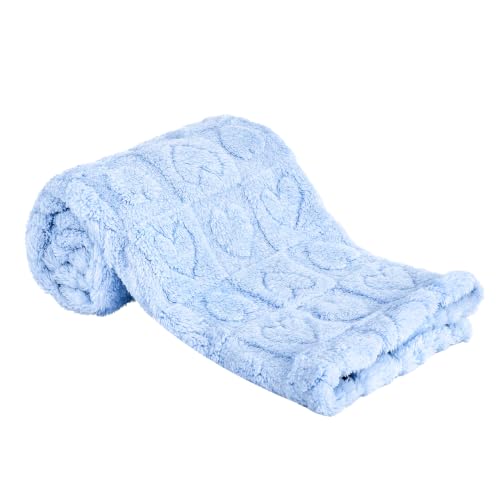
View NTBAY Cotton Cable Knit Toddler Blanket, 30 x 40, Baby Blue on Amazon
Best for a plush fleece texture
5. Yurhap Sherpa Baby Blanket
A plush sherpa fleece blanket that the maker says suits a crib, stroller, car seat or play mat. Machine washing is recommended. The size was not stated in what we read.
Suits: a plush fleece texture. Strengths: a soft sherpa feel and many colors. Weaknesses: no size given. Skip it if you want natural cotton.
View Yurhap Sherpa Baby Blanket, Soft Plush Fleece Baby Blankets for Boys Girls on Amazon

Best for a textured cellular weave
6. Neiwech Cotton Cellular Baby Blanket
A cotton cellular weave blanket listed at 40 by 30 inches (100 by 80 cm), machine washable and dryable. The listing calls it heavyweight, which is unusual for a baby blanket.
Suits: a textured cellular weave. Strengths: cotton and machine care. Weaknesses: listed as heavyweight. Skip it if you want a light layer.

Care and Setup
- Wash a new blanket before first use, following the care label.
- Use cold water and low heat for knits.
- Skip bleach unless the label allows it.
- Store folded in a dry spot.
Mistakes to Avoid
- Buying without checking the size.
- Ignoring the care label.
- Assuming every knit is pure cotton.
- Choosing a heavy weave when you want a light layer.
Safe Sleep and Where a Blanket Belongs
Before comparing fabrics, settle how the blanket will actually be used, because that changes what is sensible to buy. Pediatric safe sleep guidance in many countries advises keeping loose bedding out of an infant’s sleep space, usually in the first year. That means a blanket is better thought of as a stroller cover, a car seat layer worn over the harness (never under it or behind the baby), a tummy time mat, a nursing cover or a play-area throw. Ask your pediatrician or read your local health authority’s current guidance, since recommendations are updated over time.
Once you accept that, the buying criteria shift. A blanket for supervised, awake time can afford to be bigger, heavier and more textured, while one that rides in a stroller needs to be light and easy to tuck. A toddler who has moved on from the crib can use a blanket in bed under the guidance of a doctor, and there size and weight matter more.
When a listing uses words such as swaddle, crib blanket or nursery blanket, treat them as descriptions of the product’s look and size, not a statement about sleep safety. If a maker gives sleep-related advice, read it in full and compare it to your own health provider’s advice. Also check that nothing on the blanket, such as tassels, loose ribbon or beaded trim, can detach and become a hazard, and give any trim a gentle tug when it arrives.
Finally, think about the room temperature and the baby’s clothing. A light cotton layer over a sleeper is rarely the same job as a plush fleece layer over a thin bodysuit. Matching the blanket to the situation is more useful than chasing the softest label.
Choosing Fabric for Skin and Season
Fabric is the biggest comfort decision, and the right answer depends on the climate and the season. Cotton is a common first pick because it breathes, tends to soften with washing and is generally comfortable against sensitive skin. Knit cotton stretches slightly and drapes over a stroller canopy, while a tighter weave feels flatter and cooler. Cotton also suits warm months, when a plush layer could leave a baby sweaty.
Blends made with rayon, polyester or nylon can feel silky and hold their color well, but they trap more heat than cotton and may feel different against the skin. They are not wrong choices, and some parents like the drape and stain resistance, but read the fiber percentages rather than assuming a soft feel means natural fiber. The post lists several blankets with exact fiber content, and that kind of detail is what you should look for on any listing you consider.
Sherpa and other fleece-style fabrics are warm and cozy for winter strolls, but they can be too hot indoors and may shed fuzz when new. They are also made from synthetic fibers, which dry quickly after washing but can build up static. If your baby has eczema or very reactive skin, ask your pediatrician about fabric and detergent, and consider a fragrance-free wash.
A practical approach is to own one lightweight cotton blanket for most of the year and a warmer one for cold days, rather than relying on one blanket to do everything. Layering lets you adjust to temperature changes without overheating.
Weave, Weight and Texture Compared
Two blankets in the same fiber can feel completely different because of how they are made. A fine knit is stretchy and light and folds down small, which is handy for a diaper bag. Cable knit and other chunky patterns look striking in photos and add warmth, but their raised ridges can catch on small fingers, buttons and zippers, so they are best for supervised use and for toddlers.
Waffle weave uses a grid of small pockets that adds texture and some insulation without much weight. It also dries relatively quickly and tends to look good even when slightly rumpled. Cellular weave is similar in spirit, using an open, airy structure that is designed to trap warm air while staying breathable. The post notes that one cellular blanket is listed as heavyweight, so remember that weave type does not by itself tell you how heavy a finished blanket is. Check the listed weight or the maker’s description of its weight class.
Muslin and gauze use very open weaves that are airy and soften quickly, which suits hot weather and layered use. Plush and sherpa fabrics add pile for a soft handle but are bulkier to pack.
When you compare, think about three things. How warm does it need to be? How small does it need to pack? And will your baby be handling it? Texture matters more once a child starts grabbing at the blanket, because loose loops or long pile can be a snag. A smoother surface is easier to wipe and tends to hold up better when a blanket gets washed often.
Size, Dimensions and Getting the Fit Right
Blanket sizes are less standardized than they look. Some makers call a small square a receiving blanket, others use the same word for a rectangle of a different size, and toddler blankets can overlap with baby sizes. Always read the stated length and width rather than the category name, and note whether a listing gives dimensions in inches, centimeters or both. If a listing does not state a size, treat that as a reason to look for a clearer alternative or to ask the seller.
Think about the main use. A smaller blanket drapes neatly over a car seat carrier or stroller without hanging into the wheels. A larger one can double as a play mat, cover a nursing parent or wrap a child who is still small. Remember that fabrics can shrink slightly in the first washes, particularly natural fibers dried on high heat, so a little extra size is not a bad thing.
Consider growth too. A blanket that is very large for a newborn becomes a useful toddler or lap blanket later, so it can serve longer. On the other hand, an oversized blanket in a stroller can drag, bunch or get close to the wheels, so a compact piece can be safer and more practical.
Finally, picture storage and travel. Folded size, not just open size, decides whether it fits in a diaper bag. A thick weave takes more room than a thin knit even at the same dimensions, so factor that in when you plan to carry it every day.
Washing, Gifting and When to Replace
Baby blankets get washed far more than adult bedding, so easy care is a real feature. Look for machine-washable fabric and follow the label on temperature and drying. Wash new blankets before first use, use a mild detergent without strong fragrance, and avoid fabric softener if the maker or your doctor suggests skipping it, since softener can reduce absorbency and leave residue. Dry on low heat or as the label directs to limit shrinkage and pilling.
Pilling, the small balls of fiber that form on the surface, is normal in many knits and fleeces. It is mainly cosmetic, but excessive loose fiber can be a reason to retire a blanket. Replace a blanket when seams are coming apart, when trim is loose or detaching, when holes appear that could catch a finger, or when stains and odors will not wash out.
If you are buying a gift, consider the recipient’s climate and style. A neutral color and a classic weave rarely clash with a nursery, and including a gift receipt or the care instructions is thoughtful. Avoid heavily scented packaging, and check that the item is labeled for infants if you want to be sure about the intended use.
Lastly, it can help to buy two of a favorite design. Then one can be in the wash while the other is in use, and a lost blanket in a stroller or restaurant is less of a crisis. Keep a spare in the car or the bag for sudden spills and temperature changes.
Reading the Label Before You Gift or Buy
A baby blanket looks simple, yet the product page holds several clues about whether it will suit your household. Spend a minute on the details, because soft photos can hide a lot. The fiber content is the first thing to find. A listing that names the fabric clearly, such as cotton knit or cellular weave, is easier to trust than one that only says soft and cozy.
- Fiber content: look for a plain statement of what the blanket is made from, and whether the lining differs from the top.
- Dimensions: a stroller blanket, a crib-side throw and a toddler bed cover can be very different sizes. Compare the measurements with where you plan to use it.
- Care instructions: a label that tolerates regular machine washing will save you trouble later.
- Edge finishing: bound or stitched edges hold up better than loose fringe or thin hems.
- Weight: a light weave suits warm rooms and car seats, while a heavier knit suits cool evenings.
If any of those items are missing, check the questions section or contact the seller. For anything related to sleep spaces, follow the guidance from your pediatrician and recognized infant care organizations rather than the product page.
Matching the Blanket to the Moment
Most families end up using blankets for several different jobs, and one piece rarely does everything well. Thinking in terms of occasions helps you decide what to add to the cart and what to skip.
| Occasion | What to look for | Why |
|---|---|---|
| Stroller walks | Medium size, breathable knit | Easy to tuck and adjust as the weather shifts |
| Tummy time or play mat | Flat, even weave | Gives a smooth surface for floor play |
| Photo keepsake or gift | Plaid, cable or textured knit | Looks good and holds up in storage |
| Daycare or travel | Machine washable, labeled easily | Quick to clean and simple to identify |
Plan on owning two so one is always clean while the other is in the wash. Wash new blankets before first use following the label, and keep an eye on seams and loose threads over time. As your child grows, a blanket that was oversized for a newborn becomes a perfect toddler companion, so choose a size with that growth in mind and enjoy years of use from a single good piece.
When a blanket is a gift, tuck in a short note about the care steps, and consider choosing a neutral color that suits any nursery. Parents appreciate pieces that match many outfits and survive many laundry days.
Baby Blanket FAQ
Which blankets here are all cotton?
The Hadetoto and NTBAY list 100 percent cotton. The Baby Morgan is a rayon, polyester and nylon blend, and the Yurhap is sherpa fleece.
Which is the largest?
The Baby Morgan at 36 by 50 inches. Two listings did not state a size.
Can a baby sleep with a blanket?
Many safe sleep guidelines advise keeping loose blankets out of an infant's sleep space during the first year. Ask your pediatrician and follow your local health authority's current advice. Blankets are generally better suited to supervised use such as strollers and play time.
Is cotton or sherpa better for a baby?
Cotton breathes and suits most of the year, while sherpa is warmer and better for cold days outdoors. Sherpa can be too hot indoors. Many families keep one of each.
How many baby blankets do I need?
Two to four is a practical range for most families. That gives you one in use, one in the wash and a spare for the bag or car. Needs vary with how often you do laundry.
Do I need to wash a blanket before first use?
Yes, it is wise to wash a new blanket following its care label. This removes finishing residue and loose fibers. Use a mild detergent, and consider a fragrance-free one for sensitive skin.
Why does my knit blanket have loose threads?
Knits can form small snags or pulls with use. Trim a loose strand gently with scissors rather than pulling it, and check that nothing could wrap around small fingers. Retire the blanket if the seams or stitching start to unravel.
What size blanket is best for a stroller?
A smaller blanket that stays clear of the wheels is usually easier. Check the stated dimensions rather than the category name. A larger blanket can still work if you fold it.
Can I tumble dry a baby blanket?
Often yes on low heat, but follow the label. Natural fibers can shrink with high heat, and some trims and fabrics prefer air drying.
How do I get stains out of a baby blanket?
Rinse stains with cool water soon after they happen and treat them with a gentle, baby-safe stain remover before washing. Avoid bleach unless the label allows it, and check the stain is gone before drying, because heat can set it.
Safe Sleep Comes First, Always
Everything else in this guide is secondary to one principle: a baby’s sleep space should be bare. Blankets, however soft and however lovingly chosen, do not belong in a cot with a sleeping infant who cannot yet move covers away from their face. The blankets in this guide earn their place everywhere else in a baby’s day, and understanding that boundary is what lets you enjoy them without worry.
Use blankets for supervised time: tummy time on the floor, cuddles on a lap, the pram on a walk, the car seat over a harness on a cold morning, and the arms of whoever is holding the baby. In each of those settings an adult is present and attentive, which is precisely the condition that makes a blanket a comfort rather than a hazard.
As babies grow into toddlers who can push covers away and move freely, household practice evolves, and your own clinician and national guidance are the authorities for your child’s stage. The point of stating the boundary plainly here is that a buying guide for baby blankets should never blur it for the sake of a cosy photograph.
When you shop, then, shop for the blanket’s real jobs: warmth during waking life, softness against skin during cuddles, a clean surface for floor play, and a layer for outings. Judged on those jobs, the six picks in this guide differ clearly, and none of them needs to be judged on a job it should not be doing.
Choosing Fabric for Newborn Skin
Newborn skin is thinner and more reactive than older skin, which is why fibre choice matters more in this category than in any other blanket guide. Cotton dominates this list for sound reasons: it is soft without treatment, breathable, washable at the temperatures hygiene sometimes demands, and unlikely to provoke the contact irritation that some synthetic piles cause on sensitive cheeks.
Knit structure shapes the feel as much as fibre does. A smooth cotton knit lies gently and slides over skin; a waffle or thermal weave traps small pockets of air for warmth without weight; a cellular weave breathes in summer and layers in winter. The entries in this guide describe each structure, and matching structure to your climate is the real decision.
Sherpa and plush synthetics appear in this list as the warm, cuddly option for outings and supervised snuggles, and they are genuinely lovely in that role. Their limits are heat and washing temperature, so treat them as the blanket for the pram and the lap rather than the everyday workhorse that will be washed after every feed.
Whatever you choose, wash it before first use and observe the baby’s skin over the first days. A fabric that suits most babies may not suit yours, and the early weeks are exactly when a mild reaction is easiest to spot and simplest to solve by switching to the plainest cotton in the drawer.
Sizes and What They Are Actually For
Baby blanket sizes cluster around a few shapes, and each shape has a job. The smaller receiving sizes are for wrapping, cuddling and layering in a pram; they are light, endlessly washable, and the ones you will own in multiples. Their smallness is the feature: they go everywhere, in the changing bag, over a shoulder, under a baby on any surface.
Mid sizes suit the floor and the lap: big enough for tummy time with room to roll, small enough to wash without dominating the machine. This is the size that becomes the household’s default baby blanket, the one photographed in a hundred ordinary moments, and it is worth choosing the fabric you like most in this size.
The larger toddler sizes in this guide anticipate the child who has outgrown wrapping but not blankets. They cover a small bed for daytime naps under supervision, a lap on a long car journey, and a child who now has opinions about which blanket is theirs. Buying one larger blanket in the first year is a small act of foresight most parents are glad of.
Measure against your pram and car seat rather than against the baby, who will change size faster than the blanket wears out. A blanket that tucks securely without trailing near wheels or dragging on pavements is the right size for outings, whatever the label calls it.
Washing: The Real Test of a Baby Blanket
A baby blanket’s life is measured in washes. It will be washed after feeds, after naps in the pram, after floor time in other people’s houses, and after every illness, so its behaviour in your machine matters more than its first-day softness. Cotton knits in this guide are built for that rhythm; they wash hot when needed, forgive ordinary detergents, and dry without ceremony.
Wash new blankets separately the first time, because loose dye and surface fibre belong in that first wash, not on the baby. Thereafter, wash with the household’s baby laundry on the warmest cycle the label allows when hygiene demands it, and a gentler one for routine freshness. An extra rinse is a kindness for sensitive skin, clearing detergent residue from the fibres.
Drying is where blankets are quietly ruined. High heat can shrink cotton knits unevenly and rough up plush surfaces; moderate heat or line drying keeps sizes true and hands soft. A blanket that dries quickly is worth real money in a house with a newborn, because the wash cycle’s bottleneck is never the washing.
Keep two or three blankets in rotation so no single one is washed to exhaustion, and so there is always a clean one in the bag. Rotation also spreads the fading and softening evenly, which matters when a child eventually adopts one as the blanket, at which point its condition becomes a household concern of the first order.
The Blanket as Comfort Object
Somewhere in the first two years, one blanket may be promoted from textile to treasure. A comfort blanket works because it is familiar: the smell, the edge texture, the exact worn softness. Parents cannot choose which object receives this honour, but they can prepare for it by noting which blanket the child reaches for and buying a duplicate while it is still available.
The duplicate strategy has rules. Rotate the pair from the start if you can, washing and using both, so they age together and the spare is genuinely interchangeable. A pristine duplicate produced after the original is lost convinces no toddler; the comfort is in the wear, and wear cannot be faked in an afternoon.
If the beloved blanket is one of the knits in this guide, its repairability is a quiet virtue. Knitted cotton can be darned, its edges rebound, its small holes caught early before they ladder. Learn or find someone who can do a simple repair, because the first hole in a treasured blanket is a family event, not a laundry detail.
Respect the attachment while it lasts and let it fade in its own time. Comfort objects do their work in the years when the world is large and new, and the blanket that was essential at two becomes a keepsake at seven, folded in a drawer, carrying more family history per gram than almost anything else you own.
Blankets for the Pram, the Car and the World Outside
Outdoors, a blanket’s enemies are wind and wheels. Choose a size that tucks firmly around a seated baby without loose ends near the pram’s moving parts, and prefer a weave with enough body to stay where it is tucked. A trailing corner in a wheel is a ruined blanket and a frightening moment, and both are prevented by thirty seconds of tucking.
In the car, blankets go over the harness, never under it, because layers between baby and straps compromise the fit that makes the seat work. A blanket over a secured child warms just as well and can be adjusted or removed at the first sign of overheating, which matters because cars warm quickly and babies cannot tell you they are hot.
For floor time away from home, a blanket is a portable clean surface: over a café’s highchair-side floor, a friend’s carpet, a clinic waiting room chair. The mid-size washable cotton earns its place in the changing bag here, and it should be the blanket you are least precious about, because its job description includes other people’s floors.
Travel multiplies these uses. One good blanket on a journey is a pillow, a shade, a changing surface, a comfort object and a layer for an air-conditioned cabin, which is why experienced travelling parents pack the blanket first and defend its space in the bag against all challengers.
Gifting Baby Blankets Well
A baby blanket is among the safest gifts to give and among the easiest to give thoughtlessly. The thoughtful version starts with the parents’ life: a household without a tumble dryer needs quick-drying weaves; a family in a cold flat will use the warmest pick here more than the prettiest. Ask, or observe, before choosing on looks alone.
Colour and pattern are the giver’s pleasure and should be indulged after the practicalities are settled. A beautiful knit in a colour the parents love will be used and photographed; a blanket in a colour they dislike will live in a drawer however fine its cotton. If you know their taste, follow it; if not, quiet neutrals survive every nursery scheme.
Presentation matters less than timing. A blanket given before the birth joins the preparations; given in the first weeks, when laundry is endless and sleep is scarce, a second or third blanket is received like reinforcements. The mid-price practical blanket given at the right moment outranks the exquisite one given into a drawer already full.
If you knit or sew, a handmade blanket carries a weight no purchase matches, but apply the same standards as the commercial picks: secure stitches a small finger cannot worry loose, no glued decorations, no ribbons or buttons, and fibres that wash. Love is not a substitute for construction, and the makers of the best handmade blankets know it.
Seasons: Summer Babies and Winter Babies
A summer baby needs blankets that shade and cover without warming: cellular and waffle cottons that let air move, in sizes suited to the pram and the floor. Overheating is the summer risk, and a baby who is flushed and sweaty under a blanket is telling you the layer is wrong for the day, whatever the blanket’s quality.
A winter baby needs the opposite wardrobe: a warm pram blanket, a cuddly layer for laps in cold rooms, and the same washable cottons underneath it all. Layering two light blankets beats one heavy one for outings, because layers can be peeled as shops, cars and houses warm up, and a baby cannot regulate by kicking covers off as an adult would.
Between seasons, the mid-weight knit is the workhorse, and it is no accident that several picks in this guide sit exactly there. Houses with variable heating, spring and autumn weather that changes by the hour, and babies dressed differently day to day all reward the blanket that is never quite wrong.
Across all seasons, check the baby, not the thermometer on the wall. The back of the neck and the chest tell the truth: warm and dry is right, hot or clammy means a layer too many, cool means one more. Blankets are the adjustable part of that equation, which is why having several weights washed and ready is the real system.
When a Blanket Should Be Retired
Retire a blanket from baby use when its structure fails: holes that fingers can catch in, thinning patches, fraying edges, or a knit that has stretched into a net. A baby explores textiles with hands and mouth, and a blanket coming apart offers threads and fibres to a child who should meet neither. Regular inspection during folding catches most of this early.
Stains are not a retirement reason; wear is. A blanket can be marked by a year of service and remain perfectly safe and useful, and parents should resist replacing sound blankets for appearance’s sake. The exception is any blanket that has been in contact with something no wash can remedy, where replacement is simply hygiene.
A blanket that has been outgrown is not finished. Sound baby blankets retire into second lives all over the house: lining a pet’s basket for a dog the child grows up beside, padding in the car, a doll’s blanket of exactly the right scale, or the keepsake box. The comfort blanket, if there was one, is retired only by its owner, and sometimes not even then.
Keep one blanket from the first year, washed and folded away, whatever its condition. Parents who do this universally report the same thing years later: nothing else in the house recalls the scale of those days so immediately. It takes one drawer corner, and it is among the best uses of a drawer corner there is.
Choosing Among the Six for Your Family
For the household that wants one fabric and no decisions, the plain cotton knits are the centre of this guide: washable, breathable, gentle and honest in every season as a base layer. Most families should start there, because most baby blanket hours are ordinary hours, feeds, floors and prams, and cotton serves them all without a special instruction ever being read.
For cold climates and winter arrivals, add the warm plush pick for outings and laps, and let it be the second blanket rather than the only one. Its job is warmth where warmth is scarce, and paired with a cotton for everything else, the two cover the year between them.
For gift-givers and grandparents stocking a house, the larger, beautiful knits earn their place: they photograph well, they last into toddlerhood, and they become the blanket a child remembers. Buy them in the family’s colours and give them early enough to be used, not just admired.
And for every family, the multiples rule stands: whatever you choose, own more than one. The best baby blanket in this guide, singular, loses to two good ones in rotation on the first night it is in the wash when it is needed. Choose the fabric for your climate, the size for your pram and floor, and then buy the second one while the choosing is fresh.
A Short Note for Second-Time Parents
Parents expecting a second child often ask whether the first child’s blankets simply transfer. Mostly, yes, with inspection: wash everything, check seams and edges with new-parent eyes, and retire anything that has thinned or frayed in its first tour. Sound cotton knits from this guide’s class of blanket routinely serve two or three children without complaint.
Resist transferring the comfort object. If the older child has a blanket that is theirs, it remains theirs, and the new baby starts with their own. Sibling peace is built from such small sovereignties, and a toddler asked to surrender a treasure to a newcomer learns the wrong lesson about both the blanket and the baby.
New for the second baby, buy the thing you learned you lacked: usually it is not a better blanket but another one, in the bag, in the car, at the grandparent’s house. Experience teaches logistics, and the second-time parent’s blanket system is distributed across the places life actually happens.
Finally, expect the second child to choose differently. The blanket the first child ignored may become the second’s treasure, and the favourite may be passed over entirely. Blankets, like children, are individuals, and the household that keeps a small, varied, well-washed stock is ready for whoever arrives.
Blankets at Every Stage of the First Year
In the first weeks, blankets are mostly for holding: a layer between the baby and the world during feeds, visits and the constant passing from arms to arms. The softest, most washed cotton you own does this work, because it meets the baby’s skin and the parents’ hands more than any other textile in the house. Expect these early blankets to be washed more in a month than a household blanket is in a year.
As the baby begins floor time, the blanket’s job shifts to surface: a clean, padded-enough layer for tummy time, rolling practice and the long, serious business of studying a toy. The mid-size knits come into their own here, big enough for the work, washable enough for the inevitable aftermath, and this is the stage where owning several stops looking like excess.
By the sitting and crawling months, blankets become landscape: dragged, bunched, sat on and occasionally worn as a cape by an older sibling. Durability at the edges and a weave that forgives being hauled across floors matter more now than delicacy, and the blanket that survives this stage with its structure intact has earned its place in the keepsake drawer.
In the second half of the year, the comfort attachment described earlier often declares itself, and the household’s blanket stock suddenly has a hierarchy no adult arranged. Watch for it, duplicate the favourite if you can, and let the rest of the stock carry on with the pram, the car and the floor, which still need blankets every day.
Grandparents, Childminders and Other Houses
A baby’s blankets live in several houses at once, and a small stock placed deliberately beats a large stock carried back and forth. One blanket that lives at each grandparent’s house, one at the childminder’s if they welcome it, and the main stock at home ends the daily packing negotiation and the particular misery of discovering the blanket is in the wrong county.
Choose the outposted blankets for their hosts’ laundry as much as for the baby. A grandparent without a tumble dryer needs the quick-drying weave; a childminder needs the blanket that washes with everything and asks nothing special. The baby will not mind which of their blankets is where; the adults’ goodwill is the resource being managed.
Brief the other houses on the same safe sleep boundary that governs your own: blankets for waking life, bare sleep spaces for babies. Say it once, kindly, as a fact about how things are done now, and provide the alternatives, the sleep clothing your baby uses, so nobody has to improvise at nap time.
When a blanket comes home from another house, wash it before it rejoins the stock, not from suspicion but from system: every blanket in the home pile is then known to be clean and ready. Small systems like this are what make a stock of textiles feel like equipment rather than laundry waiting to happen.
Keeping Blankets Soft Without Special Products
Baby blankets stay soft through washing technique rather than additives. Fabric softeners coat fibres and reduce absorbency, and heavily fragranced products leave residues against skin that has opinions it cannot express, so the plainest detergent that cleans well is the right choice for this laundry. An extra rinse cycle does more for softness and skin than any scented addition.
Hard water is the quiet enemy of cotton softness, leaving mineral stiffness that parents often blame on the blanket. If your water is hard and the knits feel boardy after washing, a thorough rinse and line drying in moving air help, and the blankets will also soften simply with use, because cotton knits relax into their final hand feel over the first dozen washes.
Dry blankets fully before folding them into drawers, because a knit put away faintly damp smells of it within days and needs rewashing before it can go near the baby. In winter, plan the wash for the morning and give the blankets the day near, not on, a heat source. Patience here is the whole technique.
Finally, store the clean stock where it will be grabbed one-handed, because the other hand is holding the baby. A drawer or basket at changing-table height, stocked with folded blankets in rotation order, is a small piece of household design that pays out several times a day for a year.
The Short Version
For light cotton knit, the Hadetoto. For a plaid pattern, the Crane Baby. For the largest size, the Baby Morgan. For cable knit, the NTBAY. For plush fleece, the Yurhap. For a cellular weave, the Neiwech.