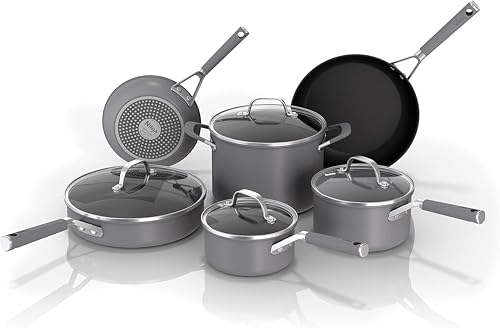
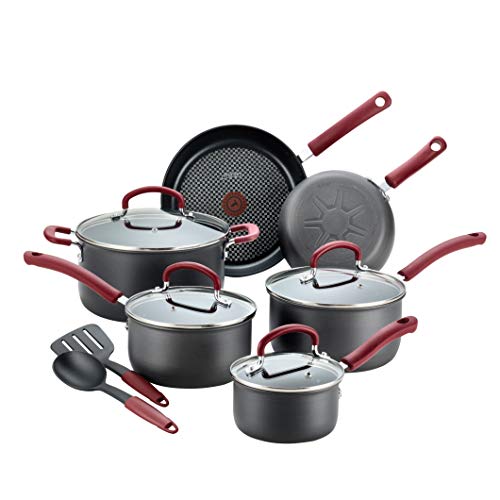
A cookware set is the quickest way to equip a kitchen, because it bundles the pans and pots most recipes call for in one box. The trick is picking a material and a piece count that match how you actually cook, not just the biggest number on the box.
The six sets below span stainless steel, hard-anodized nonstick and ceramic nonstick, from premium lines to well-known mainstream ones. We have not used these products ourselves, and the details here come from general product knowledge, so confirm piece counts, sizes and materials on the current listing before buying.
As an Amazon Associate we earn from qualifying purchases. Links below are affiliate links, and they do not change the product information we give.
What to Look For
| Feature | Why it matters |
|---|---|
| Material | Stainless is durable, nonstick is easy to clean, ceramic avoids traditional coatings |
| Piece count | Lids and utensils inflate the count, so check the actual pans |
| Core construction | Layered metal or a thick base spreads heat more evenly |
| Handle design | Riveted handles that stay cool are safer and sturdier |
| Stove compatibility | Induction needs magnetic bases, so check before buying |
In this guide
Specs at a Glance
| Set | Material | Type | Notes |
|---|---|---|---|
| All-Clad D3 Stainless | Tri-ply stainless steel | Multi-piece set | Premium fully clad line |
| Made In Stainless Clad | Multi-ply stainless steel | Multi-piece set | Direct-to-consumer brand |
| Henckels Clad H3 | Stainless steel with aluminum core | Multi-piece set | Fully clad build |
| Anolon Advanced Home | Hard-anodized, nonstick | Multi-piece set | Rubberized handles |
| Le Creuset Toughened Nonstick PRO | Hard-anodized, nonstick | Multi-piece set | Reinforced nonstick coating |
| GreenPan Valencia Pro | Hard-anodized, ceramic nonstick | Multi-piece set | PFAS-free ceramic, per the maker |
The 6 Best Cookware Sets
Top pickBest for serious home cooks
1. All-Clad D3 Stainless Steel Cookware Set
A fully clad tri-ply stainless set from one of the best-known names in cookware. The aluminum layer runs up the walls, which helps with even heating from base to rim.
Suits: serious home cooks. Strengths: a durable build with a long lifespan. Weaknesses: a premium investment. Skip it if you want nonstick convenience.
View All-Clad D3 Stainless Set on Amazon

Best for stainless fans who like a modern brand
2. Made In Stainless Clad Cookware Set
A multi-ply stainless set from a newer direct-to-consumer brand that focuses on restaurant-style construction. It suits cooks who want clad stainless without a legacy-brand label.
Suits: stainless fans who like a modern brand. Strengths: a sturdy clad build and a focused piece list. Weaknesses: fewer pieces than some mainstream sets. Skip it if you want a large bundle.


Best for cooks who want a clean, classic look
3. Henckels Clad H3 Stainless Steel Cookware Set
A stainless steel set with an aluminum core and a polished finish, from the German knife and cookware maker. It handles stovetop browning and oven finishing alike.
Suits: cooks who want a clean, classic look. Strengths: even heat and a sturdy build. Weaknesses: food can stick on poor heat control. Skip it if you want nonstick throughout.


Best for everyday nonstick cooking
4. Anolon Advanced Home Hard-Anodized Nonstick Set
A hard-anodized nonstick set with rubberized stainless handles and shatter-resistant glass lids. The wide, comfortable handles are a signature of the line.
Suits: everyday nonstick cooking. Strengths: a soft grip and sturdy pans. Weaknesses: nonstick wears over time. Skip it if you plan to sear on very high heat.
Best for brand fans who want nonstick
5. Le Creuset Toughened Nonstick PRO Cookware Set
A hard-anodized nonstick set from the French enamel cookware brand, built with a reinforced coating that the maker says stands up to metal utensils. Pick it if you like the brand and want nonstick.
Suits: brand fans who want nonstick. Strengths: a tougher coating and a polished look. Weaknesses: a pricier option among nonstick sets. Skip it if you are on a tight budget.
View Le Creuset Toughened Nonstick PRO Set on Amazon

Best for cooks avoiding traditional nonstick
6. GreenPan Valencia Pro Ceramic Nonstick Cookware Set
A hard-anodized set with a ceramic nonstick coating that the maker describes as free of PFAS. It is built to take a bit more heat than basic ceramic lines.
Suits: cooks avoiding traditional nonstick. Strengths: easy release and a sturdy body. Weaknesses: ceramic loses slickness with time. Skip it if you want bare stainless.

Care and Setup
- Wash every piece by hand before first use.
- Preheat stainless on medium heat before adding oil.
- Keep nonstick pans off high flame and use soft tools.
- Let cookware cool before rinsing it in cold water.
Mistakes to Avoid
- Counting lids as pieces when comparing sets.
- Buying nonstick for tasks that need a hard sear.
- Skipping the induction check on your stove.
- Storing pans nested without protection.
How Metal Layers and Bases Spread Heat
Stainless steel is durable but conducts heat poorly on its own, so makers pair it with aluminum or copper. Understanding the three common constructions helps you read a listing. Fully clad cookware has layers of metal bonded together that run from the base up the sides, which heats the whole pan evenly. Disc-bottom or encapsulated-base cookware has a thick aluminum disc attached to the bottom only, which heats the floor of the pan but not the walls. Hard-anodized aluminum is aluminum treated to form a hard surface, and it heats quickly and evenly.
For most cooks, the difference shows up in everyday tasks. Fully clad pans give more even results for sauces and for browning, and the sides stay hot enough to reduce pan sauces or simmer. A thick base is often fine for boiling pasta or heating soup. Very thin pans heat unevenly, create hot spots and warp, so weight is a useful clue. A solid, flat base that sits fully on the burner matters more than any marketing term.
Look at the listing for words like tri-ply, five-ply, aluminum core, encapsulated base or hard-anodized, and check whether the layers run up the walls. More layers do not automatically mean better cooking, and the thickness and quality of the metal matter. If the product page does not describe the construction, that is a reason to be cautious. Handle the pan in a store if you can, and check that lids fit snugly and the rims pour cleanly.
Choosing Pieces You Will Actually Use
Piece counts are often padded. A 10-piece set may contain only five pans, with the lids counted individually, plus a couple of utensils. When you compare sets, list the actual cooking vessels and their sizes. A practical core includes a small and a large fry pan, a one-to-two quart saucepan, a three-quart saucepan, a sauté pan with a lid and a stockpot of about six to eight quarts.
Next, think about your habits. If you cook for one or two people, big pots will sit unused, and a smaller set paired with a few open-stock pieces may serve better. If you cook for a family, bigger saucepans and a deep sauté pan become more valuable. Cooks who bake or braise should check oven-safe limits and look for a Dutch oven or roasting pan, which most sets do not include.
- Decide which pans you reach for every day, then check that the set includes those sizes.
- Look for one pan you would not buy, such as a tiny saucepan, and consider whether the set is still worth it.
- Check lid compatibility, since some lids are shared between pans and may not fit snugly.
- Leave room in your cabinet; stacking pans with protectors is easier than nesting them directly.
Buying a smaller core set and adding specialty pieces later often costs less overall and avoids clutter.
Handles, Lids and Ergonomics
You will use the handles and lids every time you cook, so test them mentally. Riveted handles are generally sturdier than welded or screwed-on ones, and they are less likely to loosen over time, though rivets inside the pan can trap food and need a little extra scrubbing. Handles that are hollow or shaped to stay cooler on the stovetop are comfortable, but no handle stays cool in the oven, so always use mitts.
Weight is a balance. Heavy pans are stable and sear well but can be tiring to lift when full, especially for pots like stockpots. Lighter pans are easier to handle but may heat less evenly. Check the handle angle and length: a long, slightly angled handle on a fry pan helps toss food, while helper handles on large pots make lifting safer.
Lids can be glass, stainless steel or a combination. Glass lids let you see the contents without losing steam, but they are heavier and can chip, while steel lids are tougher. Check that the lid has a steam vent, a knob that is easy to grip and an oven-safe rating that matches the pan. Pour spouts or measuring marks on the inside of saucepans are small perks that save steps. Lastly, verify the rim shape: a flared rim pours cleanly, while a straight rim may drip.
Stove Types, Induction and Oven Limits
Cookware has to match the heat source. Gas works with nearly any pan, though flames that lick up the sides can overheat handles. Electric coil and radiant glass tops want flat, smooth bases for good contact, and warped pans rock and heat unevenly. Induction requires magnetic cookware. A simple test is to hold a magnet to the base; if it sticks firmly, it should work, but check the listing for explicit induction compatibility, because some aluminum or non-magnetic sets will not work.
Oven use varies by set. Maximum temperature ratings depend on the handle material, the lids and any nonstick coating. Stainless pans with metal handles are often safe at high temperatures, while rubberized or silicone handles and glass lids have lower limits. Read the maker’s published guidance rather than assuming, and remember that the limit for lids is often lower than for pans.
Also consider the broiler and the dishwasher. Some sets are labeled dishwasher safe, but many makers still suggest hand washing to protect finishes, especially for nonstick coatings and polished exteriors. Using high heat on nonstick can damage the coating, and using a very small burner under a large pan creates uneven heating. If you have several stove types in your life, such as a home kitchen and a holiday rental, check that the set suits all of them.
Longevity, Warranty and When to Replace
How long a set lasts depends on material and treatment. Stainless steel can serve for many years if you avoid overheating and harsh cleaning. Hard-anodized and ceramic nonstick coatings wear with use, particularly with metal utensils, high heat and abrasive pads. Plan to replace nonstick pans sooner than stainless ones, and do not expect one set to be perfect for every task.
Read the warranty. A limited lifetime warranty usually covers defects in materials and workmanship, not normal wear, damage from misuse, or scratched coatings. Check what you must do to claim, whether proof of purchase is needed and which pieces are covered. A clear policy is a good sign, but it does not replace care.
Signs that cookware should be replaced include warped bases that spin on the burner, peeling or flaking nonstick coating, deep scratches that expose metal, loose or cracked handles, lids that no longer fit, and food that sticks even when you use enough fat. Stainless can often be restored with a gentle cleaner for stains or discoloration, but pitting and warping are permanent. When pieces wear out unevenly, replacing only the worst pans is often smarter than buying a whole new set. Keep a few open-stock options in mind for gaps.
Deciding How Many Pieces You Actually Need
Cookware boxes advertise big numbers, but lids, utensils and storage racks inflate the count. Before you compare sets, write down the pieces you genuinely use, then see how many of them a set covers.
- Small saucepan: Heating sauces, boiling eggs, cooking small portions of grains.
- Medium saucepan with lid: Everyday rice, vegetables and soups.
- Large skillet: Searing, stir-frying and one-pan dinners.
- Stockpot: Pasta, stock and large batches.
- Saute pan or deep skillet: Braising and recipes with sauce.
- Extra pans: Many people add a small skillet for eggs.
Consider whether one piece is more valuable bought on its own. A set is useful when you need a whole kitchen kit to begin with, while an individual pan may be the smarter move if you already own most of the basics.
Materials Table for Everyday Cookware
Different materials suit different cooking styles. The table lays out the main options so you can match them to what you cook.
| Material | Good at | Watch for |
|---|---|---|
| Stainless steel | Browning, sauces, long-term durability | Food can stick without enough fat or preheating |
| Hard-anodized aluminum | Even heating and easy release | Coating care and utensil guidance |
| Nonstick coated | Eggs, pancakes, delicate fish | Surface wears, so avoid very high heat |
| Cast iron | Heat retention and searing | Weight, seasoning care and rust if left wet |
| Copper-core or clad | Responsive heat control | Higher cost of entry and polishing for outer copper |
| Ceramic coated | Slick surface without certain coatings | Coating can dull over time |
Check that the set suits your stove. Induction needs magnetic bases, and glass tops need flat bases. The listing or the maker’s site should state compatibility.
Handles, Lids and Oven Limits Worth Checking
Small details separate a pleasant set from an annoying one. These features show up in daily use more than you might expect.
- Handle comfort: Hold a handle in your hand if you can, or look at its shape and length. Riveted handles are generally sturdy.
- Oven-safe limit: Listings state a temperature limit, and lids or handles may have a lower limit than the pan. Read both numbers.
- Lid fit: A snug lid keeps moisture in. Glass lids let you see without lifting.
- Pour spouts and measuring marks: Handy on saucepans for liquids.
- Stackability: Pans that nest save cabinet room.
Follow the maker’s instructions for any oven use, and for cleaning. If the cookware is dishwasher safe, the care guide will say so.
Caring for Your Cookware So It Lasts
Good cookware can last years with simple habits. Follow the specific care instructions that come with your set.
- Preheat gently and avoid empty pans on high heat.
- Use utensils that suit the surface, such as wood or silicone on coated pans.
- Let pans cool before washing to reduce warping.
- Remove stuck food with soaking, not harsh scraping.
- Store pans so they do not scratch each other.
If a nonstick surface peels or a base warps, it is time to replace that piece. Using damaged cookware can lead to uneven cooking, so retire it according to the maker’s advice.
Matching a Set to Your Stove and Cooking Style
A set is only useful if it works with your range and your habits. Spend a minute on these checks before you commit.
- Induction ranges: A magnet should stick to the bottom of a pan. Listings usually state induction compatibility clearly.
- Gas ranges: Flames should stay under the base, so pick pan sizes that suit your burners.
- Electric coil or glass tops: Flat bases give the best contact, so avoid pans with warped bottoms.
- Stir-fry fans: A wide, sloped skillet or a wok-style pan can be more useful than another saucepan.
- Batch cooks: Prioritize a big stockpot and a large skillet.
- Small households: Smaller pans heat quickly and are easier to store.
Think about weight too. A heavy pan is sturdy, yet it can be tiring to lift when full.
Reading Warranty and Replacement Information
Cookware is used almost daily, so the support behind it matters. Check the policy details on the product page or the maker’s website.
- Look for the length of the warranty and what it covers.
- Note whether the cover applies to coatings, handles or lids.
- Find out if individual pieces can be bought later.
- Keep your receipt or order record in a safe place.
- Read the care instructions, since misuse can limit a claim.
Following these steps now saves hassle if a problem appears later.
Cookware Set FAQ
Is stainless or nonstick better for a first set?
Nonstick is more forgiving for beginners, while stainless lasts longer and sears better.
How many pieces do I need?
Most households do well with two fry pans, two saucepans, a sauté pan and a stockpot.
Are these safe in the oven?
Limits vary by line and by handle material, so follow the maker’s published guidance.
How long should a set last?
Stainless steel can last for decades with care, while nonstick coatings usually need replacing sooner, so factor that into the choice.
Is hard-anodized cookware safe for induction?
Not always, because plain aluminum is not magnetic. Some hard-anodized pans have a magnetic base plate. Check the listing for induction compatibility.
Do I need to season stainless steel pans?
Not in the way you season cast iron. Preheat the pan, then add oil and food, which reduces sticking. Wash gently after use.
Can I use metal utensils on nonstick pans?
Check the maker's guidance, since some coatings are marketed as metal-utensil safe and others are not. Wood, silicone or nylon tools are the safer choice. Scratches shorten the coating's life.
Why do my stainless pans discolor?
Rainbow tints or white marks usually come from heat or mineral residue. A gentle stainless cleaner or a little white vinegar often removes them. It is usually cosmetic.
Are matching sets better than mixing pans?
A matching set is convenient and stacks neatly. Mixing lets you choose the best material for each job, such as nonstick for eggs and stainless for searing. Many cooks end up with a mix.
How should I store pans to avoid scratches?
Use pan protectors, felt liners or a rack so pans do not rub against each other. Hang them if you have the space. Stack lids separately.
Is it okay to put hot cookware in cold water?
Sudden temperature change can warp pans, so let them cool first. Rinse once they are warm rather than hot. This protects nonstick coatings and bases.
Safety in Everyday Use
Most kitchen accidents involving cookware are mundane and preventable: a handle turned out over the walkway and caught by a passing hip, a lid lifted toward the face so the steam rolls straight up, a hot pan set down on a surface that cannot take the heat. Turn handles inward, lift lids away from you so the steam escapes at the back, and decide where a hot pan will land before you pick it up. Those three habits, repeated until they are automatic, prevent the large majority of burns and spills in home kitchens.
Keep the area around the stove clear of towels, paper and wooden utensils resting against hot rims, and keep a dry mitt or two in the same place every day so you never improvise with a damp cloth, which conducts heat shockingly fast. If oil ever smokes hard or catches, stay calm: slide a lid over the pan to cut off the air, turn off the heat, and let it cool untouched. Never carry a flaming pan and never put water on burning oil. Knowing the calm sequence in advance is what makes it available in the moment.
Children and pets change the calculation again. Use back burners for long simmers when small children are in the kitchen, keep pot handles well inside the stove’s edge, and treat the minutes after cooking as part of the danger window, because heavy pans and hot surfaces stay hot long after the flame or element is off. A simple household rule, that nobody reaches across the stove for anything, removes a whole category of accidents at a stroke.
Matching Cookware to the Meals You Cook Most
Work backwards from your real menu. If weeknights mean pasta, a fast sauce and a blanched vegetable, your heroes are a large pot that boils without drama, a wide pan that takes the sauce and the pasta together, and a medium saucepan that never scorches. If weekends mean slow roasts and braises, the heavy lidded pot is the centre of the kitchen and deserves the largest share of any budget. Writing the menu first turns cookware shopping from a guessing game into a matching exercise, and it explains why two households can read the same set list and honestly need different things.
Breakfast people should judge skillets by release and responsiveness: eggs and pancakes punish pans that heat unevenly or hold too much heat once they are done. Soup and stew households should judge by capacity, lid fit and how a pot behaves at a bare simmer for hours. Bakers who use the stovetop as a starting point, for cornbread, cobblers and frittatas, need oven-safe handles and honest oven limits. None of these needs is exotic, but each one reorders the priority list, and the picks in this guide were chosen to cover the common patterns well rather than any single pattern perfectly.
Finally, think about who washes up. A household that hand-washes everything can happily own high-care materials. A household that relies on a dishwasher for weekday sanity should weight easy-care pieces more heavily, whatever their theoretical virtues. The best cookware for a real kitchen is the cookware that gets used, cleaned and put away without resentment, night after night, and that practical fit is worth as much as any difference in materials.
Understanding Materials Without the Myths
Every cookware material is a trade among four qualities: how evenly it spreads heat, how quickly it responds when you change the setting, how much care it asks for, and how it behaves with the foods you cook. Cast iron spreads heat moderately and responds slowly, but holds a temperature through anything. Carbon steel responds faster and asks for seasoning. Clad stainless balances evenness, response and easy care, which is why it anchors so many sets. Coated and ceramic surfaces trade lifespan for effortless release. There is no mystery material that wins all four, and any claim that one does should make you read the rest of the listing more carefully.
Thickness matters as much as the material’s name. A thick pan of an ordinary material will outcook a thin pan of a fashionable one on almost any stove, because thickness is what smooths hot spots and resists warping. When you compare two similar pieces, weight in the hand and a base that does not flex or ring hollow are more informative than the adjectives on the box. Makers who are proud of a pan’s construction usually describe its layers plainly; vagueness about what a pan is made of is itself a useful signal.
Surfaces age differently, and planning for that ageing is part of buying well. Uncoated metals can be restored almost indefinitely: seasoning renews, discoloration polishes back, and light rust scrubs away. Coated surfaces are consumable by nature and should be bought with a replacement horizon in mind. Pure ceramic and glass ask for protection from shocks and sudden temperature swings. Choosing materials whose ageing pattern suits your patience is the difference between a pan that feels like a tool for life and one that feels like a countdown.
A Week of Cooking With These Picks
Monday starts simply: eggs in the most responsive pan you own, cooked a touch lower than instinct suggests while you learn how the base carries heat. By Wednesday you are reheating soup, simmering rice and discovering which saucepan lid actually fits which pot, knowledge that sounds trivial and saves a small frustration every single day. Friday brings something more ambitious, perhaps a seared protein finished in the oven or a slow braise that tests how evenly your heaviest piece holds a simmer over hours rather than minutes.
Across that week, patterns emerge that no specification sheet can give you. You learn which handle stays comfortable during a long stir, which base forgives a distracted minute, and which piece you wash immediately because tomorrow’s breakfast needs it. Those patterns are the real review any cook writes over time, and they are why this guide keeps returning to fit, handling and care rather than headline features. A pan that suits your hands, your stove and your habits will outcook a theoretically better pan that fights all three.
Keep a small note, mental or otherwise, of what each piece did well during its first weeks. The skillet that browned evenly becomes your default for cutlets. The saucepan that held a sauce without catching becomes the one you trust with custards. Building that map of your own kitchen takes a month of ordinary cooking, and once it exists, weeknight decisions get faster and results get steadier without any new equipment at all.
Getting More From the Pieces You Already Own
Before adding anything new, most kitchens benefit from a short audit. Lay out every pot and pan, check each base for flatness, test every lid against every pot, and note the gaps honestly. Many households discover they own three similar skillets and no decent saucepan, or a stockpot so large it has been used twice. An audit turns vague dissatisfaction into a precise shopping list of one or two pieces, which is a far better use of money than replacing everything on suspicion.
Technique closes most remaining gaps. A pan that sticks for eggs may sear beautifully once it is properly preheated. A saucepan that scorches may behave perfectly one burner size down. A lid from another set may transform an open skillet into a braising vessel. Working through those combinations costs nothing, teaches you the character of what you own, and means that when you do buy, you buy the piece your kitchen is genuinely missing.
Finally, look after the audit’s winners properly. The best pan in any cupboard deserves a protector when it is stacked, a wash by hand when the maker recommends it, and a place it can be reached without moving two other pieces. Cookware that is easy to reach gets used, and cookware that gets used gets understood. That cycle, more than any purchase, is what steadily improves everyday cooking.
How Heat Behaves: Cooking Well on a cookware set
A set only proves itself in daily use, so build one good habit from the first week: preheat pans gently, cook on the heat the food needs rather than the highest setting, and let pieces cool before washing. Sets that share one material and one care routine are easier to live with, because every piece rewards the same handling. Keep the maker’s care notes for your set somewhere you will actually see them during the first month, until the routine becomes automatic.
Imagine unboxing a set into an empty kitchen. Day one, the small skillet fries eggs while the saucepan warms beans. By the weekend, the large skillet is browning sausages, the stockpot is full of pasta water, and the saute pan is carrying a one-pan dinner from stove to table. That is the promise of a good set: every shape a normal week demands, in one material, with lids that fit across pieces. The sets that disappoint are the ones where, three months in, half the box lives untouched at the back of the cupboard while the one saucepan you love is always in the sink. Counting how you actually cook, before you count pieces, is the whole secret.
Choosing With Confidence: A Step-by-Step Approach
Start with your stove, not with a shopping list. Measure your most-used burners, note how much space separates them, and think about the largest pan you realistically use each week. Cookware chosen for a cookware set has one overriding job: to manage paying for a high piece count padded with lids and utensils while the core pans are thinner than you hoped. Every decision after that, material, weight, handle shape and lid style, is in service of the food you actually cook, so write down your five most common dishes before you compare anything and judge every candidate against that list.
Next, handle the weight question honestly. Heavier pans hold heat through the moment cold food lands, which means steadier searing and calmer simmering, but a pan you cannot lift one-handed when it is full of soup will quietly stop being used. If you can, hold candidates in a shop with something in them, or fill your current pans with water to the level of a typical stew and test your comfort. There is no virtue in the heaviest pan, only in the heaviest pan you will happily use three times a week.
Then look at the base, because on a cookware set the base is where cooking succeeds or fails. It should be flat, thick enough to resist warping and sized to the burner you will use it on most. Run a fingertip around the rim for rough edges, check that the handle fixings feel solid with no movement, and confirm the lid sits without rattling. None of this requires expertise, only a minute of attention, and it filters out most disappointing purchases before money changes hands.
Everyday Technique: Small Habits, Better Results
Bring ingredients to the pan in the right order and at the right moment. Dry the surface of proteins with a cloth or paper towel before they meet a hot pan, because surface moisture must boil away before browning can begin, and that delay is when sticking and steaming happen. Salt vegetables after they have given up some water if you want them to brown rather than stew. Give food room: a crowded pan drops in temperature and releases liquid faster than the heat can drive it off, so cook in two calm batches rather than one steamy pile.
Manage heat actively instead of setting it once and hoping. Every stove and pan combination has a working range where food browns steadily without smoking, and finding it for your three most-used pans is worth one attentive cooking session. Notice where the dial sits when butter foams without browning, when onions soften without catching, and when a sauce holds a bare simmer. Those landmarks, once learned, transfer to almost every recipe you will ever cook in those pans.
Rest and carryover matter too. A heavy pan keeps cooking food for several minutes after it leaves the heat, which is a gift for finishing sauces and a trap for delicate fish and eggs. Move finished food out of a heavy pan promptly, or choose a lighter pan for dishes that must stop cooking the second they are done. Thinking one step ahead about where the food goes next is the quiet skill that separates calm cooks from frantic ones, and the right pan makes it easier.
Troubleshooting Common Problems
The classic set-buying regrets are predictable. Piece counts that include every lid and spatula make a modest collection sound enormous. A set bought for its looks alone can hide thin bases that scorch sauces. And a set in a high-care material can sour a busy household on cooking altogether. Read the piece list line by line, lift the core skillet if you can, and check its base thickness and weight, because that one piece predicts the set’s character better than any photograph. Confirm oven limits for handles and lids too, especially if you finish dishes under the grill.
If food browns in one fierce spot while the rest stays pale, preheat longer at a lower setting and give the base time to equalise, then rotate the pan a quarter turn halfway through cooking. If sauces catch at the edges, your heat is travelling up the sides rather than through the base, so reduce the setting and stir the edges into the middle more often. If a pan that once released food cleanly has started to grab, look for buildup: a thin film of polymerised oil or scorched residue changes how any surface behaves, and a thorough clean often restores the pan you remember.
Care, Cleaning and Making Cookware Last
Treat the set as one system. Wash pieces as their shared material requires, dry them fully, and store them nested with protectors or hung so cooking surfaces do not grind against each other. Keep lids together on a rack or door organiser rather than loose in a drawer. Rotate which skillet you reach for if the set includes two, so wear spreads evenly. And when one piece eventually tires, many makers sell open-stock replacements, which is far cheaper than replacing a whole set for the sake of one pan.
Build care into the cooking routine rather than treating it as a separate chore. While food rests, put the warm pan somewhere safe to cool. While the table is cleared, wash the pans so residue never sits overnight to harden. Dry everything before it is put away, because cupboards trap moisture against metal. Once a season, work through the collection: tighten what can be tightened, refresh seasoning where it is worn, check bases for flatness, and be honest about any piece whose surface has cracked, peeled or warped beyond usefulness. Retiring one tired piece protects the rest of the set and the stove beneath it.
Storage, Lids and the Practical Details
How cookware is stored decides how long it stays in good condition. Nesting saves space but grinds cooking surfaces against bases, so slip a cloth, a paper towel or a purpose-made protector between stacked pieces. Lids live best on a rack, a door-mounted holder or a deep drawer where they stand on edge; loose lids in a pile chip rims and hide the one you need. Keep the two or three pieces you use daily at the front, at waist height if you can, and let the stockpot and other occasional pieces live further away with their lids stored inside them.
Handles and knobs deserve a moment of thought when you buy and a moment of maintenance each season. A handle should let your whole hand grip without your knuckles nearing hot metal, and a helper handle on large pots is not a luxury once a pot is full. Knobs should stay cool enough to lift during a simmer or be shaped for a mitt. If a handle works loose, stop using the pan until it is secure; a shifting handle under a full, hot pot is one of the few genuinely dangerous faults cookware can develop.
Putting the Picks to Work, Dish by Dish
Start with the dish that exposes weak cookware fastest: a pan sauce. Brown your protein, remove it to rest, and build the sauce in the same pan over the fond. On a cookware set, a pan that holds steady, moderate heat without hot rings will give you a sauce that thickens evenly instead of splitting at the edges. Deglaze with stock or water, scrape the base with a wooden spoon, and watch how the pan responds when you lower the heat: the best pieces settle into a gentle simmer within moments and hold it there while you finish the rest of the meal.
Vegetables tell the next part of the story. A wide pan, properly preheated and not overcrowded, lets green beans blister and mushrooms give up their water and then brown in it. Cook them in a single layer, resist stirring for the first minute, and season once they have some colour. If your vegetables steam no matter what you do, the pan is either too small for the quantity or was not hot enough when they went in, and both faults are easier to fix with technique than with new equipment. When a second batch is needed, let the pan recover its heat for half a minute between batches rather than piling the next load onto a cooled surface.
Finish with the quiet test of a long simmer: a pot of beans, a lentil soup or a slow tomato sauce held for an hour. This is where base thickness and lid fit earn their keep, because a thin base demands constant stirring and a loose lid lets the liquid reduce faster than the recipe intends. Check the pot every so often rather than constantly, note how little adjustment the heat needs, and taste for the flat, scorched note that betrays a catching base. A set of pans that passes the sauce test, the vegetable test and the simmer test will handle the overwhelming majority of home cooking with no drama at all.
More Questions, Answered
How are set piece counts calculated?
Most makers count every lid as a piece, and some count included utensils as well. A set described with a high piece count may contain only half that number of actual pots and pans, so read the itemised list before comparing sets.
Is it better to buy one set or build a collection slowly?
A set suits new kitchens and anyone who values matching pieces and shared lids at a lower combined cost. Building slowly suits cooks who already own good pieces and want to fill specific gaps. Both routes can end at an excellent kitchen.
What if one piece of my set wears out?
Ask the maker about open-stock replacements and warranty terms before you buy, and keep your purchase record. Many lines sell the core skillets and saucepans individually, so a single tired piece rarely means starting over.
Do all pieces in a set share the same oven limit?
Not always. Lids and certain handles often carry lower limits than the pan bodies. Check the guidance piece by piece if you plan to use the set for stovetop-to-oven dishes, and treat the lowest limit as the rule for that combination.
How do I store a full set in a small kitchen?
Nest the pots with soft protectors between them, stand lids in a rack, and hang the daily skillet where it is easy to grab. If cupboard space is tight, store the stockpot with infrequently used items inside it rather than empty.
Can I mix a set with pans I already own?
Absolutely. A set forms the backbone, and a beloved cast iron skillet or a specialist pan can live alongside it. Just confirm any new set works with your cooktop type before you commit, especially for induction.
The Short Version
For premium stainless, the All-Clad D3. For a modern clad option, the Made In. For a classic look, the Henckels Clad H3. For comfort, the Anolon Advanced Home. For a tougher nonstick, the Le Creuset. For ceramic, the GreenPan Valencia Pro.
Related Guides
- 6 Best Cookware Sets: What Is Really in the Box (2026)
- 6 Best Cookware for Induction Cooktops: Pans That Work (2026)
- 6 Best Small Stainless Steel Cookware Sets: 5 to 8 Pieces (2026)
- 6 Best Calphalon Cookware Sets: Nonstick and Stainless (2026)
- 6 Best Camp Kitchen Sets: Cookware Kits for Camping (2026)