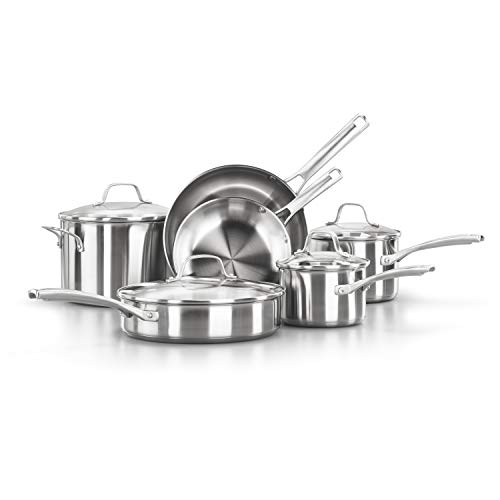
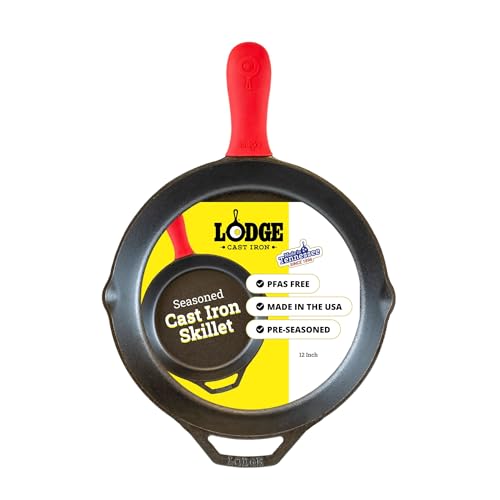
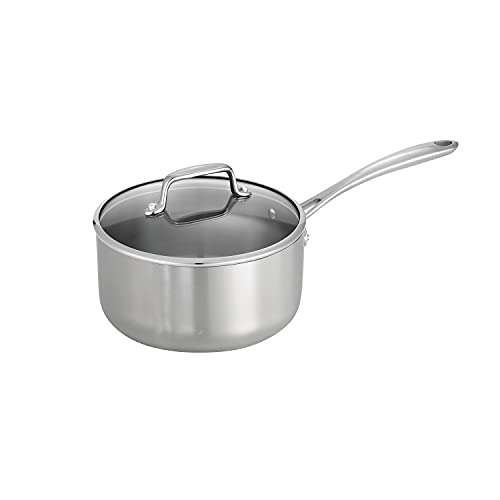
The best cookware to cook with is the kind you reach for every day: a skillet that sears, a saucepan that simmers, a pot that handles soup and a Dutch oven for braises. A few well-chosen pieces often beat a giant set.
The six pieces below cover the core jobs in most kitchens, from cast iron and clad stainless to nonstick and enameled cast iron. We have not used these products ourselves, and the details here come from general product knowledge, so confirm sizes, materials and what is included on the current listing before buying.
As an Amazon Associate we earn from qualifying purchases. Links below are affiliate links, and they do not change the product information we give.
What to Look For
| Feature | Why it matters |
|---|---|
| Versatility | Pieces that go from stovetop to oven do more jobs |
| Heat behavior | Cast iron holds heat, clad stainless spreads it, nonstick releases food |
| Handles | Secure, comfortable handles make heavy pans safer to lift |
| Size | A skillet in the 10 to 12 inch range suits most households |
| Upkeep | Seasoning, hand washing and storage differ by material |
In this guide
Specs at a Glance
| Cookware | Material | Type | Notes |
|---|---|---|---|
| Lodge Cast Iron Skillet | Pre-seasoned cast iron | Skillet | Stovetop, oven and campfire use |
| All-Clad D3 Saucepan | Tri-ply stainless steel | Saucepan | Fully clad build |
| Le Creuset Signature Dutch Oven | Enameled cast iron | Dutch oven | Braising and baking |
| Made In Stainless Clad Frying Pan | Multi-ply stainless steel | Fry pan | Searing and sauces |
| OXO Good Grips Pro Nonstick Fry Pan | Hard-anodized, nonstick | Fry pan | Eggs and delicate foods |
| Cuisinart Chef’s Classic Stockpot | Stainless steel | Stockpot | Soups, stock and pasta |
The 6 Best Cookware to Cook With

Top pickBest for searing and baking
1. Lodge Cast Iron Skillet
A long-running pre-seasoned cast iron skillet made for searing, frying and baking. It holds heat well and moves from stovetop to oven to campfire, which makes it one of the most versatile pans around.
Suits: searing and baking. Strengths: great heat retention and a long life. Weaknesses: heavy and needs seasoning care. Skip it if you want a light, low-maintenance pan.

Best for sauces and grains
2. All-Clad D3 Stainless Steel Saucepan
A fully clad tri-ply stainless saucepan with an aluminum layer that runs up the walls for even heating. It is a durable pick for sauces, grains and reheating, with a lid that suits simmering.
Suits: sauces and grains. Strengths: an even-heating, durable build. Weaknesses: a premium purchase. Skip it if you want a budget pan.
View All-Clad D3 Saucepan on Amazon
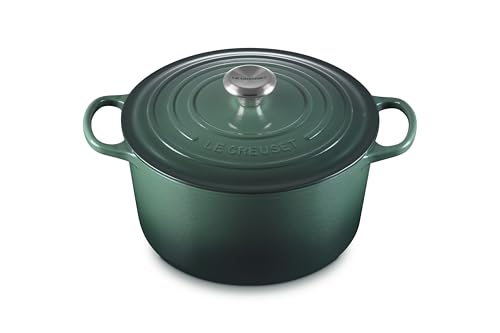
Best for braising and baking
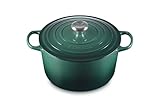
3. Le Creuset Signature Enameled Cast Iron Dutch Oven
A premium enameled cast iron pot with a light interior that makes it easy to judge browning. It is built for braises, stews, soups and no-knead bread, and it is a long-lived piece for the oven and stovetop.
Suits: braising and baking. Strengths: a durable enamel and strong heat hold. Weaknesses: heavy and a premium purchase. Skip it if you want a lightweight pot.
Best for searing and pan sauces
4. Made In Stainless Clad Frying Pan
A multi-ply stainless frying pan from a direct-to-consumer brand focused on restaurant-style build. It is a sturdy choice for searing meat and building pan sauces.
Suits: searing and pan sauces. Strengths: a clad build and oven-friendly design. Weaknesses: food may stick without technique. Skip it if you want nonstick release.
View Made In Stainless Frying Pan on Amazon
Best for eggs and delicate foods
5. OXO Good Grips Pro Nonstick Fry Pan
A hard-anodized nonstick fry pan with a reinforced coating and a comfortable handle. It is the pan to reach for when you are cooking eggs, fish or other delicate foods.
Suits: eggs and delicate foods. Strengths: easy release and a good grip. Weaknesses: the coating wears over time. Skip it if you sear at very high heat.
View OXO Good Grips Pro Fry Pan on Amazon
Best for soups and pasta
6. Cuisinart Chef’s Classic Stainless Steel Stockpot
A stainless stockpot with a lid, made for soups, stock, pasta and larger batches. Check the listing for the exact capacity, since sizes vary across the line.
Suits: soups and pasta. Strengths: a durable stainless build. Weaknesses: sizes vary by listing. Skip it if you rarely cook for a crowd.
View Cuisinart Chef’s Classic Stockpot on Amazon
Care and Setup
- Season cast iron lightly after washing and drying.
- Preheat stainless before adding oil.
- Use soft tools on nonstick.
- Let enameled pots cool before washing.
Mistakes to Avoid
- Buying a huge set when a few pieces would do.
- Overheating nonstick pans.
- Soaking cast iron for long periods.
- Using sharp metal tools on enamel.
Building a Core Kit Around How You Cook
Before comparing materials, list what you actually cook in a typical week. Cookware is best chosen by task, not by the number of pieces in a box. Someone who sears meat and makes pan sauces needs a heavy skillet with good heat control. A person who mainly makes pasta, soup and rice needs a large pot and a medium saucepan. A household that makes eggs and pancakes every morning benefits from a nonstick pan. Writing down your top five dishes makes the shopping list surprisingly short.
A practical starter kit is a skillet in the ten to twelve inch range, a small saucepan with a lid, a medium saucepan or saucier, a large stockpot or Dutch oven and a nonstick pan for delicate foods. Many cooks add a sauté pan with straight sides and a lid for dishes that need more depth. You can add a roasting pan, a griddle or a wok later, depending on your habits.
Think about the number of people you cook for. A single cook may be happy with smaller pans, while a family needs larger capacities so food is not crowded. Overcrowding steams food instead of browning it, so a pan that is slightly too big is often better than one that is too small. Also consider the number of burners, since several large pans may not fit on a small stovetop at once.
Finally, set a priority between buying fewer, better pieces and buying a larger set at a lower cost per piece. A few high-quality pans that you use daily often outperform a large set of rarely used ones, but the right balance depends on your budget and kitchen.
Material Tradeoffs in Everyday Use
Each material has strengths. Cast iron holds heat very well, which makes it excellent for searing and baking, and it can last for generations with care. It is heavy, reacts to acidic foods if the seasoning is thin and needs drying and oiling after washing. Enameled cast iron keeps the heat retention but adds a coating that does not need seasoning, though the enamel can chip if struck.
Stainless steel clad cookware layers steel around an aluminum or copper core to spread heat evenly. It is durable, does not react with acidic foods and handles high heat and the oven, but food can stick without proper technique, and it takes attention to preheating and oiling. It is a good choice for browning and for making sauces from the browned bits left in the pan.
Nonstick surfaces release food easily and need little fat, which is great for eggs, fish and delicate foods. They are not made for very high heat and are sensitive to metal utensils and abrasive cleaning, so the coating wears over time. Hard-anodized aluminum bases are common and give even heating.
Carbon steel behaves like a lighter cast iron and is popular for woks and skillets, but it also needs seasoning. Copper conducts heat quickly and responds fast, though it is expensive and needs polishing unless lined and coated. Aluminum alone is light and conductive but can react with acidic food unless anodized or coated. Use this overview to match materials to jobs rather than looking for a single winner.
Compatibility: Induction, Oven and Lids
Check compatibility before you buy, since the stove you own limits your options. Induction cooktops require cookware that responds to magnets, which includes cast iron and most magnetic stainless steel. A simple test is to see whether a magnet sticks firmly to the base. Aluminum and copper alone will not work unless they have a magnetic layer. Listings often state induction compatibility, so look for it.
Flat bases matter on glass or ceramic cooktops, where warped pans heat unevenly and can rock. Heavy cast iron can scratch glass if dragged, so lift rather than slide. On gas, make sure the pan sits steadily on the grates, and note that flames reaching up the sides can scorch handles and discolor the pan.
Oven use depends on the handle and any lid. Metal handles are usually fine for the oven up to a temperature the maker states, while plastic or silicone handles and glass lids have lower limits. Nonstick coatings also have temperature limits. Check the listed maximum, and remember that it may apply to the pan but not to the lid.
Lids deserve attention. A snug lid holds moisture for braises and rice, while a loose one lets steam escape. Glass lids let you check progress without lifting, but metal lids often tolerate higher heat. Handles should be comfortable and stay reasonably cool, and they should be secure. A wobbly handle is a safety concern with a heavy pan full of hot food.
Weight, Handles and Ergonomics
Cookware is something you lift, flip and carry, so comfort matters. Heavy pans retain heat and feel stable, but they are tiring to lift when full and can be hard for people with limited wrist strength. Lighter pans respond faster to heat changes and are easier to toss, but they may heat unevenly if thin. Pick a weight that suits your body and your style.
Handles should fit your grip. Long handles give leverage but may hang over the edge of a small stove, and short handles save space. A helper handle on the opposite side of a large pan or Dutch oven makes lifting safer. Check the handle material, too, since metal handles get hot on the stove, while some designs stay cooler. Always use oven mitts when pans come from the oven.
Shape also matters. Sloped sides help with flipping and tossing, while straight sides hold more liquid. A pouring rim reduces drips. Rounded interior corners make stirring and cleaning easier than sharp angles. If you cook for a crowd, wide pans with a large surface let you brown more food at once.
If you can, try the pan in a store to feel the weight and balance. If you cannot, read the listed weight and dimensions and imagine lifting it full. Storage is part of ergonomics as well: nesting pans save space, and hanging racks keep frequently used pieces within reach. Choose pieces you will not dread picking up.
Longevity, Care and Knowing When to Replace
How long cookware lasts depends on care. Cast iron and carbon steel improve with use if you keep the seasoning, which means drying them well after washing and rubbing on a thin coat of oil. Avoid long soaks and harsh scrubbing. If rust appears, scour it, rinse, dry and re-season; it is usually fixable.
Stainless steel is durable but can discolor with heat or develop stains from hard water. A paste of baking soda or a non-abrasive cleaner usually restores its look. Let pans cool before washing to avoid warping, and avoid thermal shock, such as plunging a hot pan into cold water. Enameled pots should cool before cleaning, and abrasive cleaners and metal utensils can scratch the finish.
Nonstick pans are the most perishable. Use low to medium heat, avoid metal tools and wash with a soft sponge. Replace a nonstick pan when the coating is scratched, flaking or no longer releases food, and when the pan is warped. Do not use a pan with a flaking coating. Follow the maker’s instructions on dishwashers, since many recommend hand washing.
Replace any cookware with loose or cracked handles, deep warping that causes it to wobble, or a damaged lining. Keep an eye on glass lids for chips. Good cookware is an investment in daily cooking, and the best approach is to buy what suits your style, maintain it properly and replace only what is worn out.
A Core Set Built Around How You Cook
Cookware shopping can feel overwhelming because sets come with many pieces, but most cooks lean on a small core. Think about your usual weekly meals and build around them. A skillet, a saucepan, a larger pot and a baking sheet cover a surprising amount of ground.
| Piece | Handy for | Look for |
|---|---|---|
| 10 to 12 inch skillet | Eggs, searing, stir-fries | A flat base and a comfortable handle |
| 2 to 3 quart saucepan with lid | Sauces, grains, reheating | A snug lid and pour-friendly rim |
| 5 to 8 quart stockpot | Pasta, soups, stews | Sturdy handles and a thick base |
| Saute pan with sides | One-pan dinners | Deep walls and a lid |
| Dutch oven | Braises and bread | Heavy construction and a tight lid |
Materials in Everyday Language
- Stainless steel: durable and versatile. It browns well, though food can stick if the pan is not heated and oiled properly.
- Nonstick: good for eggs and delicate fish. Use gentle tools and follow the maker temperature limits.
- Cast iron: strong heat retention and long life, but heavy and in need of seasoning care.
- Enameled cast iron: offers similar heat behavior without seasoning, though the coating can chip if knocked.
- Carbon steel: lighter than cast iron and prized by many cooks, with seasoning needs.
- Aluminum and copper cores: spread heat evenly, usually layered inside steel.
Check what the listing says about the stove types it supports, particularly if you have an induction cooktop.
Handles, Lids and Oven Use
Handles should stay comfortable and be firmly attached. Riveted handles are common on durable pieces, while welded ones can be easier to clean. If you plan to finish dishes in the oven, read the oven-safe temperature for the pan and for the lid separately, since lids with plastic knobs often have lower limits than the pot itself.
Caring for Your Cookware
- Let pans cool before washing to avoid warping and shock.
- Wash gently with a soft sponge, and avoid steel wool on coated surfaces.
- Dry cast iron and carbon steel right away and apply a thin coat of oil, as the maker instructs.
- Store pans so the cooking surfaces do not scrape each other, using felt or paper towels between them.
- Replace nonstick pans when the coating is badly damaged.
Matching the Set to Your Kitchen
Count your cabinets before buying a large set. A tidy collection of well-chosen pieces is better than a crowded cupboard of items you never use. Mixing materials is perfectly fine, such as a stainless saucepan with a cast iron skillet.
Mistakes New Cookware Owners Make
Even good pans can disappoint when they are used the wrong way. Heating a stainless pan too fast, adding cold oil to a smoking surface or cramming the pan with food are common slips. Nonstick surfaces suffer when overheated empty, and cast iron rusts if left wet. Reading the maker guide for each piece takes a few minutes and avoids damage.
- Preheat gently and let the pan come to temperature before adding food.
- Match the burner size to the pan base, so flames or heat do not wrap up the sides.
- Use wood, silicone or nylon tools on coated surfaces.
- Do not chill a hot pan under cold water, which can warp it.
- Keep handles turned inward to avoid accidents.
If a handle loosens or a base warps so the pan rocks on the burner, it is time to replace it.
Head-to-Head: Six Core Pieces, Six Different Jobs
Unlike the set-based guides, this collection is a team of specialists, and comparing them means comparing roles rather than rivals. The Lodge Cast Iron Skillet is the heat keeper. The All-Clad D3 Saucepan is the precision simmering tool. The Le Creuset Signature Dutch Oven is the braising and baking vessel. The Made In Stainless Clad Frying Pan is the searing and sauce pan. The OXO Good Grips Pro Nonstick Fry Pan is the delicate-food specialist. The Cuisinart Chef’s Classic Stockpot is the volume worker. No piece here substitutes for another, which is exactly the argument for building a kitchen this way.
The Lodge and the Made In pans invite the closest comparison, because both sear. The Lodge, pre-seasoned cast iron, stores a great deal of heat and holds it when cold food arrives, so crusts form reliably and the pan doubles as a baking dish and a campfire tool. Its costs are weight and seasoning care. The Made In clad frying pan heats more evenly across its surface and responds faster when you lower the heat, and its stainless surface is the one that gives you a pan sauce from the residue afterwards. A kitchen with both uses the Lodge for steaks, cornbread and frying, and the Made In for the weeknight sear-and-sauce routine.
The All-Clad D3 Saucepan and the Cuisinart Chef’s Classic Stockpot are the two lidded liquid vessels, divided by scale. The saucepan’s clad walls make it the choice for sauces, grains and reheating, where even heat prevents the scorching that thin bases cause in milk, custards and reductions. The stockpot’s job is volume: pasta water, stocks, soups and big batches, where wall construction matters less than capacity and a sturdy base. Cooks sometimes try to make one vessel do both jobs and end up with scorched sauces in a pot too big and pasta cooked in cramped batches; the pair exists because the jobs genuinely differ.
The Le Creuset Dutch oven overlaps both neighbours and still earns its place. Against the stockpot, it trades capacity for heat retention and oven character: its enameled cast iron holds a braise at a murmur for hours and bakes bread with a crust a thin pot cannot produce. Against the skillets, it is the deep, lidded braising vessel they are not. Its costs are weight and price, and the original review is plain about both. What owners consistently report is that it becomes the most emotionally valued piece in the kitchen, the one used for the meals that mark occasions.
The OXO nonstick pan is the piece that looks least impressive and gets used most. Eggs, fish, pancakes and reheats are daily food, and this pan does them without technique, without soaking and without drama. Its coating will age, as all coatings do, and it should be kept away from fierce heat. In a kit of long-lived bare-metal pieces, it plays the role of the consumable specialist, replaced when its release fades while everything around it carries on. A core kit planned with that expectation is honest engineering, not a flaw.
Assembled, the six pieces cover searing, frying, sautéing, saucing, simmering, braising, boiling, baking and delicate cooking, which is to say nearly everything a home stove is asked to do. The gaps a cook might later find, a small saucepan for tiny jobs, a larger skillet for crowds, a sheet pan for the oven, are additions to a working system rather than repairs to a broken one. That is the deep difference between this approach and a boxed set: the kit grows by need, and every piece in it was chosen for a job it is genuinely the best tool for.
Building the Kit in the Right Order
Few cooks buy six pieces at once, and the order of acquisition matters more than the final list. Start with the piece that covers your most frequent frustration. For most households that is the skillet decision: the Lodge if your cooking is hearty and oven-friendly, the Made In if sauces and responsiveness matter more, or, if breakfast is the pain point, the OXO nonstick, which will be used twice a day from the moment it arrives. A first piece that gets used daily justifies the whole project and teaches you how your stove behaves with substantial cookware.
The second purchase should add the liquid capacity you lack. If sauces and grains are your weakness, the All-Clad saucepan changes weekday cooking immediately, because even heat removes the stirring-and-watching tax on everything from oatmeal to a cheese sauce. If your cooking is soups, pasta and batches, the Cuisinart stockpot comes second instead. Notice that the right order is personal: it follows your menu, not a universal ranking, and two cooks with opposite menus should build the same final kit in opposite orders.
The Dutch oven usually arrives third, and it tends to change the household’s cooking the most per purchase, because it unlocks the slow, oven-based dishes, braises, stews, baked beans, no-knead bread, that none of the earlier pieces do well. It is also the piece most worth buying once and well, since enameled cast iron kept dry and treated kindly lasts for decades and its work cannot be imitated by a substitute. If your cooking rarely braises or bakes bread, it can wait; the kit philosophy is that need, not completeness, sets the schedule.
Leave gaps without anxiety. A kit built over a year teaches you what you actually cook, and the pieces bought later are bought with knowledge the first purchase could not have given you. Borrow or improvise in the meantime; a borrowed large pot for the one annual occasion is better economics than a stored one. The six pieces in this guide are the destination for most home cooks, but the route, piece by piece, each earning its place, is where the satisfaction and the savings live. A kitchen assembled this way contains nothing that has to be explained or excused.
Technique Notes for Each Material in the Kit
Cast iron, seasoned and confident
The Lodge skillet rewards a simple routine: preheat it gradually, cook with enough fat, and clean it while warm with water and a brush, drying it on the stove and wiping in the thinnest film of oil if it looks dry. Avoid long soaks and harsh detergents, not because the pan is fragile but because the seasoning you are building is a surface you maintain like a garden. Cook in it often; regular use with frying and roasting is what deepens the seasoning, and a pan used weekly will outperform a pampered pan used monthly within a season.
Clad stainless, the preheat and the release
The Made In frying pan and the All-Clad saucepan share one technique: preheat the empty pan gently, test with water droplets that should bead and roll, then add oil and food, and wait for the food to release before moving it. Protein that sticks at first and releases as it browns is behaving normally, and forcing it early tears the crust you wanted. Deglaze the frying pan after searing and you have a sauce; simmer gently in the saucepan and the clad walls protect the base. These two pans teach the same lesson from opposite ends, which is why they pair so well in one kit.
Enameled cast iron, low and slow
The Le Creuset wants gradual heating, moderate settings and wooden or silicone tools. Its enamel is tough but dislikes thermal shock, so let it cool before washing and never plunge it hot into cold water. Inside the oven it is in its element, holding braises at a bare simmer for hours without attention. The light interior lets you watch browning, which is a real cooking advantage when building a stew’s base. Treat it as the kit’s slow instrument, and it will play for decades.
Nonstick and stockpot, the straightforward pair
The OXO pan asks only for moderate heat, soft tools and a gentle wash, and in return removes all technique from eggs and fish. The Cuisinart stockpot asks for even less: enough water, a lid used sensibly, and a rinse. Their simplicity is the point. In a kit where other pieces teach skills, these two provide the reliable background, the pan that always works on a tired morning and the pot that always boils the pasta, and a kitchen needs that reliability as much as it needs any star performer.
A Week of Cooking Across the Six Pieces
Monday is a sear-and-sauce night in the Made In pan: chicken thighs browned, removed, and a quick sauce built in the same pan from the residue, with rice from the All-Clad saucepan alongside, its even walls keeping the grains from catching. Tuesday drops to comfort speed: eggs or an omelette in the OXO for a light supper, or fish fillets that need its gentle release. Already the kit’s rhythm is visible: the stainless pair for the cooked-from-scratch meals, the nonstick for the evenings when cooking must be effortless to happen at all.
Wednesday belongs to volume: a soup or a pasta night in the Cuisinart stockpot, with enough made for tomorrow’s lunch, because a big pot’s real talent is cooking once for two meals. Thursday is braise night in the Le Creuset, started on the stove after work and finished in the oven while the evening happens around it, producing the kind of meal that makes a weekday feel like an occasion. Notice that no piece has yet repeated a job, which is the kit working as designed: each tool doing the work its material does best.
Friday is the Lodge’s night: a steak, burgers, or a skillet cornbread to go with chili reheated in the Dutch oven. Cast iron’s stored heat gives the crust the other pans cannot quite match, and the pan goes from stove to table. The weekend then opens the kit fully: pancakes in the OXO, a slow sauce in the All-Clad, bread in the Le Creuset, a stock simmering in the Cuisinart from the week’s bones and vegetable ends. A cook who spends one weekend cooking this way understands the kit philosophy completely, because every piece has been the right tool at the moment it was lifted.
The week’s lesson is that versatility in a kitchen comes from contrast, not from any single miraculous pan. Heavy and light, coated and bare, deep and shallow, oven-bound and stove-only: the six pieces differ on purpose. A boxed set gives you matching pieces of one material, which is tidy and often sensible. This kit gives you the best material for each job, which is less tidy and, for cooks who enjoy the craft, more satisfying. Neither philosophy is wrong; this guide simply argues that if you cook widely, the mixed kit is the one that grows with you.
Care and Storage for a Mixed-Material Kit
A mixed kit cannot be cared for with one routine, and that is its main cost. The Lodge wants drying and a whisper of oil; the Le Creuset wants gradual temperature changes and no metal tools; the OXO wants soft sponges and moderate heat; the stainless pieces want prompt washing and occasional brightening; the stockpot wants almost nothing. The practical solution is to attach the routine to the piece rather than to the cook: wash each item as it is used, in its own way, and the whole system takes no longer than a single routine applied badly to everything.
Storage should follow weight and frequency. The Lodge and the Le Creuset are the heavy pieces; they belong low, on a shelf or in a drawer that does not ask you to lift them from above shoulder height, and the Dutch oven’s enamel appreciates not having other pans stacked inside it without a cloth. The stainless pans hang well or stack with protectors. The OXO should be stored where nothing metal rests in its surface. A kit is an investment spread across objects, and storing each according to its nature is how the investment keeps its value.
Replacement planning is part of care in a kit like this. Expect the nonstick pan to be the first and possibly only recurring replacement, and budget for it the way you budget for knife sharpening: a normal cost of a working kitchen. The stainless and enameled pieces, barring accidents, are effectively permanent, and the Lodge can be re-seasoned back from almost any neglect. Knowing which pieces are permanent and which are consumable stops a worn coating from feeling like a failure of the whole kit; it is simply the one part designed to be renewed.
Finally, keep the kit honest by reviewing it once in a while. A piece that has not been used in a year is telling you something about your cooking, and it can be passed on without regret. A job you do weekly with the wrong tool is telling you what to buy next. The six pieces here are a considered answer for a broad, typical menu, but the kit method matters more than the list: choose by job, buy the material that does that job best, care for it as its nature requires, and the kitchen quietly becomes exactly the one its cook needs.
Making the Final Call on a Core Kit
If you cook a wide range of food and enjoy the tools themselves, this six-piece kit is the most capable answer in our cookware guides. The Lodge Cast Iron Skillet and the Made In Stainless Clad Frying Pan cover searing between them, one for stored heat and one for response and sauces. The All-Clad D3 Saucepan handles the delicate liquid work, the Cuisinart Chef’s Classic Stockpot the volume, the Le Creuset Signature Dutch Oven the slow oven dishes, and the OXO Good Grips Pro Nonstick Fry Pan the daily delicate jobs. Together they leave very little a home cook cannot do well.
If, on reflection, your cooking is narrower, buy the subset without hesitation. A household that never braises can skip the Dutch oven for now; a household that lives on eggs, grains and stir-fries may need only the OXO, the Made In and the stockpot. The kit philosophy blesses the subset, because every piece present will be used and every absent piece is money unspent rather than capability lost. Add pieces when a recipe you love demands them, and the kit will always match the cook.
Before ordering any piece, confirm its size against your stove and storage, its weight against the cook who will lift it full, and its care routine against your real habits. Those three checks, applied piece by piece, are the whole discipline of building a kitchen this way. Do that, and the result is not a set that looks impressive in a cupboard; it is a set of tools that disappears into the cooking, which is the highest state kitchen equipment can reach.
Three Cooks, Three Different Versions of the Same Kit
The first cook is a beginner equipping a kitchen from nothing, with more enthusiasm than budget. Their version of this kit starts with two pieces: the OXO Good Grips Pro nonstick pan, because breakfast should succeed from day one, and the Made In Stainless Clad Frying Pan, because it teaches the central skill of home cooking, managing heat in a good pan, while covering searing, sautéing and sauces. The Cuisinart stockpot joins when pasta and soup nights demand it, and the rest of the kit can wait for birthdays and growing confidence. A beginner who buys in this order never owns a discouraging piece, because each arrival answers a need they have already felt at the stove.
The second cook is an experienced one replacing a tired boxed set and keeping, mentally, a list of everything the set did badly. Their version of the kit is bought almost whole, but chosen piece by piece against the list: the Lodge Cast Iron Skillet because the old set could not sear, the All-Clad D3 Saucepan because the old saucepan scorched every sauce, the Le Creuset Dutch Oven because braises were the old kitchen’s weak point. This is the kit method at its most satisfying, because every piece is a specific answer to a remembered frustration, and the first month of cooking feels like a series of small revenges on the old set.
The third cook has a small kitchen and a serious habit: little storage, high standards. Their kit is the same six pieces with the discipline turned up, each piece earning its shelf by doing at least two jobs. The Dutch oven bakes and braises; the Lodge fries and bakes; the stockpot boils and steams with a basket; the saucepan sauces and reheats; the two skillets divide delicate from searing work. Nothing decorative survives this audit, and nothing essential is missing either. Small kitchens are where the kit philosophy proves itself most completely, because a boxed set spends its storage on matching pieces while a kit spends it on capability.
The three cooks end with similar shelves and entirely different stories, which is the point. A kit is not a product; it is a method, and the method is to let the cooking lead. Cooks who follow it stop asking what the best cookware is in the abstract and start asking the only question that has an answer: what is the best tool for the thing I am about to cook, and do I own it. These six pieces answer that question for most of what a home stove is asked to do, and the gaps they leave are not failures but invitations, to be accepted one recipe at a time.
If you are standing at the start of this process, the most useful first step costs nothing: cook your normal week and notice, each time you reach for a pan, whether it was the right one. Note the moments of compromise, the sauce in the too-big pot, the eggs in the pan that sticks, the braise in the vessel that cannot go in the oven. That list, written by your own cooking, is your personal version of this guide, and it will order the six pieces, or their substitutes, more accurately than any ranking. The kit that results will look like this one in outline and like nobody else’s in detail, which is exactly what a working kitchen should be.
A Note on Weights, Hands and Honest Comfort
One check this guide returns to, because it is skipped so often, is the full-pan lift. A skillet or Dutch oven that feels pleasantly solid empty becomes a serious weight filled with food and hot oil, and it must be lifted, tilted and carried by the cook who will actually use it, sometimes with one hand while the other holds a spoon or a plate. If a piece is too heavy for that cook at full load, it will be avoided, and an avoided piece is wasted money however fine its construction. Where possible, handle a candidate piece in a shop, or at least weigh your current pans and compare honestly. The Lodge and the Le Creuset are the heavy members of this kit and earn their weight in performance, but they earn it only in hands that can manage them gladly, meal after meal, year after year.
In short, lift before you buy, and let the hand vote alongside the head.
Cookware to Cook With FAQ
What are the first pieces to buy?
A 10 to 12 inch skillet, a saucepan with a lid, a stockpot and a nonstick pan for eggs cover most daily cooking.
Is cast iron hard to maintain?
Not much. Wash it by hand, dry it fully and rub on a light coat of oil to keep the seasoning in good shape.
Do I need a Dutch oven?
If you braise, bake bread or make stews, it is one of the most useful pots you can own.
Can I mix brands?
Yes. Mixing materials lets you match each pan to its task, and nothing requires matching sets.
Do I need a full cookware set?
Not necessarily. Many cooks do better with a few pieces chosen for their cooking style. A set can be economical if you will use every piece, but check what is actually included.
How do I know if a pan works on induction?
Check the listing for induction compatibility, or see whether a magnet sticks firmly to the base. Pans without a magnetic layer will not heat.
Can I use metal utensils on stainless steel and cast iron?
Generally yes, though cast iron seasoning and enamel can be marred by hard scraping. Use softer tools on nonstick and enamel finishes.
Why does food stick to my stainless pan?
Usually the pan is too cold or too hot, or there is too little oil. Preheat the pan, add oil, then add food and let it release before turning.
How do I re-season cast iron?
Clean and dry it, rub on a thin layer of oil, and heat it as the maker advises. Repeat if needed. Follow the manufacturer's instructions for your pan.
Is it safe to cook acidic food in cast iron?
Occasionally, yes, especially in a well-seasoned or enameled pan. Long simmering of acidic sauces can strip seasoning and add a metallic taste in bare cast iron.
What size skillet should I buy first?
A ten to twelve inch skillet suits most households. Choose larger if you cook for several people.
When should I replace a nonstick pan?
When the coating is scratched or flaking, food sticks despite proper use, or the pan is warped. Replacing it is safer than continuing to use a damaged coating.
The Short Version
For searing and baking, the Lodge skillet. For sauces, the All-Clad D3 saucepan. For braising, the Le Creuset Dutch oven. For pan sauces, the Made In frying pan. For eggs, the OXO Good Grips Pro. For soup, the Cuisinart stockpot.