A kitchen hood sits above the cooktop to capture smoke, grease and steam. Beyond clearing the air, it frames the cooking area, so style and size matter as much as the fan itself. Choosing a hood is partly about looks and partly about whether your kitchen can vent to the outside, so think about both before you compare models.
The six hoods below mix wall-mount, under-cabinet and convertible designs from established makers. We have not used these products ourselves, so confirm the width, venting type and mounting needs on the current listing before you buy. Performance and noise claims are the makers’ own. Many hoods are sold in several widths and finishes under the same name, so read the listing carefully to make sure the width and venting type fit your range and your ductwork.
As an Amazon Associate we earn from qualifying purchases. Links below are affiliate links, and they do not change the product information we give.
What to Look For
| Feature | Why it matters |
|---|---|
| Style | Wall-mount, under-cabinet and island hoods suit different layouts |
| Width | Match or exceed the cooktop width for better capture |
| Controls | Push buttons, touch panels and remotes differ in feel |
| Lighting | Built-in lights help you see what is on the stove |
In this guide
Specs at a Glance
| Hood | Style | Venting | Notes |
|---|---|---|---|
| Broan-NuTone BCDF1 | Under-cabinet | Convertible ducting | Multiple widths, check listing |
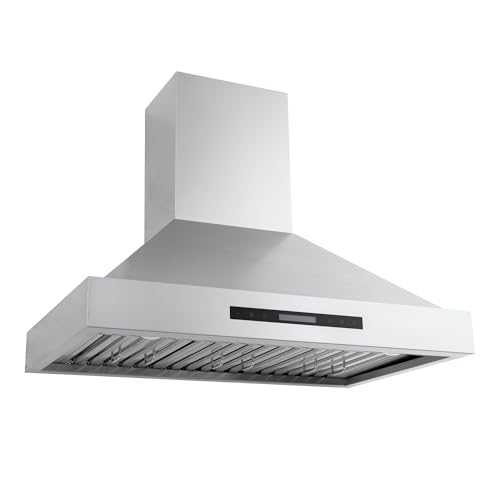
| Empava wall mount | Wall-mount | Ducted or ductless, check listing | Stainless steel |
| Ancona slim hood | Under-cabinet | Ducted or ductless, check listing | Stainless steel |
| AKDY wall mount | Wall-mount | Ducted or ductless, check listing | Stainless steel |
| Cosmo wall mount | Wall-mount | Ducted or ductless, check listing | Stainless steel |
| Zephyr range hood | Wall-mount, island or under-cabinet, check listing | Ducted | Many finishes |
The 6 Best Kitchen Hoods
Top pickBest for rental or standard kitchens
1. Broan-NuTone BCDF1 Convertible Range Hood
A convertible hood that can be ducted or run as a recirculating unit depending on setup. It is an old standby in many homes.
Suits: rental or standard kitchens. Strengths: flexible venting. Weaknesses: basic look. Skip it if you want a designer piece.
View Broan-NuTone Convertible Hood on Amazon
Best for modern kitchens
2. Empava Wall Mount Range Hood
A stainless wall-mount hood with touch or push controls, depending on model. It offers a modern look for the kitchen.
Suits: modern kitchens. Strengths: a stylish stainless look. Weaknesses: model details vary. Skip it if you want a built-in insert.
View Empava Wall Mount Hood on Amazon
Best for small kitchens
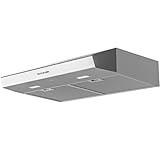
3. Ancona Slim Under-Cabinet Range Hood
A slim under-cabinet hood designed for tight spaces. It keeps a low profile above the range.
Suits: small kitchens. Strengths: a compact slim build. Weaknesses: smaller capture area. Skip it if you cook heavy meals daily.
View Ancona Slim Hood on Amazon
Best for remodels
4. AKDY Wall Mount Range Hood
A wall-mount hood with multiple speeds and lighting. It is marketed for homeowners who want a visible upgrade.
Suits: remodels. Strengths: many features. Weaknesses: install effort. Skip it if you need the easiest install.
View AKDY Wall Mount Hood on Amazon
Best for statement kitchens
5. Cosmo Wall Mount Range Hood
A wall-mount hood from a brand that sells many ventilation models. It combines a bold look with fan speeds and lights.
Suits: statement kitchens. Strengths: solid build and style. Weaknesses: takes ceiling clearance. Skip it if you have a low ceiling.
View Cosmo Wall Mount Hood on Amazon
Best for design-led kitchens
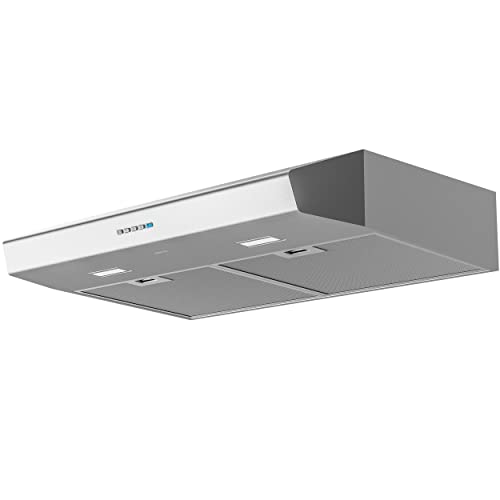
6. Zephyr Range Hood
A hood maker known for design-forward models in many styles. It focuses on looks as well as ventilation.
Suits: design-led kitchens. Strengths: striking design. Weaknesses: premium styling. Skip it if you want a plain budget hood.
Care and Setup
- Clean filters often and follow the maker’s cleaning guidance.
- Wipe the hood surface weekly to prevent grease buildup.
- Check the ducting for blockages or leaks.
- Replace bulbs and charcoal filters on schedule.
Mistakes to Avoid
- Buying without measuring the cooktop and ceiling height.
- Choosing ductless when ducted is possible.
- Skipping professional help for a complicated install.
- Using the hood too weakly during heavy cooking.
Ducted, Ductless and Convertible Venting Compared
How a hood handles the air it captures is the most important decision, because it affects performance more than style does. A ducted hood pulls smoke, grease, steam and cooking odors through a duct and out of the house. Because it removes moisture and combustion byproducts from the home rather than just filtering them, it is generally the better choice for frequent or heavy cooking, particularly with gas ranges. It needs a duct path to an exterior wall or roof, which depends on your building and may require professional help.
A ductless or recirculating hood pulls air through filters, usually a metal grease filter and a charcoal filter, then returns it to the room. It is easier to install where ductwork is impractical, such as in some apartments, but it does not remove heat or moisture, and charcoal filters wear out and need regular replacement. Smell control depends on keeping those filters fresh.
Convertible hoods can be set up either way, and the listing should say what parts are needed for each mode. Some require a separate recirculation kit, so confirm what is included. Before you choose, find out whether your kitchen can vent outside, how long and straight the duct run would be and whether local rules apply. Long runs with many bends reduce airflow, and a hood that performs well on paper may disappoint in a poor duct layout. If you rent or cannot alter the walls, a ductless model with easy-to-find replacement filters may be the realistic option.
Sizing, Airflow and Capture Area
Hood size and airflow work together. Width is the first check: the hood should be at least as wide as the cooktop, and many people prefer one that extends a little beyond each side to catch rising steam. A hood narrower than the range leaves gaps where smoke escapes. Depth also matters, because deeper canopies cover the front burners, where much cooking happens.
Airflow is often listed in cubic feet per minute, abbreviated CFM. Higher numbers mean more air moved, but more is not automatically better. An oversized fan in a tight home can be noisy and, in some cases, may pull air back down other flues or vents, which is a safety issue for homes with gas appliances. Local building codes may require make-up air for powerful hoods, so check requirements before choosing a high-output model. Match airflow to your cooking style: occasional light cooking needs less than daily frying, searing or wok work.
Consider how airflow numbers are measured. Makers may state maximum airflow without accounting for ducting resistance, so real-world performance can be lower. Look for guidance on duct size, since a narrower duct than the hood expects can reduce performance and add noise. Check the listing for recommended duct diameter, and do not assume that a larger hood means better capture if the ductwork is not suitable. If you are unsure, an HVAC professional or the manufacturer’s support can help you size correctly.
Noise, Fan Speeds and Controls
A hood you dislike turning on will not clear much smoke, and noise is the usual reason. Fan noise rises with speed, and a hood that sounds fine on low can be intrusive on high. Makers sometimes state sound levels, but the numbers are measured under test conditions and not always comparable between brands. Treat them as rough guides and read reviews for comments about real-world loudness, remembering that perception varies.
Where the motor sits affects noise. Hoods with an internal motor tend to be louder in the kitchen, while remote or inline motors, mounted farther away in the duct, can run quieter. These options cost more and need more installation work, but they can be worth it for open-plan homes. Insulated or rigid ducting can also reduce vibration and noise.
Look at controls too. Push buttons are simple and easy to clean, while touch panels look sleek but may be harder to use with greasy fingers. Some hoods include remote controls, timers that run the fan after cooking, or sensors that adjust the speed automatically. These are conveniences, not necessities. Count the fan speeds and see whether a gentle low setting exists for everyday simmering. Finally, check the lighting: bright, even lights over the cooktop make cooking easier. Confirm bulb type and replacement instructions on the listing so you are not surprised by specialty bulbs.
Filters, Grease and Routine Maintenance
Filters protect the hood and the duct, and how they are cleaned can shape your daily life with the appliance. Mesh filters trap grease in layers of metal screen, and many are removable and dishwasher friendly, though you should check the manual first. Baffle filters use curved metal plates that direct grease into channels and are generally easier to wipe clean. Charcoal filters, used in ductless setups, cannot usually be washed and must be replaced on a schedule.
Cleaning frequency depends on how you cook. Frequent frying, stir-frying and searing produce more grease, so filters may need cleaning more often, perhaps monthly for heavy users, while light cooking can stretch that interval. Follow the maker’s guidance. A hood with filters that clip out easily is more likely to be maintained than one that needs tools.
Grease buildup is not only messy, it is also a fire risk, so do not neglect it. Wipe the surfaces regularly with a mild degreasing cleaner suited to the finish, and avoid abrasive pads on stainless steel, which can scratch. Always cut power before cleaning the interior, and let the hood cool. Look at the duct and the exterior vent cap from time to time for blockages, nests or damage. If the fan sounds different, vibrates or moves less air than before, check for clogged filters and loose fittings first, then call a professional if the issue continues. Keep spare filters on hand where replacement is required.
Installation Planning and Budget Priorities
A good hood installed badly will underperform, so plan the installation before you order. Measure the cooktop width, the ceiling height and the wall or cabinet space, and note the position of any studs, wiring and existing ducts. Check the mounting height in the manual, as this affects both safety and capture. The listing will usually show recommended clearance above the cooktop, and gas and electric ranges may have different requirements.
Think about the weight. Wall-mount canopy hoods can be heavy, and the wall needs solid support, often through studs or blocking. Under-cabinet hoods rely on the cabinet’s strength and may need a specific cutout or a particular cabinet depth. Wiring may require a dedicated circuit or an electrician, and ducting changes may require a contractor. If you are not confident, budget for professional help, since mistakes can be costly.
When deciding where to spend, prioritize in this order: correct venting type, correct width, adequate but sensible airflow, tolerable noise and easy-to-clean filters. Style, finish and extra features come next. Lower-priced hoods can serve well if they suit your layout, while higher-priced ones often add quieter motors, better materials and more refined controls. Check warranty terms and how to get replacement filters and bulbs. Before purchase, make sure the hood will fit through your doorways and that you have a safe plan for lifting it, as hoods can be bulky and awkward to handle.
Convertible, Wall Mount and Under-Cabinet Hoods Compared
Kitchen hoods fall into a few groups, based on how they mount and vent. The Broan-NuTone BCDF1 is a convertible hood that can vent outside or recirculate, which suits kitchens where ducting is not straightforward. Wall mount hoods, such as the Empava, AKDY and Cosmo models, hang on the wall above the range and often have a chimney. Under-cabinet hoods, such as the Ancona Slim, sit beneath cabinets and keep a low profile. The Zephyr is a design-oriented range hood brand with several styles.
| Hood | Mount type | Good for |
|---|---|---|
| Broan-NuTone BCDF1 Convertible | Under-cabinet, convertible | Kitchens with or without ducting |
| Empava Wall Mount | Wall mount | Ranges against a wall with no cabinet above |
| Ancona Slim Under-Cabinet | Under-cabinet slim | Low-profile installations |
| AKDY Wall Mount | Wall mount | Open kitchens that want a visible hood |
| Cosmo Wall Mount | Wall mount | Wall-mounted installations with ducting |
| Zephyr Range Hood | Various styles | Check the maker’s page for the model |
Sizing a Hood to Your Range
Choose a hood that is at least as wide as the cooktop, and many makers recommend a bit wider for better capture. Check the recommended mounting height above the cooking surface, which differs between gas and electric ranges and between hood styles. A hood that is too low can be a hazard, and one that is too high will not capture smoke well. Read the installation instructions, and check local building codes.
Airflow is measured in cubic feet per minute, and the right number depends on your range and cooking style. High-output ranges and heavy frying often require stronger ventilation, while light cooking can manage with less. Ask a qualified installer or the maker’s support about requirements, because strong hoods can need make-up air in tightly sealed homes.
Ducting and Installation Checklist
- Decide whether the hood will vent outside or recirculate, and confirm the model supports that option.
- Plan the duct path, keeping it short and straight, with as few elbows as possible.
- Use the duct size the maker specifies, and seal the joints.
- Check that the wall or cabinet can support the weight of the hood.
- Arrange the electrical connection according to code, using a qualified electrician if needed.
- Cap the outside vent with a damper to prevent drafts.
Filters, Noise and Upkeep
Most hoods use metal mesh or baffle filters that can be washed, while recirculating hoods use charcoal filters that are replaced. Clean filters on the schedule in the manual, since grease buildup reduces performance and can create a fire risk. Noise varies with fan speed, so consider where the kitchen is located and how often you will use high speed. Wipe the exterior with a gentle cleaner to avoid scratches on stainless steel.
Common Mistakes
The first mistake is choosing a hood narrower than the cooktop. The second is using a long, twisting duct that cuts airflow. The third is skipping filter cleaning. The fourth is mounting at the wrong height. Plan carefully and rely on qualified help for wiring and ductwork.
Noise, Lighting and Control Features
A hood only helps if you are willing to use it, and noise is the main reason people avoid turning one on. Look at the sound level listed by the maker, often in sones, and remember that the highest speed is louder than the lower ones. Ducting, wall construction and fan type also change how the hood sounds in your kitchen. If you cook often at low heat, a hood that is pleasant on its lowest speeds will serve you better than one that is only impressive at maximum.
Lighting matters too. Most hoods include lights over the cooktop, with LED options that last a long time. Check the number and brightness of the lights, and whether the bulbs are replaceable. Controls vary from simple rocker or push buttons to touch panels and remote controls. Choose controls that are easy to clean and understand, since grease collects on buttons.
Some hoods have a delay-off feature that keeps the fan running after cooking to clear remaining steam. Others have a filter-cleaning reminder. These small features are useful if you cook daily. Consider the finish too: stainless steel shows fingerprints, while black or matte finishes may show grease differently. Pick a finish that matches your kitchen and your cleaning habits.
Two Hoods, Two Philosophies: This Guide and Its Sister Category
Kitchen hoods divide along a line that matters more than brand: where the air goes. A ducted hood removes vapour, grease and heat from the house entirely, which is why kitchens feel fresher after frying and why windows near the hob mist less in winter. A recirculating hood filters and returns the air, keeping the heat but surrendering the moisture, and asks for charcoal filters on a replacement cycle as the price of avoiding ductwork. Convertible models, like the Broan-NuTone pick that opens this guide, keep both doors open, installed one way today and the other if the kitchen is remodelled tomorrow, and that flexibility is worth real money in homes whose plans are not finished.
Choosing between the philosophies begins with the building, not the brochure. A hob on an external wall with a short, straight path outside is a ducted candidate in almost any budget. A hob deep inside a flat, under neighbours and lease restrictions, may have no lawful or practical route out, and there a good recirculating hood, honestly maintained, is not a compromise but the correct engineering. Between those poles sits the majority of kitchens, where ducting is possible at some cost and disruption, and the decision turns on how much the household fries, steams and sears, because heavy cooking repays ducting’s trouble many times over.
Whichever philosophy you choose, commit to its maintenance half. The ducted hood’s half is filter washing and an occasional check of the external vent; the recirculating hood’s half adds charcoal changes on schedule, without which it slowly becomes a fan that moves smell around the room. Hoods fail their owners less often than owners fail their hoods, and the schedule belongs in the household calendar from the first week.
Capture, Not Just Power: Reading a Hood’s Real Ability
A hood’s job is to intercept a rising plume that expands as it climbs, and interception is decided by the canopy’s size and shape before the fan is ever switched on. A canopy that covers the hob’s full footprint, with some depth to gather the vapour rolling off the front burners, captures at modest fan speeds what a small, flat hood misses at full power. This is why the wall-mount chimney designs in this guide, with their broad canopies, suit enthusiastic cooks, and why slim under-cabinet models suit kitchens whose cooking is gentler or whose cabinets leave no other choice.
Mounting height is capture’s second half. Set within the maker’s stated range, the canopy meets the plume while it is still compact; set higher for headroom or looks, it meets a cloud that has doubled in width and halved in obedience. Tall cooks face a genuine tension, and the honest resolutions are a wider canopy, a deeper design, or cooking smoky dishes on the back burners, not a fan run at a roar that still misses the edges of the plume.
Your own technique completes the system. Starting the hood before the pan heats, using lids vented toward the back, and giving the fan some minutes after cooking to clear the room’s corners are worth as much as a model step upward, and they cost nothing. The hood should be judged as a partnership between canopy, fan and cook, because that is how it will actually perform across a year of dinners.
The Duct Run: Short, Smooth and Straight
If ducting is the hood’s lungs, the duct run is its windpipe, and its condition decides how much of the fan’s rated power ever reaches your kitchen. Every bend taxes the airflow, sharp elbows tax it most, and long runs of flexible, corrugated duct tax it continuously along their ridges. A short run of smooth, rigid duct, rising or travelling directly to an outside wall, is the ideal the installation should approach as closely as the building allows, and it is why the duct route deserves planning before the hood is chosen, not after it is unboxed.
Diameter discipline matters quietly. Reducing a hood’s outlet to a smaller duct to fit an existing hole throttles the machine permanently, trading a one-time convenience for a lifetime of noise and underperformance. Where an existing route is too small, enlarging it or choosing a hood designed for that diameter are the honest options. The external termination needs its own care: a flap or grille that opens freely under airflow, closes against weather and birds, and can be reached for the occasional inspection.
In flats and shared buildings, the route may pass through common areas or need permissions, and discovering that after purchase is the classic project-killer. Establish the route’s legality and practicality first, in writing where the building requires it, and let that answer steer you between a ducted installation and a high-quality recirculating setup with a clear conscience.
Noise, Neighbours and Open-Plan Life
A hood’s loudest setting is its least informative number, since almost nobody cooks at maximum for long. What shapes daily life is the middle range, where the fan runs through most of a meal’s preparation, and whether conversation, music or a podcast can continue beneath it. When comparing the hoods in this guide, weight the noise at working speeds above the headline airflow at full blast, and remember that installation quality, firm mounting, smooth ducting, a free external flap, can quiet a hood as surely as its motor design.
Open-plan homes raise the stakes because the hood performs in the living room too. There, the strategy of a generous canopy run gently outperforms a small hood run hard, moving the same air at lower speed and lower pitch. Delay-off timers help as well, letting the hood finish its clearing after the cook has left the kitchen, without anyone standing over it. Evening cooking with guests seated nearby is the real examination, and the hood that passes it is the one nobody mentions.
Neighbours below and above hear structure-borne hum more than airborne noise, so firm, isolated mounting matters in flats. A hood that vibrates a shared wall advertises every stir-fry to the building. Checking fixings for tightness after the first weeks, as materials settle, keeps a good installation good.
Filters and the Maintenance Calendar
Metal grease filters are the hood’s consumable heart, and their washing interval should be set by your cooking, not by a generic month. Fry and sear daily and the filters load within weeks; mostly bake and boil and a season may pass before they need attention. The inspection takes seconds: a filter that looks furred and feels tacky is restricting the fan and feeding smells back into the room each time it warms. Most metal filters wash in hot soapy water or the dishwasher, and they should dry fully before refitting so the fan is not asked to breathe through a wet mat.
Charcoal filters, where fitted, cannot be washed back to life; they saturate and quietly stop working while looking unchanged, which is why their replacement belongs in a calendar rather than in memory. Note the date of each change on a label inside the canopy or in the household’s records, and keep the interval the maker suggests as your starting point, shortening it if cooking smells begin to linger despite clean grease filters.
The canopy’s own surfaces need a rhythm too. The underside gathers a film that drips if ignored, the controls gather grease from the hands that use them, and the chimney exterior shows every splash in a stainless finish. A warm, damp cloth with a mild detergent, used weekly while the film is fresh, keeps all three trivial; left for months, the same film becomes a scouring project that tempts harsh pads and damages finishes.
Installing Into Real Kitchens: Cabinets, Chimneys and Ceilings
Under-cabinet hoods inherit the cabinet’s dimensions, so measure the cabinet’s width, depth and the height of its underside before falling for a model, and confirm where its duct or its power will go. A hood slightly narrower than the hob it serves is a common inheritance in older kitchens; replacing like with like preserves the cabinets, while widening the hood usually means cabinet surgery that should be decided as part of a larger plan rather than improvised around a delivery date.
Wall-mount chimneys ask about the ceiling as much as the wall. The chimney sections supplied suit a range of ceiling heights, and rooms taller or lower than that range need extensions or trims planned in advance, not discovered with the hood half-hung. Check also what the wall is made of where the fixings land, because a chimney hood is a tall, leveraged load, and the right fixings for masonry and for stud or plasterboard are different purchases.
Power supply is the third quiet question. Some hoods plug in, others expect a wired connection, and the answer must match what your kitchen offers or what an electrician will provide under local rules. As with every installation in this guide, the maker’s instructions and local requirements govern, and the regulated parts belong to qualified hands; the cosmetic parts, the measuring, the masking, the second pair of hands, are where the household’s labour is best spent.
Range Hoods and Indoor Air: The Bigger Picture
Cooking is one of the largest sources of indoor air pollution in a home, a fact that surprises people who associate air quality with traffic and industry. A gas hob’s combustion, the fine particles from frying and searing, and the moisture from boiling all enter the room’s air at the moment of cooking, and the hood is the only appliance whose entire purpose is to intercept them at the source. Used early and long enough, a ducted hood measurably changes what the household breathes during and after a meal; used late or not at all, the same particles and moisture distribute themselves through the home, where they linger in fabrics and on surfaces long after the smell has faded.
This is the deeper argument for the habits this guide keeps recommending: the hood on before the pan, the back burners for smoky work, the few minutes of running after the cooking ends. Each habit is cheap, and together they convert the hood from an odour accessory into the kitchen’s air management system. Households with asthma, allergies or a new baby often discover this argument first, but the physics applies to every kitchen equally, whether or not anyone has yet noticed its effects.
Recirculating hoods play a smaller but real part in the same picture: their grease filters remove the larger particles, and fresh charcoal reduces odours and some gases, while moisture and the finest fraction remain the room’s to handle through ventilation generally. Knowing which job your hood can and cannot do lets you support it intelligently, with a window opened at the right moment worth more than a fan speed increased at the wrong one.
Future-Proofing: Remodels, Hob Changes and Resale
A hood outlasts hobs, worktops and sometimes the kitchen’s whole layout, so decisions made at installation echo for years. A convertible model preserves options when a remodel might one day allow ducting that today is impossible. A duct run installed generously, smooth and of proper diameter, serves the next hood as faithfully as this one, which makes the duct the most future-proof money in the whole project. Photograph the installation before walls and cabinets close over it, and keep the photographs with the home’s documents; the next person to plan work in that kitchen, possibly you in a decade, will bless the record.
Hob changes interact with hoods in ways worth anticipating. A move from electric to gas, or to a larger hob, increases the vapour and combustion load and may ask more capture than the existing canopy offers, while a move to induction reduces heat and moisture but still produces frying particles that deserve extraction. If a hob change is on the horizon, choose today’s hood with tomorrow’s hob in mind, favouring canopy coverage and flexibility over a perfect match to the current four rings.
At resale or letting, a clean, quiet, working hood is a small but real asset, because viewers and tenants test kitchens by switching things on. A hood with washed filters, working lights and a manual in the drawer signals a maintained home more eloquently than almost any other single detail in the room, and it costs an afternoon to arrange before photographs are taken.
Hoods for Keen Fryers, Bakers and Batch Cooks
Different cooking styles load a hood in different currencies. The keen fryer spends grease: every session coats the filters a little more and tests the canopy’s coverage with energetic, spitting plumes, so frying households should weight capture area and washable metal filters above all, and set their washing rhythm by inspection rather than by month. The baker spends steam and heat in long, gentle sessions, where a quiet low speed run for the oven’s whole working life matters more than any maximum, and where a hood that can be left on without being heard is the one that will actually be used. The batch cook spends time: hours of simmering pots whose cumulative moisture quietly saturates a recirculating setup, making ducted extraction, or at least disciplined window ventilation, the batch cook’s true requirement.
Most households blend all three styles across a week, which is why the balanced hoods in this guide, decent canopy, honest airflow, tolerable noise, washable filters, suit the majority better than a specialist extreme. Identify your dominant style honestly, let it break ties between close candidates, and the hood will feel chosen rather than merely bought.
Reading Reviews of Hoods Without Being Mislead
Hood reviews reward sceptical reading, because so many complaints trace back to installation and maintenance rather than the machine. A pattern of comments about weakness, in a model whose filters arrive clogged in the reviewers’ photographs and whose ducts are never mentioned, says more about kitchens than about hoods. Conversely, praise that mentions a short, straight duct run and a wide canopy is describing a system, and the lesson transfers to your kitchen only if your system resembles it. Extract the conditions from every review you read, and match them against your own five measurements and your duct route before letting the verdict move you.
Noise comments need the same translation. One household’s unbearable is another’s background, and the setting used during the reviewed meal is rarely stated. Treat noise adjectives as weather reports from a different climate: useful for direction, useless for exact temperature. The specifications at working speeds, plus the installation discipline this guide describes, will predict your experience more reliably than any star-shaped summary of strangers’ evenings.
The Hood and the Cooktop Cover Question
Many cooks ask whether a hood still matters when pans are lidded, and the honest answer is that lids help the hood rather than replacing it. A lid contains most of a simmer’s steam and returns it to the pot, which is why lidded cooking fogs a kitchen so much less, but the moments that load a hood most heavily are precisely the lidless ones: searing, frying, reducing a sauce, lifting the lid to stir and releasing its stored cloud. A cook who lids diligently can choose a hood for those peak moments rather than for continuous duty, and can run it at gentler, quieter settings the rest of the time, which is a legitimate and comfortable strategy in a smaller kitchen.
Splatter screens occupy the middle ground, cutting the grease that reaches the canopy while letting steam escape to be captured. Used together, lid, screen and hood divide the work of a frying session between them, and the filters stay cleaner for longer as a result. The hood remains the only member of the trio that removes anything from the room, which is why it keeps its place even in the most lid-faithful kitchen.
When the Hood Is Not Enough: Whole-Kitchen Ventilation
Some kitchens ask more of ventilation than any hood can give: the windowless internal kitchen, the basement conversion, the tiny flat where the hob shares air with the bed. In those rooms the hood remains the first line, capturing at the source, but it needs allies: a window or vent elsewhere in the home opened during cooking to give air a path, a door left open so the room does not stew in its own humidity, and cooking choices that respect the space on the days when several steamy dishes coincide. Landlords and renovators planning such kitchens should treat mechanical ventilation generally, not just the hood, as part of the design, because moisture that cannot leave will eventually announce itself in paint, grout and air quality.
For the tenant in such a kitchen today, the practical kit is a well-maintained recirculating or convertible hood with fresh charcoal, a habit of lids and back burners, and a small window fan used with judgement where one can be fitted safely. None of it is glamorous, and together it can make a difficult room entirely workable, which is the standard that matters at dinner time.
Kitchen Hood FAQ
How high should a hood be above the stove?
Follow the maker’s guidance, which varies by model. Check the listing and manual for mounting height. Too low can be a hazard and too high weakens capture, so the recommended range matters.
What is a convertible hood?
It can be set up to vent outside or recirculate air indoors, depending on how you install it.
Do hoods need professional installation?
Not always, but ducted or wall-mount models often benefit from a pro. Wiring, ducting and heavy wall mounting are the usual reasons to call for help.
Is stainless steel the best finish?
It is common and easy to wipe, but other finishes work as well. Choose by style and cleaning habits. Fingerprints show more on some stainless finishes than others.
Does a gas range need a stronger hood than an electric one?
Gas cooking releases combustion byproducts as well as steam and grease, so a ducted hood is generally recommended. Airflow needs depend on the range output and your cooking habits, and local codes may apply.
What does CFM mean on a range hood?
It stands for cubic feet per minute and shows how much air the fan can move. Real performance depends on ducting, so a higher number does not always mean better results in your kitchen.
How often should I replace charcoal filters?
Follow the maker's schedule, because it varies by model and usage. Replace them sooner if odors are no longer being reduced, and keep spare filters on hand.
Can I install a hood over an island cooktop?
Yes, but island hoods are designed specifically for that placement and need ceiling support and ducting. Check that the model you choose is listed for island use.
Is a wider hood better than one that matches the cooktop?
A hood that extends slightly past the cooktop often captures more steam and smoke. Check the maker's recommendations and what your space allows.
Why does my hood smell after cooking?
Dirty filters are a common cause, as are grease deposits inside the hood. Clean the filters and surfaces, and replace charcoal filters if you have a ductless setup.
Do I need make-up air for a powerful hood?
Some regions require it for higher-output hoods, because pulling air out of the home needs replacement air. Check local building codes or ask a qualified installer.
Why does my kitchen still smell after using the hood?
Usually one of three causes: the hood was started after the vapour had already escaped, the grease filters are loaded and restricting flow, or, on a recirculating model, the charcoal filters are saturated. Start the hood before cooking, wash the grease filters, and replace charcoal on schedule, and most smell complaints resolve without a new hood.
Can I fit a hood where there was only a recirculating fan before?
Often yes, if a duct route exists or can be created; the new hood can also run in recirculating mode if it is a convertible model, using the old position while a duct is planned. Check dimensions, power and fixings against the space, since hood footprints vary more than the old fan’s did.
How wide should the duct be?
Match the hood’s outlet size as the maker specifies, and avoid reducing it along the run. A smaller duct raises noise and lowers performance for the life of the installation. If an existing duct is smaller, either enlarge it or choose a hood designed for that size.
Do I need to open a window when the hood runs?
A source of replacement air, a window ajar or a door open to the rest of the home, helps most hoods work better, especially powerful ducted ones in well-sealed modern kitchens. The fan cannot move air out faster than air arrives, and a starved hood grows louder while doing less.
What finish shows the least mess?
Finishes with some texture or a brushed grain hide fingerprints and light splashes better than mirror-polished surfaces. All finishes clean to the same standard with a warm damp cloth; the difference is how they look between cleanings in a busy kitchen’s light.
How long should a hood last?
A well-installed hood with washed filters and sound ducting should serve for many years, with fans and controls as the usual first failures rather than the body. Longevity collapses when filters are neglected and the fan labours against grease, which is another reason the maintenance calendar matters from the first month.
The Short Version
For a classic convertible, the Broan-NuTone BCDF1. For a stylish chimney look, the Empava. For a slim profile, the Ancona. For a feature-rich wall mount, the AKDY. For a premium-style wall mount, the Cosmo. For a design-forward brand, the Zephyr. If you are unsure where to start, measure your cooktop and ceiling height, decide whether you can run a duct, and then choose the style that suits the room. Confirm mounting height, filters and any parts sold separately on the current listing.
Related Guides
- 6 Best Range Hoods: Under Cabinet, Wall Mount and Insert (2026)
- 6 Best Kitchen Ventilation Hoods: Under-Cabinet and Wall Mount
- 6 Best Kitchen Extractor Hoods: Wall and Under-Cabinet (2026)
- 6 Best Kitchen Hood Vents: Under-Cabinet and Wall Mount (2026)
- 6 Best Mailboxes: Wall Mount and Post Mount Styles (2026)