A kitchen ventilation hood pulls smoke, grease and steam away from your cooktop so they do not settle on cabinets and walls. The best kitchen ventilation hoods match the width of the range, move enough air for your cooking style and stay quiet enough to use every day.
The six hoods below include under-cabinet, wall-mount and convertible models. We have not used these products ourselves, so please confirm the details on the current listing before you buy. Always check width, airflow rating, duct size and installation needs against your own kitchen before ordering.
As an Amazon Associate we earn from qualifying purchases. Links below are affiliate links, and they do not change the product information we give.
What to Look For
| Feature | Why it matters |
|---|---|
| Mounting | Under-cabinet, wall-mount and island hoods fit different layouts |
| Ducting | Ducted hoods vent outside; ductless hoods recirculate through filters |
| Airflow | Higher airflow suits heavy frying and high-heat cooking |
| Filters | Baffle or mesh filters that go in the dishwasher make upkeep easier |
| Controls | Fan speeds and built-in lights should be easy to reach |
In this guide
Specs at a Glance
| Hood | Type | Venting | Notes |
|---|---|---|---|
| Broan-NuTone 41000 Series | Under-cabinet | Ducted or ductless | Long-running, budget-friendly line |
| Cosmo 5MU30 | Under-cabinet | Ducted or ductless | Stainless steel; push-button controls |
| Hauslane Chef Series | Wall mount | Ducted or ductless | Stainless steel; touch panel |
| ZLINE Wall Mount Range Hood | Wall mount | Ducted | Stainless steel; chimney style |
| Broan-NuTone BCDF1 | Under-cabinet | Convertible | Slim profile; check the width |
| Winflo Wall Mount Range Hood | Wall mount | Ducted or ductless | Stainless steel; chimney style |
The 6 Best Kitchen Ventilation Hoods
Top pickBest for budget-friendly installs
1. Broan-NuTone 41000 Series Under-Cabinet Range Hood
Broan-NuTone has supplied residential hoods for decades, and this long-running under-cabinet line is common in rental and budget remodels. It comes in several widths and finishes.
Suits: budget-friendly installs. Strengths: an established brand and simple controls. Weaknesses: airflow and noise levels are modest compared with premium hoods. Skip it if you cook with a wok or fry often.
View Broan-NuTone 41000 Series Under-Cabinet Range Hood on Amazon
Best for everyday family cooking
2. Cosmo 5MU30 Under Cabinet Range Hood
A stainless steel under-cabinet hood sold for either ducted or ductless setups. It offers multiple fan speeds, push-button controls and washable filters for everyday cooking.
Suits: everyday family cooking. Strengths: a clean look and flexible venting. Weaknesses: ductless use requires a charcoal filter kit. Skip it if you need extra-wide coverage.
View Cosmo 5MU30 Under Cabinet Range Hood on Amazon
Best for statement kitchens
3. Hauslane Chef Series Wall Mount Range Hood
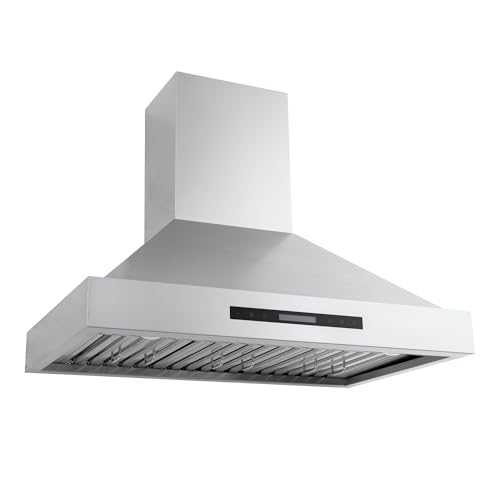
A stainless steel chimney-style hood with a touch control panel, filters and lighting. It is meant to be a focal point above the range and can be set up for ducted or recirculating use.
Suits: statement kitchens. Strengths: a bold look and flexible venting. Weaknesses: a chimney hood needs wall space and a duct run. Skip it if you have a low ceiling or small wall.
View Hauslane Chef Series Wall Mount Range Hood on Amazon

Best for stainless steel kitchens
4. ZLINE Wall Mount Range Hood
ZLINE sells a wide range of stainless steel hoods in different styles and widths. The chimney design offers a professional look with baffle-style filters in many versions.
Suits: stainless steel kitchens. Strengths: a polished look and a broad range of sizes. Weaknesses: model details vary, so match the exact version carefully. Skip it if you want a basic hood with minimal ducting.

Best for small kitchens
5. Broan-NuTone BCDF1 Convertible Range Hood
A slim convertible hood that can vent through a duct or recirculate with a filter. The low profile helps in small kitchens where headroom matters.
Suits: small kitchens. Strengths: a slim shape and a flexible setup. Weaknesses: filters are sold separately if you recirculate. Skip it if you want a bold designer look.
View Broan-NuTone BCDF1 Convertible Range Hood on Amazon
Best for mid-range remodels
6. Winflo Wall Mount Range Hood
A stainless steel wall-mount hood that suits a mid-range remodel. It offers a chimney body, filters and multiple fan speeds for regular cooking.
Suits: mid-range remodels. Strengths: a classic chimney style. Weaknesses: installation takes planning for the duct. Skip it if you want to avoid cutting a vent opening.
View Winflo Wall Mount Range Hood on Amazon
Care and Setup
- Wash baffle or mesh filters with warm, soapy water on a regular schedule.
- Replace charcoal filters on ductless hoods as the maker advises.
- Wipe stainless steel with the grain.
- Run the fan a few minutes before and after cooking.
- Check that the damper flap moves freely and wipe it clean.
Mistakes to Avoid
- Buying a hood that is narrower than the cooktop.
- Ignoring duct size and length when planning a ducted setup.
- Skipping filter cleaning.
- Choosing for looks without checking airflow.
Sizing Airflow to the Way You Cook
Airflow is usually rated in cubic feet per minute, and the right amount depends on what you cook and what is under the hood. A household that mostly boils, simmers and bakes can get by with a modest fan. Someone who sears steaks, stir-fries in a wok or fries often produces far more smoke and grease and benefits from a stronger one. A gas range with high-output burners also calls for more airflow than an electric or induction cooktop of the same width.
A rule of thumb many installers use is to scale airflow to burner output or cooktop size, but the best source is the hood maker’s own sizing guidance and your local building code. Some jurisdictions require make-up air once a hood moves past a certain airflow, because a powerful fan can pull air back down flues or through gaps. If you are considering a high-powered hood, ask your installer or building department whether make-up air is needed.
More airflow is not automatically better. A strong fan is louder, can pull heat from the room in winter, and may be wasted if the hood is too small to capture the plume. Capture matters as much as raw power. A hood that overhangs the cooktop on each side and sits at the recommended height catches more steam than a narrow one with a bigger motor.
- Light cooking and apartments: a modest fan with good capture is usually enough.
- Family cooking: choose several fan speeds so you can run low most of the time.
- Frequent frying, searing or wok cooking: look for higher airflow and ducted venting.
- Check the listing for the airflow rating and the speed at which it was measured.
Treat airflow numbers as a comparison tool between similar hoods, and read the manual for the conditions behind the figure.
Duct Size, Duct Runs and Make-Up Air
A ducted hood is only as good as its duct. The fan can be excellent, but if the duct is too narrow, too long or full of sharp bends, airflow drops and noise rises. The hood’s manual states the duct diameter or dimensions it needs, and the duct should match or exceed it rather than reduce it. Smooth, rigid metal duct performs better than flexible foil duct, which creates turbulence and collects grease.
Every elbow and extra length adds resistance. Try to keep the run short and straight, and many makers publish a maximum equivalent duct length that counts elbows as extra footage. Venting should end at an exterior wall or roof cap with a damper, never into an attic, soffit or crawlspace, since moisture and grease cause damage there. If the route to the outside is difficult, that is the moment to consider a recirculating model instead.
Wall-mount chimney hoods usually vent up through the ceiling or straight out the back, so check which directions your chosen model supports. Under-cabinet hoods may vent out the top, back or sometimes through the front, and some require a transition piece sold separately.
- Measure the distance from the hood to the exterior and count the turns.
- Confirm the duct diameter and whether adapters are included.
- Ask about a roof or wall cap with a backdraft damper.
- Consider make-up air if the hood moves a large volume.
Plan the duct before buying the hood, because the route may decide which models are practical.
Ductless and Convertible Hoods: What to Expect
Ductless hoods pull air through filters and push it back into the room. They are common in apartments, condos and kitchens where a duct to the outside is impractical. Their strengths are simple installation and flexibility. Their limits are clear: they can reduce some grease and odor, but they do not remove heat and moisture the way a ducted hood does, so they suit lighter cooking better than heavy frying.
The key part is the charcoal or carbon filter. It is consumable and must be replaced on the schedule the maker gives, because a saturated filter stops absorbing odors. Many hoods labeled convertible or ductless ship without the recirculating filter, so check the listing and add the right kit to your budget. Make sure the filter you buy matches your hood model, since shapes and sizes vary.
Convertible hoods are designed to be set up either way, often with a diverter or by swapping panels. They make sense if you might move or renovate later. Read the setup steps in the manual so you know what the hood requires in each mode.
- Ductless suits renters, small kitchens and light cooking.
- Ducted suits heavy frying, gas ranges and anyone sensitive to cooking odors.
- Ask how often carbon filters need replacing and what they cost.
- Pair a ductless hood with an open window or a quick airing out after greasy cooking.
Be honest about your cooking habits, because a ductless hood on a heavy-frying kitchen is likely to disappoint.
Noise, Lighting and Controls
A hood you dislike running will not do its job, and noise is the usual reason. Makers sometimes list a sound rating, but the figure depends on test conditions, so use it only to compare similar models. Noise also comes from the duct. A hood with an oversized duct and a gentle bend often sounds quieter than the same unit forced through a narrow, kinked run. Hoods with several speeds let you run a quiet low setting for everyday cooking and save the high one for bursts of smoke.
Lighting is easy to overlook. A hood light should illuminate the whole cooktop without glare. Check the bulb type and whether it is included, whether it is replaceable, and whether it works with the bulbs you can easily buy. Some hoods have separate light controls, which is handy when you want to leave the lights on while the fan is off.
Controls vary from push buttons and sliders to touch panels and remote controls. Push buttons and sliders are usually easy to use with greasy hands and easy to clean. Touch panels look sleek but need wiping often. Look for a timer or delay-off feature if offered, so the fan keeps clearing the air after you leave the stove.
- Choose a hood where the controls are reachable without leaning across hot burners.
- Check how the filter releases, since easy access matters for regular cleaning.
- Consider the hood depth relative to your head height at the stove.
- Make sure the light output suits your cooktop and cabinets.
Comfort in daily use matters more than long feature lists.
Maintenance Schedule and Signs of Trouble
Hoods work well only when they are clean. Grease-laden filters restrict airflow, create a fire hazard and lose capture. Baffle and mesh filters usually come out easily and can be washed in warm, soapy water or, if the maker allows, in the dishwasher. A busy kitchen may need monthly cleaning, while light cooking can stretch it out, but let the filter’s look and feel guide you. Wipe the underside of the hood and the surrounding cabinets with a degreasing cleaner suitable for the finish.
Stainless steel should be wiped with the grain using a soft cloth, and abrasives can scratch it. Check the damper flap in the duct, which should open freely when the fan runs and close when it stops. A stuck damper causes drafts and noise. Outside, make sure the cap is free of nests and lint.
Signs of trouble include a fan that rattles or wobbles, a motor that hums without moving air, noticeably weaker pull, grease dripping from the hood, a persistent burning smell, and lights that flicker or fail. Some are cleaning problems, others point to a worn blower or loose mounting.
- Switch off power at the breaker before any internal cleaning or repair.
- Replace carbon filters on the maker’s schedule.
- Check that the mounting screws and duct connections are tight.
- Call a qualified electrician or the maker if you suspect wiring issues.
Regular cleaning protects the fan, the cabinets and the air in your home.
Ducted or Recirculating: Choosing the Venting Method
How a hood moves air is the first choice, and it depends on your home. The table gives a general view. Always read the maker’s installation instructions for the model you consider.
| Method | What happens to the air | Points to consider |
|---|---|---|
| Ducted | Air is carried outdoors through a duct | Needs a duct path through a wall or roof; usually removes moisture and odor more completely |
| Recirculating (ductless) | Air passes through a filter and returns to the room | Easier to fit where ducting is hard; filters need regular replacement |
| Convertible | Can be set up either way | Ask whether the charcoal filter kit is included or sold separately |
Duct size and shape should match what the maker specifies. A duct that is too small or has many bends can reduce performance and add noise. If a duct run does not exist, a professional can tell you what is possible in your building.
Sizing, Controls and Maintenance
Once the venting method is set, look at the size and features.
Width and mounting height
A hood is usually chosen to be at least as wide as the cooktop beneath it, and many makers suggest a specific mounting height range. Follow the instructions for your hood and for your cooktop, particularly when cooking with gas.
Airflow figures
Listings give airflow in cubic feet per minute. Higher numbers mean more air movement, but also potentially more noise and a need for make-up air in tightly sealed homes. Some local codes address this, so check with your building authority or a licensed installer.
Noise levels
Makers often list noise in sones or decibels. Treat the figure as a guide, and consider how many speeds the hood offers so you can run it lower for light cooking.
Lighting and controls
LED lights are common and help you see the pan. Check whether the bulbs are replaceable, and whether the switches are easy to clean. Touch controls look tidy but can show smears, while buttons and sliders are simple to use with a wet hand.
Filter care
Metal mesh or baffle filters can often be washed according to the manual, and charcoal filters are replaced. Set a reminder for cleaning. Grease buildup is both a nuisance and a maintenance issue, so keep up with it. For wiring, gas appliances nearby or structural work, hire a licensed professional.
A Short Glossary of Range Hood Terms
Hood listings are full of unfamiliar abbreviations. This glossary explains what they generally describe, so you can read specifications with confidence.
| Term | Plain meaning |
|---|---|
| CFM | Cubic feet per minute, a measure of how much air the fan can move |
| Sone | A unit used to describe how loud the fan sounds. Lower numbers are quieter |
| Baffle filter | A metal grease filter made of layered channels, usually washable |
| Mesh filter | A metal grease filter made of layered screens, also usually washable |
| Convertible | A hood that can be installed ducted or recirculating |
| Makeup air | Fresh air brought into the home to replace air the hood sends outside |
Cleaning Routine for Hood Filters
A greasy filter reduces performance and can look unpleasant. Follow the maker’s instructions for how often to clean, and for which cleaning methods are safe for the finish.
- Switch the hood off and let the lights and fan cool.
- Remove the filters as shown in the manual.
- Soak in hot water with dish detergent, or wash as the maker advises.
- Rinse and let them dry completely before refitting.
- Wipe the underside and the exterior with a non-abrasive cleaner suited to the finish.
Noise and Performance Tips
- Turn the fan on before you begin cooking and let it run a few minutes after.
- Use the back burners when you can, since they sit closer to the hood’s capture zone.
- Replace charcoal filters on recirculating models at the intervals the maker gives.
Keep the manual handy for the exact filter cleaning interval, and set a reminder on your phone so the task does not slip.
What a Hood Is Really For: More Than Steam
It is tempting to think of a range hood as a steam remover, switched on when a pot boils over. Its real job is broader. Cooking releases grease particles, moisture, odors and, from gas burners, combustion by-products, all of which drift upward and settle on cabinets, walls and ceilings if nothing captures them. Over months, that fallout becomes the sticky film on cabinet tops and the lingering smell in soft furnishings that no amount of surface cleaning quite removes. A hood that captures at the source prevents the problem rather than chasing it.
Moisture deserves its own mention. A kitchen that regularly boils pasta, simmers stocks and runs a dishwasher produces a great deal of water vapor, and in a modern, well-sealed home that vapor condenses on the coldest surfaces it can find, which is how kitchens contribute to damp and mold elsewhere in the house. Venting moisture outside at the moment it is made is one of the simplest protections a home has, and the hood over the stove is where most of it can be caught.
Grease is the other quiet enemy. Aerosolized cooking oil coats everything near the stove, degrades painted surfaces, and builds up inside the hood itself and its ducting if it is not filtered. That is why filters exist, why they need cleaning, and why a hood’s capture area, the size and shape of the canopy over the burners, matters as much as its fan strength. A hood that covers the front burners properly catches what a smaller, prettier hood lets escape past its edges.
Understanding this changes how you shop. The questions become: does it cover my cooktop, does it move air at a rate matched to my cooking, does it send that air outside or recirculate it through filters, and can I live with its noise at the speed I will actually use? The picks in this guide answer those questions in different combinations for different kitchens.
Ducted, Ductless and Convertible: The Decision That Comes First
Before style, before finish, decide where the air goes. A ducted hood vents outside through ductwork, carrying heat, moisture, grease and odors out of the house entirely. It is the most effective arrangement and the one to choose whenever the building allows it. An under-cabinet hood in a house with an existing duct, or a wall-mount hood on an exterior wall, makes ducting straightforward; an island or an internal wall makes it harder, but rarely impossible for a determined installer.
A ductless, or recirculating, hood filters the air and returns it to the room. Grease is caught by the metal filter and odors are reduced by a charcoal filter, but heat and moisture stay in the kitchen. It is the fallback for apartments and layouts where ducting genuinely cannot run, and it is far better than no hood at all, provided the charcoal filters are replaced on schedule, because a saturated charcoal filter does almost nothing for odor.
Convertible hoods, like the Broan-NuTone convertible pick in this guide, can be installed either way, which makes them the flexible choice for renters with ambitions, phased renovations, or anyone unsure what the wall will allow until it is opened. Buying convertible keeps both futures open, and many owners install ductless now and convert to ducted when the kitchen is next remodeled.
Whichever route you take, the duct itself matters on a ducted install: the shortest, straightest run in smooth, correctly sized ducting preserves the airflow the maker promises, while long runs, sharp bends and undersized or flexible duct eat into it. When you read airflow figures on a listing, read them as the hood’s capability, with the installed result depending on the duct run the installer gives it.
The Picks Above, Compared in Plain Terms
The list divides by mounting. The Broan-NuTone 41000 Series and the Cosmo 5MU30 are under-cabinet hoods, made to sit beneath existing cabinetry over the stove, the most common replacement scenario in an established kitchen. The Broan name carries decades of ventilation specialization, and the 41000 is the straightforward, proven shape of that idea. The Cosmo covers the same brief with a more contemporary look, for kitchens where the hood is visible and should match modern appliances.
The Hauslane Chef Series, the ZLINE and the Winflo are wall-mount canopy hoods, the chimney style that suits stoves on an open wall without cabinets above, and kitchens being designed around a statement hood. Hauslane’s Chef Series pitches itself at serious home cooking, ZLINE is known for its finished, appliance-grade look across a range of styles, and Winflo covers the same wall-mount brief at the accessible end. The Broan-NuTone BCDF1, the convertible pick, sits in the under-cabinet world with the installation flexibility described above.
Choosing between the groups is mostly about your wall. Cabinets above the stove that are staying: under-cabinet. A remodel that frees the wall, or a stove against an open wall already: wall-mount canopy, sized to cover the cooktop with margin. Uncertain ducting or a phased project: convertible. Within each group, the comparison moves to airflow, speeds, lighting and noise, all of which the listings state and all of which should be confirmed there.
Finish and controls finish the comparison. Stainless dominates this category because it survives the environment and matches most appliances, but the real daily questions are whether the controls are reachable and legible from in front of a hot pan, whether the lights actually illuminate the cooktop, and whether the filters come out easily for washing. A hood whose filters fight you gets cleaned less, and a hood cleaned less performs worse every month.
Airflow, Noise and the Speed You Will Actually Use
Airflow figures are stated by makers in cubic feet per minute, and the honest way to use them is comparatively: more airflow captures more, at the cost of more noise and more demand on the ducting. What your cooking needs depends on its intensity. Gentle simmering and occasional frying ask little; regular searing, wok cooking and griddling ask a great deal, because they produce smoke and grease at a rate a weak hood visibly fails to catch.
Noise is the factor that decides real-world use. A hood that roars on its top speed will be run on its lowest speed or not at all, and a hood run low captures less than its headline figure suggests. This is why multiple speeds matter, and why the middle speed of a strong hood is often the sweet spot: enough capture for everyday cooking at a volume you can talk over. When comparing listings, look for noise figures alongside airflow, and be skeptical of any hood that promises the highest airflow with no mention of sound.
Make-up air is the advanced point that heavy cooking raises. A powerful hood exhausting a great deal of air from a tightly sealed modern home can depressurize it, which affects fireplaces and gas appliances; building codes in many places address this for the largest hoods. Most domestic installations sit well below that territory, but if you are planning a high-output hood in a new, airtight home, it is a question for your installer, not an afterthought.
The practical advice is simple. Buy enough airflow for your most serious regular cooking, not your gentlest; check the noise at the speeds you will live with; and give the hood a duct run that lets it deliver what you paid for.
Installation Realities Worth Knowing Before You Order
A hood is one of the few kitchen purchases that is partly a building project. Mounting height matters to both safety and capture: too low and it crowds the cook and the pans; too high and the rising plume of steam and grease spreads beyond the canopy before it arrives. Makers state a recommended height range for each model, and the listing and manual for your pick are the authority for your install.
Width is the other hard number. A hood at least as wide as the cooktop is the baseline, and wider is better where the space allows, because capture improves with coverage, especially over the front burners where most escaping happens. Depth matters the same way: a canopy that reaches over the front burners catches what a shallow one misses.
Electrical and structural points are mundane but decisive. Most hoods need a nearby power supply, some plug in and some are hardwired, and wall-mount canopies need solid fixing into studs or suitable anchors, since a chimney hood is not a light object to hang on plasterboard alone. Under-cabinet models need the cabinet base to be sound and level. None of this is difficult for a competent installer or a confident DIYer with the manual, but all of it is easier to plan before the box arrives than after.
If you are replacing an existing hood, measure the old one’s width, the duct position and size, and the cabinet or wall space before you shop. Replacement is where under-cabinet and convertible models shine, because they are designed around the standard spaces the old hood leaves behind.
Living With the Hood: Habits That Make It Work
The best hood in this guide underperforms in a kitchen with poor habits, and an ordinary one shines with good ones. Switch the hood on a minute before the heat, so the airflow is established before the first steam rises. Keep it running for some minutes after cooking ends, because the room’s air holds moisture and odor that the hood can still clear, and most of the benefit of a quiet low speed is in that patient tail.
Cook on the back burners when you can, especially for the smokiest jobs, since the canopy covers them best. Use lids on boiling pots, which cuts the steam load at the source. Wipe the canopy’s underside and edges in the weekly clean, because that is where the grease that escaped the filters collects, and a clean underside drips nothing back onto the stove.
Teach the household the hood as part of cooking, not an optional extra for dramatic moments. A hood used every time, at a sensible speed, with clean filters, keeps a kitchen fresher than a powerful hood used only for fish and fry-ups. That is the unglamorous truth of this category, and it is good news: the largest gains are free.
Grease, Fire Safety and the Honest Maintenance Case
A hood and its filters sit directly above open flame and hot oil, which makes their maintenance a safety matter as well as a performance one. Grease that builds up in a filter, a canopy or a duct is fuel in exactly the wrong place. The domestic risk is modest in a kitchen that cleans its filters, and grows in one that never does, which is why the cleaning routine described in this guide is not cosmetic advice.
The routine itself is undemanding. Metal filters wash in hot soapy water or the dishwasher; the canopy wipes down with the rest of the stove area; a ducted system’s exterior vent should be checked now and then to confirm the flap moves and no nest or blockage has taken up residence. Charcoal filters in recirculating hoods get replaced rather than washed, on the maker’s schedule.
There is a performance dividend as well as a safety one. A clogged filter can cut a hood’s effective airflow dramatically, so the cook who cleans filters monthly is cooking with the hood they paid for, while the cook who never does is cooking with a fraction of it and blaming the fan. When a hood seems to weaken over its first year, dirty filters are the first suspect, ahead of any mechanical fault.
Treat the hood like the stove it serves: a working appliance that handles grease and heat daily, kept clean as part of cooking rather than as a special project. Do that, and any pick in this guide will do its job quietly for years.
Kitchen Ventilation Hood FAQ
Should I choose a ducted or ductless hood?
Ducted hoods send air outside and work better for heavy cooking, because smoke and grease leave the house. Ductless hoods recirculate air through filters, so they suit apartments and other spaces where ducting is not possible.
How wide should the hood be?
It should be at least as wide as the cooktop, and a little wider catches more steam. Check the listing for exact dimensions and the mounting height the maker recommends above the burners.
Do hoods need professional installation?
Many do, particularly for ducted setups and wall-mount styles. Follow the maker’s instructions and local rules.
How high should a hood be mounted above the cooktop?
The maker gives a recommended range, so follow the installation manual. Too high and it captures less, too low and it can be a safety or comfort problem. Check the range manufacturer's clearance rules as well.
Is a wider hood better than one matching the cooktop?
A hood slightly wider than the cooktop captures steam more effectively, especially at the edges. It still needs to fit the available cabinet or wall space, so measure carefully.
Can I vent a hood into the attic?
No, hoods should vent to the outdoors, because moisture and grease inside an attic or wall cause damage. Follow local code and the maker's instructions.
How often should I clean the filters?
It depends on how much you fry and sear. Check them monthly at first and clean when you see a greasy film. Replace charcoal filters on the maker's schedule rather than washing them.
Do induction cooktops need a hood?
They still make steam, odors and grease, so a hood remains useful. Induction produces less radiant heat, which may mean you can use a more modest fan.
What does make-up air mean?
It is outside air supplied to replace the air a powerful hood removes. Some areas require it above a certain airflow, so ask your installer or building department.
Why is my new hood so loud?
Duct problems such as a narrow run, kinks or a stuck damper are common causes. Running a lower speed also helps, and the manual may list troubleshooting steps.
How often do hood filters need cleaning or replacing?
Metal grease filters should be washed regularly, monthly in a busy kitchen is a sensible rhythm, and many can go in the dishwasher; a filter clogged with grease restricts airflow and becomes a hygiene and fire concern. Charcoal filters in a recirculating setup cannot be washed back to life and need replacing on the maker’s schedule. Confirm the filter type and care for your model on its listing, and treat filter care as part of the hood’s performance, not an optional extra.
Can I install a wall-mount hood where cabinets used to be?
Yes, and it is a common remodel move: removing the cabinets above the stove and fitting a canopy hood opens the cooking area and improves capture. The work involves making good the wall, confirming the fixing strength, and arranging the duct and power in the freed space. Plan it as a small project with the hood’s manual in hand, and measure the chimney’s reach against your ceiling height before ordering.
Why does my kitchen still smell of cooking with the hood on?
Usually one of four things: the hood is too small or too high to capture the plume, the speed is too low for the cooking, the grease or charcoal filters are saturated, or, on a ducted install, the duct run is restricting the flow. Work through them in that order. Also check that the hood is switched on before the pan gets hot, because a hood started late is chasing smoke that has already escaped into the room.
Do I need a hood if I mostly cook gently?
You need ventilation for moisture and odor even in gentle cooking, but a modest hood run at low speed covers it comfortably, and quietness then matters more than maximum airflow. Gentle cooks are the natural audience for under-cabinet and convertible models used at their calm settings. The cooks who must prioritize power are the searers, fryers and wok users.
What lighting should a hood have?
Light that actually falls on the cooktop, bright enough to judge the color of what is cooking, from bulbs or fittings that tolerate heat and are easy to replace or are long-lived. Hood lighting often becomes the kitchen’s most-used task light, since it is aimed exactly where hands and knives work. Check what the listing says about the lights in any model you are comparing, and where they sit in the canopy.
Is a hood worth it in a rental kitchen?
A recirculating under-cabinet or convertible hood is often the practical rental answer, improving daily cooking without building work, subject to your landlord’s agreement. Even a modest hood changes the grease fallout on cabinets and the moisture in the room, which protects the property as well as your cooking. Keep the original fittings and the paperwork if you install one, and agree the change in writing first.
What size hood do I need for an island cooktop?
Island cooking is the hardest capture job, because there is no wall to contain the plume and cross-drafts from the room push it around. Island hoods are generally wider than the cooktop and mounted with particular care to height. None of the picks in this guide is an island model, so treat this list as your wall and cabinet guide, and shop a dedicated island range if your stove sits in an island.
Can a hood be too powerful for a small kitchen?
It can be noisier and more disruptive than the cooking justifies, and in a very small, sealed space a large hood on full speed is overkill that will simply be run low. Small kitchens are usually best served by a right-sized hood with a genuinely quiet low speed, which is a specification worth hunting for on the listing rather than maximum airflow.
Does a hood help with gas stove fumes specifically?
A ducted hood is the effective answer, because it removes combustion by-products from the room entirely rather than filtering and returning the air. A recirculating hood helps with grease and some odor but does not remove gases or moisture. Households cooking on gas, especially for long sessions, have the strongest case for ducting outside, and should weigh that heavily in the ducted-versus-ductless decision.
When should a hood be replaced rather than repaired?
When the motor or controls fail on an older unit, when the canopy is damaged or corroded, or when a kitchen remodel changes the stove’s size or position so the old hood no longer covers it. Hoods are also commonly replaced for noise alone, and that is a legitimate reason: a hood quiet enough to use captures more in a month than a powerful one left off. Measure the space and duct before shopping, as the installation section advises.
Can I run the hood with the windows closed in winter?
Yes, that is rather the point of ducted ventilation: it removes the cooking plume at the source, so the room does not need a window opened to clear it. In a very airtight home with a powerful hood, your installer may discuss make-up air, but for ordinary domestic hoods, cooking with the windows shut is normal and the hood handles the steam and odor on its own.
What is the single most useful measurement before buying?
The width of your cooktop, followed by the space the hood must fit: cabinet width for an under-cabinet model, ceiling height for a chimney model. A hood that covers the cooking surface with a little margin captures noticeably better than one that matches it exactly or falls short, and every other specification is secondary to that fit.
Do higher speeds wear a hood out faster?
Running at high speed for the cooking that needs it is normal use, and a well-made hood is built for it. What shortens a hood’s useful life is neglected filters forcing the motor to work against clogged airflow, and grease left to bake onto every surface. Use the speed the cooking asks for, keep the filters clean, and the hood will not mind.
Should the hood match the stove brand?
It does not need to. Ventilation is its own specialty, which is why dedicated ventilation makers feature in this guide alongside appliance brands. Match the finish if looks matter, match the width and the duct because function demands it, and let the brands fall where they may.
One last check before the installer leaves?
Boil a kettle under the hood and watch the steam: it should be drawn up cleanly rather than spilling past the canopy edges. That ten-second test confirms capture, duct and fan in one look, while the person who fitted it is still in the room.
The Short Version
For a budget-friendly under-cabinet hood, the Broan-NuTone 41000. For stainless looks, the Cosmo 5MU30. For a focal point, the Hauslane Chef Series. For range choice, the ZLINE. For small kitchens, the Broan BCDF1. For a mid-range chimney, the Winflo.
Related Guides
- 6 Best Range Hoods: Under Cabinet, Wall Mount and Insert (2026)
- 6 Best Kitchen Hoods: Wall Mount and Under-Cabinet (2026)
- 6 Best Kitchen Extractor Hoods: Wall and Under-Cabinet (2026)
- 6 Best Kitchen Hood Vents: Under-Cabinet and Wall Mount (2026)
- 6 Best Mailboxes: Wall Mount and Post Mount Styles (2026)