Cooking outdoors puts knives through rougher treatment than a home kitchen does. You need blades that come with sheaths, resist rust and fit a camp box or pack. The best knife sets for outdoor cooking are compact, easy to clean and safe to carry between the car and the campsite.
The six picks below mix kitchen knife kits with simple folding and fixed-blade knives. We have not used these products ourselves, and details such as blade length, steel type and what comes in each kit should be confirmed on the current listing before buying. Treat each description as a starting point, not a verified spec sheet.
As an Amazon Associate we earn from qualifying purchases. Links below are affiliate links, and they do not change the product information we give.
What to Look For
| Feature | Why it matters |
|---|---|
| Sheaths | Covers protect the blades and your hands in a camp box |
| Rust resistance | Stainless steel copes better with damp air and campfire cleaning |
| Compact size | Short blades pack easily and suit camp meal prep |
| Grip | A secure handle matters when your hands are cold or wet |
In this guide
Specs at a Glance
| Kit | Style | Material | Notes |
|---|---|---|---|
| Cuisinart Advantage Color Knife Set | Kitchen set with sheaths | Stainless steel | Color-coded sheaths |
| Victorinox Swiss Classic Paring Knife Set | Paring knives | Stainless steel, polymer handles | Light and compact |
| Kuhn Rikon Colori Knife Set | Knives with sheaths | Stainless steel with coating | Colorful sheaths |
| Mora Companion | Fixed-blade knife | Stainless steel, rubber handle | Sheath included, per the maker |
| Opinel No. 8 Stainless | Folding knife | Stainless steel, wood handle | Locking collar |
| Morakniv Kansbol | Fixed-blade knife | Stainless steel, rubber handle | Sheath included, per the maker |
The 6 Best Knife Sets for Outdoor Cooking
Top pickBest for camp kitchens and RVs
1. Cuisinart Advantage Color Knife Set
A multi-knife set where each knife comes with a matching cover. The blades slide safely into a camp box without needing a block.
Suits: camp kitchens and RVs. Strengths: sheaths for every blade. Weaknesses: not a heavy-duty outdoor knife. Skip it if you need a big chopper.
View Cuisinart Advantage Color Knife Set on Amazon
Best for small camp prep
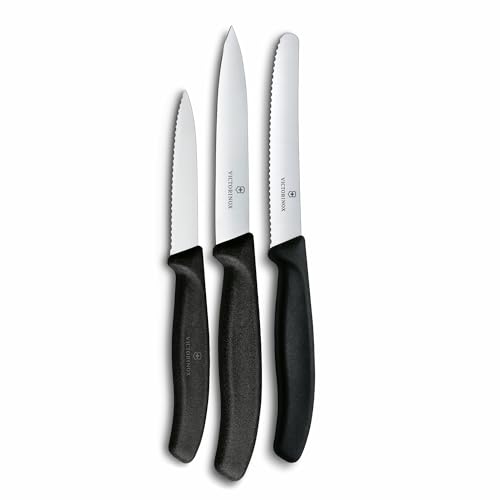
2. Victorinox Swiss Classic Paring Knife Set
A set of small stainless paring knives with polymer handles. They are light and take up little room in a camp box.
Suits: small camp prep. Strengths: low weight and an easy clean. Weaknesses: short blades only. Skip it if you chop large vegetables.


Best for campers who love bright gear
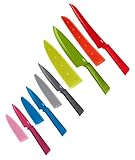
3. Kuhn Rikon Colori Knife Set
A set of knives with colorful blade coatings and matching sheaths. They pack safely and are easy to spot in a gear bag.
Suits: campers who love bright gear. Strengths: sheaths and a nonstick coating. Weaknesses: the coating can wear. Skip it if you prefer plain steel.

Best for camp food prep and chores
4. Mora Companion
A well-regarded fixed-blade utility knife with a sheath and rubberized handle. Many campers use it for food prep and general chores.
Suits: camp food prep and chores. Strengths: a secure grip and a simple design. Weaknesses: not a thin slicer. Skip it if you want a kitchen-style knife.

Best for light campers
5. Opinel No. 8 Stainless
A French folding knife with a wooden handle and a locking collar. It folds small enough for a pocket or a camp box.
Suits: light campers. Strengths: a compact folding design. Weaknesses: a folding knife needs care. Skip it if you want a fixed blade.
View Opinel No. 8 Stainless on Amazon

Best for campers needing one tough knife
6. Morakniv Kansbol
A fixed-blade knife with a stainless blade and a sheath. A sturdy general camp knife that also handles food prep.
Suits: campers needing one tough knife. Strengths: a sturdy fixed blade. Weaknesses: not a precision slicer. Skip it if you want a kitchen-style set.

Care and Setup
- Dry knives fully after washing in camp.
- Wipe the blades with a little food-safe oil if you store them long.
- Keep each knife in its sheath when packing.
- Check folding knives for debris in the joint.
- Rinse sand and ash off blades before the next cut.
Mistakes to Avoid
- Using a prep knife to pry or split wood.
- Leaving blades wet in a damp box.
- Cutting on rocks or a metal tailgate.
- Packing knives loose in a bag.
- Using the blade as a hammer or wedge.
Fixed, Folding and Kitchen-Style Blades for Camp
Camp cooking asks for different blades than a home kitchen, and three broad designs cover most needs. Kitchen-style knives with sheaths, such as chef, paring and utility shapes, behave like the ones you use at home. They slice vegetables and meat cleanly and are comfortable for long prep, but they are slim and not meant for rough chores. Keep them for food only.
Fixed-blade utility knives have a single piece of steel running into the handle, with no joint to trap food or fail. They are strong and simple to clean, and the sheath keeps the edge covered. They suit campers who want one knife for food prep and general camp tasks, though they do not replace a longer chef knife for chopping a big pile of onions.
Folding knives shrink to pocket size, which is handy for hiking and light packing. The pivot and the lock need attention, because food, sand and ash collect in the joint. Look at how the knife locks, and make sure you can open and close it with one hand and without risk of the blade closing on your fingers.
- Car camping with a cook box: kitchen-style knives with sheaths.
- Backpacking: a single fixed-blade or folding knife.
- Group meals: a chef-style knife plus a paring knife.
Choose the number of blades by how many people cook at once.
Choosing Steel for Damp and Dirty Conditions
Outdoor conditions test steel. Dew, rain, river water and fruit juices all invite rust, and campfire cooking adds salt, ash and smoke residue. Stainless steel resists corrosion and is forgiving if you forget to dry a blade. It is the common pick for camp kits, and is easy to keep in good condition with a quick wipe.
Carbon steel can take a very keen edge and is easy to sharpen, but it will rust if left damp and can darken with acidic foods. If you choose it, commit to drying and oiling the blade after each use. Many campers find that extra care a hassle in camp, and prefer stainless.
Coatings on blades can add some protection and reduce sticking, but they wear where the knife is used and sharpened. A coating can also scratch, and once it breaks, the steel underneath is exposed. Look at the listing for what the coating is intended to do.
Questions worth asking:
- Is the steel described as stainless, and does the listing give more detail?
- Does the blade have a coating, and how should it be cleaned?
- How easily will you be able to sharpen it in the field?
Whichever you choose, wipe the blade dry with a cloth and keep it out of damp sheaths overnight.
Sheaths, Handles and Grip in the Field
A sheath is not an accessory in camp; it is part of the knife. A good sheath fully covers the edge, holds the knife firmly enough that it will not fall out when the box is jostled, and does not trap moisture. Hard plastic sheaths wipe clean and hold their shape. Soft fabric sleeves are light but can wear through at the tip. Leather looks good but can hold water, so dry it fully.
Check how the knife retains in the sheath. Friction fits, snaps and straps all work, but a loose fit can let the blade slip out. If the sheath has a belt loop, make sure it suits your belt, and think about whether you want a hip carry in camp or just storage in a box.
Handles matter when your hands are wet, cold or greasy. Rubberized and textured polymer handles stay grippy and do not swell or crack when wet. Wooden handles are comfortable and attractive, but they can swell and split if soaked repeatedly, so wipe them down and avoid leaving them in water. Gloves in cold weather change how a handle feels; consider a handle with enough room for your fingers.
- Choose a handle with a guard or lip that stops your hand sliding forward.
- Check there are no hot spots where the handle meets the blade.
- Keep handles away from fire, since many materials soften or burn.
Camp Kitchen Safety and Food Handling
Camp kitchens have uneven surfaces, poor lighting and distractions. Set up a stable prep area before you pick up a knife: a flat table or a cutting board placed on a damp cloth, away from the fire and from walkways. Avoid cutting on your lap, on a rock or on a vehicle tailgate, which can dull the blade and slip. A portable cutting board that fits your box is a worthwhile addition.
Light matters. Use a headlamp or lantern so you can see your fingers and the blade. Keep children and pets away from the prep zone, and pass knives handle first, or set them down for someone else to pick up.
Food safety also deserves attention. Raw meat should be cut on a separate board or at least cleaned thoroughly before other foods touch it, and the knife washed with hot soapy water before it is used on ready-to-eat items. Without running water, bring a wash basin, biodegradable soap and a way to heat water. Keep raw meat cold in a cooler until you cook it, and follow regional guidance about safe food temperatures.
- Return each knife to its sheath when you stop using it.
- Never leave a knife on a picnic table where someone might sit or reach.
- Do not use a prep knife to split kindling or pry cans.
Pack a basic first aid kit and know where it is before cooking begins.
Packing, Sharpening and Cleaning Away From Home
Pack knives so that they cannot move. Each should be in its sheath, then placed in a rigid container or wrapped in a roll, so tips cannot poke through fabric. Keep the knife box dry and away from the cooler, where condensation can collect. Label or color-code if you carry more than one, so that nobody uses the paring knife on a chore it is not built for.
Sharpness is a safety issue outdoors, since you may be working with rough conditions and can’t afford to slip. Before a trip, check the edge on each knife, and sharpen at home if needed. A small pocket sharpener or a honing rod can serve for touch-ups in camp; follow the angle that suits your knife, and use light pressure. Do not try to repair a chipped edge in the field.
Cleaning in camp follows a simple routine. Rinse off sand and ash first, since grit scratches the blade. Wash with warm soapy water, rinse and dry completely. For folding knives, open the blade fully and clear the joint with a cloth or small brush. If you store knives for the off-season, wipe them with a thin coat of food-safe oil on carbon steel, and keep them in a dry spot.
Signs of trouble include a loose handle, a wobbly blade, rust spots that return after cleaning and a sheath that no longer holds. Replace worn parts before your next trip.
A Packing Checklist for the Camp Kitchen Knife Roll
Choosing a set is only half the job. Packing it well keeps blades sharp, hands safe and the kitchen organized once you arrive. Use this list before every trip.
- Confirm every blade is clean and fully dry before it goes into a sheath or roll.
- Check that each sheath or guard fits snugly and does not slip off in transit.
- Pack a small cutting board that fits in your cooler lid or a flat shelf in the vehicle.
- Bring a basic sharpener or honing tool suited to the blades you own.
- Add a cloth and a small bottle of dish soap for washing at camp.
- Keep knives separate from tools such as hatchets and shovels so blades do not knock together.
This routine takes only a few minutes at home and prevents the usual frustrations: a dull blade, a rusty spot or a sheath that lets a tip poke through the bag.
Knife Jobs at Camp and the Blades That Handle Them
| Camp task | Blade type that suits it | Notes |
|---|---|---|
| Slicing onions and vegetables | Medium chef or utility blade | Needs a stable board |
| Peeling and trimming | Small paring knife | Good control for fine work |
| Cutting rope, kindling shavings | Sturdy fixed blade | Keep separate from food knives |
| Spreading and light cutting | Folding blade | Easy to carry in a pocket |
| Carving cooked meat | Longer slicing blade | Needs a clean surface |
Many campers use one sturdy blade for food and a second for chores. Mixing the two jobs can leave a food knife dull or dirty, so keep them apart if you can.
Reading a Camp Knife Listing
Pay attention to blade length, handle material and what comes with the blade. A listing may mention a sheath, a blade guard or a roll, and each one affects how safely the knife travels. Photos of the handle help you judge grip, especially if you will be wearing gloves or working with wet hands.
Look for care notes from the maker. Some steels need to be dried right away and oiled lightly, while others tolerate more moisture. If a listing is silent on this point, plan to dry every blade by hand after use and avoid soaking. Dishwasher use is rarely suitable for fine edges, so follow the maker’s advice.
Handling and Hygiene in the Outdoors
Always cut away from your body on a stable surface, and keep your free hand clear of the blade’s path. Pass a knife handle first, and never leave a loose blade on a picnic table where a child could reach it. Store knives in a sheath or roll whenever they are not in use.
For food handling, wash hands and boards with safe water, keep raw and ready-to-eat foods apart, and follow official food safety guidance for temperatures and cooler storage. Local fire rules and park regulations may also affect which tools you can carry and use, so check them before you go.
Care Between Trips and When to Replace a Blade
After a trip, wash each knife by hand, dry it fully and check the edge. Look for small spots of discoloration on the steel, which are easiest to remove early with a gentle non-abrasive method suggested by the maker. A light coat of food-safe oil on carbon steel can help during storage, and handles made of wood benefit from occasional care as well.
Store knives in a dry place rather than in a sealed sheath for long periods, since trapped moisture can cause trouble. If a blade chips, bends or loosens at the handle, stop using it for food and consult the maker’s guidance about repair or replacement.
A good habit is to hone and sharpen before the season rather than at camp, where light and space are limited. A sharp knife is easier to control, and that alone makes camp cooking safer and more enjoyable.
A Week of Cooking With a Set Like This
Specifications only tell part of the story. The clearest way to judge any of the sets above is to picture them working through an ordinary week of campfire breakfasts, grilled vegetables, foil-packet dinners, fruit and cheese boards and shore-lunch fish. On Monday the chef’s knife does the heavy lifting: onions, carrots and peppers for a quick pan dinner, where a blade that rocks or glides smoothly without sticking makes the job noticeably calmer. By midweek the utility and paring knives take over for smaller jobs — trimming green beans, slicing garlic, cutting sandwiches and opening packaging — and this is where campers and outdoor cooks who prep food at picnic tables, tailgates and camp kitchens where conditions are rougher than at home start to notice whether the smaller handles are genuinely comfortable or merely adequate.
Weekend cooking tests a set differently. A roast or a big batch of soup means longer sessions at a compact camp board or a clean flat surface that keeps blades out of the dirt, and fatigue shows up in the wrist and fingers if the balance is off. The bread knife earns its place on crusty loaves, the shears handle herbs, twine and spatchcocking, and the steak knives come out when dinner moves to the table. A set that handles all of that without you wishing for a different knife is doing its job, whatever the piece count says on the box.
Matching the Set to Your Actual Menu
Before choosing between the picks, list the five meals you cook most often and walk through which knives each one needs. Households that mostly make salads, stir-fries and grain bowls live on the chef’s knife and paring knife, so edge quality on those two matters far more than extra specialty pieces. Households that bake bread weekly, host roasts or break down whole chickens should weight the bread knife, boning flexibility and shears more heavily. This simple exercise explains why two shoppers can look at the same six sets and reasonably choose different winners.
It also protects you from paying for the wrong strengths. A set padded with pieces you will rarely touch is not better value than a leaner set whose core knives suit your menu, and several of the options above — from the compact end of the list to the largest blocks — exist precisely because kitchens differ. Buy for the cooking you actually do, then let the set grow only if your menu does.
Technique Habits That Make Any Set Perform Better
Good technique flatters even a modest set, and poor technique makes an expensive one feel disappointing. Start with the grip: pinch the blade just in front of the handle with thumb and forefinger, then wrap the remaining fingers around the handle. That pinch grip gives control, keeps the wrist aligned and reduces the death-grip tension that tires hands during long prep. Your guiding hand should use the claw shape, fingertips curled under, knuckles forward, so the flat of the blade can ride against the knuckles safely.
Let the edge do the work. A sharp knife should move through an onion with gentle forward-and-down motion rather than downward force, and a tomato should slice under its own light pressure instead of being crushed until the skin gives. If you find yourself pushing hard, the answer is almost never a stronger arm — it is honing, sharpening or slowing down. Working on a compact camp board or a clean flat surface that keeps blades out of the dirt with a stable, non-slip base also matters more than most people expect: a board that creeps across the counter makes every cut less accurate and less safe.
Knife Skills Worth Practising First
Three skills repay practice quickly. The first is the rock chop for herbs and nuts, keeping the tip on the board and moving the heel in an arc. The second is uniform slicing — carrots, cucumbers and potatoes cut to even thickness cook evenly and look better, and consistency comes from watching the guiding knuckles, not the blade. The third is breaking down produce cleanly: halving, quartering and coring peppers, onions and apples with a plan instead of improvised hacks. Spend ten minutes on one skill a week and the set you already own will start to feel like an upgrade.
Finally, slow down at the end of a cut. Most home accidents happen on the last slice of an onion or the final pass through a bagel, when attention drifts. Finishing each task deliberately, then moving the knife to a safe resting place — flat on the board, edge facing away, never hidden under a towel or in a sink of soapy water — is the habit that keeps good knives and good fingers intact for years.
Comparing the Picks in Daily Use
Readers often ask how the six picks differ once the spec tables are set aside, so it helps to think of them as personalities rather than rankings. The Cuisinart Advantage Color Knife Set represents the dependable end of this group: the set most shoppers picture when they imagine a straightforward upgrade, with the core knives covered and few surprises. The Victorinox Swiss Classic Paring Knife Set leans toward buyers who want a fuller block and more pieces in play for varied cooking, while the Kuhn Rikon Colori Knife Set appeals to shoppers who weigh design and hand feel heavily alongside cutting performance.
The Mora Companion suits households that want recognisable, easy-going everyday tools and simple upkeep, and the Opinel No. 8 Stainless is the pick to study if you prefer a more focused line-up where the essential knives get the attention. The Morakniv Kansbol rounds out the list for buyers who want maximum coverage in one purchase, including table knives and extras that larger households genuinely use. None of these positions is a flaw; they are answers to different questions about budget, counter space and how many people the kitchen serves.
How to Run Your Own Tie-Break
If you are stuck between two finalists, run a tie-break on the work you do most. Imagine prepping your most common meal with each set: which block layout puts the chef’s knife where your hand expects it, which handle shape suits your grip, and which storage format — here, sheaths, guards and a roll or case that keeps every blade covered in transit — fits the counter you actually have. Then check the unglamorous details: whether the set’s care instructions match the effort you will honestly give, and whether replacement or add-on knives in the same line are easy to find later.
Weight the chef’s knife above everything else in that decision. It will do the large majority of your cutting, so a small preference there outweighs a longer list of extras. The paring knife comes second for most cooks, followed by the bread knife if you buy unsliced loaves. Steak knives, shears and specialty pieces are pleasant bonuses, and they should break a tie only after the core knives have been judged.
Cleaning, Drying and Storage in Detail
More knives are ruined by washing and storage than by cooking. The routine that protects any set in this guide is simple: wash by hand in warm soapy water as soon as you finish, dry immediately with a towel, and put the knife straight back into sheaths, guards and a roll or case that keeps every blade covered in transit. Dishwashers attack edges with heat, detergent and rattling contact against racks and other utensils, and they are hard on handles too, so the few minutes of hand washing is the cheapest insurance a set can have.
Storage deserves the same care. Loose knives in a drawer dull each other and are a hazard to reaching hands. A block’s slots should be kept clean — crumbs and moisture collect inside — so turn the block over and shake it out regularly, and wipe slots with a thin cloth or bottle brush if your block design allows. Magnetic strips keep edges visible and off the counter but should be mounted where children cannot reach, and knives should be placed and removed with a rolling motion rather than dragged sideways across the magnet.
Boards, Counters and the Small Details
Your board choice quietly decides how long edges last. Wood and quality plastic boards are kind to edges; glass, stone and ceramic boards are not, and cutting directly on countertops or plates will undo fresh sharpening in a single meal. End-grain wood is the gentlest option for keen edges, while dishwasher-safe plastic boards are practical for raw meat because they can be sanitised thoroughly. Many cooks keep both: wood for produce and bread, plastic for proteins.
Also mind the journey between board and storage. Scraping chopped food off the board with the edge of the blade drags the edge across the surface; use the spine of the knife or a bench scraper instead. Never toss a knife into a sink of water where someone may reach in blindly, and never leave a blade balanced at a counter edge. These small habits, repeated daily, are what separate a set that still delights after years from one that feels tired within months.
Troubleshooting: When a Set Disappoints
When a new set feels underwhelming, the cause is usually fixable. If knives crush tomatoes or skid on onion skin, the edges need attention first — a few passes on a honing rod realigns a folded edge, and if that does not restore the bite, the knife needs actual sharpening rather than more force. If food sticks to the blade during slicing, a slight change of angle and a taller, more confident stroke helps, as does cutting with the full length of the edge instead of sawing in one spot.
Handle discomfort has its own remedies. A grip that feels large or small often improves once you switch to a proper pinch grip, which changes where the hand sits. Sore wrists after long prep usually point to a board at the wrong height: if your board sits too low, you hunch and push; too high, and your shoulders do the work. Adjusting the working height, even by choosing a thicker or thinner board, can transform how the same knives feel.
Knowing When It Is the Knife, Not You
Sometimes the knife really is the problem. An edge that will not take or hold sharpness after proper sharpening, a handle that loosens, or rust spots that return quickly despite careful drying are legitimate defects to raise with the maker under warranty. Keep your proof of purchase and a note of when the issue appeared. By contrast, a knife that simply feels different from your old one usually needs a fortnight of regular use before judgement — hands adapt, and many cooks end up preferring the new balance they initially questioned.
Finally, audit the set honestly after a few months. Note which knives you reach for daily and which have not left the block. That record is gold when you shop again: it tells you whether your next purchase should be a single better chef’s knife, a missing specialty piece, or nothing at all. A set that taught you your own habits has done more for your cooking than its price tag suggests.
Sharpening Day: A Calm Walkthrough
Set aside the mystery and sharpening becomes a short, satisfying routine. Begin by checking whether the knife actually needs sharpening or only honing: slice a ripe tomato or a sheet of paper. If the edge bites with light pressure after a few strokes on the honing rod, you are done. If it slides or tears, plan a proper sharpening session. Gather everything first — your chosen sharpener or stone, a towel to steady it, water or oil if your method calls for it, and good light — so the session runs without interruption.
Work on one knife at a time, starting with the one you use most. Keep the angle consistent rather than chasing perfection; a steady, repeatable angle at roughly the maker’s intended geometry beats an exact angle that wanders. Use even strokes along the full length of the edge, count strokes per side to keep things balanced, and test on food — not your thumb — as you go. The moment the knife slices cleanly under its own weight, stop. Oversharpening wastes steel and time, and a set maintained little and often rarely needs a heroic rescue session.
Keeping a Simple Maintenance Log
A note on the fridge or in a phone — which knives were sharpened, when, and anything you noticed — sounds excessive until the first time it answers a real question. It shows whether one knife dulls faster than the rest, which usually means it is being used on the wrong board or for the wrong jobs, and it spreads maintenance evenly instead of letting the favourite knife carry all the wear. Two lines a month is enough, and within a year you will know your set’s habits better than any review could tell you.
Finish sharpening day by wiping down the block or storage, checking handles for looseness, and returning every knife to its place dry. Ten unhurried minutes, a few times a year, is the entire secret behind sets that still feel new long after the purchase excitement has faded.
Sharing the Kitchen: Guests, Helpers and House Rules
Sooner or later someone else will cook in your kitchen, and a few gentle house rules protect both the knives and the helper. Show guests where the knives live and which board to use, rather than assuming they will guess. Mention the hand-wash routine casually while you cook together, and keep a decent general-purpose knife available for anyone who feels nervous handling your best blade. People treat tools better when the expectations are visible and relaxed.
Children learning to cook deserve a planned path rather than sudden access. Start them with table knives and soft foods, teach the claw grip with a forgiving knife on stable produce, and keep the storage rule absolute: knives are carried one at a time, blade down and announced, and never left in washing-up water. A household that teaches these habits early gains confident young cooks and a set that survives family life intact.
When Someone Else’s Knife Habits Differ
Partners and housemates may arrive with different habits — dishwasher loading, drawer tossing, using a chef’s knife to open packaging. Arguing about steel rarely works; redesigning the kitchen so the right thing is easy usually does. Put the block where it is genuinely convenient, keep a utility blade or shears near the packaging station for boxes and ties, and agree together which single knife is the household beater for rough jobs. Protecting the good edges becomes a shared system rather than one person’s policing.
A Final Word on Fit Before You Decide
Every comparison in this guide eventually narrows to fit: fit with your hand, your board, your counter and the meals you repeat. That is why the strongest advice is also the least dramatic — choose the set whose core knives match your cooking, whose storage suits your kitchen, and whose care routine you will keep without resentment. A set that fits gets used daily, maintained willingly and judged kindly, and those three habits matter more to long-term satisfaction than any single specification. If two finalists still feel equal after all the checks, choose the one whose chef’s knife you would rather hold for a long Sunday prep session, and let the extras fall where they may. Then cook with it wholeheartedly for a month before forming a verdict, because familiarity is the final feature no listing can describe.
Outdoor Cooking Knife FAQ
Do I need a full set for camping?
Not usually. One chef-style or utility knife and a paring knife cover most camp meals.
Stainless or carbon steel?
Stainless resists rust, which helps outdoors. Carbon steel can hold an edge well but needs more care.
How do I clean knives in camp?
Wash with warm soapy water, dry well and store in a sheath.
Can I use these on a grill?
Use them for prep. Keep handles away from direct flame or hot grates.
How should I carry knives to a campsite?
Keep each knife in its sheath or a roll, and pack them in a hard container so tips cannot poke through bags.
Are folding knives good for food?
Yes for light prep, but clean the joint thoroughly, since food can collect around the pivot and the lock.
What size knife is best for camp cooking?
A blade in the middle range, enough for slicing vegetables and meat but still easy to pack, suits most campers. Check the blade length on the listing against your box size.
Can I use a camp knife to cut wood?
Kitchen-style knives should not be used for wood. A sturdy fixed-blade knife may tolerate light tasks, but check the maker's guidance, and use proper tools for splitting.
How do I stop knives from rusting in a damp tent or box?
Dry them thoroughly, keep them in sheaths that are dry inside and add a silica packet to the box if you can. Wipe carbon steel with a thin coat of oil.
Are serrated knives useful in camp?
Yes, for bread, tomatoes and thick-skinned produce. A small serrated knife is easy to pack and can save time.
Should I bring a separate knife for raw meat?
It is a good practice. At least wash the knife in hot soapy water before using it on ready-to-eat foods, and keep a separate board for raw meat.
Is a knife set better than a single knife for camping?
For one or two people, a single versatile knife may be enough. For groups or longer trips, a small set with sheaths allows several people to prep at once.
How do I carry knives when hiking?
Keep them in their sheaths inside your pack, away from your back and any soft items. Folding knives should be locked closed.
How should I prioritise if I can only afford part of a set now?
Start with the pieces you will use daily — typically the chef’s knife and a paring knife — and add the rest as your cooking demands it. Several lines represented here, including the Cuisinart Advantage Color Knife Set and the Opinel No. 8 Stainless, sit within ranges where companion pieces and open-stock knives are commonly available, so growing gradually is realistic. Buying the core well beats buying a large block of pieces you rarely touch.
What is the best way to test a set in the first week?
Cook your normal menu rather than special test recipes. Make the meals you repeat most — for many readers that means campfire breakfasts, grilled vegetables, foil-packet dinners, fruit and cheese boards and shore-lunch fish — and notice which knives you reach for, how the handles feel after twenty minutes, and whether the storage suits your counter. Keep notes for a week; patterns that repeat are the truth about fit, while a single awkward moment is usually technique or an unfamiliar balance.
How do I keep steak knives and table pieces in good shape?
Wash and dry them by hand like the prep knives, store them back in their slots rather than loose in a cutlery drawer, and keep serrated table knives away from sharpening stones — serrations need specialist care if they ever dull. If your set’s table knives are straight-edged, a light hone before a dinner party restores a clean cut through roasts and chops.
Can different people in one household share one set comfortably?
Yes, with a little organisation. Agree on where each knife lives, keep the storage in one consistent place, and make sure everyone knows the hand-wash and dry routine. Households with very different hand sizes may find one handle style suits one cook better, which is worth remembering if you later add a second chef’s knife — variety at the main prep position is often more useful than another specialty piece.
What should I do before giving a knife set as a gift?
Think about the recipient’s cooking, counter space and care habits rather than the longest piece list. A compact, quality set suits a small kitchen better than a large block, and easy-care handles suit a busy household. Include a note about hand washing and storage, and consider adding a good board — it protects the edges and completes the gift in a way extra pieces rarely do.
How long should I wait before judging a new set?
Give it two to three weeks of ordinary cooking. Balance, handle shape and edge feel all take time to become familiar, and first impressions formed during one unusual recipe are unreliable. If, after that settling-in period, you still avoid a particular knife or dread a routine task, that is useful information: adjust technique, check the edge, and only then conclude the set is not the right fit.
Is it normal for a new set to feel awkward at first?
Completely. Balance point, handle shape and edge profile all differ from whatever you used before, and your hands need repetitions to recalibrate. Cook ordinary meals for a couple of weeks before judging, and pay attention to whether the awkwardness is shrinking — genuine misfits stay awkward, while unfamiliar good knives quietly become favourites.
What is the single best upgrade to pair with a new set?
A board that suits it. A stable, edge-friendly board improves safety, comfort and edge life more than any accessory, and it makes the knives you already bought perform closer to their best. After that, a honing rod matched to the set and a simple storage solution you will actually use complete the foundation.
How do I stop food sticking to the blade?
Use the full length of the edge with a forward slicing motion, keep the edge sharp so cuts are clean rather than crushed, and for tall foods like potatoes or onions, create a flat face first so the piece sits still. A slight pause between slices lets pieces fall away instead of climbing the blade, and wiping the blade with a damp towel during big prep sessions keeps the surface slick.
The Short Version
For a sheathed kitchen set, the Cuisinart Advantage Color. For compact paring, the Victorinox Swiss Classic. For bright sheaths, the Kuhn Rikon Colori. For a sturdy fixed blade, the Mora Companion. For a folding option, the Opinel No. 8. For a tough all-rounder, the Morakniv Kansbol.