Victorinox, the Swiss company behind the Swiss Army knife, also makes kitchen knives used in home and professional kitchens around the world. The Fibrox Pro line, with its textured non-slip handle, is especially popular, and the Swiss Classic and Rosewood lines offer different looks.
The six Victorinox knives below cover the main jobs, from chef’s and bread knives to a paring knife and a boning knife. We have not used these products ourselves, so confirm blade lengths, handle styles and edge types on the current listing before you buy. Any sharpness or durability claim is the maker’s own.
As an Amazon Associate we earn from qualifying purchases. Links below are affiliate links, and they do not change the product information we give.
What to Look For
| Feature | Why it matters |
|---|---|
| Line | Fibrox Pro has a grippy handle; Rosewood has a traditional wood look |
| Knife type | Chef’s, bread, paring and boning knives each have a clear job |
| Blade length | Longer blades slice faster; shorter blades are more nimble |
| Edge | Plain edges suit most tasks; wavy or serrated edges suit bread |
| Care | Hand washing keeps handles and edges in better shape |
In this guide
Specs at a Glance
| Knife | Line | Type | Notes |
|---|---|---|---|
| Fibrox Pro Chef’s Knife | Fibrox Pro | Chef’s | Textured, non-slip handle |
| Fibrox Pro Bread Knife | Fibrox Pro | Serrated | Wavy edge |
| Swiss Classic Paring Knife | Swiss Classic | Paring | Small, light, precise |
| Rosewood Chef’s Knife | Rosewood | Chef’s | Wood handle |
| Fibrox Pro Boning Knife | Fibrox Pro | Boning | Narrow, flexible blade |
| Fibrox Pro Granton Santoku | Fibrox Pro | Santoku | Hollow-edge scallops |
The 6 Best Victorinox Kitchen Knives

Top pickBest for nearly every home cook
1. Victorinox Fibrox Pro Chef’s Knife
A widely recommended stamped chef’s knife with a textured, non-slip handle and a stainless blade. It is a favorite among cooks who want a dependable workhorse without a high-end label, and it is often the first knife recommended to beginners.
Suits: nearly every home cook. Strengths: a secure grip and easy upkeep. Weaknesses: a plain look. Skip it if you want a wooden handle.


Best for bread and soft produce
2. Victorinox Fibrox Pro Bread Knife
A long serrated knife with a wavy edge that saws through crusty loaves, soft rolls and tomatoes without crushing them. It shares the same non-slip handle.
Suits: bread and soft produce. Strengths: a clean cut through crusts. Weaknesses: serrations are harder to sharpen. Skip it if you rarely cut bread.


Best for peeling and trimming
3. Victorinox Swiss Classic Paring Knife
A small, lightweight paring knife for peeling, trimming and detail work. It is cheap to replace but sharp enough for daily use, and it comes in several handle colors.
Suits: peeling and trimming. Strengths: light and precise. Weaknesses: a thin handle for large hands. Skip it if you prefer a bigger grip.


Best for a classic look
4. Victorinox Rosewood Chef’s Knife
A chef’s knife from the traditional line, with a rosewood handle that looks warm and classic. It suits cooks who like the feel of wood and are willing to hand wash.
Suits: a classic look. Strengths: a warm, attractive handle. Weaknesses: wood needs extra care. Skip it if you use a dishwasher.


Best for butchering chicken and roasts
5. Victorinox Fibrox Pro Boning Knife
A narrow knife made for trimming meat off the bone and breaking down poultry. It is available with a stiff or flexible blade, so choose the style that suits your cutting.
Suits: butchering chicken and roasts. Strengths: a precise, controllable blade. Weaknesses: limited to meat work. Skip it if you rarely cut meat.

Best for thin slicing
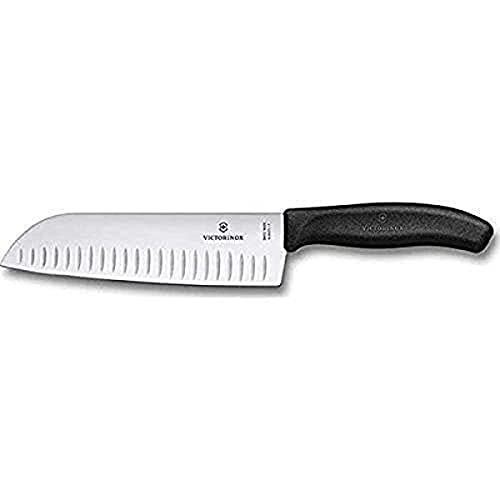
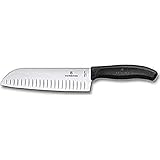
6. Victorinox Fibrox Pro Granton Edge Santoku
A santoku with scalloped hollows along the edge that help thin slices release from the blade. It is a good option for cooks who prefer a shorter, broader blade.
Suits: thin slicing. Strengths: slices release easily. Weaknesses: a shorter blade than a chef’s knife. Skip it if you want a rocking motion.
Care and Setup
- Hand wash even if the maker says a dishwasher is allowed.
- Hone the edge before regular use and sharpen as needed.
- Cut on wood or plastic boards.
- Keep knives in a block, sheath or drawer tray.
Mistakes to Avoid
- Using the chef’s knife on bones or frozen food.
- Soaking wooden handles in water.
- Leaving the knife unsharpened for years.
- Buying a whole set when three knives would do.
Matching a Victorinox Line to Your Kitchen
Victorinox sells kitchen knives in several lines, and the line decides handle feel, care needs and appearance more than it decides the basic job of the blade. Fibrox Pro has a textured synthetic handle that is designed to stay grippy when wet or greasy, which suits busy kitchens and cooks who put function first. Swiss Classic knives have a lighter, simpler handle and are offered in many colors, which makes them popular for paring and utility work. Rosewood has a wood handle with a classic look that rewards careful hand washing.
Think about your habits. If you often handle fatty meat or wash up in a rush, a synthetic handle is more forgiving. If you want a knife that looks traditional on a magnetic strip and you are happy to dry it right away, wood may appeal. Many cooks mix lines: a Fibrox chef’s knife for heavy prep and a colorful Swiss Classic paring knife for small jobs.
Whatever you choose, check the listing for the exact line name, blade length and edge type, because Victorinox uses similar names across products. Matching the listing to what you actually need prevents mistakes such as buying a boning knife in the wrong flexibility or a bread knife that is shorter than expected.
Blade Length and Shape: Choosing for Your Hands and Boards
Blade length changes how a knife feels more than most people expect. A longer chef’s knife slices big items in fewer strokes, but it needs board space and can feel unwieldy in a small kitchen or for smaller hands. A shorter blade is quicker around the board and easier to control with a pinch grip. If you mostly cook for one or two people on a modest counter, a mid-length chef’s knife is often the comfortable choice; if you carve large roasts or cut big squashes, consider going longer.
Shape matters too. A chef’s knife with a curved belly supports a rocking motion, while a santoku has a flatter edge that suits straight up-and-down chopping. A bread knife should be long enough to pass through a whole loaf in a few sawing strokes. A paring knife works best in your hand, so look at the handle thickness. A boning knife comes in stiff and flexible versions: stiffer blades handle tough cuts, and more flexible ones follow the contours of poultry and fish.
Test the fit by imagining your main task. If it is slicing vegetables, think about knuckle clearance. If it is trimming meat, think about control. Pick for the job you do most often.
Keeping Fibrox and Wood Handles in Good Shape
Handle care differs by line. For Fibrox, hand wash with mild soap and dry it fully. The textured surface can hold residue if left, so scrub gently with a soft brush when needed. Avoid prolonged soaking and high heat, and keep the knife away from open flames or hot burners. A dishwasher may be permitted by the maker, but heat and detergent are tougher than a quick hand wash, and loose items can knock the edge.
Wood handles need a little more attention. Rinse and dry them promptly, never leave them sitting in water, and keep them out of the dishwasher. If the wood looks dry over time, a light rub of food-safe oil can help, although you should follow the maker’s advice on care. Keep wooden-handled knives away from radiators and direct sun, which can dry and crack the wood.
- Dry the blade and handle after every wash.
- Store the knife in a sleeve, block or on a magnetic strip so the edge does not hit other metal.
- Check the rivets or handle joint occasionally for looseness.
Good care is the difference between a knife that looks tired after a year and one that still looks fine after many.
If you wash up in a shared household, tell others how to treat the knives. Most damage comes from a blade left in a sink of soapy water or tossed in a drawer with other utensils.
Sharpening and Honing Victorinox Blades
Victorinox’s stainless blades are usually described as easy to bring back to sharpness, which is a useful trait for home cooks. The routine is simple: hone regularly and sharpen when honing stops helping. A honing rod straightens the edge in seconds. When the knife starts to crush tomatoes or slip on onion skins even after honing, it needs real sharpening.
For sharpening, a whetstone gives the best control. Use the angle the maker recommends in the manual or on the listing, and keep it steady. A guided system can help if you find holding an angle difficult. Pull-through sharpeners are fast and convenient, but they can be coarse, so use them sparingly and prefer finer options. Serrated bread knives need a tapered rod or a specialist tool, and many cooks simply have them professionally serviced or replace them when worn.
Whichever method you use, work gradually. Take off only as much metal as needed, check for a burr, and finish with light strokes. Wipe the blade clean before cutting food. Learning on an inexpensive knife is a sensible way to build confidence before moving to more costly blades.
Common Buying Slip-Ups and Replacement Signs
A few errors come up repeatedly. People sometimes buy a whole set when three well-chosen knives would do the work. Others choose a bread knife with a blade that is too short for their loaves, or a boning knife in a stiffness that does not suit their cutting. Some buyers also confuse lines and receive a handle style they did not want. Reading the listing title and details carefully avoids most of this.
Think about where the knife will live. A drawer without protection chips edges, while a sleeve or block protects them. If you give a knife as a gift, check whether the recipient prefers a synthetic or wood handle and whether they are left- or right-handed, since some handle shapes feel different in each hand.
Know the signs of a knife that needs replacing. A cracked handle, a loose rivet that will not tighten, a bent blade, deep chips that would take a long time to grind out, or persistent rust pitting are all reasons to retire a knife. A paring knife that has been sharpened many times may become noticeably narrower and feel different, which is normal wear rather than a defect. When that happens, replacing it is often easier than trying to restore it.
Which Victorinox Knife Does Which Job
A small group of knives handles most kitchen work, and knowing the role of each helps you decide what to buy. The chef’s knife is the all-rounder for chopping, slicing and dicing. The bread knife, with its saw-toothed edge, cuts through crust and soft crumb without crushing. The paring knife is small and precise, suited to peeling and trimming in the hand. Other shapes, like a utility knife or a boning knife, fill in the gaps.
| Knife | Main use | Notes |
|---|---|---|
| Chef’s knife | Chopping, slicing, dicing | Most used in a home kitchen |
| Bread knife | Loaves, tomatoes, soft cakes | Saw-toothed edge, longer blade |
| Paring knife | Peeling and trimming | Small and nimble |
| Utility knife | Sandwiches and small tasks | Between paring and chef sizes |
If you are building a collection one piece at a time, begin with a chef’s knife, add a bread knife, and then a paring knife. Those three cover a very wide range of recipes.
Handle Choices and How They Feel
The same brand can offer different handle styles, and the choice comes down to grip and kitchen habits. A molded synthetic handle tends to be grippy even when wet and is simple to clean. A wood handle has a classic look and warm feel but needs more careful drying and should not sit in water. Hand size matters too. A handle that feels perfect to a large hand may feel bulky to a small one.
Whenever possible, look at the stated handle length and weight. Some cooks prefer a lighter knife for long prep sessions, while others like the stability of a heavier one. Read the maker’s description and think about how you hold a knife, with a pinch grip near the blade or a handle grip further back.
Mistakes to Avoid With Everyday Knives
- Cutting on glass, stone or ceramic, which dulls and can chip the edge
- Leaving knives in a sink or tossing them in a drawer without protection
- Using a knife to pry, twist or open cans
- Putting wooden handles through repeated soaking
- Skipping regular honing, then wondering why the blade feels dull
Use a wood or plastic cutting board, wash knives by hand soon after use and dry them right away. Check the maker’s guidance on dishwasher use, as many advise washing by hand to protect the edge and handle.
Keeping the Edge Sharp
Honing and sharpening are different jobs. Honing realigns the edge and should be done often, while sharpening removes a small amount of steel to create a new edge and is needed less often. Use a honing steel or a fine rod for regular touch-ups, and a stone, a guided system or a professional service for sharpening. Always follow the instructions that come with your sharpening tool.
Store knives in a block, on a magnetic strip or in sheaths so the edges do not bang together, and always keep them out of reach of children.
Choosing a Blade Length and Shape
Chef’s knives are sold in several lengths, and the choice depends on your hands, your board and the food you prepare. Shorter blades feel nimble and are easy to control for small cooks or compact boards. Longer blades slice big items, such as melons and roasts, with fewer strokes. Many home kitchens find a mid-length blade the most flexible choice.
Shape matters, too. A curved belly suits a rocking motion, while a flatter edge suits push cuts and chopping. Look at the profile in the product photos and think about how you cut. If you use a rocking motion for herbs and onions, a curved edge feels natural. If you prefer to push straight down, a flatter edge may suit you.
Building a Small Set in Sensible Order
- A chef’s knife for most daily tasks
- A paring knife for small, careful work
- A bread knife for loaves and soft-skinned produce
- A utility or boning knife only if your cooking calls for it
This order avoids paying for pieces you rarely use. A three-piece set can cover a great deal of cooking, and you can add more later as needs appear. If a boxed set is on offer, count how many of the pieces you would truly reach for, and compare that with buying each knife on its own.
Safe Habits for Using and Storing Knives
Good habits protect both the blade and your hands. Cut away from your body, keep your guiding fingers curled and use a stable board. A damp cloth under the board stops it from sliding. Pass knives handle first, and never try to catch a falling knife.
When you store knives, choose a method that guards the edge. A block, a magnetic strip mounted at a safe height or individual sheaths all work. Loose knives in a drawer chip each other and risk injury when you reach in. Keep all knives out of reach of children, and wash them one at a time by hand, never leaving them submerged in a sink full of water.
Follow the maker’s care instructions, and when an edge becomes damaged or very dull, use a proper sharpening method or take it to a professional service.
Victorinox in Busy, Shared and Working Kitchens
There is a reason these knives turn up in professional kitchens, cooking schools and rental properties: they tolerate being shared. A Fibrox handle does not mind wet hands, does not crack when it is knocked, and gives the same secure grip to the fifth person who picks it up as to the first. In a household where several people cook, where a teenager is learning, or where a guest might help with dinner, that forgiving nature is worth more than refinement. Nobody has to be taught how to treat the knife before they can safely use it.
Shared use also means shared washing habits, and here the design helps again. The knives are made to be washed, dried and put back without ceremony. They will never love the dishwasher, no knife does, but their materials cope with real life better than delicate handles and high-maintenance finishes. For a household establishing good habits, a knife that survives the learning period is the right teacher.
In a working kitchen, cost-per-knife changes the emotional math. When a knife is affordable, losing it to a chip or a drop is an annoyance, not a disaster, and cooks work faster and more relaxed because of it. Many professionals keep a fine knife for their own station and Victorinox blades for everything else, which is a sensible division home cooks can copy: one special knife if you want it, and dependable everyday blades for the bulk of the work.
They also travel well. A Victorinox in a knife roll or a guarded drawer is the knife people take to a holiday rental, a friend’s barbecue or a community kitchen, because it performs properly and nobody will be upset if the setting is rough. A collection that includes one such traveler is more useful than a collection of precious blades that never leave home.
Building Skills on a Forgiving Blade
Because these knives are inexpensive and honest, they are ideal for learning the skills that make all knives better. Knife grip, the pinch grip on the blade and the claw grip on the food, can be practiced without fear of damaging a treasure. The blades are light enough that a beginner can complete a full prep session without hand fatigue masking what good technique feels like, and sharp enough out of the box that the student learns what a proper edge does.
Sharpening is the other skill they teach well. The steel responds quickly to a honing rod, so a learner sees immediate results from correct technique, and it sharpens readily on a basic whetstone without the patience harder steels demand. Practicing on a blade whose replacement cost is low removes the fear that stops many cooks from ever learning to sharpen, and the skill, once learned, serves every knife they will own afterward.
They also teach task selection by example. The range makes the division of labor obvious: the chef knife for board work, the bread knife for crusts and melons, the paring knife for hand work, the boning knife for joints. A new cook who owns three of these learns more about choosing the right tool than one who owns a single expensive all-purpose blade, because each knife’s shape explains its job every time it is picked up.
When skills grow, the knives do not become obsolete. They become the household’s second set, the camping set, the knives lent without worry. A tool that remains useful at every stage of a cook’s development is the definition of money well spent, and it is the quiet reason these knives are recommended so often to beginners and kept so long by experts.
Handles, Hygiene and Long Service Life
The Fibrox handle’s textured surface is a hygiene feature as much as a grip feature. It has no seams or cracks where food and moisture can hide, and it washes clean completely. In a busy kitchen, that smooth, sealed construction matters: a handle that can be fully cleaned is a handle that stays pleasant for years. Check any handle, on any knife, for gaps where the blade enters, since that junction is where grime collects and where a failing handle first announces itself.
Wood handles, like the rosewood options in the range, ask for the standard courtesies of wood: hand washing, prompt drying and no soaking. In return they offer a warm feel and a classic look that many cooks prefer at the table end of cooking, for carving and serving. Neither handle is better in the abstract; the choice is between the sealed practicality of the synthetic and the character of wood, matched to how the knife will live.
Service life on these blades is usually ended by accumulation, not catastrophe: an edge sharpened back over many years, a handle finally worn smooth, a tip bent in an accident. Because sharpening removes metal slowly, a home cook’s knife can serve for a very long time before the blade’s shape changes enough to notice. When the edge no longer sits flat against the board at the heel, or the knife has been sharpened so often the profile has changed, replacement is due, and by then the knife has long since repaid its cost.
Keep a simple record if you manage several knives: which ones were sharpened when, and which are due. It sounds fussy, but in a drawer of similar-looking blades it prevents the common situation where the same favorite gets sharpened constantly and the rest slowly dull unnoticed. Even rotation keeps the whole set ready, and ready knives are safe knives.
Victorinox for Specific Jobs Around the Kitchen
Beyond the headline tasks, these knives cover a long tail of kitchen jobs with the same unpretentious competence. The paring knife is the household’s utility player: opening packaging, hulling strawberries, segmenting citrus, deveining prawns and doing the small trimming work that happens over a bowl rather than a board. Its low cost means many households keep two, so one is always clean and reachable, a small luxury that costs very little and gets used every day.
The bread knife’s talents extend well past bread. Its serrations handle the waxy skin of winter squash with more control than a straight edge offers, slice melons and pineapples cleanly, and portion cakes and roasts with crusts without tearing. It is also the safest choice for slicing a ripe tomato when the other knives are due for sharpening, since the teeth start the cut without pressure or slipping.
The boning knife earns its keep even in kitchens that never break down a whole bird. It trims silverskin, portions boneless cuts, butterflies chicken breasts and follows the curves of fruit and cheese where a straight, wide blade cannot. Its narrow profile goes where other knives are too broad, and cooks who own one find uses for it weekly that they never predicted when they bought it.
The granton-edge santoku is the vegetable specialist of the group: its shorter, taller blade and the scalloped edge that helps slices release make it a pleasure for onions, cucumbers, apples and cheese. In households where vegetable prep dominates, it often becomes the most-used knife of all, and its friendly size makes it a good first real knife for a younger cook learning under supervision.
Seen this way, the range is a small system rather than a list of separate products. Each shape explains a family of tasks, and owning three or four of them covers the kitchen’s whole repertoire without overlap or waste. That clarity is part of why the brand is recommended so often to people building a collection from nothing.
Care Calendar: Keeping a Set Ready All Year
A simple calendar keeps a set of everyday knives in shape without any single session becoming a chore. Weekly, or whenever the tomato test falters, each working knife gets a few light strokes on the honing rod, alternating sides, followed by a wipe and a test slice. This takes a minute per knife and restores the edge that daily cutting has bent. Make it part of a fixed moment, before the weekend’s big cook, for example, and it will actually happen.
Monthly, give the handles and junctions a deliberate clean. Wash each knife paying attention to where blade meets handle, dry thoroughly, and check handles for looseness and blades for any spot that needs attention. Wood handles can be checked for dryness at the same time. This is also the moment to wash blade guards and check the block or drawer organizer for the crumbs that gather in every storage system.
A few times a year, each knife gets a true sharpening, on a whetstone or by a professional, to rebuild the edge that honing can no longer restore. Stagger them if you like, one knife per session, so the work stays light. After sharpening, test each knife on a tomato and on paper, and note which knives were done; a simple note on the calendar prevents the favorite from being sharpened constantly while the others quietly dull.
Seasonally, review the set itself. Which knives were used constantly, which were not touched, which are showing wear that cleaning cannot reverse? A set reviewed twice a year stays matched to the household’s cooking, and replacements or additions get bought for real reasons. Knives that have not been used in a year can move to the camping box or a drawer elsewhere, freeing the prime storage for the workers.
None of this requires expertise, only rhythm. The knives themselves ask for little: honest edges, clean handles, safe storage. A household that gives them that rhythm will find, year after year, that the set is simply always ready, which is the highest compliment everyday tools can earn.
A Complete Walkthrough: A Family Weekend Cooked With the Whole Range
Saturday breakfast begins with the bread knife, because a crusty loaf is the first job of the day and serrations make it a pleasure rather than a wrestling match. Slices come off even, the crumb intact, and the same knife halves the grapefruit and portions the melon for the table. It rinses clean in seconds and goes back to its slot, having already justified its existence before the coffee is finished.
Late morning is market and prep time, and the chef knife takes the board. Onions, peppers and courgettes fall into even pieces, a chicken is portioned with the help of the boning knife at the joints, and the paring knife works over a bowl, hulling, trimming and segmenting. Three knives, three clear jobs, no overlap or argument. A younger cook helping out is handed the santoku for the cucumbers and apples, its friendly size and secure grip making it the right teaching tool, and the granton edge lets the slices fall away instead of clinging.
The afternoon bake brings the paring knife back for fruit prep and the chef knife for cubing cold butter and chopping chocolate. Nothing in the bake required a specialty tool, because the basic shapes, honestly made and properly sharp, cover the ground. The honing rod makes its brief appearance before the heavy work, six light strokes per side on the chef knife, and the edge that breakfast dulled slightly is true again.
Sunday’s roast is the range’s showcase. The chef knife trims and portions the meat before cooking, the boning knife tidies what the chef knife cannot reach, and at the table the chef knife, freshly honed, carves in long clean slices while the bread knife handles the crusty rolls. Vegetables roasted alongside were prepped by the santoku and the paring knife in the morning. Every knife in the set has worked this weekend, and none has been asked to do a job outside its design.
Washing up is unremarkable, which is the point. Each knife is washed, dried and returned to its place by whoever is on duty, without special instructions or anxiety. The Fibrox handles look the same as they did on Friday, the edges are ready for Monday, and nobody has thought about the knives as objects at all; they were simply the means by which a weekend of food happened.
Multiply that weekend by a year and the range’s reputation explains itself. No single moment was spectacular, and that is precisely the achievement: thousands of small jobs done cleanly, safely and without fuss, by knives that cost little, ask little and keep showing up. Dependability at that scale is a kind of excellence all its own.
What a Year With Victorinox Teaches You
The first lesson is that reliability is a flavor of quality all its own. A year of mornings where the knife was simply ready, sharp enough, clean, in its place, teaches a cook to value the absence of drama as highly as any refinement. Finer knives may cut with more elegance, but the knife that never once made a meal harder has a claim on the cook’s loyalty that elegance alone cannot displace, and a year is long enough for that claim to become permanent.
The second lesson is that skills transfer upward. The grip, the honing rhythm, the sharpening confidence and the storage habits built on these forgiving blades apply unchanged to any knife the cook later owns. Households that start here find, when a finer knife eventually arrives, that they already know how to keep it fine. The inexpensive knives were tuition as much as tools, and the lessons compound for a lifetime of cooking.
The third lesson is about sharing. A year in a household where everyone uses the same knives, without fear, without ceremony and without a single injury or ruined edge, proves that good tools can be communal tools. Guests cook, children learn under watchful eyes, and the knives absorb it all. Kitchens run on that kind of trust, and these are the knives that make it easy to extend.
The fourth lesson is replacement without regret. When a knife in the set finally tires after long service, its replacement is a small, known purchase, the same model or its nearest sibling, and the set continues without research or disruption. Owners learn to love this continuity: the kitchen’s tools stay familiar year after year, and familiarity is its own kind of efficiency, since no meal ever pauses while a hand adjusts to a stranger.
The final lesson is the one professionals could have given at the start: the best knife is the one that is sharp, at hand and used without worry. A year with these knives teaches that truth in the only way it can really be learned, through hundreds of unremarkable, successful meals. Whatever else a cook adds to the collection later, that standard, sharp, at hand, worry-free, remains the measure every new knife is judged by.
A Note on Victorinox Beyond the Home Kitchen
These knives have a second life in settings far from the family kitchen, and it is worth knowing because it explains their design. Food trucks, market stalls, school kitchens, boats and camps all favor them for the same reasons homes do: they work, they wash, they forgive, and their loss is survivable. A knife that thrives in a rocking boat’s galley and a school canteen has been tested in ways no review can simulate, and the home cook inherits all of that testing for free.
Boats and camps deserve a special word, because they add corrosion and chaos to the usual demands. Stainless blades that are rinsed, dried and guarded ask for nothing more, and the synthetic handles are indifferent to the damp that swells and cracks lesser materials in a locker. Many sailors and campers keep a dedicated Fibrox-handled knife in the kit for years, and its biography of harbors and campsites never seems to trouble it.
For the home cook, the lesson of these second lives is confidence. The knife on your board is not a delicate domestic variant of a professional tool; it is the professional tool, unchanged, doing its quieter shift in your kitchen. Treat it with the same straightforward respect it gets in those harder workplaces, keep it sharp, keep it dry, keep it guarded, and it will give you the same years of uncomplaining service.
One last encouragement: buy the first one without overthinking it. The chef knife in this range has introduced more people to real cooking than perhaps any other single blade, precisely because the decision is easy, the price is gentle and the performance is immediate. Add the honing rod, give it a safe home, and start cooking. The rest of the set can arrive one felt need at a time, and each arrival will feel less like shopping and more like what it actually is: a kitchen quietly assembling the tools it intends to use for years.
Victorinox Kitchen Knife FAQ
Are Victorinox knives good?
They are widely respected for practical performance and are common in working kitchens.
Fibrox or Rosewood?
Fibrox gives a grippy, low-fuss handle. Rosewood gives a classic wood look and needs more care.
Are they forged?
The Fibrox Pro line is stamped, which keeps the weight down and makes the knives nimble. Some other lines from the brand are forged, so check each listing.
Which three knives should I start with?
A chef’s knife, a paring knife and a bread knife cover most kitchen work.
Which Victorinox line is best for beginners?
Fibrox Pro is a common choice because its textured handle stays secure and needs little fuss. Check the listing for the knife type and length you want.
What length chef's knife should I choose?
A mid-length blade suits most home cooks, while a longer blade helps with large roasts and big vegetables. Consider your counter space and hand size.
Can I use a Victorinox knife on bones?
Avoid bones and frozen food with a chef's knife, because the edge can chip or roll. A boning knife is for working around bones, not through them.
Do I need a honing rod?
A rod is a useful, low-cost way to keep an edge aligned between sharpenings. It does not replace sharpening when the knife is truly dull.
Are serrated bread knives hard to sharpen?
Yes, they need a tapered rod or specialist tool because of the wavy edge. Many cooks replace them or have them serviced when they wear out.
Is a flexible or stiff boning knife better?
Flexible blades follow curves on poultry and fish, while stiffer ones handle tougher cuts. Choose based on what you cut most often.
How should I store these knives?
In a block, sleeve, magnetic strip or drawer tray so edges do not knock together. Make sure the blade is dry before storing it.
Are Victorinox knives a good choice for a rental or holiday kitchen?
They are one of the best choices for that setting. They are affordable to replace, tolerate varied users and washing habits, and perform well enough that cooking on holiday is not a frustration. Add blade guards if they will live in a drawer, and the set will serve many seasons.
How do I stop the handle feeling slippery when my hands are wet?
Dry your hands and the handle before starting, and rinse away any fat or oil from the handle as soon as it gets on there, since grease, not water, is what makes handles treacherous. The textured Fibrox surface grips well in water; if it still slips, the handle is probably carrying a film that a proper wash will remove.
Can I use these knives for carving at the table?
The chef knife and the granton-edge santoku both carve cooked meats respectably, and the bread knife handles crusty roasts’ crackling and large melons well. For frequent roasts, a dedicated longer carving knife is a pleasant addition, but it is an addition, not a necessity.
What should I buy alongside a first Victorinox chef knife?
A honing rod to keep the edge true, and safe storage: a guard, a block space or an in-drawer organizer. Those two purchases protect the knife and your hands from day one. The next blade to add is the one your cooking asks for most, commonly a paring knife or a bread knife.
Can I sharpen a Victorinox knife with a pull-through sharpener?
Yes, a decent pull-through used lightly will maintain these blades serviceably, and the steel is forgiving of it. A whetstone gives a finer edge and removes less metal over time, but the best sharpener is the one you will actually use regularly.
Why does my knife feel dull right after honing?
Either the angle was inconsistent, so the rod never met the edge, or the edge has worn beyond what honing can restore and needs true sharpening. Try slow, deliberate strokes at a steady angle; if the tomato test still fails, the knife is asking for a stone, not more honing.
Should I keep the packaging’s edge guard or buy proper guards?
Buy proper guards if the knives live in a drawer. The packaging sleeve is temporary and quickly splits. A fitted guard or an in-drawer organizer protects the edge and your hands every day, and costs little compared with the safety it provides.
The Short Version
For an all-rounder, the Fibrox Pro Chef’s. For bread, the Fibrox Pro Bread. For detail work, the Swiss Classic Paring. For a wooden handle, the Rosewood. For meat trimming, the Boning. For thin slices, the Granton Santoku.