Disclosure: As an Amazon Associate, Reviews Took earns from qualifying purchases. Links to Amazon on this page are affiliate links; they cost you nothing extra.
Check which knives are included.
This guide is built from Amazon product listings and maker specs, not our own testing, so confirm size, contents and current price on each product page.
Check the current price on Amazon before you buy.
Last updated: November 2, 2026.
In this guide
Quick Picks
| Product | Type | Best for |
|---|---|---|
| Japanese Knives Set for Kitchen Magnetic Knife Set with Block | Knife set | full kitchen sets |
| 15-Piece Kitchen Knife Set with Block and Built-In Sharpener Black | Knife set | full kitchen sets |
| Astercook Knife Set 6-Piece Kitchen Knife Set with Block High | Knife set | full kitchen sets |
| Astercook Knife Set for Kitchen with Block and Sharpener 21pcs | Knife set | full kitchen sets |
| Astercook Knife Set 15 Piece German Steel Kitchen Knife Block Set | Knife set | full kitchen sets |
| Astercook Knife Set for Kitchen with Block and Sharpener 15pcs | Knife set | full kitchen sets |
| 8-Piece Kitchen Knife Set with Block Dishwasher Safe Black | Knife set | full kitchen sets |
Our Picks

Top pickBest for full kitchen sets
1. Japanese Knives Set for Kitchen Magnetic Knife Set with Block
A Japanese Knives Set for Kitchen Magnetic Knife Set with Block (knife set), per the listing. Check price on Amazon.
Good for: full kitchen sets. Watch out: Check steel quality.

Best for full kitchen sets
2. 15-Piece Kitchen Knife Set with Block and Built-In Sharpener Black
A 15-Piece Kitchen Knife Set with Block and Built-In Sharpener Black (knife set), per the listing. Check price on Amazon.
Good for: full kitchen sets. Watch out: Check steel quality.

Best for full kitchen sets
3. Astercook Knife Set 6-Piece Kitchen Knife Set with Block High
An Astercook Knife Set 6-Piece Kitchen Knife Set with Block High (knife set), per the listing. Check price on Amazon.
Good for: full kitchen sets. Watch out: Check steel quality.

Best for full kitchen sets
4. Astercook Knife Set for Kitchen with Block and Sharpener 21pcs
An Astercook Knife Set for Kitchen with Block and Sharpener 21pcs (knife set), per the listing. Check price on Amazon.
Good for: full kitchen sets. Watch out: Check steel quality.

Best for full kitchen sets
5. Astercook Knife Set 15 Piece German Steel Kitchen Knife Block Set
An Astercook Knife Set 15 Piece German Steel Kitchen Knife Block Set (knife set), per the listing. Check price on Amazon.
Good for: full kitchen sets. Watch out: Check steel quality.

Best for full kitchen sets
6. Astercook Knife Set for Kitchen with Block and Sharpener 15pcs
An Astercook Knife Set for Kitchen with Block and Sharpener 15pcs (knife set), per the listing. Check price on Amazon.
Good for: full kitchen sets. Watch out: Check steel quality.
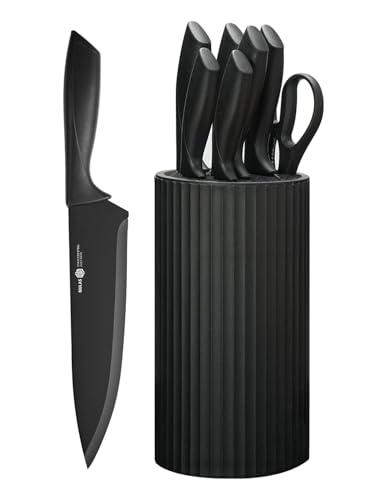
Best for full kitchen sets
7. 8-Piece Kitchen Knife Set with Block Dishwasher Safe Black
A 8-Piece Kitchen Knife Set with Block Dishwasher Safe Black (knife set), per the listing. Check price on Amazon.
Good for: full kitchen sets. Watch out: Check steel quality.
Best Picks by Category
These labels group the picks by use case and price tier. They summarize listing data and are not hands-on test results.
- Top rated: Astercook Knife Set for Kitchen with Block and Sharpener 21pcs — check price on Amazon.
- Most reviewed: Astercook Knife Set for Kitchen with Block and Sharpener 21pcs — check price on Amazon.
- Best value: 8-Piece Kitchen Knife Set with Block Dishwasher Safe Black — a budget-tier pick; check price on Amazon.
- Lowest price: 8-Piece Kitchen Knife Set with Block Dishwasher Safe Black — a budget-tier pick; check price on Amazon.
- Premium option: Japanese Knives Set for Kitchen Magnetic Knife Set with Block — a premium-tier pick; check price on Amazon.
Price, Rating and Review Comparison
The table groups the picks by price tier. Prices change often, so confirm the current price on Amazon.
| Product | Price | Rating | Ratings | Price tier |
|---|---|---|---|---|
| 8-Piece Kitchen Knife Set with Block Dishwasher Safe Black | Check price on Amazon | — | — | Budget |
| Astercook Knife Set 6-Piece Kitchen Knife Set with Block High | Check price on Amazon | — | — | Budget |
| 15-Piece Kitchen Knife Set with Block and Built-In Sharpener Black | Check price on Amazon | — | — | Mid-range |
| Astercook Knife Set for Kitchen with Block and Sharpener 15pcs | Check price on Amazon | — | — | Mid-range |
| Astercook Knife Set 15 Piece German Steel Kitchen Knife Block Set | Check price on Amazon | — | — | Mid-range |
| Japanese Knives Set for Kitchen Magnetic Knife Set with Block | Check price on Amazon | — | — | Premium |
| Astercook Knife Set for Kitchen with Block and Sharpener 21pcs | Check price on Amazon | — | — | Premium |
How Much Feedback Backs Each Rating
A high average from a handful of ratings is weaker evidence than a slightly lower average from thousands. Here is how the sample size looks for each pick.
- Japanese Knives Set for Kitchen Magnetic Knife Set with Block: a moderate sample of ratings.
- 15-Piece Kitchen Knife Set with Block and Built-In Sharpener Black: a moderate sample of ratings.
- Astercook Knife Set 6-Piece Kitchen Knife Set with Block High: a moderate sample of ratings.
- Astercook Knife Set for Kitchen with Block and Sharpener 21pcs: a large sample of ratings.
- Astercook Knife Set 15 Piece German Steel Kitchen Knife Block Set: a moderate sample of ratings.
- Astercook Knife Set for Kitchen with Block and Sharpener 15pcs: a large sample of ratings.
- 8-Piece Kitchen Knife Set with Block Dishwasher Safe Black: a moderate sample of ratings.
How to Choose
Size
Check the max pizza or capacity size.
Fuel and power
Match fuel or power to where you cook.
Cleaning
Removable parts make cleanup easier.
Which Knives in a Set Earn Their Place
Piece counts on a box can mislead, because many sets count the block, the sharpener, kitchen shears and steak knives in the total. Before comparing sets, list the blades you would actually reach for. For most home cooks that means a chef’s knife for chopping and slicing, a paring knife for small trimming jobs, a serrated bread knife, and a utility knife for in-between tasks. Everything else is a bonus.
Steak knives are common in larger sets. They are useful if you serve steak regularly, but they take up block slots and add to the piece count without changing how you cook day to day. A slicing or carving knife helps with roasts, while a santoku-style blade is a matter of taste: some cooks like its shape for vegetables, others stay with a chef’s knife.
Read the listing for the exact contents and lengths of the main blades. A chef’s knife that is too short can feel cramped on a large cutting board, and one that is too long can feel unwieldy in a small hand. Many people find a middle length comfortable, but this is a personal fit question, so check the listing dimensions against what you are used to.
A good question to ask is how many pieces you will use weekly. A smaller set with solid core knives often serves better than a large one padded with rarely used blades, particularly if the budget limits quality.
Steel and Construction Differences
Listings use terms such as stainless steel, high-carbon stainless, German steel or Japanese-style. These describe a general approach rather than a guaranteed quality level, so treat them as clues and look for more detail. Maker pages sometimes state the steel grade or hardness, and when they do not, you cannot judge it from the title alone.
In general, harder steel can hold an edge longer but may chip if misused, while softer steel is more forgiving but needs more frequent honing. Neither is better for everyone. A cook who chops through bone or frozen food should lean toward a sturdier blade profile, while someone doing precise vegetable work may prefer a thin, sharp edge.
Construction matters too. Forged knives are shaped from a single piece of steel and usually have a bolster, the thick section between blade and handle. Stamped knives are cut from sheet steel and are often lighter. Both can be fine, and listings do not always say which method is used, so look for the word and, if absent, assume nothing.
Check how the handle joins the blade. A full tang runs steel through the handle, and many cooks like the balance. Gaps, rough seams or loose rivets in listing photos or buyer images are worth noticing, because they collect food residue and can weaken over time.
How Built-In Sharpeners Work and Their Limits
Several sets in this guide pair the block with a sharpener. It is convenient: you slide the blade through a slot as you store it. Most such devices use fixed abrasive surfaces, ceramic wheels or carbide-type edges, and the listing may or may not say which. Their job is to restore a bit of edge between professional sharpenings, not to produce a keen edge from a badly dulled blade.
Know the difference between honing and sharpening. Honing realigns the edge of a blade that has bent microscopically with use, and it does not remove much metal. Sharpening removes metal to create a new edge. A built-in slot that sharpens aggressively will wear a knife faster if used at every storage, so use it when a knife feels dull rather than as a habit, and follow the maker’s instructions.
Also check that the slot fits the blade types in the set. Serrated bread knives and shears generally should not go through a straight-edge sharpener. Any pass should be a few gentle strokes with light pressure, then wipe the blade clean of metal dust.
If you already own a whetstone or a honing rod, a sharpener in the block is a nice extra rather than a deciding factor.
Block Design, Storage and Counter Space
The block affects daily use as much as the knives do. Slotted wooden or plastic blocks hold each blade in a fixed place, and they work well when slots match the knife widths. Magnetic blocks hold knives on their side with strong magnets, which makes blades easy to see and reach. The set listed first in this guide is described as magnetic, so its storage works differently from a traditional slotted block.
Measure the space under your wall cabinets before ordering. A tall block with a chef’s knife handle sticking out can bump the cabinet, and a wide block may crowd a small counter. Check the listing for footprint dimensions.
Hygiene is a practical concern. Slots can trap moisture and crumbs, so always dry blades fully before putting them away. Some blocks allow you to tip them over and shake out debris, or to remove inserts for washing, and the listing or manual will say whether yours does. A magnetic block with a smooth surface is generally easier to wipe, but the magnets need room for blades not to knock each other.
Also consider the knife edges in storage. Slots that hold blades edge-up or edge-down differ in how much the edge touches the wood or plastic, and how well that protects sharpness. Follow the manual.
Care Routine and Signs to Replace the Set
Good care extends the life of any knife set. Wash knives by hand soon after use with warm water and mild soap, dry them right away, and avoid leaving them in a sink. Some sets, including one named in this guide, are marketed as dishwasher safe, but dishwashers can dull edges, loosen handles and cause rust spots on certain steels, so hand washing is a safer habit even then. Follow the care sheet.
Use the right cutting surface. Wood or plastic boards are gentler than glass, stone or ceramic, which dull blades quickly. Never use the blade to scrape food off the board with the edge down; flip the knife and use the spine.
Signs it may be time to replace a set or individual knives include a blade that no longer takes an edge after honing, chips that do not grind out, handles that are loose or cracked, rust pitting that returns after cleaning, and a bent blade that will not sit flat. If one core knife wears out, check whether the maker sells it individually before buying a whole new set.
Finally, store knives away from children, and never catch a falling knife. Let it drop and step back.
Which Knives Do the Real Work in a Block Set
A block set can hold twelve or fifteen pieces, yet most home cooks lean on only a few. The Japanese-style magnetic set, the 15 piece set with a built-in sharpener and the Astercook six piece sets all include a mix of blades, and knowing which ones matter helps you judge whether a bigger count is worth having.
- Chef’s knife: the all-rounder for chopping, slicing and dicing, usually about 8 inches long.
- Paring knife: small and precise, for peeling and trimming fruit and vegetables.
- Serrated bread knife: cuts bread and tomatoes without crushing them.
- Utility knife: a mid-sized blade for sandwiches and smaller jobs.
- Santoku: a Japanese-style knife with a flatter edge that suits fast chopping.
- Steak knives: useful at the table, but not a daily tool.
- Kitchen shears: handy for herbs, packaging and poultry.
Pick a set whose core knives feel balanced in your hand. A big count with flimsy handles may serve you less than a modest set with sturdy ones.
Sharpening, Storage and Safe Handling Habits
Knives stay useful only if they are kept in good condition. A built-in sharpener in the block is convenient, though it is a light-duty solution. Plan for care from the beginning.
| Habit | Why it matters |
|---|---|
| Hand wash and dry promptly | Protects edges and handles from water and detergent damage, unless the maker says dishwasher use is acceptable |
| Use a proper cutting board | Wood or plastic boards protect edges, while glass and stone dull blades |
| Hone and sharpen regularly | A sharp knife needs less force, which lowers the chance of slipping |
| Store in the block or on a magnet | Keeps edges from hitting other tools in a drawer |
| Keep the block dry and clean | Crumbs and moisture can collect in slots |
Handle knives with respect. Keep your fingers curled when cutting, never catch a falling knife, and carry blades with the tip pointed down. Keep them away from young children, and store the block where it cannot be pulled from the counter.
Magnetic blocks hold knives on the surface, so insert and remove them with care and check the magnet strength. Slotted blocks should be turned over occasionally and cleaned. If a handle loosens or a blade chips, stop using that knife. Learning a few basic cuts from a trusted video or class will improve both speed and safety in the kitchen.
Going Deeper: The Criteria That Decide Long-Term Satisfaction
The headline differences between the picks in this guide are easy to spot, but the factors that decide whether you are still happy with your kitchen knife set with block in a year are usually quieter ones. They show up in the kitchen counter, on busy days, when the product is no longer new and nobody is treating it carefully. This section works through those slower, more honest criteria one by one, so you can weigh the reviews above against the way you actually live rather than the way a product page imagines you do.
Which knives are actually in the set
Count the pieces you will use weekly: a chefs knife, a bread knife, a paring knife and a utility usually earn their slots, while filler pieces pad the count. Steak knives matter only if your household eats steak at the table. When you compare the picks above on this point, use the descriptions already given in each review rather than the headline claims at the top of a listing. Write down how this factor affects your own routine, because a weakness that never touches your habits is not a weakness worth paying to avoid, while a strength you will use daily is worth prioritising over almost everything else in the set.
One steel and construction story
Sets built from one coherent blade line behave consistently when you sharpen them. Mixed mystery pieces sharpen unpredictably and feel unrelated in the hand, which slows you down every single meal. Judge this in the context of your own kitchen counter, not an ideal one. The honest test is whether the feature still helps on an ordinary tired day when nobody is concentrating, and whether any drawback shows up immediately or only after months of use. Shortlist the picks that handle this point well and let other criteria separate them later.
Block footprint and angle
Blocks eat counter space and tall blocks fight low cupboards. Measure the counter run and the clearance above it, and check whether the block angle lets long knives slide in without striking the units. This is also a point where the most expensive option is not automatically the best. Mid-priced picks often balance it sensibly, while premium designs sometimes trade it away for a sleeker look or a longer feature list. If two picks seem equal overall, let the one that handles this everyday detail better take the lead in your decision.
Built-in sharpener honesty
Block sharpeners maintain an edge between real sharpenings; they do not resurrect a ruined blade or suit every grind. Value the feature as convenience, and still plan on proper sharpening for the chefs knife. Think about who else will use the kitchen knife set with block besides you. A choice that works for one careful adult can frustrate children, guests or a partner with different habits, and shared use multiplies small annoyances quickly. If the item will be shared, weight this factor more heavily than you would for a purely personal purchase.
Handle consistency across sizes
Your hand should not have to relearn its grip for each knife. Consistent handle shaping across the set, secure in wet hands, matters more than decorative bolsters or matching finishes. When you compare the picks above on this point, use the descriptions already given in each review rather than the headline claims at the top of a listing. Write down how this factor affects your own routine, because a weakness that never touches your habits is not a weakness worth paying to avoid, while a strength you will use daily is worth prioritising over almost everything else in the set.
Shears, honing steel and extras
Extras earn their place only if they are decent: kitchen shears that actually cut, a honing steel long enough for the chefs knife. Cheap extras inflate the piece count and clutter the block. Judge this in the context of your own kitchen counter, not an ideal one. The honest test is whether the feature still helps on an ordinary tired day when nobody is concentrating, and whether any drawback shows up immediately or only after months of use. Shortlist the picks that handle this point well and let other criteria separate them later.
How It Plays Out in Real Life: Scenarios Worth Picturing
Specifications describe a product; scenarios describe a life. The situations below are the ones that most often separate a kitchen knife set with block that merely tests well from one that earns its place, and each one highlights a different strength among the picks already reviewed above. Find the scenario that sounds most like your week and read the relevant reviews again with that picture in mind before you decide.
A first full kitchen for a new home
For a first home, a coherent set covers every common job from day one and removes decision fatigue. Choose the set whose chefs knife you love, because that is the knife your hand will live in. The lesson from this scenario is that context beats specification. A pick that looks average on paper can be exactly right once the room, the timing and the people involved are real, and the reverse is just as true. Match the scenario closest to your own life first, then check that your shortlisted pick also copes with your second most common situation.
Upgrading from mismatched knives
Households replacing a drawer of random knives gain most from consistency: one grip language, one sharpening routine, one home in the block. Keep the best old knife as a beater for rough jobs. Preparation decides how well this goes in practice. A few minutes spent arranging the kitchen knife set with block, clearing the space around it and setting expectations with anyone sharing it will do more for the result than an upgrade to a pricier model. Build the small routine once and the scenario becomes repeatable without thought.
keen cooks who mostly need two knives
Serious cooks often use the chefs and paring knives from a set and ignore the rest. For them a smaller, better set beats a large one, and the savings belong in a good board and sharpening gear. Notice, too, that this scenario exposes different weaknesses in different picks. One design handles it through sheer capacity, another through convenience, another through being quick to clean or put away afterwards. Decide which of those qualities your household values before comparing, because there is rarely a single winner for everyone.
Wedding lists and gift buying
As a gift, a set suits because it asks nothing of the recipients existing kit. Favour easy-care handles, forgiving steel and a block that fits a typical counter, and include the receipt without embarrassment. If this is your main scenario, be strict: a pick that only copes with it when conditions are perfect will disappoint you weekly. Favour the option that forgives imperfect setup, tired users and interruptions, since real life supplies all three generously and without warning.
Setup and First Use, Done Properly
Unpack the set and learn it deliberately: name each knife, test the chefs knife through a full prep session, and assign every piece its slot in the block before the first wash. Place the block where the chefs knife can be drawn safely without reaching across the hob or sink, check cupboard clearance with the longest knife half-drawn, and set your rule from day one — hand wash, dry, straight back in the block. Hone the main knives once so the routine exists before the edges ever need it, and keep the box and paperwork until you are sure the set suits your hands.
During the first week, resist the urge to judge the kitchen knife set with block on a single use. Early impressions are distorted by novelty, by packaging stiffness or new-material smells, and by your own learning curve. Give it several ordinary days in the kitchen counter, adjust the small things — position, settings, accessories, routine — and only then decide whether a disappointment is the products fault or simply an unsettled setup. Many returns happen in week one for problems that a ten-minute adjustment would have solved permanently.
Care, Cleaning and Storage That Add Years
Hand wash and dry every knife immediately after use; the dishwasher is where set knives go to dull, rust and loosen their handles. Hone the straight-edged knives regularly, use the blocks sharpener as directed if fitted, and book proper sharpening when edges stop biting. Wipe the block down, vacuum crumbs from the slots occasionally, and never store a damp knife. Shears should be washed and dried with the pivot open so moisture escapes.
Care works best as a rhythm rather than a rescue. Tie the small jobs to something you already do — a weekly clean, a monthly tidy of the kitchen counter, the change of a season — and they stop feeling like chores attached to the kitchen knife set with block. Keep any tools, chargers, covers or spares the product needs in one labelled place, because maintenance skipped while hunting for a missing part tends to stay skipped. A product that is easy to care for is not one that needs nothing; it is one whose needs fit calmly into your existing routines.
Troubleshooting: When Your Kitchen knife set with block Is Not Behaving
Most problems with a kitchen knife set with block have ordinary causes and patient fixes. Before assuming a defect, work through the situations below, which cover the complaints owners raise most often once the newness wears off. Change one thing at a time, test honestly, and only escalate to the maker or a replacement when the simple explanations have been ruled out.
Knives rattling loose in the block
Slots wear and knives stored in the wrong slots rock. Return each knife to its own slot, insert blades spine-first if the maker suggests, and check that children cannot pull knives out at counter height. Work through the checks in order and change only one thing at a time, so you can tell what actually fixed it. If the problem survives every sensible adjustment, treat it as a sign the pick no longer suits your needs or has reached the end of its service, and use the warranty or the makers support while those options still exist.
Edges dulling faster than expected
Block-stored knives dull mainly from cutting surfaces and skipped honing, not the block. Hone the chefs knife lightly and often, keep the set off glass boards, and sharpen properly when honing stops helping. Prevention is cheaper than cure here: most cases start small and grow through being ignored. Add a quick look at this point to your normal routine with the kitchen knife set with block, and you will catch the early stage, when a wipe, a tightening or a small adjustment is still all that is required.
Rust spots on blades
Spots appear when knives are stored damp or washed in the dishwasher. Hand wash, dry immediately before blocking, and treat early spots with a gentle paste and a soft cloth rather than abrasives. Avoid the tempting rough fixes — forcing parts, using harsh cleaners, or improvising repairs the maker never intended. They often convert a recoverable problem into permanent damage. Gentle, documented steps first, and if a component has genuinely failed, replace that component rather than the whole product where the design allows it.
The block sliding or tipping
A block that moves when a knife is drawn is a hazard. Give it a non-slip mat, position it away from the counter edge, and draw knives with a straight pull rather than a sideways yank. Keep notes the first time this happens: what you changed, and what worked. The same issue tends to recur across the life of any kitchen knife set with block, and future-you will solve it in minutes with a record instead of starting the detective work from the beginning again.
Mistakes Buyers Keep Making With This Purchase
Shoppers count pieces instead of weighing the chefs knife in their hand, buy blocks too tall for their cupboards, and assume the built-in sharpener makes maintenance disappear. Others wash the set in the dishwasher from day one and wonder why premium knives spot and dull. Judge a set by its most-used knife and your willingness to hand wash; the rest is arithmetic.
One more mistake deserves its own mention: deciding in a hurry and researching afterwards. The order matters. Read the reviews in this guide first, picture your own scenarios, check the measurements and compatibility points that apply to your kitchen counter, and only then look at todays offers. A kitchen knife set with block bought calmly for the right reasons rarely needs replacing, while a bargain bought for the wrong ones becomes the most expensive option you own, because you pay for it twice — once at the till and once in frustration.
Comparing the Picks in This Guide Against Each Other
With no new products introduced, the fairest comparison is between the roles the existing picks already fill. At one end sit the simplest, most affordable-style options in the list: they cover the core job with the least fuss and suit buyers whose needs are occasional or narrowly defined. In the middle are the all-rounders, which balance features, build and convenience for the widest range of households, and which most readers should shortlist first. At the other end are the specialist or premium-leaning picks, whose extra capability only pays when your scenario genuinely demands it every week.
To choose between them, score each shortlisted pick against your own top three criteria from the deeper list above, using only what the reviews in this guide already state. Add a point for every criterion a pick clearly handles well, take one away for every drawback that touches your routine, and ignore features you will never use no matter how impressive they sound. The pick that wins on your personal scorecard — not the one with the longest feature list — is the one that will still feel right with your kitchen knife set with block long after the comparison tables are forgotten.
More Questions Worth Settling Before You Buy
The main questions are answered in the frequently asked questions section of this guide. The points below cover the second round of questions that thoughtful buyers usually ask once a shortlist exists — the ones about fit with an existing kitchen counter, about other people in the household, and about what ownership feels like after the first month rather than the first day.
How do I know which of the picks above suits my household size?
Match the pick to the largest group that will use the kitchen knife set with block regularly, not the average day. Occasional guests or rare big efforts can be handled with patience and workarounds, but a pick undersized for your everyday household will frustrate you constantly. Conversely, the biggest option often brings cost, storage and handling burdens that a smaller household never recovers. Let your busiest ordinary week, honestly described, make this decision.
What should I check about my existing space before ordering?
Measure the exact spot in your kitchen counter where the kitchen knife set with block will live and be used, including the clearance around it for doors, drawers, people and cleaning. Check access too: the route from the front door to that spot defeats more purchases than any specification does. Photograph the space, keep the measurements on your phone, and compare them with the dimensions stated for each pick before you commit to any of them.
Is it worth paying more for the premium-leaning picks in this guide?
Only when the extra money buys something your routine touches weekly: stronger construction where loads are real, finer control where small differences matter, or convenience features that remove a daily irritation. Premium pricing spent on capacity, speed or features you use twice a year is decoration. Decide which weekly benefit you are buying, in one sentence, before paying for it; if the sentence will not come, the mid-range pick is probably your answer.
How long should a good kitchen knife set with block realistically last?
Longevity depends less on the badge and more on the match between the product and its workload, plus the small care habits described above. A well-matched pick used within its limits and maintained on a simple rhythm should serve for years of ordinary use, while even the sturdiest option fades quickly when it is overloaded, stored badly or cleaned with the wrong products. Judge lifespan claims by construction details you can verify, not by optimism.
What if several people in the household disagree about which pick to choose?
Let the person who will use the kitchen knife set with block most often hold the casting vote on comfort and handling, while the person who will clean and store it holds the casting vote on care and size. Features nobody will operate can be ignored entirely. Where tastes still clash, choose the pick with the fewest strong objections rather than the one with the loudest supporter; shared products succeed on the absence of daily friction.
Should I buy accessories or spares at the same time?
Buy only the accessories the reviews above identify as part of normal use, plus any consumable you know you will need within the first month. Everything else can wait until your routine reveals a genuine gap, because accessory drawers everywhere are full of attachments bought for imagined habits. When you do add pieces later, choose ones made for your exact model so fit and safety are never improvised.
How do I judge a pick when two reviews seem to contradict each other?
Look for the context behind each opinion: the household size, the space, the frequency of use and the expectations the reviewer brought to it. Contradictions usually dissolve once you see that one writer needed the kitchen knife set with block daily in a busy kitchen counter and the other used it occasionally. Weight the experience closest to your own situation and treat the other as a warning about a scenario that may never apply to you.
What is the sensible first upgrade if I outgrow my first pick?
Outgrowing a pick usually means one specific limit has started to bite — capacity, control, durability or convenience — rather than everything being wrong at once. Name that limit precisely, then choose the next pick from this guide that removes exactly it, instead of jumping to the largest or most feature-heavy option. Targeted upgrades cost less and satisfy more, because they are answers to a problem you actually have.
A Simple Routine for the First Month of Ownership
In the first week, use the kitchen knife set with block exactly as the maker directs, without inventing improvements, so you learn its intended behaviour and have a fair baseline. In the second week, adjust the one thing that annoyed you most — position, setting, accessory or habit — and leave everything else alone. In the third week, involve the other people who share the kitchen counter and agree the household rules: where it lives, who cleans it, and what never happens to it. By the fourth week the product should feel less like a purchase and more like furniture: present, understood and quietly doing its job.
Related guides
- 6 Best Barware Sets: Decanters, Rocks and Tasting Glasses
- 6 Best Insulated Tumbler Sets and Multi-Packs (2026)
Frequently Asked Questions
Is it easy to use?
Most are simple with a short learning curve.
What do I need extra?
A peel and a thermometer help.
Is it safe?
Follow the maker instructions.
Does a higher piece count mean a better knife set?
Not necessarily. Counts often include the block, sharpener, shears and steak knives. Focus on the number and quality of the core knives you will use, such as the chef's knife, paring knife, bread knife and utility knife.
How often should I use the built-in sharpener?
Use it when a knife feels dull rather than at every storage, since sharpening removes metal. Keep strokes light, follow the maker's instructions, and skip serrated blades unless the manual says otherwise.
Are dishwasher safe knives really fine to put in the dishwasher?
They may survive it, but heat, detergent and knocking against other items can dull edges and wear handles. Hand washing and drying right away is gentler and is the safer habit for any kitchen knife.
What is the difference between forged and stamped knives?
Forged knives are shaped from one piece of steel and usually have a bolster. Stamped knives are cut from sheet steel and are often lighter. Both can work well, and the listing may not say which method is used.
Is a magnetic block better than a slotted block?
It depends on your kitchen. Magnetic blocks make blades easy to see and wipe clean, while slotted blocks hold each knife in a set place. Check space on the counter and how well the magnets hold your knives.
Can I mix a set with a separate chef's knife later?
Yes. Many cooks start with a set and add a single knife they prefer. Check that it fits your block, or store it separately, and make sure the handle and weight feel comfortable.
How do I tell if a knife is dull?
A dull knife slips off the skin of a tomato, crushes soft foods instead of slicing, or needs more force than before. Try honing first, then sharpen if the edge does not return.
Bottom Line
Sets with a sharpener save money for new cooks.
More Kitchen Guides
- Best Glass and Plastic Meal Prep Containers
- Best Stainless Steel and Ceramic Mixing Bowls
- Best Chef Knives from Budget to Premium
- Best Wooden Cutting Boards for Kitchens

