Disclosure: As an Amazon Associate, Reviews Took earns from qualifying purchases. Links to Amazon on this page are affiliate links; they cost you nothing extra.
Check cutting safety and cleaning.
This guide is built from Amazon product listings and maker specs, not our own testing, so confirm size, contents and current price on each product page. Health products are for general information and are not medical advice.
Check the current price on Amazon.com.
Last updated: November 2, 2026.
In this guide
Quick Picks
| Product | Type | Best for |
|---|---|---|
| Cuisinart CCO-55 Deluxe Chrome Electric Can Opener Silver | Electric can opener | easy opening |
| Kitchen Mama Auto Electric Can Opener Battery Operated Red | Electric can opener | easy opening |
| Electric Can Opener Automatic USB-C Rechargeable Smooth Edge | Electric can opener | easy opening |
| Electric Can Opener Automatic USB-C Rechargeable Smooth Edge | Electric can opener | easy opening |
| KITCHENMUH Electric Jar Opener for Seniors with Arthritis White | Electric can opener | easy opening |
| Electric Can Opener Automatic USB-C Rechargeable Smooth Edge | Electric can opener | easy opening |
| KITCHENMUH One Touch Electric Can Opener Fits All Can Sizes | Electric can opener | easy opening |
| Cuisinart Deluxe Electric Can Opener Single-Touch Automatic Can | Electric can opener | easy opening |
Our Picks

Top pickBest for easy opening
1. Cuisinart CCO-55 Deluxe Chrome Electric Can Opener Silver
A Cuisinart CCO-55 Deluxe Chrome Electric Can Opener Silver (electric can opener), per the listing. Check price on Amazon.
Good for: easy opening. Watch out: Check can size support.

Best for easy opening
2. Kitchen Mama Auto Electric Can Opener Battery Operated Red
A Kitchen Mama Auto Electric Can Opener Battery Operated Red (electric can opener), per the listing. Check price on Amazon.
Good for: easy opening. Watch out: Check can size support.
Best for easy opening
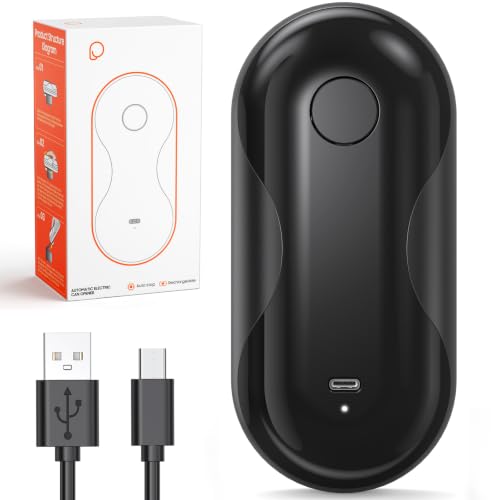
3. Electric Can Opener Automatic USB-C Rechargeable Smooth Edge
An Electric Can Opener Automatic USB-C Rechargeable Smooth Edge (electric can opener), per the listing. Check price on Amazon.
Good for: easy opening. Watch out: Check can size support.
Best for easy opening
4. Electric Can Opener Automatic USB-C Rechargeable Smooth Edge
An Electric Can Opener Automatic USB-C Rechargeable Smooth Edge (electric can opener), per the listing. Check price on Amazon.
Good for: easy opening. Watch out: Check can size support.
Best for easy opening
5. KITCHENMUH Electric Jar Opener for Seniors with Arthritis White
A KITCHENMUH Electric Jar Opener for Seniors with Arthritis White (electric can opener), per the listing. Check price on Amazon.
Good for: easy opening. Watch out: Check can size support.
Best for easy opening
6. Electric Can Opener Automatic USB-C Rechargeable Smooth Edge
An Electric Can Opener Automatic USB-C Rechargeable Smooth Edge (electric can opener), per the listing. Check price on Amazon.
Good for: easy opening. Watch out: Check can size support.
Best for easy opening
7. KITCHENMUH One Touch Electric Can Opener Fits All Can Sizes
A KITCHENMUH One Touch Electric Can Opener Fits All Can Sizes (electric can opener), per the listing. Check price on Amazon.
Good for: easy opening. Watch out: Check can size support.

Best for easy opening
8. Cuisinart Deluxe Electric Can Opener Single-Touch Automatic Can
A Cuisinart Deluxe Electric Can Opener Single-Touch Automatic Can (electric can opener), per the listing. Check price on Amazon.
Good for: easy opening. Watch out: Check can size support.
How to Choose
Size and capacity
Pick a size that fits your household.
Power and speed
Check wattage and settings.
Cleaning
Removable, dishwasher-safe parts help.
How Electric Can Openers Cut
Electric can openers use a motor to turn a cutting wheel around the can, and the way they cut shapes the results. The two common approaches are cutting the lid from the top and cutting along the side seam. Top-cutting models remove the lid, often leaving a sharp edge, while side-cutting, sometimes called smooth-edge, models cut the seal at the rim so the lid can be lifted off without a sharp edge. Some listings in this guide mention a smooth edge, which is the feature to look for if you worry about cuts.
Most traditional countertop openers hold the can with a magnet or a gripping mechanism and lower a cutting wheel as the can rotates. Handheld and battery or rechargeable models grip the rim and walk around the can by themselves. Each approach works differently: countertop units are stable and fast, and handheld ones are easy to store and travel with, but may be harder to line up. Check the listing for how the opener attaches to the can, and for any notes about can sizes it cannot handle.
- Choose a countertop unit if you open cans often and want a fixed spot.
- Choose a handheld battery or rechargeable model if you want to put it in a drawer and use it anywhere.
- Choose a smooth-edge design if you want to reduce sharp lids.
The post’s watch-out says to check can size support, and you should do that carefully if you use unusual cans, such as very tall, very small or ones with ring pulls.
Corded, Battery and Rechargeable Power
Power source is one of the biggest practical differences. Corded openers plug into an outlet and never run out of charge, which suits a kitchen where you have a socket close to your workspace. They need counter space and a cord path. Battery-operated models, like the red Kitchen Mama in the post, use disposable cells, so you must remember to replace them, and weak batteries can slow or stall the motor mid-can. Rechargeable models, such as the USB-C ones in the list, avoid the need for spare batteries, but you must remember to charge them.
Think about your habits. If you open cans every day, a corded unit may be the most dependable. If you use the tool occasionally, a rechargeable one that has lost charge in a drawer can be annoying, so check how long it holds a charge in storage. For people with limited grip strength or arthritis, an easy hands-free operation matters more than anything, so look at how much effort it takes to start and how securely it grips the can.
Check the cord length on corded models and whether it can be stored out of the way. For rechargeable ones, check the charging method and what the listing says about how many cans a charge covers, remembering that this is the maker’s estimate. Also see whether the battery is replaceable, since a sealed battery that fades will end the life of the tool.
Ease of Use, Grip and Accessibility
People often choose an electric opener because manual ones are hard on the hands, so ease of use deserves attention. A one-touch or single-touch operation, as described for some in this list, means you press once and the machine does the work. Look at how much force is required to lower the lever, how stable the opener is on the counter and whether it needs to be lined up exactly. A model that grips the can securely and stops automatically when it is finished is easier for people with limited dexterity.
Handles and buttons should be large enough to press without strain. Check whether controls are on the side or front, whether there is a clear indicator when the opener is working and whether it can be used with one hand. Some openers also have a built-in bottle or jar opener. The list includes a jar opener marketed for seniors with arthritis, and while that can be helpful, check the listing to see what the product really does and what sizes of jar it handles.
- Check whether you can operate it with one hand.
- Check for stability when the can is full and heavy.
- Check how the lid is released: some drop it onto the food, which you may not want.
If anyone in your home has a medical condition that affects hand strength, you may want to try the opener in person before you rely on it. Remember that a tool alone does not replace advice from a health professional.
Cleaning, Hygiene and Maintenance
Can openers touch the rims of cans and food residue, and the cutting wheel is a common place for grime to collect. Wipe the cutting wheel and the surfaces that touch the can after use, and unplug a corded unit before cleaning. Many models have a removable cutting lever or blade assembly that can be washed with warm soapy water, so check the manual to see which parts come off and whether any are dishwasher safe. Never put the motor housing in water.
A buildup of food on the cutter can leave the opener sticky or cause it to skip. A small brush, such as an old toothbrush, helps clean the teeth of the drive wheel and the cutting edge. Dry the parts fully to prevent rust. If the opener has a magnet to hold the lid, wipe it clean so it keeps its grip. Store the opener in a dry place, and keep it clear of heat and water.
The cutting wheel wears over time, so a dull wheel struggles and leaves ragged edges. Some makers sell replacement cutting parts, and others do not, so check the listing before you buy. Replace the opener if it slips on the can, makes grinding noises, stalls, leaves metal shavings or has damaged cords or switches. Signs of sparks or burning smells mean you should unplug it and stop using it. Following the manual’s care instructions will extend its life.
Safety and Choosing a Tier
Even with an electric opener, cans have sharp edges. Handle lids and rims with care, and dispose of lids safely, for example by pressing them back into the empty can before throwing it away. Smooth-edge models reduce the risk but do not eliminate it, so check the lid’s edge before touching it. Keep fingers clear of the cutting wheel and the drive gear while the opener is running, and keep the cord away from hot surfaces and out of children’s reach.
Be careful with dented cans, bulging cans or those with damaged seams, since these may be unsafe to use, and the food inside should be treated with caution. If you see a bulging can or strong odor on opening, do not taste the food, and follow food safety guidance in your area. Check pet food and other cans for their intended use before you cut them.
When it comes to budget tiers, lower-priced openers cover the basics of cutting around a standard can. Mid-range ones tend to offer smoother cuts, better stability or rechargeable convenience. Higher-priced models may add features such as additional openers, better materials or longer warranties. Before you buy, ask whether you want corded or cordless, whether smooth-edge cutting matters to you, how much counter space you have, whether you will use it daily and what the warranty and return terms are. Read recent customer feedback on how well it handles different can sizes.
Counter Space, Cord Placement and Storage
An electric can opener is a small appliance that lives or dies by how convenient it is to reach. Many people buy one, tuck it in a cabinet, and quietly return to a manual tool because retrieving it feels like more work than the task. Think about where the opener will actually sit before comparing models.
Corded units need an outlet within reach of a clear stretch of counter, and the cord length determines whether that works near a stove, a sink or a backsplash outlet. Keep the cord away from heat and water, and avoid stretching it across a walkway. Wall-mounted or under-cabinet styles free up counter space but require installation and a nearby outlet, so they suit permanent kitchens better than rentals. Cordless and rechargeable openers solve the placement problem, though they need a spot near a charger or a spare set of batteries.
Footprint and height also matter. Tall cans, such as larger tomato or vegetable sizes, need enough clearance under a cabinet to lift the opener’s lever. Measure the gap between counter and upper cabinet if your kitchen is tight, and check the product dimensions before assuming a model will fit.
Matching an Opener to Your Household
Different kitchens ask different things of this appliance, and the best choice shifts accordingly.
- Seniors or anyone with arthritis or limited grip strength: prioritize a hands-free or single-touch operation, a lever that needs little pressure, and a stable base that does not tip. The jar-focused model in this guide targets that need, though check that its controls feel manageable for the person using it.
- Small apartments and dorms: a compact cordless or rechargeable unit that stores in a drawer usually beats a bulky countertop machine you will use twice a week.
- Large families and heavy cooks: a corded model with a sturdy motor handles frequent use better, especially if you open several cans per meal.
- RVs, boats and camping kitchens: battery or USB-C rechargeable designs work away from reliable outlets, but pack a manual backup in case the charge runs out.
- Occasional users: a basic, inexpensive unit is fine. Paying for premium features makes little sense if the opener only appears a few times a month.
It helps to be honest about frequency. A device used daily justifies a sturdier build and a better warranty. One used monthly rarely does.
Noise, Motor Wear and Realistic Lifespan
Electric can openers are not silent. The motor, gears and cutting wheel together produce a grinding hum, and cheaper plastic housings can amplify it. If you cook early in the morning or share a thin-walled space, noise deserves a place on your checklist alongside power and size.
Longevity depends on a few predictable factors. The cutting wheel and drive gear are the wear parts, and both dull faster when residue from sticky foods builds up on them. Overloading the motor with oversized cans, or forcing it past a stuck point, shortens its life. A cutting wheel that begins slipping or leaving ragged edges is telling you it needs cleaning first and replacement second. Some brands sell replacement cutter assemblies, which is worth checking before purchase because a spare part can extend an otherwise sound appliance by years.
Warranty length gives a rough signal of how confident the maker is. A one-year warranty is common, but terms vary, so read what is covered, whether the cutter is included, and how claims work before relying on it.
Why a Manual Backup Still Makes Sense
Even the best electric opener fails when the power goes out, the battery dies, or a cutter dulls. Keeping a simple manual opener in a drawer costs little and removes the risk of being unable to open a can during an outage or a camping trip. A safety-cut manual model, which removes the lid from the side and leaves a smooth rim, is a reasonable pairing.
Handle the discarded lids with care regardless of style. Even smooth-edge cuts can leave a sharp circle of metal, so press the lid back into the can or drop it into the recycling carefully, and keep it away from small children and pets.
Questions Worth Asking Before You Order
A few quick checks prevent most disappointment with this kind of appliance. Ask whether the cutter is removable for cleaning, since a fixed blade traps residue and shortens life. Confirm the maximum can height, especially if you cook with tall cans of tomatoes or beans. Look at how the opener attaches to the can: a sturdy lever or magnet that holds firmly matters more than extra buttons.
Check power details too. Corded models should state cord length, while rechargeable ones should say how many cans a charge covers and how long recharging takes. If a listing gives no figures, treat any claim about battery life with caution. Finally, read what buyers say about the first few months of use, not just the first week, because early praise rarely tells you how a cutter holds up after repeated washing. If a model offers a return window, plan to test it with a few different can types right away, including a dented one and one with a ridged rim, so you can return it quickly if it struggles.
Three Families of Opener, Three Different Kitchens
The eight products in this guide are not eight versions of one idea. The Cuisinart countertop models are fixed appliances: they stand on the worktop, plug in, and open cans with a lever and a magnet in the traditional powered way. The Kitchen Mama and the USB-C rechargeable designs are walk-around openers that sit on top of the can, travel around it and leave a smooth edge, powered by batteries or a rechargeable cell. The KITCHENMUH entries widen the picture further, since that brand appears here with jar-opening help aimed squarely at users with weak grip or arthritis. Choosing well means choosing the family first, because each family suits a different kitchen layout, a different user’s hands and a different attitude to counter space.
Countertop models reward a permanent station: a spot near the prep area with a socket, where the opener is always ready and cans are brought to it. Walk-around models reward the opposite arrangement, living in a drawer and coming to the can wherever it is, which suits small kitchens and anyone who dislikes appliances on display. The smooth-edge cutting style of the handheld family also changes the result: the lid lifts away without a sharp rim and can rest back on the can as a cover, while traditional countertop cutting leaves the familiar edge inside the rim. Neither result is better in the abstract; cooks who strain tuna over the lid have preferences, and so do cooks who recycle lids and worry about small fingers.
Grip, strength and the users these tools really serve
Electric openers are often bought for someone else: a parent whose hands have stiffened, a partner recovering from an injury, a teenager making their first solo meals. For those users, the details that matter are how the opener starts, whether it needs to be held throughout, and what happens if a can is dented. A one-touch model that clamps, travels and stops by itself asks almost nothing of the hand. A countertop model asks the user to position the can and press a lever, which is still far easier than a manual opener’s twisting grip but not entirely hands-free. If you are buying for accessibility, watch the whole sequence, from picking the opener up to removing the lid, and favour the design with the fewest moments that demand pinch strength or sustained holding.
Can Sizes, Shapes and the Jobs Around the Kitchen
Most cans in most kitchens are unremarkable, and every pick in this guide handles them. The differences appear at the edges of the range: very small paste cans that some top-travelling openers struggle to grip, tall catering cans that test a countertop model’s height clearance, and oval or square cans whose corners defeat mechanisms designed around a circle. If your cooking uses a particular awkward can regularly, that can, not the standard one, should decide your model. Pet owners opening multiple cans daily, often small ones with pull rings as a backup, should think about daily repetition and how the opener cleans, because fish and pet food residues are unforgiving.
The opener’s second jobs matter too. Countertop models often add a knife sharpener or bottle opener at the back, features easy to dismiss until the day they save a drawer search. Handheld models travel: to a caravan, a holiday cottage with a dreadful manual opener, or a picnic where jars and cans both appear. The jar-opening members of this guide deserve a special mention, because in many households the jar, not the can, is the real daily battle, and a tool that solves both problems earns double its drawer space.
Lids, edges and safety around children and recycling
Cut style determines what you handle afterwards. Smooth-edge openers separate the lid at the side seam, leaving a lid that is safe to touch and a can rim that is safe to drink from or for a child to hold under supervision. Inside-cut openers leave the sharp edge on the lid itself, which then needs careful handling and disposal. Magnets on countertop models exist precisely to keep that lid out of the food and under control. Whichever style you choose, teach the household its habit: where lids go, how the magnet or the smooth lid is removed, and why the opener is unplugged or put away before small hands explore it. The safest opener is the one whose routine everyone in the house understands.
Power Choices and What They Mean Month to Month
Corded countertop models draw power only while cutting and never surprise you with a flat battery, but they anchor the task to one spot and add a cord to keep clean and clear of the hob. Battery handhelds trade that certainty for freedom, and their satisfaction depends on the household’s charging discipline. The USB-C rechargeable designs in this guide reflect how charging has changed: the same cable that charges a phone restores the opener, which makes a weekly top-up easy to fold into existing habits. Replaceable-battery models suit households that prefer to swap cells instantly rather than wait for a charge. There is no universal winner; there is only the match between a power system and a kitchen’s routines, and the honest question is whether anyone in your home will actually keep a small appliance charged.
Cutting performance over time follows maintenance more than power source. A cutting wheel dulled by years of use or corroded by unwashed food acids will tear rather than cut, whatever drives it. Rinsing or wiping the cutter after messy cans, drying it, and removing the wheel for a proper clean where the design allows keeps the cut clean for years. Countertop models collect splashes on their housing and cord; handhelds collect them around the cutting head and buttons. Five seconds of wiping after the evening meal is the entire maintenance programme for most of these tools, and skipping it is how a good opener becomes a grubby one.
Troubleshooting cuts that fail
When an opener skips, stalls or leaves the lid attached by a thread, work through the simple causes first. A dented rim can defeat the gear’s grip; rotating the can to start on an undamaged section often completes the cut. A very full can of something dense can strain a handheld’s motor, in which case a pause and a second run beats forcing it. Residue on the wheel acts like a blunt blade, so clean before condemning. If a countertop model hums without engaging, check that the can is seated against the guide and the lever fully pressed; these mechanisms are alignment-sensitive by design, because that alignment is what makes the cut safe. Only after those checks should you conclude that a wheel has worn out, and on models with replaceable cutters that is a small fix rather than a new appliance.
More Questions Households Ask About Electric Openers
Can these openers handle cans with pull rings?
They can, though the ring usually makes them unnecessary. Where a ring has snapped off, which happens at the worst moments, an electric opener is the rescue: smooth-edge handhelds grip the seam as usual, and countertop models cut inside the rim below the failed ring. Keep the can steady and expect the first attempt on a damaged rim to need repositioning. It is a genuinely useful backup role and one reason an electric opener earns its place even in kitchens that mostly buy ring-pull cans.
How do I clean the cutting area safely?
Unplug or switch off first, always. Most cutting heads wipe clean with a damp cloth and a little washing-up liquid, worked around the wheel with an old toothbrush for dried residue. Some handheld heads detach or open for rinsing under the tap; follow the maker’s guidance for your model rather than immersing a motor body that was not designed for it. Dry the metal parts before storing, because a wheel put away wet in a drawer is a wheel that rusts, and rust is the beginning of torn cuts and metallic flavours near food.
Is a smooth-edge cut always better?
Not for every cook. Smooth-edge lids cannot be used to press liquid out of a can of tuna in the traditional way, because the lid no longer fits inside the rim, and some cooks prefer the inside cut for exactly that trick. Smooth-edge cans also leave the full rim intact, which some find harder to empty completely with a spoon. These are small, real preferences, and they are why this guide keeps both cutting families in view. Choose the edge your cooking actually wants, not the one that sounds more advanced.
Placing the Opener in a Real Kitchen Workflow
Think about where cans get opened in your kitchen: usually beside the hob or the main board, mid-recipe, with wet hands. A countertop opener therefore wants its station within a step of that place, not across the room near the kettle. A handheld wants its drawer to be the one you can open with a hip while your other hand holds the can. These placement thoughts sound trivial until the first week of use proves them decisive, because an opener that is awkward to reach loses to the manual one in the nearer drawer, however much better it cuts.
Finally, consider the household’s whole opening problem, not just cans. Jars, bottles, ring pulls and packaging all resist somebody in most homes. The picks in this guide that add jar help or bottle opening to the main job solve a cluster of frustrations at once, and for the person in the house with the weakest grip, that cluster is the difference between cooking independently and waiting for help. Buy for that person, place the tool where their hands can find it, and the opener will justify itself every single day.
Ownership Over Time: What Wears, What Lasts
An electric can opener has few moving parts, and the ones it has wear predictably. The cutting wheel is the consumable: it meets every rim you feed it, and its edge slowly rounds. The traction gear that grips the rim wears more slowly but can be damaged by forcing dented cans. Motors in this class rarely fail before the cutter does, which is why models with replaceable cutting assemblies, or makers who supply spares, deserve a preference when everything else is equal. Plastic housings yellow and stain with kitchen life but keep working; the honest end of an opener’s life is usually a cut that tears despite a clean wheel and a sound battery or cord.
There is also a hygiene arc to ownership. The cutting area touches the rim of every can, and can exteriors travel through warehouses and shop shelves before reaching your kitchen. A quick wipe of dusty can tops before opening is a habit worth adopting alongside the opener itself, because the lid and rim pass close to the food as they separate. It takes two seconds, it costs nothing, and it is the kind of detail that separates a kitchen that merely owns good tools from one that uses them well.
Gifting and equipping other kitchens
Few small appliances are given as often as these, to students, to parents, to friends setting up a first kitchen. If you are choosing as a gift, favour the model that needs the least explanation: a one-touch handheld for a drawer in a small flat, a sturdy countertop unit for a family kitchen with space to spare. Include the batteries or charge it before wrapping if it is rechargeable, because a tool that works the moment it is unwrapped makes its case immediately. And if the recipient’s difficulty is grip rather than cans, look again at the jar-opening picks in this guide; matching the gift to the real frustration is the whole art of choosing in this category, whether the kitchen is yours or someone you love.
In the end, an electric can opener is a modest tool with an immodest effect: it removes a small daily struggle so completely that owners forget it was ever there. Choose the family that fits your counters and your hands, keep the cutter clean, and let it get on with being forgotten. That forgettability, paradoxically, is the mark of the right choice among the picks above.
A short routine for the first week
When the opener arrives, open three cans with it on the first day: one standard can, one small one and, if your kitchen uses them, one awkward shape. That small trial teaches you its seating, its sound and its stopping behaviour without the pressure of a meal in progress. Note where it feels happiest in your kitchen and make that its home. Show anyone else who cooks how it starts and stops, because a tool shared without explanation gets forced, and forcing is what damages gears and wheels. A week later the routine will be invisible, which is exactly the point: the opener has joined the kitchen’s furniture, ready for the thousands of unremarkable cans that are its real workload, and for the one difficult can, on the one tiring evening, when you will be quietly grateful it is there.
It is worth saying plainly that none of the picks in this guide asks much of you in return: a clean wheel, a charged battery or a free socket, and a home within reach of the board. Meet those small conditions and the daily negotiation with cans simply ends. For households where that negotiation had become a genuine obstacle to cooking, the change feels larger than the tool, and it begins with the unglamorous decision you are making now, between a countertop station, a travelling handheld and the jar-helping designs that share this list.
Choose for the hands that will use it most, not for the specification that reads best. In this category more than most, the right opener is a personal fit, and the guide above gives you honest examples of every fit worth considering.
One more practical thought before you order: measure the space or the drawer you have in mind. Countertop models vary in height enough to matter under low cupboards, and a handheld that shares a drawer with sharp tools will pick up scratches and knocks that do its buttons no good. A minute with a tape measure now prevents the small, silly mismatch that sends an otherwise perfect opener back in its box.
And when it arrives, keep the manual’s cleaning page. Every model in this guide has one small quirk of disassembly or care that is obvious once read and puzzling until then, and the two minutes with that page are the best investment in the tool’s whole life.
After that, there is nothing left to learn and nothing left to struggle with. The cans open, the lids behave, the cooking proceeds, and a task that used to interrupt recipes becomes a pause of a few seconds that nobody in the kitchen even remarks on any more.
That quiet reliability is the standard to hold your choice to. If the model you are leaning towards promises it, in a form your kitchen can house and your hands can work without thought, you have found your opener among the picks above.
Buy it once, place it well, keep its cutter clean, and let it serve without ceremony for years. Few purchases in the kitchen ask so little and remove so much.
That is the whole case for the category, and it rests on your next ordinary week of cooking, not on any feature list.
Trust your hands to judge it when it arrives; they are, after all, the reason it exists.
And with that judgement made, the rest of this guide’s advice is simply there to help you keep the tool working as well in its third year as it did in its first week.
Keep the cutter clean, the battery charged or the cord untangled, and there is no reason it should not, season after season, can after can.
Frequently Asked Questions
Is it easy to use?
Most have simple controls.
What do I need extra?
Check included accessories.
Is it safe?
Follow the manual.
What is a smooth-edge can opener?
It is a design that cuts around the outside rim of the can so that the lid has no sharp inner edge. Check the listing to confirm how a specific model cuts, since the word is used in different ways.
Do electric can openers work on all can sizes?
Not always. Very small, very tall or unusually shaped cans may not fit, so check the listing for the sizes it supports, as the post suggests.
How do I clean the cutting wheel?
Unplug the opener, wipe the wheel with a damp cloth or brush and dry it fully. If the part is removable, wash it in warm soapy water, following the manual.
Are battery can openers strong enough?
Many can open standard cans, but weak batteries slow them down. Use fresh cells, or choose a rechargeable model and keep it charged.
Can an electric opener open pull-tab cans or jars?
Pull-tab cans can be opened by hand, and some openers also include jar features, though that is not typical. Check the listing to see what the product is designed to open.
Why does my opener keep slipping?
The cutting wheel may be dull or dirty, the can may not be seated properly or the drive gear may have food on it. Clean the parts and reposition the can before replacing the tool.
Is it safe to use on dented cans?
Heavily dented cans may not seat properly and could be unsafe, particularly if the seam is damaged. If a can is bulging or smells wrong when opened, do not use the food.
What should I use if the power goes out?
Keep a manual can opener in a kitchen drawer as a backup. Battery and rechargeable electric models work during an outage only while their charge lasts, and corded models will not run at all. A basic hand-crank or safety-cut manual opener costs little and avoids the problem.
How long should an electric can opener last?
There is no fixed number, since lifespan depends on how often you use it and how well you clean it. A model used a few times a week and kept free of food residue can serve for years, while heavy daily use or neglected cleaning wears the cutter and gears sooner.
Can an electric opener handle large restaurant-size cans?
Most household electric openers are designed for standard grocery cans and may not fit tall or wide institutional cans. Check the manufacturer’s stated maximum can height and diameter, and use a dedicated heavy-duty opener for bulk sizes.
Do magnetic lid holders actually matter?
A magnet that lifts the lid as the cut finishes is a convenience feature that keeps your fingers away from a loose edge and prevents the lid from dropping into the food. It is not essential, but it is useful for anyone with limited dexterity.
Bottom Line
Hands-free models help people with weak grip.
More Kitchen Guides
- Best Hand Blenders
- Best Nonstick Electric Griddles and Skillets
- Best Disposable Parchment Air Fryer Liners
- Best Belgian and Mini Waffle Makers
- Best Cold Press and Citrus Juicers
- Best Programmable Slow Cookers
- Best Multi-Cookers for Home Kitchens
- Best Immersion Circulators for Sous Vide