Disclosure: As an Amazon Associate, Reviews Took earns from qualifying purchases. Links to Amazon on this page are affiliate links; they cost you nothing extra.
Cold brew steeps coarse coffee grounds in cool water for many hours, which gives a smooth, low-acid concentrate. It keeps in the fridge for days, so one batch covers a week of iced coffee.
This guide compares 12 cold brew coffee makers listed on Amazon, from simple mason jar pitchers to an electric rapid cold brew machine. We compare capacity and explain how to brew a good batch.
Check price on Amazon for current pricing and availability; prices change often.
Last updated: November 2, 2026.
How We Chose These Picks
This guide is built from Amazon product listings, prices and customer ratings, not our own testing, so confirm size, contents and current price on each product page. For each product we looked at the Amazon listing title and specifications, then grouped products by type and price tier. We did not buy or test these products. Ratings reflect what other buyers reported and can shift as new reviews arrive.
This list covers 12 products across budget, mid-range and premium price tiers. Use the tables below to compare quickly, then read the individual notes before you buy.
In this guide
Quick Picks
| Product | Type | Price | Rating | Why it stands out |
|---|---|---|---|---|
| Primula Burke Deluxe Cold Brew Iced Coffee Maker Comfort Grip | Cold brew coffee maker | Check price on Amazon | — | Smooth iced coffee at home |
| OXO Brew Cold Brew Coffee Maker | Cold brew coffee maker | Check price on Amazon | — | Smooth iced coffee at home |
| VINCI Express Electric Cold Brew Coffee Maker 10-Minute Fast | Cold brew coffee maker | Check price on Amazon | — | Smooth iced coffee at home |
| Cold Brew Coffee Maker 1 Gallon Iced Coffee Maker With Stainless | Cold brew coffee maker | Check price on Amazon | — | Smooth iced coffee at home |
| County Line Kitchen 64oz Cold Brew Coffee Maker with Leak Proof | Cold brew coffee maker | Check price on Amazon | — | Smooth iced coffee at home |
| Cold Brew Coffee Maker 64 oz Glass Mason Pitcher | Cold brew coffee maker | Check price on Amazon | — | Smooth iced coffee at home |
| 64 oz Cold Brew Coffee Maker Mason Jar Pitcher with Stainless | Cold brew coffee maker | Check price on Amazon | — | Budget tier pick |
| [Upgraded Widened Handle] Cold Brew Coffee Maker Mason Jar Pitcher | Cold brew coffee maker | Check price on Amazon | — | Budget tier pick |
| Ninja Hot & Iced XL Coffee Maker with Rapid Cold Brew Black CM371 | Cold brew coffee maker | Check price on Amazon | — | Premium tier pick |
| Cold Brew Coffee Maker 64 oz Glass Mason Jar Pitcher | Cold brew coffee maker | Check price on Amazon | — | Smooth iced coffee at home |
| County Line Kitchen 64oz Cold Brew Coffee Maker with Leak Proof | Cold brew coffee maker | Check price on Amazon | — | Smooth iced coffee at home |
| Cold Brew Coffee Maker 64 oz Mason Jar Pitcher with Stainless | Cold brew coffee maker | Check price on Amazon | — | Smooth iced coffee at home |
Our Picks
Top pickBest for keeping costs low while covering the basics
1. Primula Burke Deluxe Cold Brew Iced Coffee Maker Comfort Grip
Primula Burke Deluxe Cold Brew Iced Coffee Maker Comfort Grip is listed as a cold brew coffee maker. Listing details include: Comfort Grip Handle; Durable Glass Carafe; Removable Mesh Fi. Check price on Amazon for current pricing (budget tier).
Good for: keeping costs low while covering the basics. Watch out: Check capacity and filter fineness.
Best for larger or more demanding setups where extra capacity matters
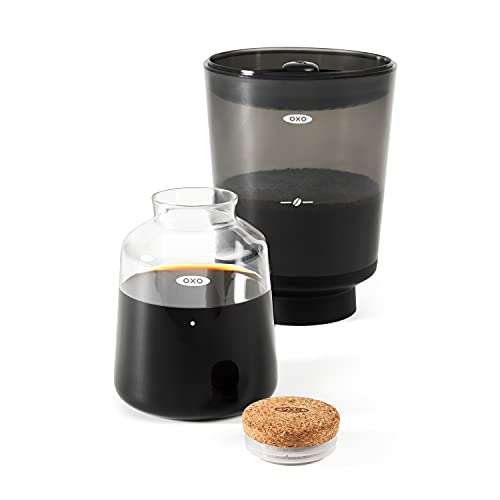
2. OXO Brew Cold Brew Coffee Maker
OXO Brew Cold Brew Coffee Maker is listed as a cold brew coffee maker. Check price on Amazon for current pricing (premium tier).
Good for: larger or more demanding setups where extra capacity matters. Watch out: Check capacity and filter fineness.
Best for larger or more demanding setups where extra capacity matters
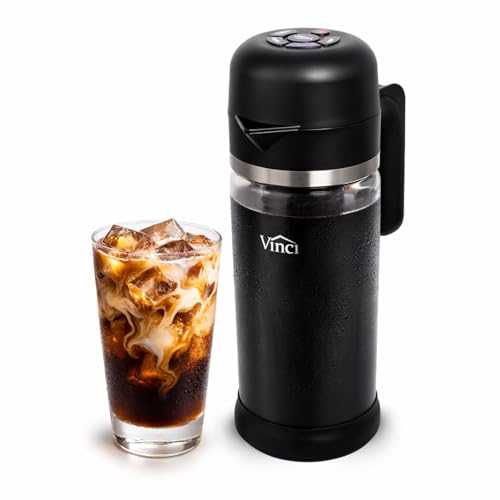
3. VINCI Express Electric Cold Brew Coffee Maker 10-Minute Fast
VINCI Express Electric Cold Brew Coffee Maker 10-Minute Fast is listed as a cold brew coffee maker. Listing details include: 10-Minute Fast Brewer (47oz). Check price on Amazon for current pricing (premium tier).
Good for: larger or more demanding setups where extra capacity matters. Watch out: Check capacity and filter fineness.
Best for smooth iced coffee at home
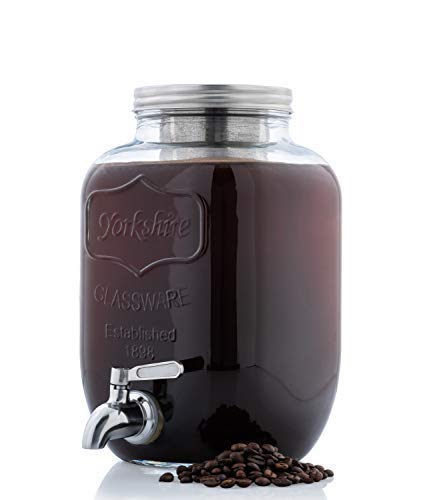
4. Cold Brew Coffee Maker 1 Gallon Iced Coffee Maker With Stainless
Cold Brew Coffee Maker 1 Gallon Iced Coffee Maker With Stainless is listed as a cold brew coffee maker. Listing details include: 1 Gallon Iced Coffee Maker With Stainless Steel Filter; Heavy Duty Glass Cold Brew Pit. Check price on Amazon for current pricing (mid-range tier).
Good for: smooth iced coffee at home. Watch out: Check capacity and filter fineness.
Best for smooth iced coffee at home
5. County Line Kitchen 64oz Cold Brew Coffee Maker with Leak Proof
County Line Kitchen 64oz Cold Brew Coffee Maker with Leak Proof is listed as a cold brew coffee maker. Listing details include: Black. Check price on Amazon for current pricing (mid-range tier).
Good for: smooth iced coffee at home. Watch out: Check capacity and filter fineness.
Best for smooth iced coffee at home
6. Cold Brew Coffee Maker 64 oz Glass Mason Pitcher
Cold Brew Coffee Maker 64 oz Glass Mason Pitcher is listed as a cold brew coffee maker. Listing details include: 64 oz Glass Mason Pitcher. Check price on Amazon for current pricing (mid-range tier).
Good for: smooth iced coffee at home. Watch out: Check capacity and filter fineness.
Best for keeping costs low while covering the basics
7. 64 oz Cold Brew Coffee Maker Mason Jar Pitcher with Stainless
64 oz Cold Brew Coffee Maker Mason Jar Pitcher with Stainless is listed as a cold brew coffee maker. Listing details include: Mason Jar Pitcher with Stainless Steel Filter. Check price on Amazon for current pricing (budget tier).
Good for: keeping costs low while covering the basics. Watch out: Check capacity and filter fineness.
Best for keeping costs low while covering the basics
8. [Upgraded Widened Handle] Cold Brew Coffee Maker Mason Jar Pitcher
[Upgraded Widened Handle] Cold Brew Coffee Maker Mason Jar Pitcher is listed as a cold brew coffee maker. Listing details include: Mason Jar Pitcher. Check price on Amazon for current pricing (budget tier).
Good for: keeping costs low while covering the basics. Watch out: Check capacity and filter fineness.

Best for larger or more demanding setups where extra capacity matters
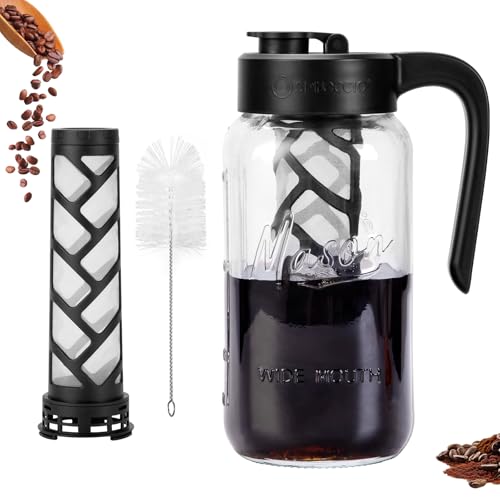
9. Ninja Hot & Iced XL Coffee Maker with Rapid Cold Brew Black CM371
Ninja Hot & Iced XL Coffee Maker with Rapid Cold Brew Black CM371 is listed as a cold brew coffee maker. Listing details include: Black; CM371. Check price on Amazon for current pricing (premium tier).
Good for: larger or more demanding setups where extra capacity matters. Watch out: Check capacity and filter fineness.

Best for smooth iced coffee at home
10. Cold Brew Coffee Maker 64 oz Glass Mason Jar Pitcher
Cold Brew Coffee Maker 64 oz Glass Mason Jar Pitcher is listed as a cold brew coffee maker. Listing details include: 64 oz Glass Mason Jar Pitcher. Check price on Amazon for current pricing (mid-range tier).
Good for: smooth iced coffee at home. Watch out: Check capacity and filter fineness.
Best for smooth iced coffee at home
11. County Line Kitchen 64oz Cold Brew Coffee Maker with Leak Proof
County Line Kitchen 64oz Cold Brew Coffee Maker with Leak Proof is listed as a cold brew coffee maker. Listing details include: Gray. Check price on Amazon for current pricing (mid-range tier).
Good for: smooth iced coffee at home. Watch out: Check capacity and filter fineness.
Best for keeping costs low while covering the basics
12. Cold Brew Coffee Maker 64 oz Mason Jar Pitcher with Stainless
Cold Brew Coffee Maker 64 oz Mason Jar Pitcher with Stainless is listed as a cold brew coffee maker. Listing details include: 64 oz Mason Jar Pitcher with Stainless Steel Filter; Pour Spout Handle Lid; Airtight &. Check price on Amazon for current pricing (budget tier).
Good for: keeping costs low while covering the basics. Watch out: Check capacity and filter fineness.
Price and Rating Comparison
The table below lists the same products by price tier so you can compare them side by side.
| Product | Price | Rating | Price tier |
|---|---|---|---|
| 64 oz Cold Brew Coffee Maker Mason Jar Pitcher with Stainless | Check price on Amazon | — | Budget |
| [Upgraded Widened Handle] Cold Brew Coffee Maker Mason Jar Pitcher | Check price on Amazon | — | Budget |
| Primula Burke Deluxe Cold Brew Iced Coffee Maker Comfort Grip | Check price on Amazon | — | Budget |
| Cold Brew Coffee Maker 64 oz Mason Jar Pitcher with Stainless | Check price on Amazon | — | Budget |
| Cold Brew Coffee Maker 64 oz Glass Mason Pitcher | Check price on Amazon | — | Mid-range |
| County Line Kitchen 64oz Cold Brew Coffee Maker with Leak Proof | Check price on Amazon | — | Mid-range |
| County Line Kitchen 64oz Cold Brew Coffee Maker with Leak Proof | Check price on Amazon | — | Mid-range |
| Cold Brew Coffee Maker 64 oz Glass Mason Jar Pitcher | Check price on Amazon | — | Mid-range |
| Cold Brew Coffee Maker 1 Gallon Iced Coffee Maker With Stainless | Check price on Amazon | — | Mid-range |
| OXO Brew Cold Brew Coffee Maker | Check price on Amazon | — | Premium |
| VINCI Express Electric Cold Brew Coffee Maker 10-Minute Fast | Check price on Amazon | — | Premium |
| Ninja Hot & Iced XL Coffee Maker with Rapid Cold Brew Black CM371 | Check price on Amazon | — | Premium |
How to Choose
Capacity and batch size
A 64-ounce pitcher makes enough concentrate for several servings. Larger one-gallon makers suit big households.
Filter design
A fine mesh filter keeps grounds out of the cup. Check that it is easy to clean and does not clog.
Glass versus plastic
Glass resists stains and odors but can break. BPA-free plastic is lighter.
Manual versus electric
Manual pitchers are cheap and quiet, while electric cold brew machines speed up the process at higher cost.
Lid and spout
A sealed lid and drip-free spout reduce mess in the fridge.
Common Mistakes to Avoid
- Using a fine grind, which makes bitter, muddy coffee
- Steeping too long at room temperature
- Not rinsing the filter
- Storing cold brew for too long
Setup and Care Tips
- Use coarse grounds at about a 1 to 8 ratio for concentrate
- Steep 12 to 18 hours in the fridge
- Dilute concentrate with water or milk
- Clean the filter right after use
Ratios and Steep Times Explained
Cold brew is simple in concept: coarsely ground coffee sits in cold or room-temperature water for many hours, then you strain it. The details are the ratio of coffee to water and the length of the steep, and those two choices decide whether you get a concentrate you dilute or a drink-ready brew. Ratios are most reliable when measured by weight, since a scoop of coarse grounds can vary a lot in grams. If you only have measuring cups, keep the same cup size each time so your results stay consistent.
As a rough framework, a concentrate uses a lot of coffee relative to water, and you add water or milk when serving. A ready-to-drink style uses less coffee and can be poured straight over ice. Neither is better; it depends on how you drink it and how much fridge space you have. Concentrate stores compactly, while ready-to-drink needs larger pitchers but avoids a step at serving time.
How Long to Steep
- Shorter steeps (around 12 hours): tend to taste lighter, brighter and less intense.
- Medium steeps (roughly 16 to 18 hours): a common middle ground with balanced body and sweetness.
- Longer steeps (20 hours or more): can produce heavier, woodier or more bitter flavors, especially with fine grounds or dark roast.
Time and temperature interact. A pitcher left on the counter extracts faster than one in the refrigerator, so adjust the time down if you steep at room temperature. Taste at different points on your first few batches, and keep notes on which timing you liked.
Choosing Beans and Roast Level
Cold extraction brings out smooth, chocolate-like and nutty notes more readily than it does bright acidity. That is why many people reach for medium or medium-dark roasts when they make cold brew. Light roasts can still work, but their fruity and floral character may come across as thin or tea-like after a long cold steep, and some people find them sour. Single-origin beans reveal more of their own character, while blends tend to give a steadier everyday cup.
Freshness helps, but cold brew is more forgiving than espresso. Beans a week or two past roasting still produce a pleasant cup, and stale beans taste flat rather than harsh. Buy whole beans and grind them just before brewing when you can. If you buy pre-ground, look for a coarse grind labeled for cold brew or French press, since a fine grind passes through filters and makes sludge.
Hot-Brewed Iced Coffee and Rapid Methods
Not every product in this guide works the same way. The Ninja Hot and Iced XL, for example, is a machine with a rapid cold-brew setting, which is different from the long steep used in a pitcher. Rapid methods agitate or pulse the water to speed extraction, producing something closer to cold brew in a fraction of the time, though the flavor can differ from an overnight steep. VINCI’s fast electric design follows a similar idea of speed over the traditional approach.
Hot-brewed iced coffee is another option: you brew a stronger cup, pour it over ice and let dilution do the rest. It tastes brighter and more acidic than cold brew, and it is ready in minutes. If you value speed and a lively cup, this method deserves consideration. If you value smoothness and the ability to prepare a big batch for the week, a steeping pitcher is a better fit.
Serving Cold Brew Well
How you serve it matters as much as how you brew it. Ice dilutes as it melts, so a strong concentrate over ice tastes balanced while a ready-to-drink batch can get weak. Some people freeze coffee in ice-cube trays so the cubes chill the drink without watering it down.
- Black over ice: the simplest option, best for tasting the coffee.
- With milk or cream: concentrate stands up to dairy or plant milk better than a lighter brew.
- Sweetened: sugar dissolves poorly in cold liquid, so use a simple syrup made from equal parts sugar and hot water.
- As a cocktail or dessert base: concentrate works in tiramisu-style recipes or mixed drinks, where its intensity is an advantage.
Planning Batches for Your Household
Think about consumption before buying. A single drinker having one glass a day uses far less than a family, and a 64-ounce pitcher is already a lot of liquid in a small refrigerator. The 1-gallon option in this guide is meant for larger batches, but make sure it fits on a shelf, including its lid and handle. Storage matters, because a tall pitcher on a door shelf is more likely to be knocked or leaked than one placed in the main compartment.
Brewing a new batch every few days keeps the flavor fresh, and many people stagger two pitchers so there is always one ready. Cleaning is the part people skip, and oils from coffee can build up on mesh and plastic. Rinse parts right after straining, and do a fuller wash with mild soap every cycle. That habit prevents the stale taste that often gets blamed on the beans.
Related guides
- 6 Best Cold Brew Systems for Iced Coffee at Home (2026)
- 6 Best Cold Brew Coffee Makers for Home Use (2026)
- 6 Best Nitro Cold Brew Makers for Home
Frequently Asked Questions
How long does cold brew last?
Many people drink it within about a week when kept cold.
What grind should I use?
Coarse, like French press.
Is cold brew less acidic?
It is generally perceived as smoother and less acidic than hot coffee.
Can I use any coffee beans?
Yes, but medium and dark roasts are popular for cold brew.
Do I need a special pitcher?
No, but a fine mesh filter makes the process easier.
How much concentrate do I use?
Start with equal parts concentrate and water or milk, then adjust.
Should I steep cold brew on the counter or in the refrigerator?
Both work. Counter steeping extracts faster, so use a shorter time, roughly half a day, and refrigerate soon after. Refrigerator steeping is slower and gentler, often taking a full day or so, but lowers any concern about leaving it out. Choose whichever fits your schedule and taste.
Does cold brew have more caffeine than regular coffee?
It depends on the ratio and how you dilute it. Concentrate is strong and can contain a lot of caffeine per ounce, but once diluted the amount per cup is often similar to or somewhat different from hot coffee. Check your serving size rather than assuming one method is always higher.
Can I reuse the grounds for a second batch?
You can, but the second brew will be weak and may taste papery or flat because most of the soluble flavor leaves in the first extraction. Some people mix leftover grounds into a fresh batch or compost them. For best taste, start each batch with fresh grounds.
Why is my cold brew cloudy or gritty?
Cloudiness usually comes from fine particles that passed through the filter, often caused by too fine a grind or a worn mesh. Use a coarser grind, strain slowly, and consider a second pass through a paper filter. Some cloudiness is normal and harmless, but grit means your setup needs adjusting.
Bottom Line
For most homes a 64-ounce mason jar style pitcher with a fine mesh filter is the best value for smooth cold brew.
More Guides You May Like
- Best Stovetop Espresso Makers
- Best Travel Mugs
- Best Digital Coffee Scales for Espresso and Pour-Over
- Best Airtight Coffee Containers
- Best Tea Tumblers with Infusers
- Best Coffee Bean Grinders for Home Brewing
How to Judge cold brew coffee maker Quality Beyond the Headline Features
The headline features of any cold brew coffee maker are the easiest part to compare, but they are rarely what decides whether you still enjoy using it a year from now. When you are steeping smooth, low-acid iced coffee at home, the details that matter most tend to be the ones you feel every single day: how smoothly parts move, how predictable the behaviour is, and how much small friction builds up between you and the job you actually want to do. A sensible way to judge quality is to separate the purchase into three layers. The first layer is the core job, the one task the product exists to do. The second layer is everything that supports that job, such as handling, build, compatibility and ease of cleaning or maintenance. The third layer is ownership over time: spare parts, support, and how gracefully the product ages when it is used hard rather than admired on a shelf.
A useful exercise before you buy is to write down the three situations in which you will use the product most often, in plain language, and then test every candidate against those situations rather than against an idealised best case. Products that look similar on a comparison table often separate quickly once you ask concrete questions. What happens on a rushed morning, on a long day, or in awkward conditions? Does the design still make sense when you are tired, hurried or working in a tight space? The options in the main list above were chosen because they cover different answers to those questions, from simple and robust to feature-rich and specialised, so the honest comparison is not which one is best in the abstract but which one matches your three situations most closely.
It also helps to distinguish between limitations you can work around and limitations you cannot. A workaround you perform once, such as an initial setup step or buying one inexpensive accessory, is a minor cost. A workaround you must repeat every single session is a design mismatch, and it will quietly push the product into a drawer or onto a resale listing. As you read the individual reviews above, pay attention to the skip-if notes: they exist precisely to flag those repeat-every-time mismatches, and they are usually a more reliable guide than the headline strengths.
Setting Up and Getting the First Week Right
The first week with a new cold brew coffee maker teaches you more than any specification sheet, provided you use that week deliberately. Start with the simplest possible version of your routine for steeping smooth, low-acid iced coffee at home. Resist the urge to test every feature at once, because when something disappoints you will not know whether the cause was the product, your settings, or simple unfamiliarity. Change one variable at a time, keep the rest of your routine constant, and note what actually changed. A few lines in a notebook or phone note, written immediately after a session, are worth more than a detailed memory reconstructed days later.
Pay attention to the order in which problems appear. Early problems are usually fit and familiarity problems: things feel awkward because your hands, your workspace or your habits were built around different equipment. Those problems often fade within days. Problems that persist into the second week, and that you find yourself planning around, are the real signals. If you bought from a retailer with a returns window, treat that window as part of the product test rather than as an embarrassment to avoid. A return made for a clear, observed reason is a successful test, not a failed purchase.
Finally, set the product up for the way you will actually store and reach for it. Equipment that lives in its working position gets used; equipment that must be unpacked, assembled or fetched from another room gets skipped on busy days. Where your cold brew coffee maker lives, how it is stored between sessions, and how quickly it returns to a ready state will shape your results as much as any feature on the box.
Technique Matters More Than Most Upgrades
Experienced cold brew fans tend to agree on an unglamorous point: technique explains more of the final result than the difference between good products in the same class. That is good news, because technique is free. The core skill in steeping smooth, low-acid iced coffee at home is consistency: doing the same sensible steps in the same order until they become automatic, so that when you do change something, the effect is visible and repeatable. Random variation hides cause and effect; consistency reveals it.
Build a short baseline routine and write it down. Include the preparation steps people usually skip, the order of operations, and the one or two checks you perform before you start and after you finish. Then, when a result disappoints, walk the routine backwards and find the first step that differed from the baseline. Most disappointments trace back to a hurried preparation step, a skipped check, or an environmental factor such as temperature, light, clutter or fatigue, rather than to the product itself. Fixing the step is cheaper and more satisfying than replacing the product.
When you do upgrade, upgrade the bottleneck. If your routine is consistent and one specific step still limits you, that step is where money earns its keep. If your routine is inconsistent, a better product mostly gives you more expensive inconsistency. This is why the picks above are organised by use case rather than by a single ranking: the right upgrade for a beginner building consistency is rarely the right upgrade for an experienced user chasing a specific capability.
Common Mistakes and How to Avoid Them
The most common mistake with any cold brew coffee maker is buying for an imagined routine instead of a real one. It is easy to picture the ambitious version of steeping smooth, low-acid iced coffee at home: the big project, the demanding trip, the elaborate session. Most of life, though, is the ordinary version, and a product optimised for the rare ambitious day often performs worse on the ordinary days that make up ninety percent of its use. Buy for the routine you have, and let the ambitious version be the pleasant surprise rather than the design brief.
A second mistake is ignoring compatibility until after the purchase. Compatibility is not only about whether two things physically connect or fit. It is also about sizes, clearances, weights, power, software, and the accessories you already own. Before ordering, list what the new product must work with, measure the spaces it must fit into, and check the makers’ own compatibility notes rather than relying on a marketplace answer written about a different model. Five minutes with a tape measure and a compatibility list prevents the most frustrating category of return.
A third mistake is neglecting the boring consumables and care items that keep the product working: the correct cleaning method, the replacement part that wears out, the storage condition that prevents damage. Owners who build a tiny maintenance habit, a few minutes on a regular rhythm, routinely get years more service from mid-range products than careless owners get from premium ones. The premium price buys capability; the maintenance habit is what lets you keep it.
Matching the Picks Above to Real Situations
Because the list above covers several different approaches to the same job, it helps to translate the picks into situations. If your priority is simplicity and reliability above all else, favour the pick whose review emphasises straightforward operation and easy care, even if its feature list looks shorter. Features you never use do not merely add nothing; they add weight, cost, cleaning burden and failure points. If your priority is room to grow, favour the pick with the widest compatibility and the most standard fittings, because it will absorb future accessories and changes of routine without forcing a replacement.
If you work in demanding conditions, heat, cold, moisture, dust, travel or long continuous sessions, weight the durability and protection notes in each review more heavily than the convenience notes. Convenience features are designed for comfortable conditions; protection features earn their value precisely when conditions stop being comfortable. Conversely, if your use is entirely at home or in a studio, protection you will never need is dead weight, and the lighter, simpler, easier-to-clean option is usually the smarter buy.
Budget deserves a situation-based answer too. Spending more makes sense when the expensive pick removes a step you perform constantly, solves a compatibility problem you definitely have, or survives conditions you definitely face. Spending more makes little sense when the difference is a capability you might use someday. A practical rule: pay for the problems you already have, not for the problems you can imagine. The comparison notes in each review above are written to help exactly that judgement, pick by pick.
Care, Cleaning and Long-Term Ownership
Long-term ownership of a cold brew coffee maker is mostly a story of small habits. Clean the product the way the maker directs, with the materials the maker approves, and be suspicious of aggressive shortcuts: harsh chemicals, abrasive pads and improvised tools cause more cumulative damage than the dirt they remove. Where the maker is silent, the conservative default is warm water, a soft cloth, mild detergent where appropriate, and patience. Let things dry fully before storage, because trapped moisture is a slow and silent enemy of metals, fabrics, seals and electronics alike.
Inspect wear points on a schedule rather than waiting for failure. Straps, hinges, seals, threads, contacts, edges and moving joints all announce their decline gradually: stiffness, play, fraying, discolouration, roughness or a new noise. Catching wear early usually means a cheap replacement part or a small adjustment; catching it late can mean a ruined session or a damaged companion product. Keep the small spares and tools that came in the box together in one labelled place, because the day you need them is never the day you want to search for them.
Storage deserves the same thought as use. Store the product clean, dry, unloaded where the maker advises it, and away from extremes of heat and damp. If it travels with you, protect it from the two forces that damage equipment most in transit: impact and abrasion. A modest case, wrap or divider system, used consistently, preserves both function and resale value far better than careful intentions.
Understanding the Trade-Offs in This Category
Every cold brew coffee maker design is a bundle of trade-offs, and understanding the main ones makes the reviews above much easier to use. The first trade-off is capability versus simplicity. More capability usually means more adjustments, more modes or more parts, and each addition asks something of you: learning time, setup time, or attention during use. The second trade-off is size and weight versus capacity and comfort. Bigger and heavier designs can carry more, reach further or run longer, but they ask more of your body, your vehicle and your storage space. The third trade-off is specialisation versus versatility. A specialised product does one job beautifully and other jobs reluctantly; a versatile product does everything adequately and nothing perfectly.
None of these trade-offs has a universally right answer, which is why honest reviews describe them instead of hiding them. When a review above lists a limitation, read it as a coordinate rather than a verdict: it tells you where that product sits on the trade-off map. Your job as a buyer is simply to know where you sit on the same map. If you are unsure, versatility and simplicity are the safer defaults, because most people overestimate how specialised their routine really is, and an adequate tool used constantly beats a perfect tool used rarely.
Price interacts with trade-offs in a way worth stating plainly. Higher prices in this category usually buy refinement: smoother operation, better materials, tighter tolerances, better support. They rarely buy a different category of result. A careful user with a mid-priced pick and a consistent routine will outperform a careless user with the flagship almost every time, which is another way of saying that the reviews above matter less than the habits in these added sections.
A Practical Checklist Before You Buy
Before ordering any cold brew coffee maker, run through a short written checklist. First, state the job in one sentence: what will this product do, how often, and where. Second, list everything it must be compatible with, including sizes, fittings, power and the accessories you already own. Third, measure the space it will live in and the space it must pass through. Fourth, decide which single trade-off you care about most, capability, size, simplicity or specialisation, and let that decision rank the shortlist. Fifth, check what ownership requires: cleaning method, wear parts, warranty terms and the maker’s support route.
Sixth, re-read the review of your leading candidate and look specifically for the skip-if line. If it describes you, believe it and move to the next candidate; reviewers include those lines because they are the most common source of returns and regret. Seventh, if two candidates still tie, choose the one that is easier to return, easier to service, or already owned and understood by people whose use resembles yours. Ties are broken better by ownership practicalities than by one more comparison video.
Finally, plan the first week when you order, not when the box arrives. Decide your baseline routine, what you will keep constant, and what single thing you will test first. A purchase approached this way rarely disappoints, because even if the product turns out to be wrong for you, you will know exactly why, and the next choice will be right.
Questions Worth Asking That Spec Sheets Do Not Answer
Specifications answer the questions makers find easy to print. Ownership raises different questions. How does the product behave at the end of a long day rather than the start of a short one? What does it feel like to clean after the messiest realistic session, not the tidiest? Which part will wear first, what does that part cost, and can you replace it yourself? How does the product behave slightly outside its intended conditions, because real life will take it there? The reviews above try to answer several of these from listing information and category knowledge, and where a listing is silent, that silence is itself worth noticing.
Another under-asked question is what the product demands of the rest of your kit. Some products quietly require companions: a particular fitting, a stronger support, a bigger bag, a different workflow. Total cost of ownership is the purchase price plus those companions plus the wear parts over the years you will keep it. A seemingly expensive pick that needs nothing extra can be cheaper to own than a bargain that drags three accessories behind it. When you compare the picks above, compare whole systems, not single items.
The last question is about exit. If your routine changes, can the product adapt, be handed on, or be sold without embarrassment? Standard fittings, transferable warranties and durable construction all preserve options. Unusual proprietary choices can be worth it for a committed specialist, but they narrow your future, and that narrowing should be a conscious decision rather than a surprise.
Building a Routine That Gets the Most From Your Choice
Whichever pick you choose from the list above, the return on it will be decided by the routine you build around steeping smooth, low-acid iced coffee at home. Keep the routine short enough to survive a busy day: a preparation step you can do in minutes, a consistent working method, and a two-minute reset afterwards that leaves everything ready for next time. Routines fail when they depend on motivation; they succeed when they depend on arrangement. Put things where the routine needs them, in the order the routine needs them, and remove every step that exists only because it has always existed.
Review your routine monthly with fresh eyes. Ask which step produces the most value and which produces the most friction, and be willing to move effort from the second to the first. Small routine improvements compound quietly: a slightly better arrangement, a slightly earlier check, a slightly more consistent setting. Over a season, those small improvements are worth more than most equipment upgrades, and they transfer free of charge to whatever equipment you own next.
Share the routine if you work or live with others who use the same equipment. A shared baseline means anyone can pick up the kit and get a predictable result, and it means problems get diagnosed against a known standard instead of against five private habits. Consistency is a team sport as much as a personal one, and the best-equipped households and studios are usually the ones where the routine is written down, visible and boringly reliable.
More Questions, Answered
How long should a good cold brew coffee maker last with regular use?
With regular use and the basic care described above, a well-made cold brew coffee maker should serve for years rather than months. Lifespan depends far more on handling, cleaning and storage than on the purchase price alone. Wear parts are the exception: items designed to be replaced should be replaced on the maker’s schedule, and doing so on time is what allows the main product to reach its full lifespan.
Is it worth paying more for a premium cold brew coffee maker?
It is worth paying more when the premium version removes friction from a step you perform constantly, solves a compatibility need you definitely have, or offers support and spare parts you will actually use. It is rarely worth paying more for a capability you expect to grow into someday. Buy for the routine you have now, and let a proven, repeated limitation, not enthusiasm, trigger the next upgrade.
What should I check first if results disappoint?
Check your routine before you blame the product. Return to your written baseline, confirm each preparation step was done properly, and change only one variable in the next session. Most disappointing results trace back to a skipped preparation step, an environmental factor, or an unfamiliarity that fades with practice. If the same problem survives several careful, consistent sessions, then the product itself is the likely cause and a different pick from the list is justified.
Can one cold brew coffee maker suit both beginners and experienced users?
Sometimes, but the honest answer is that beginners benefit most from simplicity and forgiveness, while experienced users benefit from control and compatibility. A versatile mid-range pick often serves both reasonably well, which is why several options above aim at that middle ground. What a beginner should avoid is a highly specialised product whose strengths only appear inside a narrow, advanced routine.


