A cold brew coffee maker steeps coarse grounds in cold water for many hours, producing a smooth, low-acid concentrate. Most are simple pitchers or jars with a built-in filter, which makes the process easy to repeat at home.
The six makers below include pitchers, a filter-bag system and a pot with a mesh filter. We have not used these products ourselves, so confirm the capacity, filter type and dishwasher guidance on the current listing before buying. Material and seal claims are the makers’ own.
As an Amazon Associate we earn from qualifying purchases. Links below are affiliate links, and they do not change the product information we give.
What to Look For
| Feature | Why it matters |
|---|---|
| Filter | Mesh filters are reusable; paper or felt filters give a cleaner cup |
| Capacity | Pick a size that matches how much iced coffee you drink in a week |
| Material | Glass resists staining; plastic is lighter and less fragile |
| Lid and seal | A tight lid keeps flavors out of the fridge and the coffee fresh |
| Cleaning | Wide openings make it easier to scoop out wet grounds |
In this guide
Specs at a Glance
| Maker | Style | Material | Notes |
|---|---|---|---|
| Takeya Deluxe Cold Brew Coffee Maker | Pitcher with filter | BPA-free plastic, per the maker | Airtight lid |
| OXO Good Grips Cold Brew Coffee Maker | Brewing container with rainmaker | Plastic and glass | Dispersal lid for even soaking |
| Hario Mizudashi Cold Brew Pot | Pitcher with mesh filter | Glass | Compact, Japanese design |
| Toddy Cold Brew System | Brewing crock | Plastic and glass | Uses felt filters |
| Primula Cold Brew Iced Coffee Maker | Pitcher with filter | Glass | Value pick |
| Vremi Cold Brew Coffee Maker | Pitcher with filter | Glass | Home-friendly size |
The 6 Best Cold Brew Coffee Makers
Top pickBest for beginners
1. Takeya Deluxe Cold Brew Coffee Maker
Takeya is a well-known drinkware brand. This pitcher has an airtight lid, a removable filter and is meant to sit in the fridge while it steeps.
Suits: beginners. Strengths: a simple pitcher with a seal. Weaknesses: check the size you order. Skip it if you want glass.
View Takeya Deluxe Cold Brew Coffee Maker on Amazon
Best for people who want a polished system
2. OXO Good Grips Cold Brew Coffee Maker
OXO uses a two-part system: a brewing container with a lid that disperses water evenly, and a carafe for storing the concentrate. The design is meant to produce consistent results.
Suits: people who want a polished system. Strengths: even soaking and easy straining. Weaknesses: more parts than a pitcher. Skip it if you want one jar.
View OXO Good Grips Cold Brew Coffee Maker on Amazon

Best for fridge-door storage
3. Hario Mizudashi Cold Brew Coffee Pot
Hario’s glass pot has a mesh filter and a slim shape that fits many fridge doors. It is a classic pick for people who like glass.
Suits: fridge-door storage. Strengths: glass and a trusted coffee brand. Weaknesses: a mesh filter lets fine particles through. Skip it if you need a large batch.

Best for concentrate fans
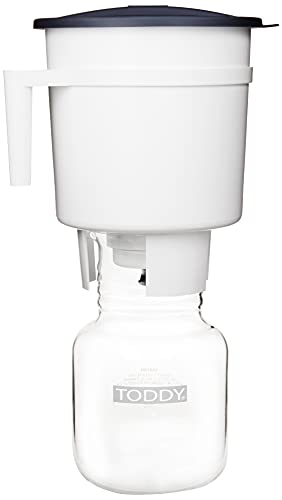
4. Toddy Cold Brew System
Toddy has sold its cold brew system for years. You steep grounds in a crock and drain concentrate through a felt filter into a glass carafe, giving a clean cup.
Suits: concentrate fans. Strengths: a clean, low-sediment result. Weaknesses: felt filters need care and replacement. Skip it if you want a quick clean-up.

Best for first-timers
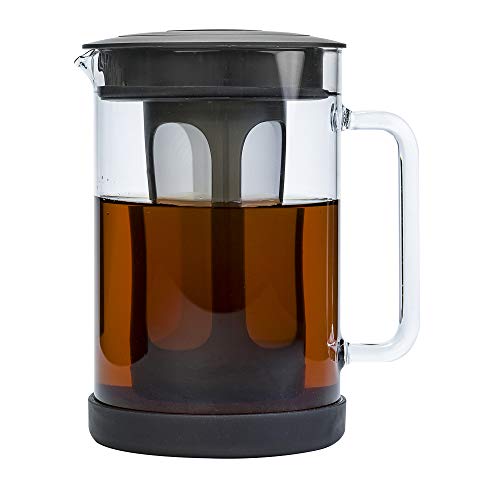
5. Primula Cold Brew Iced Coffee Maker
Primula makes affordable drinkware and coffee gear. Its cold brew pitcher is a glass model with a filter, which suits trying cold brew without a big outlay.
Suits: first-timers. Strengths: an easy, low-risk start. Weaknesses: basic extras. Skip it if you want a refined system.
View Primula Cold Brew Iced Coffee Maker on Amazon
Best for casual drinkers
6. Vremi Cold Brew Coffee Maker
Vremi sells home and kitchen products. Its cold brew maker is a glass pitcher with a filter that targets everyday home use.
Suits: casual drinkers. Strengths: glass and a simple layout. Weaknesses: less brand history. Skip it if you prefer an established coffee name.
View Vremi Cold Brew Coffee Maker on Amazon
Care and Setup
- Use coarse ground coffee so the filter does not clog.
- Steep in the fridge for the time the maker suggests, then remove the grounds.
- Wash filters and lids right away so oils do not linger.
- Drink the finished concentrate within the window the maker advises.
Mistakes to Avoid
- Using fine grounds, which cloud the brew and clog the filter.
- Leaving the coffee steeping far longer than recommended.
- Skipping a taste test before diluting the concentrate.
- Buying a huge maker for a single drinker.
Pitcher, Jar or Crock: Choosing a Format
Cold brew makers come in a few basic shapes, and the right one depends on how you drink coffee and where you keep it. Pitchers with built-in filters are the simplest: you add grounds to the filter basket, fill with water and leave it in the refrigerator. They store easily, pour directly and are quick to clean. Jars and containers with a separate dispersal lid focus on even wetting of the grounds, and may come with a carafe for storing the finished coffee.
Crock systems, which use a larger vessel and a filter you drain through, are designed for concentrate. They give a cleaner result and more flexibility, but they have more parts and take more fridge space. A concentrate lets you dilute to taste and make hot or iced drinks from one batch. A ready-to-drink pitcher gives you a finished product without any mixing, which suits people who want grab-and-pour convenience.
Think about your fridge. A tall pitcher may not fit on a shelf, but fits in a door. A wide jar may fill precious space. Measure the shelf height and depth, and compare them to the dimensions on the listing. Also think about how much coffee you finish in a week. A pitcher that makes more than you drink will leave you with old coffee, and one that is too small will have you brewing constantly.
Grind Size, Ratio and Water
Cold brew is forgiving, but a few choices have a large effect. Grind size matters most. A coarse grind, similar to coarse sea salt, allows water to flow through and makes filtering easier. A grind that is too fine can clog the filter, cloud the coffee and produce a bitter, muddy cup. If you buy ground coffee, look for a coarse grind labeled for cold brew or French press.
The ratio of coffee to water determines strength. Many recipes use a higher ratio for concentrate and a lower one for ready-to-drink coffee, and each maker’s instructions will suggest a starting point. Begin with the recommended amounts, taste the result and adjust in later batches. Keep notes so you can repeat what you liked.
- Use a scale if you can, because scoops vary with the bean and grind.
- Use cold, fresh, filtered water if your tap water has a strong taste.
- Stir gently or press the grounds under the surface so all of them are wet.
Choose beans you enjoy. Cold brewing tends to emphasize chocolate, nut and caramel notes and softens acidity, though it still reflects the beans you use. Medium and darker roasts are common choices, but personal taste rules. Experiment with different beans, keeping other variables steady.
Filters and Sediment: What to Expect
The filter shapes the cup. Mesh filters, usually stainless steel or fine plastic, are reusable and easy to rinse, but they let some fine particles through, which can leave sediment at the bottom of the glass and a slightly heavier feel. Paper filters trap more fines and give a cleaner, brighter cup, but they are a recurring cost and need to be replaced. Felt filters, used in some crock systems, produce a very clean result but need careful washing and eventual replacement.
If sediment bothers you, you can strain the finished coffee through a paper filter or a fine cloth before storing it. Do this slowly, as the filter may clog. Sediment is not harmful, but it can make the coffee taste gritty and continue extracting in the pitcher, so some people prefer to remove it. If you like a fuller body, a mesh filter may suit you.
Check how easy it is to remove the filter and grounds. Wet grounds are heavy and messy, and a wide opening helps. Make sure the filter seats securely, because a loose fit allows grounds to escape into the coffee. Look for replacement filters and check that they are available for your model. A reusable filter that is hard to clean can become a chore, so consider your tolerance for maintenance.
Food Safety and Storage of Cold Brew
Because cold brew sits for many hours without heating, cleanliness is important. Wash the maker thoroughly before each batch, and make sure it is free of oils and old residue. Use clean water and fresh grounds. Keep the maker refrigerated while it steeps if the instructions recommend it, or follow the maker’s guidance if room temperature steeping is allowed.
Once brewed, remove the grounds and filter, and store the coffee in a clean, covered container in the refrigerator. Use it within the time suggested by the maker, and discard it if it smells sour, looks cloudy in an unusual way or shows signs of spoilage. Concentrate usually lasts longer than diluted coffee, but do not rely on it indefinitely. Label the container with the brew date to avoid guessing.
Avoid adding milk, sugar or flavorings to the whole batch, since these shorten shelf life. Add them to individual servings instead. A tight lid keeps other fridge odors from entering the coffee. If your fridge is crowded with strong-smelling foods, an airtight container is especially helpful. Wash gaskets and lids with care, since they trap moisture and can develop odors. If a plastic part becomes stained or retains smells despite cleaning, replace it.
Cleaning Routine and When to Replace Parts
A quick cleaning after each batch keeps the maker working and the coffee tasting fresh. Discard the grounds, rinse the filter under running water and wash the pitcher with warm water and mild soap. Use a bottle brush for narrow spots, and check the lid and any silicone seals. Dry everything fully before storing, since trapped moisture leads to smells.
Periodically, give the maker a deeper cleaning. Soak removable parts in a solution of warm water and a suitable cleaner, following the maker’s care notes, and rinse well. Glass parts are usually easy to clean, while plastic can stain and retain odors over time. If the listing says that parts are dishwasher safe, you can use that option, but hand washing often extends life.
- Check mesh filters for bent or torn areas that let grounds through.
- Inspect seals for cracks, stiffness or persistent smells.
- Look for chips or hairline cracks in glass before each use.
Replace the filter if it is torn, clogged beyond cleaning or leaves excessive sediment. Replace seals that no longer hold, and retire any glass with chips or cracks. If plastic becomes cloudy or warps, it may be time for a new pitcher. Keep spare filters on hand if your system uses felt or paper, so you can brew when you want.
Choosing Between the Picks in This Guide, One by One
Six options is a lot to hold in your head at once, so it helps to work through the shortlist for this cold brew coffee maker guide pick by pick, using only what the reviews above already establish. Each pick below is framed the same way: who it suits, what it does best, and the limitation to accept with open eyes. Read the six in order and mark the one whose weakness bothers you least — that simple test resolves most shortlists faster than chasing an abstract idea of the single best option.
Consider the Takeya Deluxe Cold Brew Coffee Maker if its particular balance of trade-offs matches how you actually work. The guide above notes that it suits beginners, and that its appeal rests on a simple pitcher with a seal. Set against the other picks, that makes it the natural shortlist entry when those qualities matter more to you than all-round convenience. Its honest limitation is worth weighing just as carefully: check the size you order. Skip it if you want glass. If that limitation touches something you do every day, another pick in this guide will serve you better; if it touches something you rarely do, it is a fair price in kind for the strengths you gain. The mistake to avoid is choosing it for a use case it was never aimed at, then blaming the product for a mismatch that was visible from the start.
The OXO Good Grips Cold Brew Coffee Maker earns its place for a narrower reason than the headline suggests. It suits people who want a polished system, with even soaking and easy straining as the qualities that separate it from the rest of this list. Read it as a specialist rather than a default: when your routine lines up with what it does well, it can outperform a more general pick, and when your routine does not, its drawback — more parts than a pitcher. Skip it if you want one jar — will be the thing you notice daily. A useful test is to picture your most ordinary session, not your most ambitious one, and ask whether this is the pick you would reach for then. Ordinary sessions are where satisfaction is actually decided.
With the Hario Mizudashi Cold Brew Coffee Pot, the decision comes down to priorities. It is aimed at fridge-door storage, and it stands out for glass and a trusted coffee brand. Those are real advantages, but they sit alongside a clear compromise: a mesh filter lets fine particles through. Skip it if you need a large batch. Compared with the neighbouring picks in this guide, it asks you to accept that compromise in exchange for doing its main job in its own way. If you have read the other reviews and found yourself nodding at this one’s strengths while shrugging at its weakness, that reaction is usually the right signal. If the weakness made you hesitate, trust the hesitation and look at the pick whose strengths match the task you found yourself defending.
Consider the Toddy Cold Brew System if its particular balance of trade-offs matches how you actually work. The guide above notes that it suits concentrate fans, and that its appeal rests on a clean, low-sediment result. Set against the other picks, that makes it the natural shortlist entry when those qualities matter more to you than all-round convenience. Its honest limitation is worth weighing just as carefully: felt filters need care and replacement. Skip it if you want a quick clean-up. If that limitation touches something you do every day, another pick in this guide will serve you better; if it touches something you rarely do, it is a fair price in kind for the strengths you gain. The mistake to avoid is choosing it for a use case it was never aimed at, then blaming the product for a mismatch that was visible from the start.
The Primula Cold Brew Iced Coffee Maker earns its place for a narrower reason than the headline suggests. It suits first-timers, with an easy, low-risk start as the qualities that separate it from the rest of this list. Read it as a specialist rather than a default: when your routine lines up with what it does well, it can outperform a more general pick, and when your routine does not, its drawback — basic extras. Skip it if you want a refined system — will be the thing you notice daily. A useful test is to picture your most ordinary session, not your most ambitious one, and ask whether this is the pick you would reach for then. Ordinary sessions are where satisfaction is actually decided.
With the Vremi Cold Brew Coffee Maker, the decision comes down to priorities. It is aimed at casual drinkers, and it stands out for glass and a simple layout. Those are real advantages, but they sit alongside a clear compromise: less brand history. Skip it if you prefer an established coffee name. Compared with the neighbouring picks in this guide, it asks you to accept that compromise in exchange for doing its main job in its own way. If you have read the other reviews and found yourself nodding at this one’s strengths while shrugging at its weakness, that reaction is usually the right signal. If the weakness made you hesitate, trust the hesitation and look at the pick whose strengths match the task you found yourself defending.
The Steep: Where Cold Brew Is Actually Made
Cold brew is decided during the steep, long before you taste it. Coarse grounds, fully submerged, given time — that is the whole technology. The common failures are all visible in that sentence: grounds floating dry at the top extract nothing, fine grounds over-extract and clog filters, and a steep cut short tastes thin no matter how good the coffee was. Whatever maker you choose from this guide, stir or shake once at the start to wet everything, keep the vessel covered, and let the clock do the work. Patience is the ingredient home cold brewers most often skimp on.
Temperature during the steep is a matter of taste and safety. Room-temperature steeps run faster and can taste rounder; refrigerated steeps run slower and cleaner. Either is legitimate, but be consistent so your results are comparable, and refrigerate the finished brew promptly. Keep notes the way hot brewers do — coffee, grind, ratio, time, temperature — because cold brew’s long cycle means you taste the result a day after making the decisions, and memory alone will not connect them.
Filtering and the Last, Messy Inch
Every cold brew maker promises easy filtering and every experienced user knows the last inch is where the promise is tested. Fine sediment settles at the bottom; pouring carelessly stirs it back in and turns a clean cup gritty. Pour slowly, stop before the dregs, and if clarity matters to you, pass the brew through a paper filter at the end — a step that costs minutes and transforms texture. Makers differ in how gracefully they handle this stage, which is why the reviews above dwell on filters and spouts rather than only on capacity.
Clean the filter the same day. Coffee oils left in mesh or fabric filters turn rancid and flavour the next batch unmistakably; a rinse postponed is a scrub scheduled. Most filters want hot water, an occasional soak, and complete drying before storage. A maker whose filter you find easy to clean will be used weekly; one whose filter is a chore will be used monthly, then seasonally, then never. Choose accordingly — your future self is the real reviewer.
Serving, Diluting and Keeping a Week of Coffee
Decide whether you brew ready-to-drink or concentrate, because the choice shapes everything downstream. Ready-to-drink is simple and suits households that finish a batch in days. Concentrate stores compactly, stretches further, and lets each drinker dilute to taste — but it demands the discipline to dilute thoughtfully, since a glass poured neat from a strong concentrate is a harsh surprise. Many households settle on a mild concentrate as the flexible middle: drinkable slightly diluted, forgiving of ice melt on a hot day.
Storage is flavour’s second half. Keep finished cold brew in a clean, sealed vessel in the fridge, away from strong-smelling foods, and treat a week as the outer horizon rather than a target. Taste changes across the days — bright notes first, then a mellower, sometimes flatter cup — and most drinkers find their favourite window. Brew batch sizes that land inside that window and cold brew becomes a quiet weekly rhythm rather than a project with leftovers.
A Slower Decision Routine Before You Order
Most disappointment with a cold brew coffee maker is not caused by a bad product; it is caused by a quick decision made on the wrong criterion. The criteria table near the top of this guide is short for a reason — those are the checks that actually predict whether you will be happy. Work through them in the order below, in writing if necessary, before you commit to any of the six picks.
Start with filter. The guide’s table puts it plainly: mesh filters are reusable; paper or felt filters give a cleaner cup. Do not treat that as a box to tick and move on. Picture it in your own space and routine — where this cold brew coffee maker will live, who else will use it, and how often. A criterion that looks minor on a product page becomes major when it is part of a daily habit, and minor daily friction is what quietly pushes a purchase into a cupboard. If a pick is weak on the criterion that matters most in your routine, that weakness outweighs several strengths elsewhere.
Start with capacity. The guide’s table puts it plainly: pick a size that matches how much iced coffee you drink in a week. Do not treat that as a box to tick and move on. Picture it in your own space and routine — where this cold brew coffee maker will live, who else will use it, and how often. A criterion that looks minor on a product page becomes major when it is part of a daily habit, and minor daily friction is what quietly pushes a purchase into a cupboard. If a pick is weak on the criterion that matters most in your routine, that weakness outweighs several strengths elsewhere.
Start with material. The guide’s table puts it plainly: glass resists staining; plastic is lighter and less fragile. Do not treat that as a box to tick and move on. Picture it in your own space and routine — where this cold brew coffee maker will live, who else will use it, and how often. A criterion that looks minor on a product page becomes major when it is part of a daily habit, and minor daily friction is what quietly pushes a purchase into a cupboard. If a pick is weak on the criterion that matters most in your routine, that weakness outweighs several strengths elsewhere.
Start with lid and seal. The guide’s table puts it plainly: a tight lid keeps flavors out of the fridge and the coffee fresh. Do not treat that as a box to tick and move on. Picture it in your own space and routine — where this cold brew coffee maker will live, who else will use it, and how often. A criterion that looks minor on a product page becomes major when it is part of a daily habit, and minor daily friction is what quietly pushes a purchase into a cupboard. If a pick is weak on the criterion that matters most in your routine, that weakness outweighs several strengths elsewhere.
Start with cleaning. The guide’s table puts it plainly: wide openings make it easier to scoop out wet grounds. Do not treat that as a box to tick and move on. Picture it in your own space and routine — where this cold brew coffee maker will live, who else will use it, and how often. A criterion that looks minor on a product page becomes major when it is part of a daily habit, and minor daily friction is what quietly pushes a purchase into a cupboard. If a pick is weak on the criterion that matters most in your routine, that weakness outweighs several strengths elsewhere.
Finish the routine by re-reading the review of your leading pick one more time, looking only for reasons not to buy it. If the reasons you find are things you can genuinely live with, you have made a sound choice. If they are things you are merely hoping will not matter, keep looking — the other five picks exist precisely because no single cold brew coffee maker suits everyone.
Three Mistakes That Lead to the Wrong Choice
Grinding too fine
Fine grounds over-extract in a long steep, clog filters and leave the brew bitter and muddy. Cold brew wants coarse grounds — coarser than most beginners dare. If your brew tastes harsh and filters slowly, the grind, not the coffee or the maker, is the first suspect.
Steeping by hope instead of time
Pulling the brew early because you want coffee now gives a thin, sour result that misrepresents the method. Set the steep up the day before you want it, and keep a small ready supply so impatience has an outlet. Cold brew rewards planners and punishes improvisers.
Storing the brew in the brewing vessel with grounds
Leaving finished brew sitting on its grounds continues extraction and turns each day’s glass stronger and harsher than the last. Separate brew from grounds when the steep ends, store it clean and sealed, and the flavour you approved on day one is the flavour you keep.
Living With It: The First Month and Beyond
In the first month, find your household’s consumption honestly: how many glasses a day, on which days, and whether weekends differ. Size your batches to that pattern with a small margin. The makers in this guide span personal to family scale, and satisfaction tracks the match between batch and thirst far more than any feature list — a maker emptied happily twice a week beats a giant standing half-full and ageing.
Wash the vessel and filter after every batch, dry them fully, and store the maker assembled in its spot. Cold brew equipment that lives clean and visible gets used; equipment stored damp in a dark cupboard develops the stale smell that ruins the next batch before it starts. A minute of care per batch is the entire maintenance budget of this brewing method.
Across a summer, cold brew makers earn their keep in gatherings: a batch made ahead means iced coffee for guests with no queue at a machine. Keep a simple serving routine — brew, ice, milk and sweetener laid out — and guests serve themselves while you enjoy your own party. That quiet hospitality is the method’s real luxury.
More Questions About Choosing and Using One
What coffee should a beginner start with?
A medium or darker roast from a roaster you already like for hot coffee is the forgiving starting point; cold extraction smooths edges and flatters chocolatey, nutty profiles. Use coffee you would happily drink hot, grind it coarse, and adjust the coffee before blaming the method.
Why is my cold brew weak?
Almost always ratio or time: too little coffee for the water, or a steep ended early. Strengthen the ratio a step, confirm the grounds were fully wet, and give the steep its full run before judging. Weakness fixed by those three checks rarely needs a new maker.
Can I make cold brew with a maker sized for one in a household of four?
You can, in rotation, but you will brew constantly and the fridge will hold a production line. Households that drink cold brew daily are happier sizing up once. The large-batch guide in this series exists for exactly that realisation, which arrives for most families by the second month of summer.
Is cold brew stronger in caffeine?
It depends entirely on how it is brewed and diluted. Concentrates contain a lot of caffeine per volume but are usually diluted before drinking. Judge by how you feel and brew to your household’s comfort rather than by reputation — the method itself is neither hero nor villain.
Three Readers, Three Different Right Answers
Abstract rankings matter less than fit, so consider three typical readers of this cold brew coffee maker guide and notice how the same shortlist resolves differently for each. Their situations are composites, but the reasoning is the reasoning you should apply to your own circumstances, using the reviews above as the evidence base.
The first-time buyer has never owned one and wants the fewest possible surprises. For this reader, the Takeya Deluxe Cold Brew Coffee Maker is the natural landing place: it suits beginners, and its case rests on a simple pitcher with a seal. Crucially, its known limitation — check the size you order. Skip it if you want glass — is one this reader is well placed to accept, because it does not collide with the use they actually have in mind. The lesson generalises: the right pick is rarely the one with the fewest weaknesses, but the one whose weaknesses fall where you will never step. Read your own situation into these three sketches, decide which reader you most resemble, and let that resemblance — not the numbering in the list — order your shortlist.
The upgrader already owns a basic version and is replacing it because one specific frustration finally outweighed the rest. For this reader, the Hario Mizudashi Cold Brew Coffee Pot is the natural landing place: it suits fridge-door storage, and its case rests on glass and a trusted coffee brand. Crucially, its known limitation — a mesh filter lets fine particles through. Skip it if you need a large batch — is one this reader is well placed to accept, because it does not collide with the use they actually have in mind. The lesson generalises: the right pick is rarely the one with the fewest weaknesses, but the one whose weaknesses fall where you will never step. Read your own situation into these three sketches, decide which reader you most resemble, and let that resemblance — not the numbering in the list — order your shortlist.
The host or gift buyer is choosing for other people’s use, or for a household where several people will share it. For this reader, the Primula Cold Brew Iced Coffee Maker is the natural landing place: it suits first-timers, and its case rests on an easy, low-risk start. Crucially, its known limitation — basic extras. Skip it if you want a refined system — is one this reader is well placed to accept, because it does not collide with the use they actually have in mind. The lesson generalises: the right pick is rarely the one with the fewest weaknesses, but the one whose weaknesses fall where you will never step. Read your own situation into these three sketches, decide which reader you most resemble, and let that resemblance — not the numbering in the list — order your shortlist.
Cold Brew Coffee Maker FAQ
How long does cold brew steep?
Most recipes call for around twelve to twenty-four hours in the fridge or at room temperature. Follow the maker’s guidance.
Is cold brew less acidic?
Many people find it smoother, though it is not acid-free. Taste is personal.
Can I use pre-ground coffee?
Yes, if it is a coarse grind. Very fine grounds can leave sediment.
Concentrate or ready-to-drink?
Some systems make a concentrate to dilute with water or milk. Others make a drinkable batch, so check your system.
Can I brew cold brew at room temperature?
Some makers allow it, while others recommend the refrigerator. Check the instructions for your model, and keep the time within the recommended range. Refrigerate once brewed.
Why does my cold brew taste weak?
Possible causes include too little coffee, a grind that is too coarse or too short a steeping time. Adjust one factor at a time and keep notes. Check the maker's suggested ratio.
Why does my cold brew taste bitter?
Over-extraction from a grind that is too fine, or steeping too long, can cause bitterness. Try a coarser grind or a shorter time. Stale beans can also contribute.
How long does cold brew last in the fridge?
It depends on the maker's guidance and how clean the equipment is. Store it covered and refrigerated, and discard it if it smells or tastes off. Concentrate often keeps longer than diluted coffee.
Do I need a coffee grinder?
A grinder lets you control grind size and freshness, but it is not required. You can buy coffee ground coarsely. Avoid fine grinds, which clog filters.
Can I make tea in a cold brew maker?
Many people do, but check the manufacturer's notes. Clean the maker well between coffee and tea to avoid flavor transfer.
Is glass or plastic better for cold brew?
Glass resists staining and odors but is breakable, while plastic is light and durable but may retain smells. Choose according to how you will use and store it.
Dialing In Flavor: Steep Time and Temperature Trade-Offs
Cold brew is forgiving, but small changes shift the flavor in predictable ways. Understanding those shifts lets you adjust a batch instead of guessing.
- Shorter steeps (around 12 hours) usually taste lighter and more tea-like, with brighter fruit notes and less body.
- Medium steeps (around 16 to 18 hours) tend to give a rounder, balanced cup with moderate sweetness.
- Longer steeps (20 to 24 hours or more) pull out more bitterness and woody flavors, especially with dark roasts or fine grounds.
Temperature also changes extraction. A fridge steep is slower, so it often needs a longer time than a counter steep, but it keeps the brew safely cold throughout. Counter steeps extract faster, which makes timing more important. Treat the ranges above as starting points rather than rules, and change only one variable at a time so you can tell what caused the difference.
Roast and Origin: What Beans Work Best
Hot brewing highlights acidity and aroma. Cold extraction mutes some of that and emphasizes sweetness, chocolate and nutty notes. That is why many drinkers like medium and medium-dark roasts for cold brew.
Light roasts can taste thin or grassy when brewed cold, though a longer steep and a slightly finer grind can help. Very dark, oily roasts may taste heavy and smoky, and the oils can clog fine mesh filters. Single-origin beans from regions known for chocolate and caramel notes are common choices, while blends designed for espresso often work well because they are built for body.
Freshness matters here too. Beans a few weeks past roast date still make a decent cold brew, but very old coffee tastes flat and papery. Buying smaller bags more often is a simple way to keep batches tasting alive.
Using Concentrate: Dilution, Milk and Serving Ideas
Many pitcher-style makers produce a ready-to-drink strength, while systems that use a higher coffee-to-water ratio create concentrate. Concentrate stores efficiently and gives you flexibility at serving time.
Dilution Basics
A common starting point is equal parts concentrate and water or milk, then adjusting to taste. If your batch is already ready-to-drink, you can serve it straight over ice. Because ice melts, some people pour over ice made from frozen coffee to keep the drink from watering down.
Ways to Serve
- Black over ice for a clean, smooth profile.
- With milk or cream for a latte-style drink; oat and whole milk are popular for body.
- With sparkling water for a refreshing, lightly fizzy cup.
- With a flavored syrup such as vanilla or brown sugar for a sweeter drink.
- As a dessert ingredient poured over ice cream or used in tiramisu.
Planning Batches Around Your Household
Cold brew is easiest when the batch size matches your drinking habits. A small household that drinks one or two glasses a day may find a large concentrate batch too much to finish before flavor fades. A larger family or an office setting benefits from a bigger vessel or a weekly routine.
Fitting the maker in the refrigerator is a real constraint. Measure shelf height before buying, especially if you have a pitcher with a tall handle. Round jars that lie on their side or slim pitchers that fit in a door shelf are practical options.
Many people settle into a rhythm, such as starting a batch on Sunday evening and straining it Monday morning. A set routine prevents the old batch from sitting too long and makes sure you always have a fresh supply. Label the date on the jar with a piece of tape if more than one person uses the fridge.
Troubleshooting a Batch That Went Wrong
When cold brew tastes off, the cause is usually one of a few things. Sour or thin results often point to a steep that was too short, a grind that was too coarse or too little coffee for the water. Bitter or harsh flavors suggest too long a steep, too fine a grind or stale oily beans.
A muddy cup with sediment means the filter let fines through, so a second pass through a paper filter can clean it up. A flat, papery flavor usually comes from old coffee. Change one variable at a time and note the result in a small log or on your phone. After two or three batches you will have a recipe tuned to your taste, your water and your equipment, which beats any generic ratio.
Kitchen Habits That Make Cold Brew Easier
A few small habits keep the routine painless. Weigh coffee and water on a kitchen scale instead of using scoops, since scoops vary with grind size and roast. Keep a dedicated pitcher or bottle for finished brew so the maker can be rinsed and dried right away. Use a funnel when transferring concentrate to a narrow bottle. If you like iced coffee on busy mornings, pre-fill a glass with coffee ice cubes the night before. These small steps remove friction, and the easier the routine feels, the more likely you are to keep making it.
Related guides
- 6 Best Small Batch Coffee Roasters for Home Use (2026)
- 6 Best Coffee and Espresso Makers for Home Use (2026)
- 6 Best Nitro Cold Brew Makers for Home
Frequently Asked Questions
Can I reuse coffee grounds for a second cold brew batch?
You can, but the second batch will be noticeably weaker and flatter because most soluble flavor leaves in the first steep. Some people mix a little fresh coffee in or use the second batch as a base for iced drinks with milk. Do not expect the same strength.
What coffee-to-water ratio should I start with?
Many people start around one part coffee to eight parts water by weight for ready-to-drink, and closer to one to four or five for concentrate. These are common starting points. Taste your first batch and adjust a little each time until it suits your preference.
Does cold brew have more caffeine than hot coffee?
It depends on the ratio. Concentrate made with a lot of coffee can contain more caffeine per ounce than regular drip coffee, but diluted ready-to-drink versions are often comparable. Steep time and grind also matter, so caffeine content varies widely between recipes.
Can I flavor cold brew while it steeps?
Yes. Cinnamon sticks, vanilla beans or strips of orange peel can be added to the grounds for subtle flavor. Use small amounts, and strain them out with the coffee. Avoid dairy or sugary additions during steeping, since they spoil faster than plain coffee.
The Short Version
For a simple pitcher, the Takeya. For a polished system, the OXO. For glass and a slim shape, the Hario Mizudashi. For a clean concentrate, the Toddy. For an easy start, the Primula. For a home glass pitcher, the Vremi.


