Many households want both drip-style coffee and espresso drinks without buying two machines. The choices run from a semi-automatic espresso machine with a grinder to capsule systems and compact machines that make espresso alone.
The six machines below cover those routes, from beginner-friendly to hands-on. We have not used these products ourselves, so confirm the features, water tank size and accessories on the current listing before buying. Performance claims are the makers’ own.
As an Amazon Associate we earn from qualifying purchases. Links below are affiliate links, and they do not change the product information we give.
What to Look For
| Feature | Why it matters |
|---|---|
| Type | Semi-automatic machines need skill; capsule machines need almost none |
| Grinder | A built-in grinder saves counter space but is harder to service |
| Milk | A steam wand makes lattes; capsule machines may need a frother |
| Counter space | Measure the footprint and the height under your cabinets |
| Upkeep | Descaling and cleaning keep every machine working |
In this guide
Specs at a Glance
| Machine | Type | Grinder | Notes |
|---|---|---|---|
| Breville Barista Express | Semi-automatic espresso | Built in | Steam wand for milk |
| De’Longhi Stilosa | Manual espresso | No | Compact, steam wand |
| Mr. Coffee Cafe Barista | Espresso | No | Automatic milk frother, per the maker |
| Nespresso Vertuo Plus | Capsule | No | Makes coffee and espresso-style cups |
| Ninja Espresso and Coffee Barista System | Combo | No | Brews coffee and espresso |
| De’Longhi All-in-One Coffee and Espresso Maker | Combo | No | Drip side plus espresso side |
The 6 Best Coffee and Espresso Makers

Top pickBest for people ready to learn
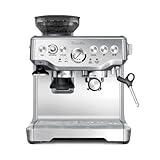
1. Breville Barista Express
A semi-automatic espresso machine with a built-in conical burr grinder and a steam wand. It is a long-running Breville model and a popular first step into home espresso.
Suits: people ready to learn. Strengths: grinder and machine in one unit. Weaknesses: a learning curve and a big footprint. Skip it if you want push-button coffee.
Best for small kitchens
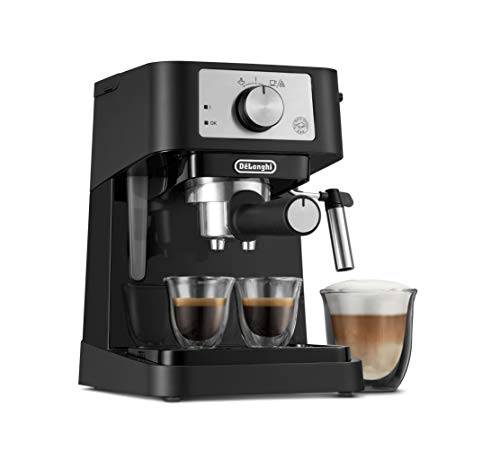
2. De’Longhi Stilosa Manual Espresso Machine
A compact manual espresso machine with a steam wand for milk. It is aimed at buyers who want real espresso on a small footprint.
Suits: small kitchens. Strengths: a compact size. Weaknesses: you need a grinder and some practice. Skip it if you want a built-in grinder.
Best for milk drinks without steaming skill
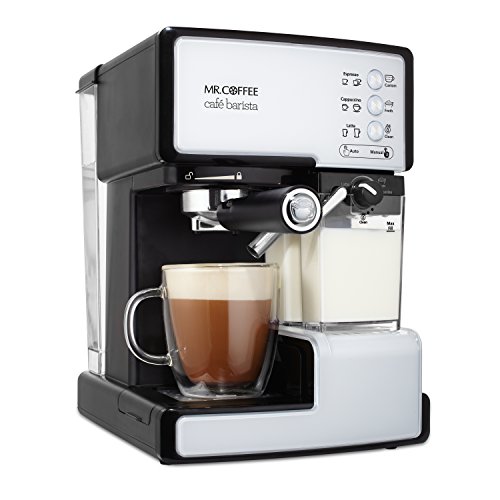
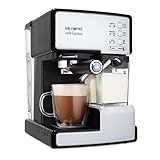
3. Mr. Coffee Cafe Barista
An espresso, latte and cappuccino machine from a familiar household brand. The maker describes an automatic milk frother, so you do not steam by hand.
Suits: milk drinks without steaming skill. Strengths: a familiar, simple design. Weaknesses: less control than semi-automatic machines. Skip it if you want a hands-on wand.

Best for speed and low effort
4. Nespresso Vertuo Plus
A capsule machine made by Breville and De’Longhi under license from Nespresso. It reads a barcode on each capsule and brews a coffee or espresso-style cup at the touch of a button.
Suits: speed and low effort. Strengths: consistent, simple cups. Weaknesses: it is tied to Nespresso capsules. Skip it if you want to use your own beans.

Best for mixed households
5. Ninja Espresso and Coffee Barista System
A single machine from Ninja that brews drip-style coffee as well as espresso, with a frothing option for milk drinks. Confirm the exact features on the listing.
Suits: mixed households. Strengths: one machine for both styles. Weaknesses: it takes up counter space. Skip it if you only drink one style.
View Ninja Espresso and Coffee Barista System on Amazon
Best for a morning coffee plus an afternoon latte
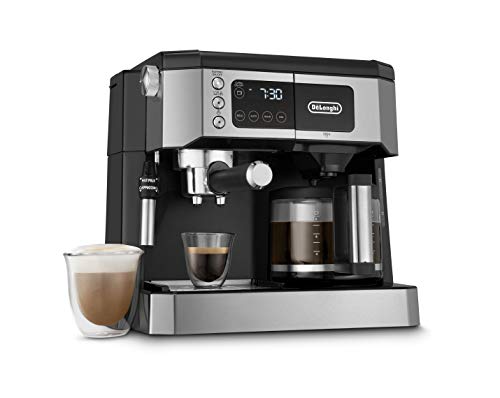
6. De’Longhi All-in-One Coffee and Espresso Maker
A dual machine with a drip coffee side and a separate espresso side. De’Longhi has sold this style of combo for years, and it fits a household that wants both.
Suits: a morning coffee plus an afternoon latte. Strengths: two methods under one roof. Weaknesses: more parts to clean. Skip it if you want a compact unit.

View De’Longhi All-in-One Coffee and Espresso Maker on Amazon
Care and Setup
- Use filtered water if your tap water is hard, and descale on the maker’s schedule.
- Rinse portafilters, baskets and drip trays after each session.
- Wipe the steam wand right after steaming milk.
- Store beans in an airtight container away from heat.
- Read the manual before the first brew, since priming steps differ by machine.
- Run a water-only cycle if the machine has sat unused for several days.
Mistakes to Avoid
- Buying a machine without a grinder and then using stale pre-ground coffee.
- Skipping descaling until flow slows down.
- Choosing a large machine for a small counter.
- Expecting café results on the first day of a manual machine.
Deciding How Much Involvement You Want
The biggest difference between these machines is not features but how much effort and skill they ask of you. Capsule systems ask almost nothing: you insert a capsule, press a button and get a cup. Automatic and combo machines take care of some steps while leaving others to you. Semi-automatic espresso machines put you in charge of grind, dose, tamp and milk texture, which brings control and a learning curve.
Be honest about your mornings. If you want a hot drink in a minute with little cleanup, a hands-on machine may become a counter ornament after the novelty fades. If you enjoy the process, and treat making coffee as a hobby, a machine that gives you control can be satisfying. Some people prefer to start with a simple approach and move to a more involved one later, which is a sensible path.
Think about who else will use the machine. If your household includes several people with different tastes, a combo machine that handles drip coffee and espresso can reduce arguments. If only you drink espresso, a dedicated machine is enough. Also consider whether you serve guests, since a machine that takes time to prepare and clean may not suit a crowd. Match the machine to the habits you actually have, not those you imagine you will develop.
Grinders, Beans and Freshness
Espresso depends heavily on grind size and freshness. Fine, consistent grounds create the resistance needed for proper extraction, and a poor grind can ruin an otherwise capable machine. A built-in grinder is convenient and saves space, but if it fails or needs servicing, the whole machine is affected. A separate grinder costs more and takes room, but you can upgrade or replace it independently.
If you buy a machine without a grinder, plan a grinder purchase too, or buy freshly ground coffee with a grind size matched to your machine. Pre-ground coffee can work, but it goes stale faster, and the grind may not suit your equipment. Pressurized baskets, which some entry machines use, are more forgiving of grind inconsistency, while non-pressurized baskets reward good grinding but punish errors.
Fresh beans make a clear difference. Buy whole beans in quantities you can use within a reasonable time, store them in an airtight container away from heat and light, and grind just before brewing. Drip coffee is more forgiving than espresso, but it benefits from freshness as well. Check the listing for what grinder or basket type your machine includes, and what grind size the maker recommends. Adjust gradually, changing one variable at a time.
Milk Drinks: Steam Wands, Frothers and Expectations
If lattes and cappuccinos are on your list, how the machine handles milk becomes important. A manual steam wand lets you texture milk yourself, which gives control over foam and temperature but requires practice. Beginners often find it frustrating at first, and learning to create smooth microfoam takes repetition. Automatic frothers do the work for you, producing consistent foam with less skill, though they offer less control and need cleaning after each use.
Capsule machines may rely on separate frothers or have none, so check what is included. Combo machines vary, with some offering a frothing option and others leaving milk entirely to you. Read the listing to see which method each machine uses and how easy it is to clean.
- Use cold milk and a cold pitcher for steaming, which gives you more time to texture it.
- Purge the steam wand before and after use, and wipe it right away so milk does not harden on it.
- Clean automatic frothers according to the manual, because milk residue spoils quickly.
Plant-based milks behave differently from dairy, and some are formulated for frothing while others are not. If you use them, experiment with a few types. Set realistic expectations: a home machine can produce good milk drinks, but results depend on technique, milk and the specific equipment.
Space, Water and Daily Upkeep
Before you buy, measure the counter space, including height under cabinets, since espresso machines with large hoppers or water tanks can be tall. Allow room to remove the water tank, open lids and pull out drip trays, and leave clearance for the steam wand to move. If you plan to keep a grinder and accessories nearby, include them in your plan.
Water quality affects taste and machine life. Hard water can cause scale buildup in boilers and lines, and the manual will explain how and when to descale. Use the solution the maker recommends. If your water has a strong taste or is very hard, filtered water can help, but check what the manual says about water types, as some machines have specific filter systems.
Daily upkeep keeps coffee tasting good. Empty and rinse drip trays, wipe the steam wand, and rinse the portafilter or brew basket after use. Clean the grounds container and the water tank regularly, and let parts dry. Capsule machines still need descaling and wiping, and combo machines have two systems to maintain. Skipping maintenance leads to bitter, sour or weak coffee and shortens the machine’s life. Build the routine into your mornings so it becomes automatic.
Running Costs and Signs It Is Time to Upgrade
The purchase price is only part of the cost. Capsule machines tie you to capsules, which can add up over time, while whole bean machines require beans, a grinder and sometimes extras like a tamper, milk pitcher and cleaning supplies. Consider consumables like descaler, filters and replacement gaskets, and check whether parts are available. A machine that is cheap to buy but costly to run may not save money.
Think about budget in qualitative tiers. Entry-level machines usually cover the basics, with simpler controls and fewer materials upgrades. Mid-range machines often add better build, more control and sometimes an integrated grinder. Premium models offer finer control and sturdier construction, but only make sense if you will use those features. Spend on what matters most to your habits, such as a good grinder, rather than on features you will not use.
Signs it may be time to upgrade include inconsistent shots despite good technique and fresh beans, constant leaks, pressure problems, weak steam or a machine that no longer heats properly. If repairs cost more than the machine is worth, or if you have outgrown its limits, consider moving up. Equally, if you rarely use it because it is too complicated, a simpler machine may serve you better.
Choosing Between the Picks in This Guide, One by One
Six options is a lot to hold in your head at once, so it helps to work through the shortlist for this coffee and espresso maker guide pick by pick, using only what the reviews above already establish. Each pick below is framed the same way: who it suits, what it does best, and the limitation to accept with open eyes. Read the six in order and mark the one whose weakness bothers you least — that simple test resolves most shortlists faster than chasing an abstract idea of the single best option.
Consider the Breville Barista Express if its particular balance of trade-offs matches how you actually work. The guide above notes that it suits people ready to learn, and that its appeal rests on grinder and machine in one unit. Set against the other picks, that makes it the natural shortlist entry when those qualities matter more to you than all-round convenience. Its honest limitation is worth weighing just as carefully: a learning curve and a big footprint. Skip it if you want push-button coffee. If that limitation touches something you do every day, another pick in this guide will serve you better; if it touches something you rarely do, it is a fair price in kind for the strengths you gain. The mistake to avoid is choosing it for a use case it was never aimed at, then blaming the product for a mismatch that was visible from the start.
The De’Longhi Stilosa Manual Espresso Machine earns its place for a narrower reason than the headline suggests. It suits small kitchens, with a compact size as the qualities that separate it from the rest of this list. Read it as a specialist rather than a default: when your routine lines up with what it does well, it can outperform a more general pick, and when your routine does not, its drawback — you need a grinder and some practice. Skip it if you want a built-in grinder — will be the thing you notice daily. A useful test is to picture your most ordinary session, not your most ambitious one, and ask whether this is the pick you would reach for then. Ordinary sessions are where satisfaction is actually decided.
With the Mr. Coffee Cafe Barista, the decision comes down to priorities. It is aimed at milk drinks without steaming skill, and it stands out for a familiar, simple design. Those are real advantages, but they sit alongside a clear compromise: less control than semi-automatic machines. Skip it if you want a hands-on wand. Compared with the neighbouring picks in this guide, it asks you to accept that compromise in exchange for doing its main job in its own way. If you have read the other reviews and found yourself nodding at this one’s strengths while shrugging at its weakness, that reaction is usually the right signal. If the weakness made you hesitate, trust the hesitation and look at the pick whose strengths match the task you found yourself defending.
Consider the Nespresso Vertuo Plus if its particular balance of trade-offs matches how you actually work. The guide above notes that it suits speed and low effort, and that its appeal rests on consistent, simple cups. Set against the other picks, that makes it the natural shortlist entry when those qualities matter more to you than all-round convenience. Its honest limitation is worth weighing just as carefully: it is tied to Nespresso capsules. Skip it if you want to use your own beans. If that limitation touches something you do every day, another pick in this guide will serve you better; if it touches something you rarely do, it is a fair price in kind for the strengths you gain. The mistake to avoid is choosing it for a use case it was never aimed at, then blaming the product for a mismatch that was visible from the start.
The Ninja Espresso and Coffee Barista System earns its place for a narrower reason than the headline suggests. It suits mixed households, with one machine for both styles as the qualities that separate it from the rest of this list. Read it as a specialist rather than a default: when your routine lines up with what it does well, it can outperform a more general pick, and when your routine does not, its drawback — it takes up counter space. Skip it if you only drink one style — will be the thing you notice daily. A useful test is to picture your most ordinary session, not your most ambitious one, and ask whether this is the pick you would reach for then. Ordinary sessions are where satisfaction is actually decided.
With the De’Longhi All-in-One Coffee and Espresso Maker, the decision comes down to priorities. It is aimed at a morning coffee plus an afternoon latte, and it stands out for two methods under one roof. Those are real advantages, but they sit alongside a clear compromise: more parts to clean. Skip it if you want a compact unit. Compared with the neighbouring picks in this guide, it asks you to accept that compromise in exchange for doing its main job in its own way. If you have read the other reviews and found yourself nodding at this one’s strengths while shrugging at its weakness, that reaction is usually the right signal. If the weakness made you hesitate, trust the hesitation and look at the pick whose strengths match the task you found yourself defending.
Dialling In: The Skill Behind Every Machine
Every machine in this guide can make a good drink and a bad one; the difference is dialling in. Espresso rewards small, patient adjustments: change the grind a little, keep the dose and yield steady, taste, and repeat. Beginners often change three things at once and learn nothing except frustration. Keep a simple log — coffee, dose, grind setting, how the shot ran, how it tasted — and patterns emerge within a week. The machine’s job is consistency; your job is to give it consistent inputs and honest tasting.
Fresh coffee is the variable no machine can overcome. Beans roasted recently, ground just before brewing, transform even a modest machine’s output, while stale beans flatten the best equipment money can buy. Buy smaller amounts more often, store beans away from heat and light, and treat the grinder — built-in or separate — as half the machine. If your drinks disappoint, change the coffee before you change the equipment; it is cheaper and usually right.
Milk Drinks Without the Café Queue
Most home espresso machines earn their place making milk drinks, so steaming skill matters. Start with cold milk and a cold pitcher, purge the steam wand, and aim for gentle, glossy microfoam rather than a pitcher of stiff bubbles. The milk should move in a slow whirlpool; the sound should be a soft hiss, not a scream. Practise with water and a drop of washing-up liquid if milk is precious — the foam behaves similarly and the sink forgives mistakes. Latte art is optional; hot, sweet, well-textured milk is not.
Workflow decides whether milk drinks feel like a pleasure or a production. Set out cups, milk and towels before the shot, steam while or after the espresso runs according to your machine’s design, and wipe the steam wand immediately — milk bakes onto a neglected wand within minutes and is miserable to remove later. Machines that heat quickly suit households making one or two drinks; households making four in a row should value recovery time and boiler capacity, which the reviews above flag where relevant.
Water, Descaling and the Long Game
Water is most of what you drink, and it quietly decides both flavour and machine life. Very hard water scales boilers and dulls taste; very soft water can taste flat and stress some components. If your tap water is extreme, a simple filter jug used to fill the tank improves both problems at once. Whatever water you use, descale on the schedule the maker sets for your hardness — scale is the slow killer of home espresso machines, and it announces itself only when repairs are already expensive.
Daily care is smaller and simpler: empty and rinse the drip tray, knock out and rinse the portafilter, backflush or wipe the group as the maker directs, and leave the machine dry-ish rather than sealed and damp. These two-minute habits prevent the sour, stale flavours that owners often blame on their beans. A machine cared for this way commonly outlasts one that is descaled heroically once a year and ignored in between.
A Slower Decision Routine Before You Order
Most disappointment with a coffee and espresso maker is not caused by a bad product; it is caused by a quick decision made on the wrong criterion. The criteria table near the top of this guide is short for a reason — those are the checks that actually predict whether you will be happy. Work through them in the order below, in writing if necessary, before you commit to any of the six picks.
Start with type. The guide’s table puts it plainly: semi-automatic machines need skill; capsule machines need almost none. Do not treat that as a box to tick and move on. Picture it in your own space and routine — where this coffee and espresso maker will live, who else will use it, and how often. A criterion that looks minor on a product page becomes major when it is part of a daily habit, and minor daily friction is what quietly pushes a purchase into a cupboard. If a pick is weak on the criterion that matters most in your routine, that weakness outweighs several strengths elsewhere.
Start with grinder. The guide’s table puts it plainly: a built-in grinder saves counter space but is harder to service. Do not treat that as a box to tick and move on. Picture it in your own space and routine — where this coffee and espresso maker will live, who else will use it, and how often. A criterion that looks minor on a product page becomes major when it is part of a daily habit, and minor daily friction is what quietly pushes a purchase into a cupboard. If a pick is weak on the criterion that matters most in your routine, that weakness outweighs several strengths elsewhere.
Start with milk. The guide’s table puts it plainly: a steam wand makes lattes; capsule machines may need a frother. Do not treat that as a box to tick and move on. Picture it in your own space and routine — where this coffee and espresso maker will live, who else will use it, and how often. A criterion that looks minor on a product page becomes major when it is part of a daily habit, and minor daily friction is what quietly pushes a purchase into a cupboard. If a pick is weak on the criterion that matters most in your routine, that weakness outweighs several strengths elsewhere.
Start with counter space. The guide’s table puts it plainly: measure the footprint and the height under your cabinets. Do not treat that as a box to tick and move on. Picture it in your own space and routine — where this coffee and espresso maker will live, who else will use it, and how often. A criterion that looks minor on a product page becomes major when it is part of a daily habit, and minor daily friction is what quietly pushes a purchase into a cupboard. If a pick is weak on the criterion that matters most in your routine, that weakness outweighs several strengths elsewhere.
Start with upkeep. The guide’s table puts it plainly: descaling and cleaning keep every machine working. Do not treat that as a box to tick and move on. Picture it in your own space and routine — where this coffee and espresso maker will live, who else will use it, and how often. A criterion that looks minor on a product page becomes major when it is part of a daily habit, and minor daily friction is what quietly pushes a purchase into a cupboard. If a pick is weak on the criterion that matters most in your routine, that weakness outweighs several strengths elsewhere.
Finish the routine by re-reading the review of your leading pick one more time, looking only for reasons not to buy it. If the reasons you find are things you can genuinely live with, you have made a sound choice. If they are things you are merely hoping will not matter, keep looking — the other five picks exist precisely because no single coffee and espresso maker suits everyone.
Three Mistakes That Lead to the Wrong Choice
Upgrading the machine before the coffee
Owners chase better drinks by replacing a working machine while still using stale beans and a neglected grinder. Fresh beans and a decent grind improve any machine in this guide more than a model upgrade improves stale inputs. Spend on coffee first; it is the ingredient, and the machine is only its instrument.
Adjusting everything at once
Changing grind, dose and coffee on the same morning makes the result unreadable — better or worse, you learn nothing. Move one variable, taste, note it, and move again. Dialling in feels slow for two days and then becomes fast forever, because you finally understand your own machine.
Skipping the warm-up
Espresso from a cold machine runs under-extracted and sour, and the first drinker of the day gets the worst cup. Let the machine and portafilter come fully to temperature before judging any shot. Many disappointing first drinks are simply cold equipment wearing the blame.
Living With It: The First Month and Beyond
In the first month, build a morning routine around the machine’s warm-up: switch it on first, then do everything else while it heats. Keep beans, cups and a towel in fixed places so the workflow becomes muscle memory. Expect the first week to be uneven; by the fourth, most owners can produce their household’s standard drink without thinking, which is when the machine starts paying back its counter space.
Track what your household actually drinks. Many buyers imagine straight espresso and discover the machine lives on lattes, or plan for guests and find it serves two people daily. Let the real pattern guide your bean buying, your milk stocking and any accessory purchases — a knock box earns its place in a high-volume home, while a second portafilter rarely does.
Long-term satisfaction tracks maintenance more than model. The owners who descale on schedule, replace gaskets when shots start to channel oddly, and keep the steam wand clean are the ones still happy years later. Put the maker’s care schedule in your calendar the day the machine arrives; future-you will be grateful every single morning.
More Questions About Choosing and Using One
How long should a shot take to pour?
As a working guide, a shot should run in a steady, honey-like stream and finish in roughly the time the maker and most recipes suggest for your dose — if it gushes, grind finer; if it drips and chokes, grind coarser. Treat timing as a diagnostic, not a target: taste is the final judge.
Is a built-in grinder good enough?
For most households, yes — the convenience of an integrated grinder gets used daily, and a used-daily grinder beats a superior one left in a cupboard. Enthusiasts chasing the last degree of control may outgrow one, but that is a happy problem that arrives after hundreds of drinks, not a reason to hesitate at the start.
Why do my shots taste sour one day and bitter the next?
Inconsistency usually comes from inputs: dose weighed differently, grind drifting as beans age, or a machine not fully warm. Fix the routine first — weigh the dose, purge a little ground coffee after changing settings, warm everything properly — and most day-to-day swings disappear.
How much counter space should I plan for?
Measure the machine, then add working room: space to knock out the portafilter, set a milk pitcher, and open any lid or tank the design requires. Overhead cabinets are the classic trap, so measure height with lids and cup warmers in their open positions before the machine arrives, not after.
Three Readers, Three Different Right Answers
Abstract rankings matter less than fit, so consider three typical readers of this coffee and espresso maker guide and notice how the same shortlist resolves differently for each. Their situations are composites, but the reasoning is the reasoning you should apply to your own circumstances, using the reviews above as the evidence base.
The first-time buyer has never owned one and wants the fewest possible surprises. For this reader, the Breville Barista Express is the natural landing place: it suits people ready to learn, and its case rests on grinder and machine in one unit. Crucially, its known limitation — a learning curve and a big footprint. Skip it if you want push-button coffee — is one this reader is well placed to accept, because it does not collide with the use they actually have in mind. The lesson generalises: the right pick is rarely the one with the fewest weaknesses, but the one whose weaknesses fall where you will never step. Read your own situation into these three sketches, decide which reader you most resemble, and let that resemblance — not the numbering in the list — order your shortlist.
The upgrader already owns a basic version and is replacing it because one specific frustration finally outweighed the rest. For this reader, the Mr. Coffee Cafe Barista is the natural landing place: it suits milk drinks without steaming skill, and its case rests on a familiar, simple design. Crucially, its known limitation — less control than semi-automatic machines. Skip it if you want a hands-on wand — is one this reader is well placed to accept, because it does not collide with the use they actually have in mind. The lesson generalises: the right pick is rarely the one with the fewest weaknesses, but the one whose weaknesses fall where you will never step. Read your own situation into these three sketches, decide which reader you most resemble, and let that resemblance — not the numbering in the list — order your shortlist.
The host or gift buyer is choosing for other people’s use, or for a household where several people will share it. For this reader, the Ninja Espresso and Coffee Barista System is the natural landing place: it suits mixed households, and its case rests on one machine for both styles. Crucially, its known limitation — it takes up counter space. Skip it if you only drink one style — is one this reader is well placed to accept, because it does not collide with the use they actually have in mind. The lesson generalises: the right pick is rarely the one with the fewest weaknesses, but the one whose weaknesses fall where you will never step. Read your own situation into these three sketches, decide which reader you most resemble, and let that resemblance — not the numbering in the list — order your shortlist.
Coffee and Espresso Makers FAQ
Is a combo machine worth it?
It helps if two people want different drinks, but each side is usually simpler than a dedicated machine.
Do I need a grinder for espresso?
Yes. Freshly ground beans make a big difference, so buy a machine with a grinder or add one.
Are capsule machines real espresso?
They make espresso-style drinks with pressure, though makers use different definitions. Check the listing.
Which is easiest to start with?
A capsule machine is easiest. A semi-automatic machine with a grinder offers more control once you learn it.
Can a combo machine make good espresso and good drip coffee?
Combo machines can make both, but each side may be simpler than a dedicated machine. Check the listing for features and what is included. They suit households that want variety with limited space.
How often should I descale my machine?
It depends on your water hardness and how often you use it. Follow the maker's instructions and watch for slow flow, noise or scale. Use the descaler the manual recommends.
Do I need a tamper and other accessories?
Semi-automatic machines usually need a tamper, and many include one, though quality varies. A milk pitcher and scale are also useful. Check what is in the box.
Why does my espresso taste sour or bitter?
Sour often points to under-extraction, such as a grind that is too coarse, while bitter can mean over-extraction or stale beans. Adjust grind, dose and freshness one at a time. Check the manual for guidance.
Can I use pre-ground coffee in an espresso machine?
Many machines accept it, especially those with pressurized baskets, but freshness and grind size matter. Use a fine grind designed for espresso.
Is a built-in grinder better than a separate one?
A built-in grinder saves space and money upfront, while a separate grinder gives you more upgrade options. Choose based on space and how much control you want.
What should I do if the machine stops heating?
First check the water level, power and any scale buildup, and follow the manual's troubleshooting steps. If the problem persists, contact the maker or a qualified repair service.
Pressure, Temperature and Why Machine Specs Matter Less Than You Think
Espresso machine listings emphasize bar pressure, often citing 15 or 19 bar. That number refers to the maximum pump pressure, not the pressure at the coffee puck. Espresso extraction is generally targeted at around 9 bars at the group head, and many machines use a pressure relief valve to limit it there. A higher advertised bar rating therefore does not mean better espresso, and it should not drive your decision.
Temperature stability and consistent water flow have more influence on the cup. Machines with a thermoblock heat water on demand and warm up quickly, which suits busy mornings. Boiler-based machines hold a reservoir of heated water and tend to recover more steadily between shots, but take longer to warm up. Preheating the portafilter and cup by running a blank shot of hot water makes a noticeable difference in how warm the espresso stays by the time you drink it.
- Thermoblock: faster startup, lower cost, less temperature stability across consecutive shots.
- Boiler: slower startup, steadier temperature, more weight and a higher price.
- Pre-infusion: gently wets the puck before full pressure, which helps even extraction.
Water Quality and Its Effect on Taste and Machine Life
Water makes up nearly all of a cup of coffee, so its quality shows up in both flavor and machine life. Very hard water leaves scale on heating elements and in narrow passages, which reduces flow and can eventually damage the machine. Very soft or distilled water can taste flat and may not suit some machines that use sensors to detect water in the reservoir. A moderate mineral content tends to extract best.
If your tap water tastes strongly of chlorine, a basic filter pitcher can improve flavor. If you live in a hard water area, a filter cartridge in the reservoir or a periodic descaling schedule reduces scale. Check what your manufacturer recommends, since using the wrong filter or descaler can affect warranty coverage. Emptying and refilling the reservoir daily rather than topping up also keeps stale water out of the system.
Matching a Machine to Your Household
A household of one or two coffee drinkers who want a quick cup before work needs something different from a family that serves guests on weekends. If speed and simplicity rule, a capsule system like the Nespresso Vertuo Plus keeps the process short and predictable, with very little cleanup. If you want to learn and enjoy the ritual, a semi-automatic machine with a manual portafilter gives more control and more room for improvement, along with a learning curve.
Households split between espresso drinkers and plain coffee drinkers may like a combination machine such as the Ninja or De’Longhi all-in-one options, since one appliance serves both. The cost is that each function is usually a compromise compared with a dedicated machine. If both espresso and drip coffee are important and counter space allows, two separate appliances often give better results.
Cleaning Routines That Keep Flavor Clean
Coffee oils build up on any surface they touch, and rancid oil makes coffee taste bitter. After every use, wipe the steam wand with a damp cloth and purge it briefly, then rinse the portafilter or brew basket. Once a week, soak removable parts in a mild solution suitable for coffee equipment, and run a cleaning cycle with a backflush disc if your machine supports it. Descale when the manufacturer recommends, or sooner if flow slows or the machine becomes noisier.
Empty the drip tray often. Standing liquid grows mold surprisingly fast, and the tray is the part most people forget. A machine that is easy to clean is more likely to be cleaned, so check how simple the removable parts are to access before you choose.
Reading Reviews and Spec Sheets Honestly
When comparing machines, separate what a manufacturer claims from what owners report over time. Spec sheets list tank size, power in watts and features, but long-term ownership is revealed in patterns: do people mention leaks after a year, clogged steam wands, or a grinder that struggles with oily beans? A handful of complaints is normal for any product, but a repeated issue across many reviews deserves attention.
Check the water tank size against how many drinks you make. A small tank means frequent refills, which is annoying when you are making several cups. Look at how the tank is accessed, since a rear tank that is hard to reach becomes a chore. Consider the footprint and height, particularly if you plan to put the machine under a cabinet, and check that the drip tray can hold a taller cup if you drink large mugs.
Finally, look at how much of the machine you can repair or replace. Gaskets, shower screens and portafilter baskets wear out, and models with readily available spare parts last longer. A machine that you can maintain yourself usually costs less over time than one that has to be replaced when a small part fails.
Related guides
- 6 Best Espresso Tamper Sets for Home Baristas (2026)
- 6 Best Prosumer Espresso Machines for Home Use (2026)
- 6 Best Espresso Coffee Makers for Home
Frequently Asked Questions
Does higher bar pressure make better espresso?
No. The bar number on a listing is the maximum pump pressure, while extraction is typically targeted around 9 bars at the coffee puck, controlled by a relief valve. Temperature stability, grind consistency and fresh beans have a much larger influence on how the espresso tastes.
Should I use distilled water in my espresso machine?
Usually not. Distilled water lacks the minerals needed for good extraction and may confuse the water level sensors in some machines. Filtered tap water of moderate hardness is a better choice. Check your manual, since manufacturers often recommend specific water types or cartridges.
What is the difference between a thermoblock and a boiler?
A thermoblock heats water as it passes through, so it warms up quickly and costs less, but temperature may drift between shots. A boiler holds heated water in a reservoir, giving steadier temperature at the price of longer warm-up, extra weight and higher cost.
How do I stop my espresso machine drip tray from smelling?
Empty and rinse it after every use or at least daily, and wash it with warm soapy water weekly. Standing coffee grows mold and bacteria quickly, which causes odor. Wipe the area under the tray and dry it before replacing.
The Short Version
For a hands-on grinder machine, the Breville Barista Express. For a compact manual machine, the De’Longhi Stilosa. For automatic milk, the Mr. Coffee Cafe Barista. For capsules, the Nespresso Vertuo Plus. For both styles in one, the Ninja or the De’Longhi All-in-One.


