A smoothie shop blender has to handle frozen fruit, ice and thick mixes all day, so durability and consistency matter more than any single feature. Commercial models offer strong motors, tough containers and programmable cycles that help staff make the same smoothie every time.
The six blenders below include foodservice-grade models from established brands. We have not used these products ourselves, so confirm the container size, noise level, warranty terms and electrical needs on the current listing before buying. Power and durability claims are the makers’ own.
As an Amazon Associate we earn from qualifying purchases. Links below are affiliate links, and they do not change the product information we give.
What to Look For
| Feature | Why it matters |
|---|---|
| Programs | Preset cycles give staff consistent smoothies |
| Container size | A larger jar speeds service, but a small one suits single servings |
| Motor | Frozen fruit and ice need sustained power |
| Noise | A sound cover helps in a small shop |
| Warranty | Commercial warranties differ from home warranties |
In this guide
Specs at a Glance
| Blender | Type | Controls | Notes |
|---|---|---|---|
| Vitamix Vita-Prep 3 | Commercial blender | Variable speed | Long-running foodservice model |
| Blendtec Stealth 885 | Sound-enclosed | Touch programs | Quiet design |
| Waring MX1500XTX | High-power blender | Programmable | Commercial-use line |
| Hamilton Beach HBH450 Summit | Commercial blender | Preset programs | Foodservice maker |
| Omniblend V | High-speed blender | Variable speed | Commercial option |
| Vitamix 5200 | Home-and-light-commercial | Variable speed | Popular classic |
The 6 Best Commercial Blenders for Smoothie Shops
Top pickBest for busy smoothie bars
1. Vitamix Vita-Prep 3
The Vita-Prep 3 is a Vitamix model sold into foodservice, with variable speed control and a strong motor. It has a long reputation in smoothie bars and kitchens.
Suits: busy smoothie bars. Strengths: a strong brand and a proven design. Weaknesses: loud. Skip it if you need a sound enclosure.
View Vitamix Vita-Prep 3 on Amazon

Best for quiet, repeatable service
2. Blendtec Stealth 885
Blendtec’s Stealth uses a sound enclosure and touch programs to reduce noise and standardize drinks. It suits shops where customers sit near the counter.
Suits: quiet, repeatable service. Strengths: a sound cover and presets. Weaknesses: a premium purchase. Skip it if you want a basic blender.
View Blendtec Stealth 885 on Amazon

Best for high-volume service
3. Waring Commercial MX1500XTX
A powerful Waring blender sold for commercial kitchens. It is intended for frozen drinks, thick purees and heavy use.
Suits: high-volume service. Strengths: power and a professional brand. Weaknesses: check electrical needs. Skip it if you want a compact unit.
View Waring Commercial MX1500XTX on Amazon
Best for cafes and smoothie counters
4. Hamilton Beach HBH450 Summit Blender
Hamilton Beach Commercial’s Summit is a foodservice blender with preset programs, aimed at kitchens and beverage counters.
Suits: cafes and smoothie counters. Strengths: a commercial maker and programs. Weaknesses: check the noise level. Skip it if you want premium branding.
View Hamilton Beach HBH450 Summit on Amazon

Best for larger batches
5. Omniblend V
The Omniblend V is a high-speed commercial blender with a large container, often used in smoothie shops. It offers manual speed control.
Suits: larger batches. Strengths: a big container. Weaknesses: less brand history. Skip it if you want a famous name.
View Omniblend V Blender on Amazon

Best for small shops and food trucks
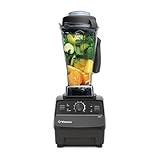
6. Vitamix 5200
The Vitamix 5200 is a long-running Vitamix blender used by home cooks and light-commercial operations. Check the warranty terms if you plan commercial use.
Suits: small shops and food trucks. Strengths: a proven classic. Weaknesses: not a dedicated commercial unit. Skip it if you need all-day service.
Care and Setup
- Rinse the jar after every drink so frozen fruit residue does not harden.
- Run a short soapy-water cycle between flavors.
- Load liquids first, then soft items, then frozen fruit and ice.
- Inspect seals and blade assemblies on a regular schedule.
Mistakes to Avoid
- Overfilling the jar with frozen fruit.
- Ignoring noise in a small shop.
- Buying a home blender for all-day service.
- Skipping the warranty details for commercial use.
Estimating Your Daily Blending Volume
The right number and size of blenders comes from your peak hours, not your daily average. Start by estimating how many smoothies you expect to sell during your busiest hour and how long each one takes from loading to cleanup. A single blend might take a minute or two, plus time to rinse the jar, load ingredients and pour. If you expect a rush of customers over a short period, one machine will become a bottleneck.
Think about your menu. Simple smoothies of fruit, juice and ice are lighter work than thick bowls, nut butters or drinks with frozen chunks and greens. A menu with many thick or frozen items puts more strain on the motor and calls for stronger machines and more frequent breaks. Note also the container size you need: a larger jar handles bigger orders, while smaller jars blend single portions with less waste.
Plan for staff speed. New employees will be slower, and the machine needs to be simple to operate. Count how many blends a worker can handle at once and whether a second station will help. It is better to plan for slightly more capacity than you think you need, since lines of waiting customers can cost sales.
- Estimate orders per peak hour.
- Think about thick versus thin recipes.
- Plan for new staff and cleanup time between blends.
Duty Cycles, Warranty and Commercial-Use Terms
Not every blender that looks powerful is rated for continuous business use, so read the fine print. A commercial-rated model will usually say it is intended for foodservice, and its warranty terms will reflect that. Some home blenders have shorter or limited warranties that exclude commercial use, which means a repair may not be covered if you run them in a shop. Check the listing, the manual and the warranty documents for wording on commercial use before you buy.
Duty cycle is how long a machine can run and how much rest it needs. Heavy blending creates heat, and a motor may shut off to protect itself. Check the manual for the recommended operating time and cool-down periods, and plan your workflow around them. Having a spare unit can help during busy periods.
Ask about service. If a blender fails in the middle of a rush, how quickly can you get it repaired or replaced? Look at who handles repairs, whether replacement parts such as jars, blades and drive sockets are easy to order, and how long the warranty covers motor and container. A longer warranty on the motor is a sign of the maker’s confidence, but you should read exactly what is covered.
- Confirm commercial use is covered by the warranty.
- Read the duty cycle guidance in the manual.
- Check how to get parts and service quickly.
Jar Design, Blade Wear and Cleaning Speed
The jar and blade assembly do most of the work, and they are also the parts that wear. Look at the jar material: durable plastics are common because they resist cracking and are light, though they can scratch and cloud with heavy use. Some jars are designed with a tall, narrow shape that pulls ingredients into the blades, and others are wider. Check the listing for capacity, height and whether the jar fits under your counter shelf or in your station.
Blades are consumables in a busy shop. They dull, and seals around the blade assembly can wear and leak. Some jars have removable blade assemblies, which can be replaced, and others are sealed units. Ask how replacement parts are sold and whether the jar can be repaired or has to be replaced entirely. Keep spare jars so that you can swap quickly during a rush.
Cleaning speed matters in a shop. A jar that rinses clean with a splash of hot water and a drop of soap saves time between orders, and a design with few crevices is easier to sanitize. Check which parts are dishwasher safe and which are best hand washed. Follow local food safety rules for cleaning and sanitizing equipment, and train staff on a consistent routine.
- Check how jars and blades are replaced.
- Keep spare jars for peak times.
- Choose designs with few crevices for easier cleaning.
Noise, Ventilation and Counter Layout
Blenders are loud, and in a small shop the noise affects customers and staff. Manufacturers sometimes offer sound enclosures, which cover the jar and reduce noise, so check whether one is available for the model you consider. An enclosure can also protect the jar from splashes and keep the machine out of the customer’s reach. Think about where the blender sits relative to the counter and seating area.
Heat matters too. Motors give off warmth, and a crowded counter with poor air circulation can lead to overheating. Make sure there is space around the vents and avoid placing the machine near ovens or fryers. Do not block the air intake with towels or storage.
Check electrical needs. Power draw varies, and a shop with several machines running at once may stress a circuit. Confirm the plug type and the amperage on the listing and ask an electrician if you are unsure. Use outlets protected as required by your local rules, and avoid long extension cords. Finally, think about ergonomics: place the blender at a height where staff can load and lift jars without strain, and keep ingredients within reach to save time.
- Consider a sound enclosure if noise is a concern.
- Leave space around vents and away from heat.
- Check electrical requirements before ordering several units.
Standardizing Recipes and Training Staff
A good blender helps consistency, but a consistent product also comes from the way you run the station. Write down every recipe with exact amounts by weight or measure, a loading order and a blending program or time. Loading liquid first, then soft ingredients and finally frozen items and ice, helps the blades pull ingredients down and reduces air pockets.
If your blender has programmable settings, use them, but check how they work. Staff should know how to start, stop and clean the machine, what to do if it jams and when to stop and call a manager. Put clear instructions near the station. Never let staff reach into a jar with the blades in place, and require the machine to be unplugged or turned off during cleaning and repairs.
Train for hygiene. Staff should wash hands, sanitize jars and keep food contact surfaces clean, following local regulations. Label and rotate frozen fruit and other ingredients. Track how long each blend takes and adjust your menu or staffing if one drink slows the line. Review recipes periodically for taste and cost, and replace worn parts before they affect quality.
- Write recipes with exact amounts and loading order.
- Train staff on safety, cleaning and troubleshooting.
- Replace worn parts before quality drops.
Choosing Between the Picks in This Guide, One by One
Six options is a lot to hold in your head at once, so it helps to work through the shortlist for this commercial blender for a smoothie shop guide pick by pick, using only what the reviews above already establish. Each pick below is framed the same way: who it suits, what it does best, and the limitation to accept with open eyes. Read the six in order and mark the one whose weakness bothers you least — that simple test resolves most shortlists faster than chasing an abstract idea of the single best option.
Consider the Vitamix Vita-Prep 3 if its particular balance of trade-offs matches how you actually work. The guide above notes that it suits busy smoothie bars, and that its appeal rests on a strong brand and a proven design. Set against the other picks, that makes it the natural shortlist entry when those qualities matter more to you than all-round convenience. Its honest limitation is worth weighing just as carefully: loud. Skip it if you need a sound enclosure. If that limitation touches something you do every day, another pick in this guide will serve you better; if it touches something you rarely do, it is a fair price in kind for the strengths you gain. The mistake to avoid is choosing it for a use case it was never aimed at, then blaming the product for a mismatch that was visible from the start.
The Blendtec Stealth 885 earns its place for a narrower reason than the headline suggests. It suits quiet, repeatable service, with a sound cover and presets as the qualities that separate it from the rest of this list. Read it as a specialist rather than a default: when your routine lines up with what it does well, it can outperform a more general pick, and when your routine does not, its drawback — a premium purchase. Skip it if you want a basic blender — will be the thing you notice daily. A useful test is to picture your most ordinary session, not your most ambitious one, and ask whether this is the pick you would reach for then. Ordinary sessions are where satisfaction is actually decided.
With the Waring Commercial MX1500XTX, the decision comes down to priorities. It is aimed at high-volume service, and it stands out for power and a professional brand. Those are real advantages, but they sit alongside a clear compromise: check electrical needs. Skip it if you want a compact unit. Compared with the neighbouring picks in this guide, it asks you to accept that compromise in exchange for doing its main job in its own way. If you have read the other reviews and found yourself nodding at this one’s strengths while shrugging at its weakness, that reaction is usually the right signal. If the weakness made you hesitate, trust the hesitation and look at the pick whose strengths match the task you found yourself defending.
Consider the Hamilton Beach HBH450 Summit Blender if its particular balance of trade-offs matches how you actually work. The guide above notes that it suits cafes and smoothie counters, and that its appeal rests on a commercial maker and programs. Set against the other picks, that makes it the natural shortlist entry when those qualities matter more to you than all-round convenience. Its honest limitation is worth weighing just as carefully: check the noise level. Skip it if you want premium branding. If that limitation touches something you do every day, another pick in this guide will serve you better; if it touches something you rarely do, it is a fair price in kind for the strengths you gain. The mistake to avoid is choosing it for a use case it was never aimed at, then blaming the product for a mismatch that was visible from the start.
The Omniblend V earns its place for a narrower reason than the headline suggests. It suits larger batches, with a big container as the qualities that separate it from the rest of this list. Read it as a specialist rather than a default: when your routine lines up with what it does well, it can outperform a more general pick, and when your routine does not, its drawback — less brand history. Skip it if you want a famous name — will be the thing you notice daily. A useful test is to picture your most ordinary session, not your most ambitious one, and ask whether this is the pick you would reach for then. Ordinary sessions are where satisfaction is actually decided.
With the Vitamix 5200, the decision comes down to priorities. It is aimed at small shops and food trucks, and it stands out for a proven classic. Those are real advantages, but they sit alongside a clear compromise: not a dedicated commercial unit. Skip it if you need all-day service. Compared with the neighbouring picks in this guide, it asks you to accept that compromise in exchange for doing its main job in its own way. If you have read the other reviews and found yourself nodding at this one’s strengths while shrugging at its weakness, that reaction is usually the right signal. If the weakness made you hesitate, trust the hesitation and look at the pick whose strengths match the task you found yourself defending.
Throughput Is the Product: Designing the Peak Hour
A smoothie shop lives or dies in its peak ninety minutes, so judge every blender decision by the queue at the busiest moment, not by the calm of mid-afternoon. Work backwards from demand: drinks per hour at peak, seconds per drink including rinsing and pouring, and the number of blending stations that arithmetic demands. For many shops the answer is two stations sooner than expected — the second blender is not redundancy but capacity, and it doubles as insurance when one unit is serviced. The models in this guide differ in cycle speed and jar handling; map those differences onto your peak, not your average.
Menu design is throughput design. A menu of twenty smoothies with twenty methods blends slower than a menu built on shared bases and a few finishing variations. Shops that engineer the menu and the blender together — common bases, pre-portioned frozen fruit, programmes matched to drink families — serve queues that defeat shops with better machines and chaotic menus. The blender is one component in a system whose other components are free to fix.
Frozen Fruit, Ice and the Texture Customers Photograph
Smoothie texture is decided by the ratio of frozen to liquid and by blend order as much as by the machine. Load liquids first, soft ingredients next, frozen last, and let the programme’s early seconds pull the frozen load down into the blades. Under-blended smoothies have chunks; over-blended ones melt and separate. Each shop finds its standard by tasting its own menu on its own machine and writing the result into the drink spec — cup, ingredients, programme, seconds. That spec sheet, taped where new staff can see it, is worth more than any single equipment upgrade.
Ingredient temperature is the hidden variable. Fruit that has softened in a warm kitchen blends differently from fruit at freezer temperature, and drinks drift across a hot day if nobody notices. Keep frozen stock properly frozen until the moment of blending, rotate it honestly, and treat the freezer as part of the blending system. Consistency that survives a heatwave is consistency customers can set their routines by — and routines are a smoothie shop’s real revenue.
Noise, Neighbours and the Morning Rush
Smoothie shops open early, blend loudly, and often sit under flats or beside cafés whose mornings are quiet. Sound-managed models and enclosures, well represented in this guide, are not luxuries in that setting; they are neighbour relations and staff hearing rolled into one purchase. Inside the shop, noise shapes the counter experience too — a customer shouting an order over a blender is a small daily failure. Place stations so the sound fires away from the till, and batch blends where the menu allows, so the room gets intervals of calm.
Staff exposure matters across a full shift in a way a home user never meets. Programmes that run unattended free the operator to step back from the noise and build the next drink, which is both an ergonomic and a throughput win. When comparing models, stand where your staff will stand, for as long as they will stand there. The shop’s soundscape is a working condition, and working conditions decide whether good staff stay.
A Slower Decision Routine Before You Order
Most disappointment with a commercial blender for a smoothie shop is not caused by a bad product; it is caused by a quick decision made on the wrong criterion. The criteria table near the top of this guide is short for a reason — those are the checks that actually predict whether you will be happy. Work through them in the order below, in writing if necessary, before you commit to any of the six picks.
Start with programs. The guide’s table puts it plainly: preset cycles give staff consistent smoothies. Do not treat that as a box to tick and move on. Picture it in your own space and routine — where this commercial blender for a smoothie shop will live, who else will use it, and how often. A criterion that looks minor on a product page becomes major when it is part of a daily habit, and minor daily friction is what quietly pushes a purchase into a cupboard. If a pick is weak on the criterion that matters most in your routine, that weakness outweighs several strengths elsewhere.
Start with container size. The guide’s table puts it plainly: a larger jar speeds service, but a small one suits single servings. Do not treat that as a box to tick and move on. Picture it in your own space and routine — where this commercial blender for a smoothie shop will live, who else will use it, and how often. A criterion that looks minor on a product page becomes major when it is part of a daily habit, and minor daily friction is what quietly pushes a purchase into a cupboard. If a pick is weak on the criterion that matters most in your routine, that weakness outweighs several strengths elsewhere.
Start with motor. The guide’s table puts it plainly: frozen fruit and ice need sustained power. Do not treat that as a box to tick and move on. Picture it in your own space and routine — where this commercial blender for a smoothie shop will live, who else will use it, and how often. A criterion that looks minor on a product page becomes major when it is part of a daily habit, and minor daily friction is what quietly pushes a purchase into a cupboard. If a pick is weak on the criterion that matters most in your routine, that weakness outweighs several strengths elsewhere.
Start with noise. The guide’s table puts it plainly: a sound cover helps in a small shop. Do not treat that as a box to tick and move on. Picture it in your own space and routine — where this commercial blender for a smoothie shop will live, who else will use it, and how often. A criterion that looks minor on a product page becomes major when it is part of a daily habit, and minor daily friction is what quietly pushes a purchase into a cupboard. If a pick is weak on the criterion that matters most in your routine, that weakness outweighs several strengths elsewhere.
Start with warranty. The guide’s table puts it plainly: commercial warranties differ from home warranties. Do not treat that as a box to tick and move on. Picture it in your own space and routine — where this commercial blender for a smoothie shop will live, who else will use it, and how often. A criterion that looks minor on a product page becomes major when it is part of a daily habit, and minor daily friction is what quietly pushes a purchase into a cupboard. If a pick is weak on the criterion that matters most in your routine, that weakness outweighs several strengths elsewhere.
Finish the routine by re-reading the review of your leading pick one more time, looking only for reasons not to buy it. If the reasons you find are things you can genuinely live with, you have made a sound choice. If they are things you are merely hoping will not matter, keep looking — the other five picks exist precisely because no single commercial blender for a smoothie shop suits everyone.
Three Mistakes That Lead to the Wrong Choice
Sizing for the average day
A shop equipped for its average hour fails every peak, and peaks are when new customers decide whether to return. Size blending capacity for the busiest realistic window, with the menu engineered to help. Capacity bought for the peak idles harmlessly at noon; capacity missing at peak costs customers permanently.
A menu the machines cannot repeat
Twenty bespoke methods guarantee inconsistency across staff and shifts. Build the menu on shared bases and programmed cycles, and let variation come from finishing ingredients. Customers taste consistency as quality; a shop that cannot repeat its best smoothie does not, commercially, have a best smoothie.
Neglecting jars until they fail
Jars cloud, craze and crack under daily thermal and mechanical stress, and a jar that fails mid-rush takes a station with it. Inspect during washing, keep spares, and retire on condition. Jar spares are the cheapest insurance in the entire shop and the most commonly skipped.
Living With It: The First Month and Beyond
In the first month, time your peak honestly and write down drinks per hour per station. That single number governs your second-blender decision, your staffing and your menu’s future. Shops that know their number make calm decisions; shops that guess make anxious ones. Revisit it each season — demand patterns move, and the system should move with them deliberately, not accidentally.
Cleaning is a rhythm, not an event: rinse between drinks, wash jars through the day as rotation allows, deep-clean on schedule, and inspect blades, seals and sockets while parts are in your hands. Sugary residue left overnight is tomorrow’s off-flavour and next month’s service call. A closing checklist that names the blender explicitly keeps the standard when the opener changes.
Over a year, your blenders will teach you your business: which drinks carry the shop, where the queue forms, what breaks and when. Keep buying decisions downstream of that knowledge. The shops that thrive treat equipment as the servant of a measured system — menu, spec, station, staff — and the blenders in this guide reward exactly that treatment.
More Questions About Choosing and Using One
One powerful blender or two mid-range ones?
For most shops, two stations beat one hero unit: capacity at peak, cover during service, and the ability to run two drink families at once. A single flagship suits a genuinely low-volume shop. Decide from your measured peak, not from the romance of the biggest specification.
Do I need programmable cycles?
If more than one person blends, yes — programmes are how a shop’s standard survives staff changes and rush hours. A solo operator with a tiny menu can blend manually happily. Programmes are consistency insurance, and consistency is what turns first-time buyers into regulars.
How do I keep smoothies from separating?
Serve promptly, blend to the spec rather than beyond it, and build recipes with enough body — frozen fruit and natural thickeners do this work. Separation after a long sit is physics, not failure; drinks designed to be drunk now should be handed over now, with the spec tuned so ‘now’ tastes right.
What spare parts should be on the shelf?
At minimum: a spare jar, and the wear items your maker lists for your model — seals and drive components as applicable. Add the maker’s service contact to the shop’s phone before you need it. Downtime is priced by the hour at peak; spares are priced once.
Commercial Smoothie Blenders FAQ
What makes a blender commercial?
Stronger motors, tougher parts and warranties meant for business use.
Do I need programmable cycles?
They help staff make the same drink every time, which matters in a shop.
How loud are these?
Many are loud. Sound-enclosed models cut noise but cost more.
Can a home blender work for a small business?
Possibly for light use, but warranties and durability differ. Check the terms.
How should I load the jar for a smoothie?
Add liquid first, then soft ingredients such as yogurt or fresh fruit, and finish with frozen fruit and ice on top. That order lets the blades pull the heavy items down and puts less strain on the motor during each cycle.
How often should the blades and seals be replaced?
That depends on volume and on the maker’s guidance. In a busy shop, check the blade assembly, gasket and container for wear on a regular schedule, and keep spare parts on hand so one worn seal does not stop service.
Should I buy more than one blender?
A second unit is cheap insurance in a shop. If one jar is being washed or a motor needs a break, the line keeps moving, and rush periods are far easier to handle with two machines than one.
How do I decide how many blenders I need?
Estimate your busiest hour of orders and how long each blend and cleanup takes. If a single machine would create a line, plan for a second unit or a spare jar.
Does a home blender warranty cover commercial use?
Often it does not. Check the warranty and manual for language on commercial or business use before buying, and ask the seller if it is unclear.
What is a duty cycle?
It is the amount of time a machine can run before it needs a rest. The manual should describe recommended run times and cool-down periods, and following them helps protect the motor.
Are sound enclosures worth it?
They can reduce noise and protect against splashes, which is useful in a small shop. Check whether one is offered for your model and whether it affects speed of use.
How should I load a jar for a smoothie?
Many recipes work best with liquid first, then soft ingredients, then frozen items and ice. Follow the maker's guidance and avoid overfilling the jar.
How often should I clean blenders in a shop?
Clean and sanitize jars between uses as your local food safety rules require, and give the base and seals a regular wipe-down. Follow the manual for deeper cleaning.
What signs show a blender needs service?
Burning smells, unusual noise, leaks at the base of the jar, a dull or damaged blade and the motor shutting off often are all signs. Stop using it and check the manual or contact support.
Can I mix frozen and fresh ingredients in the same recipe?
Yes, but load them in a sensible order and add enough liquid to keep the blades moving. Very hard frozen blocks can strain the motor, so break up large pieces first.
How Ice, Frozen Fruit and Thick Ingredients Stress a Blender
Smoothie shops ask more of a blender than most kitchens do. Frozen fruit, ice, nut butters, leafy greens and protein powders all load the motor and jar differently, and understanding that load helps you choose and operate equipment sensibly.
Frozen fruit and ice
Frozen ingredients are hard and dense, so they place a heavy torque demand on the motor in the first seconds of a cycle. A well-built commercial blender handles this repeatedly, but poorly layered jars still produce air pockets that make blades spin without pulling product down. Loading liquid first, then soft ingredients, then frozen items on top is a widely used practice that lets the vortex form quickly.
Thick blends and add-ins
Acai bowls, nut butter shakes and very thick smoothies can stall a motor if they are underhydrated. A tamper helps push ingredients into the blades without opening the lid, but the staff must be trained to use it correctly and keep it clear of the blades. Check whether a model includes a tamper, and ask whether the jar and lid are designed for it.
Fibrous greens
Kale, spinach and other fibrous produce can leave a gritty texture if blended too briefly. Longer or higher-speed cycles help, and adding greens early in the order, with liquid, tends to give the smoothest result.
Electrical Requirements and Placement
High-performance blenders draw substantial current, and in a commercial space that matters more than it does in a home kitchen. Before buying several machines, check the following.
- Circuit capacity: a standard outlet circuit can often be shared, but running multiple blenders at once, plus a refrigerator or other equipment, can overload it. A licensed electrician can tell you what your space supports.
- Plug type and voltage: confirm that the plug matches your outlets, and do not use adapters that bypass grounding.
- Cord length and routing: short cords are safer than extensions, and routing them away from water and foot traffic reduces hazards.
- Ground-fault protection: outlets near sinks usually need GFCI protection under electrical codes, so check with your local inspector.
Your landlord or local authority may also have rules about commercial equipment and permits, and these vary by location. It is worth asking before installing rather than after.
Cost of Ownership Beyond the Purchase Price
The sticker price is only part of what a blender costs in a busy shop. Several recurring items add up over a few years.
Replacement parts
Jars, blade assemblies, lids, drive sockets and gaskets wear out. Before choosing a model, look into whether these parts are sold individually, how widely they are available, and what they cost. A cheaper machine with expensive or hard-to-find parts can end up costing more than a premium model with an easily replaced blade assembly.
Downtime
When a blender fails during a rush, the real cost is lost sales. Shops with a single machine are particularly exposed. Keeping a backup unit, or at minimum a spare jar and blade assembly, protects revenue. Some buyers prefer to purchase two moderately priced machines instead of one very expensive one for this reason.
Service and warranty
- Check how long the warranty lasts and whether it covers commercial use specifically.
- Ask what happens when a unit fails: is it repaired, replaced, or shipped away for weeks?
- Note which parts are covered and which are treated as consumables.
Sanitation, Allergens and Health Code Basics
Food safety rules apply to blending equipment, and a blender that is hard to clean is a liability. Rules differ by state and county, so confirm local requirements with your health department.
Certification
Many health departments expect food service equipment to meet a recognized sanitation standard, often indicated by NSF certification. Some blenders sold for home use do not carry it, which can create problems at inspection. Check the product details and, if unsure, contact the manufacturer before buying.
Cleaning between orders
Rinsing the jar between orders is not always enough, particularly for allergen-containing ingredients such as peanut butter, milk or tree nuts. A full wash, rinse and sanitize routine between allergen and non-allergen orders prevents cross-contact. Many shops keep separate, clearly marked jars for allergen-heavy recipes.
Daily deep clean
- Disassemble the lid, gasket and any removable parts at close.
- Wash in a three-compartment sink or a commercial dishwasher if the parts are rated for it.
- Air dry fully to avoid trapped moisture and odors.
- Wipe the base, cord and controls with an approved sanitizer wipe, taking care not to let liquid enter the vents.
Written cleaning checklists posted near the station help new staff follow the same process each shift.
Planning for Peak Hours and Backup
A shop does not fail on an average Tuesday; it fails during the Saturday lunch rush. Before buying, picture your busiest hour and ask how many drinks must leave the counter in that window. If one blender needs a full wash cycle between each order, a single machine becomes the bottleneck regardless of motor strength. Many owners add a second jar per machine so one can be rinsed while another is blending. Keep the station close to the sink, stock ingredients in pre-portioned cups, and make sure at least one person on every shift knows how to swap a jar or reset a tripped unit. Those small preparations keep service moving when equipment misbehaves.
Related guides
Frequently Asked Questions
Do commercial blenders need NSF certification?
Often, yes. Many health departments expect food service equipment to meet a recognized sanitation standard, and NSF certification is a common way to show that. Requirements vary by location, so ask your local health department before buying and check each model’s documentation instead of assuming a commercial-looking blender qualifies.
What electrical circuit does a commercial blender need?
Most high-performance models draw a large share of a standard circuit, so it is best to avoid sharing it with other heavy equipment. Check the amperage listed on the blender, avoid extension cords, and have a licensed electrician confirm that your outlets and breakers can handle it before you install multiple units.
How do I prevent allergen cross-contact when blending?
Wash, rinse and sanitize the jar, lid, blade assembly and tamper between allergen and non-allergen orders, rather than just rinsing. Many shops dedicate separate marked jars to allergen-heavy recipes, train staff on the routine, and post clear allergen information at the counter so customers can make informed choices.
How long does a commercial blender last in a busy shop?
There is no fixed figure, because lifespan depends on daily volume, ingredient loads, cleaning habits and model quality. Jars, blades and seals usually wear out well before the motor. Check the warranty, plan to replace consumable parts, and keep a spare unit if downtime during rush periods would be costly.
The Short Version
For a proven classic, the Vitamix Vita-Prep 3. For quiet service, the Blendtec Stealth 885. For power, the Waring MX1500XTX. For presets, the Hamilton Beach Summit. For big batches, the Omniblend V. For a light-commercial pick, the Vitamix 5200.

