Red wine often tastes better after a short stay in a decanter. Pouring it into a wide vessel gives it contact with air, which softens firm tannins in young bottles, and it lets you leave old sediment behind. The right decanter makes that process easy to repeat.
The six decanters below cover wide-base glass, a simple carafe and a design made for quick pouring. We have not used these products ourselves, so please confirm the capacity, material and cleaning instructions on the current listing before buying. We keep specs general, since sizes differ between sellers. Treat these notes as a starting point, then compare sizes, set contents and current availability across the listings before you decide.
As an Amazon Associate we earn from qualifying purchases. Links below are affiliate links, and they do not change the product information we give.
What to Look For
| Feature | Why it matters |
|---|---|
| Base width | A broad base gives red wine more air contact |
| Capacity | Make sure a full bottle fits with room for swirling |
| Neck | A narrow, steady neck gives control for pouring and for stopping sediment |
| Ease of cleaning | Wide openings make cleaning easier than narrow necks |
In this guide
Specs at a Glance
| Decanter | Material | Style | Notes |
|---|---|---|---|
| Riedel Mature Burgundy Decanter | Lead-free crystal | Wide flat base | Hand-made |
| Menu Winebreather Carafe | Glass and steel | Funnel shape | Two-piece design |
| Vintorio Wine Decanter | Glass | Wide body | Often has accessories |
| Viski Raye Decanter | Crystal glass | Wide base | Lead-free glass |
| Spiegelau Soiree Decanter | Crystal glass | Classic shape | Machine-made |
| Le Chateau Wine Decanter | Hand-blown glass | Wide base | Often sold with extras |
The 6 Best Decanters for Red Wine
Top pickBest for delicate older reds
1. Riedel Sommeliers Mature Burgundy Decanter
A hand-made decanter with a wide, flat base for pinot noir and similar lighter reds. It is the stuff of fine dining and priced like it.
Suits: delicate older reds. Strengths: a large surface area. Weaknesses: a high price and fragile glass. Skip it if you want a casual everyday piece.
View Riedel Mature Burgundy Decanter on Amazon
Best for design lovers
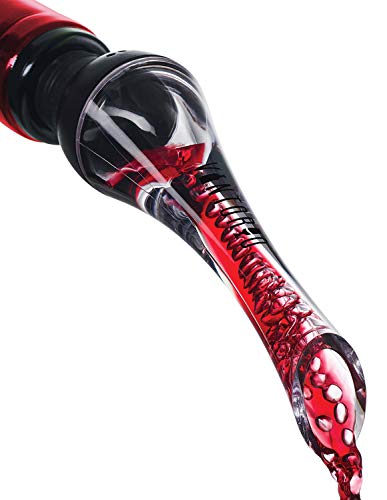
2. Menu Winebreather Carafe
A Danish design with a stainless steel cover and a glass body meant to aerate wine as you pour. It is a conversation starter and a simple way to give wine air.
Suits: design lovers. Strengths: a distinctive Scandinavian design. Weaknesses: the cover is a separate part to wash. Skip it if you prefer a one-piece decanter.
View Menu Winebreather Carafe on Amazon
Best for new decanter owners
3. Vintorio Wine Decanter
A glass decanter with a wide body and a spout. It is often sold as a set with a stopper and cleaning accessories, making it a good starter pick.
Suits: new decanter owners. Strengths: a low price and accessories. Weaknesses: less refined than crystal. Skip it if you want a heirloom item.
View Vintorio Wine Decanter on Amazon

Best for modern kitchens
4. Viski Raye Wine Decanter
A sleek decanter with a wide base and a tall neck designed to aerate and show the wine. The glass has a lead-free, crystal-clear look.
Suits: modern kitchens. Strengths: a stylish shape. Weaknesses: tall neck makes cleaning harder. Skip it if you dislike cleaning brushes.
View Viski Raye Decanter on Amazon
Best for everyday use
5. Spiegelau Soiree Decanter
A simple, machine-made decanter that is widely available and easy to use. It holds a full bottle with room to spare.
Suits: everyday use. Strengths: affordable and practical. Weaknesses: plain styling. Skip it if you want a showpiece.
View Spiegelau Soiree Decanter on Amazon
Best for gift buyers
6. Le Chateau Hand Blown Wine Decanter
A hand-blown glass decanter with a wide base and a lead-free formula according to the seller. It is often sold with a cleaning kit.
Suits: gift buyers. Strengths: a handcrafted look. Weaknesses: varying finish between pieces. Skip it if you want a famous brand.
View Le Chateau Wine Decanter on Amazon
Care and Setup
- Rinse with warm water straight after pouring so the red wine does not leave a stain on the glass.
- Use cleaning beads or a soft brush sparingly on wide bases, and never force anything into a narrow neck.
- Dry the decanter upside down on a rack so moisture can escape and no musty smell builds up.
- Store it with the stopper off, or without one, so air can circulate between uses.
Mistakes to Avoid
- Decanting very old wines for too long, since fragile bottles can fade quickly once opened.
- Pouring too fast, which stirs up sediment and sends it into the glass.
- Using a decanter that is too small to hold a full bottle with swirl room.
- Putting delicate glass into a dishwasher, where it can chip or crack.
Decanter Shapes Compared
Decanters look alike at a glance, but the outline changes how the wine behaves. A wide, flat base spreads the wine into a shallow layer, which exposes a large surface to air. This is the usual choice for young, tannic reds that need to loosen up. A standard bell or bottle-shaped decanter has a smaller surface and works more as a serving vessel, handy for bottles that need only a gentle pour and some sediment control.
Funnel or swan-style designs add curves or channels meant to guide the wine along the glass, and some include a separate cover or aerating insert. These can look striking, but extra parts mean extra washing, so read the listing to see what comes apart. Tall, narrow decanters look elegant on a table, yet they give the wine less air and are harder to clean inside.
A practical way to choose is to think about the reds you pour most often:
- Bold, young reds usually suit a wide base, because more air contact helps them open up.
- Lighter, delicate reds are better with a more modest surface area and a shorter rest.
- Older bottles with sediment need a steady neck and a clean, controlled pour more than they need aeration.
Also look at the lip. A well-shaped spout helps the wine leave in a thin, clean stream, while a rough or thick rim can make the last drops dribble down the outside of the glass.
Size and Capacity Checks Before You Order
A standard wine bottle is commonly 750 ml, but a decanter needs more room than the liquid alone. The wine must be able to swirl and breathe, and a decanter filled to the neck cannot do either. Look for a stated capacity that comfortably exceeds one bottle, and check the listing for how that capacity is measured, since some sellers quote the brim volume and others the usable volume.
Think about where it will live as well. A broad base takes up cabinet and table space, and some wide models will not fit on a shelf with a low clearance. Measure the shelf height and the dishwasher or sink basin if you plan to wash it by hand under the tap.
If you often open magnums or want to blend two bottles for a party, a larger decanter makes sense. If you mostly drink one bottle between two people, a very large model is just more to store and clean. Check these points on the listing:
- Stated capacity and overall height and width.
- Opening diameter, which decides how easily you can pour in and reach inside.
- Weight when full, because a wide glass vessel full of wine is heavy to tilt with one hand.
- Whether a stopper, stand or cleaning accessory is included.
Glass, Crystal and Lead-Free Claims
Decanters are made from ordinary glass, crystal glass or hand-blown glass, and the terms are not always used consistently across sellers. Crystal is usually thinner and clearer, which looks refined but chips more easily. Standard glass is often thicker and more forgiving, which suits daily use and busy sinks.
Because older crystal could contain lead, many buyers now look for lead-free wording. Treat that as a claim to verify, not a guarantee. Read the product description, the packaging details and any care notes, and ask the seller if the information is vague. Do not store wine in a decanter for long periods in any case, since decanters are for serving, not for storage.
Other things worth checking on the listing:
- Whether the piece is hand-made or machine-made, which affects how uniform the finish is.
- Whether the manufacturer states it is dishwasher-safe or hand-wash only.
- Rim thickness, since thin rims feel nicer but break more readily.
- Any visible bubbles or uneven walls in photos, which are common on hand-blown pieces and are not necessarily defects.
If the piece is a gift, choose a style with simple care needs so the recipient actually uses it.
Ask the seller about returns for breakage in transit, since thin glass is fragile when shipped. Photos with a ruler or a bottle for scale help you judge size, and a listing that names the glass type and care steps is usually a better sign than one that only praises the look.
How to Decant an Older Bottle With Sediment
Sediment collects in older red wines as a gritty, dark deposit. The goal is to pour the clear wine and leave the deposit behind, and a little preparation makes that much easier.
- Stand the bottle upright for a good while before serving, ideally a day, so the sediment settles to the bottom.
- Open it gently and wipe the neck so no cork crumbs or dust fall in.
- Light behind the neck. A candle or a bright phone torch behind the bottle shoulder lets you see when sediment approaches the neck.
- Pour in one slow, steady motion into the decanter without stopping, keeping the bottle low against the rim to reduce splashing.
- Stop when the cloudy wine reaches the neck and leave the last small amount in the bottle.
Older, fragile wines usually need little air, so decant them shortly before serving. Younger, firmer wines can be poured more vigorously and left longer, but taste as you go because there is no fixed rule. A coffee filter or fine mesh is sometimes used for stubborn sediment, though a careful pour is usually enough.
Practise the pour once with water before opening a treasured bottle. Getting the angle, the speed and the light behind the neck right on a cheap run makes the real decanting calmer, and it shows whether your decanter’s lip pours cleanly or drips.
Removing Stains and Smells From the Glass
Red wine leaves a purple film that can cloud the base if the decanter is left to dry. The simplest habit is to rinse it with warm water right after serving, then wash it properly later. If a film has already formed, there are gentler options than scrubbing hard.
- Fill the decanter partly with warm water and a small amount of mild washing-up liquid, then swirl well.
- Use decanter cleaning beads or a soft decanter brush as the manufacturer allows, moving slowly so the glass is not scratched.
- For a stubborn film, a mix of warm water and white vinegar left for a short time and then rinsed thoroughly is a common home method.
- Rinse several times until no scent remains, as soap or vinegar residue will flavour the next wine.
Avoid harsh abrasives, very hot water on thin glass, and sudden temperature changes, all of which can crack a decanter. Always follow the care instructions on the listing or in the box, especially for crystal or hand-blown pieces.
If a musty smell lingers, let the decanter air dry upside down on a rack for longer, and wash again. A decanter that still smells or has permanent etching or chips along the rim is a sign it may be time to replace it.
Why Decanting Is More Than a Show
Decanting means pouring wine from its bottle into another vessel, and it serves two purposes. For older wines, it separates the clear liquid from sediment that gathers at the bottom of the bottle. For young, bold reds, it exposes the wine to air, which many people feel softens harsh edges and brings out aromas. A good decanter makes this simple, with a shape that is easy to hold and pour from.
| Wine situation | Decanter shape that helps |
|---|---|
| Young, full-bodied reds | Wide base for extra surface contact with air |
| Older wines with sediment | Slimmer shape for a gentle pour |
| Everyday reds | Mid-size decanter that is easy to wash |
| Entertaining a crowd | Large capacity with a stable base |
Wide Bases and Easy Pours
A wide base gives wine more surface area, and a narrow neck makes it easy to grip and tip. Look at the stability of the base, since a wide decanter that wobbles is an accident waiting to happen. A lip that pours cleanly without dripping saves tablecloths, and a good handle or gripping point makes pouring from a full decanter more comfortable.
- Check the capacity, which should hold a standard bottle with room to swirl.
- Consider the weight when full.
- Look for a smooth rim that does not catch drips.
- Note whether a stopper or lid is included.
Glass Quality and Care
Thin, clear glass looks elegant but needs careful handling, while heavier glass is sturdier. Crystal and glass both work, and the maker will describe the material. Rinse the decanter with warm water right after use, and avoid soaps that leave residue and scents. Hand washing is often best, and a cleaning brush or beads can help reach narrow necks. Let the decanter air dry upside down on a rack designed for it, or use a lint-free cloth.
How Long to Let Wine Breathe
There is no single rule for how long wine should sit in a decanter, since it depends on the wine and your taste. Many people try a small taste right after pouring and again over time to see how the flavor changes. Older wines are often decanted just before serving, since they can fade quickly with air.
Serving and Storing
Serve at a temperature appropriate to the wine, and place the decanter on a stable surface away from the table edge. Finish the wine within a sensible time, and store any leftover wine as the wine maker or a reliable source advises. Keep the decanter in a cabinet where it is protected from knocks.
Mistakes to Avoid With Decanters
Decanters are delicate, and a few habits shorten their life. Pouring very cold wine into warm glass can cause stress, and rinsing a hot decanter in cold water may crack it. Leaving wine in a decanter for days leads to flat aromas, and using strong detergents may leave a film that affects flavor.
- Do not put a decanter in the dishwasher unless the maker explicitly says it is allowed.
- Avoid gripping the neck tightly when the decanter is full and heavy.
- Do not leave stoppers in place when storing the decanter, so air can circulate.
- Skip drying with towels that leave lint inside.
- Never carry a full decanter by the neck alone.
If you pour carefully, store gently and clean thoughtfully, your decanter will stay clear and elegant.
Red Wine Decanter FAQ
How long should red wine sit in a decanter?
Younger, bold reds may like an hour or more, while older wines usually need only a short rest after pouring, because they can fade once air reaches them.
Do all red wines need decanting?
No. Light, fruity reds often do not need it, but full-bodied reds and bottles with sediment can benefit from the extra air and the slow pour.
What is the best shape for red wine?
A wide base with a steady neck is the most common advice, because the wide base exposes more wine to air while the neck gives you pouring control.
Can I decant white wine or sparkling wine in the same decanter?
You can decant some white wines in a clean decanter, particularly full-bodied ones that benefit from a little air. Sparkling wine is usually not decanted because it would lose its bubbles. Make sure the decanter is fully rinsed so no red wine scent carries over.
Should I chill the decanter or serve at room temperature?
Most reds are served slightly cooler than a warm room, so a decanter at normal room temperature is fine. If the wine is very warm, a short stay in a cool place first can help. Avoid putting a thin glass decanter straight from the fridge into hot water.
How do I know if a decanter is too small for my bottles?
Check the stated capacity on the listing and compare it to a standard 750 ml bottle. If the wine would fill it to the neck, there is no room to swirl. Choose a size that holds a full bottle with space to spare.
Is it safe to leave wine in a decanter overnight?
It is better not to. Wine left out loses freshness quickly once it has had air, and some of the flavour fades. If you have leftovers, pour them back into a bottle with a stopper and keep it cool.
Is a decanter with a stopper better than one without?
A stopper keeps dust and insects out between pours and helps with short storage, but it is not needed for the airing itself. If you choose one with a stopper, check that it fits snugly and that you can remove it without twisting the neck.
Do aerating funnels replace a decanter?
They speed up contact with air during the pour, which can help with a young wine when you are short on time. A decanter also lets you leave sediment behind and gives the wine a longer rest, so the two serve slightly different purposes.
Can I put a decanter in the dishwasher?
Only if the maker says it is dishwasher-safe. Many are hand-wash only because thin glass can crack or cloud over time, and the shape often makes it hard for water to reach the inside properly.
Troubleshooting: When a Decanted Pour Disappoints
When a decanted drink tastes worse than expected, work through the likely causes in order before blaming the bottle. First, time: taste again after a short rest. Some pours pass through a dull, closed phase before opening up, and a judgement made in that window is often reversed half an hour later. Second, temperature: a drink served too warm tastes flat and heavy regardless of air, and a drink served too cold tastes thin and muted. Small temperature errors masquerade as decanting failures remarkably often.
Third, cleanliness. A decanter that was stored closed, rinsed hastily, or dried with a cloth that carried detergent can lend a faint dullness or odour that flattens aroma. Re-rinse the vessel, pour a small amount back in, swirl, and discard that rinse before judging the rest. Fourth, glassware: a thick-rimmed or slightly soapy glass will undo the decanter’s good work at the final step, so taste from your best clean glass before concluding anything about the bottle.
Finally, consider the pairing. A pour that seemed quiet on its own can come alive beside the right food, and a pour that shone during tasting can be overwhelmed by a strongly flavoured course. None of this requires new equipment — only the habit of checking time, temperature, cleanliness, glass, and food in that order. Keep that checklist in mind and the decanters for red wine in this guide stop being display pieces and become what they should be: reliable instruments you understand well enough to trust.
Buying a Second Decanter: When One Shape Is No Longer Enough
Most households start with one decanter and, if the habit sticks, eventually feel the pull of a second. The sensible trigger is not novelty but a recurring friction: two bottles open on the same evening with different needs, a favourite vessel that is always in the wash when wanted, or a growing taste for older bottles whose sediment handling deserves a shape of its own. A second decanter should solve one of those specific problems, which usually means choosing a shape that differs from the first in a deliberate way — wider where the first is narrow, sturdier where the first is delicate.
Contrast is the guiding principle. If your first pick is a dramatic, wide-based piece in the spirit of the Riedel Sommeliers Mature Burgundy Decanter, a plain, easy-pouring second vessel in the spirit of the Vintorio Wine Decanter covers weeknights and second bottles without ceremony. If your first is a practical everyday decanter, the second can be the showpiece, kept for the bottles and the evenings that deserve theatre. What rarely earns its shelf space is a near-duplicate: two vessels that pour alike, clean alike, and suit the same bottles will simply compete for the same job.
Before buying, re-check the unglamorous details against your home: drying space for two vessels, storage height for the taller of them, and a cleaning routine that works for both shapes. Note, too, that a second decanter multiplies the value of good habits — rinsing straight after use, storing stoppers with their vessels, keeping each decanter beside its bottle during service. Bought for a reason and chosen for contrast, a second decanter is one of the few upgrades in this corner of the kitchen that genuinely changes what an evening at home can be.
A First-Month Routine: Learning Your Decanter by Using It
A decanter reveals its character over the first few bottles, not on the day it arrives. During the first month, keep a few simple notes — on paper or in a phone — for each use: what you poured, how long it rested in the decanter, and whether the last glass tasted better or worse than the first. Patterns appear quickly. You may find that younger, firmer pours improve steadily for an hour or more, while older, more delicate ones peak early and then fade. Those notes turn the general guidance in this article into instructions written for your own palate and your own cellar habits.
Use the first month to learn the pour as well. A wide-based design like the Riedel Sommeliers Mature Burgundy Decanter and a tall, narrow design like the Menu Winebreather Carafe behave very differently at the table: one pours with a broad, slow arc, the other with a quicker, thinner stream. Practise with water before the first important bottle. Learn where to grip the neck so your hand does not warm the contents, how far the decanter tips before the flow starts, and how the last glass — the one that carries any sediment — announces itself by clouding slightly in the neck.
By the end of the month you will also know your cleaning reality. Some shapes rinse clean in seconds; others need a soak, a swirl of warm water, and patient air-drying on a stand. Build that reality into your decision about which decanter becomes the everyday choice and which is reserved for occasions. The best decanters for red wine for your home is the one whose routine you are genuinely willing to repeat, because a decanter that feels like a chore quietly stops being used at all.
Decanting for Two, for a Table, and for a Crowd
The right decanting routine changes with the size of the occasion. For two people sharing one bottle, decanting is intimate and forgiving: pour the whole bottle, taste as you go, and let the drink evolve across the meal. A smaller vessel keeps the contents in proportion and looks right on a small table, and there is no pressure to finish quickly — if the last glass is the best one, that is a success, not a problem.
At a full dinner table, timing becomes the challenge. Several bottles may be open across an evening, and each wants a different amount of air. Work backwards from the moment each course is served: the pour for the main course goes into the decanter first, since it usually needs the longest rest, while a delicate bottle for a later course can be opened closer to its moment. Label nothing and announce little; simply keep track of which decanter holds what. A host who confuses two similar vessels — a real risk when the Vintorio Wine Decanter and the Viski Raye Wine Decanter are both in service — can avoid it by keeping each decanter beside its empty bottle.
For a crowd, decanting becomes logistics. Large gatherings reward decanters that pour cleanly at speed and survive a busy sideboard, which is where a sturdier pick earns its place over the most delicate showpiece. Decant in batches rather than all at once, keep one vessel in reserve, rinsed and ready, and accept that at a party the decanter’s job is consistency — every guest getting a sound, well-aired glass — rather than the fine gradations of change you would follow at a quiet table of two.
Sediment, Cork, and the Older Bottle: A Careful Walk-Through
Older bottles reward patience and punish hurry, and the decanter is only one part of the ritual. Stand the bottle upright well before serving — a day is not too long — so sediment settles to the bottom. When the moment comes, open the bottle gently, wipe the neck inside and out, and pour in one slow, continuous motion with a light behind the neck so you can watch the liquid run clear. The instant a haze or a trail of particles reaches the shoulder of the bottle, stop. What remains in the bottle is a small sacrifice that protects the clarity of everything already in the decanter.
Cork condition tells its own story. A cork that crumbles is not automatically a sign of a spoiled drink, but fragments must be kept out of the glass; a fine strainer or a clean piece of muslin over the decanter mouth solves it without fuss. If the cork smells musty in a way that follows into the first small taste, air will not rescue the bottle, and it is kinder to open something else than to decant hopefully and serve with apologies.
Temperature deserves the same care as sediment. A bottle brought up from a cold cellar may need an hour at room temperature before it shows its best, while a bottle stored in a warm kitchen may need the opposite. Decanting into a vessel like the Spiegelau Soiree Decanter will not fix a serving temperature that is far off; it will only hold the drink at whatever temperature it already has. Judge the bottle by touch, pour a small first taste, and adjust the room, not the drink, before committing the whole bottle.
Where the Decanter Lives: Display, Safety, and Everyday Storage
A decanter spends far more of its life empty and stored than full and admired, so its home matters. The ideal spot is easy to reach without stretching, protected from direct sunlight, and away from the vibrations of a frequently slammed door or a hard-working appliance. Height is a safety question as much as a convenience one: a tall piece like the Menu Winebreather Carafe needs headroom not only on the shelf but along the whole path from shelf to table, past light fittings and cupboard doors.
Store the stopper with the vessel, not in a drawer of odds and ends. A stopper stored separately gets chipped, lost, or — worst of all — confused with the stopper of another decanter, which rarely seals as well as the original. If the decanter is kept on display, rinse it before use even if it looks clean; fine dust settles inside a wide bowl invisibly and shows itself only in the first poured glass. A quick rinse and a drain upside down on a clean cloth takes a minute and guarantees a neutral start.
Households with children or large pets need one extra rule: the decanter’s resting place, full or empty, is never a low table edge or a crowded sideboard corner. A filled decanter is top-heavy in spirit even when its base is wide, and a knocked vessel spills further than a knocked bottle. Choose a serving spot against a wall, pour there rather than carrying a full decanter across the room, and the most dramatic decanter stories — the ones nobody wants to tell — simply never happen.
What Decanting Cannot Do: Honest Limits and Better Expectations
Decanting is surrounded by hopeful claims, and a clear-eyed view makes for better buying and better drinking. Air can soften a young, tight pour and can lift aroma noticeably; it cannot add complexity that was never in the bottle, repair a drink that is genuinely faulty, or turn an everyday bottle into a special one. Expecting transformation leads to over-decanting — leaving a drink exposed until its freshness has ebbed — while expecting nothing leads people to skip a step that genuinely helps the firm, young bottles most households buy most often.
Shape has limits, too. A dramatic vessel like the Le Chateau Hand Blown Wine Decanter maximises air contact and table presence, but the drink inside obeys the same clock as it would in a plainer shape; the wider surface speeds the early stages rather than changing the destination. Likewise, material — crystal, lead-free crystal, or glass — affects weight, clarity, and care, not the chemistry of what is poured. Choose the shape for your bottles and the material for your hands and your washing routine, and let both choices be practical ones.
The most useful expectation is the simplest: decanting buys control. It lets you separate a drink from its sediment, watch it change, and serve it at the moment you judge best. Used that way — tasted early, tasted often, and poured when it is ready rather than when a timer says so — even a modest decanter like the Viski Raye Wine Decanter becomes one of the most satisfying tools in the house, precisely because its job is honest and its limits are understood.
Keeping a Decanting Journal: Turning Taste Into Knowledge
A decanting journal sounds like an enthusiast’s indulgence until you notice what it replaces: the same uncertain experiment, repeated bottle after bottle, with nothing learned between them. The journal can be three lines per bottle — what it was, how long it breathed, and a sentence on how the first glass differed from the last. Within a dozen bottles, those lines become the most personalised decanting guide in existence, because they describe your bottles, your room temperature, your decanter, and your palate, rather than a critic’s cellar.
Patterns worth watching for will emerge on their own. You may find that one style consistently peaks earlier than advice suggests, that your wide-based Riedel Sommeliers Mature Burgundy Decanter moves a drink along faster than your narrower vessel, or that a second hour of air flatters one region’s bottles and flattens another’s. These are not universal truths and do not need to be; they are operating instructions for your own table, which is the only table the decanter serves.
The journal also disciplines buying in both directions. It tells you when a second, different decanter would genuinely change results, and it tells you when the honest answer is that the current vessel — perhaps the Viski Raye Wine Decanter — already handles everything you pour. Keep it with the decanter rather than in a distant drawer, write in it while the last glass is still in hand, and let it stay brief. A journal that demands essays will be abandoned; one that asks for three lines will still be teaching you in five years.
Decanting Half Bottles, Leftovers, and the Second Evening
Not every decanting question involves a fresh, full bottle. Half bottles and leftovers raise their own problems, and the decanter’s role changes with them. A half bottle has already met a great deal of air relative to its volume, so its remaining contents usually need protection rather than aeration: keep the bottle stoppered, keep it cool, and drink it sooner rather than later. Pouring leftovers into a wide decanter like the Le Chateau Hand Blown Wine Decanter at that stage accelerates the very decline you are trying to slow.
For a bottle opened yesterday and destined for tonight’s table, judge by tasting, not by hope. Pour a small amount, let it sit in the glass a few minutes, and taste again; some sturdy pours genuinely improve overnight, while delicate ones will have traded freshness for softness. If the drink is sound but subdued, a brief, gentle decant — minutes, not hours — can wake its aroma without pretending the clock can be reversed. If it tastes tired, believe it, and let it serve the cooking instead.
The practical lesson is that air is a budget, not a blessing. Every bottle arrives with a total amount of exposure it can spend well, divided between the cellar, the decanter, the glass, and the hours after opening. Owning a good decanter, whether the everyday Vintorio Wine Decanter or a special-occasion piece, is really about spending that budget deliberately — generously for a young, firm bottle with a long evening ahead, sparingly for an older or already-open one whose best moments are nearer.
The Decanter at the Table: Etiquette That Helps the Drink
Table etiquette around a decanter is not stuffiness; most of it exists to protect the drink and the people drinking it. The host pours, or clearly invites a guest to, because the host knows what is in the vessel and how it has been treated — which bottle, how long it has breathed, whether sediment waits in the last glass. Announce the pour briefly when it is served. Guests enjoy a drink more when they know what it is, and the announcement prevents the decanter’s anonymity from turning a thoughtful bottle into a mystery.
Pour with the vessel’s design in mind. A decanter is filled to be poured from steadily, not topped up mid-service, and the glass is filled to a level that lets the drink be swirled and nosed — well short of the brim, however generous the mood. Keep the decanter itself on a stable surface within the host’s reach rather than passing it hand to hand around the table; a full decanter like the Spiegelau Soiree Decanter is heavier and more awkward than it looks, and its journey is the riskiest of its evening.
When the bottle is finished, the decanter’s work is not quite done. Rinse it before residue dries, especially after a long evening when tomorrow feels distant, because dried deposits are the one enemy every section of this guide agrees on. Etiquette, in the end, is simply care made visible — and a decanter that is poured from gracefully, explained briefly, and rinsed promptly will make any of the decanters for red wine in this list feel like the right purchase.
More Questions Readers Ask About Decanting at Home
Can I decant a drink the day before serving?
It is almost always better to decant on the day. Air exposure is a one-way process: a drink left in a decanter overnight will usually taste tired by the time it is served, however good the vessel. If timing is tight, open the bottle earlier and keep it stoppered, then decant closer to the meal, tasting as it opens.
Should the decanter be warmed or chilled first?
Match the vessel to the drink. A decanter at a cool room temperature suits most pours. A vessel that has been sitting in a hot kitchen or a cold garage can nudge the drink the wrong way, so a rinse with water at roughly the serving temperature is a simple, effective reset before the bottle is poured.
What do I do with the last cloudy glass from an old bottle?
Nothing obliges you to serve it. The final portion that carries sediment can be set aside, left to settle, and tasted later out of curiosity, or simply discarded. Guests remember a clear, delicious glass far longer than they remember a host determined to use every last drop.
Is it worth decanting an inexpensive everyday bottle?
Often, yes — everyday bottles are frequently the firmest and most closed on opening, which is exactly the profile that benefits from air. The gain is modest but real: a softer texture and a clearer aroma. It costs nothing but a little time, and the tasting habit it builds improves every future bottle as well.
Pacing a Long Evening: The Second Bottle Problem
Red wine evenings rarely end with the bottle that started them, and the second bottle is where decanter planning quietly earns its keep. If a second bottle of the same wine will follow the first, the kindest approach is to open it before the first runs dry and give it a shorter rest, since a table already warmed by the first bottle judges the second against a moving target. Pour a small comparison glass of each side by side once, out of curiosity; the difference between a bottle with an hour of air and its younger twin teaches more about decanting than a shelf of advice.
If the second bottle is a different wine, sequence becomes the decision. Move from lighter to weightier, from older and more delicate to younger and firmer, because the reverse order makes a fine bottle taste thin and a delicate one taste invisible. Rinse the decanter between wines with a little of the next pour if the change is a step up in quality, or with plain water and a thorough drain if it is not; carrying the ghost of a heavy first wine into a delicate second one helps neither. This is the moment a second, simpler vessel proves its worth, letting one wine rest while another is served, rather than forcing the evening to march to a single decanter’s timetable.
Temperature drifts across a long evening, too, as rooms warm with cooking and company. A bottle that began perfectly cool can end the night a degree or two too warm, and the decanter will hold it there faithfully. Keep later bottles in the coolest part of the room until their turn, and let the Viski Raye Wine Decanter or whichever vessel is in service sit away from the heat of the kitchen. Pacing — of air, of sequence, of temperature — is the invisible half of serving red wine well, and it costs nothing but attention.
The Short Version
For delicate reds, the Riedel Mature Burgundy Decanter. For modern design, the Menu Winebreather Carafe. For a starter set, the Vintorio Wine Decanter. For a stylish look, the Viski Raye Decanter. For daily use, the Spiegelau Soiree Decanter. For a handmade look, the Le Chateau Wine Decanter.
Related Guides
- 6 Best Burgundy Wine Glasses for Red Wine: Stemmed or Not
- 6 Best Red Wine Glasses: Bordeaux, Burgundy and Universal (2026)
- 6 Best Wine Glasses for Red Wine: Bordeaux, Cabernet and Burgundy (2026)
- 6 Best Ship Whiskey Decanters: Wide-Base and Nautical (2026)
- 6 Best Wine Making Kits: Grape Juice Concentrate and Fruit Bases (2026)

