An electric ice cream maker churns a chilled base while it freezes, which keeps ice crystals small and the texture smooth. Home models fall into two groups: freezer-bowl machines that need a pre-frozen bowl, and compressor machines that chill themselves.
The six makers below cover both groups. We have not used these products ourselves, so confirm every detail on the current listing before you buy. Size, freezing method and the time between batches are the key points to check.
As an Amazon Associate we earn from qualifying purchases. Links below are affiliate links, and they do not change the product information we give.
What to Look For
| Feature | Why it matters |
|---|---|
| Freezing method | Bowls need freezer time; compressor units chill themselves |
| Capacity | Match batch size to your household |
| Noise | Compressor units can be louder |
| Cleaning | Check for dishwasher-safe parts |
In this guide
Specs at a Glance
| Maker | Type | Capacity class | Notes |
|---|---|---|---|
| Ninja Creami | Pint-based freezer system | Pint containers | Spins frozen pints |
| Cuisinart ICE-21 | Freezer bowl | Around 1.5 quarts | Pre-freeze the bowl |
| Cuisinart ICE-30BC | Self-cooling compressor | Around 2 quarts | No pre-freezing |
| Breville Smart Scoop | Self-cooling compressor | Around 1.5 quarts | Hardness settings |
| Whynter ICM-201SB | Self-cooling compressor | Around 2 quarts | Stainless bowl |
| Hamilton Beach 4-Quart | Ice and salt churn | Around 4 quarts | Motorized |
The 6 Best Electric Ice Cream Makers
Top pickBest for small households
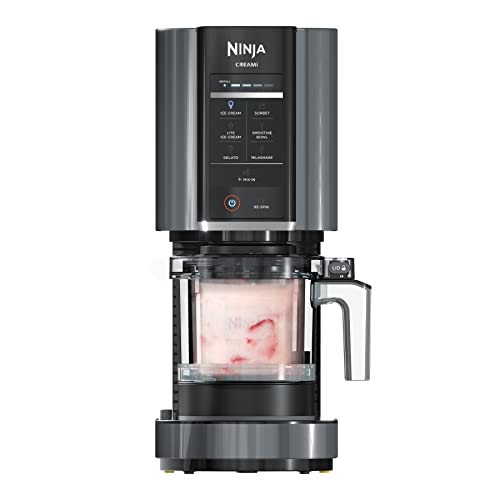
1. Ninja Creami
A countertop machine that turns frozen pints into ice cream, sorbet and similar treats. It is popular for its flexibility: you freeze a base in a pint container, then process it to a scoopable texture. That makes small batches and dairy-free recipes easy to try. Check the listing for the pint count and attachments included.
Suits: small households. Strengths: many recipe styles. Weaknesses: you must freeze each pint in advance. Skip it if you want a large continuous batch.
Best for beginners
2. Cuisinart ICE-21
A long-running freezer bowl model that makes ice cream, frozen yogurt and sorbet. It is simple to use: you freeze the bowl, pour in the base and let it churn for a short time. The result is a soft serve texture that firms up in the freezer. Check the current listing for the exact bowl capacity.
Suits: beginners. Strengths: easy and compact. Weaknesses: the bowl must freeze first. Skip it if you want back-to-back batches.
View Cuisinart ICE-21 on Amazon
Best for frequent ice cream makers
3. Cuisinart ICE-30BC Pure Indulgence
A compressor ice cream maker that chills itself so there is no bowl to pre-freeze. It can make batches back to back, which helps if you want several flavors in an afternoon. The compressor adds weight and noise, so measure your counter and check the current listing for the capacity.
Suits: frequent ice cream makers. Strengths: spontaneous batches. Weaknesses: it is larger and heavier. Skip it if you have little space.
View Cuisinart ICE-30BC on Amazon

Best for texture control
4. Breville Smart Scoop
A compressor machine with adjustable texture settings and a pre-cool function that gets the bowl cold before you pour in the mix. It is a favorite among people who want control over how firm the result is. Check the listing for the number of settings.
Suits: texture control. Strengths: programmable hardness. Weaknesses: it is large and costly. Skip it if you want a basic model.
View Breville Smart Scoop on Amazon
Best for ice cream fans
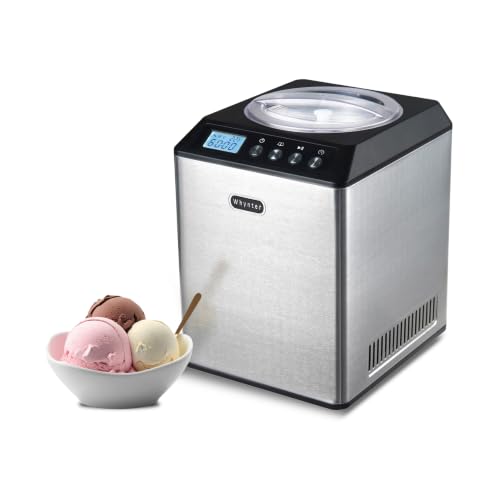
5. Whynter ICM-201SB
A self-cooling machine with a stainless steel bowl that suits frequent use, since you do not wait on a frozen bowl between batches. The metal bowl is easy to keep clean. It is heavy, so decide on a permanent spot, and check the current listing for the capacity.
Suits: ice cream fans. Strengths: durability. Weaknesses: it is heavy. Skip it if you want a light unit.
View Whynter ICM-201SB on Amazon

Best for large batches
6. Hamilton Beach 4-Quart Automatic Ice Cream Maker
A large motorized maker that uses ice and rock salt to chill the base. It suits parties and family gatherings, because the large tub makes plenty for a crowd. The classic ice and salt method adds some mess and a little effort. Check the listing for the exact capacity and parts.
Suits: large batches. Strengths: big capacity. Weaknesses: it needs ice and salt. Skip it if you want a tidy process.
View Hamilton Beach 4-Quart Ice Cream Maker on Amazon
Care and Setup
- Wash removable parts by hand or as the listing allows.
- Freeze the bowl for the full recommended time.
- Chill the base thoroughly before churning.
- Dry the paddle before storing.
Mistakes to Avoid
- Churning a warm base.
- Overfilling past the max line.
- Skipping the bowl freeze time.
- Storing finished ice cream uncovered.
Freezer Bowl, Compressor and Ice-and-Salt Compared
How a machine gets cold is the most important thing to understand, because it shapes cost, space, speed and convenience. A freezer-bowl maker has a double-walled bowl filled with a liquid that freezes in your freezer. You pour in a chilled base and the paddle churns it while the bowl draws out heat. These machines are compact and simple, but the bowl must be frozen solid beforehand, and once it warms up you generally cannot make a second batch until it is frozen again.
A compressor machine has its own refrigeration, like a small freezer, so it chills itself. You can make batch after batch, and there is no planning ahead. The trade-off is size, weight and noise, and these are usually the most expensive type. An ice-and-salt machine uses a bucket packed with crushed ice and rock salt around a canister. It makes large amounts and has a traditional feel, but it needs supplies and creates a wet mess.
- Freezer bowl: good for occasional batches and small kitchens, provided you have freezer room for the bowl.
- Compressor: good for frequent use, entertaining, and trying several flavors in a day.
- Ice and salt: good for parties and family events when a big batch matters more than convenience.
Think about how often you will really use it and how much counter and freezer space you can spare. A rarely used heavy compressor machine can end up in a cupboard.
Capacity and Batch Planning
Capacity figures on a listing usually describe the maximum volume of the bowl or canister, not the amount you should pour in. Ice cream expands as it churns because air is whipped in, so the base should leave room to grow. Overfilling leads to overflow, poor texture and a motor working harder than it should. The manual normally gives a fill line or a recommended maximum.
When you plan your purchase:
- Decide how many people you usually serve. A small household needs far less than a family with guests.
- Check the usable batch size, which is lower than the headline capacity.
- Consider storage. A big batch needs freezer containers, so make sure you have space.
- Think about whether you want to make several flavors at once. Only a compressor machine can do that in a single session without waiting.
Smaller makers can be a plus if you like fresh ice cream often and in modest quantities, because homemade ice cream without stabilizers tends to firm hard and ice up over days. Making a batch that you will finish within a few days gives better texture. If you often host, a bigger capacity or a compressor machine makes more sense than repeating small batches.
Texture, Bases and Recipe Basics
A machine is only one part of how the ice cream turns out. The base recipe sets the texture. Fat, sugar and solids all affect how smooth, soft and scoopable the final product is. Sugar lowers the freezing point, so low-sugar bases freeze harder and can taste icy. Fat adds creaminess, and very low-fat bases may feel thin. Egg-based custards give a rich texture and are cooked first, then cooled completely. Simple cream-and-milk bases skip the cooking step, which many beginners prefer.
Some practical points:
- Chill the base well before churning, ideally overnight in the fridge, so the machine starts with a cold mixture.
- Add mix-ins late, near the end of churning, so they stay whole and do not clog the paddle.
- Use a tested recipe when trying dairy-free, low-sugar or vegan bases, because they behave differently and may need other stabilizers or fats.
- Do not expect store texture without commercial stabilizers; homemade ice cream is often best on the day it is made.
Soft-serve texture straight from the machine is normal. Move it into a chilled container and let it firm in the freezer for a few hours. Alcohol in a recipe lowers the freezing point and can keep it soft, so add only small amounts as a recipe directs.
Noise, Footprint and Kitchen Fit
Practical fit often decides whether a machine gets used. Measure your counter and the cupboard where you will store it, and look at both width and height, since some machines have lids that open upward. A compressor model can weigh a lot, so ask yourself whether you will lift it often. If not, choose a permanent spot where it can sit with room for ventilation around the vents.
Noise varies. Motors, compressors and churning ice all make sound, and a machine that runs for thirty minutes in an open-plan home may bother other people. Listings and manuals sometimes give guidance, but personal tolerance differs. Consider when you will run it and whether it will share a room with a television or a sleeping child.
Other fit questions:
- Is the cord long enough to reach an outlet from where you want to place it?
- Is the freezer large enough for a bowl that must fit upright and flat?
- Is there room in the sink for the parts you will wash by hand?
- Do you have somewhere to store paddles, lids and canisters, so you do not lose them?
Machines with a built-in timer or automatic shutoff reduce the need to hover. If you are unsure, favor the smaller, simpler choice, because a unit that is easy to bring out gets used more often.
Cleaning, Hygiene and Wear Signs
Dairy-based mixtures are perishable, so cleaning matters. Wash every part that touches the mixture as soon as possible after use, following the manual to see which pieces are dishwasher safe and which must be washed by hand. Warm water, mild soap and a soft brush reach the paddle, lid and canister. Rinse well and dry thoroughly before storing to prevent odors and mildew.
Take special care with:
- Freezer bowls: do not use sharp tools to chip out frozen mix, and let the bowl come to room temperature before washing so it is not shocked by hot water.
- Compressor bowls: wipe with a soft cloth and avoid abrasive pads that scratch the surface.
- Seals and gaskets: check them for trapped residue.
- Motor housing: wipe with a damp cloth only, and never immerse it.
Signs that a machine is wearing out include a paddle that slips or does not turn smoothly, a bowl that no longer freezes the mix well, a leaking freezer-bowl liquid, cracked plastic parts, or unusual noises from the motor or compressor. Compressor machines need to stand upright and rest after transport, so follow the maker’s guidance before switching on. Replacing a worn paddle or lid is often cheaper than replacing the whole machine, so check parts availability when you buy.
Electric Ice Cream Makers FAQ
Freezer bowl or compressor?
Bowl models are simple and compact. Compressor models are more convenient but larger and costlier.
Is the Ninja Creami a traditional churn machine?
It works differently by spinning a frozen pint, which many people like for flexibility.
Can I make dairy-free or low-sugar ice cream?
Yes, most makers handle those bases, though texture can differ because sugar and fat help keep the result soft. Follow a tested recipe and expect to experiment.
How long should ice cream firm up?
Most makers produce a soft serve texture, and a short rest in the freezer firms it up.
How long does a freezer bowl need to freeze?
It depends on the bowl and your freezer, so follow the manual. Many makers recommend freezing it solid for a long period, and the bowl should not slosh when you shake it.
Why is my ice cream icy instead of creamy?
Common causes include a base that was not cold enough, too little fat or sugar, or a bowl that was not fully frozen. Chill the base thoroughly and check the recipe balance.
Can I put mix-ins in from the start?
It is usually better to add them near the end of churning. Early additions can break down or get stuck, and large pieces may stall the paddle.
Do I need an egg-based custard?
No. Custard bases give a rich texture but simple cream bases also work. Choose what you like, and follow a tested recipe.
How long does homemade ice cream last in the freezer?
Quality fades over days to weeks, since it lacks commercial stabilizers and tends to harden and form ice crystals. Store it in an airtight container and eat it relatively soon.
Can I make sorbet in the same machine?
Most ice cream makers also handle sorbet and frozen yogurt, but check the listing. Sorbet bases are high in sugar and water, so follow a recipe designed for churning.
Is it safe to use raw eggs in a base?
Raw eggs carry a food safety risk, so many recipes cook the custard first. Follow safe food handling advice, particularly when serving children, older adults or anyone who is pregnant.
How Churning Shapes Texture: Air, Cold and Crystal Size
Ice cream is a mix of fat, sugar, water and air, frozen while it moves. The quality of the result depends on three linked things: how fast the base freezes, how much air is folded in, and how small the ice crystals stay. A machine only controls part of this, but understanding the process helps you judge what each type can do.
Fast freezing makes small crystals, and small crystals feel smooth. That is why a very cold bowl or a compressor that holds a steady low temperature matters. If the base warms before it freezes, crystals grow and the texture turns icy. Churning also adds air. The extra volume, called overrun in the trade, makes ice cream lighter and easier to scoop. A paddle that turns steadily and scrapes the bowl wall incorporates air gradually, while a paddle that stalls leaves dense frozen patches.
- Pre-chilling the base in the refrigerator before it goes into the machine gives the machine less work and a better result.
- Filling the bowl only part way leaves room for the mix to expand as it takes in air.
- Stopping when the mix reaches a soft-serve consistency is normal. Most homemade ice cream needs time in the freezer to firm up afterward.
- Heavy cream and egg yolks add fat and emulsifiers, which tend to give a richer, smoother result than lower-fat bases.
Machines that work differently, such as ones that spin a pre-frozen block, change the process rather than follow it, so read the maker’s instructions carefully rather than assuming the same rules apply. The Ninja Creami, for example, is described in this guide as not a traditional churn machine.
Planning Around Freezer Space and Prep Time
Making ice cream is not instant, and the biggest surprise for new owners is how much planning it needs. Even with a machine that churns in under an hour, you have steps before and after.
- Make or buy the base and chill it thoroughly, often overnight.
- Prepare the machine: freeze the bowl for the stated time if it is a freezer-bowl model, or pre-cool the compressor if the maker recommends it.
- Churn the base until it thickens.
- Transfer the ice cream to a container and freeze it to harden.
Freezer space deserves attention before you buy. A freezer-bowl needs a spot to sit upright and undisturbed for many hours, and a crowded freezer door may not hold it. Check the bowl size against your freezer shelf. Storage tubs also take room, and shallow, flat containers freeze faster than deep ones.
If you want to make several batches in a day, a freezer bowl needs refreezing between uses, so a compressor machine or a second bowl is the easier route. If you make one batch for a weekend dessert, the bowl style fits well. Be honest about how often you will really bake, chill and churn, because a machine that is awkward to prepare tends to end up in a cupboard.
Scooping, Storing and Serving
Homemade ice cream has no stabilizers like many store tubs, so it hardens quickly and can become difficult to scoop. A few simple habits keep it enjoyable.
- Press a piece of parchment or plastic wrap onto the surface before sealing the container. This limits ice crystals forming on top.
- Use a shallow, airtight container, and keep it in the back of the freezer where temperatures are steadiest, not in the door.
- Let a very hard batch soften on the counter for a few minutes before scooping, or run the scoop under warm water.
- Eat it within a week or two for the best texture. Quality drops as ice crystals grow over time.
Serving soft right from the machine is a pleasure many people enjoy. If you plan to serve at a party, churn shortly before guests arrive and keep the finished batch chilled. Cones, bowls and toppings are easy to prepare ahead, and a small batch is usually enough to avoid leftovers that go icy.
Alcohol, high sugar and certain mix-ins also change how firmly ice cream freezes. A little alcohol can keep a batch soft, but too much prevents it from setting, so follow a reliable recipe.
Is a Home Machine Worth It?
A home ice cream maker is a hobby purchase, so value depends on what you enjoy. If you want complete control over ingredients, to make dairy-free or low-sugar versions, or to create flavors that stores do not sell, a machine opens many options. If you mainly want a cheap treat, store-bought tubs are hard to beat on cost and convenience.
Think about the ongoing costs as well as the purchase price. Quality cream, vanilla, fruit and chocolate add up, and a batch of rich ice cream is not always cheaper than a premium pint. Electricity use is modest for most home machines, but a compressor model runs for longer.
- A simpler freezer-bowl model suits an occasional maker who has freezer room and does not mind planning ahead.
- A compressor machine suits someone who wants spontaneous batches, and who has counter space and a larger budget.
- A machine that makes small, single-serve portions suits people who like variety and do not want leftovers.
Look at the warranty, spare parts availability and how easily the bowl, paddle and lid can be replaced. Parts that wear, such as paddles and lids, should be easy to buy, since a single broken piece can make a machine unusable.
Related guides
Frequently Asked Questions
What is overrun in ice cream?
Overrun is the amount of air whipped into ice cream during churning. More air makes it lighter and softer. Home machines add a modest amount, so homemade ice cream is usually denser than many commercial tubs. The exact figure varies by machine and recipe.
Should I chill the base before churning?
Yes, in most cases. A cold base freezes faster in the machine, which keeps ice crystals small and the texture smooth. Many recipes suggest chilling for several hours or overnight. Follow your machine’s instructions for the best results.
Why does homemade ice cream get hard in the freezer?
Homemade ice cream usually lacks the stabilizers and air that keep commercial versions soft. It freezes hard as water turns to ice. Let it sit at room temperature for a few minutes before scooping, or store it in a shallow container.
Can I make ice cream if I do not have much freezer space?
Yes, but choose carefully. A compressor machine needs no pre-frozen bowl, which saves freezer space. Otherwise, check the bowl size against your freezer, and remember you also need room for the finished tub.
Going Deeper: What This Guide Means by a Good Electric Ice Cream Maker
This article was written for making ice cream at home, where The base you cook matters as much as the machine that churns it. That focus shapes everything in it, and it is worth keeping in mind as you read the picks again, because an electric ice cream maker that suits one household can be the wrong answer for another even when both are well made. The honest way to use a guide like this is to decide what your own batch has to deliver, then judge each option against that, rather than against an abstract idea of the best. Treat what follows as a working churning routine rather than theory. Each step exists because skipping it shows up later, usually in the texture or the glass-hard finish.
Start with how often you will actually churn. A electric ice cream maker used twice a day lives a different life from one used twice a month, and the features that matter change with that rhythm. Churn often and easy washing, predictable freezing and replaceable paddles become what counts. Churn only on high days and holidays and you will want the most forgiving machine, since occasional users never build daily muscle memory. Be candid about the dessert maker you are: many disappointed owners bought for a hoped-for enthusiast, then resented an unsupportable routine.
Next, think about the whole system around the electric ice cream maker, not the electric ice cream maker alone. The kitchen counter it sits in, the cream, milk, sugar and flavourings you have measured before the machine starts turning, the water you use, and the time you genuinely have all shape the result as much as the headline product does. A modest ice cream setup used carefully will outperform an ambitious one used in a rush. As you compare ice cream makers, ask what each demands of freezer and patience, because that demand is part of the cost.
Comparing the Ice Cream Makers With Each Other, Not With Perfection
The six makers here cover different households, so head-to-head reading is more useful than a ranking. Use the comparisons below as questions to carry back into the individual machine reviews above. Where two picks seem close, the deciding factor is usually workflow: how the batch starts, what you have to watch, and how much clearing up waits at the end. Those are the differences you will still notice in six months of churning, long after first impressions have faded.
Set the Ninja Creami beside the Cuisinart ICE-21 and ask what each assumes about you. The Ninja Creami suits households whose rhythm it matches: the pace it sets, and the decisions it leaves in your hands. If its routine — freeze, churn, wash — sounded pleasant rather than dutiful, that reaction deserves weight. If it sounded like homework, believe that too, and look again at the Cuisinart ICE-21, whose appeal may be precisely that it asks less of you when you have least to give on a hot day. A electric ice cream maker you use happily and often beats a theoretically finer one that gathers dust.
Set the Cuisinart ICE-21 beside the Cuisinart ICE-30BC Pure Indulgence and ask what each assumes about you. The Cuisinart ICE-21 suits households whose rhythm it matches: the pace it sets, and the decisions it leaves in your hands. If its routine — freeze, churn, wash — sounded pleasant rather than dutiful, that reaction deserves weight. If it sounded like homework, believe that too, and look again at the Cuisinart ICE-30BC Pure Indulgence, whose appeal may be precisely that it asks less of you when you have least to give on a hot day. A electric ice cream maker you use happily and often beats a theoretically finer one that gathers dust.
Set the Cuisinart ICE-30BC Pure Indulgence beside the Breville Smart Scoop and ask what each assumes about you. The Cuisinart ICE-30BC Pure Indulgence suits households whose rhythm it matches: the pace it sets, and the decisions it leaves in your hands. If its routine — freeze, churn, wash — sounded pleasant rather than dutiful, that reaction deserves weight. If it sounded like homework, believe that too, and look again at the Breville Smart Scoop, whose appeal may be precisely that it asks less of you when you have least to give on a hot day. A electric ice cream maker you use happily and often beats a theoretically finer one that gathers dust.
Set the Breville Smart Scoop beside the Whynter ICM-201SB and ask what each assumes about you. The Breville Smart Scoop suits households whose rhythm it matches: the pace it sets, and the decisions it leaves in your hands. If its routine — freeze, churn, wash — sounded pleasant rather than dutiful, that reaction deserves weight. If it sounded like homework, believe that too, and look again at the Whynter ICM-201SB, whose appeal may be precisely that it asks less of you when you have least to give on a hot day. A electric ice cream maker you use happily and often beats a theoretically finer one that gathers dust.
Set the Whynter ICM-201SB beside the Hamilton Beach 4-Quart Automatic Ice Cream Maker and ask what each assumes about you. The Whynter ICM-201SB suits households whose rhythm it matches: the pace it sets, and the decisions it leaves in your hands. If its routine — freeze, churn, wash — sounded pleasant rather than dutiful, that reaction deserves weight. If it sounded like homework, believe that too, and look again at the Hamilton Beach 4-Quart Automatic Ice Cream Maker, whose appeal may be precisely that it asks less of you when you have least to give on a hot day. A electric ice cream maker you use happily and often beats a theoretically finer one that gathers dust.
Set the Hamilton Beach 4-Quart Automatic Ice Cream Maker beside the Ninja Creami and ask what each assumes about you. The Hamilton Beach 4-Quart Automatic Ice Cream Maker suits households whose rhythm it matches: the pace it sets, and the decisions it leaves in your hands. If its routine — freeze, churn, wash — sounded pleasant rather than dutiful, that reaction deserves weight. If it sounded like homework, believe that too, and look again at the Ninja Creami, whose appeal may be precisely that it asks less of you when you have least to give on a hot day. A electric ice cream maker you use happily and often beats a theoretically finer one that gathers dust.
One more comparison habit is worth adopting: compare the machines at their worst, not their best. Every electric ice cream maker here can produce a good result on a good day. What separates them is what happens on a tired weekday, with a new tub of mix, a distracted cook and no time to start again. The pick whose failure mode is a slightly ordinary batch, rather than a wasted mix or a mess, is often the right machine for a busy household. Read the honest-limitation notes in each review above with that hot weekday in mind, and the shortlist usually narrows itself.
A Careful Batch, Step by Step
Technique advice is easy to give and hard to use in the abstract, so here is the batch broken into the order that experienced users actually follow. You do not need to memorise the process. Repeat the steps without rushing and they knit together into a rhythm; that rhythm is the difference between a lucky churn and a reliable one. While you work, watch the base thicken against the dasher, listen for the motor working harder as it firms up, and taste before you add mix-ins. Those senses, trained over a handful of batches, will tell you more than any single gadget or guess.
Work on cooking or mixing the base and chilling it thoroughly before it goes near the machine. Doing this deliberately, rather than roughly, is what makes the rest of the batch easy to judge. When a result disappoints you, a careful routine lets you name the step that drifted; without one, every batch is a fresh mystery and improvement is mostly luck. The extra moments return batches you can repeat deliberately, texture included.
Work on preparing the machine, whether that means a frozen bowl, a compressor cool-down or ice and salt. Doing this deliberately, rather than roughly, is what makes the rest of the batch easy to judge. When a result disappoints you, a careful routine lets you name the step that drifted; without one, every batch is a fresh mystery and improvement is mostly luck. The extra moments return batches you can repeat deliberately, texture included.
Work on churning and watching the texture rather than trusting a timer alone. Doing this deliberately, rather than roughly, is what makes the rest of the batch easy to judge. When a result disappoints you, a careful routine lets you name the step that drifted; without one, every batch is a fresh mystery and improvement is mostly luck. The extra moments return batches you can repeat deliberately, texture included.
Work on adding mix-ins in the last moments, when the base can actually hold them. Doing this deliberately, rather than roughly, is what makes the rest of the batch easy to judge. When a result disappoints you, a careful routine lets you name the step that drifted; without one, every batch is a fresh mystery and improvement is mostly luck. The extra moments return batches you can repeat deliberately, texture included.
Work on transferring to a chilled container and covering the surface before freezing. Doing this deliberately, rather than roughly, is what makes the rest of the batch easy to judge. When a result disappoints you, a careful routine lets you name the step that drifted; without one, every batch is a fresh mystery and improvement is mostly luck. The extra moments return batches you can repeat deliberately, texture included.
Work on letting the finished batch firm up, then serving it at a temperature where flavour registers. Doing this deliberately, rather than roughly, is what makes the rest of the batch easy to judge. When a result disappoints you, a careful routine lets you name the step that drifted; without one, every batch is a fresh mystery and improvement is mostly luck. The extra moments return batches you can repeat deliberately, texture included.
Finally, end the batch properly. Clear up while things are still easy to clean, note anything you changed and what it did, and leave the kitchen counter ready for the next churn. That habit separates people who improve steadily from people who plateau: the next batch starts from knowledge instead of a vague memory. Over a season, quick churn notes become the recipe file you rely on, shaped by your machine and household’s tastes.
Troubleshooting: When the Batch Is Not What You Expected
Every owner of a electric ice cream maker meets the same handful of disappointments. The good news: each disappointing churn has a few probable causes, and calm checking fixes most without purchases. Alter one thing per churn, and give the alteration a fair chance before altering another. Change the base and the churn time together and the texture shifts without explaining itself, which is how makers chase their tails for weeks.
Consider ice cream that freezes hard and icy instead of smooth. Before blaming the equipment, check the basics in order: the freshness and quality of your your ice cream base, the quantities you used, the temperatures involved, and whether everything was properly prepared and clean. Most disappointing churns trace to those four basics. If the basics are sound, change the single variable the reviews above connect most closely with this problem, and repeat the batch as identically as you can otherwise. If icy results persist through several attempts, open the manual’s troubleshooting pages or ring the maker, notes ready.
Consider a batch that never thickens no matter how long it churns. Before blaming the equipment, check the basics in order: the freshness and quality of your your ice cream base, the quantities you used, the temperatures involved, and whether everything was properly prepared and clean. Most disappointing churns trace to those four basics. If the basics are sound, change the single variable the reviews above connect most closely with this problem, and repeat the batch as identically as you can otherwise. If icy results persist through several attempts, open the manual’s troubleshooting pages or ring the maker, notes ready.
Consider flavours that taste strong in the base and dull once frozen. Before blaming the equipment, check the basics in order: the freshness and quality of your your ice cream base, the quantities you used, the temperatures involved, and whether everything was properly prepared and clean. Most disappointing churns trace to those four basics. If the basics are sound, change the single variable the reviews above connect most closely with this problem, and repeat the batch as identically as you can otherwise. If icy results persist through several attempts, open the manual’s troubleshooting pages or ring the maker, notes ready.
Consider mix-ins sinking to the bottom or freezing into hard lumps. Before blaming the equipment, check the basics in order: the freshness and quality of your your ice cream base, the quantities you used, the temperatures involved, and whether everything was properly prepared and clean. Most disappointing churns trace to those four basics. If the basics are sound, change the single variable the reviews above connect most closely with this problem, and repeat the batch as identically as you can otherwise. If icy results persist through several attempts, open the manual’s troubleshooting pages or ring the maker, notes ready.
Consider a freezer bowl that was not cold enough and quietly ruined the batch. Before blaming the equipment, check the basics in order: the freshness and quality of your your ice cream base, the quantities you used, the temperatures involved, and whether everything was properly prepared and clean. Most disappointing churns trace to those four basics. If the basics are sound, change the single variable the reviews above connect most closely with this problem, and repeat the batch as identically as you can otherwise. If icy results persist through several attempts, open the manual’s troubleshooting pages or ring the maker, notes ready.
Ownership Over Months and Years of Churning
The first week with a new electric ice cream maker is the worst guide to owning it. A new machine makes first churns effortless; a busy month reveals whether bowl-freezing still happens. Form your verdict after a season of ordinary churns, not the first delighted week. Are you still reaching for the machine whenever the sun comes out? Is the bowl still washed and dried properly, or just rinsed? Are its ingredients and extras easy to keep ready in the pantry? Ice cream makers age well under frequent care — bowls, paddles and seals washed promptly, not rescued later.
Keep the manual, and read the maintenance pages once, ideally before you need them mid-summer. Makers write those pages from the machines returned to them, so they map what goes wrong when care slips. Note which parts are consumable, which you can replace yourself, and what the maker asks you not to open or soak after a churn. If a part will wear out, check it is available before it fails, not during the hot week you need it most. A simple record of deep cleans and part changes stops ice cream machine maintenance becoming guesswork.
Before You Buy: A Final Round of Ice Cream Questions
Where will it live, exactly — machine, bowl and all? Measure the space, including the room above and in front of it, and think about heat and noise reaching whatever sits nearby. Who else will churn with it, and will its routine make sense to them without you standing over it? What does home ice cream need that you do not currently own, and are you content to buy, store and clean those extras? What cleaning and servicing schedule does the maker set for the machine, and will your patience stretch to it? None of these questions is glamorous, which is why ice cream buyers should ask them before money changes hands.
More Questions Ice Cream Readers Ask
Why does my homemade ice cream freeze so hard?
Your freezer plays a part, although regular churners agree on the broad answer. Start from the basics emphasised throughout this guide: fresh, suitable your ice cream base, a clean and properly prepared electric ice cream maker, and a routine you follow the same way each time. Most disappointing churns trace to one of those basics, rarely the machine. Give any change a few batches before judging it; single results mislead, while patterns are evidence worth trusting.
How cold does a freezer bowl need to be before churning?
Your freezer plays a part, although regular churners agree on the broad answer. Start from the basics emphasised throughout this guide: fresh, suitable your ice cream base, a clean and properly prepared electric ice cream maker, and a routine you follow the same way each time. Most disappointing churns trace to one of those basics, rarely the machine. Give any change a few batches before judging it; single results mislead, while patterns are evidence worth trusting.
Can I halve a recipe in a larger machine?
Your freezer plays a part, although regular churners agree on the broad answer. Start from the basics emphasised throughout this guide: fresh, suitable your ice cream base, a clean and properly prepared electric ice cream maker, and a routine you follow the same way each time. Most disappointing churns trace to one of those basics, rarely the machine. Give any change a few batches before judging it; single results mislead, while patterns are evidence worth trusting.
What does churning actually do to the texture?
Your freezer plays a part, although regular churners agree on the broad answer. Start from the basics emphasised throughout this guide: fresh, suitable your ice cream base, a clean and properly prepared electric ice cream maker, and a routine you follow the same way each time. Most disappointing churns trace to one of those basics, rarely the machine. Give any change a few batches before judging it; single results mislead, while patterns are evidence worth trusting.
How long can homemade ice cream be stored well?
Your freezer plays a part, although regular churners agree on the broad answer. Start from the basics emphasised throughout this guide: fresh, suitable your ice cream base, a clean and properly prepared electric ice cream maker, and a routine you follow the same way each time. Most disappointing churns trace to one of those basics, rarely the machine. Give any change a few batches before judging it; single results mislead, while patterns are evidence worth trusting.
Do I need eggs for a good home ice cream base?
Your freezer plays a part, although regular churners agree on the broad answer. Start from the basics emphasised throughout this guide: fresh, suitable your ice cream base, a clean and properly prepared electric ice cream maker, and a routine you follow the same way each time. Most disappointing churns trace to one of those basics, rarely the machine. Give any change a few batches before judging it; single results mislead, while patterns are evidence worth trusting.
The Short Version
For flexibility, the Ninja Creami. For a simple bowl, the Cuisinart ICE-21. For self-cooling, the ICE-30BC. For texture control, the Breville. For a steel bowl, the Whynter. For parties, the Hamilton Beach.

