Celery is one of the harder things to juice, because its long fibers wrap around blades and clog screens. Slow juicers that press celery against an auger tend to produce a clearer, drier result, while powerful centrifugal machines can handle it quickly if you cut the stalks short. Straight celery juice also means a lot of produce, so cleanup matters. Expect to strain or skim foam from fast juicers.
The six picks below cover four slow juicers and two fast ones with large chutes, so you can choose between yield and speed. We have not used these products ourselves, so confirm sizes, parts and warranty terms on the current listing before you buy. Yield and clog claims are the makers’ own.
As an Amazon Associate we earn from qualifying purchases. Links below are affiliate links, and they do not change the product information we give.
What to Look For
| Feature | Why it matters |
|---|---|
| Type | Slow juicers get more from stringy celery, while fast ones finish a batch sooner |
| Screen | A fine screen gives smoother juice, while a coarse one lets more pulp through |
| Chute | A wide chute helps with whole stalks, but cutting them short avoids tangles |
| Reverse function | A reverse mode helps clear fibers that jam the auger |
| Cleanup | Celery strings stick to screens, so a cleaning brush and simple parts help |
In this guide
Specs at a Glance
| Juicer | Type | Style | Notes |
|---|---|---|---|
| Omega VSJ843 Slow Juicer | Slow masticating | Vertical, wide chute | Long-running brand |
| Tribest Slowstar | Slow masticating | Vertical, with mincer attachment | Doubles as a mincer |
| Breville Big Squeeze | Slow masticating | Large chute | Easy-clean design |
| Cuisinart CSJ-300 Slow Juicer | Slow masticating | Vertical | Brand with wide service reach |
| Hamilton Beach Big Mouth Pro | Centrifugal | Extra-wide chute | Fast prep |
| Mueller Ultra Juicer | Centrifugal | Wide chute | Budget-friendly option |
The 6 Best Juicers for Celery Juice
Top pickBest for daily celery juice
1. Omega VSJ843 Vertical Slow Juicer
A vertical slow juicer from a brand known for masticating machines, with a wide feed and a reverse function that helps clear fibers. It suits people who juice greens several times a week. Check the pulp container size on the listing.
Suits: daily celery juice. Strengths: a high yield and a clog-clearing mode. Weaknesses: more parts to wash. Skip it if you want one-minute juice.
View Omega VSJ843 Slow Juicer on Amazon
Best for stringy produce
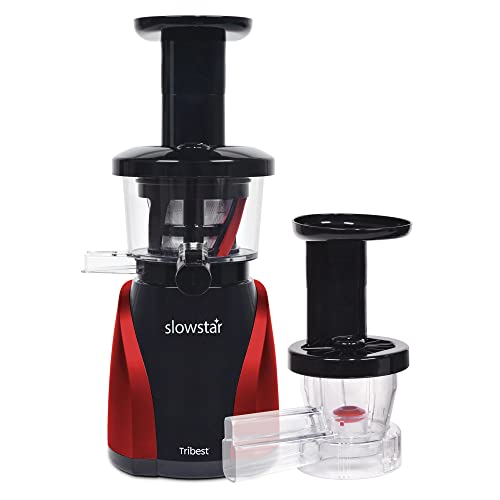
2. Tribest Slowstar Vertical Slow Juicer
A slow juicer and mincer in one, built to handle fibrous produce such as celery and wheatgrass. It is a durable pick for health-focused kitchens. It also handles frozen fruit desserts through the mincer.
Suits: stringy produce. Strengths: versatility. Weaknesses: a bigger footprint. Skip it if you have little cabinet space.
View Tribest Slowstar on Amazon
Best for fast cleanup
3. Breville Big Squeeze Slow Juicer
A slow juicer with a large chute that saves some chopping and a design focused on quick cleanup. It suits households that want less prep. Its simple parts suit people who juice every morning.
Suits: fast cleanup. Strengths: an easy feed. Weaknesses: it is less compact than some. Skip it if you want a small appliance.
View Breville Big Squeeze on Amazon
Best for first-time slow juicers
4. Cuisinart CSJ-300 Masticating Slow Juicer
A masticating slow juicer from a large appliance maker. It gives celery lovers a mainstream-brand option with a familiar warranty path. It is a safe starting point if you want slow juicing from a recognizable brand. Expect a smaller feed than the largest models.
Suits: first-time slow juicers. Strengths: brand support. Weaknesses: fewer extras than premium models. Skip it if you want the biggest chute.
View Cuisinart CSJ-300 Slow Juicer on Amazon
Best for quick, occasional juicing
5. Hamilton Beach Big Mouth Pro Juicer
A fast centrifugal juicer with an extra-wide chute that takes large pieces. It is an easy way to try celery juice without a big commitment. Cutting stalks into short pieces reduces tangles.
Suits: quick, occasional juicing. Strengths: speed and chute width. Weaknesses: louder and less efficient than slow juicers. Skip it if you juice only greens.
View Hamilton Beach Big Mouth Pro on Amazon
Best for light use
6. Mueller Austria Ultra Juicer
A centrifugal juicer with a wide feed chute, positioned as a budget-friendly way to start. Cut celery short for the best results. Check the included brush and parts on the listing.
Suits: light use. Strengths: a simple operation. Weaknesses: more foam and pulp. Skip it if you want dry pulp.
View Mueller Ultra Juicer on Amazon
Care and Setup
- Cut celery into short lengths so strings do not wrap the auger.
- Rinse the screen right away, since fibers harden when dry.
- Use the supplied brush on fine mesh.
- Alternate celery with a softer fruit to help clear pulp.
Mistakes to Avoid
- Feeding long stalks and ignoring the clog warning.
- Using a coarse screen and expecting smooth juice.
- Letting strings dry in the screen.
- Buying a juicer with no reverse function and then complaining of jams.
Why Celery Is Tough on Juicers
Celery looks simple but it is mechanically demanding. A stalk is made of long, tough strands that run the full length of the rib, surrounded by watery tissue. When a juicer cuts or grinds celery, those strands do not break cleanly. They wind around augers, wrap around blades and push into the fine holes of a screen, which is why celery is the usual cause of clogs and stoppages.
Celery is also mostly water, so you need a lot of stalks to fill a glass. A juicer that wastes liquid in the pulp makes this worse. That is why extraction efficiency matters here more than with fruits that are juicy and soft. A machine that leaves wet pulp means more bunches in your basket and more money spent.
Different juicer designs deal with the fibers in different ways. Masticating juicers grind and press the produce slowly, and the strands are broken down as they move along the auger, though they can still tangle. Centrifugal juicers shred produce against a spinning basket and fling the juice out. They work quickly, but the fibers can catch on the basket or form a mat, and the juice tends to carry more foam.
Understanding this helps you read product pages. Look for features aimed at fibrous produce: a strong motor, an auger designed for tough stems, a reverse function to clear jams and a screen that is easy to remove and clean. Also think about prep time. Cutting celery into short pieces helps any machine, and the time you save by using a wide chute may be lost if you need to untangle the strings later.
Slow or Fast: Choosing for Your Routine
The main choice is between slow and fast juicers, and the best answer depends on how you will use the machine.
- Slow (masticating) juicers usually extract more from stringy produce, produce less foam and run quieter. They suit people who juice celery regularly and want drier pulp. The trade-offs are slower processing, more parts to clean and, often, a higher price.
- Fast (centrifugal) juicers are quick and often have wide chutes that take larger pieces. They suit people who juice occasionally, or who want a glass in minutes. The trade-offs are more foam, wetter pulp and more noise.
Think about volume. If you make a large glass every morning, even small differences in yield add up over weeks. If you make juice once or twice a month, a simpler machine may be more practical.
Consider timing as well. Fast machines are good when you are in a hurry, while slow ones reward patience. If you juice in the morning before work, a slow machine can feel like a chore unless you prepare produce in advance.
Noise matters in shared homes. Slow juicers are generally quieter, which is helpful in an apartment or early in the day.
Finally, think about other uses. Some juicers handle leafy greens, wheatgrass or soft fruit better than others. If celery is only one of many things you plan to juice, check the listing for what the machine does well. Buying for one use and finding it falls short at another is a common source of disappointment.
Screens, Chutes and Jam Prevention
Small design details decide how pleasant celery is to juice. The screen, or strainer, controls how fine the juice is. A fine screen produces smooth juice with little pulp but can clog more easily. A coarser screen lets more pulp through and clogs less, but the juice is thicker. Some juicers come with more than one screen so you can choose.
The feed chute affects prep. A wide chute accepts thick stalks, but you still need to cut them shorter to avoid long strings. A narrow chute forces more cutting but keeps the produce under control. Cut stalks to a length that the maker recommends, and you will avoid most jams.
A reverse function is useful. It runs the auger backward for a moment to release stuck fibers. Check that it is easy to engage, and that the juicer has clear instructions for clearing a jam. Some models have an automatic reverse or jam alert.
Here are some habits that help whatever the model:
- Feed celery at a steady pace, without pushing hard.
- Alternate celery with a juicy or soft ingredient such as cucumber or apple if you want to flush fibers through.
- Stop and clear the juicer as soon as the motor strains.
- Do not overfill the pulp container, which can back up and cause a jam.
Look at the way parts fit together too. Parts that twist apart easily are simpler to clean, and gaskets that hold tight reduce leaks. A clear description of assembly in the manual saves frustration.
Cleaning and Daily Upkeep
Celery juice leaves fibrous residue that sticks to screens, and cleaning is the part many people give up on. Make it easy for yourself by cleaning the juicer right after use, before fibers dry and harden. Rinse all parts under running water, then use the brush supplied to scrub the screen from the inside out. A soft brush is better than a hard one, which can damage fine mesh.
Soak parts briefly in warm water with a little mild dish soap if pulp is stubborn. Avoid hard scrapers and abrasive pads on plastic parts, and check the manual to see which parts are dishwasher safe. Many makers recommend hand washing for screens and augers. Let everything dry fully before reassembling to avoid stale smells.
Look at the number of parts. A juicer with fewer pieces is quicker to clean, so it is more likely to be used. If you plan to juice daily, favor simplicity. Models with a self-rinsing function or a cleaning accessory may reduce effort, but check what the listing includes.
Inspect parts from time to time for cracks, stains or worn seals. Replace worn gaskets or screens as the maker advises. Do not run the juicer empty or beyond the recommended running time, which can wear the motor.
Keep the motor base dry. Wipe it with a damp cloth, never submerge it, and keep the power cord away from water. Store the clean, dry juicer with the lid off so air can circulate.
Getting More Juice and Handling the Leftovers
A few simple habits improve results regardless of the juicer. Wash the celery well and trim the base and any very tough or damaged areas. Dry or shake off excess water so it does not dilute the juice. Cutting stalks into short lengths, as short as the maker suggests, reduces strings.
Chilled celery often juices more cleanly than celery that is limp or old. Fresh, crisp stalks hold more liquid, so buy bunches that feel firm and snap when bent. Store celery wrapped in the refrigerator, and use it within a reasonable time.
If your juice is foamy, let it settle for a minute and skim the foam, or pour it through a fine strainer. Drink or store the juice promptly, since juice changes in taste and quality over time. If you store it, use a clean, airtight container filled close to the top, and keep it cold.
Think about the pulp. Wet pulp can be run through the juicer a second time, though results vary and the second pass may be less pleasant. Dry pulp can go into compost, be added to soups or stock for texture, or be mixed into baked goods or crackers, if you enjoy that. Check what is practical in your kitchen.
If your juicer struggles, check the basics before blaming the machine: stalk length, feed speed, screen condition and the state of the seals. Following the maker’s tips usually fixes the problem. And if you only occasionally find the yield disappointing, remember that celery varies from bunch to bunch.
Slow or Fast Juicer: Which Suits Celery
Celery is stringy and watery, so it behaves differently from soft fruit. The two main juicer families handle it in different ways. Slow juicers, often called masticating or cold press, crush produce with a rotating auger. Fast juicers, called centrifugal, shred produce against a spinning blade and spin the juice out.
| Type | Typical traits | Consider if |
|---|---|---|
| Slow juicer | Quieter, drier pulp, more steps to clean | You juice greens often |
| Fast juicer | Quick and wide feed chute | You want a fast morning routine |
Neither type is right for everyone. The best match is the one you will actually use and clean regularly.
Handling Celery Fibers and Pulp
Long celery fibers can wrap around an auger or clog a screen. Many people cut stalks into short lengths before feeding them in, which keeps the machine from straining. Alternate celery with a juicy item such as an apple or cucumber if the maker suggests it, and watch how the pulp comes out. Very wet pulp suggests the juicer is leaving juice behind.
- Wash celery and trim the ends before juicing.
- Cut stalks to the length recommended in the manual.
- Feed at a steady pace instead of cramming the chute.
- Run a small piece of cucumber at the end to help clear the screen.
Cleaning Habits That Keep a Juicer Running
Cleanup is the factor that decides whether a juicer sits on the counter or in a cabinet. Rinse parts right after use, before pulp dries, and use the brush supplied with the machine for screens and strainers. Check whether the listing says parts are dishwasher safe, then confirm in the manual which ones go on the top rack.
Count the parts too. A model with fewer pieces is usually quicker to assemble and rinse. Dry components fully before storing them, and replace worn gaskets or screens according to the maker guidance.
Reading the Listing: Size, Noise and Yield Claims
Look at the feed chute width, the juice and pulp containers, the motor type and the stated noise level. Claims about yield or nutrition belong to the maker, and results vary with the produce, so treat them as general statements. Follow the manual for run times and rest periods so the motor is not overworked. For any health questions about drinking juice, speak with a qualified professional.
Mistakes to Avoid When Buying a Juicer
A juicer purchase tends to go wrong in predictable ways. Be honest about how much time you will spend each morning, because a machine that is a chore to clean often ends up unused.
- Choosing a model with a tiny chute and then spending the whole morning chopping.
- Ignoring the noise level, which matters in a small apartment or early in the day.
- Buying for a family when you juice for one, or the other way around.
- Forgetting storage space for the base and the parts.
- Skipping the manual, which explains how to assemble the screen and auger properly.
Buy produce you will use up soon, and store it as the packaging advises. Juice is best enjoyed fresh, and the maker usually has guidance on storing it for a short time. If you plan to juice often, consider how much counter space and how many leftover pulp containers you will need.
Celery Juicer FAQ
Do I need a slow juicer for celery?
Not strictly, but slow juicers usually deliver more juice from the fibers and stay quieter.
How much celery makes a glass?
It varies by machine, so plan on a bunch or two per serving and check the maker’s guidance.
Why does my juicer clog?
Long strings tangle in the screen or auger. Cutting stalks short and using reverse can help.
Can I make celery juice in a blender instead?
Yes, but you need a strainer or nut milk bag to remove the pulp afterward.
How long should I cut the celery stalks?
Follow the maker's guidance, but a few inches is a common starting point. Shorter pieces reduce stringy tangles and help the juicer run more smoothly.
Do I need to remove the leaves?
Not necessarily. Leaves can be juiced, but they add a stronger taste and may change the color. Remove tough or damaged parts for a cleaner result.
Why is my celery juice foamy?
Fast juicers add air, which creates foam. Let it settle, skim it off or pour the juice through a strainer. Slow juicers usually produce less.
Can I juice celery with other vegetables?
Yes. Many people mix celery with cucumber, apple or lemon. Alternating soft and fibrous ingredients can also help the juicer feed smoothly.
How long does fresh celery juice keep?
It is best soon after juicing. If you store it, use a clean airtight container, keep it cold and follow food-safety guidance for fresh juice.
Is a blender a good alternative?
A blender can work if you strain the pulp afterward with a fine sieve or a nut milk bag. The result is different from a juicer's, and cleanup can take longer.
Should I run the juicer longer to get more juice?
No. Follow the maker's limits on running time and let the motor rest if the manual advises. Extra running rarely adds much juice and can wear the machine.
Why Celery Defeats Ordinary Juicing Habits
Celery looks like the easiest produce in the shop: cheap, crisp, full of water. In a juicer it is one of the most demanding, because its long, stringy fibres behave like rope rather than pulp. In a fast centrifugal machine those fibres can wrap, clog and pass through half-processed, which is why the Hamilton Beach Big Mouth Pro and the Mueller Austria Ultra Juicer in this guide will make celery juice, but will ask the user to cut the stalks short, feed steadily and accept a wetter pulp. In a slow machine, the auger takes hold of the fibres and draws them through a longer pressing path, which is why the slow picks dominate this guide’s serious end. Understanding that single fact, fibre management, explains nearly every difference between the six machines and nearly every frustration new celery juicers report.
Preparation is where the battle is mostly won. Cut stalks into short lengths so the fibres are severed before they meet the machine, wash them well since celery holds grit at its base, and feed them in a rhythm the machine can keep up with rather than in a fistful. Alternate celery with something firmer or juicier if your recipe allows it, because a mixed feed clears the screen and keeps the press moving. Juice celery cold and fresh where possible; limp, old stalks give less juice and more string, and no machine in this guide can reverse a tired bunch.
The Slow Machines: Four Approaches to the Same Fibre
The Omega VSJ843, the Tribest Slowstar, the Breville Big Squeeze and the Cuisinart CSJ-300 are all slow juicers, but they are not the same machine wearing four badges. The Omega vertical design is the classic celery answer: a compact footprint, a patient press, and a long record of handling fibrous produce without drama, suited to the daily celery drinker with a small counter. The Tribest Slowstar brings a more deliberate, powerful pressing character and a following among juicers who process greens and celery in quantity. The Breville Big Squeeze applies a familiar, kitchen-friendly design language to the slow format, which suits households that want slow results without learning an eccentric machine. The Cuisinart CSJ-300 is the calm, mainstream option, the slow juicer for a household that wants celery juice as part of a general routine rather than as a discipline.
Choosing among them is a matter of volume and temperament. The daily, single-glass celery drinker needs reliability and an easy cleanup above all, because the habit will be repeated hundreds of times. The household juicing celery for several people, several days a week, should weight capacity, feeding comfort and the dryness of the pulp more heavily, since small inefficiencies multiply across that volume. In both cases, the slow format’s quieter voice matters more than buyers expect: celery juicing is often a morning ritual, and a machine that can do its work without waking the house is a machine whose ritual survives.
The Fast Machines: When Speed Is the Right Answer
It would be a mistake to dismiss the two centrifugal picks as simply wrong for celery. They are wrong for a particular celery habit, the daily, fibre-heavy, yield-obsessed one, and right for another: the household that juices celery as one ingredient among many, a few times a week, in a mixed juice, and values a glass in two minutes over the last measure of extraction. For that household, the discipline is in the preparation: short pieces, steady feeding, no forcing, and an immediate rinse of the screen before the fibres dry into it. Accept the wetter pulp as the price of the speed, and the fast machine becomes a rational tool rather than a compromise.
The honest test is your calendar. If celery juice is a daily appointment, buy for the appointment, which means slow. If celery is a supporting actor in a varied juicing life, buy for the life, which may well mean fast, and let the celery technique described in this guide close most of the gap. What does not work is buying the fast machine for a daily celery discipline and then blaming it, month after month, for being what it is.
Building a Sustainable Celery Routine
Celery juicing is usually begun as a project, often a daily glass for a set period, and projects end. The households still juicing celery a year later are the ones who converted the project into a routine with a place in the day, a shopping rhythm and a cleanup that takes minutes. Shop for celery in a quantity that matches the routine, since a mountain of wilting stalks is a reproach and a shortage is an excuse. Wash and cut a few days’ worth at once and store the pieces cold in a sealed container, so the morning’s work is feeding and pressing rather than preparation. Keep the machine assembled on the counter if celery is daily; a daily habit cannot survive a daily assembly.
Drink the juice promptly and simply. Celery juice’s character fades faster than most, and the elaborate additions that make it a cocktail defeat the plainness that most celery drinkers are seeking. If the taste is a struggle, the answer that lasts is a smaller glass drunk consistently, or celery partnered with cucumber and apple in a mixture you enjoy, rather than a heroic daily pint endured for a fortnight and abandoned. A routine should be built at the size you can keep, because in this corner of the kitchen, consistency is the entire benefit and the entire difficulty.
Troubleshooting the Fibre Problems
When a slow juicer backs up on celery, the causes are a short list: pieces too long, feeding too fast, a screen that was not clean when the session began, or stalks too dry and stringy to press well. Stop, reverse if your machine offers a reverse function, clear the chute, and restart with shorter pieces at a slower pace; forcing the machine only packs the fibres tighter. When juice comes out unusually foamy or the pulp is wet in a slow machine, slow the feeding further and check that the screen and the pressing parts are seated as the manual describes. When a centrifugal machine vibrates or the pulp is full of recognisable stalk, the pieces were too long and the feeding too eager.
Keep notes the way the general juicing guides advise, but celery notes can be unusually specific and unusually valuable: the length you cut, the freshness of the bunch, the pace you fed, the result. Within a few weeks those notes become a personal specification for your machine and your shop’s celery, and the problems that felt mysterious in week one become settings you adjust without thinking. That is the real graduation in this niche: not a better machine, but a known one.
More Questions From Celery Juicers
Should I juice the leaves and the base of the celery?
The leaves juice well and carry a stronger, more concentrated flavour, which some drinkers prize and others find stern; include a few and judge by taste rather than by rule. The very base of the bunch should be trimmed and washed with particular care, since it holds the grit, and the tough, discoloured outer strings of old stalks can be stripped before juicing to spare the machine the worst of the fibre. Nothing in the bunch is wasted if the trimmings go to stock or compost, and a bunch prepared thoughtfully juices more sweetly in every machine in this guide.
Why does my celery juice taste salty or bitter some days?
Celery varies by bunch, season and storage, and its natural mineral character reads as saltiness to many palates, especially when the juice is drunk alone and concentrated. Bitterness usually arrives with older stalks, with too much leaf for your taste, or with the greener, more exposed parts of the bunch. Buy fresh, firm celery, store it cold and wrapped so it stays crisp, and balance a stern bunch with cucumber or a little apple while you learn your preference. Taste is a property of the produce first and the machine a distant second, which is why two identical machines can produce different reputations in different kitchens.
Can I freeze celery juice for later?
You can, in small portions, and it is a reasonable strategy for a household whose juicing time and drinking time refuse to meet. Freeze it promptly in sealed containers with little air, thaw it in the refrigerator, and drink it soon after thawing, accepting that the fresh, bright character will have softened. Freezing is a compromise in the service of consistency, and for a daily routine it is a better compromise than skipping days whenever the morning runs late. Keep the fresh glass as the standard you return to whenever the schedule allows, so the frozen portion remains the understudy rather than the performance.
Buying and Storing Celery for Juicing
The juicer begins at the market. Choose bunches that are firm, heavy for their size and crisp enough to snap rather than bend, with leaves that look alive rather than tired. Avoid bunches that feel light and rubbery, since they have already given up much of their water to the air and will repay you in string rather than juice. At home, wrap the bunch so it does not dry out, keep it cold, and use the outer stalks first if they are the least crisp, saving the firm heart for the days when celery will be juiced alone and its quality is fully exposed. If a bunch begins to soften, a soak in cold water can restore some of its snap, and slightly softened celery is better juiced in a mixture than alone.
Buy at the rhythm of your routine. A daily drinker is better served by two moderate shops a week than by one heroic one, because the second half of a heroic shop is always juiced in worse condition than the first. Households with a market or a delivery on a fixed day can build the juicing calendar around it, juicing celery alone while it is at its freshest early in the cycle and moving it into mixed juices as the days pass. That small piece of planning does more for the taste of a month of celery juice than any difference between the machines in this guide.
What to Expect in the First Month of Daily Celery Juicing
Week one is about the machine: the cut length it likes, the pace it keeps, the cleanup it demands. Expect one minor clog and treat it as tuition. Week two is about the shopping: how much celery a week of glasses actually consumes, which shop’s bunches juice sweetest, and how the prepared pieces should be stored. Week three is about the palate, which adjusts to celery’s plain, mineral character in a way that surprises most beginners; the glass that tasted austere on day one often tastes clean and refreshing by day twenty, provided the juice is fresh and cold. Week four is about the routine’s honesty: whether the hour, the quantity and the cleanup fit the life around them. Adjust the routine in week four without sentimentality, shrinking the glass, moving the hour or changing the mixture, because a routine adjusted is a routine kept, and a routine kept is the whole point of buying a dedicated machine for this demanding, rewarding stalk.
How much celery should I buy for a week of daily juice?
Work it out from your own first week rather than from anyone’s chart, because bunch sizes, stalk sizes and appetites vary too much for a universal number. Juice your usual glass for three days, weigh or count what it consumed, and scale that to your week with a small allowance for trimmings and for the stalk that turns out to be tired. Write the figure on the shopping list as your household’s standard, and revise it after a month. A standard built from your kitchen’s evidence ends both the wilting surplus and the Friday shortage, which are the two shopping failures that quietly kill juicing routines.
Is a dedicated celery routine worth a slow juicer on its own?
If the routine is daily and likely to last, yes: the slow machine’s handling of fibre, its quieter mornings and its drier pulp are advantages you will collect hundreds of times, and small advantages collected hundreds of times are the definition of a good appliance purchase. If the routine is an experiment, begin with the machine you have or the most versatile pick your budget allows, prove the routine for a month, and then let the proven habit justify the dedicated machine. Habits first, hardware second is the order that fills kitchens with used equipment rather than with monuments to good intentions.
Keep the pieces short, the pace patient, the screen clean and the glass a size your life can honour daily. Do those four things and any of the serious picks in this guide will turn the most fibrous stalk in the shop into the calmest ritual in your kitchen.
What is the best time of day to juice celery?
The time you will keep. Many celery drinkers favour the morning, on an empty stomach and as the first act of the kitchen’s day, because the ritual is clean, the machine is washed before the day begins, and nothing has yet had the chance to displace it. Others juice in the evening for the following morning and accept a small loss of freshness for a routine that fits a crowded start. Both are defensible; the indefensible time is the one that depends on finding a spare half hour that your day does not actually contain. Fix the hour, prepare the pieces the night before if the hour is early, and let the routine become as unremarkable as the kettle.
Unremarkable is the goal. A celery routine that has become as ordinary as the kettle no longer needs motivation, and it will still be running, quietly and daily, when every dramatic health project in the neighbourhood has been quietly composted along with its pulp.
How do I involve a reluctant household member in the celery routine?
Do not begin with celery alone. Begin with the mixture that person already likes, cucumber, apple and a modest amount of celery, and let the celery share grow across the weeks as the palate adjusts. Give them a job in the ritual, the washing, the cutting or the pressing, because people defend routines they participate in and resist routines that are administered to them. And keep the glass sizes honest: a small glass enjoyed is worth more to the household’s health and harmony than a large glass negotiated every morning like a treaty.
Harmony is an ingredient in every routine that lasts. A juicer that only one person in the house believes in will be washed by that person, shopped for by that person, and eventually resented by that person, so build the routine at the size and the flavour the whole household can live inside.
What should I do when the routine breaks for a week?
Restart smaller than you left it. A short glass, a forgiving mixture, an easy cleanup, and the hour restored to the day: that is a restart that succeeds. The common failure is the heroic restart, the largest glass at the earliest hour as a punishment for the lapse, which collapses by Thursday and takes the routine’s confidence with it. Lapses are a normal part of a long routine, caused by travel, illness and ordinary life, and the households that last are the ones that treat a lapse as weather rather than as verdict.
Weather passes. A clean machine, a stocked crisper and a modest glass will bring the routine back within days, and the break will become one more thing the habit survived rather than the thing that ended it.
How do I know if my slow juicer is pressing celery as well as it should?
Judge by the pulp and by the pace. Well-pressed celery pulp comes out comparatively dry and in a coherent, fibrous mass, and the machine maintains a steady rhythm without repeated backing up. If the pulp is wet and the juice is thin, work through the short list before suspecting the machine: shorter pieces, a slower feed, a cleaner screen, fresher stalks. Only when all four are right and the result is still poor should the machine itself be questioned, and at that point a worn screen or a tired seal is the likeliest culprit and the cheapest repair.
Technique first, parts second, replacement last: that order will save most celery juicers from an early retirement and most owners from an unnecessary purchase.
Can children drink celery juice and help make it?
Children can share a household’s juices in modest amounts, and celery mixtures with apple and cucumber are usually the versions they accept. Let them wash stalks, choose the day’s partner fruit, and watch the press work, keeping hands clear of the chute and the pusher in adult hands. A child who has helped make a juice will usually taste it, and a child who tastes without pressure will usually develop the palate in their own time. Keep the portions small and the tone light, and the routine becomes a family habit rather than a parental campaign.
Family habits built lightly tend to be the ones still standing in a decade, long after the campaigns have been forgotten, and a juicer that the whole household uses kindly is a juicer that will be replaced, when its day finally comes, without a moment’s hesitation.
What is the simplest celery juice to start a sceptical beginner with?
Celery with cucumber and apple, in proportions that favour the partners at first, served very cold in a small glass. The cucumber keeps the character green and light, the apple carries the palate over celery’s mineral edge, and the small glass keeps the commitment friendly. Across a fortnight, let the celery share rise as the taste adjusts, and let the beginner set the pace of that rise. More routines have been saved by that patience than by any machine in this guide, because the machine was never the obstacle; the first glass was.
Win the first glass, keep the routine modest, and the rest of the habit builds itself, one crisp bunch at a time.
Should I run the pulp through the machine a second time?
With celery in a slow juicer, a second pass of the pulp occasionally yields a little more juice, and some dedicated drinkers do it as a matter of thrift. Judge it by your own pulp: if the first pass leaves it comparatively dry, the second pass is effort without reward; if your technique is still developing and the pulp is wet, the second pass is a fair teacher while the feeding improves. Do not build the routine around the second pass, because a routine that needs it is a routine whose first pass needs attention.
Attention to the first pass, in the end, is attention to everything: the cut, the pace, the screen, the bunch. Celery rewards it more visibly than any other produce in the juicing basket, which is why its devotees tend to become the most skilled juicers in their kitchens.
Skill, once earned on celery, transfers to every other juice you will ever make.
The Short Version
For a clog-clearing slow juicer, the Omega VSJ843. For a juicer and mincer, the Tribest Slowstar. For easy cleanup, the Breville Big Squeeze. For a mainstream brand, the Cuisinart. For speed, the Hamilton Beach. For a starter fast juicer, the Mueller.
Related Guides
- 6 Best Masticating Juicers for Celery: Slow and Cold Press
- 6 Best Slow Juicers for Wheatgrass and Fresh Juice
- 6 Best Commercial Juicers for Juice Bars and Cafes
- 6 Best Juicers: Centrifugal and Slow Masticating (2026)
- 6 Best Juicers for Leafy Greens: Slow and Twin-Gear (2026)

