Wheatgrass is tough, fibrous and packed with chlorophyll, so a fast centrifugal juicer tends to waste most of it. Slow masticating juicers press and grind the blades, which is why they are the standard way to get a decent yield from wheatgrass, leafy greens and herbs.
The six juicers below are electric slow models that handle wheatgrass alongside everyday fruit and vegetable juice. We have not used these products ourselves, so confirm that the listing names wheatgrass or leafy greens as supported, and check capacity, motor type and parts before you buy.
As an Amazon Associate we earn from qualifying purchases. Links below are affiliate links, and they do not change the product information we give.
What to Look For
| Feature | Why it matters |
|---|---|
| Juicing method | Slow masticating or twin gear designs extract wheatgrass best |
| Feed chute | A narrow chute suits grass; a wide one suits whole fruit |
| Yield | Dry pulp is a good sign that the juicer extracts well |
| Cleaning | Fewer parts and a rinse-friendly screen save time |
| Noise | Slow juicers are quiet, which suits early mornings |
| Warranty | Check the warranty length from the maker |
In this guide
Specs at a Glance
| Juicer | Type | Orientation | Notes |
|---|---|---|---|
| Omega J8006 Nutrition Center | Slow masticating | Horizontal | Handles greens and wheatgrass |
| Hurom H-AA Slow Juicer | Slow masticating | Vertical | Compact, easy rinse |
| Tribest Slowstar | Slow masticating | Horizontal | Also mincer and food processor |
| Kuvings Whole Slow Juicer | Slow masticating | Vertical | Wide feed chute |
| Nama J2 Cold Press Juicer | Slow masticating | Vertical | Large feed chute design |
| Omega NC800 Vertical Juicer | Slow masticating | Vertical | Space-saving footprint |
The 6 Best Juicers for Wheatgrass and Fresh Juice
Top pickBest for wheatgrass and greens
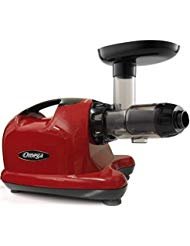
1. Omega J8006 Nutrition Center Juicer
A long-running horizontal slow juicer with a reputation for handling wheatgrass and leafy greens. The auger design squeezes slowly and is known for dry pulp. It also takes carrots, apples and ginger well.
Suits: wheatgrass and greens. Strengths: a widely trusted design and a long track record. Weaknesses: a longer cleaning routine. Skip it if you want a quick-clean machine.
View Omega J8006 Nutrition Center on Amazon
Best for everyday juicing
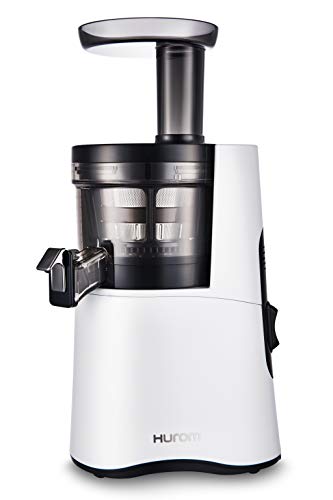
2. Hurom H-AA Slow Juicer
A vertical slow juicer from a pioneer of the category, with a compact body and a design meant to be rinsed fast. It handles greens when you feed them gradually. Its parts are sturdy, though they are many.
Suits: everyday juicing. Strengths: compact size and easy cleanup. Weaknesses: smaller feed opening. Skip it if you want a very wide chute.

Best for juicing and food prep
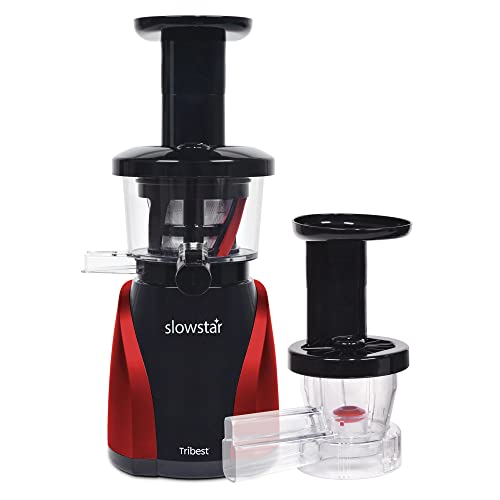
3. Tribest Slowstar Slow Juicer and Mincer
A horizontal juicer that doubles as a mincer for sauces, nut butters and pasta. It works with wheatgrass thanks to its slow, steady squeeze. It can make nut milk and frozen desserts with the right screens.
Suits: juicing and food prep. Strengths: multiple functions in one unit. Weaknesses: more attachments to clean. Skip it if you only want juice.
View Tribest Slowstar on Amazon
Best for quick prep
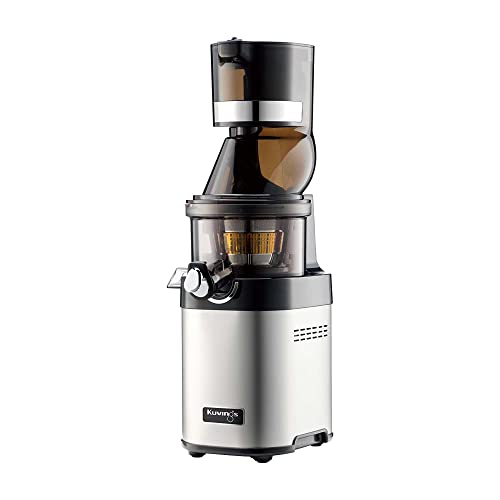
4. Kuvings Whole Slow Juicer
A vertical slow juicer with a wide feed chute that accepts whole fruit and vegetables. Greens work best when fed in a bunch rather than a few blades at a time. Check the listing for which attachments are included.
Suits: quick prep. Strengths: a big chute that cuts chopping time. Weaknesses: bigger footprint. Skip it if you have a tiny counter.
View Kuvings Whole Slow Juicer on Amazon
Best for time-short households
5. Nama J2 Cold Press Juicer
A modern cold press juicer with a very wide feed chute. It is designed to minimize prep and to run quietly. It runs quietly, which is nice for early morning use.
Suits: time-short households. Strengths: a large opening and a quiet motor. Weaknesses: a newer brand with fewer long-term reviews. Skip it if you want an established name.
View Nama J2 Cold Press Juicer on Amazon
Best for small kitchens
6. Omega NC800 Vertical Slow Juicer
A vertical masticating juicer from the same family as the J8006, with a smaller footprint. It handles leafy greens when you feed them gradually. Parts snap together simply, but there are fewer attachments than on bigger machines.
Suits: small kitchens. Strengths: a compact vertical build. Weaknesses: a narrower feed area. Skip it if you want large batch speed.
View Omega NC800 Vertical Juicer on Amazon
Care and Setup
- Rinse parts straight after juicing before pulp dries.
- Use the supplied brush to clear the screen.
- Feed wheatgrass in small bunches to avoid jams.
- Dry all parts before storing.
- Drink the juice fresh, soon after pressing.
Mistakes to Avoid
- Forcing too much fibrous grass into the chute.
- Leaving parts unwashed overnight.
- Expecting a fast centrifugal juicer to handle wheatgrass.
- Overloading with frozen produce.
- Skipping a check of what the machine is rated to juice.
Auger Designs: Single Versus Twin Gear
Slow juicers use a rotating auger to crush and press produce, and the number of augers changes how they handle wheatgrass. A single-auger juicer, which can be horizontal or vertical, pushes produce against a screen and works with greens, fruit and vegetables. Twin-gear juicers use two interlocking gears and are often described as especially good at fibrous leaves, though they are usually larger, heavier and harder to clean.
Most of the picks in this guide are single-auger designs. That is a sensible choice for a household that juices a mix of ingredients and only occasionally wants a shot of wheatgrass. If wheatgrass is your main reason for buying, compare dedicated wheatgrass models and twin-gear options too, and read the listing for what the maker says it handles.
Horizontal juicers tend to be better with thin, stringy greens because the auger pulls the leaves forward as it turns. Vertical juicers are more compact and often have a wide chute. Whichever style you choose, check that the listing explicitly names wheatgrass or leafy greens, and look for user feedback that mentions wheatgrass yield rather than just general juice quality.
Yield, Pulp Dryness and Getting More From the Grass
Wheatgrass gives a small amount of juice for the quantity of grass, so yield is worth paying attention to. A good slow juicer leaves dry, crumbly pulp, which suggests it has extracted most of the liquid. Wet, soggy pulp suggests wasted juice. You can often run the pulp through again to get a bit more, though the second pass may taste different.
Technique matters as much as the machine. Feed the grass in small bunches, pushing gently rather than forcing it, and let the auger pull it in. Cutting long blades into shorter lengths can prevent wrapping around the auger. Alternate with a few pieces of firmer produce such as apple or cucumber, which help push the grass through and add flavor.
Freshness affects yield too. Grass cut shortly before juicing tends to yield more than wilted grass. Wet grass can make the machine slip, so dry it gently after rinsing. Expect variation in yield depending on the grass, the machine and how you feed it. Do not assume any listing’s numbers will match your result.
Screens, Strainers and Clogging
The screen is the part that separates juice from pulp, and wheatgrass fibers can clog it. Fine screens give clearer juice but clog more easily, while coarser screens let more pulp through and are easier to run. Some juicers include more than one screen so that you can switch between juice, mincing and frozen desserts.
If the machine slows or the juice stops flowing, stop and clear the blockage. Many models have a reverse function that backs out jammed material. Do not push harder or use a utensil inside the chute while it is running. Turn it off and unplug it before clearing.
Look at how easy the screen is to clean. A brush is usually supplied, and running water through the screen from the inside out helps. Dried pulp is hard to remove, so rinse as soon as you finish. Check how the juicing bowl, auger and screen come apart, and whether the parts are easy to handle. A design with fewer parts is faster to clean, which often matters more for daily use than a slightly higher yield.
Noise, Speed and Motor Considerations
Slow juicers operate at a low speed, which is part of why they are quieter than fast centrifugal juicers. Quiet operation is a real advantage if you juice early in the morning or in an open-plan home. Listings might provide a speed in rotations per minute, but sound levels are rarely measured in a consistent way, so rely on user comments.
Check the duty cycle. Many juicers recommend limits on continuous running time, followed by a rest. Fibrous grass makes the motor work harder, so respect those limits, especially if you are juicing a large amount. Overheating can trigger a safety shut-off or shorten the life of the machine.
Also consider the footprint and weight. Horizontal machines take up counter space, and vertical ones are taller. A heavy machine stays put but is harder to move. Think about where it will live and whether you have a spot for the parts to dry. Look at the cord length, the position of the controls and how the juice and pulp containers fit under the spouts.
Food Safety and Sensible Wheatgrass Habits
Wheatgrass is often grown at home or bought from a grocer. If you grow it, use clean containers, fresh water and good airflow, and discard any grass that smells musty or shows mold. Rinse the grass before juicing and cut above the root and soil line. Fresh juice is best consumed soon after pressing, as it does not keep well.
Start with a small serving to see how you feel, since some people find wheatgrass juice upsetting to the stomach. People with medical conditions, those who are pregnant, or anyone on medication should ask a doctor before adding it to their routine. Nothing here is medical advice.
Clean the juicer thoroughly after each use. Residue from fresh grass can spoil quickly and harbor bacteria. Dry all parts before storing, and inspect the auger and screen for cracks. Replace parts that show wear, and follow the maker’s instructions for assembly and care. If a part is cracked, do not use the machine until it is replaced. Keep it out of reach of children, as the moving parts can be dangerous.
Wheatgrass Juicer FAQ
Can any juicer make wheatgrass juice?
Not well. Slow masticating juicers extract much more from wheatgrass than fast centrifugal ones.
How much wheatgrass do I need?
A good handful makes a small shot. Yields vary by machine and by how fresh the grass is.
Is wheatgrass juice safe to drink?
Start small, since some people find it hard on the stomach. Ask your doctor if you have a medical condition.
Do I need a special wheatgrass juicer?
Not necessarily. A slow masticating juicer that lists greens as supported is usually enough.
How much juice does wheatgrass produce?
Not much. A handful yields a small amount of juice, and the quantity varies by machine and freshness. Dry pulp is a sign the juicer is extracting well.
Can I juice wheatgrass with a blender?
A blender mixes the whole plant rather than separating juice, so you would need to strain it. A juicer designed for greens is a more direct way to get juice.
Is a twin-gear juicer better for wheatgrass?
Twin-gear designs are often recommended for fibrous greens, but they are larger and harder to clean. Many single-auger slow juicers also handle wheatgrass if the listing says so.
Why does my juicer clog with wheatgrass?
Long, stringy blades can wrap around the auger. Cut the grass into shorter pieces, feed small amounts, and alternate with firmer produce. Use the reverse function if your model has one.
How long does wheatgrass juice last?
It is best to drink it soon after pressing. If you must store it, keep it cold in a closed container and follow food safety guidance.
Can I use frozen wheatgrass?
Check the manual, as frozen produce can strain the machine. Thaw it first unless the maker says otherwise.
How do I clean a slow juicer quickly?
Rinse the parts right after juicing, use the supplied brush on the screen, and wash with mild soap. Dry parts before storing.
Choosing by Kitchen Routine, Not Only by Specs
Spec sheets rarely settle a juicer purchase. How often you juice, how much counter space you have and who does the cleanup matter more. Think through your routine first.
Daily one-shot wheatgrass drinkers
If you mostly want a small shot each morning, a compact vertical or horizontal slow juicer with a quick-rinse design is more practical than a heavy twin-gear machine. A simple parts list means you will actually clean it each day. The Omega and Hurom models in this guide fit that profile in general terms, though you should confirm current features on the product pages.
Weekend batch juicers
If you juice a larger batch once or twice a week for the household, a bigger feed chute and a larger juice container save time. Look for a machine that can run continuously without overheating and has a reverse function to clear jams.
Mixed use: greens plus fruits and vegetables
Households that also juice carrots, apples and celery want a model with a wide chute and a strong enough motor for hard produce. Wheatgrass-only machines can struggle with dense items, so check the manufacturer’s stated uses before you assume a single machine does everything.
Preparing Wheatgrass Before It Goes In
Good prep makes the machine’s job easier and improves juice quality. A few general habits help whether you grow your own or buy trays:
- Cut the grass just above the root mat, rinse it in cool water and shake off excess moisture. Very wet blades dilute the juice and can make the pulp slip through instead of being squeezed.
- Feed in small handfuls rather than a whole bundle at once. Overloading is the most common cause of jams.
- Alternate wheatgrass with a few pieces of a firmer item such as apple or cucumber if your manual allows it. This can push stray fibers through.
- Run the pulp through a second time only if your manufacturer says that is safe. Some machines handle it fine; others strain the motor.
- If the grass has been refrigerated, let it come back to near room temperature, since very cold, brittle blades can behave differently when pressed.
Growing and Sourcing Grass
The juicer is only half of the equation. Wheatgrass quality depends on where it comes from. Home-grown trays give you control over seed, soil and harvest time, and the grass is cut fresh, which helps flavor. Store-bought trays or loose bunches are convenient but vary in freshness, so look for firm, vivid green blades with no slime, mold smell or yellowing.
Keep the growing area clean. Wheatgrass sits in moist conditions that can encourage mold, so use clean trays, rinse seeds well and ensure good airflow. If you see fuzzy white growth on the soil or roots, discard the tray rather than risk it.
Counting Cost Over Time
A juicer is a long-term purchase, so factor in more than the sticker price. Replacement parts such as screens, augers and sealing rings wear out eventually. Ask whether the brand sells them separately and how long the warranty runs on the motor versus the plastic parts. Some manufacturers offer long motor coverage but shorter terms on wear items.
Also consider ongoing costs. Wheatgrass seed, soil and trays, or purchased grass, add up faster than many buyers expect. If you juice often, a machine that gets more liquid from each handful pays for itself in less waste. If you juice only occasionally, a simpler, cheaper model may be the smarter choice, and a pricey twin-gear unit would sit idle.
Storage, Counter Space and Daily Practicalities
Think about the physical footprint. Vertical slow juicers take less counter width but are tall, which can be an issue under cabinets. Horizontal models tend to be longer and sometimes heavier. Measure the spot you will use and check the cord length, since a short cord can force an awkward placement.
- Check whether the parts are dishwasher safe, and whether the manual recommends handwashing for the auger and screen.
- Look for a drip-stop or juice-cap feature if you pour from the spout into multiple glasses.
- Confirm that all parts fit your sink and drying rack without wedging.
- Keep a small cleaning brush by the sink. Wheatgrass fibers lodge in mesh screens quickly, and rinsing right away is far easier than scrubbing later.
Questions to Ask Before You Buy
- Is wheatgrass listed as a supported ingredient in the manual or on the product page?
- How many parts need cleaning, and how long does cleaning take?
- What is the warranty on the motor, and what does it cover?
- How loud is the machine, according to the manufacturer and owner reports?
- Do you want a manual crank option as a backup, or is an electric motor enough?
Pairing Your Juicer With a Weekly Routine
A simple schedule makes the habit stick. Harvest or buy grass on a set day, store it dry, and juice in short sessions when you will drink it right away. Rinse the screen and auger immediately after each use, and do a deeper wash once a week. Keep a small notebook of how much grass you used and how much juice you got, which helps you spot declining performance before a screen needs replacing.
Going Deeper: How to Judge Slow Juicers For Wheatgrass in Real Use
The shortlist above covers the main approaches, yet the right choice still depends on habits that rarely appear in a specification table. For slow juicers for wheatgrass, the deciding factor is rarely a single feature in isolation. It is the combination of how the item fits your daily fresh juice routine, how forgiving it is when you are in a hurry, and how much upkeep it asks for between uses. Readers who start from those three questions usually narrow this list down to one or two sensible options very quickly, without needing to study every specification in detail.
Start with fit. Measure the space you actually have, not the space you imagine after a tidy-up, and compare it honestly with the footprint, height and clearance each option needs. With slow juicers for wheatgrass, a small mismatch in fit tends to cause daily friction: doors that do not open fully, items stored at an awkward angle, or a setup that has to be moved every time you use it. If a pick only works when everything else in the daily fresh juice routine is rearranged around it, treat that as a genuine drawback rather than a minor inconvenience.
Next, think about yield, pulp and cleaning. This is the area where cheaper and more considered designs separate most clearly over time. Pay attention to how the materials feel in the hand, whether edges, joints and moving parts look finished rather than merely adequate, and whether the maker explains care in plain language. A product that is honest about its limits in the description usually behaves predictably in the home, while vague claims tend to hide the compromises you will discover later.
Finally, consider rhythm. How often will you use it, in what quantity, and alongside what else? Someone reaching for slow juicers for wheatgrass every day needs durability and speed above novelty, while an occasional user can reasonably prioritise appearance or compact storage. Neither priority is wrong, but mixing them up is the most common reason a well-reviewed product ends up unused in a cupboard. Match the pick to the rhythm first, and let the smaller features settle the tie afterwards.
Comparing the Picks Side by Side in Practice
Between the Omega J8006 Nutrition Center Juicer and the Hurom H-AA Slow Juicer, the practical question is which set of trade-offs suits your daily fresh juice routine better. The Omega J8006 Nutrition Center Juicer makes most sense when its particular strengths line up with the way you already work, while the Hurom H-AA Slow Juicer is the easier recommendation when you want the more forgiving option for mixed, everyday use. Neither displaces the other outright; they simply reward different habits. If you find yourself torn between them, choose based on the task you repeat most often, not the impressive edge case you might try once or twice a year.
Between the Tribest Slowstar Slow Juicer and Mincer and the Kuvings Whole Slow Juicer, the practical question is which set of trade-offs suits your daily fresh juice routine better. The Tribest Slowstar Slow Juicer and Mincer makes most sense when its particular strengths line up with the way you already work, while the Kuvings Whole Slow Juicer is the easier recommendation when you want the more forgiving option for mixed, everyday use. Neither displaces the other outright; they simply reward different habits. If you find yourself torn between them, choose based on the task you repeat most often, not the impressive edge case you might try once or twice a year.
Between the Nama J2 Cold Press Juicer and the Omega NC800 Vertical Slow Juicer, the practical question is which set of trade-offs suits your daily fresh juice routine better. The Nama J2 Cold Press Juicer makes most sense when its particular strengths line up with the way you already work, while the Omega NC800 Vertical Slow Juicer is the easier recommendation when you want the more forgiving option for mixed, everyday use. Neither displaces the other outright; they simply reward different habits. If you find yourself torn between them, choose based on the task you repeat most often, not the impressive edge case you might try once or twice a year.
Between the Hurom H-AA Slow Juicer and the Nama J2 Cold Press Juicer, the practical question is which set of trade-offs suits your daily fresh juice routine better. The Hurom H-AA Slow Juicer makes most sense when its particular strengths line up with the way you already work, while the Nama J2 Cold Press Juicer is the easier recommendation when you want the more forgiving option for mixed, everyday use. Neither displaces the other outright; they simply reward different habits. If you find yourself torn between them, choose based on the task you repeat most often, not the impressive edge case you might try once or twice a year.
Between the Omega J8006 Nutrition Center Juicer and the Kuvings Whole Slow Juicer, the practical question is which set of trade-offs suits your daily fresh juice routine better. The Omega J8006 Nutrition Center Juicer makes most sense when its particular strengths line up with the way you already work, while the Kuvings Whole Slow Juicer is the easier recommendation when you want the more forgiving option for mixed, everyday use. Neither displaces the other outright; they simply reward different habits. If you find yourself torn between them, choose based on the task you repeat most often, not the impressive edge case you might try once or twice a year.
Across the whole list, a pattern emerges: the picks that earn their place longest are not always the most elaborate. They are the ones whose size, handling and care routine disappear into the background of the daily fresh juice routine. When two options seem evenly matched on paper, prefer the one you can clean, store and explain to a guest in a sentence. Simplicity that survives contact with real life beats a longer feature list that demands constant attention.
Matching a Pick to Common Situations
Everyday, unhurried use
For routine use at home, consistency matters more than peak performance. Choose the option above that you can set up the same way every time, with the fewest steps between deciding to use it and actually using it. In a daily fresh juice routine, that usually means favouring straightforward handling and easy cleaning over specialised extras. Keep the item where it is used, keep any accessories together in one place, and the habit will sustain itself without effort.
Entertaining and guests
When guests are involved, presentation and predictability take over. Pick the option that looks settled on the table or counter, works without explanation, and does not require you to disappear for ten minutes of preparation. Practise with it once beforehand if it is new to you. With slow juicers for wheatgrass, the version you have used calmly three times will always serve guests better than the theoretically superior version you are still learning on the night.
Small spaces and shared homes
In a compact or shared daily fresh juice routine, storage and footprint deserve as much weight as performance. Measure cupboards, shelves and worktop depth before ordering, and think about where the item lives on the days it is not used, which for most households is most days. A slightly simpler pick that stores neatly will be used far more often than a larger one that has to be fetched, assembled and put away again each time.
Building a longer-term setup
If this purchase is the first piece of a larger setup rather than a one-off, favour compatibility and replaceable parts over a closed, all-in-one design. Check whether accessories, refills or matching pieces are easy to find, and whether the style will sit comfortably alongside what you plan to add later. Buying with the second and third purchase in mind avoids the familiar pattern of replacing the first item entirely within a year.
Setup, First Use and the First Fortnight
Unbox carefully and keep the packaging until you have completed a first full use. Lay out every part, read the maker’s instructions once from start to finish before beginning, and wash or wipe down anything that will contact food, drink or glassware as directed. For slow juicers for wheatgrass, most early disappointment traces back to a skipped setup step rather than a faulty product, so the unglamorous ten minutes of preparation is worth taking seriously.
During the first fortnight, pay attention to three things: how long setup and cleanup actually take when you are not concentrating, whether anything loosens, sticks, stains or behaves differently from the first day, and whether the storage spot you chose still makes sense. Small adjustments made in week one, such as moving the item closer to where it is used or changing the order of steps, usually fix frustrations that otherwise get blamed on the product itself.
Keep a simple note of what works. It sounds excessive for a household purchase, but a few lines about quantities, timings or settings that suited you will save repeated trial and error, especially for items used in batches or for guests. Households that share the daily fresh juice routine benefit even more, because the note turns one person’s learning into everyone’s starting point.
Care, Cleaning and Keeping It Working Well
Routine care for slow juicers for wheatgrass is mostly about little and often. Wipe spills and moisture promptly, clean in the way the maker describes rather than reaching for the strongest product in the cupboard, and let everything dry fully before storing it away. Trapped moisture and leftover residue cause more long-term damage, odour and staining than ordinary use ever does, and both are avoided by the same unhurried two minutes at the end.
Inspect the working parts periodically: seals, threads, joints, blades, hinges or contact points, depending on the design you chose. Early wear is usually visible long before it becomes failure, and replacement of a small consumable part is far cheaper and less wasteful than replacing the whole item. Keep spare consumables with the item itself so a change never has to wait for a delivery.
Avoid the common care mistakes: soaking materials that should only be wiped, stacking or storing while still damp, using abrasive pads on finished surfaces, and forcing a part that resists. Resistance is information. Stop, check alignment and instructions, and only then proceed. Almost every design in this category rewards a gentle hand and punishes improvisation with stripped threads, clouded surfaces or bent fittings.
Before You Buy: A Final Checklist
Run through these questions honestly before ordering. Have you measured the space, including clearance to open, lift or pour? Do you know how the item is cleaned, and are you genuinely willing to do it at the frequency your household needs? Does it suit the quantity you typically handle, rather than the largest gathering you might host once a year? Have you checked what is included in the box, and what is sold separately? If any answer is no, resolve it now; every one of these questions is much cheaper to answer before checkout than after delivery.
It is also worth deciding in advance what would make you return or exchange the item. A clear personal threshold, such as it must fit the intended spot without modification, or it must be manageable to clean on a weekday evening, turns a vague sense of disappointment into a quick, calm decision inside the returns window. Buyers who set that threshold beforehand rarely keep unsuitable items out of inertia, and rarely send back good ones over a fixable setup issue.
Taken together, the picks above cover the sensible ground for slow juicers for wheatgrass: options for daily reliability, for presentation, for small spaces and for building out a fuller daily fresh juice routine over time. Choose the one whose strengths match the job you repeat most, set it up carefully, keep the care routine simple and consistent, and it should serve you well for a long time without demanding attention it has not earned.
Extra Notes on Living With This Choice
One more consideration that experienced owners raise about slow juicers for wheatgrass is how the choice behaves across seasons and occasions rather than on a single day. In a busy daily fresh juice routine, demands shift: weekday use is quick and functional, weekend use is slower and more social, and occasional larger gatherings test capacity and patience in ways ordinary use never does. The strongest pick for you is the one that degrades gracefully across all three modes, staying pleasant when rushed and still satisfying when you have time to do things properly.
Think as well about who else will use it. A product that only works in the hands of the person who researched it is a fragile purchase in a shared home. Clear handling, obvious storage and forgiving cleaning make it far more likely that everyone uses the item correctly, which in turn keeps it in good condition for longer. When comparing the final two candidates on your shortlist, this shared-use test is a reliable tiebreaker.
Finally, give any new purchase a fair trial before judging it. First uses are slower and clumsier with almost every design in this category, and technique improves quickly. Judge the item on your third or fourth use, with the setup settled and the routine familiar. That is the experience you are actually buying for the years ahead, and it is the fairest basis on which to compare it with the alternatives described above.
A Practical Detail Worth Deciding Early
Yield is best judged over a week rather than a single glass. Keep simple notes on how much grass you cut, how much juice you collected and how long cleaning took each day. Patterns appear quickly: the day you rushed the feeding, the batch that was cut a little dry, the morning the parts were left to soak too long. Those notes turn a good juicer into a reliable routine, and they make any comparison with the other picks in this guide concrete instead of impressionistic.
None of this changes which pick suits you on paper, but it often changes which one still suits you after a season of use. Weigh it alongside the comparisons above, and let it break any remaining tie in favour of the option that fits the way your household genuinely lives.
Related guides
Frequently Asked Questions
What is the best way to store wheatgrass before juicing?
Keep cut wheatgrass dry, wrapped loosely in a paper towel, inside a sealed container or bag in the refrigerator. It generally lasts several days, though flavor fades. Wet grass spoils faster. Rinse it just before juicing instead of washing the whole batch in advance.
Can I juice wheatgrass and other greens together?
In most slow juicers, yes, as long as the manual allows it. Mixing wheatgrass with apple, cucumber or celery softens the grassy bite and helps push fibers through. Add the grass in small handfuls rather than all at once to avoid clogging.
How loud are slow juicers compared to blenders?
Slow juicers are generally much quieter than high-speed blenders or centrifugal juicers because the auger turns at a low speed. You may still hear the motor and the crunch of produce. Manufacturers sometimes list decibel figures, but owner descriptions of daily noise are more useful.
Do I need to peel produce before juicing with wheatgrass?
Not for wheatgrass itself. For other items, follow the juicer manual and the produce type: citrus peel and thick rinds are usually removed, while thin skins on apples or carrots are often fine after a good wash. Always scrub produce to remove dirt and surface residue.
The Short Version
For greens, the Omega J8006. For easy cleanup, the Hurom. For juicing plus prep, the Tribest. For a wide chute, the Kuvings. For a quiet cold press, the Nama J2. For small kitchens, the Omega NC800.

