A manual espresso machine creates pressure by hand, either with a lever or a piston. It has no electric pump, so it is portable and quiet. You control how hard and how fast you press, and that makes every cup yours. Expect to spend a few sessions dialing in the grind, the dose and the speed of your press.
The six picks below range from approachable press-style makers to a classic hand lever design and a compact handheld model. We have not used these machines ourselves, so please confirm the included parts, basket size and heat needs on the current listing before buying. Pressure claims are the makers’ own.
As an Amazon Associate we earn from qualifying purchases. Links below are affiliate links, and they do not change the product information we give.
What to Look For
| Feature | Why it matters |
|---|---|
| Pressure source | Arm, lever and handheld pumps feel different, so pick what you enjoy |
| Basket size | Larger baskets make a stronger shot but need more effort |
| Heating | You must supply hot water, so plan for a kettle |
| Grind | A fine, even grind matters more than the machine itself |
| Portability | Check the weight and parts count if you plan to travel |
In this guide
Specs at a Glance
| Machine | Pressure | Style | Notes |
|---|---|---|---|
| Flair NEO Flex | Lever | Entry manual | Pressurized-style basket option |
| Flair Classic | Lever | Manual press | Stand-style build |
| Flair Signature | Lever | Manual press | Includes a pressure gauge, per the maker |
| ROK Presso | Lever | Hand-press | Compact with a classic arm |
| ROK EspressoGC | Lever | Hand-press | Heavier, more complete kit |
| Wacaco Nanopresso | Piston pump | Handheld | Very portable |
The 6 Best Manual Espresso Machines
Top pickBest for newcomers
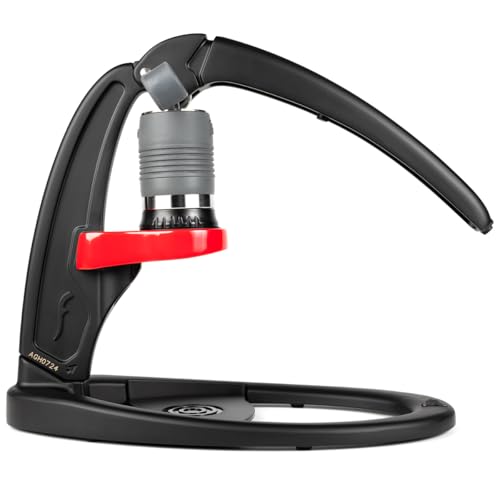
1. Flair NEO Flex Espresso Maker
An entry model in the Flair line that uses a lever and a basket designed to give a forgiving shot. It is aimed at people new to manual espresso.
Suits: newcomers. Strengths: approachable setup and a gentle learning curve. Weaknesses: less control than higher models. Skip it if you want a gauge.
Best for manual espresso fans
2. Flair Classic Espresso Maker
A manual lever espresso maker with a stand and a classic design. It is the step up from entry models and uses a standard espresso basket.
Suits: manual espresso fans. Strengths: traditional shots and a sturdy build. Weaknesses: needs a good grinder. Skip it if you want a gauge.
Best for tinkerers
3. Flair Signature Espresso Maker
A manual lever espresso maker that adds a pressure gauge and a stainless build. It lets you see the pressure while you press.
Suits: tinkerers. Strengths: gauge feedback and a polished kit. Weaknesses: more setup than entry models. Skip it if you want a simple machine.
View Flair Signature on Amazon
Best for small kitchens
4. ROK Presso Manual Espresso Maker
A compact hand-press espresso maker with a classic arm design. It is a good way to make a manual shot without a big machine.
Suits: small kitchens. Strengths: compact size and a hand arm. Weaknesses: needs hot water supply. Skip it if you want a boiler.
Best for committed manual brewers
5. ROK EspressoGC Manual Espresso Maker
A heavier version of the hand-press design, with a more complete kit and a sturdier build. It suits those who want a durable manual setup.
Suits: committed manual brewers. Strengths: solid build and a full kit. Weaknesses: heavy. Skip it if you want light travel gear.
Best for travel and office
6. Wacaco Nanopresso Portable Espresso Maker
A handheld espresso maker with a built-in piston pump. It is tiny, easy to stash in a bag and needs only hot water and ground coffee.
Suits: travel and office. Strengths: portable size and low effort. Weaknesses: small shots. Skip it if you want a larger basket.
View Wacaco Nanopresso on Amazon
Care and Setup
- Rinse all parts with warm water after use.
- Dry the seals and gaskets to avoid wear.
- Store parts in a clean, dry spot.
- Check the gasket every few months and replace if worn.
- Replace worn seals before they begin to leak.
Mistakes to Avoid
- Using a grind that is too coarse.
- Pressing too quickly and losing flavor.
- Skipping the water preheat.
- Leaving damp parts packed away.
- Using stale beans and blaming the machine.
- Overfilling the basket and making the press too stiff.
The Hand-Powered Espresso Workflow From Start to Cup
A manual machine replaces the pump and boiler with your hands and a kettle, so it helps to picture the whole routine before buying. You heat water separately, grind and dose the coffee, tamp it in a basket, assemble the brewing head, pour in hot water, then press a lever or plunger to push the water through the coffee. Afterward you knock out the puck, rinse the parts and let them dry. The steps are few, but the order and timing matter.
Plan on a few minutes per shot once you are practiced, with most of that time spent heating water and preheating the machine. The workflow is hands-on in a way that many people enjoy, but it does not suit someone who wants a one-button cup in a rush. Check each listing for what comes in the box, such as a portafilter, baskets, a tamper, a scoop and a pressure gauge, and what you need to add. Common extras include a kettle, a grinder, a scale and a cup that fits under the spout. Keeping a small tray with your tools together makes the routine smoother, and wiping spills right away prevents sticky coffee residue on a counter.
Hot Water and Preheating Explained
Because manual machines have no built-in heater for the brew water, you must supply it, and the temperature you use strongly affects the taste. Water that is too cool gives sour, thin flavors, while water that is too hot can taste harsh and bitter. Most users bring water to or near boiling and let it settle for a short time, adjusting for the roast: darker roasts often taste better with slightly cooler water and lighter roasts with hotter water. Follow the maker’s guidance on temperature, and adjust by taste.
- Preheat the brewing chamber, basket and cup with hot water before the shot, as cold metal steals heat quickly.
- Pour the water carefully and promptly, because it loses heat as it sits.
- Use a kettle with a spout that lets you pour accurately, and a thermometer if you want to be precise.
- Be careful, since the chamber and spout become very hot, and handle them with a cloth where needed.
The amount of water you need depends on the machine and the recipe, and the manual or listing will state a chamber size. Heat a little extra for preheating and rinsing.
Coffee, Grind and Dose for Hand Presses
Hand-pressed espresso works with fresh, whole beans ground fine and consistent. Pre-ground coffee is rarely fine enough or fresh enough, though some machines accept ground espresso capsules or pods through adapters, so check the listing. A good grinder with fine adjustment makes a bigger difference than most upgrades, and manual grinders can pair well with manual machines if you enjoy the ritual and do not mind the effort.
Basket size and recommended dose differ between machines, so follow the numbers for your model, and weigh the coffee to repeat results. Tamp with even pressure and keep the surface level. If the lever pushes with almost no resistance and the shot is thin and sour, try a finer grind or more coffee. If you cannot press or the flow stops, the grind may be too fine or the dose too large. Roast also matters: medium and medium-dark roasts are forgiving for most people, while very light roasts may be harder to extract. Store beans in an airtight container away from heat and light, and buy amounts you can use in a few weeks.
Milk Drinks, Travel and Camping Use
A manual machine makes a concentrated shot, and milk drinks need a separate step. You can warm and froth milk with a handheld frother, a steam wand on another appliance, a French press method or a small pitcher and whisk. Think about how you drink coffee, since a manual maker alone will not heat milk. Some people simply enjoy shots, americanos made by adding hot water, or cortados with warmed milk poured by hand.
Travel and camping suit some manual designs very well, because they need no power. Compact hand-held models can fit in a bag, and larger ones can pack into a case. Consider what you must also carry: a portable kettle or stove, a grinder, a cup and cleaning supplies. Weigh the machine and its parts, check how it packs, and look for a case or pouch. On the road, rinse parts promptly and dry them before storing. Remember that a handheld model may produce a smaller shot and less pressure than a larger lever, so think about your expectations when you compare. For home use, a larger lever may be steadier and easier to press.
Cleaning, Maintenance and Replacement Parts
Manual machines have few moving parts, but cleanliness affects both taste and longevity. Rinse the basket, chamber and plunger after every shot, remove the used coffee puck as soon as you can and let the parts air dry. Use a small brush to clean the shower screen and seals. Periodically wash the parts with warm water and a mild detergent, or a cleaner suited to espresso equipment, and rinse thoroughly so no residue is left.
Seals and gaskets wear out, so check the manual to see how to replace them and whether spare parts are sold. Silicone or rubber seals that harden, crack or leak will reduce pressure and make pressing difficult or messy. Check threads and fittings for coffee build-up. If you use hard water, scale can accumulate inside, so rinse with filtered water if possible and follow the maker’s descaling advice. Signs that it is time to repair or replace include leaking at the seals, a plunger that sticks, bent parts, cracks in plastic and loss of pressure that cleaning does not fix. Confirm where to buy spares before you commit to a particular machine.
Manual Espresso Machine FAQ
Can manual machines make real espresso?
Yes, when you use a fine grind and enough pressure. Results depend on technique.
Do I need a special grinder?
A grinder that can reach a fine, even grind is key. A blade grinder will not do the job.
Are they good for travel?
Handheld models are. Larger press-style makers are better at home.
How is a manual machine different from a pump machine?
A pump machine drives the water for you. A manual one relies on your hand, which means more control and more room for error.
What coffee should I buy?
Fresh, espresso-roast beans ground just before brewing give the best chance of a good shot.
How much hot water do I need?
Each maker has its own limit, so check the manual and heat only what you need.
How hot should the water be?
Many users start near the boiling point and adjust. Lighter roasts often suit hotter water and darker roasts slightly cooler. Follow the machine's manual and change in small steps.
Can I use espresso pods or capsules in these machines?
Some manual machines have adapters for pods, and others do not. Check the listing for accessories and compatible formats.
Is it hard to press the lever?
Effort depends on the machine design, grind size and dose. A grind that is too fine or too much coffee can make pressing difficult. Adjust one thing at a time.
How do I make a milk drink with a manual machine?
Make the shot, then add steamed or frothed milk made separately with a frother or similar tool. The machine itself does not heat milk.
Can I pull a shot without a scale?
You can, but a scale makes it easier to repeat good results. Weighing the dose and the shot is a simple way to improve consistency.
Why does my espresso have little crema?
Fresh beans, fine grinding and good technique all influence crema. Stale coffee, too coarse a grind or low pressure can reduce it. Crema does not always indicate quality, so rely on taste.
Are these machines easy to take apart?
Most are designed to be simple to disassemble for cleaning. Check the manual and keep track of small seals so they are not lost.
What Pressure Actually Does in a Hand-Powered Machine
Pump machines advertise a bar rating, usually 9 bar at the group head, because that is the pressure traditionally associated with espresso extraction. A manual machine has no motor holding that number steady. Your arm, or a lever with mechanical advantage, produces the pressure, and it rises and falls with how hard you push and how much resistance the coffee puck offers. That sounds like a weakness, but it also means you have direct control over something that pump owners can only adjust indirectly.
The resistance comes from the grind and the tamp. Finer grounds packed firmly push back harder, so the same effort on the lever produces higher pressure inside the chamber. Coarser grounds let water pass easily, and the pressure never builds. This is why two people using the identical machine can pull very different shots: the hardware sets a ceiling, but grind, dose and hand technique decide what actually happens inside the basket.
Many experienced users aim for a gentle ramp. They start with light pressure to wet the puck evenly, then increase it through the middle of the shot and ease off near the end as the flow thins. A flat, constant shove is easy to do and often works fine, but the ramp tends to reduce harsh edges because water saturates the coffee before it is forced through. If you are new to this, treat the first several shots as practice in feeling how the lever responds rather than judging the result harshly.
Reading the Shot: Sour, Bitter and Watery Cups
Most disappointing manual espresso traces back to one of three problems, and the cup usually tells you which one.
- Sour, sharp or thin: the water passed through too fast or too cool, so it pulled the bright acids but not the sweetness. Grind finer, add a touch more coffee, or preheat the machine longer.
- Bitter, dry or ashy: the extraction ran too long or too hard. Grind slightly coarser, shorten the push, or check that the water is not scalding.
- Watery with no body: the dose is too small for the basket, the grind is far too coarse, or the puck channeled and water found a shortcut.
Change only one variable per shot. Adjusting grind, dose and water temperature at the same time makes it impossible to learn what helped. Keep a short note of the settings so you can return to a shot you liked.
Channeling deserves a mention because it hides well. If water cuts a narrow path through the puck, part of the coffee is over-extracted and part is barely touched, so the cup tastes both sour and bitter at once. Common causes are clumpy grounds, an uneven tamp, a tilted tamp, or banging the basket against the counter after tamping. Distributing the grounds level before tamping and pressing straight down solves most cases. Spent pucks that look cratered or wet and sloppy are a clue.
Choosing a Machine by How You Actually Drink Coffee
Instead of picking the highest-rated machine, match the design to your routine. Think through a typical week and be honest about which scenario fits.
The daily single-shot drinker
If you pull one or two shots each morning at home, convenience and repeatability matter more than portability. A countertop lever with a sturdy base and a larger basket will feel steadier and require less fuss. Larger models like the Flair Signature or the ROK EspressoGC suit this pattern because you can keep them set up and rinse them in a minute or two.
The occasional weekend enthusiast
If you only make espresso on weekends, a mid-range hand press that stores in a cupboard is enough. You will accept a few extra minutes of preparation in exchange for a better cup than capsules or a moka pot, and you will not resent the counter space.
The traveler or camper
Weight, size and the ability to work without a power outlet decide everything here. A compact piston device like the Wacaco Nanopresso trades basket size and capacity for portability. Expect smaller, more concentrated shots and a little more work per cup, and plan to carry a thermos of hot water.
The milk-drink household
If most cups become lattes, the shot only has to hold its own against steamed milk, so you can be less fussy about perfect extraction. Your budget may be better spent on a separate milk frother than on the most expensive press.
Accessories That Earn Their Place
Hand presses often include a basic tamper and a scoop, but the rest of the setup determines how good the results get. In rough order of impact:
- A capable grinder. This matters more than any other purchase. A hand press cannot compensate for inconsistent, coarse grounds. Burr grinders with fine adjustment give you the range to dial in.
- A small scale with a timer. Weighing the dose and the liquid in the cup turns guesswork into repeatable recipes. A kitchen scale reading to 0.1 gram is plenty.
- A kettle with temperature control. Water just off the boil is usually what these machines want, and a gooseneck spout makes filling a small chamber cleaner.
- A properly fitting tamper. If the supplied tamper rocks inside the basket, a snug replacement helps create an even, level puck.
- Paper filters. Some models accept them under or over the puck, which can make cleanup easier and reduce fine particles in the cup. Check the manufacturer guidance for your model before buying.
Skip the gadgets that promise to fix poor technique. Distribution tools and gauges are interesting later, but they are optional until you can get a consistent shot with the basics.
Realistic Expectations on Time and Effort
A manual shot takes longer than pressing a button. Boiling water, preheating the chamber, grinding, tamping, pressing and rinsing can take roughly ten minutes the first few times and shrink as the sequence becomes habit. That is part of the appeal for people who enjoy the ritual, and a dealbreaker for those who want coffee while half asleep. Decide which group you belong to before buying, because an unused espresso maker is the most expensive kind.
Related guides
- 6 Best Manual Lever Espresso Machines: Presses and Classics
- 6 Best Lever Espresso Machines: Manual Lever Picks
- 6 Best Manual Lever Espresso Machines for Enthusiasts
Frequently Asked Questions
Why does my manual espresso taste sour?
Sour espresso usually means under-extraction: the water moved through too quickly or was not hot enough. Try grinding finer, increasing the dose slightly, and preheating the machine longer. Change one thing at a time so you can tell what helped, and make sure the puck is tamped level.
Do I need a pressure gauge on a manual espresso machine?
No. A gauge is helpful for learning how your hand pressure translates into force, and some people enjoy the feedback, but plenty of good shots are pulled without one. Focus on grind, dose and a steady, comfortable push first. Treat a gauge as a learning tool rather than a requirement.
How long does it take to make one shot with a hand press?
Expect about ten minutes your first few times, including heating water, preheating, grinding, tamping, pressing and rinsing. With practice, most people get it closer to five minutes. The pressing itself usually takes under a minute, so most of the time goes into preparation and cleanup.
Should I upgrade my grinder before my espresso machine?
In most cases yes. Hand presses respond strongly to grind quality, and an inconsistent grinder produces uneven shots no matter how good the machine is. If you must choose, buy a burr grinder with fine adjustment first and a basic manual machine second.
Going Deeper: Getting the Most From a Manual Espresso Machine
A manual espresso machine is the smallest complete answer to a large question: how much of espresso is the machine, and how much is the person? These devices remove the pump, the boiler electronics and most of the counter footprint, leaving you, a kettle, good coffee and your own hands. The picks above, from the Flair family to ROK’s hand-pressed designs and Wacaco’s portable Nanopresso, differ in how they generate pressure, what they ask of your preparation, and where they can travel. This section explores the ownership experience, because a manual machine is chosen for its philosophy as much as its performance, and the philosophy has to survive your actual mornings.
Matching the Choice to the Way You Actually Work
If counter space or budget rules out a conventional machine, a manual press offers real espresso without the appliance commitment. It stores in a cupboard or a drawer, asks only for hot water from the kettle you already own, and costs its owner attention instead of electricity and bench space. This pattern suits the single daily shot made deliberately, by someone who enjoys the process and would rather spend on coffee and a grinder than on machinery.
If you travel, camp or keep irregular hours in irregular places, the portable end of this list changes what coffee is possible away from home. A hand-powered maker in a bag, with a kettle or any source of hot water at the destination, produces genuine espresso in hotel rooms, rentals and campsites where the alternative is whatever the location provides. The traveller’s criteria are weight, robustness and how forgiving the device is of imperfect preparation when you are working on a wobbly table.
If you are espresso-curious but uncommitted, a manual machine is the honest apprenticeship. It teaches dose, grind, distribution and extraction at a price that leaves budget for the grinder, which is where the real quality lives. Many owners later add a pump machine and keep the manual one for travel and quiet mornings; others discover the manual ritual was the point all along. Either outcome is a success, and both are cheaper than learning the same lesson on a large machine.
The Criteria That Matter Most, Revisited
Manual machines are simple, which makes their few specifications unusually important. These are the criteria that separate a satisfying press from a frustrating one.
- How pressure is generated: Lever arms multiply your force and give a feel for the extraction; hand pumps and squeezes suit smaller, portable designs. The mechanism decides both the physical effort and how directly you sense the puck’s resistance, which is your main source of feedback.
- Basket type and dose: Some manual machines use standard baskets that reward proper preparation; others use pressurised baskets that forgive coarse or pre-ground coffee at some cost to the ceiling of quality. Know which you are buying, because it decides your grinder requirements.
- Water management: You supply the hot water, so chamber size, filling ease and heat retention shape the shot. Designs that preheat well and hold temperature through the extraction produce sweeter, more consistent results, especially for lighter roasts.
- Build and seals: A manual machine has few parts, and each one matters. Sound materials, replaceable seals and a mechanism that does not flex under pressure are what separate a decade-long tool from a novelty.
- Portability in practice: Weight, packed size and whether the device travels in a case decide if it truly travels or merely could. A machine that is portable in theory but fiddly to pack stays home, which defeats the category.
- Cleaning and drying: Small chambers, baskets and seals need rinsing and, importantly, drying between uses, especially in a travel bag. Designs that strip down quickly and drain fully stay fresh; designs with hidden wet corners develop stale flavours.
The recurring theme is that your hands replace the electronics, so judge every criterion by what it asks of your hands: the force, the feedback, the cleaning, the packing. The best manual machine is the one whose demands you enjoy meeting, because you will meet them at every single shot, with no programme to hide behind.
A Step-by-Step Routine That Works
Manual espresso rewards a settled routine more than any other format, because you are the temperature control, the pump and the timer. This sequence covers the essentials.
- Preheat deliberately: Fill the chamber with hot water and let the device warm, or run a blank cycle, before the real shot. Small metal parts shed heat quickly, and preheating is the difference between a sweet shot and a sour one.
- Grind and prepare while it warms: Use the warming time to grind fresh, dose carefully and distribute evenly. In manual espresso, puck preparation carries even more weight than usual because there is no pump profile to smooth over mistakes.
- Fill with water just off the boil: Top up the chamber with hot water at your chosen temperature, assemble promptly, and begin before the assembly cools. A tidy bench, with everything laid out in order, makes this step unhurried rather than frantic.
- Press smoothly and steadily: Apply pressure in a smooth ramp, then hold a steady effort, watching the stream. A thin, fast stream asks for a finer grind next time; a drip-by-drip struggle asks for coarser. Your hands will learn to read both.
- Judge by yield and taste: Stop the shot at your target yield, taste honestly, and change one variable next time. The manual format’s gift is how directly each change answers; keep notes so the answers accumulate.
- Rinse, dry and reset: Disassemble, rinse the coffee parts, and dry them before storing or packing. A manual machine put away wet, especially in a travel case, returns with stale flavours as a souvenir.
After a few weeks the routine compresses into a few calm minutes that many owners describe as the best part of the format. The shot becomes something you make rather than something a machine dispenses, and the inevitable imperfect shots become information rather than failures, because you felt exactly where they went astray.
Troubleshooting: Problems, Causes and Fixes
Shots run fast and taste thin
The grind is too coarse, the dose too light, or the preparation channelled. Grind finer first, then check distribution. With pressurised baskets this is less common; with standard baskets it is the classic first lesson, and it is solved at the grinder, not the press.
Shots choke or demand excessive force
Ease off rather than forcing the mechanism, which stresses seals and can be unsafe. The cause is a grind too fine, a dose too large, or both. Coarsen in small steps and confirm the basket is not overfilled, and the press should return to a firm but comfortable effort.
Shots taste sour even with good timing
Suspect temperature. A device that was not preheated, water that sat after boiling, or a cold cup all pull a small shot’s temperature down. Extend the preheat, work promptly after filling, and warm the cup, then judge the same recipe again.
Crema is disappointing
Crema follows bean freshness and grind more than it follows the device. Fresh beans, ground finely and prepared evenly, produce crema on any of these machines. Stale or pre-ground coffee gives thin results everywhere, and no mechanism can manufacture what the beans no longer hold.
Care, Storage and Making It Last
Manual machines are refreshingly maintainable. Rinse the brew parts after use, keep seals clean and lightly inspected, and replace them when they harden or weep, following the maker’s guidance. Because there is no boiler, there is no descaling regime; the whole maintenance burden is cleanliness, seals and not forcing the mechanism against a choked puck.
Drying is the care step owners skip. Small chambers and baskets hold droplets in exactly the places coffee oils collect, and a device stored damp develops stale flavours and, in a sealed travel case, worse. Shake out the water, leave parts open to the air until dry, and only then pack or put away.
Store the machine where its small parts stay together: basket, tamper and seals have a talent for separating in drawers and luggage. A case or a single designated pouch is not fussiness; it is what makes the machine genuinely grab-and-go, which for many owners is the entire reason it exists.
Extra Questions, Answered
Can a manual machine really match a cafe shot?
It can produce genuinely excellent espresso, with the caveat that you are supplying the consistency a cafe machine automates. With fresh beans, a capable grinder and practised preparation, the ceiling is high. What it will not do is produce that quality carelessly.
Do I need a special kettle?
No, but a kettle that pours controllably and holds temperature while you prepare makes the routine calmer. Any kettle that boils water works to start; upgrade the kettle when its pouring, not its existence, becomes the annoyance.
How portable is portable, honestly?
The hand-pump designs travel in a coat-adjacent bag and work anywhere hot water exists. The lever designs travel in a car or a suitcase rather than a pocket. Match the claim to your trips: the best travel machine is the one whose size you will actually carry.
Can I use pre-ground coffee?
In pressurised-basket models, yes, with modest expectations. In standard-basket models, pre-ground coffee usually runs too fast and tastes thin, because it cannot be adjusted to the device. A small hand grinder transforms any of these machines and is the classic companion purchase.
Is a manual machine a good gift?
For the right person, an inspired one: the coffee enthusiast who enjoys process. For someone who wants coffee without ceremony, it is a beautiful burden. Judge the recipient’s mornings honestly, as you would your own.
How the Picks Differ in Spirit
The Flair NEO Flex, Classic and Signature form a family with a shared idea, a lever press over a standard-style basket, tuned at different points of price, materials and forgiveness, with the NEO line leaning toward accessibility. The ROK Presso and EspressoGC take a two-handed, sculptural approach, pressing with both arms in a motion owners find meditative. The Wacaco Nanopresso leaves the counter behind entirely, a hand-pumped device built for bags and journeys.
Choosing among them is choosing a posture toward espresso. The Flairs reward the student who wants to learn the classic variables. The ROKs reward the ritualist who wants the making to feel like something. The Nanopresso rewards the traveller who wants real espresso to be possible anywhere. None of these is the sensible default for everyone, and that is exactly why the category is healthy.
Pairing a Manual Machine With the Right Grinder
If this guide has a refrain, it is that the grinder decides the ceiling. A manual machine paired with a capable hand grinder is a complete, portable espresso laboratory that can outperform large electric setups in the cup, because its fundamentals are sound. A manual machine paired with pre-ground coffee is a compromise that tastes like one. When budgeting, treat the two purchases as one system and split the money with respect for the grinder’s share.
Hand grinding for espresso is its own small ritual, a minute of effort that suits the manual format’s pace, and modern hand grinders made for espresso make it far less of a chore than their reputation suggests. Electric grinding is faster and equally valid. What matters is adjustability fine enough to tune a shot in small steps, because manual espresso, with your hands on the pressure, will teach you to taste differences that coarse adjustment cannot reach.
Manual Espresso as a Practice, Not Just a Product
Owners of manual machines often describe an unexpected benefit: the practice slows coffee down in a way that survives busy periods of life. Because there is no warm-up cycle and no programme, the decision to make espresso is the decision to spend a few minutes making espresso, and those minutes become a small, deliberate pause rather than a transaction. People who buy these machines for economy or travel frequently report keeping them for this quality, which no specification sheet mentions and no pump machine quite replicates.
The practice also scales down gracefully. A manual setup asks nothing of a kitchen renovation, a plumbing decision or a counter sacrificed forever; it fits student flats, small kitchens, boats, offices and spare rooms with equal ease. That adaptability is why so many manual machines have second and third lives, lent to friends, taken to holiday houses, or handed to a younger coffee enthusiast starting their own apprenticeship. Few kitchen tools circulate so happily, and the circulation itself spreads the format’s particular, hands-on understanding of what espresso is.
What Manual Espresso Teaches That Transfers Everywhere
Spend a season with a manual machine and you will find your coffee judgement has changed in ways that follow you to every cafe and every future machine. You will taste under-extraction and know it is temperature or grind, not mystery. You will watch a barista’s preparation with a practitioner’s eye. You will understand, in your hands rather than as a fact, why freshness, distribution and patience matter, because your own hands have been the pump that reported each variable’s effect. That education is the hidden line item in every manual machine’s value, and it never depreciates.
It also recalibrates spending. Owners who have made excellent espresso with a press, a kettle and a grinder tend to buy later equipment, if they buy it at all, for workflow and convenience rather than for quality they imagine only money can unlock. They know exactly what a machine can and cannot add, because they have personally supplied the functions the machine would automate. Few purchases in the coffee world protect their owner from future purchases; a manual machine, paradoxically, is one of them.
More Questions, Answered
How long does a manual shot take, start to finish?
A practised routine, including grinding and preheating, takes a few unhurried minutes. That pace is the format’s character rather than a flaw to apologise for; if your mornings cannot hold a few minutes, a manual machine will frustrate you honestly and quickly.
Can two people share a manual setup for breakfast?
Yes, with a rhythm: prepare the second puck while the first shot runs, and keep the kettle hot. Back-to-back drinks are a small production line, and households that enjoy the process treat it as one.
What breaks first on a manual machine?
Usually a seal, which is inexpensive and replaceable, or nothing at all for years. The mechanisms are simple and overbuilt relative to their loads. Forcing a choked shot is the main way owners accelerate wear, which is another reason to ease off and adjust the grind instead.
How do I keep shots consistent when travelling?
Pre-measure your routine at home, pack the same tools in the same order, and use the best water available at the destination. Accept a small drop in precision as the price of place; a very good shot made in a mountain cabin outranks a perfect one remembered from your kitchen.
Are replacement parts easy to find?
For the established designs above, seals and baskets are generally available from the makers and their retailers, which is one reason to favour established designs. Buying a spare seal kit with the machine is cheap insurance that travels well.
Can a manual machine handle decaf and different beans?
Yes, though each bean asks for its own grind setting, and decaf often needs a finer grind to resist properly. Note the settings per coffee in your log, and switching between beans becomes a quick adjustment rather than a fresh investigation.
A manual espresso machine is a vote for participation over automation, and the picks above cast that vote in different sizes, from counter-top levers to pocketable pumps. Choose by where the machine will live and travel, by the basket philosophy you want, and by the grinder you can pair with it. Then practise with good humour. The shots will tell you, clearly and quickly, what your hands are learning, and that conversation is the entire pleasure of the format.
The Short Version
For beginners, the Flair NEO Flex. For a classic press, the Flair Classic. For a gauge, the Flair Signature. For a compact lever, the ROK Presso. For a sturdy kit, the ROK EspressoGC. For handheld use, the Wacaco Nanopresso.


