A family machine has a different job from a hobbyist one. It has to make several drinks back to back, be simple enough that anyone can use it before school or work and clean up fast enough that nobody avoids the job. Large tanks and bean hoppers help too.
The six machines below lean toward simple controls, user profiles and easy milk cleanup. We have not used these machines ourselves, and we avoid specs we cannot confirm. Check the current listing for the water tank, bean hopper and milk system details before ordering, as variants can look very alike.
As an Amazon Associate we earn from qualifying purchases. Links below are affiliate links, and they do not change the product information we give.
What to Look For
| Feature | Why it matters |
|---|---|
| Profiles | Saved drinks let each person press one button for their usual |
| Tank and hopper | Larger ones mean fewer refills on busy mornings |
| Milk cleanup | Simple jugs or rinse cycles save daily effort |
| Safety | A cool-touch spout and a steady base help around kids |
In this guide
Specs at a Glance
| Machine | Milk system | Controls | Best for |
|---|---|---|---|
| Philips 2200 LatteGo | Two-part milk jug | Simple buttons and display | First-time families |
| De’Longhi Magnifica Evo | Manual steam wand or milk option | Buttons and display | Black coffee and basic lattes |
| Gaggia Cadorna Prestige | Automatic frother | Display with profiles | Households with many tastes |
| Jura ENA 4 | Wand-based milk | Simple controls | Compact family kitchens |
| Melitta Barista TS Smart | Automatic milk system | Touch controls | Two-user profiles |
| De’Longhi Magnifica Start | Manual steam wand | Dial and button controls | Simple daily use |
The 6 Best Super Automatic Espresso Machines for Families
Top pickBest for families who want less cleanup
1. Philips 2200 LatteGo
An approachable machine with a two-piece LatteGo milk system that rinses under the tap. Controls are straightforward, which suits a household of mixed experience. Check the listing for the tank and bean hopper size.
Suits: families who want less cleanup. Strengths: easy milk cleanup. Weaknesses: fewer customization options than higher models. Skip it if you want many drink profiles.
View Philips 2200 LatteGo on Amazon

Best for families that want a classic bean-to-cup
2. De’Longhi Magnifica Evo
A popular super automatic with a simple control panel, a steam wand or milk option depending on the version and a removable brew unit. De’Longhi sells many variants, so check which one the listing shows. The brew unit pulls out for rinsing.
Suits: families that want a classic bean-to-cup. Strengths: a removable brew unit for easy cleaning. Weaknesses: versions differ in milk features. Skip it if you want fully automatic milk.

Best for households with several preferences
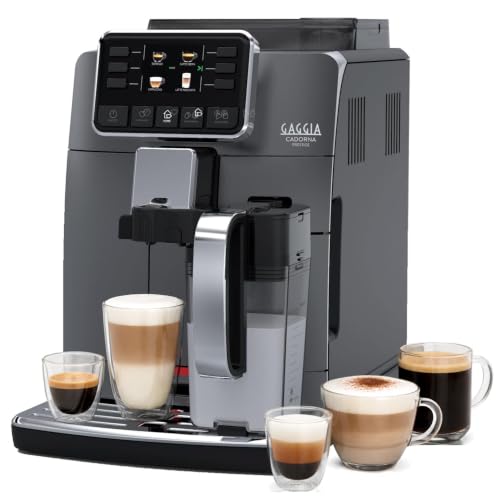
3. Gaggia Cadorna Prestige
An Italian-designed machine with a display, a milk frother and saved profiles for different drinkers. Gaggia is a long-running Italian espresso brand. Look at the listing for the number of profiles.
Suits: households with several preferences. Strengths: profiles for multiple users. Weaknesses: more buttons to learn. Skip it if you want the simplest interface.
View Gaggia Cadorna Prestige on Amazon

Best for smaller kitchens and black coffee fans
4. Jura ENA 4
A compact super automatic from a Swiss maker, aimed at users who want quality in a small body. It is well suited to a family that mostly drinks black coffee and espresso. Confirm the hopper and tank size for your household.
Suits: smaller kitchens and black coffee fans. Strengths: compact and well built. Weaknesses: milk drinks need a manual wand. Skip it if you want automatic lattes.
Best for two-person households or couples with kids
5. Melitta Barista TS Smart
A super automatic that stores two user profiles and has an automatic milk system. Melitta is a German coffee brand with a long history. Check which colors and variants are offered.
Suits: two-person households or couples with kids. Strengths: user profiles and a milk system. Weaknesses: two profiles cap personalization. Skip it if you need a bigger family list.
View Melitta Barista TS Smart on Amazon

Best for first-time bean-to-cup families
6. De’Longhi Magnifica Start
A simple, entry-level De’Longhi machine with a manual steam wand and easy controls. It is a gentle introduction to bean-to-cup brewing. Look at the listing for what ships in the box.
Suits: first-time bean-to-cup families. Strengths: approachable controls. Weaknesses: milk is hand-frothed. Skip it if you want milk made for you.

Care and Setup
- Set a daily cleaning routine and rotate who does it.
- Use filtered water to protect the machine.
- Clean milk parts every time milk is used.
- Descale on the schedule the maker gives.
Mistakes to Avoid
- Letting kids use the steam wand unsupervised.
- Leaving milk in the system for days.
- Choosing a machine with a tiny hopper for a busy household.
- Using oily beans that clog the grinder.
Tank, Hopper and Drip Tray Sizing for Busy Households
In a family kitchen, capacity is about how often you have to stop and refill. A small water tank means more trips to the sink on a busy morning, and a small bean hopper means topping up beans more often. Start by estimating how many drinks your household makes on a typical day, then compare that with the tank and hopper sizes on the listing. The figures vary by model, so check each one rather than assuming.
Think about how the tank is accessed. A tank that lifts out from the top or side is easier to fill than one stuck behind the machine. A handle helps with carrying. A tank at the back may need you to pull the machine forward on the counter. The drip tray and the used-grounds container also fill up, so check their sizes and how often they need to be emptied. Many machines show a warning when these are full, which helps prevent overflow.
Also consider how the machine fits in the kitchen. Measure the width, depth and height, including the space needed to open the lid and remove the tank. Check the clearance under cabinets. If several people use the machine, put it where it is easy to reach and where children cannot reach hot parts or the steam. Check that the spout height works for the mugs you use, including travel cups.
Milk Systems: Automatic, Manual Wand and Easy-Clean Designs
Milk is where family machines vary most, and it is also the biggest cleaning chore. An automatic milk system draws milk from a jug or carton and froths it at the push of a button. It saves effort and gives consistent results, but it has tubes and parts that must be cleaned regularly. Some have a self-rinse cycle, and some need manual cleaning of parts each time.
A manual steam wand needs more skill but is simple and easy to wipe clean. You froth milk in a jug yourself, and you control the texture. It is a good fit for people who like to learn, but it may not suit rushed mornings or younger users. A wand also gets very hot, so supervision is important in a home with children.
Easy-clean designs reduce the cleaning burden. Some systems have fewer parts that can be rinsed under the tap, and others use removable containers that go in the dishwasher if the maker permits it. Check the listing and the manual for what is dishwasher safe. If your family makes milk drinks several times a day, an easy-clean system is worth prioritizing. If most people drink black coffee or espresso, a simple machine with a basic wand may be enough. Clean milk parts after every use, since dried milk is hard to remove and can affect taste and hygiene.
Profiles, Drink Menus and Simple Controls
A family machine should be easy for everyone to operate. Look for clear buttons or a simple display that shows drink choices. A touch screen can look attractive but may be less intuitive for some users, while physical buttons are simple and quick. Think about who will use the machine, such as teenagers, grandparents or guests, and choose a control style that suits them.
User profiles store settings for each person, such as strength, volume and temperature. Models differ in how many profiles they allow, so check the listing. A pair of profiles suits a couple, while a larger household may want more. If a machine does not have profiles, it may still let you save a favorite drink setting.
Drink menus range from a few basics to a long list. More options sound appealing, but many people use the same two or three drinks. Make sure the machine can make what your family drinks most, such as espresso, a longer coffee, a latte or a cappuccino. Check whether you can adjust the coffee strength and the amount of water, and how easy this is. A one-touch operation for the most common drinks saves time. Consider whether you want a hot water spout for tea or a separate hot water function. Finally, look at how the machine handles being left idle, and whether it has an auto-off feature.
Grinder, Beans and Machine Care
The built-in grinder is the heart of a super automatic machine. Most have adjustable grind settings, and many are made of ceramic or steel burrs, though listings vary. Check whether the setting can be adjusted easily and whether the machine explains how. Grind adjustments often must be made while the grinder is running, so follow the manual to avoid damage.
Bean choice matters. Very oily or flavored beans can leave residue and clog the grinder or brew unit, so check the maker’s advice. Use fresh beans, and store them in a sealed container away from light and heat. Do not overfill the hopper if you drink coffee slowly, because beans lose freshness over time. Some machines have a bypass chute for pre-ground coffee, which is helpful for decaf, but follow the instructions for use.
Care is a routine. Empty the drip tray and grounds container, rinse the water tank and wipe the machine. Many models have a removable brew unit that should be rinsed regularly. Descale on the maker’s schedule, and use the water filter if one is supported. Hard water speeds up scale, so consider filtered water. Skipping care leads to poor taste and shorter machine life. Create a simple chore chart for the family so that cleaning is shared and nobody is left with all of it.
Safety, Noise and Long-Term Ownership in a Family Home
Hot water, steam and moving parts are part of any espresso machine, and a family home needs some rules. Keep young children away from the spout and steam wand, and teach older children how to use the machine safely. Place the machine where cords cannot be pulled and the base is stable. Do not leave the machine on and unattended for long periods unless the manual allows it.
Noise can matter in a household, especially early in the morning. Grinders and pumps make noise, and the level varies by model. Listings may not give reliable figures, so look at user feedback for patterns. Placing the machine on a mat may reduce vibration.
Think about long-term ownership. Ask about warranty terms, availability of spare parts, such as brew units and seals, and the maker’s support. Budget tiers generally differ in build quality, number of features, milk system convenience and the sturdiness of internal parts. A higher tier may offer more profiles, bigger tanks and better milk systems, but a simpler machine may serve a household that mostly drinks black coffee. Signs of trouble include weak flow, unusual noises from the grinder, leaks, persistent error messages after cleaning and coffee that tastes sour or burnt despite correct settings. Contact the maker or a service center if you see these signs, and stop using a machine that leaks near electrical parts.
How the Picks in This Guide Differ Across a Busy Week
Super automatic machines promise the same thing, one-touch coffee, yet the six here deliver it with different priorities. The Philips 2200 LatteGo is built around convenience in milk drinks, where the system handles frothing and cleaning with the least daily fuss. The De’Longhi Magnifica Evo balances a broad drink menu with straightforward controls, a combination that suits households where several people make their own drinks. The Gaggia Cadorna Prestige leans toward a more traditional coffee-house feel, with adjustment that rewards the drinker who likes to fine-tune. None is simply better; they are answers to different mornings.
The second half of the list sharpens the contrasts. The Jura ENA 4 is the minimalist’s machine, compact and focused on black coffee done well rather than a long menu. The Melitta Barista TS Smart adds connectivity and profiles for households that enjoy them, while the De’Longhi Magnifica Start brings the same one-touch idea down to the most accessible level in this guide, accepting simpler milk handling and fewer refinements. If two people in a home disagree about what matters, the honest compromise is usually the machine whose daily cleaning both will actually do.
Judge them across a week, not a single cup. A machine that delights on Saturday but annoys on a rushed Tuesday will slowly be bypassed for a kettle. Count the steps from switching on to drinking, including rinsing and emptying, and weigh them as heavily as flavor. Flavor differences between well-set-up machines in this class are real but smaller than the difference between a machine that fits your routine and one that fights it. That is the lens this guide applies to every pick, and it is why placement, tank access and drip tray size get as much attention as drink quality.
Dialing In: Beans, Grind and the First Fortnight With a New Machine
Every super automatic needs a settling-in period, and expecting café results from the first cup is the most common new-owner mistake. Start with fresh, medium-roast beans from a roaster you trust, and avoid very oily beans at first, since heavy oils coat grinders and feed unevenly in many home machines. Make one drink at the default settings, taste it, then change a single variable at a time: grind a step finer, or strength a step higher, and taste again. Changing three settings at once teaches you nothing and usually ends in a worse cup than you started with.
Keep brief notes during those first weeks. Record the bean, the grind setting, the strength setting and a word or two about the result. Patterns emerge quickly: many households find their answer within a small range and then leave the settings alone for months, adjusting only when a new bean arrives. If shots run fast and taste thin, finer grind and a touch more coffee is the usual direction; if they drip slowly and taste harsh, coarser is the first move. Water matters as well, and a machine filled from a filter jug often tastes cleaner than one filled straight from a hard-water tap.
Give the machine its break-in grace. Brew groups, seals and grinders settle with use, and early cups are rarely the machine’s best. By the end of the first bag of beans, you should know your settings, your cleaning rhythm and whether the milk system suits your drinks. If a household member still reaches for another brewing method every morning, talk about why honestly; sometimes a different pick from this list, such as the simpler Jura ENA 4 or the more automated Philips 2200 LatteGo, matches the home better than persistence with a mismatch.
Milk Drinks Without the Fuss: Hygiene and Technique Together
Milk is where super automatics earn or lose their reputation, because milk residue is both a flavor problem and a hygiene problem. Whichever system your pick uses, the rule is the same: milk that has been heated must not sit in tubes, jugs or wands waiting for the next drink. Rinse or run the maker’s cleaning cycle straight after the last milk drink of a session, and refrigerate the milk container between uses rather than leaving it on the counter for the next round. A thirty-second habit prevents the stale, sour note that drinkers often blame on beans.
Technique still matters even when the machine does the work. Cold milk straight from the fridge froths best, and a clean, cold jug gives finer foam than a warm one rinsed in hot water. For manual wands, purge a short burst of steam before and after frothing to clear condensation and milk from the tip, and wipe the wand immediately while residue is still soft. For automatic systems, check that the milk intake is fully submerged and the tubes are kink-free before blaming the machine for coarse foam; air leaks at a loose connection are a frequent, invisible cause.
Choose your milk with the system in mind. Dairy milks froth most predictably, while plant alternatives vary widely by brand and formulation, with barista-style versions generally behaving best. If one household member drinks oat and another drinks dairy, a system with a removable, washable container is easier to keep sweet between users than one with long internal paths. The picks in this guide span that range deliberately, from the low-fuss approach of the Philips 2200 LatteGo to the more hands-on style of the Gaggia Cadorna Prestige, so let your household’s milk habits steer the choice as much as the espresso itself.
Running Costs and Consumables: The Budget Beyond the Machine
The machine’s price is the start of the spending, not the whole of it. Beans are the largest ongoing cost and the one most worth protecting, because stale beans waste every other investment in the setup. Add water filters where the maker recommends them, descaling solution on the schedule your water hardness demands, and cleaning tablets or solution for the brew group and milk system. None of these is expensive alone, yet together they decide whether the machine stays pleasant in year two or slowly declines into sour, erratic drinks.
Electricity and waste are smaller but real. A machine left on all day for two drinks spends much of its life heating water nobody uses, so learn its standby and auto-off settings and set them to your pattern. Pucks and rinse water fill drip trays and bins faster in large households, which loops back to choosing a pick whose capacities match your headcount. The Melitta Barista TS Smart and De’Longhi Magnifica Evo style of machine, with generous trays and clear alerts, suits a busy kitchen precisely because the chores announce themselves before they overflow.
Protect the purchase with a simple record. Keep the receipt, note the date the machine went into service, and log descaling and filter changes on a card near the machine or in a phone note. If a fault appears, that record is the difference between a smooth warranty conversation and a vague one. When the machine eventually needs professional service, weigh the repair against its age and your satisfaction honestly; a well-kept super automatic that still makes drinks you enjoy is usually worth one proper service, while a neglected one with several faults is often better replaced by a current pick from this guide.
Extra Questions Readers Ask About Super Automatic Machines
How long should a super automatic last with home use?
With clean water, regular descaling and prompt milk hygiene, a home machine in this class should give years of daily service. Lifespan depends less on the calendar than on drink count and care: a machine making two drinks a day with filtered water lives a gentler life than one making ten with hard water and skipped descaling. Treat alerts as instructions rather than suggestions, keep spare seals and the maker’s cleaning supplies on hand, and most owners find reliability follows care more than brand.
Why does my coffee taste weaker than café coffee?
Home machines dose less coffee per drink than many cafés, and settings often start conservatively. Raise the strength setting, grind a step finer and use a smaller cup measure for a more concentrated result before concluding the machine is at fault. Fresh beans matter enormously; a bag opened weeks ago will taste flat in any machine. Finally, check the cup temperature, because coffee served into a cold thick cup loses both heat and perceived intensity. Warm the cup and the same drink usually tastes noticeably stronger.
Can I use pre-ground coffee in these machines?
Most picks here provide a bypass chute for a measured scoop of pre-ground coffee, intended for the occasional decaf or guest coffee rather than daily use. Use only the amount the manual specifies, never force more, and never put instant coffee or flavored grounds through the chute. Whole beans remain the better route for flavor and machine health, since pre-ground coffee stales quickly and its fine, uneven particles can clog a chute. Think of the feature as a useful exception, not an alternative way to run the machine.
Household Peace: Sharing One Machine Between Different Drinkers
A family machine serves people who disagree about coffee, and designing for that disagreement is the real skill in choosing. One drinker wants a strong, small espresso; another wants a large milky drink; a third wants whatever is fastest before school. Machines with user profiles, like the Melitta Barista TS Smart, solve the settings argument elegantly, while simpler machines solve it socially, with a house standard everyone accepts and small manual tweaks for those who care. Either peace is real; choose the kind your household will actually keep.
Milk is where sharing gets delicate. Different milks in one container, a container left out between drinkers, or a wand shared without a purge are the usual sources of both off flavors and quiet resentment. Agree a simple house rule: milk goes back in the fridge, the system gets its quick rinse after the last milk drink, and whoever finishes the beans refills the hopper or leaves a note. Written on a card by the machine, these rules survive; left as assumptions, they dissolve within a month.
Teach every drinker the two-minute version of care, not just the coffee enthusiast who chose the machine. A household where only one person knows how to empty the grounds, respond to an alert or run a rinse is a household one holiday away from a neglected machine. The picks in this guide were chosen partly for learnability, and the most learnable machine in a real home often beats the most capable one that only its buyer understands.
When Results Disappoint: A Calm Order for Finding the Cause
When a super automatic’s drinks slip, work through the causes in the order of likelihood, not the order of expense. Beans first: a stale or newly changed bag explains most sudden declines, and no setting rescues old beans. Water second: an exhausted filter or a switch from filtered to hard tap water changes both flavor and the machine’s internal health. Settings third: confirm nobody has nudged the grind or strength while exploring, a common event in shared kitchens and the reason profiles exist.
Cleanliness fourth, and honestly. A brew group overdue for its rinse, a milk path carrying yesterday’s residue or a drip tray sensor confusing the machine can all present as coffee problems. Run the full cleaning cycle the maker prescribes before concluding anything is broken. Fifth, check the simple mechanics: hopper lid seated, water tank fully home, grounds bin properly inserted. Machines refuse or misbehave over these small unseated parts more often than over genuine faults.
Only then consider service, and go with information: what changed, when, what you have cleaned and what the machine reports. That brief, plus your descaling and filter record, lets a technician start at the real problem. If the verdict is a major repair on an older machine, compare it honestly with a current pick from this guide, weighing how well the old machine ever suited the household. Sometimes the right answer is the De’Longhi Magnifica Start simplicity you skipped the first time, bought now with experience instead of hope.
The First Service, Spare Parts and Knowing Your Machine’s Paperwork
Sooner or later a seal weeps, a grinder sounds different or a message appears that the manual explains in language nobody would choose. Owners who fare best in that moment share a small habit: they kept the machine’s paperwork together, receipt, model and serial details, and a note of every descale and filter change. That file turns a support call from archaeology into a conversation, and it is the difference between a part sent under warranty and an argument about dates.
Learn which parts your machine expects you to replace yourself: brew group seals, milk tubes, water filters and the occasional gasket are designed as owner-level items on most picks here. Keeping one set of the cheapest wear parts in a drawer means a Sunday-morning weep is a ten-minute fix rather than a week without coffee. Order parts by exact model variant, because near-identical machines in a range often take different seals, and a photograph of the old part beside the listing prevents most mistakes.
When a professional service is needed, describe symptoms, not diagnoses: what the drink does, what the machine says, what changed beforehand. Technicians work faster from evidence, and your cleaning and descaling log is the most useful evidence you own. Ask what was replaced and keep the old parts until the machine has run happily for a week; that small discipline closes the loop on repeat faults.
Treat the service history as part of the machine’s value. If you sell or pass the machine on, a documented, descaled, well-kept unit is a genuinely different object from an identical one with no history. The same logic applies when you buy: within this guide, the well-kept second-hand example of a higher pick can be a wiser purchase than a neglected new budget machine, provided its paperwork tells the same story as its condition.
A Final Decision Checklist Before You Buy
Before you settle on a final choice, run one last comparison against your own routine rather than against the marketing. List the three jobs your super automatic espresso machine will do most often, in the order you actually do them, and check the pick you favor against each one in turn. Most disappointment in this category comes from a product that excels at a job its owner rarely gives it, while being merely adequate at the daily task. A few minutes with that list is the cheapest insurance in the whole purchase, and it frequently moves readers one place up or down this guide’s list, which is exactly what a list is for.
It also helps to decide in advance what would make you return or replace the purchase, because that decision is clearer before a box is open than after a week of hoping a mismatch improves. A fit that is wrong, a part that does not seal, seat or connect as described, or a result that falls short on the first honest test are all legitimate reasons to act quickly while returns are simple. Minor unfamiliarity is not; most products in this guide have a short learning curve, and the second or third use is the fairer test. Knowing the difference in advance protects both your money and your patience.
Finally, keep the paperwork and the product details together somewhere you will find them in a year: the exact model name, the date it went into use and any spare parts you bought with it. Future you, ordering a replacement part or checking whether a new accessory fits, will be grateful for thirty seconds of filing today. Good ownership in this category is mostly that, a series of small, unglamorous habits that keep a well-chosen product performing the way it did in its first week, long after the excitement of choosing it has faded.
One more check is worth making before you order: measure the space, surface or cupboard where this purchase will actually live, and compare those numbers with the product’s stated dimensions rather than its photographs. Listings are shot to flatter, and scale is the first casualty of flattering photography. A product that fits its home gets used daily; one that must be stored awkwardly, dragged out or worked around will be quietly resented within a month, however well it performs. Two minutes with a tape measure has saved more purchases in this category than any other single habit.
If you are buying for someone else, weight the forgiving end of this guide more heavily than you would for yourself. A gift succeeds when it fits the recipient’s routine without asking them to change it, so favor the pick that tolerates varied habits, washes easily and does not depend on accessories they do not own. Include the receipt or a note of the exact model, and mention care in one friendly sentence rather than a lecture. The best-regarded gifts in this category are the ones still in daily use a year later, and that outcome is decided by fit long before it is decided by quality.
And if two picks still seem equal after all of this, choose the one whose maker supports it better where you live: clearer documentation, easier spare parts and a range that stays available for replacements. Small differences in the product itself fade within weeks of use, while support is the gift that keeps arriving for years. That tie-breaker, applied calmly, ends most deadlocks in this guide, and it has the extra virtue of being right even when the products themselves are too close to call.
Family Espresso Machine FAQ
Is a super automatic hard for kids to use?
Simple models are button-based and easy for older kids. Keep young children away from hot parts and steam.
How many profiles do families need?
Two profiles suit couples; larger households may prefer a model that remembers more drinks.
Do families need an automatic milk system?
It saves time on busy mornings, but a manual wand costs less effort to clean.
How do I keep kids safe around the machine?
Keep children away from the spout and steam wand, place the machine out of reach and teach older children to use it with supervision. Check the manual for safety guidance.
Can I use pre-ground coffee?
Some machines have a separate chute for pre-ground coffee, often used for decaf. Check the manual, and do not put pre-ground coffee in the bean hopper.
How often should I clean the milk system?
Clean it after every use, or as the maker advises. Dried milk is hard to remove and can affect taste and hygiene.
Do I need to use filtered water?
It is often recommended, especially in hard water areas, since it reduces scale. Check whether your machine supports a filter and follow the maker's guidance.
Can the machine make tea or hot water?
Many machines have a hot water function, which is useful for tea. Check the listing for details.
Why does my coffee taste weak or sour?
The grind may be too coarse, the beans may be stale or the machine may need descaling. Adjust one setting at a time and check the manual.
How long will the beans stay fresh in the hopper?
Beans are best used within a short time after opening, and a smaller amount in the hopper helps. Store extra beans in a sealed container away from light and heat.
Is it worth getting a machine with more profiles?
It depends on how many people drink coffee. If several family members have different tastes, extra profiles save time. If most people drink the same drink, a basic model may be enough.
Water Hardness, Filters and Descaling
Water is the largest ingredient in every cup, and it is also the biggest long-term threat to a super automatic machine. Minerals in hard water build up as scale inside the heating element and tubing, which can slow brewing, reduce temperature and eventually cause failures.
Know your water first
Test strips for hardness are inexpensive, and many municipal water reports list hardness online. Very soft water can be a problem too, because some machines rely on minerals to sense water levels. If your water is quite hard, a filter or bottled water may be worth the added cost.
Filters and descaling
- Many models accept a replaceable water filter in the tank. These need replacing on the schedule the manufacturer provides, or they stop helping.
- Descaling is done with a solution made for coffee machines, run through the system on a cycle. Machines usually remind you when it is due.
- Use the descaler the manufacturer recommends. Household vinegar can leave smells and may damage seals.
- Set aside time for the process, since it can take a while and needs attention at certain steps.
Skipping descaling is one of the most common reasons these machines fail early, and warranties often expect proof of reasonable maintenance.
Speed, Heating and the Morning Rush
A family usually makes several drinks within a short window, so how a machine heats and recovers matters more than a spec sheet suggests.
Thermoblock versus boiler
Most home super automatics use a thermoblock, a compact heating element that warms water as it passes through. It heats quickly but can show some temperature variation. Larger boilers hold hot water ready and can be steadier but take longer to start and cost more. For most households, a thermoblock is perfectly adequate.
Time between drinks
- Check how long the machine takes to warm up from cold and whether it runs a rinse cycle at startup.
- Some models make milk drinks in one step, others require waiting between coffee and steam.
- Cup-warmer trays are nice but are not essential.
If four people need drinks at once, expect to make them one after another, and keep some flexibility about who goes first.
Decaf, Flavored Beans and Pre-Ground Options
Households rarely drink one kind of coffee. A parent may want regular coffee in the morning while someone else prefers decaf in the evening, and the hopper is designed to hold a single bean type at a time.
The bypass doser
Some machines include a small chute for pre-ground coffee, often called a bypass doser. You pour in a scoop of decaf or specialty grounds, and the machine brews that single cup without using the hopper. It is a convenient feature but typically takes only a single serving at a time, and the machine may require you to start the cycle within a short window.
Oily and flavored beans
Very oily beans, often those with a dark roast, can coat the grinder and clog the chute over time. Flavored beans leave residue that carries from one batch to the next. Many manufacturers advise against both, so check the manual before filling the hopper with them.
What It Really Costs to Run a Machine at Home
Super automatic machines have a higher upfront price than drip makers or capsule systems, so it is worth considering how the total compares over time.
- Beans: whole beans from a local roaster usually cost more per pound than supermarket brands, but a single cup uses only a small amount.
- Consumables: water filters, descaling solution and milk system cleaners add recurring costs.
- Repairs: grinders, brew units and pumps can eventually need service, so look at warranty length and the availability of parts.
- Time: the machine does the brewing, but you still empty the grounds container, refill the tank and run cleaning cycles.
Compare this with what the household currently spends on coffee shop drinks or pods. A family that buys several specialty coffees a week may find that the machine pays for itself in a year or two, while light coffee drinkers may not recover the cost. Being honest about how often you will actually use it is the best predictor of whether it is a good purchase.
Setting Up and Placing the Machine
Before the box arrives, measure the spot. Check the clearance above the machine for refilling the bean hopper and removing the water tank, and leave a little space at the sides for ventilation and for sliding the brew group out for rinsing. A spot near an outlet and a sink makes daily upkeep easier. Keep the machine away from the stove and direct sunlight, since heat can warm the beans and degrade flavor. Place a mat underneath to catch drips, and run the initial rinse and priming steps exactly as the manual describes before making the first drink.
Frequently Asked Questions
Can I use decaf in a super automatic machine alongside regular coffee?
Yes, if the machine has a bypass doser. You add pre-ground decaf for one cup without touching the beans in the hopper. Without that feature, you would need to empty the hopper and grinder to switch, which is awkward, or keep a second coffee maker for decaf drinkers.
How often does a super automatic need descaling?
It depends on water hardness and how much you use it. Most machines track usage and display a reminder, and the manual will give a typical interval. Hard water shortens the schedule. Using a filter and following the descaling prompts is the simplest way to avoid mineral damage.
What is the difference between a thermoblock and a boiler?
A thermoblock heats water on demand as it flows through, so it warms quickly and is common in home machines. A boiler stores a volume of hot water and may offer steadier temperatures, but it takes longer to heat and typically costs more. For most families, either works well.
Is a super automatic cheaper than buying coffee out?
Over time it can be, if you drink several cafe-style drinks a week. Add up the price of the machine, beans, filters and cleaning supplies, then divide by the number of drinks you will make. Light coffee drinkers may not reach the break-even point, while heavy users usually do.
The Short Version
For easy cleanup, the Philips 2200 LatteGo. For a classic design, the Magnifica Evo. For several tastes, the Gaggia Cadorna Prestige. For a compact black coffee machine, the Jura ENA 4. For two profiles, the Melitta Barista TS Smart. For the simplest start, the Magnifica Start.