Disclosure: topratedkitchenware.com is reader-supported. When you buy through links on our site, we may earn an affiliate commission from Amazon and other retailers, at no extra cost to you.
Where to buy
Shopping for the best meat mixers for home sausage, meatloaf and meatball making usually leads to two kinds of machine: the dedicated tub mixer butchers use, and the stand or hand mixer most home kitchens already understand. The six picks below are the second kind — verified kitchen mixers whose paddles and bowls genuinely suit mixing ground meat evenly with seasoning, breadcrumbs and ice water — and this guide is upfront about where they shine and where a dedicated tub still wins.
- Cuisinart Stand Mixer SM-50, White Linen — Best Overall. The full-size stand mixer for regular meat batches.
- Cuisinart Stand Mixer SM-50, Onyx — Best Dark Finish. The same meat performance, kinder to messy cooks.
- Cuisinart Stand Mixer SM-50, Periwinkle Blue — Best Colour Statement. Full meat-mixing power for a colourful kitchen.
- Cuisinart Stand Mixer SM-50, Ruby Red — Best Classic Finish. The classic-colour route to the same stand mixer.
- Hamilton Beach 6-Speed Electric Hand Mixer (62682G) — Best for Small Batches. The drawer-friendly option for small meat jobs.
- KitchenAid 5 Ultra Power Speed Hand Mixer, Empire Red (KHM512) — Best Compact Pick. The tidiest small-batch meat mixing option.
Read the full guide below for the detailed breakdown of every pick, the comparison table, and the buying advice.
The best meat mixers solve a problem hands solve badly. Ground meat needs seasoning, salt, fat and binders distributed evenly, and it needs them distributed cold and fast. Warm hands melt fat, smear texture and tire quickly; under-mixed meat cooks up blotchy, with salty pockets, bland patches and meatballs that crumble or turn rubbery depending on which mistake dominated. A machine mixes in a fraction of the time, keeps the bowl’s contents colder, and — just as important — mixes the same way every batch, so your sausage recipe improves by adjustment instead of by luck.
Not every mixer is equally suited to the job, and the differences are mechanical. A stand mixer with a flat paddle sweeps a wide path through mince, folding rather than whipping, which is what meat wants. Capacity decides batch size honestly: a bowl that looks generous empty becomes small once two or three pounds of meat, ice water and breadcrumbs are moving inside it. Hand mixers sit at the other end of the trade — useless for a whole brisket’s worth of sausage, genuinely handy for a single pound of meatloaf mix in a deep bowl, with zero counter commitment.
This guide compares the verified picks on the details their listings confirm — bowl size, speed range, included attachments — and reasons openly from mixing mechanics rather than claiming laboratory testing. Four of the six picks are colour variants of one well-specified stand mixer; that is stated plainly in their reviews, because for meat work the model’s paddle and bowl do the job and the colour is a legitimate listing choice. Where a pick will frustrate a serious sausage maker, the review says so before you spend anything.
Key Takeaways
- A flat paddle in a stand mixer is the home cook’s best meat-mixing tool: it folds seasoning through mince without whipping in air.
- Four picks here are colour variants of the Cuisinart SM-50 (12 speeds, 5.5-quart stainless bowl, paddle included) — choose by colour and listing, not by imagined performance differences.
- Keep everything cold: chill the bowl and paddle, work in batches the bowl can actually move, and stop mixing the moment seasoning looks evenly distributed.
- The two hand mixers suit small meatloaf and meatball batches only; they are not sausage-production tools.
- Overmixing is the main texture killer — it warms the fat and turns meatballs dense, so machine speed is a benefit only when paired with short mixing times.
- None of these picks is a dedicated tub meat mixer; very large or very frequent batches still justify the specialised tool.
In this guide
Quick Picks
| Pick | Badge | Standout trait | Where to check |
|---|---|---|---|
| Cuisinart Stand Mixer SM-50, White Linen | Best Overall | 12 speeds and a 5.5-quart stainless bowl with paddle | Check on Amazon |
| Cuisinart Stand Mixer SM-50, Onyx | Best Dark Finish | Identical SM-50 specification in a splash-forgiving black | Check on Amazon |
| Cuisinart Stand Mixer SM-50, Periwinkle Blue | Best Colour Statement | The full SM-50 kit in a distinctive periwinkle finish | Check on Amazon |
| Cuisinart Stand Mixer SM-50, Ruby Red | Best Classic Finish | The SM-50 in a traditional kitchen red | Check on Amazon |
| Hamilton Beach 6-Speed Electric Hand Mixer (62682G) | Best for Small Batches | Six speeds and beaters for a single pound of mince at a time | Check on Amazon |
| KitchenAid 5 Ultra Power Speed Hand Mixer, Empire Red (KHM512) | Best Compact Pick | Turbo Beaters and a swivel cord for controlled small batches | Check on Amazon |
How These Picks Were Chosen
The filter for this list was simple: could the machine, as listed, mix ground meat properly? That meant a flat paddle or beater geometry that folds rather than whisks, a bowl or recommended vessel deep enough to contain mince without flinging it, and speeds low enough to mix gently — because meat mixed violently at high speed heats up, smears fat and develops the bouncy texture of a cheap sausage. Stand mixers with a stated paddle attachment passed easily; hand mixers were admitted only as honestly-labelled small-batch options.
Bowl capacity was read conservatively. A 5.5-quart bowl does not mean 5.5 quarts of meat mixture in motion; listings were credited with realistic working batches well below brim capacity, and the reviews say so. Included attachments mattered because meat work uses the paddle for mixing, the whisk never, and the dough hook only for the separate job of the bread served alongside — a complete attachment set signals a machine designed for a working kitchen rather than a single trick.
As elsewhere in this programme, no hands-on testing is claimed and no prices or popularity figures influenced the ranking; both change too quickly to build advice on. Colour variants were kept as separate picks because they are separate verified listings, and the guide treats them transparently — same model, same meat performance, different finish — rather than pretending each colour is a different invention. Check the latest price on Amazon for whichever listing you prefer.
The 6 Best Meat Mixers for Home Kitchens
The stand mixers come first because they do the serious meat work; the hand mixers close the list as small-batch specialists, labelled as such.

Cuisinart Stand Mixer SM-50, White Linen
Badge: Best Overall
Strengths
- Mixing paddle folds seasoning through mince evenly without whipping in air
- 5.5-quart stainless steel bowl chills well and holds a realistic family-size batch
- Splash guard with pour spout lets you add ice water mid-mix without stopping
Trade-offs
- Counter footprint and weight are real commitments for an occasional meatloaf maker
- White Linen finish shows paprika and beet-tinted seasoning splashes
- Working batch is well below the headline bowl volume once mixture is moving
Mini spec box
- Speeds: 12
- Bowl: 5.5 quart stainless steel
- Attachments: Mixing paddle, chef’s whisk, dough hook
- Guard: Splash guard with pour spout
- Colour: White Linen
- Model: SM-50
This is the machine the rest of the stand-mixer picks are measured against, because the specification reads like a meat-mixing checklist. The flat paddle is the correct tool — it pushes mince ahead of itself and folds the bowl’s contents over, distributing salt, spices and binder without beating air into the mixture. Twelve speeds sound excessive for meat until you use the bottom two properly: the lowest settings move a batch gently enough that fat stays in distinct particles, which is exactly what juicy sausage and tender meatballs require.
The stainless bowl earns its place twice over. It can be chilled in the fridge or freezer before mixing, and cold is the whole game in meat work — cold fat stays firm, protein extraction stays controlled, and the mixture keeps the loose, slightly tacky texture that binds without toughness. The splash guard with its pour spout solves the one awkward moment in machine mixing: adding ice water or beaten egg gradually while the paddle turns, instead of stopping, lifting and splashing through an open bowl.
Size your batches honestly and this mixer will not disappoint. A few pounds of mince with its seasonings move comfortably; a bowl filled to the brim will ride up the paddle and mix unevenly while warming itself with friction. Treat the headline capacity as a container size, not a workload, work in two batches when the recipe doubles, and the SM-50 covers everything from weekly meatloaf to a serious weekend sausage session.
Best for: Home cooks making meatloaf, meatballs and sausage in family-size batches / Not suited for: Anyone wanting a dedicated tub mixer for very large game-day batches
Check on Amazon to see the current listing for the Cuisinart SM-50 White Linen.
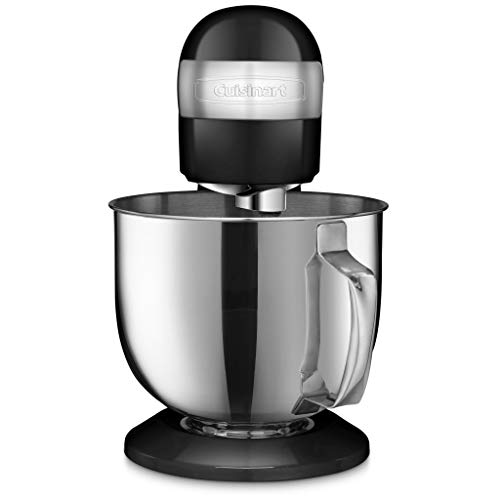
Cuisinart Stand Mixer SM-50, Onyx
Badge: Best Dark Finish
Strengths
- Same 12-speed, paddle-and-bowl specification as the White Linen version
- Dark Onyx finish hides the seasoning splashes meat mixing inevitably produces
- Full attachment set covers the bread and desserts served with the meat
Trade-offs
- No mechanical difference from the other SM-50 colours — the choice is cosmetic
- Dark finishes show flour dust and dried splashes as pale marks instead
- Same counter footprint as every other SM-50 variant
Mini spec box
- Speeds: 12
- Bowl: 5.5 quart stainless steel
- Attachments: Mixing paddle, chef’s whisk, dough hook
- Guard: Splash guard with pour spout
- Colour: Onyx
- Model: SM-50
Everything mechanical said about the White Linen SM-50 applies here without alteration: same twelve speeds, same paddle, same chillable stainless bowl, same splash guard. The Onyx version exists in this guide because meat mixing is untidy work and finishes are a practical decision, not vanity. Paprika, turmeric, tomato paste and beetroot-tinted sausage mixes all leave evidence, and a black machine simply shows less of a week’s cooking between deep cleans.
That practicality cuts both ways, and honesty requires the other side: dark finishes display pale dust — flour from the breadcrumbs, dried salt spray — as clearly as white displays paprika. Neither colour changes the cleaning itself, only what you notice. Choose Onyx if your kitchen scheme is dark, your cooking is vivid, or the machine will live permanently on the counter where it must sit comfortably among other black appliances.
For the meat work itself, use the discipline this model rewards. Chill the bowl, cube or grind the meat cold, mix on the lowest speeds that keep the mass moving, and stop early — machine mixing is so efficient that the gap between perfectly mixed and overworked is under a minute. The Onyx SM-50 in disciplined hands produces sausage filling with an even, professional bind that hand mixing rarely matches.
Best for: Busy, vivid cooking in a dark-schemed kitchen that keeps the mixer on display / Not suited for: Buyers expecting any performance difference from the other SM-50 colours
Check on Amazon to see the current listing for the Cuisinart SM-50 Onyx.
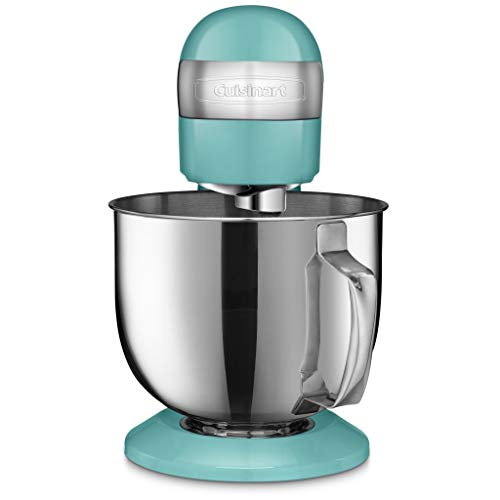
Cuisinart Stand Mixer SM-50, Periwinkle Blue
Badge: Best Colour Statement
Strengths
- Complete SM-50 specification: 12 speeds, paddle, whisk, dough hook and guard
- Periwinkle finish makes the machine a deliberate feature of the kitchen
- Stainless bowl chills for cold meat work regardless of the body colour
Trade-offs
- A distinctive colour is the hardest finish to match with future appliances
- Identical meat performance to the other three SM-50 listings
- Premium-position colour variants can carry their own listing quirks — check the current listing carefully
Mini spec box
- Speeds: 12
- Bowl: 5.5 quart stainless steel
- Attachments: Mixing paddle, chef’s whisk, dough hook
- Guard: Splash guard with pour spout
- Colour: Periwinkle Blue
- Model: SM-50
The Periwinkle Blue SM-50 is the same capable meat mixer as its White Linen and Onyx siblings, wearing the colour most likely to start conversations. That is not a trivial point for a stand mixer: these machines are heavy enough that they tend to live where they are placed, and a machine you enjoy looking at is a machine that stays on the counter, plugged in and ready — which is precisely where a meat mixer needs to be when a tray of mince and a free half hour coincide.
In use, expect the full SM-50 pattern. The paddle at low speed folds kebab mixtures, burger blends and sausage fillings to an even bind; the guard keeps the pour of ice water civilised; the bowl goes from freezer to mixer to dishwasher without complaint. Meatball mixtures with breadcrumbs and egg reach the correct, just-bound texture quickly, and the wide speed range above the meat settings serves the rest of the menu — whipped potatoes, meringues, dough for rolls — without a second machine.
The caution is purely about commitment. Periwinkle is a specific, memorable colour; kitchens change around appliances less often than appliances change, so buy it because you love it, not because it is novel this month. Functionally there is nothing to warn about that does not apply to the whole SM-50 family: respect working batch sizes, keep everything cold, and stop mixing early.
Best for: Cooks who want a permanent, colourful counter presence with full capability / Not suited for: Anyone planning a future kitchen in a clashing scheme
Check on Amazon to see the current listing for the Cuisinart SM-50 Periwinkle Blue.
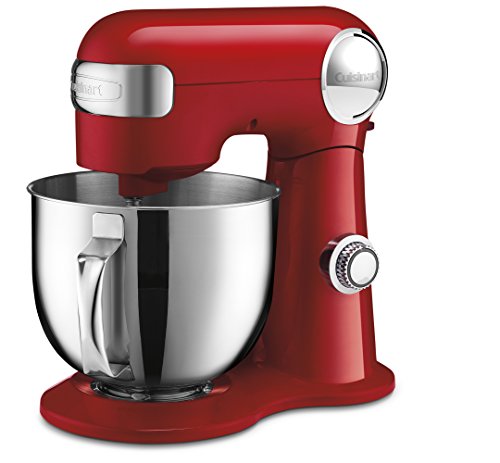
Cuisinart Stand Mixer SM-50, Ruby Red
Badge: Best Classic Finish
Strengths
- Full SM-50 meat specification with paddle, guard and chillable steel bowl
- Ruby Red is the easiest strong colour to match with other classic kitchen kit
- Twelve speeds span gentle meat folding and everyday baking alike
Trade-offs
- Functionally interchangeable with the other SM-50 colours in this guide
- Red finishes show pale flour and salt dust clearly
- Stand-mixer weight makes cupboard storage impractical for most owners
Mini spec box
- Speeds: 12
- Bowl: 5.5 quart stainless steel
- Attachments: Mixing paddle, chef’s whisk, dough hook
- Guard: Splash guard with pour spout
- Colour: Ruby Red
- Model: SM-50
Ruby Red is the traditional colour of serious kitchen machinery, and this SM-50 wears it with the specification to back the impression up. For meat work the story is the familiar, capable one: a flat paddle that folds rather than whips, a dozen speeds whose lowest settings are gentle enough for cold mince, a stainless bowl that chills beautifully, and a splash guard that accepts a slow pour of ice water while the paddle turns. Meatloaf for the week, meatballs for the freezer and sausage for the grill all come out of the same bowl with an evenness hand mixing struggles to repeat.
Why list a fourth colour at all? Because these are four separate verified listings and real buyers shop them separately — availability and listing terms differ by colour at any given moment, and a buyer set on the SM-50 should know every route to it. The reviews in this guide refuse to invent differences that do not exist; the red machine mixes meat exactly as the white, black and blue machines do, and any of the four is the correct purchase when its listing suits you best.
Use the red one as you would its siblings, with the cold discipline meat demands. One colour-specific note only: pale dust — flour, breadcrumb dust, salt — shows on red almost as clearly as paprika shows on white, so a quick wipe after mixing keeps the classic finish looking classic. Beyond that, the verdict is simple: this is a complete, capable meat mixer in the colour kitchens have loved longest.
Best for: Traditional kitchens wanting the proven SM-50 in its classic colour / Not suited for: Buyers who need colour-neutral understatement or cupboard storage
Check on Amazon to see the current listing for the Cuisinart SM-50 Ruby Red.

Hamilton Beach 6-Speed Electric Hand Mixer (62682G)
Badge: Best for Small Batches
Strengths
- Lowest speeds are gentle enough to fold seasoning through a small meatloaf mix
- Snap-on case keeps beaters stored with the machine for impromptu jobs
- Bowl-rest design lets you pause to add ingredients without a messy worktop
Trade-offs
- Beaters are the wrong geometry for large or stiff sausage batches — capacity is one modest bowl at a time
- Your hand and arm do the containing work a stand mixer’s bowl does
- Not a route to production sausage making, whatever the recipe promises
Mini spec box
- Speeds: 6, plus QuickBurst
- Motor: 250 watt (as stated in the listing title)
- Beaters: Traditional beaters
- Storage: Snap-on storage case
- Extra feature: Bowl rest
Hand mixers in a meat guide need an honest frame, and here it is: this Hamilton Beach is for the single meatloaf, the dozen meatballs, the small test batch of a new sausage seasoning before you commit a whole shoulder to it. In a deep bowl, its lowest speeds fold salt, herbs, breadcrumbs and a splash of cold milk through a pound or so of mince evenly and quickly, without warming the mixture the way prolonged hand mixing does. For small households that will never make five pounds of sausage, that is not a compromise — it is the right-sized tool.
The details suit the job better than you might expect. Traditional beaters move a small mass of mince adequately at low speed, the bowl-rest feature lets you pause and scrape without laying greasy beaters on the counter, and the snap-on case means the whole kit lives in a drawer and appears in seconds. QuickBurst should be used sparingly with meat — a brief pulse to pull in a dry pocket of seasoning, never a sustained blast, because speed is what warms and toughens mince.
Respect the ceiling and it performs; ignore it and it will tell you. A bowl crowded with several pounds of cold, stiff sausage meat will strain any hand mixer, slow the beaters and heat the mixture with friction. If your ambitions grow toward regular large batches, the stand mixers above are the honest upgrade path, and this machine retires gracefully to cakes, creams and test batches — the role it was always best at.
Best for: Small households, test batches and single meatloaves in a deep bowl / Not suited for: Large sausage batches or stiff, cold mixtures in quantity
Check on Amazon to see the current listing for the Hamilton Beach 62682G.
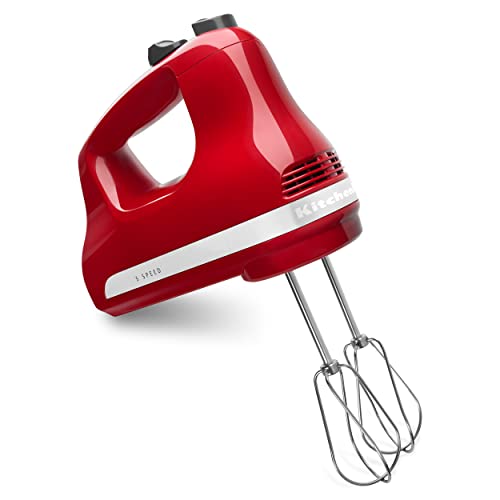
KitchenAid 5 Ultra Power Speed Hand Mixer, Empire Red (KHM512)
Badge: Best Compact Pick
Strengths
- Turbo Beaters pull a small mince mixture through evenly at low speed
- Lockable swivel cord stays clear of the bowl while you work around it
- Dishwasher-safe beaters simplify the least pleasant clean-up in meat cooking
Trade-offs
- Five speeds and a handheld format cap batch size firmly at the small end
- No storage case, so beaters live loose unless you organise them
- Empire Red is a bold finish for a machine bought for utility
Mini spec box
- Speeds: 5
- Beaters: Turbo Beaters, dishwasher-safe
- Cord: Lockable swivel cord
- Release: Easy-release button
- Colour: Empire Red
- Model: KHM512
The KitchenAid KHM512 plays the same small-batch role as the Hamilton Beach with a slightly tidier temperament. Its Turbo Beaters are shaped to move mixture through themselves rather than pushing a bow-wave ahead, and in a deep bowl of meatloaf mix that translates to seasoning reaching the bottom corners without heroic scraping. Five speeds are plenty when the whole job happens at the bottom two, and the jump between settings is predictable enough to use without looking down.
Meat work is where the swivel cord quietly earns its keep. You circle a bowl while mixing mince, repositioning constantly, and a cord that locks to your preferred side stops the trailing-across-the-rim problem that ends with cord in the mixture. Afterwards, the easy-release button drops the beaters into hot soapy water or the dishwasher without touching them — a hygiene nicety that matters more after raw meat than after cake batter.
Buy this as a compact all-rounder whose meat work is a useful sideline, not as a meat machine in disguise. It will mix a family meatloaf beautifully and season a test batch of sausage honestly, and it will struggle — audibly and thermally — if asked to do a stand mixer’s job. Cooks whose meat ambitions are modest and whose kitchens are small will find that trade entirely fair.
Best for: Compact kitchens and cooks whose meat mixing is occasional and small-scale / Not suited for: Regular sausage production or large, stiff batches
Check on Amazon to see the current listing for the KitchenAid KHM512 Empire Red.
Comparison Table
| Pick | Badge | Key attribute | Second attribute | Link |
|---|---|---|---|---|
| Cuisinart Stand Mixer SM-50, White Linen | Best Overall | 12 speeds, paddle included | 5.5 qt stainless bowl | Check on Amazon |
| Cuisinart Stand Mixer SM-50, Onyx | Best Dark Finish | 12 speeds, paddle included | Onyx finish, 5.5 qt bowl | Check on Amazon |
| Cuisinart Stand Mixer SM-50, Periwinkle Blue | Best Colour Statement | 12 speeds, paddle included | Periwinkle finish, 5.5 qt bowl | Check on Amazon |
| Cuisinart Stand Mixer SM-50, Ruby Red | Best Classic Finish | 12 speeds, paddle included | Ruby Red finish, 5.5 qt bowl | Check on Amazon |
| Hamilton Beach 6-Speed Electric Hand Mixer (62682G) | Best for Small Batches | 6 speeds + QuickBurst | Handheld, snap-on case | Check on Amazon |
| KitchenAid 5 Ultra Power Speed Hand Mixer, Empire Red (KHM512) | Best Compact Pick | 5 speeds, Turbo Beaters | Swivel cord, dishwasher-safe beaters | Check on Amazon |
The comparison that matters is format, not colour. The four SM-50 listings are one machine — pick the finish whose listing suits you — and the real decision is stand versus hand: stand for repeatable family batches with a paddle, hand for small, occasional jobs with no counter commitment. Everything else in the table is refinement of that single choice.
How to Choose a Mixer for Mixing Meat
Decide your true batch size first, and be honest rather than aspirational. Most home meat cooking is one to three pounds at a time: a meatloaf, a tray of meatballs, burgers for the family. That range is stand-mixer territory with room to spare and hand-mixer territory only at its lowest end. Hunters, sausage hobbyists and bulk freezer cooks work at five pounds and beyond, where even a stand mixer must split batches and a dedicated tub mixer starts to justify itself. Buying for the batch you make monthly beats buying for the batch you imagine making yearly.
Attachment geometry is the second filter. Meat wants a flat paddle: broad, folding, unhurried. Whisks incorporate air and tangle with mince; dough hooks knead rather than distribute. If a stand mixer’s listing does not confirm a paddle, it is not a meat mixer however powerful the motor sounds. Bowl material matters too — stainless steel chills, cleans and shrugs off years of use, and a bowl you can freeze for twenty minutes before mixing is a genuine quality feature for fat management.
Finally, weigh the machine’s second life. A stand mixer that mixes meat on Sunday bakes on Saturday and whips on weekdays earns its counter space in a way a single-purpose tub never will in a small kitchen. Readers whose mixing questions run wider than meat often compare this guide with Best Metal Mixers for the bowl-and-beater materials angle, and with Best Mezcal Mixers when the evening moves from making dinner to mixing drinks.
How to Mix Ground Meat Properly: Cold, Fast and Just Enough
Set up cold before the meat leaves the fridge. Put the bowl and paddle in the freezer while you measure seasonings, breadcrumbs and any liquid. Cold equipment buys you working time: fat stays firm, the mixture stays below the temperature where it turns smeary, and your seasoning distribution improves because the mass stays loose instead of clumping. Spread the mince in the bowl rather than dropping it in one dense brick, sprinkle seasonings across the surface, and add binders and ice water in two additions rather than one flood.
Mix on the lowest speed that keeps the mass folding over itself. Watch the mixture, not the clock: you are finished when the colour is uniform, no pale unseasoned patches remain, and the meat has just begun to look slightly tacky and cohesive — strands pulling between pieces when you lift a spoonful. That tackiness is protein doing its binding work. Every second past it trades tenderness for bounce, so stop, scrape once if a corner looks unmixed, give two or three final turns, and stop again. Rest formed meatballs or loaf mixtures briefly in the fridge before cooking so the fat firms and shapes hold.
Clean like it matters, because with raw meat it does. Wash bowl, paddle and beaters in hot soapy water immediately, or use the dishwasher where the listing allows, and sanitise surfaces the mixture touched. Troubleshooting, in the pattern that solves most home meat-mixing problems:
- Problem: Meatballs crumble when cooked → the mixture was under-mixed or too warm, so the bind never formed. Mix until just tacky, chill formed balls before cooking, and make sure a binder (breadcrumb, egg) is actually in the recipe.
- Problem: Sausage texture is rubbery and bouncy → the mixture was overmixed or mixed too fast, over-developing the protein. Shorten mixing, drop a speed, and keep everything colder next batch.
- Problem: Seasoning tastes strong in one bite and absent in the next → dry spices were dumped in one spot. Sprinkle across the surface, mix, scrape the bowl once, and mix briefly again rather than mixing longer in one go.
Stand Mixer, Hand Mixer or Dedicated Tub: Which Meat Mixer Is Honest for You?
A dedicated tub meat mixer — a hand-cranked or motorised drum with paddles — is the specialist tool: it handles large, cold batches evenly and keeps hands out entirely. It is also large, single-purpose and, for most kitchens, idle fifty weeks a year. The stand mixers in this guide exist for the majority pattern: regular family batches, mixed perfectly well by a paddle, in a machine that earns its keep the rest of the week. The hand mixers exist for the lightest pattern of all, where meat mixing is a monthly meatloaf and storage space is the scarcest ingredient in the kitchen.
There is no dishonour in any tier, only in mismatching tier to habit. The cook who buys a tub for two meatloaves a year has bought a storage problem; the cook who expects a hand mixer to process a deer has bought a burnt motor. Let the recipes you actually repeated last year choose the machine, and let this guide’s badges — overall, small batch, compact — map to those habits rather than to ambition. If your browsing started with audio ambitions instead, Best Mic Mixers For Computer and Best Mic Mixers For Podcasts are the neighbouring shelves where the same word means something entirely different.
Seasoning Science: Salt, Fat and Binders in a Machine-Mixed Batch
Salt does more than season in mixed meat: given a few minutes of contact and gentle working, it dissolves surface proteins that make a batch bind — the difference between a meatball that holds and one that sheds crumbs in the pan. That is why even distribution matters more than total quantity, and why machine mixing, which distributes faster and colder than hands, produces a more consistent bind at the same salt level. Add salt with the other dry seasonings at the start so the machine can use the full mixing time to spread it.
Fat percentage decides juiciness more than any mixing trick. Very lean mince mixes quickly and cooks dry however carefully you handle it; fattier blends forgive small errors but smear if they warm up, which is why cold discipline appears in every section of this guide. Binders — breadcrumbs soaked in milk, egg, grated onion — insure texture by holding moisture, and they must be distributed as evenly as the seasoning, one more argument for the paddle’s folding action over hand squeezing. Change one variable per batch and take a note; machine mixing is repeatable enough that your notes actually converge on a house recipe.
Batch Planning: Freezing, Portioning and Scaling Machine-Mixed Meat
Machine mixing pays its second dividend after the mixing itself, because a repeatable batch is a freezable batch. Meatloaf mixture portions into lined loaf tins or muffin trays for individual servings; meatballs roll, chill on a tray until firm, then bag with the air pressed out; sausage mixture freezes in flat, portion-sized bags that thaw evenly and stack like books. Label every package with the recipe, the date and — the detail machine mixing makes meaningful — the exact seasoning quantities, because a batch you can reproduce is a batch you can improve deliberately next time rather than approximately.
Scaling recipes up and down is where bowl honesty from the reviews becomes arithmetic. A stand mixer’s working batch is a range, not a number: scale a recipe to sit in the middle of that range and the paddle folds it perfectly; scale to the brim and the same recipe mixes unevenly no matter how long you run it. When a celebration demands double, mix two batches back to back and combine them briefly by hand in a large cold bowl — the small extra step protects texture far better than one heroic, overfilled mix. For hand-mixer households, the same logic shrinks gracefully: halve the recipe, keep the deep bowl, and the small machine stays in its competent zone.
Food safety scales with batch size too, and deserves plain words. Keep raw mixtures refrigerated between stages, work with one batch out of the fridge at a time, and get formed products back into the cold promptly — a freezer session for meatballs should begin within the hour, not after lunch. Cook a small test patty from every new batch before forming the rest; it is the sausage maker’s oldest quality check, it takes three minutes, and it lets you correct salt and seasoning while correction is still possible. Machine mixing makes that test patty representative of the whole batch in a way hand mixing rarely does, which is one more reason the method earns its place.
Over a season, these habits compound into something valuable: a house repertoire. The meatloaf that freezes well, the meatball ratio the children request, the sausage seasoning adjusted across four documented batches into your signature — none of that requires professional equipment, only a mixer that mixes the same way every time and a cook who writes down what the machine cannot remember. That, more than any single specification, is what the stand mixers in this guide are really selling.
Common Buying Mistakes
Mistake one is buying by headline bowl size. A 5.5-quart bowl mixes perhaps half that volume of meat mixture well; shoppers who plan batches to the brim end up splitting them anyway, annoyed. Mistake two is paying for a whisk-led attachment set and assuming the paddle is included — for meat, the paddle is the product, and its presence in the listing is the first thing to verify. Mistake three is treating the four SM-50 colours in this guide as four different machines and agonising over phantom performance differences; they are one machine, and the correct colour is the one whose listing and look suit you.
Mistake four is expecting a hand mixer to grow into a sausage hobby. It will not, and forcing it shortens its life while warming the meat it fails to mix. Mistake five is the opposite snobbery: dismissing machine mixing as untraditional and hand-mixing warm, uneven batches out of principle. Cold, brief, even machine mixing is simply better food science for most home recipes. Finally, do not forget the exit costs — a stand mixer needs a permanent home on the counter or a strong owner; measure the space and the lift before the box arrives, not after.
Grinding at Home vs Buying Ground: What the Mixer Cannot Do
A mixer mixes; it does not grind, and the distinction decides the ceiling of your results. Shop-ground mince arrives with a texture set by the butcher’s plate and a fat distribution you did not choose, and the best paddle work in the world can only season what it is given. Home grinding — even a modest grinder attachment or a butcher willing to grind a chosen cut to order — puts particle size and fat percentage under your control, and machine mixing then distributes seasoning through a mixture that was designed rather than accepted. Coarse, loose grinds make rustic, juicy burgers and sausages with a distinct chew; fine grinds make the smooth, sliceable textures of deli-style sausages and terrines. The mixer treats both identically, which is exactly why the grinding decision matters more than any mixing decision after it.
Fat choice deserves the same deliberation. Back fat is the sausage maker’s standard for its clean flavour and firm texture; belly brings richness and softness; the fat already marbled through a shoulder sits between the two. Whatever you choose, the cold discipline in this guide protects it — fat that stays cold stays as distinct particles in the finished product, rendering slowly in the pan and basting the meat from inside, while fat that warmed during mixing coats everything thinly and leaves the cooked result greasy at the surface and dry in the middle. If a batch ever disappoints, audit the fat and the temperature before you audit the seasoning: in mixed meat, texture failures are almost always thermal, and flavour failures are almost always distribution — the two problems this guide’s method was built to separate.
Final Recommendation
Choose any of the four Cuisinart SM-50 listings as the core recommendation — White Linen, Onyx, Periwinkle Blue or Ruby Red are the same capable meat mixer, so decide by colour and current listing. Its paddle, chillable steel bowl and gentle low speeds produce the even, cold, just-bound mixtures that meatloaf, meatballs and sausage are built on.
If your meat mixing is genuinely small-scale, the Hamilton Beach and KitchenAid hand mixers are honest, drawer-friendly answers, provided you respect their batch ceiling. And if this guide clarified that your batches are large and frequent, take the hint the guide has given throughout: that is dedicated tub territory, and no pick here pretends otherwise.
Start with the Cuisinart Stand Mixer SM-50, White Linen if you want the safest all-round choice, consider the Cuisinart Stand Mixer SM-50, Onyx as the main alternative, and look at the Cuisinart Stand Mixer SM-50, Periwinkle Blue if its particular strengths match your kitchen better.
Frequently Asked Questions
Can you really mix meat in a stand mixer?
Yes — with the flat paddle, it is one of the best home methods. The paddle folds seasoning, salt and binders through mince evenly and quickly while the mixture stays cold, which hands cannot match for consistency. Use the lowest effective speeds, chill the bowl first, and stop as soon as the mixture looks uniform and just tacky.
How much meat can a 5.5-quart stand mixer bowl handle?
Comfortably less than the headline volume suggests. Once mince, breadcrumbs, egg and ice water are moving together, a batch in the region of half the bowl’s capacity mixes evenly; a brim-full bowl rides up the paddle, mixes unevenly and warms itself. When a recipe doubles, mix two batches — the second takes minutes and the quality difference is obvious.
Why does my machine-mixed sausage turn out rubbery?
Almost always overmixing, often compounded by warmth. Extended or fast mixing over-develops the meat proteins that create a springy, bouncy bite, and friction warms the fat. Mix colder, slower and shorter: chill bowl and meat, use the lowest speed that folds the mass, and stop the moment seasoning looks evenly spread.
Is a hand mixer acceptable for meatloaf?
For a single, modest meatloaf, yes. In a deep bowl at low speed, a hand mixer distributes seasoning and binder through a small batch evenly and with less warming than prolonged hand mixing. It is not suitable for large or stiff sausage batches, and this guide labels the hand mixers as small-batch picks for exactly that reason.
Do I need a dedicated meat mixer instead?
Only if your batches are large or very frequent — regular five-pound sausage sessions, game processing, or production for a big freezer. Below that pattern, a paddle-equipped stand mixer matches the results for home recipes and works all week at other jobs. The honest dividing line is habit, not snobbery about tools.
How should I clean a mixer after raw meat?
Immediately, and thoroughly. Wash the bowl, paddle and any beaters in hot soapy water or the dishwasher where the listing permits, wipe the mixer head and splash guard, and sanitise the worktop area the mixture touched. Meat residue left to dry on a paddle is both a hygiene problem and a stubborn cleaning job, so the five minutes now saves twenty later.


