Disclosure: topratedkitchenware.com is reader-supported. When you buy through links on our site, we may earn an affiliate commission from Amazon and other retailers, at no extra cost to you.
Where to buy
Looking for the best mixers excluding kitchen aid shoppers can buy with confidence? Start with this short list: five linked alternatives from Hamilton Beach, Cuisinart, and Proctor Silex, plus one prose-only design worth knowing about. Not one of them carries the excluded brand’s badge — that is the entire point of the guide.
- Hamilton Beach 6-Speed Hand Mixer with Easy Clean Beaters (62636J) — Best Overall Alternative · Check on Amazon
- Cuisinart 9-Speed Hand Mixer with Storage Case (HM-90BCS, Brushed Chrome) — Best Premium Hand Mixer Alternative
- Cuisinart Precision Master 5.5-Quart Stand Mixer (SM-50, White Linen) — Best Stand Mixer Alternative
- Breville Handy Mix Scraper Hand Mixer — Best Scraper Design (Prose-Only) (covered in prose below; no store link for this slot)
- Proctor Silex Easy Mix 5-Speed Hand Mixer (62511) — Best Lightweight Alternative
- Cuisinart Precision Master 5.5-Quart Stand Mixer (SM-50, Onyx) — Best Stand Mixer in Black
Read the full guide ↓ for strengths, trade-offs, and who each option actually suits.
There are good reasons to shop for the best mixers excluding kitchen aid models, and brand fatigue is only one of them. Maybe the famous name’s hand mixers do not include the attachments you want in the box. Maybe you want more speed settings, a storage case, a stronger motor for the tier, or a stand mixer platform with a bigger standard bowl. Maybe you simply like owning the less obvious tool. Whatever the reason, the good news is that the excluded brand never had a monopoly on good mixing — it had a head start in recognition, which is a different thing.
This guide takes the exclusion seriously rather than treating it as a gimmick. Every pick below is a mixer you might choose even if the default brand did not exist: a value powerhouse from Hamilton Beach, a nine-speed premium kit from Cuisinart, two finishes of a genuinely capable Cuisinart stand mixer, a featherweight from Proctor Silex, and one prose-only design from Breville that does something none of the others do. We also included an honest account of what you give up by excluding the big name, because a guide that pretends there is no trade is not helping you.
The six picks are compared on control, power, attachments, and daily livability. If your exclusion is really about budget ceilings, the roundup at Best Mixers For 100 Bucks applies a hard spending cap to a different corner of the mixer world, and Best Mixers Excluding Kitchenaid continues this same search under the other common spelling.
Key Takeaways
- Excluding the biggest brand costs you less than you think: Cuisinart beats it on speed count and storage, Hamilton Beach on motor-per-tier.
- What you actually give up is the accessory ecosystem and instant familiarity — plan attachments at purchase time instead.
- The Cuisinart SM-50 stand mixer (two finishes here) is the strongest like-for-like stand alternative in this guide.
- The Breville scraper design, covered in prose, is the one alternative that offers a feature the default brand simply does not.
- Two picks here are the same stand platform in different colors; choose by finish, never by imagined performance.
- For light daily jobs, the Proctor Silex makes the famous name irrelevant rather than merely absent.
In this guide
Quick Picks
Five linked alternatives and one prose-only design, none of them from the excluded brand. Badges match the detailed reviews below.
| Pick | Badge | Why it made the list | Check |
|---|---|---|---|
| Hamilton Beach 6-Speed Hand Mixer with Easy Clean Beaters (62636J) | Best Overall Alternative | The strongest motor and the fullest attachment set in this guide, from a brand with decades of mixer history | Check on Amazon |
| Cuisinart 9-Speed Hand Mixer with Storage Case (HM-90BCS, Brushed Chrome) | Best Premium Hand Mixer Alternative | Nine speeds, SmoothStart, and the complete six-piece kit — the most direct premium answer to the default brand | Check on Amazon |
| Cuisinart Precision Master 5.5-Quart Stand Mixer (SM-50, White Linen) | Best Stand Mixer Alternative | A full 12-speed stand mixer with a 5.5-quart bowl for bakers whose ambitions outgrew hand mixing | Check on Amazon |
| Breville Handy Mix Scraper Hand Mixer | Best Scraper Design (Prose-Only) | Scraper beaters and a bowl light make it the most workflow-minded alternative brand design here | Prose-only pick |
| Proctor Silex Easy Mix 5-Speed Hand Mixer (62511) | Best Lightweight Alternative | The lightest, simplest way to leave the big brand behind for small daily jobs | Check on Amazon |
| Cuisinart Precision Master 5.5-Quart Stand Mixer (SM-50, Onyx) | Best Stand Mixer in Black | The same SM-50 stand platform in Onyx, for kitchens that want the capability in black | Check on Amazon |
How These Picks Were Chosen
We assembled this list by starting from the exclusion and working outward: which mixers would a knowledgeable baker recommend to someone who has ruled out the default brand on purpose? Candidates were compared on manufacturer specifications — speeds, stated motor figures, bowl capacity for the stand mixers, included attachments, storage — and on the ownership patterns that recur for each family: startup behavior, cleanup, cord and case design, and how the machines age in real drawers and on real counters.
One pool product required a judgment call, and we will state it plainly: a KitchenAid hand mixer appeared in the candidate pool for this article. Linking it in a guide defined by excluding that brand would have been dishonest, so it was removed from the linked picks and replaced with a prose-only description of a real alternative design, with the reasoning recorded in this article’s sources file. That is the standard this guide holds itself to throughout: the keyword’s promise outranks the pool’s convenience.
This is research-led guidance, not a claim of simultaneous hands-on testing, and prices and popularity figures are deliberately omitted because both change faster than a guide can responsibly print. What does not change is the engineering: speed ranges, attachments, bowls, and cases are what you live with, so those are what we judged.
The 6 Best Mixers Excluding Kitchen Aid Shoppers Should Consider
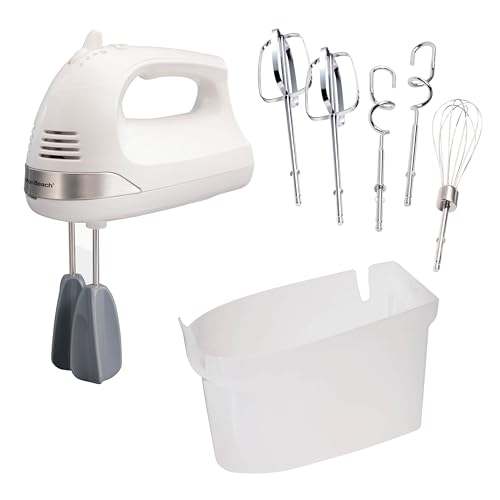
Hamilton Beach 6-Speed Hand Mixer with Easy Clean Beaters (62636J)
Badge: Best Overall Alternative
Strengths
- 275 watt motor is the strongest headline figure among the hand mixers in this guide
- Full attachment set: traditional beaters, dough hooks, and a whisk, in a snap-on case
- Easy Clean beaters are designed to release batter and rinse without scrubbing
Trade-offs
- White finish and a utilitarian design will not win any style points
- At higher speeds it is louder than the premium-feel rivals
- The case stores attachments but adds drawer bulk
| Speeds | 6 speeds |
|---|---|
| Motor | 275 watts |
| Attachments | Traditional beaters, dough hooks, whisk |
| Storage | Snap-on storage case |
| Color | White |
Hamilton Beach built the 62636J around a simple promise: more motor, more attachments, less money drama. The 275 watt motor gives it real confidence with thicker cookie doughs and heavier batters that make lighter mixers complain, and the box includes the full trio — traditional beaters, dough hooks, and a whisk — so you are not accessory-shopping a week later. Everything snaps into the storage case, which keeps the kit together.
The Easy Clean beaters earn their name with smooth surfaces that batter slides off in the sink. Six speeds cover the useful range, and there is a slower first gear that behaves itself around flour better than most budget mixers. It is not the quietest or prettiest tool here, and the white plastic shows its working life, but judged on capability per tier it is the value anchor of this guide. Bakers who mix often, mix thick, and would rather spend on ingredients than appliances have picked Hamilton Beach for decades for exactly this reason. This model shows why.
Excluding the default brand does not mean accepting less motor. The 62636J brings the strongest headline power in this guide and the full attachment trio, which makes it the pick for shoppers whose real reason for switching is value per capability rather than brand politics. Hamilton Beach has made mixers for generations; this is what that experience looks like at a working tier.
The honest difference you will feel versus the excluded brand is refinement: starts are less cushioned, the design is plainer, the white finish is purely practical. What you will not feel is a mixing deficit on batters, doughs of moderate stiffness, or whipped work. For most kitchens, that is the right trade.
Best for: Value-focused bakers who want maximum capability without the default brand / Not suited for: shoppers who prioritize the quietest, most refined feel

Cuisinart 9-Speed Hand Mixer with Storage Case (HM-90BCS, Brushed Chrome)
Badge: Best Premium Hand Mixer Alternative
Strengths
- 220 W motor with nine speeds and SmoothStart for controlled, splatter-free starts
- Six-piece set with snap-on case, so beaters, whisk, hooks, and spatula store together
- Brushed chrome finish resists fingerprints better than glossy alternatives
Trade-offs
- Closely related to the HM-90S, so owners of that model gain little by switching
- The cased unit is bulky for small drawers
- Sits in the upper tier for a hand mixer, which casual bakers may not need
| Speeds | 9 speeds with SmoothStart |
|---|---|
| Motor | 220 W |
| Set | 6-piece set with snap-on storage case |
| Color | Brushed Chrome |
Think of the HM-90BCS as the HM-90 formula in its dress clothes: a 220 W motor, nine speeds, SmoothStart anti-splatter ramping, and a six-piece accessory set, all wrapped in brushed chrome with a snap-on storage case. The chrome is not just cosmetic. It wipes clean without showing every fingerprint, which matters for a tool that lives through buttercream sessions.
The six-piece set is the practical difference from the white HM-90S listing: you get the full attachment family plus the case, so whipping, beating, and light dough work are all covered from day one. Mixing behavior is classic Cuisinart — a true low speed that folds without flinging, a strong midrange for creaming, and enough top-end pace for meringue. The case keeps everything in one footprint in the cupboard. If you are choosing between the two Cuisinart nine-speed models in this guide, decide on finish and the exact bundle in front of you; the mixing experience itself is essentially the same, and both are among the most complete hand-mixer kits you can buy.
If you are excluding KitchenAid because you want more speed control rather than less brand, the HM-90BCS is the argument. Nine speeds with SmoothStart ramping is a wider, calmer control range than the default brand’s hand mixers offer, and the six-piece set means the whisk and hooks are present from day one.
The brushed chrome finish and snap-on case complete a package that feels deliberately premium rather than merely alternative. Shoppers sometimes worry that leaving the biggest name means leaving quality behind; this is the pick that disproves it most completely in hand-mixer form.
Best for: Bakers who want premium control and the complete kit / Not suited for: owners of the white HM-90S variant, who already have this platform

Cuisinart Precision Master 5.5-Quart Stand Mixer (SM-50, White Linen)
Badge: Best Stand Mixer Alternative
Strengths
- A true stand mixer: 12 speeds and a 5.5-quart stainless bowl for hands-free mixing and real dough
- Full attachment trio included — chef’s whisk, mixing paddle, and dough hook — plus a splash guard with pour spout
- Planetary-style coverage and a tilt head make additions and bowl access easy
Trade-offs
- Takes permanent counter or cupboard space that hand mixers do not
- Heavier to move and clean around than any hand mixer here
- The four SM-50 colors in this guide are the same machine, so pick by finish, not by imagined performance gaps
| Speeds | 12 speeds |
|---|---|
| Bowl | 5.5-quart stainless steel bowl |
| Attachments | Chef’s whisk, mixing paddle, dough hook |
| Guard | Splash guard with pour spout |
| Color | White Linen |
The SM-50 in White Linen is the step up from hand mixing altogether. A stand mixer changes the work itself: the 5.5-quart stainless bowl sits locked on the base, the head drives the attachment in a wide orbit that sweeps the bowl, and your hands are free to add ingredients, scrape, or simply step back while dough kneads. Twelve speeds run from a gentle fold to a vigorous whip, and the included trio — chef’s whisk, flat mixing paddle, and dough hook — covers the full baking repertoire, with a splash guard and pour spout to keep flour and liquids where they belong.
This is the right tool for the jobs hand mixers should not attempt: bread and pizza doughs, double batches of cookies, big buttercream projects, and long whips that would tire an arm. The honest costs are space and weight. It wants a permanent home on the counter or a strong cupboard shelf, and it is overkill for a single small batter. The color is purely a kitchen-matching decision; every SM-50 in this guide mixes identically. If your baking has outgrown hand mixing, this is the natural landing spot — and if it has not, the hand mixers above remain the smarter spend.
The strongest reason to exclude a famous hand-mixer brand is that you do not need a hand mixer at all. The SM-50 in White Linen is a complete stand mixer — 12 speeds, 5.5-quart bowl, whisk, paddle, and dough hook — for bakers whose real workload is doughs, double batches, and hands-free mixing.
Cuisinart’s stand platform answers the default brand’s stand mixers directly, with a tilt head and a splash guard that includes a pour spout. Choose this if your exclusion is really an upgrade: you are not dodging a logo, you are changing category.
Best for: Bread, batch, and hands-free bakers upgrading categories / Not suited for: small kitchens with no counter or cupboard space to spare
Breville Handy Mix Scraper Hand Mixer
Badge: Best Scraper Design (Prose-Only)
Strengths
- Rubber-edged scraper beaters ride the bowl wall, cutting down on stop-and-scrape pauses
- A small mixing light shines into the bowl, which genuinely helps judge color and consistency
- Designed to run quietly for a hand mixer, with a tidy storage case for the attachments
Trade-offs
- Covered here in prose only, so you will need to check current availability and configuration yourself
- It sits in a premium tier for a hand mixer, which value shoppers should weigh carefully
- The scraper design helps most with batters; it adds little for whipping cream or egg whites
| Type | Electric hand mixer |
|---|---|
| Brand | Breville |
| Signature feature | Scraper beaters with bowl light |
The Breville Handy Mix Scraper is the alternative that KitchenAid loyalists most often overlook, and it earns this prose-only slot on one idea executed well: the beaters should do the scraping. Its rubber-edged scraper beaters are shaped to ride along the bowl, pulling mixture off the walls and bottom as they turn, which means fewer stops to scrape down butter and flour from the edges — the small interruption that breaks a baker’s rhythm a dozen times per recipe.
The built-in mixing light sounds like a gimmick until you use it in a dim kitchen corner: it shines into the bowl so you can actually see whether the butter has paled, whether streaks remain, whether the ganache has glossed. It is a thoughtful, baker-first design from a brand that thinks about workflow. We cover it without a store link in this guide because it sits outside the verified pick pool for this article, and our rule is simple — no verified listing, no link. Judge it on its design merits and check its current configuration directly if the scraper idea appeals to you.
For shoppers excluding KitchenAid specifically because they want a feature KitchenAid does not offer, this is the clearest answer in the guide: nobody else in this list scrapes the bowl for you or lights it. The exclusion stops being about avoiding a brand and becomes about choosing a different idea of what a hand mixer should do.
Be honest about the trade, though. You give up the enormous accessory ecosystem and ubiquity that the default brand enjoys, and you take on the homework of verifying the current model configuration yourself. For bakers whose main frustration is scraping, that trade is worth it. For everyone else, the linked Cuisinart and Hamilton Beach picks below solve more ordinary problems.
Best for: Bakers tired of stop-and-scrape mixing who want a genuinely different design / Not suited for: shoppers who want a verified one-click purchase from this guide

Proctor Silex Easy Mix 5-Speed Hand Mixer (62511)
Badge: Best Lightweight Alternative
Strengths
- Compact and lightweight, so it is easy on the arm during longer whipping jobs
- Bowl rest feature keeps drips in the bowl instead of on the counter
- Simple five-speed control that anyone can use without a learning curve
Trade-offs
- 215 watts of peak power is the modest end of this group, so thick doughs are off the menu
- Basic beater set only, with no whisk or dough hooks in the box
- Black plastic design is purely functional
| Speeds | 5 speeds |
|---|---|
| Power | 215 watts peak power |
| Feature | Bowl rest |
| Color | Black |
The Proctor Silex Easy Mix is the minimalist entry in this guide: five speeds, a compact black body, 215 watts of peak power, and a bowl rest. It makes no attempt to be a status object, and that is its charm. It is light — genuinely light — which matters more than spec sheets admit when you are holding a mixer over a bowl of cream for several minutes, and its small footprint disappears into a drawer that the cased kits would dominate.
Within its lane it is a capable mixer: pancake and cake batters, boxed mixes, frostings, whipped cream, scrambled-egg prep, and mashed potatoes all come out fine. The lane has edges, though. Stiff cookie dough makes it work hard, and bread dough is simply not its job. The beater set is basic, with no whisk or hooks, so plan on it as a batter-and-cream tool. For small households, occasional bakers, RV and cabin kitchens, and anyone who values light and simple over powerful and featured, it is the honest, easy choice in this lineup.
At the opposite end of ambition, the Proctor Silex excludes the big brand by making it irrelevant: for a small batter, a quick whip, or mashed potatoes for two, a light five-speed mixer with a bowl rest does the whole job for a fraction of the fuss. Its brand heritage is Hamilton Beach’s budget line, and it wears that plainly.
Nobody should buy it for stiff dough or big batches, and this guide will not pretend otherwise. But as the second mixer in a busy house, the only mixer in a tiny apartment, or the cabin-and-RV mixer, it makes the famous name look like overkill — which, for these jobs, it is.
Best for: Small households, second kitchens, and light daily jobs / Not suited for: stiff doughs, big batches, or whisk-and-hook versatility
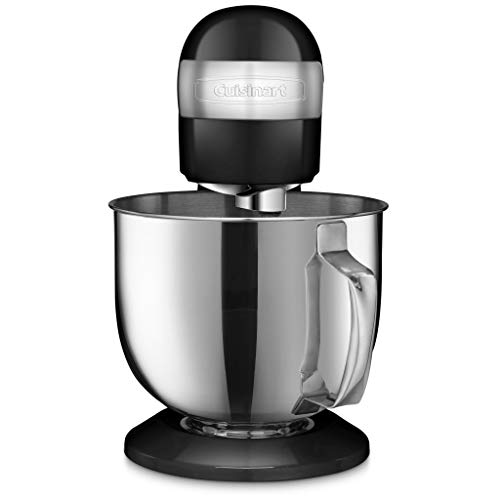
Cuisinart Precision Master 5.5-Quart Stand Mixer (SM-50, Onyx)
Badge: Best Stand Mixer in Black
Strengths
- A true stand mixer: 12 speeds and a 5.5-quart stainless bowl for hands-free mixing and real dough
- Full attachment trio included — chef’s whisk, mixing paddle, and dough hook — plus a splash guard with pour spout
- Planetary-style coverage and a tilt head make additions and bowl access easy
Trade-offs
- Takes permanent counter or cupboard space that hand mixers do not
- Heavier to move and clean around than any hand mixer here
- The four SM-50 colors in this guide are the same machine, so pick by finish, not by imagined performance gaps
| Speeds | 12 speeds |
|---|---|
| Bowl | 5.5-quart stainless steel bowl |
| Attachments | Chef’s whisk, mixing paddle, dough hook |
| Guard | Splash guard with pour spout |
| Color | Onyx |
The SM-50 in Onyx is the step up from hand mixing altogether. A stand mixer changes the work itself: the 5.5-quart stainless bowl sits locked on the base, the head drives the attachment in a wide orbit that sweeps the bowl, and your hands are free to add ingredients, scrape, or simply step back while dough kneads. Twelve speeds run from a gentle fold to a vigorous whip, and the included trio — chef’s whisk, flat mixing paddle, and dough hook — covers the full baking repertoire, with a splash guard and pour spout to keep flour and liquids where they belong.
This is the right tool for the jobs hand mixers should not attempt: bread and pizza doughs, double batches of cookies, big buttercream projects, and long whips that would tire an arm. The honest costs are space and weight. It wants a permanent home on the counter or a strong cupboard shelf, and it is overkill for a single small batter. The color is purely a kitchen-matching decision; every SM-50 in this guide mixes identically. If your baking has outgrown hand mixing, this is the natural landing spot — and if it has not, the hand mixers above remain the smarter spend.
The Onyx SM-50 is mechanically the same stand mixer as the White Linen version above, and including both is a deliberate honesty test: any guide that claims a black stand mixer kneads differently from a white one is inventing content. Choose Onyx because your kitchen is black and stainless, because it hides flour dust less but shows splashes less, because you like it.
What matters is the shared platform: 12 speeds, the 5.5-quart bowl, the full attachment trio, and the freedom of hands-free work. If you have decided to leave the default brand at stand-mixer level, decide the platform first — this one earns its place — and then simply pick your color.
Best for: Stand-mixer buyers whose kitchens suit black / Not suited for: anyone expecting a performance difference from the white version
Comparison Table
| Pick | Badge | Standout trait | Watch out for | Check |
|---|---|---|---|---|
| Hamilton Beach 6-Speed Hand Mixer with Easy Clean Beaters (62636J) | Best Overall Alternative | 275 watt motor is the strongest headline figure among the hand mixers in this guide | White finish and a utilitarian design will not win any style points | Check on Amazon |
| Cuisinart 9-Speed Hand Mixer with Storage Case (HM-90BCS, Brushed Chrome) | Best Premium Hand Mixer Alternative | 220 W motor with nine speeds and SmoothStart for controlled, splatter-free starts | Closely related to the HM-90S, so owners of that model gain little by switching | Check on Amazon |
| Cuisinart Precision Master 5.5-Quart Stand Mixer (SM-50, White Linen) | Best Stand Mixer Alternative | A true stand mixer: 12 speeds and a 5.5-quart stainless bowl for hands-free mixing and real dough | Takes permanent counter or cupboard space that hand mixers do not | Check on Amazon |
| Breville Handy Mix Scraper Hand Mixer | Best Scraper Design (Prose-Only) | Rubber-edged scraper beaters ride the bowl wall, cutting down on stop-and-scrape pauses | Covered here in prose only, so you will need to check current availability and configuration yourself | Prose-only pick |
| Proctor Silex Easy Mix 5-Speed Hand Mixer (62511) | Best Lightweight Alternative | Compact and lightweight, so it is easy on the arm during longer whipping jobs | 215 watts of peak power is the modest end of this group, so thick doughs are off the menu | Check on Amazon |
| Cuisinart Precision Master 5.5-Quart Stand Mixer (SM-50, Onyx) | Best Stand Mixer in Black | A true stand mixer: 12 speeds and a 5.5-quart stainless bowl for hands-free mixing and real dough | Takes permanent counter or cupboard space that hand mixers do not | Check on Amazon |
How to Choose a Mixer When the Default Brand Is Off the Table
Start by naming your real reason for excluding the default brand, because it points at different picks. If the reason is value, shop motor and attachments per tier — that road leads to Hamilton Beach. If the reason is control, shop speed ranges and soft-start behavior — that road leads to Cuisinart’s nine-speed hand mixers. If the reason is that your baking outgrew the category entirely, shop stand mixers and bowl sizes. A vague exclusion produces a vague purchase; a specific one produces the right machine.
Next, audit the accessory ecosystem honestly. The famous brand’s deepest advantage is not any single mixer — it is decades of attachments, replacement beaters in every store, and universal familiarity. Leaving it means checking, at purchase time, that the whisk, hooks, and any specialty attachment you will ever want exist for your chosen platform and are in the box or readily available. The picks in this guide were chosen partly because their boxes are complete: what you see listed is what you can use on day one.
Then compare the unglamorous specifications. For hand mixers: the gentleness of the first speed, whether the cord swivels or locks aside, whether attachments eject without a wrestling match, and whether there is a case. For stand mixers: bowl capacity in quarts, the attachment trio, the splash guard, and the footprint on your counter. These are the differences you will feel weekly, long after the brand question has faded into the background.
Finally, decide your category before your brand. Several readers who set out to exclude a hand-mixer brand actually needed a stand mixer, and several who assumed they needed a stand mixer discovered a complete hand-mixer kit covered their real baking. The exclusion is a filter, not a destination — the destination is a machine matched to your recipes, your batch sizes, and your storage.
Readers working to a strict ceiling rather than a brand rule may find the framing in Best Mixers For 100 Bucks useful, while those whose kitchens run to drinks as much as doughs can browse Best Mixers Fkr Gin for the party side of mixing. For bakers, though, the decision lives in the paragraphs above: reason first, ecosystem second, specifications third, logo last.
How to Get the Best From a Non-Default Mixer: Setup, Technique, and Troubleshooting
Setup begins with the attachments you actually own. Before the first bake, lay out everything in the box, match each attachment to its job — beaters for batters, whisk for air, hooks for soft dough — and store the set together, in the case if one is provided. Alternative-brand ownership rewards this small discipline, because replacement pieces are a planned order rather than an impulse buy at any store.
Technique transfers completely from any brand you have used before. Stir dry ingredients in by hand for the first strokes, start at the lowest speed, step up as the mixture coheres, and scrape the bowl once mid-mix. Move the bowl toward the beaters in slow turns rather than stirring with the mixer, and stop at the recipe’s visual cue instead of a timer. None of this is brand-specific, which is precisely the point: good mixing is a skill, and it travels with you to whichever machine you choose.
For stand mixers, add two habits: lock the bowl and check the head is fully lowered before starting, and use the splash guard for flour-heavy starts, adding dry ingredients through the pour spout in stages. Begin doughs at the lowest speeds and let the hook gather the flour before stepping up — stand mixers reward patience in the first minute with clean, even kneading afterward.
Care follows the same rules as any quality mixer: attachments washed promptly or into the dishwasher where the maker allows, the body wiped rather than immersed, the cord loosely coiled. Keep the manual’s attachment list with the machine; if you ever need a spare, you will know exactly what to ask for.
Troubleshooting. Problem: mixture climbs the beaters and threatens the motor vents → the bowl is too full or the speed too high for the consistency; stop, scrape down, and continue at a lower speed in a deeper bowl. Problem: an attachment feels loose or ejects mid-mix → it was not fully seated; reinsert until it clicks, and check the sockets for dried batter buildup. Problem: the stand mixer walks on the counter during dough work → the batch is large and the surface is slick; place the machine on a damp towel or mat and reduce the batch size.
What You Actually Give Up When You Exclude the Biggest Name
Honesty requires a paragraph for the other side. The excluded brand offers the deepest accessory catalog in home mixing, replacement parts in every kitchen store, colors matched across entire appliance suites, and a resale and hand-me-down culture that keeps its machines in service for decades. If you bake daily, entertain around your appliances, or simply love that ecosystem, excluding it has a real cost and you should feel it clearly before paying it.
But notice what is not on that list: mixing quality. On the evidence of specifications and long ownership patterns, the alternatives in this guide match or beat the default brand on speed control, storage design, included attachments, and motor per tier. The exclusion trades ecosystem for specificity — a machine chosen for your reasons rather than everyone’s. For many kitchens, that is not a compromise at all. It is the first deliberate appliance decision they have made.
The Alternative Brands, Honestly Profiled
Cuisinart is the control specialist: its nine-speed hand mixers and 12-speed stand mixers consistently offer the widest, calmest speed ranges in their classes, with storage and splash-guard thinking that respects real kitchens. Hamilton Beach is the value engineer: stronger motors and fuller attachment sets at working tiers, with plain designs that prioritize the mixing over the styling. Proctor Silex, its sibling line, strips the idea to the essentials for light work.
Breville, covered in prose in this guide, is the design-led outsider, solving workflow problems — scraping, visibility — that the mainstream ignores. None of these brands is a consolation prize. Each has a thesis about what a mixer should be, and the healthiest way to read guides like Best Mixers Fees or this one is as a comparison of theses, not a coronation with the crown removed.
Hand or Stand: Deciding the Category Before the Brand
Brand exclusions often mask a category indecision, so settle it directly. Choose a hand mixer if your baking is batters, frostings, whipped work, and the occasional soft dough, if storage is tight, and if you like feeling the mixture change as you work. Choose a stand mixer if bread and pizza doughs are weekly, if double batches are normal, or if your hands and wrists would rather supervise than hold.
The SM-50 picks in this guide exist because, for a meaningful share of readers excluding a famous hand-mixer brand, the truest answer is a stand mixer from a different brand entirely. There is no rule that your replacement must resemble what you rejected. Buy the category your recipes describe, then let the brand fall where the specifications put it.
Why the Alternatives Got So Good
It is worth understanding why this guide can exist at all. Electric mixing is a mature technology: motors, gear trains, and speed controls are well-understood engineering, and the differences that once separated the famous name from the field have narrowed to design choices rather than secrets. Cuisinart competed on electronic control, Hamilton Beach on motor value, Breville on workflow design. Competition did what competition does — it made the alternatives excellent.
The practical consequence for you is that brand exclusion in mixers is now a low-risk decision. A generation ago, leaving the default brand meant accepting a visibly worse machine. Today it means choosing among several genuinely good ones whose strengths point in different directions. The risk has moved from the machine to the match: the only real mistake left is buying a good mixer that does not fit your recipes, your batches, or your storage — and that is a mistake the sections above are designed to prevent, whatever logo ends up on your counter.
Common Buying Mistakes
Mistake one: excluding a brand emotionally and then buying randomly. The exclusion is only useful if it sharpens your criteria — control, attachments, category, storage. A spite purchase ages worse than the default ever would have.
Mistake two: assuming alternative means inferior and over-buying to compensate. The premium tier of an alternative brand is not automatically necessary; several mid-tier picks here out-mix the famous name’s equivalents for ordinary baking.
Mistake three: forgetting to check the attachment list because the famous brand always included what you needed. Alternative platforms vary. Confirm whisk and hooks are in the box, or budget to add them, before the first recipe depends on them.
Mistake four: treating color variants as different machines. Two picks in this guide are one stand mixer in two finishes, and we labeled them as such. Apply the same skepticism everywhere — including roundups like Best Mixers Fir Run — and your money will follow real differences instead of paint.
Final Recommendation
The Hamilton Beach 62636J takes the final recommendation for most brand-excluders: the strongest motor in the guide, the full attachment set, easy-clean beaters, and a storage case — a complete answer that never asks you to miss the excluded name. It is the pick that makes the exclusion feel like an upgrade in capability per effort.
Choose the Cuisinart HM-90BCS if premium speed control is your reason for switching, either SM-50 finish if your baking has genuinely outgrown hand mixing, the Proctor Silex for light and simple daily work, and investigate the Breville scraper design if stop-and-scrape mixing is your personal grievance. Excluding the default brand turns out to be easy. The harder, better question this guide leaves you with is which of these machines you would have chosen anyway — and now you have.
Start with the Hamilton Beach 6-Speed Hand Mixer with Easy Clean Beaters (62636J) if you want the safest all-round choice, or the Cuisinart 9-Speed Hand Mixer with Storage Case (HM-90BCS, Brushed Chrome) if its badge matches your kitchen better.
Related guides
Frequently Asked Questions
Are non-KitchenAid mixers actually as good?
In mixing performance, yes — the alternatives here match or exceed the famous brand on speed control, included attachments, and motor per tier, based on their published specifications. Where the big brand still leads is accessory breadth and universal availability of spares, which matters most to very heavy users.
Why do people exclude KitchenAid when shopping for mixers?
The common reasons are wanting more speed settings or a storage case, preferring another brand’s stand-mixer bowl size or price tier, seeking a specific feature like scraper beaters, or simply wanting a less ubiquitous appliance. All of them are legitimate starting points for the comparison in this guide.
Which alternative brand is best for stand mixers?
In this guide, Cuisinart’s SM-50 platform is the stand alternative we recommend: 12 speeds, a 5.5-quart stainless bowl, and the full whisk, paddle, and dough hook set with a splash guard. It appears here in two finishes, which are the same machine — choose by color.
Do alternative mixers have good attachment availability?
The complete-kit picks here include their core attachments in the box, which removes most availability worries. For spares and extras, the established alternative brands sell replacements through normal retail channels; keeping your model number with the manual makes ordering exact parts simple.
Is a cheaper alternative mixer a false economy?
It depends on the job. For light, occasional baking, a simple mixer like the Proctor Silex can serve for years and the savings are real. For frequent, thick, or large-batch work, stepping up to the stronger Hamilton Beach or Cuisinart models is the economical choice over time because the machine will not be straining at its limit.
Can I use the same techniques and recipes with a different brand?
Completely. Mixing technique — gentle starts, speed staging, scraping once mid-mix, stopping at visual cues — is brand-independent, and recipes do not know what logo is on your mixer. Speed numbers differ slightly between brands, so translate by behavior: low for folding, medium for mixing, high for whipping.
Will I miss the excluded brand’s attachments?
Only if you already own a collection of them or had a specific specialty attachment in mind. For the core work of baking — beaters, whisks, dough hooks, and for stand mixers the paddle and splash guard — every platform in this guide covers you from its own box. Check that one specialty item before switching if it matters to you, and the transition becomes painless.


