Disclosure: topratedkitchenware.com is reader-supported. When you buy through links on our site, we may earn an affiliate commission from Amazon and other retailers, at no extra cost to you.
Where to buy
The six models below are the verified picks for this guide to the best quality cookers in the countertop rice and grain cooker class. Each name links to its Amazon listing, where you can check the latest price on Amazon, confirm the current configuration, and read the newest owner feedback before you decide. Start with the Zojirushi NS-ZCC10 Neuro Fuzzy Rice Cooker and Warmer if you want the strongest all-round recommendation, .
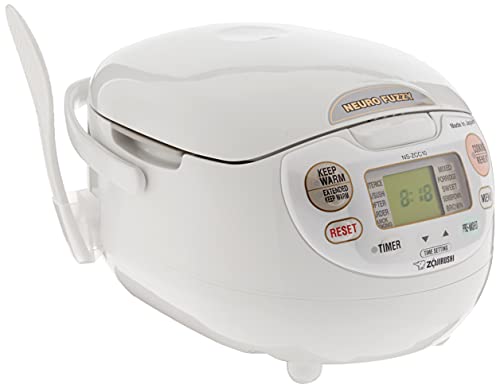
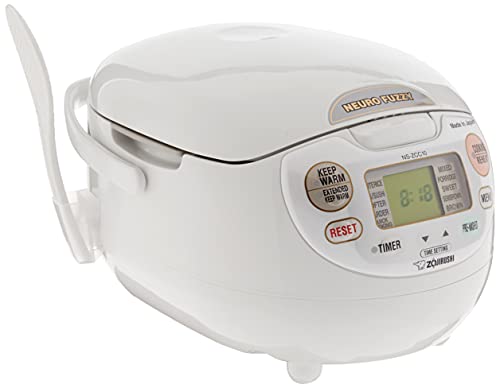
- Zojirushi NS-ZCC10 Neuro Fuzzy Rice Cooker and Warmer
- Zojirushi NS-TSC10 Micom Rice Cooker and Warmer
- Dash Mini Rice Cooker
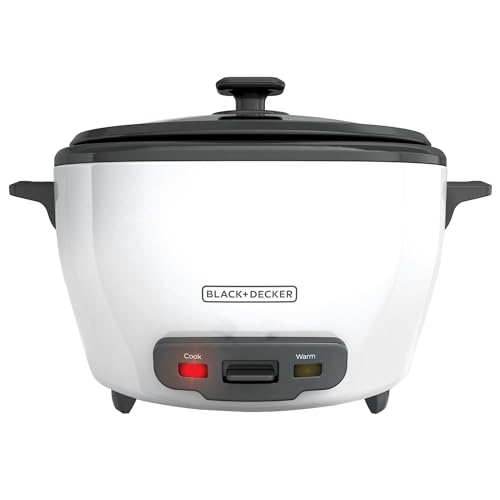
- BLACK+DECKER 16-Cup Rice Cooker RC516
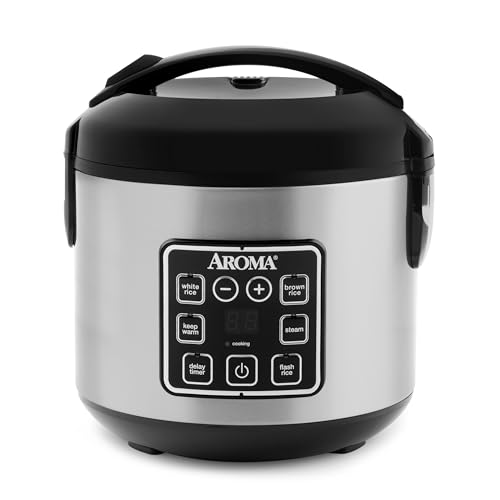
- Aroma Housewares ARC-363-1NGB Rice Cooker
- Aroma Housewares ARC-150SB Digital Rice Cooker
Read the full guide ↓ for what quality actually means in this category, the honest limitations of every pick, and the sizing checks that matter more than any feature list.
Searching for the best quality cookers sounds simple until you see how wide the word cooker stretches. It covers full ranges, pressure cookers, slow cookers, and the countertop machines that handle rice and grains every day. This guide is honest about its scope from the first page: the verified product pool behind it consists of countertop rice and grain cookers, so quality here is judged inside that class — the machines that cook rice, oatmeal, quinoa, and steamed food on a counter, week after week, for years. If your kitchen decision is really about a pressure cooker or a full range, the neighbouring research behind Best Quality Electric Pressure Cookers and Best Quality Range Cookers covers those categories separately, and you should start there instead. If, however, your daily cooking runs on rice and grains — as it does in a huge share of households — then this is the comparison that matters, because a quality rice cooker is one of the most-used appliances in the kitchen and one of the easiest to buy badly.
Quality in a rice cooker rarely announces itself on the box. The box talks about cup counts and function menus. Quality lives in less photogenic places: how evenly the pot heats, whether the lid seals well enough to keep rice moist without turning it gluey, how the keep-warm cycle treats rice held for an hour, whether the inner pot coating survives years of scooping, and whether the controls still make sense on a tired weeknight. A cheap cooker can make acceptable rice for a few months and then drift — scorching the bottom layer, drying out the top, or developing a lid that no longer sits true. A quality cooker keeps producing the same bowl in year three that it produced in month one. That consistency, more than any single feature, is what this guide rewards.
The six picks below were chosen to span the realistic ways people buy in this class. Two Zojirushi models represent the engineering-led end of the category, where computerised cooking logic adjusts the cycle as it runs. A tiny Dash model serves the one-person household that most guides ignore. A large BLACK+DECKER covers family batches with the simplest possible controls. Two Aroma models cover the straightforward middle — one compact and mechanical in spirit, one large and digital with extra functions. Every pick is a real, verified product with a confirmed listing; none was chosen to fill a price slot, and where a pick has a genuine weakness, the review says so plainly.
One more piece of honesty before the rankings. This is a research-led guide. The picks were compared on verified specifications, manufacturer documentation, design analysis, and the patterns that emerge from owner feedback over time. It does not claim hands-on laboratory testing, and it does not print star ratings or review counts, because those numbers change constantly and would be out of date before they helped you. What it offers instead is reasoning you can check: why each model earned its badge, what it gives up to earn it, and which household each one genuinely fits.
Key Takeaways
- Quality in a rice and grain cooker means consistency over years: even heating, a well-sealing lid, a durable inner pot, and a keep-warm cycle that does not dry rice out.
- The Zojirushi NS-ZCC10 is the best overall pick for households that eat rice often and want the cooker to manage the details automatically.
- Size honestly: a cooker rated by uncooked cups makes roughly double that volume cooked, and an oversized cooker makes worse small batches than a right-sized one.
- Simple one-touch models from BLACK+DECKER and Aroma suit cooks who value durability and zero learning curve over fine-grained control.
- The Dash Mini is the rare quality option sized for one person, dorm rooms, and small kitchens where a full-size cooker would sit unused.
- Read the scope note: this guide covers countertop rice and grain cookers, not pressure cookers or ranges, and links out to those categories where they belong.
In this guide
Quick Picks
Six verified cookers, six different jobs. The badge beside each model is used again in its detailed review, so you can jump straight to the pick that matches your household.
| Pick | Badge |
|---|---|
| Zojirushi NS-ZCC10 Neuro Fuzzy Rice Cooker and Warmer | Best Overall |
| Zojirushi NS-TSC10 Micom Rice Cooker and Warmer | Best Mid-Size All-Rounder |
| Dash Mini Rice Cooker | Best for One Person |
| BLACK+DECKER 16-Cup Rice Cooker RC516 | Best for Family Batches |
| Aroma Housewares ARC-363-1NGB Rice Cooker | Best Simple Pick |
| Aroma Housewares ARC-150SB Digital Rice Cooker | Best for Large Gatherings |
How These Picks Were Chosen
Every pick in this guide comes from a verified product pool: each model was confirmed against its manufacturer listing, its identity and specifications cross-checked, and its image taken from the official listing. No model appears here on the strength of a marketing claim, and no specification is printed unless it appears in the verified listing data. Where the listing does not state a figure — a wattage, a dimension — this guide leaves it out rather than guessing, and the mini spec boxes in the reviews follow the same rule strictly.
Within that pool, models were compared on the factors that separate a quality cooker from an adequate one. Heating approach came first: basic cookers simply run a heating element until a thermostat trips, while computerised models sense and adjust through the cycle, which shows up in the bowl as fewer scorched grains and more even texture. Pot and lid construction came second, because the inner pot is the part that wears, and the lid determines how much moisture the rice keeps. Controls and timers were weighed for real-life usefulness rather than menu length — a delay timer that lets you load the cooker in the morning is worth more than a dozen novelty programmes. Capacity was matched to household size instead of treated as a bigger-is-better contest. Finally, each model was read against the long-term patterns in owner feedback: the complaints that repeat across years of ownership, such as coating wear, lid issues, and keep-warm drying, counted far more than any single enthusiastic review.
The badges reflect those judgements. Best Overall went to the model with the strongest combination of cooking logic, build, and flexibility. The other badges name the specific job each remaining model does best, because a guide that ranks six different tools on one ladder misleads everyone below the top rung. Readers comparing speed-focused appliances as well will find the related work on Best Quick Cookers useful context for how cooking method, not marketing, decides how fast dinner actually is.
The 6 Best Quality Cookers for Rice and Grains
A note on scope, repeated because it matters: every detailed review below is a countertop rice and grain cooker. That is the class the verified pool covers, and within that class these six are the quality picks. None of them is a pressure cooker, a slow cooker in the crock sense, or a range, and none is presented as one.
Zojirushi NS-ZCC10 Neuro Fuzzy Rice Cooker and Warmer
Badge: Best Overall
Strengths
- Computerised Neuro Fuzzy logic adjusts the cooking cycle as it runs rather than following a fixed timer
- Automatic keep-warm and a delay timer cover the two scheduling jobs households actually use
- Zojirushi build quality and sealing are the benchmark this category is judged against
Trade-offs
- Sits in the premium tier of the category, so it only makes sense if rice is a regular part of your cooking
- Advanced logic means a slightly longer, less predictable cycle than a simple one-touch cooker
- White finish and footprint suit some kitchens better than others
| Brand | Zojirushi |
|---|---|
| Model | NS-ZCC10 |
| Cooking logic | Neuro Fuzzy |
| Functions in listing | Rice cooker and warmer, automatic keep-warm, delay timer |
The NS-ZCC10 earns Best Overall because it solves the central problem of rice cooking — variability — better than any simple cooker can. Rice changes with the season, the brand, how long it sat in the bag, and how carefully it was measured. A fixed-cycle cooker cannot respond to any of that. The Neuro Fuzzy logic in this model monitors the cooking process and adjusts as it goes, which in practice means the difference between a batch that is merely fine and a batch where the grains are distinct, tender, and evenly cooked from the top of the pot to the bottom. For households that eat rice several times a week, that consistency is the entire argument, and it is a strong one.
The supporting features are the ones that matter rather than a long novelty menu. Automatic keep-warm holds rice ready without the owner hovering, and the delay timer lets you load rice and water in the morning and come home to it cooked. Both sound mundane; both change how often the cooker actually gets used, which is the real measure of a kitchen appliance. The construction supports the electronics: Zojirushi lids and pots are built to keep sealing and heating evenly over years, and that durability is precisely what the word quality should mean in this category.
The honest limitation is commitment. This is a premium-tier machine bought for one job, and it does that job without the multi-function sprawl of cheaper rivals. If rice appears on your table twice a month, the engineering here is more than the habit justifies, and one of the simpler picks below will serve you just as happily. If rice is a staple, this is the cooker the rest of the guide is measured against.
Best for: households that eat rice several times a week and want set-and-forget consistency / Not suited for: occasional rice cooks, or anyone wanting one appliance to replace several others
Check on Amazon to confirm the current configuration and delivery options for your area.

Zojirushi NS-TSC10 Micom Rice Cooker and Warmer
Badge: Best Mid-Size All-Rounder
Strengths
- 5.5-cup size with a 1.0-litre pot matches the most common household batch
- Micom computerised cooking with clear LCD controls and a delay timer
- Same brand emphasis on sealing and even heating as the flagship pick
Trade-offs
- Still a premium-tier purchase relative to basic one-touch cookers
- Households cooking for large groups will find the capacity tight
- Control panel offers more than a complete beginner may want on day one
| Brand | Zojirushi |
|---|---|
| Model | NS-TSC10 |
| Capacity in listing | 5.5 cup, 1.0 litre |
| Controls | LCD controls, delay timer |
The NS-TSC10 is the Zojirushi for households that want the brand’s cooking intelligence in the size most kitchens actually need. Its 5.5-cup, 1.0-litre format covers the everyday reality of rice cooking — a family dinner, a couple of days of lunches — without the counter footprint or the minimum-batch awkwardness of a large machine. Micom control means the cooker manages the cycle electronically rather than by simple thermostat, and the LCD panel makes the state of the cook legible at a glance instead of a single anonymous light.
What separates this model from cheaper mid-size rivals is the same thing that separates its bigger sibling: the quality of the finished bowl and the expectation that it will still be producing that bowl years from now. Even heating protects the bottom layer, the lid design protects the moisture, and the delay timer protects your schedule. It is an appliance designed around repetition, and repetition is where quality either proves itself or falls apart.
The trade-off is positioning. It costs like a considered purchase because it is one, and very large households will outgrow its capacity at gatherings even if it suits them daily. Buyers who cook rice in bulk for events should look at the larger Aroma and BLACK+DECKER picks below; buyers who cook rice most days for a typical household will find this the most balanced machine in the guide. Readers planning a full 90-centimetre range kitchen, by contrast, are shopping a different category entirely — see Best Range Cookers 90cm for that separate decision.
Best for: most households wanting computerised consistency in an everyday size / Not suited for: very large families, or cooks who regularly batch-cook for events
Check on Amazon to confirm the current configuration and delivery options for your area.

Dash Mini Rice Cooker
Badge: Best for One Person
Strengths
- 2-cup cooked output from 1 cup uncooked is honestly sized for a single serving
- Removable ceramic nonstick pot is simple to clean and serve from
- Keep-warm function plus oatmeal, quinoa, and grain cooking widen its usefulness
Trade-offs
- Capacity is a hard ceiling — it cannot stretch to a second hungry person
- Basic controls offer none of the fine adjustment of computerised models
- Small pots are easier to overfill, which can cause messy boil-overs
| Brand | Dash |
|---|---|
| Model | Mini Rice Cooker |
| Capacity in listing | 1 cup uncooked / 2 cups cooked |
| Pot | Removable ceramic nonstick |
| Functions in listing | Keep warm; cooks oatmeal, quinoa, and grains |
Most rice cooker guides quietly assume a family. The Dash Mini exists for everyone else: the single cook, the dorm room, the office kitchenette, the small apartment where a full-size cooker would spend its life in a cupboard. Its verified capacity — one cup uncooked, two cups cooked — is exactly a generous single serving, and that honesty is its quality. Small batches are where big cookers perform worst, spreading a thin layer of rice across a wide pot and cooking it unevenly. A pot built for the batch cooks it properly.
The removable ceramic nonstick pot keeps the daily routine painless: cook, serve, rinse. Keep-warm holds a serving ready if dinner runs late, and the ability to handle oatmeal and quinoa turns a single-purpose gadget into a small breakfast-and-grains station. For a student or a first apartment, that range covers a surprising share of real meals.
Its limitation is absolute and should be respected: this cooker cannot grow with you. Two people, a recipe that doubles rice for fried rice tomorrow, a guest — all exceed it. Buy it as the right tool for one person’s current life, at a modest tier of the category, and it is one of the most satisfying picks in this guide. Buy it hoping it will stretch, and it will frustrate you within a week.
Best for: single cooks, students, dorm rooms, and very small kitchens / Not suited for: couples, families, or anyone who batch-cooks for leftovers
Check on Amazon to confirm the current configuration and delivery options for your area.

BLACK+DECKER 16-Cup Rice Cooker RC516
Badge: Best for Family Batches
Strengths
- 16-cup cooked capacity from 8 cups uncooked covers family dinners and gatherings
- One-touch operation with a steaming basket adds vegetables or proteins above the rice
- Removable non-stick bowl keeps cleanup proportionate to the batch size
Trade-offs
- Large footprint demands real counter or cupboard space
- One-touch simplicity means no delay timer or fine cycle control
- Small batches cook less evenly in a pot this wide
| Brand | BLACK+DECKER |
|---|---|
| Model | RC516 |
| Capacity in listing | 8-cup uncooked / 16-cup cooked |
| Included in listing | Steaming basket, removable non-stick bowl |
| Operation | One touch |
The RC516 is the family-batch answer in this guide, and its design philosophy is the opposite of the Zojirushi picks: instead of managing the cook electronically, it gives you a big, honest pot and a single control. Sixteen cups of cooked rice covers a family dinner with leftovers, a potluck contribution, or a week of meal-prep bases in one run. The steaming basket matters more than it looks — vegetables, dumplings, or fish steaming above the rice turn a side-dish machine into the centre of a simple dinner.
Quality here is mechanical rather than electronic. A removable non-stick bowl that survives regular family use, a lid that seats properly, a control that cannot be mis-set because there is only one setting — these are the virtues that keep an appliance in service for years in a busy household. There is also a resilience argument: the fewer systems a cooker has, the fewer systems can fail, and for many families that trade is exactly right.
The compromises are size and subtlety. It needs storage space, it will not delay-start dinner for you, and it is the wrong tool for a two-cup batch, which spreads too thin across its wide bowl. Pair it in your mind with the household it serves: regular rice for four or more people, cooked simply and in quantity. Households shopping in Ireland face different stock and plug considerations, which the separate guide behind Best Range Cookers Ireland treats in its own category context.
Best for: families and meal-preppers cooking large, simple batches / Not suited for: small households, or cooks who want timers and computerised control
Check on Amazon to confirm the current configuration and delivery options for your area.

Aroma Housewares ARC-363-1NGB Rice Cooker
Badge: Best Simple Pick
Strengths
- Compact format covering 2 to 6 cups cooked suits couples and small families
- Works as a rice cooker, steamer, and multicooker without a complicated panel
- Straightforward operation keeps the learning curve at effectively zero
Trade-offs
- No advanced cooking logic, so results depend more on your water measurement
- Capacity tops out quickly for gatherings
- Fewer scheduling features than the digital picks in this guide
| Brand | Aroma Housewares |
|---|---|
| Model | ARC-363-1NGB |
| Capacity in listing | 3 cups uncooked / 6 cups cooked, 2–6 cups range |
| Functions in listing | Rice cooker, steamer, multicooker |
The ARC-363-1NGB represents the long-running Aroma formula: a compact cooker that handles rice, steaming, and simple multicooking for a couple or small family, in a 2-to-6-cup cooked range that matches how such households actually eat. It does not ask you to learn a control system. You measure, you start it, and dinner’s foundation handles itself while you cook everything else.
There is a genuine quality argument for this simplicity. Aroma has sold variations of this design for years because the design works: a sensible pot, a functioning steamer, and controls a guest or a teenager can operate without instructions. For renters, first kitchens, and anyone replacing a cooker that annoyed them with menus, that clarity is worth more than features. It is also the natural gift pick in this guide — nobody needs a tutorial to use it.
Be clear about what you are giving up. Without computerised adjustment, your water ratio does the heavy lifting, and sloppy measuring shows in the bowl. The capacity ceiling arrives fast if your household grows. And if you want dinner timed to the minute you walk in, the digital Aroma below or the Zojirushi picks serve that plan better. Within its brief — simple, compact, dependable — this is a well-judged machine.
Best for: couples, small families, first kitchens, and anyone who wants zero learning curve / Not suited for: growing households, or cooks who rely on delay timers and precise cycles
Check on Amazon to confirm the current configuration and delivery options for your area.
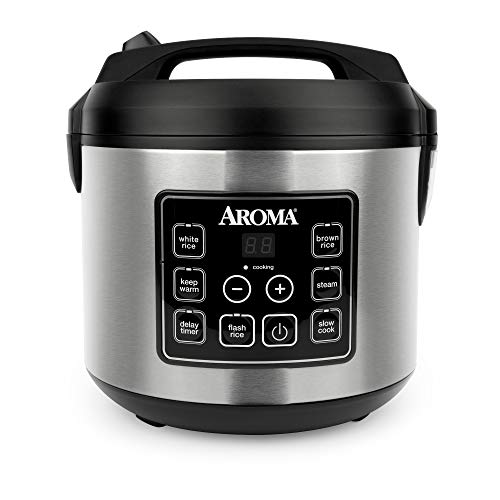
Aroma Housewares ARC-150SB Digital Rice Cooker
Badge: Best for Large Gatherings
Strengths
- 20 cups cooked from 10 cups uncooked is the largest capacity in this guide
- Digital controls add slow cooking and food steaming beyond basic rice work
- Stainless steel exterior suits heavy use and wipes down easily
Trade-offs
- The largest footprint here — storage must be planned, not hoped for
- Small everyday batches are not its strength despite its flexibility
- Digital panel is more to learn than the one-touch picks
| Brand | Aroma Housewares |
|---|---|
| Model | ARC-150SB |
| Capacity in listing | 10 cups uncooked / 20 cups cooked |
| Functions in listing | Digital rice cooker, slow cooker, food steamer |
| Exterior | Stainless steel |
The ARC-150SB closes the guide at the opposite end from the Dash Mini: twenty cups of cooked rice, digital controls, and a function set that stretches into slow cooking and steaming. This is the cooker for the household that hosts — extended family dinners, team meals, community events, holiday sides — and for serious meal-preppers who cook grain bases in genuine bulk. Its stainless steel exterior is a practical choice at this size, shrugging off the wiping-down that a heavily used large appliance constantly needs.
The digital layer earns its place here in a way it might not on a small cooker. At large volumes, a slow-cook function and proper steaming expand the machine from a rice appliance into a second cooking station that frees the stove during exactly the crowded meals it was bought for. That versatility, at a large household’s scale, is a quality of life improvement rather than a gimmick.
Size discipline still applies. A twenty-cup machine making a two-cup Tuesday batch is a mismatch — large pots want large loads — and its storage footprint is the biggest commitment in this guide. Buy it because your cooking regularly fills it, and it will feel like the hardest-working appliance you own. Buy it just in case, and it will mostly store air. UK readers should note this is a US-market listing; the separate research at Best Range Cookers Uk covers the UK category context for larger cooking appliances.
Best for: hosts, large families, and bulk meal-preppers / Not suited for: small households, or anyone short on storage space
Check on Amazon to confirm the current configuration and delivery options for your area.
Comparison Table
The table below lines the six picks up on the attributes the verified listings actually state. Where a listing does not publish a figure, the honest entry would be a blank — so use the detailed reviews above for each model’s confirmed specification box rather than expecting invented numbers here.
| Pick | Badge | Listing |
|---|---|---|
| Zojirushi NS-ZCC10 Neuro Fuzzy Rice Cooker and Warmer | Best Overall | Check on Amazon |
| Zojirushi NS-TSC10 Micom Rice Cooker and Warmer | Best Mid-Size All-Rounder | Check on Amazon |
| Dash Mini Rice Cooker | Best for One Person | Check on Amazon |
| BLACK+DECKER 16-Cup Rice Cooker RC516 | Best for Family Batches | Check on Amazon |
| Aroma Housewares ARC-363-1NGB Rice Cooker | Best Simple Pick | Check on Amazon |
| Aroma Housewares ARC-150SB Digital Rice Cooker | Best for Large Gatherings | Check on Amazon |
Read the table as a sizing and philosophy map. The two Zojirushi models compete on cooking intelligence. The Dash competes on being correctly small. The BLACK+DECKER competes on simple volume, the compact Aroma on simple everyday use, and the large Aroma on volume plus digital flexibility. There is no row in this table that is best at everything, which is exactly what an honest comparison of real products looks like.
How to Choose the Right Cooker
Start with batch size, not cup marketing. Rice cooker capacity is stated in uncooked cups, and rice roughly doubles as it cooks. A 5.5-cup cooker therefore produces around eleven cups of cooked rice at full load — far more than most families eat at a sitting. Work backwards from your real plate: one cup uncooked serves roughly two modest portions. Most households of two to four people live happily in the 3-to-6-cup uncooked range, and only regular hosts or meal-preppers need the 8-to-10-cup class. Oversizing is the most common quality mistake in this category, because a large pot cooking a small batch spreads the rice thin, heats it unevenly, and makes the keep-warm cycle dry it out faster.
Decide how much thinking you want the cooker to do. One-touch cookers run a simple cycle and reward accurate measuring. Micom and fuzzy-logic cookers sense and adjust, forgiving small measuring errors and handling mixed grains and older rice more gracefully. Neither is morally better. If you cook the same rice the same way every week, simplicity serves you and costs less in the tier structure of the category. If your grains vary — jasmine one night, brown rice the next, oatmeal on weekends — computerised control earns its premium tier by absorbing that variation for you.
Judge the pot and lid before the programme list. The inner pot is the wear item: look for a coating or ceramic surface in good order, a pot heavy enough to sit flat and heat evenly, and a shape your serving spoon can actually reach into. The lid decides moisture retention, and moisture retention decides texture. A cooker with twelve programmes and a sloppy lid will lose to a cooker with two programmes and a good seal every single week you own it.
Treat keep-warm as a real feature, not a checkbox. Households that eat in shifts live on keep-warm. A good cycle holds rice ready without cooking it further into mush or drying the surface. Equally, respect its limits: rice held for many hours declines in texture and should be refrigerated for food safety rather than parked in the cooker indefinitely. If your routine involves loading the cooker hours ahead, prioritise a delay timer over extra cooking programmes — it will change your weekdays more.
Match the machine to the counter. Measure the cupboard or counter space before ordering, including the height the lid needs to open. Large cookers fail households through storage more often than through cooking. And keep category boundaries straight: if your real need is pressure cooking speed or a full range, no rice cooker in this guide substitutes for it, which is why this site keeps those guides separate rather than blurring the categories together.
How to Use, Clean, and Maintain a Rice and Grain Cooker
For a standard batch: measure rice with the cup supplied or a consistent measure of your own, rinse until the water runs mostly clear to remove surface starch, add water to the pot’s marked line for that many cups, level the rice, close the lid, and start the cycle. Leave the lid shut for several minutes after the cycle ends so the rice finishes steaming and firms up; then fluff with a paddle rather than a metal spoon, which protects the pot surface and separates the grains instead of mashing them.
For brown rice and heartier grains: expect longer cycles and slightly more water. Computerised cookers handle much of this automatically; on one-touch models, a short soak before starting improves texture noticeably. For oatmeal and quinoa in the smaller picks, watch the first batch closely — starchy, bubbly grains can spit through the steam vent if the pot is overfilled, and staying below the marked maximum is the whole secret.
- Wipe the outside of the inner pot dry before placing it in the cooker; water on the heating plate causes spitting and uneven contact.
- Keep the steam vent and lid gasket clean — dried starch there is the main cause of odd textures and odours.
- Wash the inner pot with a soft sponge, never abrasive pads, to protect its surface.
- Leave the lid ajar in storage so the interior dries fully and stays fresh-smelling.
- Descale the heating plate area gently if mineral spots build up from hard water.
Troubleshooting. Problem: rice is scorched on the bottom → check the water ratio first, then make sure the pot exterior was dry and seated flat; repeated scorching on a simple cooker usually means the batch was too small for the pot. Problem: rice is wet and gluey on top → you likely lifted the lid mid-cycle or skipped the resting time; let the next batch rest, lid closed, before fluffing. Problem: the cooker boils over through the vent → the pot was overfilled or the rice was not rinsed; reduce the batch and rinse until the water runs clearer.
What Quality Actually Means Over Five Years of Ownership
Review culture judges appliances in their first week. Ownership judges them in their third year. The quality signals that predict a long, happy life with a rice cooker are unglamorous: a pot surface that still releases rice cleanly after hundreds of batches, a hinge and lid that still align, a cord and housing that tolerate daily handling, and controls whose markings remain legible. This is why this guide weights brand track record and design conservatism so heavily. Zojirushi’s reputation rests on exactly this longevity; BLACK+DECKER and Aroma earn their places through simple designs with little to fail.
It is also why the cheapest possible cooker is usually the expensive choice. A cooker replaced twice in five years costs more — in money, in landfill, and in mediocre rice — than one quality cooker bought once. Within this guide’s tier structure, the premium picks justify themselves to daily rice eaters on lifespan alone, while the simpler picks justify themselves to everyone else by having almost nothing in them that can break.
Cooking More Than Rice: Getting Full Value From the Pot
A quality cooker quietly expands beyond its name. The steaming baskets on the BLACK+DECKER and Aroma picks turn rice time into vegetable, dumpling, or fish time, stacking a side dish over the main one with no extra pan. Oatmeal and quinoa in the Dash Mini convert a single-purpose purchase into a breakfast routine. The large Aroma’s slow-cook function absorbs soups and braises on days the stove is crowded. None of this makes these machines multicookers in the pressure sense, and this guide will not pretend otherwise — but a cooker used for four jobs earns its counter space in a way a cooker used for one job must justify differently. When you evaluate any pick above, count the jobs it will genuinely do in your kitchen, not the jobs printed on its box.
Rice Varieties, Water Ratios, and Why Cooker Choice Changes the Result
Long-grain white rice is the forgiving case: it wants a moderate amount of water, separates cleanly, and tolerates small measuring errors on any cooker in this guide. Jasmine rice rewards a slightly lighter hand with water and punishes excess by turning soft and clumped. Brown rice is the demanding case — its bran layer slows absorption, needs more water and considerably more time, and exposes the difference between a cooker that simply heats and a cooker that manages a long, staged cycle. This is the practical argument for the computerised Zojirushi picks: not that a simple cooker cannot cook brown rice, but that the margin for error narrows, and the machine absorbs the difference instead of serving it to you.
Short-grain and sushi-style rice sit at the other extreme, where surface starch is a feature rather than a flaw and rinsing becomes a judgement call about how sticky you want the result. Sticky, glutinous rice for desserts and certain regional dishes needs its own approach again, often with soaking. The lesson for buyers is to match the cooker to the grain you actually eat most. A household living on brown rice and mixed grains will feel the benefit of Micom or fuzzy-logic control every week. A household cooking one reliable white rice will get years of satisfaction from the one-touch Aroma or BLACK+DECKER, and the money difference between the tiers is better spent on good rice itself.
Water measurement deserves its own warning because it causes more disappointment than any hardware fault. Use the same measure for rice and water, fill to the pot’s line for the number of cups you added rather than trusting a generic ratio from the internet, and remember that rinsed rice carries water into the pot with it. Older, drier rice absorbs more; freshly bought rice absorbs less. When a batch disappoints, change one variable at a time — a quarter cup of water, a rinse more or less thorough, a longer rest — and note the result. Three batches of notes will teach you your cooker and your rice better than any review, including this one.
Energy, Counter Space, and the Real Cost of Ownership
A rice cooker is among the most economical cooking appliances in the kitchen for the job it does, heating a small enclosed pot rather than an oven cavity or a large hob ring, and its keep-warm draw is modest compared with reheating. The real ownership costs are elsewhere: counter or cupboard space surrendered every day, the inner pot as the eventual wear item, and the discipline of cleaning the lid and vent before starch residue becomes odour. When comparing the picks in this guide, count those costs honestly. The large Aroma and BLACK+DECKER demand storage that small kitchens feel daily; the Dash Mini demands almost none. The premium Zojirushi models ask more of your budget tier and repay it in years of service; the simple models ask almost nothing and repay it in having almost nothing to fail. Quality, in the end, is the match between what a cooker asks of you and what your household is glad to give it.
Common Buying Mistakes
- Buying by cooked-cup headlines. Capacity is rated uncooked; misreading it doubles or halves the size you actually bring home.
- Oversizing for imaginary guests. The cooker you use daily should fit your daily batch; borrow capacity thinking for the two parties a year, not the fifty weeks between them.
- Chasing programme counts. Twelve modes on a cooker with a poor lid lose to two modes on a cooker that seals and heats well.
- Ignoring the pot. The inner pot is where quality lives and dies; a damaged or flimsy pot cannot be compensated for by electronics.
- Leaving rice on keep-warm indefinitely. Texture declines and food safety matters; refrigerate leftovers instead of parking them.
- Blurring categories. Expecting a rice cooker to pressure-cook, or a countertop cooker to replace a range, guarantees disappointment in both directions.
Final Recommendation
For most households that eat rice regularly, start with the Zojirushi NS-ZCC10 Neuro Fuzzy Rice Cooker and Warmer: its computerised cooking, dependable keep-warm, and delay timer make it the quality benchmark of this guide. Households wanting the same intelligence in a slightly smaller everyday format should choose the Zojirushi NS-TSC10 Micom Rice Cooker and Warmer instead. Single cooks should not hesitate over the Dash Mini — being correctly sized is a quality feature. Families cooking in volume with no appetite for menus should take the BLACK+DECKER RC516; couples wanting the simplest compact option should take the small Aroma; and hosts and bulk preppers should take the large digital Aroma. Every one of those choices is defensible, because each was matched to a household rather than to a ranking ladder.
Frequently Asked Questions
What makes one rice cooker higher quality than another?
Consistency over time: even heating, a well-sealing lid, a durable inner pot, and a keep-warm cycle that holds rice without drying it. Computerised models add adaptability across rice types; simpler models answer with durability and ease. Judge the pot and lid first, the programme list last.
How big a cooker does a family of four need?
Usually a 5.5-cup uncooked model is the sweet spot, producing roughly double that volume cooked — plenty for dinner with leftovers. Only families who regularly cook for guests or meal-prep in bulk need the 8-to-10-cup class represented by the larger BLACK+DECKER and Aroma picks.
Can these cookers do more than rice?
Yes, within limits stated honestly in their listings: steaming baskets handle vegetables and dumplings, the Dash Mini handles oatmeal and quinoa, and the large Aroma adds slow cooking. None of them pressure-cooks, and none should be bought expecting it to.
Is a delay timer worth prioritising?
If your routine involves loading the cooker in the morning or before leaving for activities, yes — it changes how often the cooker gets used. If you cook when you are already in the kitchen, it is a convenience you may never touch.
How long can rice stay on keep-warm?
Keep-warm is designed for the span of a meal service and staggered family eating, not for indefinite storage. Texture declines the longer rice sits, and leftovers should be refrigerated and reheated properly rather than held in the cooker for many hours.
Why does this guide not cover pressure cookers or ranges?
Because they are different appliances with different buying criteria, and mixing them into one ranking would mislead everyone. This guide’s verified pool covers countertop rice and grain cookers; the site maintains separate guides for the other categories, linked from the introduction above.