Disclosure: topratedkitchenware.com is reader-supported. When you buy through links on our site, we may earn an affiliate commission from Amazon and other retailers, at no extra cost to you.
Where to buy
The six models below are the verified picks for this guide to best grills for indian kebab. Each name links to its Amazon listing, where you can check the latest price on Amazon, confirm the current configuration, and read the newest owner feedback before you decide.
- Royal Gourmet CC1830S Charcoal Grill and Offset Smoker
- Weber Original Kettle Premium 22-Inch Charcoal Grill
- AMERLIFE 6-Burner Gas Grill with Side Burner
- Weber Original Kettle 22-Inch Charcoal Grill
- Cuisinart 14-Inch Portable Charcoal Grill
- Charbroil Portable 1-Burner Gas Grill
Read the full guide ↓ for the ranking logic, the honest limitations of every pick, and the buying checks that matter more than any headline claim.
The best grills for indian kebab have to reproduce, outdoors and at home, a style of cooking born in the tandoor: fierce, dry, direct heat, food on skewers, and edges that char while the centre stays juicy. Seekh kebab — spiced minced meat moulded onto flat skewers — is the sternest test, because the mixture is soft, the skewers are heavy, and the cooking is a negotiation between charring the outside and keeping the kebab on the skewer at all. Chicken tikka and paneer tikka ask for the same fierce heat with a gentler finish. This guide ranks six verified grills, gas and charcoal, on exactly that brief: how hot and even the direct heat runs, how the grates treat skewers, how much skewer length the cooking area accepts, and how well each design handles the marinade drips that kebab cooking produces in quantity.
Tradition points at charcoal, and two of the most-loved picks here burn it — plus a large barrel design with an offset smoker for the household that wants range. But gas has a real case for kebab nights: instant fierce heat, no ash, and zoning that lets a finished batch rest warm while the next skewers cook. The badges keep both families honest. Readers comparing the broader skewer category should also read Best Grills For Kabob, which covers the wider skewer-grilling world, while this guide stays specific to Indian kebab: the spices, the marinades, the flat skewers, and the char.
One practical note before the rankings: kebab cooking is fast. Most skewers cook in minutes, turned often, over the hottest part of the grill. That makes grate layout and working room around the grill as important as raw power, and the reviews judge the picks on the whole performance, not a specification race.
Key Takeaways
- Kebab heat should be fierce and direct; the char is not an accident, it is the flavour.
- Flat, wide skewers hold seekh kebab far better than round ones; whatever grill you choose, buy the skewers for the food.
- Charcoal gives the closest-to-tandoor character; gas gives zoning and instant heat for weeknight kebab nights.
- Long skewers need grate room and a resting zone; check cooking area against your skewer length before buying.
- Marinade drips cause flare-ups: keep a cooler zone ready and move skewers rather than fighting flames.
- Check the latest price on Amazon and confirm fuel, area, and grate details on the listing before you decide.
In this guide
Quick Picks
| Pick | Badge | Why it earns its place | Listing |
|---|---|---|---|
| Royal Gourmet CC1830S Charcoal Grill and Offset Smoker | Best Overall for Indian Kebab | A 783 sq. in. charcoal barrel with an adjustable pan: the fiercest, roomiest, most tandoor-like cooking in the guide. | Check on Amazon |
| Weber Original Kettle Premium 22-Inch Charcoal Grill | Best Kettle for Kebab | The 22-inch Weber Premium kettle: damper precision and a thermometer make its charcoal heat unusually controllable. | Check on Amazon |
| AMERLIFE 6-Burner Gas Grill with Side Burner | Best Gas for Kebab Nights | Six burners and 650 sq. in. give gas cooks a fierce zone, a resting zone, and room for a crowd’s skewers. | Check on Amazon |
| Weber Original Kettle 22-Inch Charcoal Grill | Best Classic Value Kettle | The original 22-inch Weber kettle: the classic charcoal form with damper control, at the simpler end of the range. | Check on Amazon |
| Cuisinart 14-Inch Portable Charcoal Grill | Best Portable for Kebab | A 14-inch portable charcoal grill with dual vents: real-fire kebab for two or three, anywhere. | Check on Amazon |
| Charbroil Portable 1-Burner Gas Grill | Best Compact Gas Backup | A single-burner portable gas grill: instant heat for a small skewer batch or a dietary-separated side station. | Check on Amazon |
Feeding the extended family on kebab night? Best Grills For Large Families covers the family-size side of grill buying.
How These Picks Were Chosen
This is a research-led guide, built from a verified pool for the grills category: every pick is included only where its brand, fuel, and listing details could be confirmed. For the Indian kebab brief, the comparison weighted direct-heat character first — can the grill run genuinely hot and even across the area where skewers lie? Charcoal designs were assessed on fire control: dampers, adjustable pans, and grate height behaviour as described in their listings. Gas designs were assessed on burner layout, because a kebab session needs a fierce zone and a resting zone side by side.
Second came skewer practicality. Cooking area was read as skewer capacity: how many skewers lie in a single layer with turning room, and whether the grill’s shape suits long skewers at all. Grate material mattered for the marinade problem — kebab marinades drip oil and yoghurt, which flare and then bake on; cast iron tolerates the cycle and brushes clean, while lighter grates demand more care. Third came the supporting cast: side burners and tables for the raita, chutneys, onions, and naan that a kebab meal is incomplete without.
No pick here is a tandoor, and the guide does not pretend otherwise. A clay oven’s radiant heat is its own thing. What a good grill offers instead is the closest practical approximation most households will ever need: fierce direct heat, real char, and room to cook for a family. The badges name which approximation suits which cook.
The 6 Best Options for Best Grills for Indian Kebab
Judge each pick by a kebab night, start to finish: skewers on, turned often, rested briefly, served with warm naan. The reviews follow that arc for every grill.

Royal Gourmet CC1830S Charcoal Grill and Offset Smoker
Badge: Best Overall for Indian Kebab
Strengths
- Charcoal heat delivers the char and smokiness kebab cooking is built on
- Huge 783 sq. in. barrel lays out long skewers in neat, turnable rows
- Adjustable charcoal pan works as a heat throttle for different kebab styles
Trade-offs
- Charcoal lighting and ash add time before and after every session
- Heat control is a craft learned over several cooks, not a dial
- Large footprint suits a permanent patio spot, not a balcony
At a glance
- Fuel: charcoal
- Cooking area: 783 sq. in. barrel (per listing title)
- Extras: offset smoker chamber, adjustable charcoal pan, side door, lid thermometer, front and side tables
- Finish: black
The Royal Gourmet CC1830S takes the top badge because Indian kebab is, at heart, charcoal cooking, and this is the most capable charcoal design in the verified set. Its listing confirms a 783 square inch barrel cooking area, an adjustable charcoal pan, a side door, a lid thermometer, front and side tables, and an offset smoker chamber. The barrel shape is the quiet hero: its long, rectangular grate takes full-length skewers in parallel rows, each with room to be rolled a quarter-turn without disturbing its neighbours, which is precisely the geometry seekh kebab demands.
The adjustable pan is the control that separates this grill from simpler charcoal designs. Raise the fire for the first fierce minute that sets the outside of a seekh kebab, lower it to let tikka finish through without scorching the marinade, and raise it again for paneer, which wants a fast, hot kiss and nothing more. The side door lets you add coals or shift the fire mid-session without lifting the grate and losing your layout — a detail every experienced kebab cook will appreciate by the second batch.
The tables matter more than they look. A kebab service is an assembly of small things: raw skewers arriving, cooked skewers resting, onions and lemon, chutneys, naan warming at the grate’s edge. Front and side tables hold that whole theatre at the grill, and the offset smoker, while irrelevant to kebabs themselves, gives the same household a smoking option for other weekends.
The costs are charcoal’s costs, stated plainly: lighting time before the first skewer, ash after the last, and a learning curve on fire management that the first few sessions will teach whether you plan the lesson or not. Kebab is a forgiving teacher — the food cooks fast and tells you immediately what the fire is doing. For the cook who wants the most authentic result this guide can offer, this is the pick.
Best for: charcoal cooks who want tandoor character and room for long skewers / Not suited for: cooks who need instant heat on weeknights
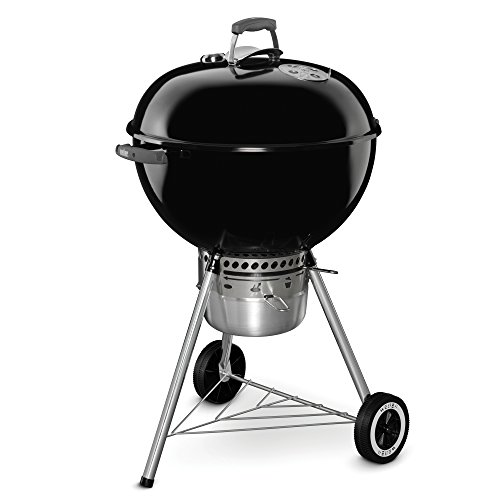
Weber Original Kettle Premium 22-Inch Charcoal Grill
Badge: Best Kettle for Kebab
Strengths
- Heat control dampers tame charcoal to the exact fierceness each kebab needs
- Built-in thermometer confirms the fire before skewers go on
- One-Touch cleaning sweeps away marinade-heavy ash in seconds
Trade-offs
- Round grate organises skewers less neatly than a barrel
- No tables or side burner for the accompaniment station
- Charcoal setup time applies to every session
At a glance
- Fuel: charcoal
- Size: 22-inch kettle
- Extras: built-in thermometer, heat control dampers, One-Touch cleaning system (per listing title)
- Finish: black
The Weber Original Kettle Premium is the precision instrument among the charcoal picks. Its listing confirms the 22-inch kettle format, a built-in thermometer, heat control dampers, and the One-Touch cleaning system. For kebab cooking, damper control translates directly into results: build the fire hot, confirm it on the thermometer, then trim the dampers to hold the fierce-but-steady heat that chars seekh kebab’s edges without drying its centre. Kettles concentrate heat beautifully, and a banked fire — coals piled on one side — creates the fierce zone and the resting zone that kebab service runs on.
The round grate asks for one adaptation: lay skewers across the centre in a row, handles toward the edge, and rotate the row rather than individual skewers where the mixture is soft. Tikka and paneer, being firm, suit the kettle perfectly and pick up the kettle’s characteristic smoky depth. When the session ends, the One-Touch system earns its keep — kebab ash is greasy ash, and a grill that cleans in seconds gets used again next weekend.
The limitations are workspace and shape. There are no tables and no side burner, so the accompaniment station needs a side table of your own, and long skewers must lie across the diameter rather than along a rectangle. Neither dents the kettle’s case for the cook who values control and a lifetime of weekly use over maximum skewer geometry. It is the connoisseur’s kebab grill in this guide.
Best for: charcoal cooks who value fire control and easy cleaning / Not suited for: cooks who want a built-in work station and rectangular layout

AMERLIFE 6-Burner Gas Grill with Side Burner
Badge: Best Gas for Kebab Nights
Strengths
- Six burners create a genuinely fierce sear zone beside a calm resting zone
- Largest gas cooking area here at 650 sq. in. for full skewer batches
- Side burner keeps sauces warm and boils accompaniments without stealing grate room
Trade-offs
- Gas char is cleaner than charcoal char; the smoky note must come from the marinade and technique
- Big grill to heat and clean for a small kebab night
- Cast iron grates need the usual drying and oiling care
At a glance
- Fuel: propane gas
- Burners: 6 plus side burner
- Total output: 60,000 BTU (per listing title)
- Cooking area: 650 sq. in.
- Grates: cast iron
- Extras: warming rack, built-in thermometer
The AMERLIFE is the gas answer to the kebab brief, and its case rests on zoning. The listing confirms six burners plus a side burner, a total output figure of 60,000 BTU, cast iron grates, a warming rack, a built-in thermometer, and 650 square inches of cooking area. Run two burners at full power as the charring zone, two at medium as the cooking zone, and two low as the resting zone, and a gas grill suddenly speaks kebab fluently: skewers start fierce, move across as they set, and rest warm without cooking further while the next batch takes their place.
Cast iron grates help twice. Their mass keeps the charring zone fierce when cold, marinade-wet skewers land on it, and their bars support soft seekh kebab more kindly than thin wire. The warming rack stages finished skewers above the heat, and the side burner handles the meal around the kebabs — a pan of onions, a sauce, or water for rice — without touching the skewer layout.
Be clear about what gas gives up: the smoke. A charcoal fire seasons the food as it cooks; a gas flame mostly heats it, so the marinade, the char, and a final squeeze of lemon must carry the flavour — which, in honest tasting, they very largely do. What gas returns is the weeknight: kebabs on a Tuesday, lit in a minute, zoned like a professional line, cleaned without ash. For many households that trade is the right one, and this is the strongest gas tool for it in the guide. Charcoal devotees should cross-check Best Grills For Lump Charcoal for the fuel this cuisine was born on, judged on its own terms.
One workflow suits this grill particularly well: the mixed grill for a crowd, where seekh kebab, tikka, wings, and vegetable skewers all cook at once. Assign each food its own burner zone by the heat it wants — seekh over the fierce burners, tikka in the middle, vegetables at the calm end — and the whole meal progresses across the grate like an assembly line, finishing together. Few home grills can run four kebab styles simultaneously without compromise; the six-burner layout is what makes it ordinary here.
Best for: gas households cooking kebab for a crowd, often / Not suited for: charcoal purists and small households
Weber Original Kettle 22-Inch Charcoal Grill
Badge: Best Classic Value Kettle
Strengths
- The classic kettle fire gives authentic kebab char and smoke
- Temperature control dampers and One-Touch cleaning, per the listing
- Simple, durable design that suits a lifetime of weekly use
Trade-offs
- No built-in thermometer listed, unlike the Premium kettle
- Round grate and no work surfaces, as with all kettles here
- Charcoal time and ash are part of every session
At a glance
- Fuel: charcoal
- Size: 22-inch kettle
- Extras: One-Touch cleaning system, temperature control dampers (per listing title)
- Finish: black
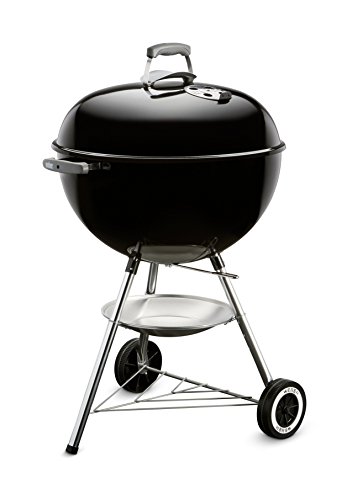
The Weber Original Kettle is the classic against which kettle cooking is measured, and for kebab it brings the essential gifts: a charcoal fire that concentrates heat fiercely, dampers to govern it, and the One-Touch cleaning system the listing confirms. Set a two-level fire — a deep bed of coals on one side, a scattering on the other — and you have the charring zone and the finishing zone that every kebab style needs. Seekh kebab sets over the deep bed, tikka finishes over the scatter, and the kettle’s domed lid, used briefly and deliberately, keeps the heat rolling over the tops of the skewers.
Compared with the Premium kettle above, this classic keeps the formula simpler: the listing names the cleaning system and the dampers but no built-in thermometer, so fire judgement is by hand and by eye — the way generations of kettle cooks have learned it, and a skill kebab’s fast cooking teaches quickly. Everything else about the ownership experience is the kettle story: light it with a chimney, cook, sweep the ash, and expect the same performance for years.
Its limits mirror its sibling’s: a round grate that asks skewers to lie across the diameter, no tables, and charcoal’s time tax on every session. Within those honest bounds, it is the value-hearted charcoal pick — the authentic kebab fire in its most proven, least complicated form. If the thermometer and the Premium’s refinements matter to you, step up within the same family; if fire and simplicity are the point, this is your grill.
There is also a budgeting honesty to this pick: because the design is simple and long-proven, money goes into the kettle itself rather than into features, and the second-hand and accessory world around it is enormous — replacement grates, chimney starters, and covers are everywhere. For a first charcoal grill bought specifically to learn kebab and general fire cooking, that ecosystem quietly matters as much as any single specification.
Best for: charcoal beginners and traditionalists who want the proven classic / Not suited for: cooks who want a thermometer and work surfaces built in

Cuisinart 14-Inch Portable Charcoal Grill
Badge: Best Portable for Kebab
Strengths
- True charcoal flavour in a grill that travels anywhere
- Dual air vents give real fire control at small scale
- Lid locks and compact size suit picnics, camping, and balconies
Trade-offs
- 196 sq. in. cooks a few skewers at a time — a relay, not a banquet
- Soft seekh mixtures need gentle handling on a small grate
- No resting zone beyond the grate’s edge; work in small batches
At a glance
- Fuel: charcoal
- Size: 14-inch portable
- Cooking area: 196 sq. in.
- Grates: chrome-plated
- Extras: dual air vent system, 3 lid locks for carrying
- Model: CCG-190RB
The Cuisinart portable is the kebab grill for the picnic, the campsite, and the small balcony, and it earns its badge by keeping the essential thing — a real charcoal fire — while shedding everything else. The listing confirms a 14-inch format, 196 square inches of cooking area, a chrome-plated grate, a dual air vent system, and three lid locks for one-handed carrying. The dual vents are the feature to respect: they give this little grill genuine fire control, so its small coal bed can be run fierce for tikka or calmed for paneer with more precision than most portables allow.
Cook in the relay style its size dictates. Four to six skewers at a time, turned often over the coal bed, off to rest under foil while the next batch goes on — kebab’s fast cooking makes the relay painless, and the food arrives in waves at its freshest. Firm kebabs like tikka and vegetable skewers suit it best; seekh kebab can absolutely be cooked here, moulded a little shorter and handled with extra gentleness over the small grate.
The limits are arithmetic, not quality: this is a grill for two to four people, not a family feast, and there is no resting zone beyond planning. As the portable expression of charcoal kebab — the version that goes to the park and the beach — it has no rival in this guide, and many owners of big grills keep exactly such a small fire for exactly these occasions. Small-space skewer cooks should also see the portable options in Best Grills For Kabob.
Small-grill kebab has one more charm worth naming: it is social in a way big-grill cooking is not. The grill sits in the middle of the group, skewers cook in minutes within everyone’s view, and the cook is a participant rather than a station manager. For the picnic and campsite occasions this pick is built for, that atmosphere is not a consolation prize — it is the entire point, and the food tastes better for it.
Best for: picnics, camping, balconies, and kebab for two to four / Not suited for: family feasts and long-skewer batches


Charbroil Portable 1-Burner Gas Grill
Badge: Best Compact Gas Backup
Strengths
- Instant gas heat with no charcoal setup, anywhere
- Useful side station for vegetarian or separated skewers at a big cookout
- Simple, light, and quick to clean after marinade-heavy cooking
Trade-offs
- One burner means one heat zone: no fierce-plus-resting layout
- Small grate suits a few skewers at a time
- Not a main kebab grill for a family; it supports one
At a glance
- Fuel: propane gas
- Burners: 1
- Total output: 11,000 BTU (per listing title)
- Body: aluminized steel, black
- Style: portable tabletop class
- Model reference: 465133010 (per listing title)
The Charbroil Portable closes the guide as the honest small gas option. Its listing confirms a single-burner propane design with an output figure of 11,000 BTU in an aluminized steel body. For kebab, its virtues are immediacy and separation. It lights in seconds for a small batch of tikka on a weeknight when lighting charcoal feels disproportionate, and at a large cookout it serves as the separated station — the grill where vegetarian skewers, or a guest’s allergen-free batch, cook on a clean grate away from everything else.
Its single burner is also its boundary. Kebab technique leans on moving skewers between fierce heat and rest, and one burner offers one temperature at a time; the workaround is to cook in small batches and rest skewers off the grill under foil, which works perfectly well at this scale. The small grate takes a few skewers per batch, so plan a relay and keep the batches small and frequent rather than crowded.
Judge it as the guide badges it: a backup and a specialist for small, separated, or spontaneous kebab cooking — not the main grill for a family’s kebab night, a role the five designs above fill in ascending order of fire and room. Bought with that understanding, it is a useful and likeable little grill that will be lit more often than many larger machines.
Best for: spontaneous small batches and separated side-station duty / Not suited for: main-grill duty for family kebab nights
Comparison Table
Kebab shopping is a fuel decision first and a size decision second. The table keeps both visible, with each pick’s specific kebab strength stated plainly.
| Pick | Cooking area | Fuel and control (per listing) | Kebab strength | Listing |
|---|---|---|---|---|
| Royal Gourmet CC1830S Charcoal Grill and Offset Smoker | 783 sq. in. | Charcoal, adjustable pan, offset smoker | Most authentic kebab heat and layout | Check on Amazon |
| Weber Original Kettle Premium 22-Inch Charcoal Grill | 22-inch kettle | Charcoal, dampers, built-in thermometer | Most controllable charcoal heat | Check on Amazon |
| AMERLIFE 6-Burner Gas Grill with Side Burner | 650 sq. in. | 6 burners + side burner, 60,000 BTU total per listing | Best gas zoning for skewer service | Check on Amazon |
| Weber Original Kettle 22-Inch Charcoal Grill | 22-inch kettle | Charcoal, dampers, One-Touch cleaning | Classic charcoal kebab fire, simpler spec | Check on Amazon |
| Cuisinart 14-Inch Portable Charcoal Grill | 196 sq. in., 14-inch | Charcoal, dual air vents | Portable real-fire kebab | Check on Amazon |
| Charbroil Portable 1-Burner Gas Grill | Small portable grate | 1 burner, 11,000 BTU total per listing | Instant small-batch and separated cooking | Check on Amazon |
How to Choose the Right Grill for Best Grills for Indian Kebab
Decide your fuel by your week, not your ideals. Charcoal delivers the flavour and char that define the dish, and the barrel and kettles here deliver it in three sizes. It also asks for lighting time and ash handling at every session. Gas delivers kebab on a weeknight with zoning that charcoal cooks achieve through craft. Households that cook kebab monthly as an occasion tend to love charcoal; households that want it in the regular rotation tend to thrive on gas. Neither answer is a compromise if it matches the calendar.
Match the grill to your skewers. Measure the skewers you own or intend to buy — flat steel skewers for seekh kebab are long — and check them against the cooking area and shape of the grill. Rectangular barrel and cart grates take long skewers in parallel rows. Round kettles take them across the diameter, which suits standard lengths. Portables take short skewers in small batches. A grill that fights your skewers will annoy you at every session, and the annoyance is entirely predictable before purchase.
Respect the marinade problem. Kebab marinades are oily, yoghurty, and acidic; they drip, flare, and bake onto grates. Choose a grill with a cooler zone or a movable fire so flare-ups are managed by relocation, not by water or panic, and favour grates and ash systems that clean easily, because a grill that is miserable to clean after kebab night quietly stops being used for kebab night. The kettle’s sweeping ash system and the barrel’s side door exist in this guide’s favour for exactly that reason.
Think about who cooks, too. Kebab night often means the cooking is shared — skewers turned by whoever is standing nearest, batches judged by committee. A grill with a simple, legible fire suits that social style: banked coals anyone can read, or burner dials anyone can understand. The kettles and the barrel here are legible in that way, and the big gas pick’s zones can be explained in one sentence. A grill only its owner can operate turns a communal meal into a solo performance, which is a real, if unglamorous, buying consideration for this cuisine.
Finally, budget the accompaniments into the decision. Naan wants a hot, dry corner of grate at the end. Onions and lemons want fierce brief heat. Raita wants to stay cold and away. Tables, side burners, and warming racks are not luxuries in this cuisine; they are how the meal assembles. Confirm fuel, area, and grate details on the listing, then check the latest price on Amazon for the pick that fits your skewers and your week.
How to Grill Indian Kebab: Skewers, Fire, and Timing
Prepare the skewers first, because the fire waits for no one. For seekh kebab, work the spiced mince until it turns tacky, chill it thoroughly, and mould it onto flat, wide skewers in an even sausage, pressing firmly; cold mixture on flat metal is the whole secret of kebabs that stay on. For tikka, marinate cubes in yoghurt and spices, then thread with small gaps so heat reaches every side. Vegetable and paneer skewers want a lighter marinade and a shorter rest. Whatever the style, let excess marinade drip off before the grill — dripping marinade is flare-ups and bitterness.
Build the fire for two zones. On charcoal, bank the coals deep on one side and shallow on the other; on gas, set one side fierce and the other low. The fierce zone sets and chars; the gentle zone finishes and rests. Lay skewers across the fierce zone and turn them a quarter-turn every minute or so, moving each skewer to the gentle zone as its outside sets, and back for a final char at the end. Total times are short — minutes, not tens of minutes — and the cook’s job is attention, not patience.
Rest and finish like it matters, because it does. Rest skewers briefly under foil so the juices settle, then finish with the classic touches: a squeeze of lemon, a scatter of raw onion and herbs, a brush of melted butter or ghee for seekh kebab. Warm naan on the grate’s clean edge during the rest. Serve straight from the skewer where you can; kebab waits for no one and dries as it sits.
A note on resting skewers in quantity: when batch follows batch, hold finished skewers on the grill’s calmest edge or on a warm tray, loosely tented, for no more than a few minutes. Kebab dries faster than almost any grilled meat because its surface area is large and its pieces are small. The schedule in the topical section above — seekh and tikka first, paneer and naan last — exists precisely so that nothing waits long enough to suffer for it.
Clean the grates while they are hot and the residue is willing; marinade sugars bake into cement if left. Troubleshooting: Problem: seekh kebab falls off the skewer → the mixture was too warm or the skewer too round; chill the mixture longer, use flat skewers, and do not turn until the first side has set. Problem: outside burns before the centre cooks → the fire is fierce but shallow; bank more coals for depth, or on gas, finish over the gentle zone after the initial char. Problem: constant flare-ups → too much marinade went to the grill; drain skewers before cooking and move them to the gentle zone until flames settle.
Seekh Kebab vs Tikka: Different Fires, Same Grill
The two great kebab families ask the grill for opposite sequences. Seekh kebab, being minced and soft, wants fierce heat first to set its surface before gravity negotiates, then gentler heat to cook through. Tikka, being solid cubes in a wet marinade, wants the marinade’s surface moisture driven off and charred at high heat, with the fiercest moments at the start and a calmer finish so the yoghurt coating does not scorch. A two-zone fire serves both, which is why every pick in this guide was judged on zoning — by burners, by banked coals, or by an adjustable pan.
Paneer and vegetable kebabs add a third pattern: fierce and brief, with no resting requirement and no tolerance for delay. They belong on the grill last, while the meat kebabs rest, so everything reaches the table together. Planning the order — seekh first, tikka alongside, paneer last, naan during the rest — turns a grill of any size into a kebab kitchen, and it is the order used implicitly throughout the reviews above.
Flat Skewers, Fire Bricks, and Other Small Upgrades
The highest-value kebab upgrade is not a grill at all: it is a set of flat, wide stainless skewers with proper handles. They stop rotation, hold minced mixtures, and conduct a whisper of heat into the centre of the kebab. A pair of fire bricks or a simple raised rack can add a gentle upper level to a charcoal grill for resting skewers, and a small cast iron pan turns any grill here into an onion-and-accompaniment station. Each upgrade costs little and multiplies what the grill can do.
What not to buy: novelty skewer systems that lock food into cages, which prevent the turning and charring that define the dish, and thin round skewers, which spin under the weight of the food and drop seekh kebab into the fire. Kebab equipment is an old, settled technology. The classics are classic because the dish has already voted.
Marinades That Char Well and Marinades That Burn
Not every marinade belongs over fierce heat. Yoghurt-based marinades char beautifully in a thin coating — the sugars and proteins brown into the crust that defines tikka — but a thick, dripping layer scorches into bitterness. The rule is to marinate generously and grill sparingly: let the bowl do the flavouring, wipe or drain the excess, and let a thin film meet the fire. Sugar-heavy glazes belong at the very end of cooking, brushed on in the final minute, never at the start.
Oil is the other judgement call. A little oil in the marinade helps spices bloom and surfaces char; a lot of oil is a flare-up schedule. If your grill session is a battle with flames, the marinade ratio is usually the cause, and the fix happens in the kitchen an hour earlier, not at the grate. Cooks who master that single idea find every grill in this guide suddenly better behaved.
Common Buying Mistakes
The first kebab mistake is round skewers for minced kebab. The mixture rotates, loosens, and falls. Flat skewers, a chilled mixture, and patience before the first turn solve it entirely. The second mistake is a single-temperature fire: skewers that start fierce must be able to move somewhere calmer, or the cook is choosing between raw centres and burnt outsides on every batch.
The third mistake is drowning the grill in marinade. Skewers should arrive drained, almost dry on the surface; the marinade’s job was done in the bowl. Wet skewers flare, soot, and steam instead of charring. The fourth mistake is serving kebab in cooking order over half an hour, so the first guests eat rested, dried skewers while the last batch cooks. Cook in planned waves, rest everything briefly, and serve together.
The buying mistake that mirrors all of these is choosing a grill on headline heat alone. Kebab needs fierce heat with somewhere to go, room for your skewers’ length, and a clean-up you will actually do. The badges and table above encode exactly those three tests; confirm the details on the listing and check the latest price on Amazon before you buy.
Final Recommendation
Start with the Royal Gourmet barrel if you want the most authentic kebab cooking in this guide: charcoal fire, an adjustable pan, and room for long skewers in rows. Choose the Weber Premium kettle for charcoal precision in a smaller footprint, the classic kettle for the same fire in its simplest form, and the AMERLIFE if your kebab nights are gas-fuelled, frequent, and crowded. The Cuisinart portable takes real-fire kebab anywhere; the Charbroil portable covers the spontaneous and the separated batch.
One last encouragement: kebab is among the most forgiving of all grill cuisines to learn, because every skewer is a two-minute experiment with immediate feedback. A new grill, a new fire layout, or a new marinade proves itself within a single batch, and the next batch can correct it. Few branches of outdoor cooking teach their cooks this quickly, which is why so many households that start with kebab night end up grilling everything.
Whichever grill you choose, spend the small extra on flat skewers and a chimney or a probe thermometer before the first session. In kebab cooking, those modest tools and a two-zone fire will do more for the result than any single specification in this guide.
Royal Gourmet CC1830S Charcoal Grill and Offset Smoker · Weber Original Kettle Premium 22-Inch Charcoal Grill · AMERLIFE 6-Burner Gas Grill with Side Burner
Frequently Asked Questions
What makes a grill good for Indian kebab specifically?
Fierce, even direct heat; room to lay skewers in a single layer with turning space; and a second, calmer zone for finishing and resting. Charcoal adds the smoky char the cuisine is built on, while multi-burner gas reproduces the zoning with dials. Grate shape matters too: long, rectangular grates suit long skewers best.
Can I cook seekh kebab on a gas grill?
Yes. Use flat skewers, a thoroughly chilled mixture, and the grill’s fiercest zone to set the surface before moving skewers to a calmer zone to finish. The result lacks charcoal’s smoky note but keeps the char, the spice crust, and the juicy centre. The six-burner pick in this guide is built for exactly that workflow.
Why does my seekh kebab fall off the skewer?
Almost always one of three causes: the mixture was too warm and soft, the skewers are round so the meat rotates and loosens, or the kebab was turned before its first side set. Chill the mixture well, switch to flat skewers, mould firmly, and let the first side firm up over fierce heat before touching it.
How hot should the grill be for kebab?
As hot as your grill runs evenly for the first minute or two — kebab is char cooking — then moderated for finishing. On charcoal that means a deep, ashed-over bed calmed by pan height or dampers. On gas it means full power on the charring burners and low on the resting burners. If marinade is scorching black before the meat cooks, the fierce phase is lasting too long; move the skewers sooner.
Do I need a tandoor for real kebab flavour?
No. A tandoor’s radiant clay heat is distinctive, but fierce direct heat, real char, correct spicing, and a charcoal fire where possible reproduce the great majority of the flavour at home. The barrel and kettle picks here exist for cooks who want that closest approximation without a clay oven in the garden.
What should I grill alongside kebabs?
Onions halved and charred at the edges, whole green chillies blistered in seconds, tomatoes softened briefly, and naan warmed on the grate’s clean edge during the meat’s rest. Keep cold accompaniments — raita, salads, chutneys — off the grill entirely and ready before the first skewer lands.