Disclosure: topratedkitchenware.com is reader-supported. When you buy through links on our site, we may earn an affiliate commission from Amazon and other retailers, at no extra cost to you.
Where to buy
The six models below are the verified picks for this guide to the best mobile home toilets. Each name links to its Amazon listing, where you can check the latest price on Amazon, confirm the current configuration, and read the newest owner feedback before you decide.
- HOROW 17 Inch High Elongated Toilet
- Garvee Two Piece Elongated Toilet
- IDEALHOUSE ADA 17 Inch Elongated Toilet
- American Standard Cadet PRO Right Height Toilet
- HOROW T0338W One Piece Toilet
- DeerValley Compact One Piece Toilet
Read the full guide ↓ for the manufactured-home specifics — floors, flanges, small rooms, and septic systems — that change how a toilet should be chosen.
The best mobile home toilets are not a separate species of fixture, and any seller who implies your manufactured home needs a mysterious special toilet is selling you a story. A mobile home bathroom ends at the same two connections as any other bathroom: a water supply and a floor flange over a drain. What genuinely differs is everything around those connections. Manufactured-home bathrooms are usually smaller, sometimes much smaller, with door swings and clearances that punish a careless bowl choice. The floor structure is different — subfloor over joists and a chassis-supported frame rather than a slab or a conventionally framed floor — which makes flange condition, floor soundness around the toilet, and correct, even seating of the fixture more important, not less. The original toilets installed by manufacturers were often chosen for cost and weight above all else, which is why so many mobile home owners live with a small, low, weak-flushing fixture and assume the house is the limitation. It usually is not. The drain does not know what kind of house sits above it, and a modern comfort-height, elongated, properly flushing toilet transforms a manufactured-home bathroom exactly as it transforms a site-built one — provided the installation respects the floor and the flange.
This guide therefore ranks six verified mainstream toilets by manufactured-home criteria: footprint and bowl depth for small rooms first, because a toilet that crowds the door is wrong no matter how well it flushes; installation forgiveness second, because floors and flanges in older manufactured homes are the places projects go sideways; flush efficiency third, weighted by the fact that many mobile homes run on septic systems where water volume is a system load, not just a bill; and fit — height and bowl shape — throughout, because the comfort upgrade is usually the point of the project. Two picks are compact or one-piece designs for the tightest rooms, one is a legacy-brand platform for owners who want any plumber in the county to know their fixture on sight, and the heights span the standard-to-chair range so the household, not the catalogue, decides. Measure your room and inspect your floor before anything else; the sections below explain exactly how, in the order a successful mobile home install actually happens.
Key Takeaways
- A manufactured home takes standard toilets — the differences that matter are room size, floor and flange condition, and often a septic system, not exotic plumbing.
- Compact and shorter-depth picks (DeerValley, and the round-front logic it represents) exist for the small bathrooms typical of mobile homes; elongated picks fit more rooms than owners expect once measured.
- Inspect the subfloor around the flange before installing anything: soft flooring is the most common hidden problem in mobile home toilet projects.
- Efficient flushes (1.28 GPF, or dual flush) reduce load on septic systems — a real consideration for many manufactured homes.
- All the mainstream picks here use a 12-inch rough-in where the listing states one; mobile homes vary, so measure yours rather than assuming.
- Two-piece models are easier to get through narrow mobile home doors and halls than one-piece models — a logistics point that decides real projects.
In this guide
Quick Picks
| Pick | Badge | Key facts | Link |
|---|---|---|---|
| HOROW 17 Inch High (Single Flush) | Best Overall for Mobile Homes | Two-piece elongated, ADA chair height, single flush 1.28 GPF, MaP 1000g, 12-inch rough-in | Check on Amazon |
| Garvee Two Piece Elongated | Best Standard Height | 15-inch bowl as listed, 1.28 GPF side-push flush, locking PP soft-close seat, cUPC certified, 12-inch rough-in | Check on Amazon |
| IDEALHOUSE ADA 17 Inch | Best Easy-Clean Porcelain | 17-inch ADA elongated, two-piece ceramic, soft-close seat, 1.28 GPF siphonic jet, easy-clean white porcelain, 12-inch rough-in | Check on Amazon |
| American Standard Cadet PRO | Best Legacy Brand | Right Height elongated, 1.6 GPF, two-piece, white — a long-running pro-grade platform | Check on Amazon |
| HOROW T0338W One Piece | Best One-Piece Upgrade | 17.3-inch ADA chair height, elongated, dual flush 1.1/1.6 GPF, MaP 1000g, skirted, 12-inch rough-in | Check on Amazon |
| DeerValley Compact One Piece | Best for Small Mobile Home Bathrooms | Standard seat height, compact skirted body, dual flush 1.1/1.6 GPF, 12-inch rough-in | Check on Amazon |
How These Picks Were Chosen
This is a research-led guide. Every model’s identity and specification were verified through the Amazon Creators API — brand and model, bowl shape, seat height, flush type and volume, rough-in where stated, seat and certification details — and the verified set was then ranked against manufactured-home criteria rather than generic ones. Footprint came first: in a small bathroom, depth is destiny. Installation practicality came second, favouring two-piece designs that travel through narrow doors as separate pieces and service with conventional parts, because manufactured homes are disproportionately owner-maintained and rural, where a plumber visit is a journey rather than a phone call. Flush efficiency was weighted for septic reality. And we deliberately included one compact standard-height model and one skirted one-piece upgrade, because mobile home bathrooms span from tiny half-baths where only the compact pick fits, to generous primary suites in newer manufactured homes where the one-piece upgrade is entirely at home.
One scope note, stated plainly: this guide covers toilets for the bathroom inside a manufactured home — plumbed, fixed fixtures. It does not cover portable or cassette toilets for RVs and campers, which are a different product family with different trade-offs; readers who landed here looking for a portable unit should shop that category directly rather than adapting anything ranked below. Within its scope, the guide’s rule is the same as everywhere on this site: specifications come from verified listing data, claims are labelled as claims, and where a listing does not state a figure — a rough-in, a test score — we say so instead of filling the gap with a guess.
The 6 Best Mobile Home Toilets

HOROW 17 Inch High Elongated Toilet (Single Flush)
Badge: Best Overall for Mobile Homes
Strengths
- 17-inch ADA chair height and elongated bowl: the full comfort upgrade most mobile home owners are actually shopping for.
- Single 1.28 GPF flush with a published MaP 1000g score — efficient for septic systems, impossible for guests to misuse.
- Two-piece format: bowl and tank travel separately through narrow doors and halls, and service with conventional logic.
Trade-offs
- Elongated depth must be measured against small-room door swings; it will not fit every manufactured-home half-bath.
- No light-flush option — the dual-flush T0338W below saves more water in disciplined households.
- Newer brand: keep the model paperwork for future parts.
Mini spec box: Format: two-piece. Bowl: elongated. Seat height: 17 inches (ADA chair height). Flush: single flush, 1.28 GPF, MaP 1000g. Rough-in: 12 inches.
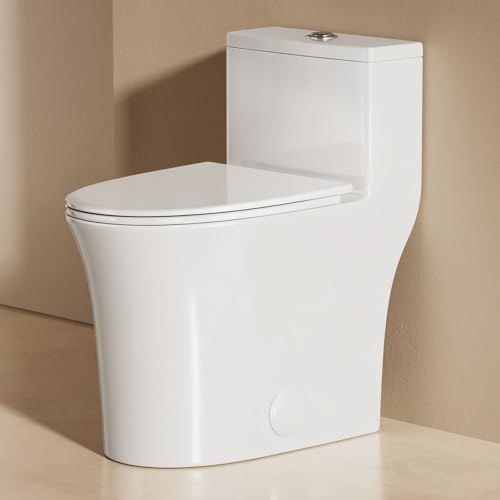
The typical mobile home toilet replacement starts from a fixture the manufacturer chose for cost: low, round, and underwhelming. This HOROW is the corrective in its most practical form. The chair height changes daily life for tall and older occupants — and manufactured homes house a great many older occupants ageing in place, for whom sit-stand ease is not a luxury but the feature that keeps a bathroom independent. The elongated bowl adds the sitting room the original fixture denied. And the flush specification threads the manufactured-home needle precisely: 1.28 gallons is the modern water-saving standard, gentle on the septic systems that serve so many of these homes, while the published MaP score of 1000 grams — the top band of that bulk-removal scale — says the efficiency is engineered rather than merely rationed. A single flush, with no buttons to teach, suits households and guests alike.
The pre-purchase homework is spatial. Elongated bowls project further into the room than the round originals they replace, and in the smallest manufactured-home bathrooms that projection can meet a door swing or steal the clearance in front of the bowl. Measure the depth from the wall, check the door’s arc, and if the numbers fail, the DeerValley at the end of this list is the honest fallback rather than a compromise to resent. The two-piece format, meanwhile, quietly solves the logistics that defeat one-piece upgrades in these homes: the bowl and tank come through a narrow hallway as two manageable carries, and if a part ever needs replacing, the platform’s conventional layout keeps the job ordinary. For the median mobile home — standard rough-in, septic or sewer, occupants who want comfort without fragility — this is the pick the rest of the list is measured against.
Best for: Most manufactured homes wanting the comfort-height, elongated upgrade on septic-friendly efficiency / Not suited for: The smallest half-baths where elongated depth does not fit

Garvee Two Piece Elongated Toilet
Badge: Best Standard Height
Strengths
- Standard 15-inch height as listed, for shorter occupants and households that found chair height a perch.
- cUPC certification stated in the listing — a compliance signal that matters for permitted work and resale paperwork.
- Side-push 1.28 GPF flush and a locking soft-close seat: simple to use, designed to stay aligned.
Trade-offs
- Standard height does not serve the tall and senior users who drive most upgrades.
- Newer brand with thinner published performance data than the HOROW picks.
- Elongated depth needs the same small-room measurement as any elongated pick.
Mini spec box: Format: two-piece. Bowl: elongated ceramic, 15 inches as listed. Flush: side-push, 1.28 GPF water-saving. Seat: locking PP soft-close. Certification: cUPC. Rough-in: 12 inches. Colour: white.
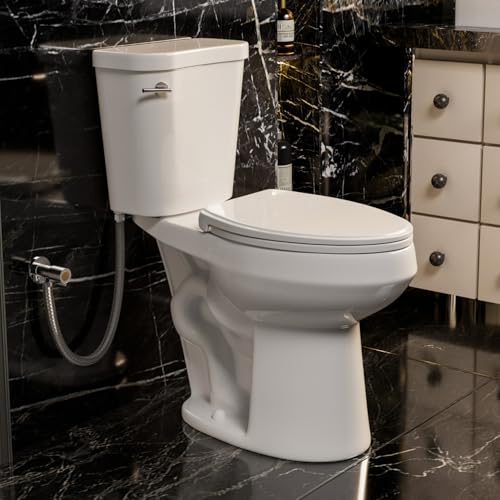
Not every manufactured-home household is shopping for height. Shorter occupants, homes with young children, and owners replacing a standard-height toilet they were perfectly content with need the modern package — elongated bowl, efficient flush, decent seat — at the height they already know. The Garvee is that package with two details that suit this housing type particularly well. The first is the stated cUPC certification: manufactured homes change hands with inspections and paperwork, and a certified fixture is one less question in that process. The second is the locking soft-close seat in polypropylene, specified to stay put rather than drifting sideways as loosened seats do — a small mercy in homes where the toilet may serve grandchildren, guests, and owners in rotation, and where a shifting seat is the kind of minor failure that lingers for years because the fix-it list is long.
Its limits are the mirror of its brief. Buyers whose knees have requested chair height should not be talked into standard height by any guide, including this one; the HOROW and IDEALHOUSE picks exist for them. The brand’s track record is shorter and its published flush evidence thinner than the top picks’, so the certification and specification carry more of the argument than a test score would. And the elongated bowl still asks the small-room question — measure the depth and the door. Within its lane, though, the Garvee represents something manufactured-home owners are often denied by the market’s fashion: a current, efficient, certified toilet that respects the height their household actually wants.
Best for: Shorter households, families with children, and standard-height replacements / Not suited for: Tall or senior users seeking chair height

IDEALHOUSE ADA 17 Inch Elongated Toilet
Badge: Best Easy-Clean Porcelain
Strengths
- 17-inch ADA comfort height with an elongated bowl, in easy-clean white porcelain positioned for low upkeep.
- 1.28 GPF siphonic jet flush — the water-saving standard, septic-friendly, with a soft-close seat included.
- Two-piece ceramic format keeps installation and service in familiar territory.
Trade-offs
- No published MaP score in the verified data; flush confidence rests on design class rather than a test figure.
- Chair height caveats for shorter household members apply.
- Newer brand ecosystem; keep model documentation for parts.
Mini spec box: Format: two-piece ceramic. Bowl: elongated. Seat height: 17 inches (ADA compliant). Flush: siphonic jet, 1.28 GPF water-saving. Seat: soft-close. Rough-in: 12 inches. Finish: easy-clean white porcelain.
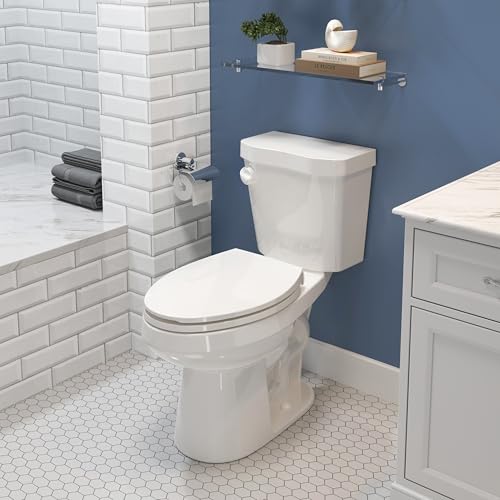
The IDEALHOUSE competes on the unglamorous axis that decides how a toilet feels in year five: upkeep. Its positioning centres on easy-clean white porcelain and a straightforward specification — ADA-height elongated bowl, a 1.28-gallon siphonic jet flush, a soft-close seat — assembled for owners who maintain their own homes and would like the bathroom to ask as little of them as possible. In manufactured homes, where the owner is very often also the cleaner, the plumber of first resort, and the person who will notice a stain’s return, that positioning is well aimed. The siphonic jet action is the conventional, well-understood flushing mechanism of the modern water-saving era, and its 1.28-gallon volume keeps septic loads modest without asking the household to learn a dual-flush routine.
Evidence discipline requires noting what its listing does not publish: no MaP score appears in the verified data, so beside the HOROW picks its flush case is argued from design class and specification rather than from a headline test figure. That is a reporting distinction, not a condemnation — the specification is the standard efficient one, executed in the standard way — but buyers who rank by published scores will weigh it accordingly. The chair height carries the usual household negotiation, and the brand is newer, with the usual advice to file the paperwork. For the owner-maintainer of a manufactured home who wants comfort height, elongated room, and a toilet that wipes down and shuts up, it is a coherent, honestly specified option.
Best for: Owner-maintainers wanting ADA height with low-upkeep porcelain / Not suited for: Buyers who require a published flush test score

American Standard Cadet PRO Right Height Elongated Toilet
Badge: Best Legacy Brand
Strengths
- American Standard’s Cadet PRO line is a professional-grade platform with deep parts availability — decisive where the nearest plumber is a county away.
- Right Height elongated bowl: the comfort pairing in a conventional two-piece body.
- A 1.6 GPF flush with full-volume carrying power for older drain lines.
Trade-offs
- 1.6 gallons per flush is the thirstiest specification here — a genuine consideration on septic systems.
- The verified listing data does not state a rough-in or test score; confirm fit details on the listing before ordering.
- Conventional exposed-trapway cleaning, as with most two-piece designs.
Mini spec box: Format: two-piece. Bowl: elongated. Height: Right Height. Flush: 1.6 GPF. Colour: white. Model: 215AA004.020.
Geography is a specification. A manufactured home on a rural lot may be an hour from the plumber and further from a plumbing wholesaler, and in that geography the value of a fixture is dominated by one question: when something wears out in year eight, can it be fixed today, with parts from the nearest town, by whoever is available? The Cadet PRO is this list’s answer. American Standard is among the most established names in North American plumbing, the Cadet line is its professional workhorse, and its wear parts belong to the category of things hardware stores stock by default. Right Height and an elongated bowl deliver the comfort brief, and the two-piece body keeps the install conventional in every respect — no concealed hardware, no proprietary rituals, nothing a competent installer has not seen a hundred times.
The trade-offs deserve their sentences. At 1.6 gallons per flush, this is the list’s highest water use, and on a septic system that volume is not merely a bill — it is hydraulic load on a tank and drain field sized for the home, so septic households with marginal systems should weigh the 1.28-gallon picks first. The verified listing also states neither a rough-in nor a flush test figure, so the pre-order discipline matters doubly here: confirm the rough-in on the listing against your measurement before the box ships, because the cost of a wrong guess is a very heavy return. Neither caveat dents the core case for its audience — owners who rank fix-it-anywhere certainty above the last word in efficiency, and whose drain lines, often older, frankly appreciate the carrying power of a full-volume flush.
Best for: Rural owners, older drain lines, and anyone who ranks parts certainty first / Not suited for: Septic systems where flush volume must be minimised
HOROW T0338W One Piece Toilet
Badge: Best One-Piece Upgrade
Strengths
- The full upgrade specification: 17.3-inch ADA chair height, elongated bowl, dual flush 1.1/1.6 GPF, MaP 1000g.
- Skirted one-piece body wipes clean in seconds — no trapway dust traps in a small room where everything is close.
- Dual flush lets septic households run light for liquid waste while keeping a full flush in reserve.
Trade-offs
- One-piece weight and bulk are the hardest carry in this list through narrow manufactured-home doors and halls — plan two people and a clear path.
- Skirted concealed mounting follows its own sequence; read it before the old toilet comes out.
- The tallest seat here; shorter household members may need a step.
Mini spec box: Format: one-piece, skirted. Bowl: elongated. Seat height: 17.3 inches (ADA chair height). Flush: dual flush 1.1/1.6 GPF, MaP 1000g. Rough-in: 12 inches. Colour: white.
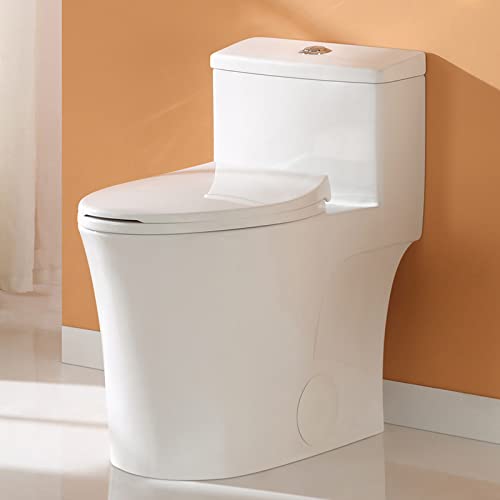
Newer manufactured homes — and ambitious renovations of older ones — increasingly have primary bathrooms that can take a genuine design upgrade, and the T0338W is what that upgrade looks like in this category. The specification is the strongest in the list: the tallest chair height at 17.3 inches, an elongated bowl, a dual-flush system spanning an economical 1.1 gallons to a full 1.6, a published MaP score at the top of the scale, and a skirted one-piece body whose smooth flanks turn the weekly clean into a single wipe — a virtue that scales with the smallness of the room, where a conventional trapway’s dust-collecting curves are literally at arm’s length from everything. For a septic household, the dual flush is also the flexible answer: light for the majority of visits, full when the load or the drain line asks for it.
The obstacle is logistics, and in a manufactured home it is not trivial. A one-piece toilet is a single heavy, awkward object, and the route from the delivery point to a manufactured-home bathroom often involves steps, a narrow door, and a hallway with opinions. Measure the route as carefully as the room, recruit the second pair of hands before the day, and consider honestly whether the two-piece picks deliver ninety percent of this toilet’s benefit at half its installation drama — for many homes, they do, which is why this pick ranks as the upgrade rather than the default. Its skirted mounting also follows a manufacturer-specific concealed sequence; it is entirely manageable, but it is not the exposed-bolt routine, and the manual deserves a full read in advance. Where the room, the route, and the household all say yes, this is the most complete toilet in the guide.
Best for: Larger manufactured-home primary bathrooms and design-led renovations / Not suited for: Tight access routes, solo installers, or the smallest bathrooms

DeerValley Compact One Piece Toilet
Badge: Best for Small Mobile Home Bathrooms
Strengths
- Compact skirted one-piece body built for small bathrooms — the fit that tiny manufactured-home half-baths demand.
- Dual flush 1.1/1.6 GPF keeps a genuine full-power option despite the small footprint, and serves septic loads flexibly.
- Standard seat height suits shorter users and children, and keeps feet planted in tight rooms.
Trade-offs
- Standard height gives up the chair-height comfort the other picks are bought for.
- Compact bowl presence is the price of the footprint; larger users will feel it.
- One-piece handling through tight spaces still applies, in a smaller but still substantial package.
Mini spec box: Format: one-piece, skirted. Positioning: compact, for small bathrooms. Seat height: standard. Flush: dual flush 1.1/1.6 GPF. Rough-in: 12 inches.
Some manufactured-home bathrooms settle the toilet question before it is asked. The half-bath carved into a hallway, the ensuite in an older single-wide, the room where the door clears the existing fixture by an inch — in these spaces, the elongated chair-height picks are not better or worse, they are simply not admissible, and the correct guide behaviour is to say so and offer the strongest toilet that fits. That is the DeerValley. Its compact skirted body is designed for small bathrooms, its smooth one-piece flanks clean as easily as the T0338W’s, and its dual-flush system is the detail that elevates it above the usual small-toilet compromise: the 1.1-gallon setting handles liquid waste economically — kind to septic systems — while the 1.6-gallon setting is a real flush with real clearing intent, not the apologetic rinse that compact fixtures have historically offered.
The costs are fit-shaped. Standard seat height serves shorter users and children well and tall users poorly; in a compact half-bath used briefly by everyone, that trade is often acceptable, and in a primary bathroom for a tall owner it is not — measure the user as honestly as the room. The compact bowl gives larger occupants less presence than any elongated pick, which is the physics of the footprint and not a defect to be argued with. And while smaller than the T0338W, it remains a one-piece carry through the same narrow route, so the two-person rule survives. For the smallest rooms in manufactured housing — the rooms most guides quietly abandon — this is the pick that respects the constraint and still delivers a modern, efficient, easy-clean toilet.
Best for: Tiny manufactured-home bathrooms and half-baths, shorter users, second toilets / Not suited for: Tall primary users with room for an elongated chair-height model
Comparison Table
| Pick | Format | Bowl | Seat height | Flush | Link |
|---|---|---|---|---|---|
| HOROW Single Flush | Two-piece | Elongated | 17 in | 1.28 GPF, MaP 1000g | Check on Amazon |
| Garvee | Two-piece | Elongated | 15 in as listed | 1.28 GPF side-push, cUPC | Check on Amazon |
| IDEALHOUSE | Two-piece | Elongated | 17 in | 1.28 GPF siphonic jet | Check on Amazon |
| American Standard Cadet PRO | Two-piece | Elongated | Right Height | 1.6 GPF | Check on Amazon |
| HOROW T0338W | One-piece skirted | Elongated | 17.3 in | Dual 1.1/1.6 GPF, MaP 1000g | Check on Amazon |
| DeerValley Compact | One-piece skirted | Compact | Standard | Dual 1.1/1.6 GPF | Check on Amazon |
How to Choose a Toilet for a Manufactured Home
Measure the room like it is small, because it probably is. Record four numbers: the rough-in (finished wall to flange-bolt centre — most picks here are 12-inch models, and manufactured homes are not guaranteed to match, so the tape decides); the depth available from the wall to the door’s swing arc; the width of the space, since elbows and walls negotiate in small rooms; and the route in — door widths and hallway turns — because the toilet has to travel that route before it can be installed. Elongated bowls need roughly two more inches of depth than round ones; where the door arc fails by an inch, the compact DeerValley is the designed answer rather than a defeat. Also confirm the required clear space in front of the bowl for your local code and your own knees; a toilet can be technically installed and practically unusable, and small rooms are where that distinction lives.
Decide the flush by your wastewater system. Manufactured homes divide into sewer-connected and septic households, and the ranking shifts between them. On septic, every gallon is load: the 1.28-gallon picks and the dual-flush models (run light for liquid) reduce what the tank must process, and that restraint compounds across a household’s year. On municipal sewer with older drain lines, the calculus reverses slightly — a full-volume flush option, like the Cadet PRO’s 1.6 gallons or the dual-flush models’ top setting, carries waste through tired pipes more certainly. Know which house you own before ranking flush figures; the same specification is a virtue in one and a liability in the other.
Fit height and format to the household and the building together. Chair height (the 17-inch picks) serves tall and older occupants and the ageing-in-place plans common in manufactured housing; standard height (Garvee, DeerValley) serves shorter users and children. Format is a building decision as much as a style one: two-piece models travel the route in pieces, install conventionally, and dominate this list for that reason; one-piece skirted models clean beautifully but arrive as one heavy object and mount by their own concealed logic. Choose with the hallway in mind, not just the bathroom.
How to Install a Toilet in a Mobile Home — and the Floor Check That Comes First
The manufactured-home install differs from the standard one at exactly one stage, and it is the stage that decides success: before the new toilet is unboxed, the floor and flange must pass inspection. Years of slow leaks from the original fixture — and original fixtures in these homes were not chosen for their seals — commonly soften the subfloor around the flange, and a new toilet set on soft flooring will rock, break its new seal, and begin the same cycle again. Press firmly around the flange area, probe suspect spots, and look from below if access allows. Sound floor: proceed. Soft floor: cut out and replace the damaged section and repair or replace the flange first — this is the unglamorous half-day that separates a twenty-year install from a two-year callback, and it is the single most valuable paragraph in this guide.
- Measure the rough-in and confirm the chosen model matches it.
- Shut off the water (know where your home’s main shut-off is — in manufactured homes it may be at the meter or an interior valve), flush, sponge dry, and disconnect the supply.
- Remove the old toilet, clean the flange, and complete the floor inspection described above before any new part is fitted.
- Dry-fit the new bowl; shim any rock caused by floor unevenness, and never ask caulk to do a shim’s job.
- Fit a new wax ring, set the bowl in one straight motion, and tighten evenly. For skirted one-piece models, follow the manufacturer’s concealed-mount sequence.
- Mount the tank on two-piece models with even, alternating snugging; fit the seat; reconnect the supply with a fresh line.
- Open the water slowly, flush repeatedly, and inspect the base, the supply, and the tank joint — then check again the next day, because slow seeps in a manufactured floor announce themselves late and cost dearly.
Troubleshooting for this housing type, in the usual pattern:
Problem: The new toilet rocks within months → the floor or flange, not the toilet; inspect for soft subfloor and reset on a repaired base.
Problem: Sewer odour in the bathroom → a failed wax seal or a venting issue; reseal first, and if the odour persists, have the vent stack checked.
Problem: Weak flush on a well or low-pressure supply → confirm the tank fills to its marked line; low supply pressure slows refill, not flush power, but a level set too low weakens both impressions.
Septic Systems, Water, and the Manufactured-Home Ledger
Because so many manufactured homes run on septic, the water question deserves its own honest treatment. A septic system is a small treatment plant sized for the household, and the toilet is its largest single water source. Moving a household from a legacy high-volume fixture to a 1.28-gallon standard — or to a dual-flush model whose light setting handles the majority of visits — reduces the hydraulic load meaningfully every single day, which is the kind of change drain fields notice and reward with longer life. The discipline is to keep the rest of the system honest alongside: no flushable wipes (they do not break down as advertised, in any system, ever), no garbage-disposal surge habits if the system was not sized for them, and pumping on the schedule your tank size and household dictate rather than on the schedule of forgetfulness. The toilet picks here were weighted with that ledger in mind, which is why efficient single-flush and dual-flush designs hold five of the six slots and the one full-volume pick carries its septic caveat in plain sight. Owners planning broader bathroom updates in a manufactured home may also find the design direction in the Best Modern Looking Toilets guide useful — small rooms benefit most from fixtures chosen for clean lines and easy wiping, a point the Best Modern Toilets rankings develop further.
Common Buying Mistakes
- Assuming a mobile home needs a special proprietary toilet. It takes standard fixtures; it needs honest measurement and a sound floor.
- Skipping the subfloor inspection. A new toilet on soft flooring is a leak with a head start.
- Ordering elongated for a room whose door says no. Measure the swing arc; the compact pick exists for exactly this room.
- Guessing the rough-in from the home’s age. Manufactured homes vary; the tape is the only authority.
- Ignoring septic load when choosing flush volume — or ignoring tired drain lines when choosing the lowest volume. Match the fixture to the system.
- Planning a one-piece install solo. The carry through a manufactured home’s route is a two-person job; schedule the help.
Final Recommendation
For most manufactured homes, the HOROW 17 Inch Single Flush is the complete answer: chair-height elongated comfort, a top-band published flush score at an efficient 1.28 gallons, and a two-piece format that respects the route, the floor, and the future parts run. Choose the American Standard Cadet PRO if fix-it-anywhere certainty and a full-volume flush for older drains outrank efficiency in your ledger, and the DeerValley Compact without hesitation if your room’s measurements demand it — a toilet that fits is worth more than a better toilet that does not. The Garvee serves standard-height households, the IDEALHOUSE the upkeep-minimisers, and the T0338W the larger primary bathrooms ready for the full one-piece upgrade. Inspect the floor, measure everything twice, and a manufactured-home bathroom will give you the same twenty quiet years as any other.
Winter, Vacancy, and Other Manufactured-Home Realities
Manufactured homes live under conditions that site-built houses meet less often, and a toilet choice that ignores them is only half finished. The first is cold. Homes in northern climates, homes on piers with exposed underbellies, and homes left unheated during winter absences all ask what happens to a fixture full of water when the temperature falls: the answer is that traps and tanks must be winterised — water shut off, lines drained, the bowl and tank emptied, and non-toxic antifreeze rated for plumbing left in the trap — a routine every pick here tolerates equally well precisely because they are conventional fixtures with conventional water paths, one more dividend of refusing exotic designs in this housing type. The second reality is vacancy in the other direction: a toilet that sits unused for weeks in a hot climate loses its trap water to evaporation and can admit sewer gas, a problem solved by a monthly flush from a neighbour or a caretaker rather than by any product feature. The third is movement and settling: manufactured homes are levelled, and over years they can settle enough to stress rigid connections, which is why the supply connection deserves a flexible line, why the base inspection belongs on the annual walk-around list alongside skirting and tie-down checks, and why a toilet that begins to rock in a manufactured home should be read as the house asking for attention, not merely the fixture failing.
None of these realities changes the ranking — they change the ownership manual that comes with it, and they reward the same mainstream virtues the ranking already prizes: standard parts, standard seals, standard behaviour in non-standard weeks. A manufactured home asks its fixtures to be ordinary in the most demanding sense of the word, and the six picks here were chosen because ordinary, for them, is a specification they meet rather than a ceiling they bump against. Owners extending the same thinking to the rest of a manufactured-home bathroom — where clean lines make small rooms feel larger and easy-clean surfaces repay themselves weekly — will find the Best Modern Toilets Mid Range rankings a useful next read, and the Best Modern Looking Toilets guide’s small-room proportion advice applies to manufactured bathrooms almost word for word.
Replacing in Stages: When the Budget or the Season Says Not Yet
Not every manufactured-home toilet project can happen the week it is imagined, and a staged approach — done in the right order — loses nothing. Stage one is always the invisible one: inspect the floor and flange, repair what is soft or cracked, and confirm the rough-in and the room measurements, because that information stays true while you save, shop, or wait for a delivery window, and it converts the eventual install into a single calm day. Stage two is the fixture itself, chosen from this list against those recorded facts rather than against a showroom impression. Stage three, if the budget stretches across seasons, is the company the toilet keeps: a properly anchored grab bar beside a chair-height model, a shut-off valve replaced while the water is already off, a supply line renewed on principle. What staging should never do is invert the order — a beautiful fixture set on an unrepaired floor is not a stage, it is a postponement with interest. Owners who sequence honestly will find that the manufactured home, so often described as a constraint on renovation, is in this project simply a house with a shorter hallway and a clearer checklist.
What About Weight and the Floor Load?
Owners sometimes worry that a full-size modern toilet — particularly a one-piece — will overload a manufactured-home floor. The honest picture is reassuring with one condition. A filled toilet and its user together impose a load that any sound residential floor, manufactured or site-built, is designed around; porcelain fixtures have stood on these floors for as long as the housing type has existed. The condition is the word sound: the load is concentrated at the flange and the base footprint, which is exactly the area this guide keeps asking you to inspect, and a floor softened by an old leak is a floor whose load story has changed. Repair the damage, spread the install correctly with the bowl seated fully and evenly, and weight returns to being a logistics question — how the fixture travels the route — rather than a structural one. Where an owner remains uncertain about a specific floor’s history, a plumber’s fifteen-minute inspection before purchase is the cheapest certainty in the entire project, and it is the kind of local, physical verification no guide, including this one, can perform from a desk.
Frequently Asked Questions
Do mobile homes need a special kind of toilet?
No. Manufactured homes use standard plumbed toilets on standard flanges. What differs is context — smaller rooms, floor structures that demand inspection, frequent septic systems, and narrower access routes — and this guide ranks ordinary toilets by how well they handle that context.
What rough-in do mobile home toilets use?
Most use the standard 12-inch rough-in, and most picks here are 12-inch models, but manufactured homes vary by maker and era. Measure from the finished wall to the centre of the flange bolts on your current installation before ordering; never assume from the home’s age.
Can I install an elongated comfort-height toilet in a small mobile home bathroom?
Often, yes — many small bathrooms accept an elongated bowl once the door swing and front clearance are actually measured. Where the numbers fail, choose a compact model like the DeerValley rather than forcing the fit; a door that cannot close is a daily defect no flush quality redeems.
Which flush volume is best on a septic system?
Lower, responsibly engineered volumes: 1.28-gallon single-flush models, or dual-flush models whose light setting handles liquid waste. The picks here carry published efficiency figures or established designs; pair the choice with septic basics — no flushable wipes, and pumping on schedule.
Why does the floor matter so much in a mobile home install?
Because years of small leaks from the original fixture often soften the subfloor around the flange, and a new toilet set on soft flooring rocks and breaks its seal. Inspect before installing, replace damaged flooring and repair the flange if needed, and the new fixture gets the solid base its service life assumes.
Is a one-piece toilet a good idea in a manufactured home?
It can be — the skirted design cleans beautifully and the T0338W’s specification is the strongest here — provided the room fits it and the access route allows the carry. Measure doors and halls, plan on two people, and follow the concealed-mount instructions; where the route says no, the two-piece picks deliver most of the benefit without the drama.