Disclosure: topratedkitchenware.com is reader-supported. When you buy through links on our site, we may earn an affiliate commission from Amazon and other retailers, at no extra cost to you.
Where to buy
This shortlist for the best mineral deposit removal for toilets is deliberately honest about what bottled bowl cleaners can and cannot do. Mineral deposits — the chalky rings, rusty streaks and crusty build-up that hard water leaves in a bowl — yield to stain-removing bowl cleaners when they are light or moderate and treated regularly. Rock-hard, years-old scale is a different job, and this guide says so in the reviews rather than pretending a gentle gel is a descaling acid. The shortlist for the best mineral deposit removal for toilets is:
- Mrs. Meyer’s Clean Day Toilet Bowl Cleaner, Lemon Verbena — Check on Amazon
- method Antibacterial Toilet Bowl Cleaner, Spearmint
- Better Life Toilet Bowl Cleaner
- method Antibacterial Toilet Bowl Cleaner, Spearmint (Pack of 3)
- Liquid-Plumr Pro-Strength Clog Destroyer (covered in prose only — see its review below)
- Green Gobbler Toilet Clog Defense (covered in prose only — see its review below)
Read the full guide ↓ for how each product was judged, where it genuinely helps, where it does not, and the safety and technique notes that matter more than brand names in this category.
If you are hunting for the best mineral deposit removal for toilets, the stain in front of you is probably one of three things: a pale ring at the waterline where minerals concentrate as water evaporates, orange or brown streaks running down from the rim jets, or a rough crust low in the bowl that a brush skates over without touching. All three are mineral — calcium and magnesium from hard water, iron that rusts as it dries — and all three share one trait: they are bonded to the porcelain, not sitting on it, which is why ordinary soap-and-water cleaning does nothing and why the product has to be a stain remover, not a disinfectant with ambitions.
The four linked picks in this guide are liquid bowl cleaners whose listings state stain-removing action, in everyday, plant-based and multi-pack forms. Two further products from the verified pool are covered in prose only, because they solve different problems: a hair-clog gel does not dissolve mineral scale, and a pipe-coating preventive does not remove deposits that already exist. Keeping those two unlinked is this guide’s honesty made visible — mineral removal is a specific chemistry, and a product earns a link here only if its stated job overlaps it.
Technique matters as much as the bottle. Mineral stains respond to contact time: a gel that clings under the rim and sits on the ring will outperform a stronger product flushed away in thirty seconds. The how-to section walks through the sequence — lower the water level, apply, wait, agitate, repeat — that turns a maintenance cleaner into a deposit treatment, and the buying guide explains when to stop escalating at home and bring in a pumice stone made for porcelain or a professional descaler instead.
Key Takeaways
- Mineral deposits are bonded scale, not dirt: they need stain-removing chemistry and contact time, not harder scrubbing with a general cleaner.
- Light and moderate rings respond to regular treatment with the linked stain-removing bowl cleaners; heavy, rough, years-old scale may need a porcelain-safe pumice or a professional product.
- Lower the bowl’s water level before treating a waterline ring, so the cleaner contacts the deposit undiluted.
- A hair-clog gel and a pipe-coating preventive are covered in prose only — neither removes mineral deposits, so neither is linked in this guide.
- Prevention is water management: fix a leaking flapper, and treat early rings monthly before they harden into scale.
- Never mix a stain remover with bleach or another cleaner, and ventilate the room during treatment.
In this guide
Quick Picks
Four linked stain removers for the deposits themselves, then two prose-only products explained and set aside. Badges name the role each linked cleaner plays in a hard-water household.
| Product | Badge | Why it is here | Listing |
|---|---|---|---|
| Mrs. Meyer’s Clean Day Toilet Bowl Cleaner, Lemon Verbena | Best Overall | Stain-removing liquid made with essential oils, septic safe | Check on Amazon |
| method Antibacterial Toilet Bowl Cleaner, Spearmint | Best Antibacterial Stain Cleaner | Cleans and sanitises bowl, seat and under-rim in one step | Check on Amazon |
| Better Life Toilet Bowl Cleaner | Best Plant-Based Pick | Plant-based, non-toxic gel sold as a stain and odour remover | Check on Amazon |
| method Antibacterial Toilet Bowl Cleaner, Spearmint (Pack of 3) | Best Multi-Pack Value in Use | The same spearmint antibacterial gel as a three-bottle pack | Check on Amazon |
| Liquid-Plumr Pro-Strength Clog Destroyer | Prose-Only: Wrong Chemistry | Covered for recognition only — a hair-clog gel does not remove mineral scale | Prose only |
| Green Gobbler Toilet Clog Defense | Prose-Only: Prevention, Not Removal | Covered for recognition only — it prevents clogs in pipes, it does not remove bowl deposits | Prose only |
How These Picks Were Chosen
Products were taken from the Creators API-verified pool for this category and then screened against the keyword’s actual demand: does the listing state stain-removing or deposit-relevant action for a toilet bowl? Four products passed that screen and are linked. Two did not — a gel formulated for hair clogs in drains and a coating treatment formulated to prevent toilet clogs — and rather than quietly linking them anyway, this guide reviews them in prose, explains the mismatch in plain language, and records the decision in the sources file. That screening step is the difference between a buying guide and a link farm, and it is applied the same way in every guide in this series.
This is a research-led guide. No laboratory descaling times are claimed, because deposit removal depends on your water’s mineral load, the age of the stain and the glaze of your specific bowl — variables no honest guide can see. What can be compared from the listings is formula positioning: which products state stain removal, which add antibacterial action, which are plant-based, which are sold in multi-packs for multi-bathroom homes, and what sizes and scents each comes in. Those stated facts, plus sound technique, are what the rankings rest on.
A note on expectations for very hard water areas: if your kettle furs up in a month and your showerhead clogs with white crust, a toilet bowl cleaner is a maintenance tool in a larger fight. Whole-home softening is beyond this guide’s scope, but the same readers often plan fixture work alongside — Best Modern Looking Toilets and Best Modern Style One Piece Toilets are the companion reads if a stained, chipped bowl is being replaced rather than rescued.
The Best Mineral Deposit Removal Options for Toilets, Reviewed

Mrs. Meyer’s Clean Day Toilet Bowl Cleaner, Lemon Verbena
Badge: Best Overall
Strengths
- Listing states stain-removing action — the core requirement for mineral marks
- Septic safe positioning suits homes whose bowls drain to a tank
- Made with essential oils and cruelty free, for households screening ingredient lists
Trade-offs
- A maintenance-strength stain remover, not a heavy descaling acid for rock-hard scale
- Lemon verbena scent is pleasant but present — not for fragrance-free homes
- One bottle size only; heavy users will prefer the multi-pack version in this guide’s wider category
| Detail | From the product listing |
|---|---|
| Format | Format: liquid bowl cleaner |
| Bottle size | Bottle size: 24 fl oz |
| Scent | Scent: lemon verbena |
| Stated action | Stated action: stain removing |
| Stated septic safe | Stated septic safe |
| Made with essential oils; cruelty free | Made with essential oils; cruelty free |
Mrs. Meyer’s earns the top badge because its listing states the exact job this keyword names — stain removing — in a formula households will actually use weekly, and frequency is the secret weapon against mineral deposits. A ring treated while it is still a film never becomes the crust that defeats brushes. The lemon verbena scent, carried by essential oils, makes that weekly habit pleasanter than the medicinal smell most people associate with bowl cleaners, and the stated septic safety removes the main objection in tank households.
Use it as a treatment, not a squirt-and-flush: lower the water level, coat the ring and the under-rim area, give it real contact time, then work it with the brush and flush. On a moderate ring, expect improvement across two or three treatments rather than a miracle in one; on a pale film, one treatment is usually the end of it. That pacing is not a weakness of this pick — it is the honest physics of dissolving bonded mineral with a household-strength formula.
On the facts, the Mrs. Meyer’s Clean Day Toilet Bowl Cleaner, Lemon Verbena is a stain-removing liquid bowl cleaner scented with lemon verbena, made with essential oils, described as septic safe and cruelty free. In a mineral guide, a stated stain-removing claim plus weekly usability is worth more than theoretical strength. The listing details in the spec box above are the whole of what the maker states about size, format and intended use, and this guide deliberately goes no further than those stated details: no performance percentages, no laboratory claims and no invented specifications have been added. Read them as a description of what the product is designed to do, then match that design honestly against the problem in your bathroom before you buy.
Best for: hard-water households who will treat rings early and often / Not suited for: bowls with thick, rough, years-old scale that needs a dedicated descaler or pumice work first
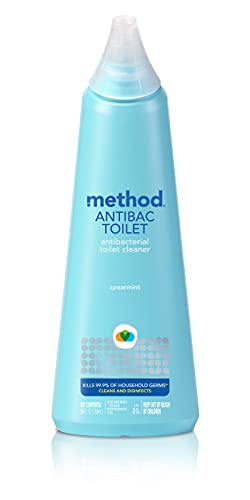
method Antibacterial Toilet Bowl Cleaner, Spearmint
Badge: Best Antibacterial Stain Cleaner
Strengths
- Stated to clean and sanitise in one step, covering bowl, seat and under the rim
- Tough-on-grime positioning suits the ring-and-streak combination most bowls present
- Angled liquid format is made for getting gel under the rim where streaks begin
Trade-offs
- Positioned for grime rather than named as a mineral descaler — heavy scale is beyond its brief
- Antibacterial formulas are not the plant-based school; ingredient-screeners should read the label
- Spearmint scent will not suit every household
| Detail | From the product listing |
|---|---|
| Format | Format: liquid bowl cleaner gel |
| Bottle size | Bottle size: 24 fl oz |
| Scent | Scent: spearmint |
| Antibacterial formula, labelled to kill household germs | Antibacterial formula, labelled to kill household germs |
| Stated use | Stated use: toilet bowls, seats and under the rim |
| Action described by maker | Action described by maker: cleans and sanitises in one step |
Method’s antibacterial gel is the pick for bowls whose problem is mixed: a mineral ring at the waterline, grime streaks under the rim, and a household that wants the cleaning pass to sanitise as it goes. Its listing describes use on the bowl, the seat and under the rim, which matters for deposits because the streaks that run down a bowl start at the rim jets — treat the source under the rim and the visible streak has nothing left to feed it. The one-step positioning is honest convenience: one product, one pass, both jobs.
For mineral work specifically, borrow the treatment method from the how-to section: apply under the rim and around the ring, let it sit, brush, and repeat on stubborn patches rather than scrubbing harder. Where this gel reaches its limit is thick scale — a crust you can feel with a fingernail needs mechanical help from a porcelain-safe pumice first, after which a gel like this one maintains the result. Bought with that division of labour in mind, it will not disappoint.
On the facts, the method Antibacterial Toilet Bowl Cleaner, Spearmint is an antibacterial bowl gel in a spearmint scent that is labelled to clean and sanitise the bowl, the seat and the area under the rim in one step. Its under-rim application matters in this guide because rim jets are where mineral streaks are born. The listing details in the spec box above are the whole of what the maker states about size, format and intended use, and this guide deliberately goes no further than those stated details: no performance percentages, no laboratory claims and no invented specifications have been added. Read them as a description of what the product is designed to do, then match that design honestly against the problem in your bathroom before you buy.
Best for: households wanting cleaning and sanitising in one product, with light-to-moderate mineral marks / Not suited for: purists seeking a plant-based formula, and bowls with heavy crusty scale as the only problem
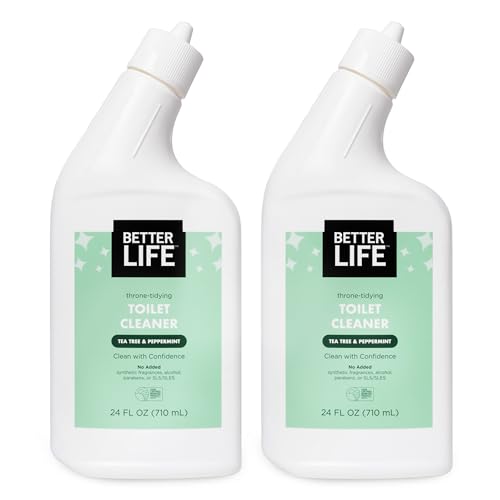
Better Life Toilet Bowl Cleaner
Badge: Best Plant-Based Pick
Strengths
- Plant-based and non-toxic positioning, stated plainly in the listing
- Sold explicitly as a stain remover — the deposit job — not just a freshener
- Tea tree and peppermint scent comes from the formula’s plant character, not a perfume overlay
- Twin-bottle pack suits a two-bathroom home
Trade-offs
- Plant-based stain removers work at maintenance pace; set contact-time expectations accordingly
- Not an antibacterial product — households wanting sanitising action should choose the method pick
- Scent is herbal and distinctive; sample one bottle’s smell before stocking a cupboard
| Detail | From the product listing |
|---|---|
| Format | Format: liquid cleaning gel |
| Pack | Pack: two 24 ounce bottles |
| Scent | Scent: tea tree and peppermint |
| Plant-based, non-toxic positioning | Plant-based, non-toxic positioning |
| Stated action | Stated action: stain and odour remover |
Better Life is the plant-based answer to the same stain problem: a non-toxic gel whose listing names stain and odour removal as its job. For mineral deposits, its natural audience is the household that treats early — the faint ring, the first streak — and wants to do so without conventional chemistry in a small, ventilated room. Plant-based stain removers reward the treatment method even more than conventional ones: full-strength contact, patience, and a brush, repeated on a schedule, rather than a single heroic application.
The twin-bottle pack is quietly practical for deposit control, because the second bathroom is where rings go unnoticed longest. Keep one bottle in each room and both bowls stay on the early-treatment rhythm that keeps mineral a maintenance topic instead of a restoration project. Readers who like to compare homemade approaches as well will find Best Mixture To Clean Toilets a useful companion read — with the caution that home mixtures share this pick’s maintenance pace and none of them is a heavy descaler either.
On the facts, the Better Life Toilet Bowl Cleaner is a plant-based, non-toxic cleaning gel sold as a stain and odour remover, scented with tea tree and peppermint and supplied as a pair of bottles. It proves the plant-based school can hold a place in a deposit guide when the stains are caught early. The listing details in the spec box above are the whole of what the maker states about size, format and intended use, and this guide deliberately goes no further than those stated details: no performance percentages, no laboratory claims and no invented specifications have been added. Read them as a description of what the product is designed to do, then match that design honestly against the problem in your bathroom before you buy.
Best for: ingredient-conscious households treating light mineral stains on a routine / Not suited for: anyone expecting a plant-based gel to strip heavy scale in one pass

method Antibacterial Toilet Bowl Cleaner, Spearmint (Pack of 3)
Badge: Best Multi-Pack Value in Use
Strengths
- Three bottles remove the rationing that makes people under-dose a stain treatment
- Same stated clean-and-sanitise action as the single bottle
- One bottle per bathroom keeps the routine where the stains are
Trade-offs
- Identical formula to the single bottle — this badge is about format, not a different chemistry
- Bulk buying only pays if the scent and formula suit you; try the single first if unsure
- Still a grime-and-stain gel, not a heavy-scale descaler
| Detail | From the product listing |
|---|---|
| Format | Format: liquid bowl cleaner gel |
| Pack | Pack: three 24 fl oz bottles |
| Scent | Scent: spearmint |
| Antibacterial formula, labelled to kill household germs | Antibacterial formula, labelled to kill household germs |
| Stated use | Stated use: toilet bowls, seats and under the rim |
This pick is the method gel in its household-logistics form: three bottles, one for each bathroom and a spare, so that a mineral ring found on a Sunday is treated on Sunday rather than added to a shopping list. Deposit control is a war of small delays — every week a ring sits, it hardens — and pack format is a legitimate buying factor precisely because it removes delay. The formula’s stated territory is the same as the single bottle’s: bowl, seat and under-rim, cleaning and sanitising in one step.
Choose between this and the single bottle purely on household shape. One bathroom, first time with the scent: single. Several bathrooms, a rental, or a cleaner who comes weekly and should never find an empty cupboard: the pack. Either way the mineral method is unchanged — lower the water, coat the deposit, wait, brush, repeat — and the pack simply guarantees the gel is always within reach when the method is needed.
On the facts, the method Antibacterial Toilet Bowl Cleaner, Spearmint (Pack of 3) is the same spearmint antibacterial bowl gel as the single bottle, sold as a three-bottle pack for households that clean more than one bathroom. Format is a real variable in deposit control, and this pack is the format pick. The listing details in the spec box above are the whole of what the maker states about size, format and intended use, and this guide deliberately goes no further than those stated details: no performance percentages, no laboratory claims and no invented specifications have been added. Read them as a description of what the product is designed to do, then match that design honestly against the problem in your bathroom before you buy.
Best for: multi-bathroom homes and landlords keeping several bowls on one routine / Not suited for: first-time buyers who have not yet lived with the spearmint scent
Liquid-Plumr Pro-Strength Clog Destroyer
Badge: Prose-Only: Wrong Chemistry
Strengths
- A genuinely strong product in its own category of hair-clog removal
- Large bottle divided into five stated gel treatments
- Stated safe for septic systems and pipes
Trade-offs
- Formulated for hair and organic clogs, not for calcium, limescale or rust deposits
- Pouring a drain gel at a bowl stain wastes the product and risks the porcelain
- Not linked in this guide, by the screening rule explained in How These Picks Were Chosen
| Detail | From the product listing |
|---|---|
| Format | Format: gel clog destroyer |
| Bottle size | Bottle size: 80 fl oz |
| Stated yield | Stated yield: 5 gel treatments per bottle |
| Stated target | Stated target: hair clogs |
| Stated safe for all septic systems and pipes | Stated safe for all septic systems and pipes |
Liquid-Plumr appears in this guide so that nobody buys it by mistake for the wrong stain. It is a pro-strength gel for hair clogs in drains — a respected product in that category — but hair and mineral scale are different chemistries. A gel designed to dissolve keratin and grease has no particular power over calcium bonded to porcelain, and using it on a bowl ring spends a strong product, exposes the bathroom to strong chemistry, and leaves the ring exactly where it was. The honest advice is to keep it for the drain problem it names.
If your bathroom has both problems — a hair-clogged basin drain and a mineral-ringed toilet, a common pairing in hard-water homes — the two products live in the same cupboard but never in the same fixture at the same time, and never mixed. Treat the drain with the gel on its label’s terms, treat the bowl with a stain remover on its terms, and let each product do the one job its maker states.
On the facts, the Liquid-Plumr Pro-Strength Clog Destroyer is a pro-strength gel sold in a large bottle that the maker divides into five gel treatments, positioned first of all as a hair clog remover. The listing details in the spec box above are the whole of what the maker states about size, format and intended use, and this guide deliberately goes no further than those stated details: no performance percentages, no laboratory claims and no invented specifications have been added. Read them as a description of what the product is designed to do, then match that design honestly against the problem in your bathroom before you buy.
Best for: recognition only — buy it for hair clogs in drains, on its own category’s terms / Not suited for: mineral deposit removal of any kind
Prose-only pick: no Amazon link or product image is shown for this product in this guide, for the reason recorded in the article sources file. It is covered so you can recognise it on a shelf and judge it against the linked picks.
Green Gobbler Toilet Clog Defense
Badge: Prose-Only: Prevention, Not Removal
Strengths
- Purpose-built for toilet drain lines, with a clear preventive mechanism
- Maker positions it for old plumbing and slow-flow toilets
- Stated safe for septic systems
Trade-offs
- Works inside the drain pipe, not on the bowl surface where mineral deposits sit
- Prevention is not removal: existing scale is untouched by a coating
- Not linked in this guide, by the screening rule explained in How These Picks Were Chosen
| Detail | From the product listing |
|---|---|
| Format | Format: liquid pipe-coating preventive treatment |
| Bottle size | Bottle size: 60 oz |
| Stated yield | Stated yield: 5 treatments per bottle |
| Stated purpose | Stated purpose: coats pipes to prevent toilet clogs and improve flush performance |
| Stated safe for septic systems | Stated safe for septic systems |
| Maker positioning | Maker positioning: old plumbing and low, slow-flow toilets |
Green Gobbler Toilet Clog Defense is the second prose-only entry, set aside for a different reason than the gel above: it is a toilet product, but its stage is the inside of the drain pipe, where it coats the wall to stop clogs forming and to help flush performance. Mineral deposits, the subject of this guide, live on the bowl’s porcelain, in full view, and a pipe coating neither reaches them nor dissolves them. A household could reasonably own this product and a stain remover at once — they simply never substitute for each other.
It earns its prose mention because shoppers cross-shopping clog prevention and deposit removal are often solving one bathroom’s two problems, and naming the boundary prevents an expensive confusion. Clear the bowl’s mineral with a stain remover from the linked picks; keep the line beyond the bowl free-flowing with prevention if clogs are also your pattern — and if the home in question is a manufactured one, Best Mobile Home Toilets is the companion read for its fixture-side constraints.
On the facts, the Green Gobbler Toilet Clog Defense is a liquid treatment designed to coat the inside of toilet drain pipes so waste slides through more easily, sold specifically as a toilet clog preventive rather than a clog remover. The listing details in the spec box above are the whole of what the maker states about size, format and intended use, and this guide deliberately goes no further than those stated details: no performance percentages, no laboratory claims and no invented specifications have been added. Read them as a description of what the product is designed to do, then match that design honestly against the problem in your bathroom before you buy.
Best for: recognition only — buy it to prevent clogs in toilet drain lines, not to clean a bowl / Not suited for: removing mineral rings, streaks or scale from porcelain
Prose-only pick: no Amazon link or product image is shown for this product in this guide, for the reason recorded in the article sources file. It is covered so you can recognise it on a shelf and judge it against the linked picks.
Comparison Table
The linked four are compared on the deposit job; the two prose-only rows are included so the table shows the whole verified pool and exactly why two of its members are not buying recommendations for this keyword.
| Product | Size / pack | Standout point | Listing |
|---|---|---|---|
| Mrs. Meyer’s Clean Day Toilet Bowl Cleaner, Lemon Verbena | 24 fl oz bottle | Everyday stain removal with a scent households actually enjoy using | Check on Amazon |
| method Antibacterial Toilet Bowl Cleaner, Spearmint | 24 fl oz bottle | Deposit-adjacent grime removal plus antibacterial action in one gel | Check on Amazon |
| Better Life Toilet Bowl Cleaner | two 24 oz bottles | Plant-based stain removal for households avoiding conventional chemistry | Check on Amazon |
| method Antibacterial Toilet Bowl Cleaner, Spearmint (Pack of 3) | 24 fl oz bottles, pack of 3 | Stock-up format for multi-bathroom homes on a treatment routine | Check on Amazon |
| Liquid-Plumr Pro-Strength Clog Destroyer | 80 fl oz bottle | Hair and drain clogs — a different problem from mineral deposits | Prose only |
| Green Gobbler Toilet Clog Defense | 60 oz bottle | Pipe coating for clog prevention — downstream of the bowl, not a bowl treatment | Prose only |
How to Choose the Best Mineral Deposit Removal for Toilets
Identify the deposit before choosing the chemistry. A pale, chalky ring is calcium-rich scale from evaporating hard water. Orange-brown streaks are iron, usually arriving through the rim jets. A grey-green tint can be copper or algae in a rarely used bowl. All are called mineral deposits, but they share one buying implication: you need a product whose stated job is stain removal, applied with contact time. A general cleaner, a disinfectant or a drain gel — however strong — is aimed at a different target, and strength aimed at the wrong target is just risk without benefit.
Grade the deposit honestly. Run a fingernail across it: if it feels smooth and looks like a stain, it is a film, and any linked pick in this guide, used as a treatment, will clear it across a few applications. If it feels rough and raised, it is built scale; a bottled maintenance cleaner will improve it slowly at best, and the realistic home sequence is mechanical reduction first — a pumice stone made specifically for porcelain, used wet and gently — followed by a stain remover to finish and maintain. If the bowl is old, crazed or already scratched, scale bonds harder and expectations should drop again; at some point replacement outperforms restoration, which is a fixture decision, not a cleaning one.
Match the formula school to the household. Antibacterial gels add sanitising action that some households want and others actively avoid. Plant-based stain removers suit ingredient-screened homes and early-treatment routines. Scent is not trivial in a product used weekly in a small room: lemon verbena, spearmint and tea-tree-and-peppermint divide opinion, and the right scent is the one nobody in the house resents, because resented products get used less and deposits win by default. Pack format matters the same way — a bottle in the room beats a better bottle in a distant cupboard.
Finally, think past the treatment to the source. Mineral arrives in the water, so deposits return; the question is only how fast. A flapper that leaks and keeps the bowl refilling lays down fresh mineral daily and will defeat any cleaner — fix the leak first. In very hard water homes, treating the ring monthly while it is still a film is the entire strategy, and it works. Check the current price on Amazon for the pick that matches your deposit grade and your household’s formula preferences, and buy the format that keeps the routine alive.
How to Remove Mineral Deposits From a Toilet Bowl, Step by Step
This sequence turns any linked pick from a quick cleaner into a deposit treatment. The two moves that make the difference are lowering the water level and honouring the contact time.
- Turn off distractions and ventilate the room; put on household gloves.
- Flush, then lower the water level: turn off the supply valve and flush again, or push bowl water down with the brush, so the waterline ring sits exposed above the water.
- Apply the cleaner generously around the ring, up under the rim, and along any streak lines — full-strength contact is the point of the exercise.
- Wait. Give the product the contact time its label states, and for a visible ring, the longer end of it; do not flush early out of impatience.
- Agitate with a stiff toilet brush, working the ring and the rim-jet area; for a rough crust, pause here and consider the pumice step described in the buying guide before continuing.
- Flush and inspect under good light. Judge the treatment by lightening and smoothing, not by perfection.
- Repeat the cycle on remaining deposit rather than scrubbing harder in one session — mineral yields to repeated chemistry, not force.
- Finish by cleaning the seat and exterior with a suitable bathroom cleaner, and wash the brush and gloves.
- Note the date. Schedule the next treatment while the deposit is still a film — monthly in hard water, quarterly in soft.
- Check the tank while you are there: a leaking flapper or crusted tank parts are tomorrow’s bowl deposits arriving early.
One safety rule governs every product in this guide: never mix cleaners. A stain remover combined with bleach or with another household chemical can release dangerous gases, and the fact that two products are each safe alone says nothing about the pair. If you want to try a different product on a stubborn ring, flush thoroughly and let the bowl refill and drain between products, so each works alone as its maker intended.
Troubleshooting
Problem: the ring lightens but will not disappear → it is built scale, not film; switch to the pumice-then-cleaner sequence, or accept a multi-week treatment rhythm, and check for a leaking flapper feeding it.
Problem: streaks return within days of cleaning → the source is under the rim; treat the rim-jet area directly, and inspect the tank for rusting parts or iron-rich refill water staining from above.
Problem: the deposit is rough and the brush skates over it → stop scrubbing, which only polishes the crust; mechanical reduction with a porcelain-rated pumice, kept wet, is the missing step before chemistry can work.
Hard Water Is the Cause; the Bowl Is Just Where It Shows
Every mineral deposit in a toilet arrived dissolved in the water supply, invisible, and became visible only where water sits, evaporates or slows: the waterline, the rim jets, the trapway entrance. That is why two toilets in the same house can differ — the guest bowl that sits full and unused for weeks grows a ring faster than the family bowl flushed twenty times a day. It is also why deposit control is partly a usage pattern: a rarely used toilet benefits from a weekly flush-and-brush minute more than from any stronger product.
Zoom out one level and the bowl becomes a free water-quality report. Heavy, fast-forming deposits in the toilet usually mean the kettle, the showerhead and the water heater are collecting the same scale, and the household conversation may need to widen to filtration or softening. A bowl cleaner remains the right tool for the bowl — but let the bowl tell you the truth about the water, and budget the bigger fix if the report is bad enough.
Rim Jets: the Hidden Half of Deposit Control
The small holes under the rim are where flush water enters the bowl, and mineral narrows them exactly as it narrows everything else. Blocked jets weaken and skew the flush, leave streaks below the blocked holes, and create the maddening pattern of a bowl that is cleaned weekly yet always looks streaked in the same places. Deposit treatment that ignores the jets treats the symptom in the bowl while the cause crusts over above it.
Work gel up under the rim with the brush’s angled head, and let treatments sit long enough to work in the jet openings. A hand mirror and a torch reveal which jets have stopped flowing; a gentle poke with a wooden skewer — never metal, which chips glaze — can clear a softened opening. Restore the jets and both problems improve at once: the streaks stop regenerating, and the flush the toilet was designed for comes back.
Common Buying Mistakes
Mistake one: scrubbing harder instead of waiting longer. Mineral is dissolved by chemistry over time; force mostly scratches glaze, and scratched glaze collects deposits faster forever after.
Mistake two: treating a full bowl. Cleaner diluted by a full bowl of water barely touches a waterline ring. Lower the water level first — it is the cheapest improvement in this entire guide.
Mistake three: buying a drain gel for a bowl stain. Hair-clog chemistry and mineral chemistry are different jobs; the prose-only reviews in this guide exist to save you that purchase.
Mistake four: mixing products on a stubborn ring. Flush and clear between products; never layer chemicals in a bowl.
Mistake five: fixing the stain and ignoring the leak. A flapper that seeps keeps fresh mineral arriving daily, and no cleaner outruns a leak.
Final Recommendation
Start with Mrs. Meyer’s Clean Day Toilet Bowl Cleaner, Lemon Verbena (Check on Amazon) for the core job — a stated stain remover, septic safe, in a scent that makes the weekly treatment habit easy to keep. Choose method Antibacterial Toilet Bowl Cleaner, Spearmint (Check on Amazon) instead if your household wants the cleaning pass to sanitise as it goes and your deposits come with under-rim grime. Plant-based households should take the Better Life gel and simply commit to its contact-time rhythm. Whichever you choose, work the method — low water, full contact, patience, repeat — because in mineral removal the method is half the product.
And keep the two prose-only products in their own lanes: the clog gel for drains, the coating for prevention. A cupboard where every product is used for the job its maker states is a cupboard that works.
Frequently Asked Questions
What actually removes mineral deposits from a toilet?
A stain-removing bowl cleaner, given undiluted contact time on the deposit, removes films and moderate rings across one to three treatments. Built, rough scale usually needs gentle mechanical reduction first — a pumice made for porcelain, used wet — followed by the cleaner to finish. Products formulated for other jobs, such as hair-clog gels or pipe coatings, do not dissolve mineral and are covered in prose in this guide for exactly that reason.
How do I stop the ring coming back?
You cannot stop mineral arriving in hard water, but you can stop it hardening: treat the ring while it is still a film, on a monthly rhythm in hard-water homes, fix any flapper leak that keeps the bowl refilling, and brush the waterline weekly. Prevention is a schedule, not a product — every linked pick here works as the chemical half of that schedule.
Is it safe to use a pumice stone on a toilet bowl?
Only a pumice made and sold for porcelain, used wet, with light pressure, and tested in a hidden spot first. Generic or dry pumice can scratch glaze, and scratched glaze stains faster afterwards. Keep the stone and the surface wet, let the stone wear rather than forcing it, and stop if the deposit is on a coloured, coated or antique bowl, where professional advice is the safer route.
Why are the streaks under the rim always in the same place?
Because they flow from the same rim jets, and those jets are partially blocked by mineral or fed by rusting tank parts. Treat under the rim directly, clear softened jets gently with a wooden skewer, and look inside the tank for corroding hardware. Cleaning the streak without treating its source guarantees its return on schedule.
Can I use a drain clog remover on toilet mineral stains?
No — it is the wrong chemistry for the job and a waste of a strong product. Clog gels are formulated to dissolve hair, grease and soap in drains; mineral scale is calcium and iron bonded to porcelain, and it answers to stain-removing cleaners and contact time. The Liquid-Plumr review in this guide is prose-only precisely to make that boundary unmissable.
When is a stained bowl not worth saving?
When the glaze is crazed, chipped or already deeply scratched, deposits bond into the damage and return within days of any treatment; when the bowl is also a poor flusher or a water-waster, restoration money is usually better spent on replacement. Clean honestly for a month first — many condemned bowls are just neglected ones — and decide with that evidence.


