Disclosure: topratedkitchenware.com is reader-supported. When you buy through links on our site, we may earn an affiliate commission from Amazon and other retailers, at no extra cost to you.
Where to buy
Every entry in this guide to the best outdoor toilets is available through Amazon, which is handy for outdoor gear because you can confirm the current listing details — what ships in the box, the exact footprint, and the newest owner reports from campers, site managers, and cabin owners — before the unit needs to be standing in a field. Check the name links below, and pay attention to whether starter cartridges or composting medium are included, since an outdoor toilet that arrives without its consumables is not ready for its first weekend.
- MODIWELL LE-310 Compact Dry Flush Toilet — Check on Amazon
- Laveo Dry Flush Toilet
- LOO SEAL R1808 Waterless Self-Contained Dry Flush Toilet
- Modiwell LE-310 Smart Dry Flush Toilet
- Nature’s Head Self Contained Composting Toilet, Close Quarters Spider Handle
- OGO Origin Compact Composting Toilet
Read the full guide ↓
Introduction: Sanitation Where There Is No Bathroom
The best outdoor toilets answer a question that appears the moment people spend real time outside a plumbed building: where does everyone go? The settings vary — a family campsite, a garden that hosts long summer gatherings, a hunting cabin, a pool house, a market stall, a small construction site, a festival corner, a remote worksite — but the requirements converge. An outdoor toilet has to work with no water supply and no drain, control odor in warm weather, stand up to users who did not read any manual, and be serviced without turning the task into an ordeal. It also has to fit its shelter, whether that shelter is a purpose-built outhouse, a privacy tent, or a corner of a shed.
The six models below are all self-contained and waterless, drawn from the two families that dominate modern outdoor sanitation. Dry flush toilets seal each use into a liner, which makes them almost impossible to misuse and ideal for mixed groups of guests, customers, and crews. Composting toilets separate urine and dry the solids, which makes them the lower-consumable, longer-stay choice for cabins and semi-permanent outdoor setups. We weigh each pick against outdoor realities specifically — heat, transport, ground conditions, servicing in the open air, and the rules that govern waste disposal outside — rather than against indoor bathroom expectations it was never designed to meet.
Key Takeaways
- For mixed users and short events, sealed dry flush toilets are the most forgiving outdoor option because nobody can use them wrong.
- For a cabin or a season-long site, composting toilets cut consumable costs to medium and a routine, and they handle steady use well.
- The shelter matters as much as the toilet: shade, a level base, privacy, and a handwashing station complete the setup.
- Heat accelerates every odor process, so outdoor units need more frequent servicing in summer than the same unit indoors.
- Know your disposal route before the first use — cartridges to trash where allowed, urine and compost handled per local rules.
- Portability is a spectrum here, from the fold-away LE-310 to fixed-style units that anchor a permanent outdoor bathroom.
In this guide
Quick Picks
| Pick | Badge | Why it stands out | Link |
|---|---|---|---|
| MODIWELL LE-310 Compact Dry Flush Toilet | Best Overall Portable for Outdoor Use | A foldable, self-contained dry flush toilet that travels, stores small, and sets up anywhere. | Check on Amazon |
| Laveo Dry Flush Toilet | Best for Campsites and Gatherings | A waterless, portable sealing toilet that guests and campers can use correctly with zero instruction. | Check on Amazon |
| LOO SEAL R1808 Dry Flush Toilet | Best Semi-Permanent Outdoor Installation | A swivel-top, rechargeable dry flush toilet for a fixed outdoor bathroom in a cabin, site, or pool house. | Check on Amazon |
| Modiwell LE-310 Smart Dry Flush Toilet | Best One-Click Convenience Outdoors | A rechargeable portable dry flush toilet with waterless one-click sealing for events and travel. | Check on Amazon |
| Nature’s Head Self Contained Composting Toilet | Best Composting for Outdoor Cabins | A self-contained composting toilet in a close-quarters design for tight cabin and outhouse spaces. | Check on Amazon |
| OGO Origin Compact Composting Toilet | Best Compact Composting | A compact composting toilet with a 15-inch footprint made for vans, RVs, boats, and small shelters. | Check on Amazon |
How These Picks Were Chosen
This is a research-led comparison built from current, verifiable listings, judged against outdoor use rather than showroom appeal. Every pick is genuinely self-contained and waterless, because an outdoor toilet that needs a hose or a drain fails its first assignment. Beyond that threshold, we weighted five outdoor criteria. First, user-proofing: outdoor toilets serve strangers, children, and tired people at midnight, so systems that seal automatically score highly for group settings. Second, servicing in the field: how a unit is emptied, what the handler actually touches, and how far waste must be carried. Third, environmental tolerance: heat, dust, uneven ground, and storage in unheated shelters between uses. Fourth, transport and footprint, from folding travel units to fixed units that furnish a permanent outdoor bathroom. Fifth, consumables logistics — cartridges or medium — matched against how far the site is from resupply.
We deliberately did not treat this as a ranking of indoor toilets that happen to be outside. A ceramic plumbed fixture in an outhouse is a plumbing project, not an outdoor toilet, and none appears here. Owner feedback informed the shortlist throughout, particularly reports from campsite hosts, boat owners, and cabin users about summer odor, cartridge pacing at gatherings, and how composting units behave in small ventilated shelters.
The 6 Best Outdoor Toilets

MODIWELL LE-310 Compact Dry Flush Toilet
Badge: Best Overall Portable for Outdoor Use
Strengths
- Foldable design packs down for transport and storage, then sets up as a real toilet at the site.
- Self-contained sealing means no odor plume around a campsite and nothing exposed when it is carried.
- Rechargeable and plumbing-free, so it works in a tent, a shelter, a boat, or a garden corner equally well.
Trade-offs
- Compact capacity is sized for campers and small groups; a busy event will cycle cartridges quickly.
- Consumes liner cartridges and battery charge, both of which must travel with it.
- Not a permanent fixture — a season-long installation deserves a fixed unit.
Mini spec box
- Type: compact dry flush toilet, waterless
- Format: foldable, self-contained
- Power: rechargeable battery
- Color listed: gray
- Settings listed: RVs, road trips, cabins, marine, van life and off-grid
The LE-310 is the outdoor toilet for people whose outdoors moves. It folds for the drive, unfolds at the site, and because it seals each use into liner film, it behaves politely in the settings where a basic bucket toilet becomes a negotiation — the family campsite, the tailgate, the small boat, the garden workday. There is no vent to site, no medium to keep dry in a damp tent, and no open container to knock over on rough ground. For weekend-scale use, that combination of tidiness and packability is hard to argue with.
Plan around its scale honestly. Take a spare cartridge on any trip longer than a weekend, keep the charging cable in the same bag as the toilet, and site it on the flattest ground you have, because a folding unit on a slope tests everyone’s balance. Within those ordinary precautions, it is the most generally useful outdoor toilet in this guide.
Best for: camping, road trips, boats, and garden or worksite days / Not suited for: permanent installations or large events

Laveo Dry Flush Toilet
Badge: Best for Campsites and Gatherings
Strengths
- Sealed flush behavior that any guest can operate correctly the first time, with no briefing.
- No compost medium, urine bottle, or venting to manage in a temporary outdoor setup.
- Portable and self-contained, so one unit can serve a campsite, a party, and a project in turn.
Trade-offs
- Gatherings burn cartridges faster than hosts expect; stock generously for events.
- Sealed waste must leave with the trash, which needs planning at remote sites.
- Portable format benefits from a shelter; it is not itself weatherproof housing.
Mini spec box
- Type: dry flush toilet, waterless
- Format: portable, self-contained
- Material listed: LDPE
- Color listed: white
- Settings listed: tiny homes, vans, boats, camping, RVs, off grid
Hosting outdoors changes the toilet problem from personal to social, and the Laveo is built for the social version. Nobody at your gathering wants a lesson in urine diversion; nobody staffing a market stall can give one. The Laveo simply behaves like a toilet — use it, flush, and the waste is sealed out of sight and smell — which is why dry flush units dominate the event and guest end of outdoor sanitation. Its maker positions it as easier to use than composting or incinerating alternatives, and at a busy campsite that ease is the whole point.
The host’s homework is logistics: cartridges counted against expected guests with a margin, a discreet trash route for the sealed bundles, and a shelter that gives the unit shade and the users privacy. Do that homework and the Laveo disappears into the event, which is the highest compliment outdoor equipment can earn.
Best for: campsites, gatherings, guest cabins, and hosts who cannot brief every user / Not suited for: long unattended installations far from trash service

LOO SEAL R1808 Waterless Self-Contained Dry Flush Toilet
Badge: Best Semi-Permanent Outdoor Installation
Strengths
- Fixed-style, swivel-top format furnishes a permanent outdoor bathroom rather than a temporary camp setup.
- Rechargeable sealing system keeps a pool house, cabin, or site toilet odor-contained with no plumbing.
- Listed across off-grid, tiny home, emergency, and care settings, reflecting a stay-in-place design brief.
Trade-offs
- Not a travel unit; moving it between sites defeats its purpose.
- Cartridge supply and battery charging become part of the site’s standing routine.
- Shares the R1808 designation with a MODIWELL model in other guides; confirm the exact listing when ordering.
Mini spec box
- Type: dry flush toilet, waterless, self-contained
- Format: swivel top, fixed-style
- Power: rechargeable battery
- Plumbing: none required
- Settings listed: RVs, boats, off-grid, vans, tiny homes, emergency and care use
Some outdoor toilets are destinations, not equipment: the bathroom in the pool house, the toilet in the site cabin, the permanent corner of a large garden where a plumbed extension was never worth its cost. The LOO SEAL R1808 fits that role. Its swivel-top, fixed format sits like a fixture, its sealing system keeps a warm-weather outdoor bathroom civilized, and its rechargeable operation means the only infrastructure it needs is a shelter and a charging habit.
Because it stays in place, the decisions around it are architectural: a level, washable floor; a roof that keeps rain off users; ventilation in the shelter itself so summer heat does not build; and a service path for cartridges that does not cross the swimming pool deck or the dining terrace. Get the shelter right and this becomes the outdoor bathroom guests remember fondly, which is not a sentence often written about outdoor bathrooms.
Best for: pool houses, cabins, garden bathrooms, and semi-permanent sites / Not suited for: travel or temporary events

Modiwell LE-310 Smart Dry Flush Toilet
Badge: Best One-Click Convenience Outdoors
Strengths
- One-click sealing removes every judgment call from using an outdoor toilet.
- Rechargeable and portable across vans, trucks, campsites, and backup roles.
- Waterless operation means no freeze worries for shoulder-season outdoor storage.
Trade-offs
- Portable scale suits groups and trips, not a season of heavy site traffic.
- Cartridge and battery discipline travel with it; forget either and it is furniture.
- Close in concept to the LE-310 Compact; compare the two current listings before choosing.
Mini spec box
- Type: dry flush toilet, waterless one-click sealing
- Format: portable, rechargeable
- Power: rechargeable battery
- Settings listed: vans, trucks, car travel, tiny homes, camping, backup and off-grid living
- Plumbing: none required
The Smart variant of the LE-310 leans into the single interaction an outdoor toilet should require: one click, sealed, done. At a campsite that means children can manage it; at a worksite it means the crew actually uses it as intended; at a roadside stop it means no lingering over an open container in a layby shelter. Portability plus that sealing discipline makes it a strong second toilet as well — the unit that comes out for the big weekend, the renovation, the power cut, and then goes back into storage without complaint.
Choose between this and the Compact above on the concrete details of the current listings — dimensions, what is bundled, how refills are supplied — because the underlying outdoor proposition is the same. Either way, store it charged, store a cartridge with it, and it will be ready the day you need it.
Best for: family camping, worksites, events, and household backup / Not suited for: permanent high-traffic installations
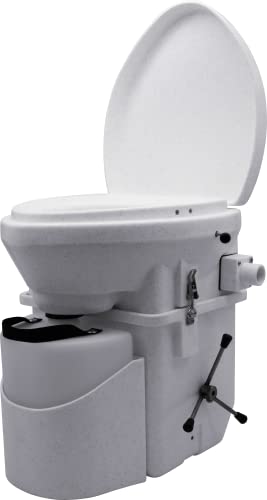
Nature’s Head Self Contained Composting Toilet with Close Quarters Spider Handle
Badge: Best Composting for Outdoor Cabins
Strengths
- Self-contained composting with urine separation, built for continuous use rather than occasional weekends.
- Close-quarters handle design suits the tight footprint of an outhouse or small cabin bathroom.
- No cartridges to buy across a long season; the running input is composting medium.
Trade-offs
- Needs venting from the shelter and a user routine — medium, turning, bottle emptying.
- Guests at a casual gathering will need the thirty-second composting briefing.
- Composting slows in cold weather, so a winter cabin treats it partly as storage.
Mini spec box
- Type: self-contained composting toilet
- Handle: close quarters spider handle design
- System: waterless, urine-separating composting
- Plumbing: none required
- Settings: cabins, boats, and small off-grid spaces
For the outdoor toilet that stays — the cabin in the woods, the permanent outhouse behind a rural home, the fishing camp used all season — composting repays its small routine with independence. This Nature’s Head variant is shaped for tight quarters, with a handle arrangement intended for spaces where a wide side swing is impossible, which describes most real outhouses. Urine is diverted and bottled, solids are agitated into medium, and a vent carries moisture and odor out of the shelter. Across a season, the consumable bill is a bag of medium rather than a stream of cartridges, and the end product is far easier to deal with responsibly on rural land, following local rules.
Its demands are the familiar composting ones, sharpened by the outdoors: keep the shelter ventilated, keep medium dry in a sealed bin against damp air, and empty the urine bottle on a rhythm set by your busiest week, not your average one. Owners who do this get the most self-sufficient outdoor toilet in this guide.
Best for: cabins, permanent outhouses, and season-long rural sites / Not suited for: one-off events or users who will not keep a routine
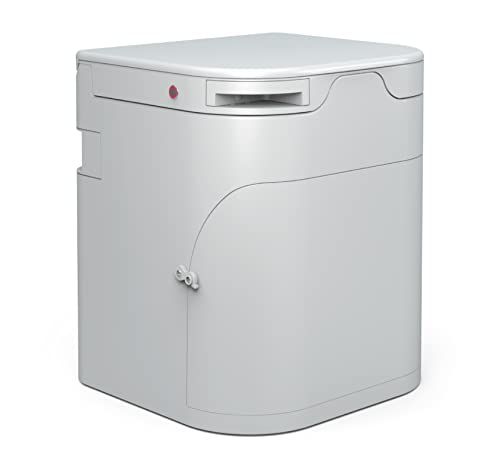
OGO Origin Compact Composting Toilet
Badge: Best Compact Composting
Strengths
- A 15-inch footprint fits shelters, vans, and boat heads where larger composting units cannot go.
- True composting operation with urine separation, avoiding cartridge dependence.
- Compact format suits semi-permanent outdoor bathrooms in genuinely small structures.
Trade-offs
- Compact chambers mean more frequent attention than a full-size composting toilet under heavy use.
- Shares the composting family’s need for venting and routine.
- Small stature is a compromise for larger users on long stays.
Mini spec box
- Type: compact composting toilet
- Footprint: 15 inches
- System: waterless, urine-separating composting
- Plumbing: none required
- Settings listed: van, RV, and boat — and small outdoor shelters
The OGO Origin exists for the gap between wanting composting and having room for it. At a 15-inch footprint it fits the narrow outhouse, the converted garden shed, the small boat head, and the van build where every inch is negotiated. Inside that small outline it runs the full composting pattern — diversion, medium, agitation — so the outdoor site gains composting’s low-consumable independence without surrendering the floor a larger unit demands.
Compact composting is still composting: vent it, feed it medium, and respect the bottle’s rhythm, which will be brisker than a full-size unit’s under the same users. For a small structure used by one or two people, that rhythm is a fair trade for a toilet that fits at all.
Best for: small shelters, sheds, boats, vans, and one- or two-person sites / Not suited for: busy group sites needing maximum capacity
Comparison Table
| Pick | Badge | System | Key attributes | Link |
|---|---|---|---|---|
| MODIWELL LE-310 | Best Overall Portable for Outdoor Use | Dry flush, sealing | Foldable and compact; rechargeable; self-contained | Check on Amazon |
| Laveo Dry Flush | Best for Campsites and Gatherings | Dry flush, sealing | Portable; LDPE body; no briefing needed for guests | Check on Amazon |
| LOO SEAL R1808 | Best Semi-Permanent Outdoor Installation | Dry flush, sealing | Swivel top; fixed-style; rechargeable; self-contained | Check on Amazon |
| Modiwell LE-310 Smart | Best One-Click Convenience Outdoors | Dry flush, sealing | One-click sealing; rechargeable; portable | Check on Amazon |
| Nature’s Head Close Quarters | Best Composting for Outdoor Cabins | Composting, self-contained | Close quarters spider handle; urine-separating; waterless | Check on Amazon |
| OGO Origin | Best Compact Composting | Composting, compact | 15-inch footprint; urine-separating; waterless | Check on Amazon |
How to Choose an Outdoor Toilet
Start with who will use it and for how long. A toilet for your own family’s camping trips can rely on your habits; a toilet for guests, customers, or a work crew must rely on none. That single distinction pushes most group and event use toward dry flush sealing, and most long-stay, small-group use toward composting. Duration matters just as much: a system that is perfect for three days can be the wrong answer for three months, because consumables and servicing accumulate with time.
Match capacity to the busiest day, not the average day. Outdoor use arrives in surges — the Saturday of the gathering, the holiday weekend at the cabin, the day the whole crew is on site. Count users and hours at the peak, then check what that means for a dry flush cartridge’s lifespan or a composting unit’s urine bottle. If the peak overwhelms one unit, the honest solutions are a second portable unit or a shorter service interval, not hope. Keep the arithmetic simple and pessimistic; outdoor sanitation failures are remembered.
Budget the shelter, not just the toilet. Every pick in this guide performs better inside a decent shelter: a roof, a door that latches, a level and washable floor, and enough light to see at night. When you finish a wooden shelter, the finish matters — a washable, moisture-resistant surface is the practical choice, and researching Best Paint For Toilets and Best Paint For Near Toilets is a sensible detour before you decorate. Add a handwashing station — even a simple water container with a tap, soap, and a towel — and the setup crosses from tolerated to genuinely civilized.
Decide the waste route in advance. Sealed cartridges leave with household or site trash where local rules allow. Urine from a composting toilet is typically diluted and dispersed on ground well away from wells, gardens, and waterways, again where rules allow. Finished compost is buried or handled per local guidance. Public land, parks, and organized sites have their own strict rules that override all of the above; check them for your specific place before assuming any of it.
How to Set Up and Service an Outdoor Toilet
Setup begins with the ground. Choose the flattest, best-drained spot in or near the shelter, out of direct all-day sun if you can, because heat is odor’s accomplice. Level the unit — a rocking toilet discourages use and stresses every seal — and, for composting models, route the vent so air leaves the shelter rather than pooling in it. For dry flush models, charge fully and run one empty sealing cycle so the sound is familiar. Then stock the shelter like a small room: paper, a lidded bin for non-flushable items, handwashing supplies, a spray cleaner, and the spare consumables, with paper products chosen to suit the system — a practical place where the guidance in Best Paper Gor Toilets belongs, since the wrong paper burdens a composting chamber.
Servicing outdoors follows a rhythm set by weather and traffic. In summer, halve your indoor instincts: bottles and cartridges fill the same, but warmth makes any delay more noticeable, and flies find outdoor units faster than indoor ones. Carry waste in closed containers, wash hands at the station you remembered to provide, and wipe surfaces with a cloth and cleaner rather than hosing the unit, because electronics, batteries, and compost chambers all dislike flooding — the same reason a plumbed bathroom’s Best Passive Cleaner For Toilets approach, which relies on water sitting in a bowl, simply does not translate outdoors. Between seasons, clean the unit thoroughly, remove batteries for storage where the maker advises, and store cartridges and medium sealed against damp and curious wildlife.
Troubleshooting. Problem: odor around a composting shelter in hot weather → check the vent path and fan first, then the urine bottle level, then whether the chamber has gone wet from a user who did not sit fully. Problem: a dry flush unit draws a crowd of flies → a previous seal was incomplete or a bundle was left beside the unit; remove waste promptly, wipe the sealing area, and keep the shelter door latched. Problem: a portable unit rocks or slides → the ground has settled; re-level on a board or paver base rather than shimming one corner.
Shelters, Privacy, and Making an Outdoor Toilet Civilized
The difference between an outdoor toilet people avoid and one they use without thinking is rarely the toilet. It is the approach path lit at night, the door that closes properly, the hook for a coat, the small shelf, the absence of gaps at eye level, and a floor that does not feel like mud. A privacy tent serves a weekend; a framed outhouse serves a generation, and building one is mostly carpentry, ventilation, and common sense: high and low vents to move air, a roof overhang that throws rain clear, and a door that swells less in August than it did in May.
Think about the full cast of users. Children need a step if the seat is high and a light they can reach. Older users need a grab point and a path without trip hazards. Everyone needs the handwashing answer to be obvious and stocked. And the person who services the toilet — probably you — needs the route from shelter to disposal point to be short, private, and possible in the rain. Design for that person too, and the whole arrangement stays pleasant for years instead of degrading one skipped service at a time.
Rules, Neighbors, and the Environment
Outdoor sanitation sits at the meeting point of your land and everyone else’s water, so it carries more rules than an indoor bathroom. Setbacks from wells, streams, and property lines commonly apply to any system that disperses urine or buries compost; organized campgrounds and public lands impose their own regimes, often pack-in, pack-out. Homeowner associations and municipalities may have views about outhouses even where health rules are silent. None of this is a reason to avoid an outdoor toilet — it is a reason to make two phone calls or website checks before the shelter goes up, not after a neighbor complains.
Neighbors deserve a sentence of their own in any outdoor plan. A well-kept, well-sited outdoor toilet is invisible to the people around your land; a neglected one announces itself downwind and becomes, fairly or not, the symbol of the whole property. Site with the prevailing breeze in mind, keep the shelter maintained and painted, and service on schedule, and the same installation that could have been a grievance becomes a non-event. Rural courtesy and good sanitation practice point, as they often do, in exactly the same direction.
The environmental ledger of the picks here is genuinely favorable when they are run properly. Waterless systems save the entire flush volume, composting returns organic matter to the soil cycle where permitted, and even dry flush cartridges concentrate waste into the managed trash stream rather than a leaking pit or an overwhelmed septic. The failures are all failures of handling — dumping where it does not belong, neglecting a unit until it is a hazard — which is another way of saying the environmental performance of an outdoor toilet is mostly the behavior of its owner.
Events and Worksites: The Toilet as Logistics
At an event or a worksite, a toilet stops being a product and becomes a service you are providing to people who did not choose it. That shift in perspective explains most buying decisions in this category. Reliability beats refinement: a sealing dry flush unit that a hundred strangers can use without instruction will outperform a cleverer system that needs its owner standing nearby. Placement becomes crowd management — close enough to be found, far enough from food and seating to be discreet, on ground that will not turn to mud at the exact moment the queue forms. Lighting stops being a nicety: an unlit toilet at an evening event is effectively no toilet, and a simple solar light or lantern hook inside the shelter does more for user satisfaction than any feature molded into the unit itself.
Servicing is the other half of the logistics. Decide in advance who checks the unit, at what interval, and what a check involves: paper stocked, bin emptied, surfaces wiped, cartridge or bottle level assessed honestly against the hours remaining. Write it on a card taped inside the shelter door if the event has staff. Worksites add a regulatory layer — many jurisdictions and general contractors specify sanitation provision for crews, and while a self-contained unit often satisfies small-site needs, confirm the requirement rather than assuming it. The sites that get this right treat the toilet like catering: planned, stocked, checked, and invisible when it works.
Transport, Storage, and the Life Between Uses
Portable outdoor toilets spend most of their lives not in use but in transit and storage, and they age according to how those phases are handled. Before any journey, empty what can be emptied: a urine bottle travels badly half full, and a dry flush unit should start a trip either freshly cartridge-changed or with its last use sealed and counted. Transport sealed units upright, in a part of the vehicle where a knock will not become a story, and keep the toilet’s bag of essentials — cable, spare cartridge or medium, gloves, cleaner — packed with the unit rather than rediscovered each time.
Storage is where good units quietly die of neglect. Clean and dry the unit before it goes away, because a chamber or sealing path stored dirty in a warm shed announces itself months later. Remove or maintain batteries according to the maker’s guidance, since a battery left flat across a winter is often a battery replaced in spring. Store cartridges and composting medium sealed, dry, and off the floor; both absorb the damp of an unheated outbuilding, and damp consumables undermine the first trip of the new season. A unit stored this way needs ten minutes of recommissioning — a charge, a check of seals and moving parts, one test cycle — while a unit stored carelessly needs a free afternoon and a strong stomach.
Children, Older Users, and Outdoor Reality
Outdoor toilets serve the full range of humanity in conditions indoor bathrooms soften. Children encounter a higher seat, a darker shelter, and systems whose correct use depends on sitting still and sitting fully — which is why families camping with small children often favor dry flush units, where there is no technique to get wrong, and keep a small step and a night light in the shelter as standard kit. School-age children, by contrast, usually enjoy the novelty and learn a composting routine faster than adults expect, provided the briefing is framed as how this toilet works rather than as a list of prohibitions.
For older users and anyone with limited mobility, judge an outdoor setup by its approach as much as its seat: a path without roots or ruts, a door that opens without a wrestle, a grab point by the seat, and enough interior room to turn. A fixed-style unit in a solid shelter serves this group far better than a folding travel toilet on grass, however clever the folding mechanism. Event organizers should think in the same terms — the most accessible toilet placement, on the firmest ground with the shortest route, is a courtesy that costs nothing at planning stage and a great deal to retrofit on the day.
Where Do Bucket Toilets and Chemical Toilets Fit?
Readers who know outdoor gear will notice two famous categories missing from the picks: the simple bucket toilet and the cassette-style chemical toilet common in camper vans. Both are real outdoor answers, and both were left out deliberately rather than overlooked. A bucket with a seat lid is the emergency minimum — light, nearly free of mechanism, and honest about what it is — but it stores mixed waste openly, which makes odor, flies, and the servicing experience the worst in the field; it belongs in emergency kits and one-night contingencies, not in a guide to the best outdoor toilets for repeated use. Chemical cassette toilets improve on the bucket with a sealed, removable tank and fragranced fluids, and they are a reasonable fit inside vehicles designed around them, but they shift the burden to chemical handling and to finding dump points where the cassette can legally be emptied, which many outdoor settings do not provide.
The six picks here were chosen because they avoid those specific compromises: dry flush units seal waste without chemicals or dump points, and composting units separate and dry waste so that servicing is infrequent and the end handling is comparatively benign. If your vehicle already has a cassette system built in, this guide is not an argument to rip it out; it is a comparison for the far more common outdoor situation — a shelter, a site, a garden, a camp — where the toilet stands on its own and must handle everything itself.
The Real Cost of Ownership, Without a Price Tag
Outdoor toilets are cheap or expensive over time in ways that have little to do with the box they arrived in. The dry flush family’s running cost is cartridges, consumed per use, plus the occasional battery replacement; its labor cost is near zero. The composting family’s running cost is medium, consumed slowly, plus your time on a predictable rhythm; its cash cost is the lowest in the field. Both families share the shelter cost, which owners consistently underestimate at purchase and overestimate never again — a good shelter is bought once and improves every single use.
The hidden variable is failure cost. A toilet that is neglected, understocked, or badly sited does not degrade gracefully outdoors; it becomes the thing guests mention on the drive home and crews complain about on Monday. Against that, the modest disciplines in this guide — a stocked shelf, a service rhythm, a level base, a lit shelter — are the cheapest insurance in outdoor equipment. Choose the family whose ongoing pattern fits the people who will actually run it at your site, and the lifetime cost, in money and in reputation, takes care of itself.
Accessibility planning has one more layer worth stating plainly: the route at night. Outdoor toilets are used after dark by people half awake, and the path — lit, even, and free of guy ropes, hoses, and steps that appear only in daylight memory — is part of the installation. A string of small solar lights costs little, marks the route for guests who do not know the site, and turns a chore into a non-event. Sites that host the public should treat that path with the same seriousness as the shelter itself, because more outdoor-toilet misery happens between the tent and the door than ever happens inside it.
Common Buying Mistakes
- Buying for the average day. Outdoor use peaks hard; size and stock for the gathering, not the Tuesday.
- Skipping the shelter budget. A good toilet in a bad shelter still feels like a bad toilet.
- No waste plan. Decide where cartridges, urine, and compost go before the first use, and check the local rules that govern each.
- Forgetting heat. Summer servicing intervals are shorter; plan labor and consumables for July, not for the mild week you tested in.
- Choosing composting for a crowd that will not learn it. Guests and crews need sealing simplicity; save composting for sites with a stable, briefed group of users.
- Neglecting handwashing. A toilet without a handwashing station is an unfinished installation, outdoors above all.
Final Recommendation
For most outdoor uses, start with the MODIWELL LE-310 — open the Check on Amazon listing to confirm its folded dimensions against your vehicle or store cupboard — because a folding, sealing, self-contained toilet covers the widest range of campsites, gardens, and workdays with the least fuss. If you host gatherings, the Laveo (Check on Amazon) is the guest-proof alternative, and if your outdoor toilet is really a permanent cabin bathroom, step up to the Nature’s Head for composting independence or the LOO SEAL R1808 as a fixed sealing fixture. The OGO Origin is the specialist to remember when the shelter is genuinely tiny.
Frequently Asked Questions
What is the best type of toilet for a campsite?
For most campsites, a self-contained dry flush portable is the easiest answer: it seals waste, needs no venting or groundworks, travels well, and can be used correctly by every member of the group. Organized campgrounds may require self-contained units and prohibit any ground disposal, which suits dry flush perfectly. For a private, season-long pitch, a compact composting unit reduces the cartridge supply problem.
Do outdoor toilets attract animals or insects?
A sealed or properly vented unit presents very little attraction. Problems arise from waste left beside the unit, cartridges stored unsealed, or a composting chamber that has gone wet and sweet-smelling to flies. Prompt servicing, latched doors, and sealed storage keep wildlife encounters rare; in bear country, store consumables and waste with the same discipline as food.
Can I leave an outdoor toilet out all winter?
The units here are waterless, so there is nothing to freeze and burst — a genuine advantage over plumbed outdoor bathrooms. Batteries lose capacity in deep cold and are better stored charged indoors; composting chambers simply pause. Shelters take the real weather beating, so a pre-winter check of roof, door, and vents is time well spent.
Where does the waste from an outdoor toilet go?
It depends on the system and the site. Dry flush cartridges go out with trash where local rules allow. Composting urine is commonly diluted and dispersed away from water sources where permitted, and finished solids are buried or disposed of per local guidance. On public or managed land, expect pack-out rules that override all of this — sealed systems travel home with you.
How many people can one outdoor toilet serve at an event?
There is no universal figure, because it depends on hours, alcohol, and how many alternative facilities exist — but the planning principle is firm: estimate uses at the peak hour, compare that with the servicing or cartridge change a unit needs, and add a second unit or a mid-event service before the queue becomes the memory of the day. Hosts consistently report that one unit too many is invisible and one too few is unforgettable.
Does an outdoor toilet need to be under a roof?
Effectively, yes. The units in this guide are built for outdoor settings but not for standing unsheltered in weather: rain finds seams, sun degrades plastics and overheats interiors, and users will simply not go out to an exposed toilet in bad weather, which defeats the installation. A simple roof — an outhouse, a lean-to, a sturdy privacy shelter with a cover — protects the unit, the consumables, and the users’ willingness, and it is the single upgrade that improves every pick in this guide at once. If a roof is genuinely impossible for a short event, position the unit in the most sheltered spot available and treat the arrangement as temporary.
How do I keep an outdoor toilet from smelling in summer?
Work the short checklist in order: shade the shelter so heat does not build; keep the vent path of a composting unit clear and its fan running; empty the urine bottle earlier than you think; confirm every dry flush seal completes; and service on a summer rhythm rather than the spring one that worked in May. Odor outdoors is almost never a product failure — it is a servicing interval that the season has outgrown.
Is a composting toilet a good choice for a garden office?
Yes, if the office is used most days by one or two people who will keep the small routine, and the structure can take a vent. It avoids any consumable supply line and handles steady use indefinitely. If the office hosts clients or rotating staff, a sealing dry flush unit is usually the more diplomatic choice.


