Disclosure: topratedkitchenware.com is reader-supported. When you buy through links on our site, we may earn an affiliate commission from Amazon and other retailers, at no extra cost to you.
Where to buy
The six models below are the verified picks for this guide to best grills with vegetable cooker installed. Linked picks take you to their Amazon listing, where you can check the latest price on Amazon, confirm the current configuration, and read the newest owner feedback. Picks marked prose-only are reviewed in full below without a purchase link, for the reason stated in their review.
- Nexgrill 4-Burner Propane Gas Grill with Side Burner — Badge: Best Overall
- Monument Grills Mesa II 410FBZ 4-Burner Propane Gas Grill — Badge: Most Versatile
- AMERLIFE 6-Burner Propane Gas Grill with Side Burner — Badge: Best for Entertaining
- Char-Broil Portable 1-Burner Propane Gas Grill — Badge: Best Portable
- Royal Gourmet CC1830S Charcoal Grill and Offset Smoker — Badge: Best for Groups
- Weber Original Kettle Premium Charcoal Grill 22-Inch — Badge: Best Charcoal Option
Read the full guide ↓ for the ranking logic, the honest limitations of every pick, and the checks that matter more than any headline claim.
The search for the best grills with vegetable cooker installed describes a real desire in unusual words. Almost no mainstream grill ships with a factory-installed vegetable cooker as a named component, so this guide interprets the brief the way experienced grillers live it: a grill set up for vegetables as first-class food — grate space and zoning for trays and baskets, gentle zones for peppers and onions alongside fierce zones for corn and asparagus, and layouts that let vegetables cook beside the mains instead of after them. Judged that way, the six verified picks here are all credible vegetable platforms, and the reviews rank them by the things that decide vegetable success: usable grate area, zone control, side burners and tables for prep, and how each format treats baskets, trays, and skewers. No pick is claimed to include an installed vegetable appliance its listing does not mention; the guide’s honesty rule is to show you how each grill cooks vegetables brilliantly as it stands.
Vegetables punish weak grills more than meat does. They are small enough to fall through wide grates, delicate enough to scorch in a flare, varied enough to need three temperatures at once, and unforgiving of crowding. The big multi-burner carts lead this ranking because zoning and area are the whole game, the side-burner models add blanching and sauce work to the workflow, and the kettle earns its place for cooks who roast vegetables in the coals’ gentle aftermath. Read the reviews for per-pick vegetable strengths, then the technique sections — which cover baskets, trays, skewers, and timing a vegetable course around the mains — before the buying guide helps you size a grill to your garden’s ambitions.
One comparison worth making early: shoppers who start here often also weigh Best Grills You Can Buy before deciding, because the two briefs overlap more than the wording suggests.
Key Takeaways
- No mainstream grill ships a factory vegetable cooker; the winning setup is zoning, area, and the right basket or tray on a capable grill.
- The six-burner AMERLIFE and the big Nexgrill lead for vegetable volume — whole trays cook beside the mains, not after them.
- A gentle zone is the vegetable cook’s best friend: peppers, onions, and zucchini want medium heat, not the sear zone.
- Side burners add blanching, glazes, and sauce work to the vegetable workflow without leaving the patio.
- Cut vegetables for the grill, not the pan: large planks and halves stay on the grate, small pieces belong in a basket or on skewers.
In this guide
Quick Picks
| Pick | Badge | Standout point | Listing |
|---|---|---|---|
| Nexgrill 4-Burner Propane Gas Grill with Side Burner | Best Overall | Side burner handles sauces, beans, and sauté pans without a trip back to the kitchen | Check on Amazon |
| Monument Grills Mesa II 410FBZ 4-Burner Propane Gas Grill | Most Versatile | Foldable side shelves give full prep space that disappears for storage | Check on Amazon |
| AMERLIFE 6-Burner Propane Gas Grill with Side Burner | Best for Entertaining | 650 sq. in. of cooking area is the largest surface in this line-up | Check on Amazon |
| Char-Broil Portable 1-Burner Propane Gas Grill | Best Portable | Truly portable format for camping, tailgating, and small balconies | Check on Amazon |
| Royal Gourmet CC1830S Charcoal Grill and Offset Smoker | Best for Groups | Offset smoker adds genuine low-and-slow smoking to a charcoal grill’s repertoire | Check on Amazon |
| Weber Original Kettle Premium Charcoal Grill 22-Inch | Best Charcoal Option | Kettle shape and dampers give proven two-zone charcoal control | Check on Amazon |
How These Picks Were Chosen
How these picks were chosen matters as much as the picks themselves, so the method is stated plainly. This is a research-led guide: the recommendations come from verified product listings checked through the Creators API programme for this site, cross-read for the specifications that decide this category — burner layout, cooking area, materials, and the features named in each listing’s own title. No hands-on testing is claimed, and no specification appears in this guide that the listing does not support. Rankings weigh the keyword’s specific brief first and general cooking merit second, because a brilliant grill that answers the wrong question is still the wrong answer. Prices and popularity scores were deliberately excluded from the ranking: both change constantly, and a recommendation that depends on either is stale on arrival. What does not change is the metal, the layout, and the fit between a grill and the life it is bought into — so those are what this guide ranks.
Picks were ranked as vegetable platforms using listing evidence: total cooking area, burner count and zoning potential, the presence of a side burner for blanching and glazes, warming racks for holding finished vegetables, and tables or shelves for the heavy prep vegetable cooking involves. Charcoal’s representative, the Weber Premium kettle, was judged on its two-zone fire and its suitability for tray and basket cooking over indirect heat. The term installed was handled transparently: no listing in the pool names a built-in vegetable cooker, so no review claims one; instead each review explains the vegetable workflow the grill genuinely supports. Readers who want a dedicated vegetable appliance as a separate purchase will find the technique sections useful for choosing baskets and trays that fit these grates.
The same verification habit applies across this category: readers cross-checking Best Grills You Can Buy At Walmart will find the same standard there — features confirmed from listings, never assumed from photographs.
Best grills with vegetable cooker installed — The 6 Detailed Reviews
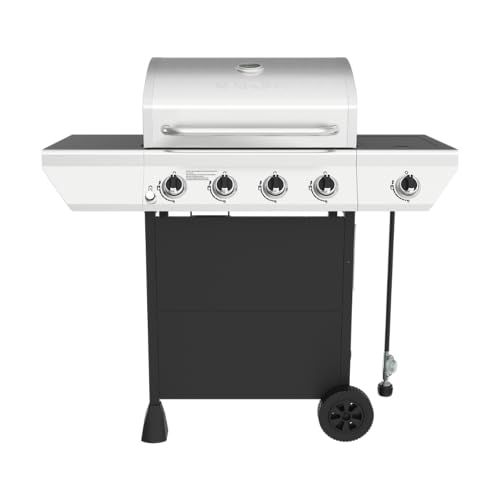
Nexgrill 4-Burner Propane Gas Grill with Side Burner
Badge: Best Overall
This Nexgrill is the all-rounder formula done completely: four main burners, a side burner, a stainless steel lid, a built-in thermometer, and electronic ignition, wrapped around 526 square inches of cooking space. That area figure matters because it is the size at which a grill stops dictating the menu — burgers for the family, a couple of chickens, or a mixed load of skewers and vegetables all fit without Tetris. The 52,000 BTU total output is spread across the burner set, and the side burner earns its keep in the way side burners actually do in real life: warming barbecue sauce, cooking baked beans, sautéing onions, or keeping a pan of peppers going while the grate is full. The matte finish cast iron grate holds heat and marks food well, with the standard cast iron bargain — brush it, oil it lightly, and do not leave it wet. It suits households that cook outdoors several times a week and want one cart that covers weeknight dinners and weekend gatherings. The honest limitation is that it is a full-size cart in every sense: measure your patio corner and your gate before you fall for the spec sheet.
As a vegetable platform, the Nexgrill 4-Burner Propane Gas Grill with Side Burner is judged on the tray test: can a basket of peppers, a tray of onions, and the mains all cook at once, each at its own temperature, without queueing? Vegetable cooking exposes weak zoning faster than any steak, because the pieces are small, the timing windows are short, and the difference between charred and burnt is about ninety seconds of attention.
Strengths
- Side burner handles sauces, beans, and sauté pans without a trip back to the kitchen
- 526 sq. in. of cooking space covers family dinners and modest gatherings
- Electronic ignition and a lid thermometer cover the everyday basics well
Trade-offs
- Matte cast iron grate needs the usual cast iron care routine to prevent rust
- At this size it is a stay-in-place cart, not something you move often
- Side burner output is for pan work, not for searing large cuts
Key specifications (from the verified listing)
- 4 burners plus side burner
- 52,000 BTU total output (per listing title)
- 526 sq. in. cooking space
- Matte finish cast iron grate
- Stainless steel lid, built-in thermometer, electronic ignition
Best for: families who cook complete meals outdoors several times a week / Not suited for: small patios and anyone who moves their grill often

Monument Grills Mesa II 410FBZ 4-Burner Propane Gas Grill
Badge: Most Versatile
The Monument Grills Mesa II 410FBZ pairs two ideas that rarely appear on the same cart: foldable side shelves and a dedicated high-heat Broil Zone. The shelves answer the storage question — full-width prep space while you cook, folded flat when the grill goes back against the wall — while the Broil Zone answers the steak question, concentrating heat for the kind of fast, hard finish that standard burners struggle to reach. Monument lists fast heat-up among its headline claims, and the stainless steel construction keeps the exterior simple to wipe down after greasy cooks. Four burners provide the zoning flexibility underneath all of this, so the broil area can run hard while the rest of the grate cooks at a civilised pace. It suits cooks who want one grill that stores compactly but still chases steakhouse-style results, and who are comfortable learning a hotter zone’s timing. The honest limitation is that high-heat zones punish inattention: sugary marinades and thin cuts can go from bronzed to burnt quickly, so this grill rewards cooks who stay at the cart rather than wander off.
As a vegetable platform, the Monument Grills Mesa II 410FBZ 4-Burner Propane Gas Grill is judged on the tray test: can a basket of peppers, a tray of onions, and the mains all cook at once, each at its own temperature, without queueing? Vegetable cooking exposes weak zoning faster than any steak, because the pieces are small, the timing windows are short, and the difference between charred and burnt is about ninety seconds of attention.
Strengths
- Foldable side shelves give full prep space that disappears for storage
- Advanced Broil Zone is aimed at high-heat finishing and crust building
- Stainless steel build suits buyers who prioritise easy-clean surfaces
Trade-offs
- Broil-style high heat takes a little practice to avoid scorching sugary sauces
- Foldable shelves should be latched and checked before loading them with heavy trays
- A newer model line, so long-term owner history is thinner than the legacy brands
Key specifications (from the verified listing)
- 4 burners
- Advanced Broil Zone
- Foldable side shelves
- Stainless steel construction
- Listing notes fast heat-up and fast assembly
Best for: cooks who want high-heat finishing plus compact storage / Not suited for: set-and-forget cooks who dislike managing a hot zone

AMERLIFE 6-Burner Propane Gas Grill with Side Burner
Badge: Best for Entertaining
The AMERLIFE is the capacity pick, full stop: six burners, a side burner, 60,000 BTU of total output, and 650 square inches of cooking area, plus a warming rack for holding finished food. Numbers like these change what a grill is for. Instead of cooking in batches, you can run ribs on a gentle zone, burgers on a hot zone, and vegetables somewhere in between, all at the same time, with the warming rack catching whatever finishes first. The side burner covers sauces and pan sides so the whole meal really can happen outdoors. Cast iron grates suit the brief, holding heat across a big surface, though they ask for the standard seasoning and drying routine, and at this size they are heavy when you lift them out for a deep clean. It suits large families, regular entertainers, and anyone who hosts the kind of cookout where the grill never gets a rest. The honest limitation is scale itself: this is a big, heavy cart that needs a big, permanent home, and for a household of two it would spend its life mostly empty.
As a vegetable platform, the AMERLIFE 6-Burner Propane Gas Grill with Side Burner is judged on the tray test: can a basket of peppers, a tray of onions, and the mains all cook at once, each at its own temperature, without queueing? Vegetable cooking exposes weak zoning faster than any steak, because the pieces are small, the timing windows are short, and the difference between charred and burnt is about ninety seconds of attention.
Strengths
- 650 sq. in. of cooking area is the largest surface in this line-up
- Six burners allow several heat zones to run at once for big mixed loads
- Warming rack keeps finished food hot without crowding the main grate
Trade-offs
- The footprint is genuinely large — measure your space before ordering
- More burners means more parts to clean and maintain over the years
- Cast iron grates at this scale are heavy to lift for deep cleaning
Key specifications (from the verified listing)
- 6 burners plus side burner
- 60,000 BTU total output (per listing title)
- 650 sq. in. cooking area
- Cast iron grates
- Warming rack and built-in thermometer
Best for: large families and regular entertainers cooking big mixed loads / Not suited for: couples and small spaces — this is a lot of grill

Char-Broil Portable 1-Burner Propane Gas Grill
Badge: Best Portable
The Char-Broil Portable is the honest minimalist in this line-up: one burner, 11,000 BTU, an aluminized steel body, and a tabletop format that travels. It exists for the cooks the big carts cannot serve — campers, tailgaters, apartment balconies with strict space limits, and anyone who wants a grill that stores in a cupboard rather than owning a corner of the patio. A single burner means a single heat zone, and the cooking area is sized for a few burgers, a couple of steaks, or a round of skewers rather than a family feast, so expectations need to match the format. Within that format it is refreshingly simple: light it, cook, brush the grate, and put it away, with none of the assembly or maintenance overhead of a full cart. It suits solo cooks, couples, and road-trip grilling where portability outranks capacity every time. The honest limitation is that it cannot grow with you — there is no indirect zone, no shelf space, and no headroom for a crowd — so treat it as a specialist tool rather than a household’s only grill, unless your household and your loads are genuinely small.
As a vegetable platform, the Char-Broil Portable 1-Burner Propane Gas Grill is judged on the tray test: can a basket of peppers, a tray of onions, and the mains all cook at once, each at its own temperature, without queueing? Vegetable cooking exposes weak zoning faster than any steak, because the pieces are small, the timing windows are short, and the difference between charred and burnt is about ninety seconds of attention.
Strengths
- Truly portable format for camping, tailgating, and small balconies
- Simple single-burner design is easy to light, run, and clean
- Aluminized steel keeps the body light for carrying
Trade-offs
- A single burner means one heat zone and no indirect cooking space
- Cooking area is sized for small loads, not family dinners
- No side shelves or prep space of any kind
Key specifications (from the verified listing)
- 1 burner
- 11,000 BTU output (per listing title)
- Aluminized steel construction
- Portable tabletop format
- Colour: black
Best for: campers, tailgaters, and solo cooks who value portability above all / Not suited for: families cooking full dinners or anyone needing a second heat zone

Royal Gourmet CC1830S Charcoal Grill and Offset Smoker
Badge: Best for Groups
The Royal Gourmet CC1830S is two cookers sharing one barrel: a charcoal grill with an adjustable charcoal pan, and an offset smoker for low-and-slow work. The adjustable pan is the feature experienced charcoal cooks look for, because raising the coal bed close to the grate for searing and dropping it for gentler cooking gives you heat control that fixed-pan kettles cannot match. The offset smoker box opens a different menu entirely — ribs, pork shoulder, and brisket cooked indirectly with smoke — though it asks for patience and practice with fire management. Front and side tables matter more on a charcoal grill than on a gas cart, because charcoal cooking involves chimneys, coal baskets, and tools that all need a home. The lid thermometer and side access door round out a design that takes charcoal seriously. It suits cooks who enjoy the process as much as the result and who want grilling and smoking in one footprint. The honest limitation is effort: charcoal means lighting time before every cook, ash after it, and temperature control that lives in your hands rather than on a dial.
As a vegetable platform, the Royal Gourmet CC1830S Charcoal Grill and Offset Smoker is judged on the tray test: can a basket of peppers, a tray of onions, and the mains all cook at once, each at its own temperature, without queueing? Vegetable cooking exposes weak zoning faster than any steak, because the pieces are small, the timing windows are short, and the difference between charred and burnt is about ninety seconds of attention.
Strengths
- Offset smoker adds genuine low-and-slow smoking to a charcoal grill’s repertoire
- Adjustable charcoal pan lets you raise or lower the coals to control heat
- Front and side tables give charcoal cooks rare built-in prep space
Trade-offs
- Charcoal means lighting time, ash cleanup, and more hands-on fire management
- Offset smoking has a learning curve for temperature control
- The barrel format takes up real patio length
Key specifications (from the verified listing)
- Charcoal fuel with offset smoker
- 783 sq. in. total cooking area (per listing title)
- Adjustable charcoal pan
- Front and side tables
- Lid thermometer and side door for charcoal access
Best for: charcoal lovers who also want genuine offset smoking / Not suited for: cooks who want push-button convenience and fast weeknight starts

Weber Original Kettle Premium Charcoal Grill 22-Inch
Badge: Best Charcoal Option
The Weber Original Kettle Premium is the charcoal benchmark against which other kettles are judged, and the Premium trim adds the two features that matter most in weekly use: a built-in lid thermometer and the One-Touch cleaning system that sweeps ash into a removable catcher. The 22-inch kettle format is a masterclass in doing one thing well — bank the coals to one side and you have a fierce searing zone and a gentle indirect zone; spread them out and the whole grate cooks evenly for burgers and dogs. Damper control is the skill to learn, and it is genuinely learnable in a few cooks: small adjustments, ten minutes of patience, and the kettle holds a temperature with a steadiness that surprises first-time charcoal owners. It suits cooks who want charcoal flavour and ritual without smoker-level commitment, and households that grill for two to six people at a time. The honest limitation is everything around the kettle rather than in it: there are no prep tables, no storage shelf worth the name, and charcoal’s lighting and ash routine is part of every single cook, which is either the charm or the deal-breaker depending on your temperament.
As a vegetable platform, the Weber Original Kettle Premium Charcoal Grill 22-Inch is judged on the tray test: can a basket of peppers, a tray of onions, and the mains all cook at once, each at its own temperature, without queueing? Vegetable cooking exposes weak zoning faster than any steak, because the pieces are small, the timing windows are short, and the difference between charred and burnt is about ninety seconds of attention.
Strengths
- Kettle shape and dampers give proven two-zone charcoal control
- One-Touch cleaning sweeps ash into the catcher with a lever
- Built-in thermometer removes the guesswork from lid-down cooking
Trade-offs
- Charcoal requires lighting time and ash management on every cook
- No side tables, so you need a separate prep surface nearby
- Round grate shape is less efficient for long items like rib racks
Key specifications (from the verified listing)
- 22-inch charcoal kettle
- Built-in lid thermometer
- Heat control dampers
- One-Touch cleaning system
- Porcelain-enameled bowl and lid (kettle line standard, per brand design)
Best for: charcoal cooks who want the proven kettle with thermometer and easy ash handling / Not suited for: anyone who needs prep tables and storage built into the grill
Comparison Table
| Pick | Format | Headline specification | Badge | Listing |
|---|---|---|---|---|
| Nexgrill 4-Burner Propane Gas Grill with Side Burner | 4 burners plus side burner | 52,000 BTU total output (per listing title) | Best Overall | Check on Amazon |
| Monument Grills Mesa II 410FBZ 4-Burner Propane Gas Grill | 4 burners | Advanced Broil Zone | Most Versatile | Check on Amazon |
| AMERLIFE 6-Burner Propane Gas Grill with Side Burner | 6 burners plus side burner | 60,000 BTU total output (per listing title) | Best for Entertaining | Check on Amazon |
| Char-Broil Portable 1-Burner Propane Gas Grill | 1 burner | 11,000 BTU output (per listing title) | Best Portable | Check on Amazon |
| Royal Gourmet CC1830S Charcoal Grill and Offset Smoker | Charcoal fuel with offset smoker | 783 sq. in. total cooking area (per listing title) | Best for Groups | Check on Amazon |
| Weber Original Kettle Premium Charcoal Grill 22-Inch | 22-inch charcoal kettle | Built-in lid thermometer | Best Charcoal Option | Check on Amazon |
Read the table as a map, not a verdict: the right row is the one whose format and headline specification match your space, your fuel preference, and the way you actually cook — a point the guide returns to alongside Best Grills You Can Buy Online, where the same trade-offs appear in a neighbouring form.
How to Choose the Right Grill for Vegetable cooking on the grill
Size the grill to your vegetable volume honestly. A household that grills a basket of peppers beside two steaks needs zoning more than area; a household feeding a garden’s worth of produce to a table of eight needs the big carts’ area and a warming rack. Burner count is vegetable control: three zones let you run corn hot, peppers medium, and onions gentle simultaneously, which is the difference between cooking vegetables and supervising them. Side burners matter more to vegetable cooks than to almost anyone — blanching green beans before charring, melting garlic butter, reducing a glaze — so weigh them heavily. Finally, check grate spacing and plan the basket purchase with the grill; a basket bought the same day as the grill is a vegetable course saved a hundred times.
How to Set Up, Cook On, and Care for Your Grill
Good grilling is a routine more than a talent, and the routine below works for every pick in this guide, with fuel-specific notes where they matter. Work through it in order the first few times and it quickly becomes automatic.
- Prepare: check fuel, clean the grate, and lay out tools, trays, and ingredients before any heat is lit — grilling punishes mid-cook searching.
- Preheat: give the grill a full preheat with the lid down; ten honest minutes now prevent sticking, weak sears, and guesswork later.
- Set zones: arrange burners or coals into a hot zone and a gentle zone before the first item goes on, and keep that map for the whole cook.
- Cook and move: work food from hot to gentle as it colours, use a probe thermometer for poultry and thick cuts, and rest everything briefly before serving.
- Close down: brush the grate while warm, close valves or dampers, let the grill cool fully, and cover it dry.
Prep vegetables for the grill in a fixed routine: wash, dry thoroughly — surface water steams instead of chars — cut to even thickness, and toss with oil and salt in a bowl rather than oiling the grate. Preheat the grill with zones set, put slow vegetables on first, and keep a clean tray for finished items separate from the raw tray. For baskets, preheat the basket on the grate so food does not stick to cold metal, and shake rather than stir to keep pieces intact.
Troubleshooting. Problem: Food sticks to the grate → the grate was not fully preheated, or the food was moved too early. Preheat completely, oil the food rather than the grate, and wait until the food releases on its own before turning. Problem: Flare-ups scorch the food → fat is dripping onto open flame or coals. Trim excess surface fat, keep a cool zone ready, and move food there for the seconds a flare lasts; close the lid to smother persistent flames instead of spraying water. Problem: Temperatures swing or will not climb → on gas, check the tank, the burner ports, and whether wind is stealing heat; on charcoal, check that vents are open and coals are fully lit rather than half-ashed. Most temperature mysteries are fuel or airflow, not defects.
Technique travels between neighbouring briefs, too — the habits above are the same ones recommended alongside Best Grills You Don T Know About, because grate discipline matters more than the feature that brought you to the grill.
Baskets, Trays, Skewers, and Planks: The Vegetable Toolkit
Four tools cover nearly all grilled vegetables, and choosing between them is mostly a question of piece size. A grill basket — a perforated pan or a hinged grid basket — is the workhorse for small and mixed pieces: cherry tomatoes, diced peppers, onion wedges, green beans. It keeps everything on the grill, allows tossing by shaking, and suits the constant movement vegetables like. A heavy tray or plancha plate serves vegetables that weep or stick — marinated mushrooms, polenta, delicate fish alongside — and doubles as the surface for smashed and crisped items. Skewers turn vegetables into portions: alternate peppers, onion, zucchini, and mushrooms in pieces cut to the same thickness so they finish together, with flat skewers preventing the spin that round ones allow. Planks and direct cuts are the fourth route: vegetables cut as large planks, halves, or whole — corn in the husk, halved peppers, thick zucchini slabs, whole onions in foil — need no tool at all and take the boldest char. Match the tool to the vegetable and the grill in this guide will handle the rest; the common failure is not the grill but small pieces loose on a wide-spaced grate, which is a toolkit mistake, not an equipment verdict.
Timing the Vegetable Course Around the Mains
The classic cookout failure is vegetables ready twenty minutes before the meat, or started so late they hold everything up. Solve it with a simple order of operations built on how long each item truly takes. Start the slow vegetables first, on the gentle zone, while the grill preheats and the mains are still in the kitchen: halved onions, whole peppers, corn, and dense items like potato wedges or carrot planks want the longest run. Add the mains when the slow vegetables are halfway, using the hot and medium zones as the protein requires. Fast vegetables — asparagus, zucchini planks, mushroom caps, tomato halves — go on last, in the final minutes, because they cook in the time the meat needs to rest. The warming rack, present on the big AMERLIFE in this pool, is the professional’s trick: finished vegetables hold there, warm and unhurried, while the last batch finishes. Glazes and butter sauces go on in the final minute only, since sugar burns and butter smokes if they ride the whole cook. Run that sequence twice and it becomes instinct — and the vegetables stop being the afterthought course entirely.
For a neighbouring angle on the same purchase, see Best Grills You Dont Know About — a different brief, but many of the same grills, judged by a different priority.
Ownership, Storage, and Seasonal Care
Ownership is where a grill’s real cost and pleasure accumulate, and it is mostly a story of small habits. Keep the grill covered when it is cool and dry; a cover put over a wet grill traps the moisture it was meant to exclude. Empty the grease tray or ash catcher on a rhythm rather than on a crisis — after every few cooks for grease, after every cook for ash. Once a season, run a deeper session: grates out, interior brushed, burner ports or dampers checked, hinges and latches worked and oiled where the design has them. Store charcoal dry and indoors, keep the propane tank valve closed between cooks, and check hoses and connections at the start of the season with soapy water. In winter, a grill that is cleaned, dried, and covered in autumn lights first time in spring, while a neglected one needs a rescue mission. None of this is glamorous, and all of it is the difference between a grill that serves for a decade and one that disappoints by its third summer — whatever its badge promised on the day it arrived.
A short word on accessories, because the right three outperform a drawer of gadgets. A fitted cover, sized to the cart and used dry, is the highest-value purchase in this entire category. A probe thermometer is the second: it converts doneness from opinion into measurement, on every fuel and at every tier in this guide. The third depends on your cooking — a chimney starter for charcoal households, a sturdy basket or tray for vegetable-heavy ones, a spare tank or a natural-gas conversion conversation for heavy gas users. Buy those in that order, use them for a season, and let experience rather than marketing choose anything further; most grill drawers fill with tools bought for imaginary cooks, while the cooks who actually happen need the same few things every time.
Fuel, Weather, and Real-World Conditions
Grills are tested by weather more honestly than by any reviewer, and the picks in this guide behave differently once conditions turn. Wind is the great leveller: it steals heat from lids and side burners, bends flames, and makes charcoal burn faster on the windward side, so the first real-world skill is placement — grill in the lee of a wall or fence, with the lid hinge working as a windbreak when you open it. Cold weather extends every preheat and increases fuel use, especially on large carts with big metal mass; plan a longer warm-up in winter and keep the lid down while the grill recovers between batches. Rain asks for judgement rather than heroics: a covered cooking spot and dry fuel storage matter more than any feature on the cart, and charcoal in particular should live indoors, because damp briquettes light reluctantly and burn unevenly for the whole cook. Heat tint, surface grease, and grate condition all move faster outdoors than indoors, which is why the care routines in this guide are written as habits rather than projects. None of this favours one pick absolutely — gas shrugs off cold starts, charcoal shrugs off power cuts and gas shortages, big carts shrug off wind better than portables — but it does mean the best grill for your patio is partly a weather decision. Buy for the conditions you actually cook in, including the February evening when enthusiasm is lowest and the grill that lights easily is the grill that gets used.
Common Buying Mistakes
- Cutting vegetables small and loose, then blaming the grate when they fall through.
- Starting vegetables with the meat and serving them raw-hearted or burnt, instead of sequencing by density.
- Soaking vegetables in sugary marinade for the whole cook, guaranteeing scorch.
- Crowding a basket so vegetables steam in their own juice instead of charring.
- Treating vegetables as a side thought on a grill with no gentle zone free for them.
Final Recommendation
Start your shortlist with Nexgrill 4-Burner Propane Gas Grill with Side Burner, Monument Grills Mesa II 410FBZ 4-Burner Propane Gas Grill and AMERLIFE 6-Burner Propane Gas Grill with Side Burner — the linked picks that answer this brief most completely — and check the latest price on Amazon for each before deciding. For vegetable-led cooking at volume, the AMERLIFE’s area and warming rack make it the standout platform, with the Nexgrill close behind and adding side-burner versatility. Smaller households will find the Weber kettle’s two-zone fire a superb vegetable teacher — add a good basket, and every pick in this guide cooks vegetables worth serving as the main event.
One last encouragement for vegetable-led cooks: build the habit of grilling one vegetable you have never grilled before each week of the season. The technique in this guide generalises — dry surface, even cut, the right zone, glaze at the end — and a season of small experiments turns a competent grill cook into a genuinely versatile one. Cabbage wedges, halved leeks, whole spring onions, thick cauliflower slices, even sturdy lettuces split and kissed with heat for a minute: all of them work on the platforms reviewed here, and several will become the dishes your table asks for by name. The grill was never only a meat machine; it was waiting for a cook who cooked that way.
And if your brief shifts as you read — many shoppers find it does — Best Hardline Gas Grills is the natural next comparison before you commit.
Frequently Asked Questions
Do any of these grills include an installed vegetable cooker?
None of the verified listings names a built-in vegetable cooker, because that is not a standard grill component. This guide ranks the grills as vegetable platforms — area, zoning, side burners, and racks — and covers the baskets and trays that complete the setup.
What is the best way to stop vegetables falling through the grate?
Cut large pieces as planks and halves that span the rods, and put small pieces in a preheated grill basket or on flat skewers. Falling food is a cutting and toolkit issue, not a grill defect.
Which vegetables grill best?
Corn, peppers, onions, zucchini, asparagus, mushrooms, and eggplant are the reliable stars — sturdy, quick, and improved by char. Dense vegetables like potatoes and carrots do best par-cooked or cut thin and started early on the gentle zone.
Should vegetables be marinated before grilling?
A short toss in oil, salt, and acid or herbs suits most vegetables. Keep sugar-heavy glazes for the final minute, and dry the surface before the grate — wet marinades steam the surface and fight the char you are after.
Can vegetables be the main course on these grills?
Absolutely — the big carts here run whole vegetable feasts: trays of mixed produce, skewer courses, grilled salads, and vegetable steaks from cauliflower or cabbage. Zoning and area, covered in the reviews, are what make a vegetable main course practical.
How do I get char without burning vegetables?
Use the medium zone rather than the fiercest heat, keep pieces moving or turning, and let oil and dry surfaces do the work. Char comes from contact and time at honest heat; burning comes from sugar, neglect, and flare-ups — all manageable with zoning.
How long should a grill bought for vegetable cooking on the grill last?
With the care routine in this guide — grate brushed hot, grease and ash managed on a rhythm, cover used dry, and one deeper clean each season — the carts and kettles in this class serve for many years, with grates, igniters, and dampers as the parts most likely to need attention along the way. Longevity is mostly behaviour: the grill that is cleaned and covered outlives the neglected premium model almost every time.


