Disclosure: topratedkitchenware.com is reader-supported. When you buy through links on our site, we may earn an affiliate commission from Amazon and other retailers, at no extra cost to you.
Where to buy
The six models below are the verified picks for this guide to best microwaves for truckers. Each name links to its Amazon listing, where you can check the latest price on Amazon, confirm the current configuration, and read the newest owner feedback before you decide.
- TOSHIBA 1.6 Cu.Ft Countertop Microwave with Inverter Technology, Black Stainless Steel
- Panasonic 1.2 Cu.Ft Countertop Microwave NN-SN67QS, Stainless Steel
- TOSHIBA 1.2 Cu.Ft Countertop Microwave, Stainless Steel
- Chefman 0.7 Cu.Ft Countertop Microwave, Black
- BLACK+DECKER 0.9 Cu.Ft Countertop Microwave, Stainless Steel
- TOSHIBA 0.9 Cu.Ft Microwave, Black Stainless Steel
Read the full guide ↓ for the ranking logic, the honest limitations of every pick, and the buying checks that matter more than any headline claim.
The best microwaves for truckers solve a problem no kitchen appliance reviewer has: dinner has to happen in a cab, on an inverter, at the end of a fourteen-hour day, in a parking area where the nearest food may be a vending machine. That reality splits this guide in two, honestly. One pick here is genuinely cab-sized, a compact low-draw oven that an inverter can feed and a tired driver can run with one press. The larger models are ranked for what they are: home-base and depot ovens, and upgrades for trucks with serious auxiliary power, not pretend cab appliances.
Power is the first filter on the road. A microwave’s cooking wattage is not its electrical draw, and the draw is what your inverter and batteries feel. The compact pick’s gentle appetite is why it leads the cab ranking despite its small cavity, while the high-draw inverter models are flagged clearly: superb ovens, wrong tool for a small inverter. Size is the second filter, because a cab microwave must be secured against vibration and braking, fit its shelf exactly, and open without swinging into the bunk.
The third filter is the driver. At the end of a long shift, controls must be one-touch, sounds must be silenceable in a sleeping area full of other resting drivers, and cleaning must be a wipe, not a project. The reviews below judge every model against that end-of-day test. Drivers who cook mostly at home between runs should also read Best Microwaves For Under $6000, because home-base reheating is half of a trucker’s food life.
Key Takeaways
- For a real cab, the compact low-draw pick is the honest recommendation; inverter capacity decides what you can run, not wishful thinking.
- Cooking wattage understates electrical draw, so size your inverter for the oven’s full demand plus headroom, and never idle the truck just to microwave.
- Secure any cab microwave against braking and vibration, and measure the shelf, door swing and ventilation before buying.
- One-touch controls, mute functions and wipe-clean interiors are end-of-shift features, not luxuries.
- The large models in this guide are excellent home-base ovens for batch cooking between runs; buy them for the house, not the cab.
In this guide
Quick Picks
Short on time? This table is the whole guide in one glance: six verified picks for best microwaves for truckers, each with the badge it earned, the capacity and power that define it, and a link to its listing.
| Pick | Badge | Capacity | Power | Standout feature |
|---|---|---|---|---|
| TOSHIBA 1.6 Cu.Ft Countertop Microwave with Inverter Technology, Black Stainless Steel | Best for Home Base | 1.6 cu ft | 1250W | Inverter technology |
| Panasonic 1.2 Cu.Ft Countertop Microwave NN-SN67QS, Stainless Steel | Best Sensor Pick | 1.2 cu ft | 1250W | Inverter technology |
| TOSHIBA 1.2 Cu.Ft Countertop Microwave, Stainless Steel | Best Mid-Size | 1.2 cu ft | 1000W | Smart humidity sensor |
| Chefman 0.7 Cu.Ft Countertop Microwave, Black | Best for the Cab | 0.7 cu ft | 700W | 10 power levels |
| BLACK+DECKER 0.9 Cu.Ft Countertop Microwave, Stainless Steel | Best Cab Runner-Up | 0.9 cu ft | 900W | 10 power levels |
| TOSHIBA 0.9 Cu.Ft Microwave, Black Stainless Steel | Best Quiet for Rest Stops | 0.9 cu ft | 900W | 6 auto menus |
How These Picks Were Chosen
Picks were ranked from the verified pool against trucking realities rather than kitchen ideals. For cab use the weighting was power draw first, footprint second, control simplicity third. For home-base use the weighting flipped to capacity, sensor and inverter reheating quality, and defrost automation for batch cooking. Each review states plainly which world its model belongs to, because the fastest way to waste a trucker’s money is to sell a kitchen oven as a cab oven.
The guide is research-led and specification-based. It does not invent road testing, and it does not quote electrical figures the verified listings do not provide; where a driver must check a number, like an oven’s exact draw or an inverter’s continuous rating, the guide says to read it from the rating plate and the inverter manual rather than from any review, including this one. That caution is deliberate: electrical mistakes in a cab are not inconveniences, they are flat batteries and, at worst, fire risks.
Driver comfort counted as evidence too: mute functions for rest areas, LED interior light for night cooking, easy-clean interiors for a cab with no sink to spare, and push-button or simple doors that work with tired hands. The small-kitchen logic in Best Microwaves For Work is the closest cousin to cab fitting, and its measuring advice transfers directly.
The 6 Best Picks for Best Microwaves For Truckers
Each review below follows the same honest pattern: what the model does well, where it asks for compromise, the verified specifications that matter, and a plain verdict about who should buy it and who should walk past it.

TOSHIBA 1.6 Cu.Ft Countertop Microwave with Inverter Technology, Black Stainless Steel
Badge: Best for Home Base
Strengths
- The largest cavity in this guide swallows family casserole dishes and big serving bowls
- Inverter delivery keeps low-power cooking even, which shows in defrosting and sauce work
- The wide turntable keeps large plates rotating properly instead of catching on the walls
Trade-offs
- The biggest footprint here, and the first thing to rule out for short or shallow counters
- The joint-highest power draw in the guide needs a circuit that can support it
- It is heavier to move for cleaning behind than any compact pick in this list
Key specs
- Capacity: 1.6 cu ft
- Power: 1250W
- Inverter technology
- Smart sensor
- Auto defrost
- 13.6 inch turntable
The TOSHIBA 1.6 Cu.Ft Countertop Microwave with Inverter Technology, Black Stainless Steel is a 1.6 cu ft countertop model with 1250W of cooking power. Its verified feature set runs to inverter technology, smart sensor, auto defrost and 13.6 inch turntable, which tells you most of what you need to know about its character: this is an oven built around inverter technology rather than around gimmicks, and its specification reads like a direct answer to the priorities this guide is built on.
Judged specifically on truckers, the picture sharpens. Inverter evenness shines at home base on defrosting and reheating batch portions, the meals the working week is built from. At home base the sensor earns its keep on family reheats; in a depot kitchen it removes the guesswork for whoever is cooking between shifts. Defrost by weight anchors the home batch-cooking routine, thawing portions by number before they ever reach the cab.
In daily use, TOSHIBA 1.6 Cu.Ft Countertop Microwave with Inverter Technology, Black Stainless Steel suits the reader whose priorities match its badge: it does the central jobs of this guide competently and asks for the biggest footprint here, and the first thing to rule out for short or shallow counters in return. Treat that trade as the decision. If it touches something you care about daily, look at the neighbouring picks; if it touches something you will never do, this model is easy to recommend.
Living with the TOSHIBA 1.6 Cu.Ft Countertop Microwave with Inverter Technology, Black Stainless Steel day to day is mostly a story of small repetitions: the door opening on a mug in the morning, the panel answering the same two or three presses it answered yesterday, the interior taking a wipe and looking new again. Its smart sensor is the kind of detail that fades into the background precisely because it works, and the owners who stay happiest with an oven like this are the ones whose routine it matches without negotiation. Keep its turntable or floor clean, respect its ventilation, and it will return the favour with the most valuable service a countertop appliance offers: being forgotten between meals.
Best for: readers who want the best for home base option in this line-up / Not suited for: buyers whose top priority contradicts the trade-offs listed above.

Panasonic 1.2 Cu.Ft Countertop Microwave NN-SN67QS, Stainless Steel
Badge: Best Sensor Pick
Strengths
- Panasonic inverter technology is the long-running benchmark for even low-power cooking
- The Genius Sensor judges reheats by steam, which takes the stop-and-check routine out of leftovers
- High wattage in a mid-large cavity gives fast reheats without the largest footprint in this guide
Trade-offs
- The power draw is at the top of this line-up, so small circuits and inverters need checking first
- It is positioned as a premium-tier option, above the basic compact models in this guide
- The stainless finish shows fingerprints and benefits from a microfibre wipe-down routine
Key specs
- Capacity: 1.2 cu ft
- Power: 1250W
- Inverter technology
- Genius Sensor
- Stainless steel finish
The Panasonic 1.2 Cu.Ft Countertop Microwave NN-SN67QS, Stainless Steel is a 1.2 cu ft countertop model with 1250W of cooking power. Its verified feature set runs to inverter technology, genius sensor and stainless steel finish, which tells you most of what you need to know about its character: this is an oven built around inverter technology rather than around gimmicks, and its specification reads like a direct answer to the priorities this guide is built on.
Judged specifically on truckers, the picture sharpens. Inverter evenness shines at home base on defrosting and reheating batch portions, the meals the working week is built from. At home base the sensor earns its keep on family reheats; in a depot kitchen it removes the guesswork for whoever is cooking between shifts. High draw is the disqualifier for most cabs and the virtue at home, where the circuit can feed it and speed is pure gain.
Who should choose it? The household that recognises itself in the strengths list above and can shrug at the trade-offs. Its most honest limitation is worth repeating plainly: It is positioned as a premium-tier option, above the basic compact models in this guide That single sentence will predict your satisfaction with this oven better than any other line in its review, so weigh it before the features.
Living with the Panasonic 1.2 Cu.Ft Countertop Microwave NN-SN67QS, Stainless Steel day to day is mostly a story of small repetitions: the door opening on a mug in the morning, the panel answering the same two or three presses it answered yesterday, the interior taking a wipe and looking new again. Its genius sensor is the kind of detail that fades into the background precisely because it works, and the owners who stay happiest with an oven like this are the ones whose routine it matches without negotiation. Keep its turntable or floor clean, respect its ventilation, and it will return the favour with the most valuable service a countertop appliance offers: being forgotten between meals.
Best for: readers who want the best sensor pick option in this line-up / Not suited for: buyers whose top priority contradicts the trade-offs listed above.

TOSHIBA 1.2 Cu.Ft Countertop Microwave, Stainless Steel
Badge: Best Mid-Size
Strengths
- The smart humidity sensor takes the guesswork out of reheating, because the oven judges steam rather than a fixed timer
- A mute function silences the end-of-cycle beeps, which matters in quiet households and shared spaces
- The easy-clean interior wipes down fast after splattery soups and sauces
Trade-offs
- The footprint is noticeably larger than the compact models in this guide, so measure your counter first
- The stainless finish shows fingerprints and needs a quick wipe to stay looking clean
- Twelve auto menus are useful, but the panel takes a little longer to learn than a basic six-preset layout
Key specs
- Capacity: 1.2 cu ft
- Power: 1000W
- Smart humidity sensor
- 12 auto menus
- Mute function
- ECO mode
- Easy-clean interior
The TOSHIBA 1.2 Cu.Ft Countertop Microwave, Stainless Steel is a 1.2 cu ft countertop model with 1000W of cooking power. Its verified feature set runs to smart humidity sensor, 12 auto menus, mute function, eco mode and easy-clean interior, which tells you most of what you need to know about its character: this is an oven built around smart humidity sensor rather than around gimmicks, and its specification reads like a direct answer to the priorities this guide is built on.
Judged specifically on truckers, the picture sharpens. At home base the sensor earns its keep on family reheats; in a depot kitchen it removes the guesswork for whoever is cooking between shifts. The mute function is rest-area etiquette built in: your dinner should not become the whole row’s alarm clock. ECO mode trims standby draw, a small mercy for any oven living on a vehicle power system or a home watching its bills.
The pattern of ownership with TOSHIBA 1.2 Cu.Ft Countertop Microwave, Stainless Steel is predictable: strong performance on the everyday jobs this guide is about, and friction only when you push it towards work it was not shaped for. Twelve auto menus are useful, but the panel takes a little longer to learn than a basic six-preset layout Buyers who stay inside its natural territory tend to forget about it entirely, which is the highest compliment a kitchen appliance can earn.
Living with the TOSHIBA 1.2 Cu.Ft Countertop Microwave, Stainless Steel day to day is mostly a story of small repetitions: the door opening on a mug in the morning, the panel answering the same two or three presses it answered yesterday, the interior taking a wipe and looking new again. Its 12 auto menus is the kind of detail that fades into the background precisely because it works, and the owners who stay happiest with an oven like this are the ones whose routine it matches without negotiation. Keep its turntable or floor clean, respect its ventilation, and it will return the favour with the most valuable service a countertop appliance offers: being forgotten between meals.
Best for: readers who want the best mid-size option in this line-up / Not suited for: buyers whose top priority contradicts the trade-offs listed above.

Chefman 0.7 Cu.Ft Countertop Microwave, Black
Badge: Best for the Cab
Strengths
- The smallest footprint in this guide, built for counters where every inch is spoken for
- The modest power draw is gentle on older circuits, small inverters and shared outlets
- One-touch express cooking starts a short cycle with a single press, no menu digging
Trade-offs
- The compact cavity is a tight fit for oversized dinner plates and tall mugs
- Lower wattage means reheats and defrosts simply take longer than in the bigger models here
- Six presets cover the basics, but there is no sensor cooking to fall back on
Key specs
- Capacity: 0.7 cu ft
- Power: 700W
- 10 power levels
- 6 cooking presets
- One-touch express cook
- Child safety lock
- Mute button
The Chefman 0.7 Cu.Ft Countertop Microwave, Black is a 0.7 cu ft countertop model with 700W of cooking power. Its verified feature set runs to 10 power levels, 6 cooking presets, one-touch express cook, child safety lock and mute button, which tells you most of what you need to know about its character: this is an oven built around 10 power levels rather than around gimmicks, and its specification reads like a direct answer to the priorities this guide is built on.
Judged specifically on truckers, the picture sharpens. This is the cab-sized footprint in the guide, the one that can be secured on a shelf and fed by a realistic inverter. The gentle draw is the entire point for cab use: it respects the inverter and the batteries instead of gambling with them. Express controls are the end-of-shift interface: one press, hot food, no menu to read through tired eyes.
In daily use, Chefman 0.7 Cu.Ft Countertop Microwave, Black suits the reader whose priorities match its badge: it does the central jobs of this guide competently and asks for the compact cavity is a tight fit for oversized dinner plates and tall mugs in return. Treat that trade as the decision. If it touches something you care about daily, look at the neighbouring picks; if it touches something you will never do, this model is easy to recommend.
Living with the Chefman 0.7 Cu.Ft Countertop Microwave, Black day to day is mostly a story of small repetitions: the door opening on a mug in the morning, the panel answering the same two or three presses it answered yesterday, the interior taking a wipe and looking new again. Its 6 cooking presets is the kind of detail that fades into the background precisely because it works, and the owners who stay happiest with an oven like this are the ones whose routine it matches without negotiation. Keep its turntable or floor clean, respect its ventilation, and it will return the favour with the most valuable service a countertop appliance offers: being forgotten between meals.
Best for: readers who want the best for the cab option in this line-up / Not suited for: buyers whose top priority contradicts the trade-offs listed above.
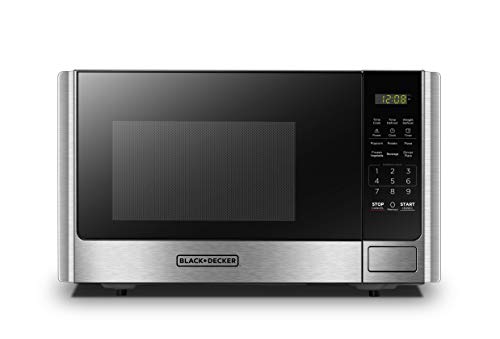
BLACK+DECKER 0.9 Cu.Ft Countertop Microwave, Stainless Steel
Badge: Best Cab Runner-Up
Strengths
- The push-button door opens with a press instead of a pull, which is kinder to wrists and grip strength
- Mid-range wattage is a sensible balance of reheating speed and electrical demand
- The cavity handles a standard dinner plate without the bulk of a full-size model
Trade-offs
- No mute function is listed, so the beeps stay on in quiet spaces
- There is no sensor cooking, so reheat times are down to your own judgement
- The stainless front shows fingerprints more readily than the black finishes here
Key specs
- Capacity: 0.9 cu ft
- Power: 900W
- 10 power levels
- Push-button door
- Child safety lock
- 6 auto cook presets
The BLACK+DECKER 0.9 Cu.Ft Countertop Microwave, Stainless Steel is a 0.9 cu ft countertop model with 900W of cooking power. Its verified feature set runs to 10 power levels, push-button door, child safety lock and 6 auto cook presets, which tells you most of what you need to know about its character: this is an oven built around 10 power levels rather than around gimmicks, and its specification reads like a direct answer to the priorities this guide is built on.
Judged specifically on truckers, the picture sharpens. A push-button door works with tired hands and a container in the other one, which is the standard end-of-shift situation. The child lock doubles on the road as a transit guard, keeping stowed gear that shifts in motion from pressing the panel to life.
Who should choose it? The household that recognises itself in the strengths list above and can shrug at the trade-offs. Its most honest limitation is worth repeating plainly: There is no sensor cooking, so reheat times are down to your own judgement That single sentence will predict your satisfaction with this oven better than any other line in its review, so weigh it before the features.
Living with the BLACK+DECKER 0.9 Cu.Ft Countertop Microwave, Stainless Steel day to day is mostly a story of small repetitions: the door opening on a mug in the morning, the panel answering the same two or three presses it answered yesterday, the interior taking a wipe and looking new again. Its push-button door is the kind of detail that fades into the background precisely because it works, and the owners who stay happiest with an oven like this are the ones whose routine it matches without negotiation. Keep its turntable or floor clean, respect its ventilation, and it will return the favour with the most valuable service a countertop appliance offers: being forgotten between meals.
Best for: readers who want the best cab runner-up option in this line-up / Not suited for: buyers whose top priority contradicts the trade-offs listed above.

TOSHIBA 0.9 Cu.Ft Microwave, Black Stainless Steel
Badge: Best Quiet for Rest Stops
Strengths
- Bright LED interior lighting makes it easy to watch food and spot splashes before they bake on
- The mute function keeps the kitchen quiet during early or late reheats
- The removable turntable lifts out for washing instead of forcing you to wipe around it
Trade-offs
- The mid-size cavity is not the choice for large casserole dishes or family-size platters
- No sensor or inverter system is listed, so low-power cooking cycles on and off like a conventional oven
- Black stainless looks smart but shows dust and light smudges between cleans
Key specs
- Capacity: 0.9 cu ft
- Power: 900W
- 6 auto menus
- Mute function
- Child lock
- LED interior lighting
- 10.6 inch removable turntable
The TOSHIBA 0.9 Cu.Ft Microwave, Black Stainless Steel is a 0.9 cu ft countertop model with 900W of cooking power. Its verified feature set runs to 6 auto menus, mute function, child lock, led interior lighting and 10.6 inch removable turntable, which tells you most of what you need to know about its character: this is an oven built around 6 auto menus rather than around gimmicks, and its specification reads like a direct answer to the priorities this guide is built on.
Judged specifically on truckers, the picture sharpens. The mute function is rest-area etiquette built in: your dinner should not become the whole row’s alarm clock. The child lock doubles on the road as a transit guard, keeping stowed gear that shifts in motion from pressing the panel to life. Bright LED interior light helps during night stops, when the cab’s own lighting is dim and the soup still needs watching.
The pattern of ownership with TOSHIBA 0.9 Cu.Ft Microwave, Black Stainless Steel is predictable: strong performance on the everyday jobs this guide is about, and friction only when you push it towards work it was not shaped for. Black stainless looks smart but shows dust and light smudges between cleans Buyers who stay inside its natural territory tend to forget about it entirely, which is the highest compliment a kitchen appliance can earn.
Living with the TOSHIBA 0.9 Cu.Ft Microwave, Black Stainless Steel day to day is mostly a story of small repetitions: the door opening on a mug in the morning, the panel answering the same two or three presses it answered yesterday, the interior taking a wipe and looking new again. Its mute function is the kind of detail that fades into the background precisely because it works, and the owners who stay happiest with an oven like this are the ones whose routine it matches without negotiation. Keep its turntable or floor clean, respect its ventilation, and it will return the favour with the most valuable service a countertop appliance offers: being forgotten between meals.
Best for: readers who want the best quiet for rest stops option in this line-up / Not suited for: buyers whose top priority contradicts the trade-offs listed above.
Comparison Table
The six picks side by side on the attributes that decide daily satisfaction. Prices and ratings are deliberately absent: both change constantly, and the listing behind each link is the only honest place to check them.
| Pick | Capacity | Power | Key feature | Badge | Listing |
|---|---|---|---|---|---|
| TOSHIBA 1.6 Cu.Ft Countertop Microwave with Inverter Technology, Black Stainless Steel | 1.6 cu ft | 1250W | Inverter technology | Best for Home Base | Check on Amazon |
| Panasonic 1.2 Cu.Ft Countertop Microwave NN-SN67QS, Stainless Steel | 1.2 cu ft | 1250W | Inverter technology | Best Sensor Pick | Check on Amazon |
| TOSHIBA 1.2 Cu.Ft Countertop Microwave, Stainless Steel | 1.2 cu ft | 1000W | Smart humidity sensor | Best Mid-Size | Check on Amazon |
| Chefman 0.7 Cu.Ft Countertop Microwave, Black | 0.7 cu ft | 700W | 10 power levels | Best for the Cab | Check on Amazon |
| BLACK+DECKER 0.9 Cu.Ft Countertop Microwave, Stainless Steel | 0.9 cu ft | 900W | 10 power levels | Best Cab Runner-Up | Check on Amazon |
| TOSHIBA 0.9 Cu.Ft Microwave, Black Stainless Steel | 0.9 cu ft | 900W | 6 auto menus | Best Quiet for Rest Stops | Check on Amazon |
How to Choose the best microwaves for truckers
Start with your power system, because it outranks every other question. Find your inverter’s continuous rating, not its peak, and compare it with the microwave’s electrical draw on its rating plate, remembering that draw exceeds cooking wattage. Leave headroom, because an inverter running at its limit beside a bunk is hot, loud and short-lived. If the numbers do not support a microwave, the honest answers are a smaller oven, a bigger inverter fitted properly, or cooking at depots and home instead.
Measure the cab like a tiny kitchen with earthquakes. The oven needs a shelf or recess it can be secured into, ventilation gaps that survive being surrounded by cab clutter, and a door arc that clears the bunk and the driver’s seat. Vibration loosens what gravity holds in a kitchen, so plan straps or a fitted recess from the start, and never run the oven while driving: it is a parked, break-time appliance.
Choose controls for the worst evening, not the best morning. After a long shift in bad weather, the driver you are buying for will use exactly one button if the oven allows it. Express starts, one-touch presets and a proper stop button are the whole interface that matters. Mute functions protect sleep in shared rest areas, and a child lock doubles as a guard against buttons being pressed by stowed gear shifting in transit.
Finally, decide honestly whether this purchase is for the cab or the house. Many truckers eat better with a compact in the cab for nightly portions and a serious oven at home for batch cooking days off, freezing portions sized to the cab oven. The picks here cover both ends of that system, and mixing them up is the expensive mistake this guide exists to prevent.
How to Cook Well in the Cab: Setup, Power and Routine
Cab cooking works when it is a routine, not an improvisation. The setup below assumes a parked truck, a correctly sized inverter and an oven secured in its place; if any of those three is missing, fix that first and cook afterwards. None of this replaces the manuals for your oven and inverter, which are the authorities for your specific equipment.
Build the routine around portions. At home or at a depot, prepare or buy meals in containers that fit your cab oven exactly, because a container that wedges against the walls reheats in stripes and spills on the road’s behalf. Keep a small kit with the oven: a vented lid, a heatproof mat, a cloth for the inevitable splash, and a fork you actually like eating with. Small dignities matter at the end of a long day.
- Run the oven only when parked, with the power system in the state your inverter manual recommends, and never leave it cooking unattended.
- Centre the container, vent the lid, and use express or sensor cycles for standard portions so the routine is identical every night.
- Stir or turn the meal halfway; cab ovens are small and their hot spots are honest about it.
- Let the meal stand a minute before eating, both for even temperature and because a rested meal tastes better than a rushed one.
- Wipe the interior after every use; a cab has no room for yesterday’s smell, and a thirty-second wipe beats a weekend scrub.
- Check the oven’s securing straps or recess weekly, and inspect the power lead for chafing where it passes cab edges.
Troubleshooting: Common Problems and Fixes
Problem: The inverter alarms or cuts out → what to do: the oven’s draw exceeds what the system can supply continuously. Stop, let the system recover, and use a smaller oven or a correctly uprated power setup rather than repeatedly tripping it.
Problem: Food reheats unevenly in the small cavity → what to do: the container is too full or too tight to the walls. Use shallower portions, stir halfway, and let the standing minute finish the job.
Problem: The oven has shifted or rattles after driving → what to do: the securing has loosened. Re-seat the oven, renew straps or padding, and check the door latch before the next run.
Home Base: Batch Cooking Between Runs
The large ovens in this guide earn their ranking at home, where a trucker’s food week is really made. A big sensor or inverter oven reheats family meals on the first night back and anchors a batch-cooking session before the next run: cook once, portion into cab-sized containers, freeze, and the cab oven’s job shrinks to a nightly reheat it can do perfectly. That system, not any single appliance, is what good eating on the road looks like.
Defrost automation and multi-stage cooking matter in that home routine, because frozen portions need thawing that does not cook their edges. Drivers building this system should match portion sizes to the cab oven first and the home oven second; the small oven is the constraint, and the big oven can handle anything the small one can. The reheating technique in Best Microwaves Good Housekeepin applies at both ends of the journey.
Eating Well on the Road Without Living on Truck-Stop Food
A cab microwave changes a driver’s food economics and health quietly: the nightly choice stops being between a truck-stop counter and nothing. Soups, stews, rice bowls, oats in the morning and real leftovers from home all become available, hot, at the cost of a container and a few minutes. The mute function and quick express cycles in these picks matter because that meal often happens within earshot of other drivers’ sleep.
Keep the menu honest, though. A cab oven reheats and cooks simply; it will not brown, crisp or roast, and planning meals that forgive reheating, saucy, sturdy, portioned, beats fighting the appliance with food that needed an oven at home. Drivers furnishing a first cab kitchen on a budget will find the value end of the category in Best Microwaves Good Housekeeping.
Capacity ratings deserve a sceptical eye in this category. Manufacturers measure the whole interior box, but cooking happens in the space your dishes can occupy while the turntable turns or, in a flatbed, while the door still closes. A shallow, wide dish often reheats better than a deep, narrow one in the same oven, because microwave energy reaches food most effectively from the top and sides. When you compare the picks in this guide, picture your own three most-used dishes inside each cavity and let that mental photograph overrule the headline number.
Power levels are the most underused control on any microwave. Full power is right for water, soups and sturdy reheats, but medium and low levels are where quality lives for everything else: melting butter without explosions, softening ice cream without soup, warming bread without turning it to leather, and reheating delicate leftovers gently. Every pick in this guide offers a range of power levels, and learning your oven’s middle settings will improve your results more than any other single habit.
Placement affects performance more than brochures admit. An oven pushed hard against a wall or sealed into a tight cubby runs hotter, vents worse and ages faster than the same oven with its specified gaps respected. Keep the vents clear, keep the top surface free of stored clutter unless the manual explicitly allows light items there, and give the door an unobstructed swing. Five minutes spent on placement protects years of service.
The turntable and its roller ring are small parts with an outsized effect. A ring clogged with dried spills makes the tray wobble, and a wobbling tray makes food heat in stripes and can stall rotation altogether on a heavy dish. Wash the tray like a plate, rinse the ring, and check its little wheels for cracks when results suddenly turn uneven. In the flatbed model here, the equivalent habit is simpler still: wipe the floor flat and keep it that way.
Covers are the cheapest upgrade in microwave cooking. A vented cover or an upturned plate keeps steam around the food, which evens the temperature, shortens the cycle and keeps the splashes inside the dish instead of on the cavity walls. The cover should never seal airtight, because steam needs its escape route, but a loose cover on every reheat is the habit that separates experienced microwave cooks from frustrated ones.
Standing time is part of the cooking time, not a delay after it. Microwaves deposit energy unevenly no matter how good the oven is, and the minutes after the cycle are when conduction finishes the job, carrying heat from the hot zones into the cool centre. Recipes and ready meals build standing time into their instructions for this reason. Treat the standing minute as untouchable and a surprising share of cold-centre complaints simply disappears.
Cleaning chemistry matters less than cleaning timing. A splash wiped while it is warm needs water and a cloth; the same splash after a week of reheating needs soaking, steam and patience. The steam method, a bowl of water with lemon heated until the cavity fills with vapour, loosens nearly everything without harsh cleaners, and it suits every interior finish in this guide. Make it a weekly habit and no deep clean will ever be needed.
Electrical common sense rounds out good ownership. Plug a countertop microwave into its own wall outlet where you can, avoid long extension leads and crowded multi-socket strips, and keep the power cord clear of hot surfaces and sharp counter edges. If a circuit trips repeatedly when the oven runs, that is information, not bad luck: the circuit is telling you the load is wrong for it, and an electrician is the right next call.
Door design quietly shapes daily satisfaction. A door that opens smoothly, latches with a positive click and stays put at ninety degrees makes loading a full bowl a one-handed job; a door that springs, sags or needs a slam makes the same job a small daily irritation. You cannot judge a door from a photograph, but you can weight the mechanisms honestly: push-button releases remove the pull from the equation, and any door benefits from a counter position where it can open fully without striking cupboards, walls or the cook.
Control panels divide into two philosophies, and knowing which you prefer saves regret. Membrane panels wipe clean in one pass and suit messy, busy kitchens, but their buttons need a firm, flat press that some hands find tiring. Tactile buttons and dials give feedback you can feel and sometimes hear, at the cost of more edges for grime to gather around. Neither is better in the abstract; the right answer is the one your household’s hands, eyes and cleaning habits vote for.
Common Buying Mistakes
Trucking punishes the wrong microwave purchase at 2 a.m. in a rest area. These are the mistakes drivers report making first.
- Buying a high-draw kitchen oven for a small inverter, then living with alarms, cut-outs and flat batteries.
- Judging fit by the shelf’s width alone and forgetting door swing, ventilation and securing against vibration.
- Running the oven while driving or leaving it unattended in the cab.
- Portioning meals at home in containers that do not fit the cab oven.
- Skipping the interior wipe because there is no sink handy, until the cab smells permanently of old food.
Final Recommendation
For the cab itself, the answer is the compact pick: modest draw, one-touch controls, a footprint that can be secured, and honest limits stated plainly. For the house that feeds the cab, the large sensor and inverter picks are the batch-cooking anchors, and the mid-size models split the difference for trucks with serious auxiliary power and room to spare.
Check your inverter’s continuous rating and your shelf measurements before ordering anything, then check the latest price on Amazon for the pick that fits both. On the road, the right microwave is the one that works at the end of the longest day, quietly, every time.
The shortlist, one more time, in the order this guide ranks it for most readers:
- TOSHIBA 1.6 Cu.Ft Countertop Microwave with Inverter Technology, Black Stainless Steel — Check on Amazon
- Panasonic 1.2 Cu.Ft Countertop Microwave NN-SN67QS, Stainless Steel — Check on Amazon
- TOSHIBA 1.2 Cu.Ft Countertop Microwave, Stainless Steel — Check on Amazon
Readers comparing neighbouring options may also find Best Microwaves Handle worth a look. Readers comparing neighbouring options may also find Best Microwaves India worth a look.
Frequently Asked Questions
What size microwave can a truck cab actually run?
A compact low-draw model is the realistic cab choice for most inverter setups, and the compact pick in this guide is ranked first for cab use for exactly that reason. Always confirm against your inverter’s continuous rating and the oven’s rating plate rather than trusting any general rule.
Can I run a microwave from a truck inverter?
Yes, when the inverter’s continuous capacity comfortably exceeds the oven’s electrical draw, the cabling is correctly installed, and the oven is used parked and attended. Draw is higher than cooking wattage, so size the system from the rating plate numbers, and have vehicle electrics fitted professionally.
Why not just buy the biggest oven for the cab?
Because size brings draw, weight and securing problems that a cab cannot absorb. The largest picks here are superb home-base ovens, but in a cab they would demand power and space the truck does not have. Match the oven to the world it will live in.
How do I stop a cab microwave moving while driving?
Fit it into a recess or strap it down as a permanent installation, check the securing weekly, and inspect the power lead for chafing. A kitchen oven relies on gravity and stillness; a cab offers neither, so the installation has to supply both.
What food works best in a cab microwave?
Portioned, saucy, sturdy meals: stews, curries, soups, rice bowls and pasta in sauce, prepared at home or bought in containers that fit the oven. Foods that need browning or crisping belong to home cooking days; the cab oven’s talent is reheating real food reliably.
Is a mute function really necessary on the road?
In shared rest areas, it is a courtesy with real value. Drivers sleep at every hour in a parking area, and an oven that can be silenced, like several picks here, lets you eat at your schedule without taxing everyone else’s rest.


