Disclosure: topratedkitchenware.com is reader-supported. When you buy through links on our site, we may earn an affiliate commission from Amazon and other retailers, at no extra cost to you.
Where to buy
The six models below are the verified picks for this guide to best microwaves nz. Each name links to its Amazon listing, where you can check the latest price on Amazon, confirm the current configuration, and read the newest owner feedback before you decide.
- BLACK+DECKER 0.9 Cu. Ft. Countertop Microwave
- Toshiba 0.9 Cu. Ft. Countertop Microwave
- Toshiba 1.2 Cu. Ft. Microwave (Black)
- COMFEE’ 0.7 Cu. Ft. Countertop Microwave
- Farberware 1.1 Cu. Ft. Countertop Microwave
- Chefman 0.9 Cu. Ft. Countertop Microwave
Read the full guide ↓ for the ranking logic, the honest limitations of every pick, and the buying checks that matter more than any headline claim.
Looking for the best microwaves nz shoppers can buy starts with the same honest caveat as any cross-market guide: the six verified models below are North American listings built for about 120V, while New Zealand homes run on 230–240V with Type I three-pin plugs. Do not import one of these exact units and plug it in. What this guide does give you is the engineering shortlist — the capacities, wattages, sensor systems and cavity designs that these brands sell around the world — so you can walk into a New Zealand retailer and recognise the regional twin of a good model when you see it.
Ranked for Kiwi kitchens, the list favours even reheating for family dinners, sensible sizes for everything from Auckland apartments to farmhouse kitchens, and features that survive daily family use: sensor programs, easy-clean interiors, child locks and ECO standby modes. Shoppers comparing how different markets approach the same pool will find a complementary deal-hunting lens in Best Microwaves On Sale Today and the community verdicts gathered in Best Microwaves Reddit.
Key Takeaways
- New Zealand runs on 230–240V with Type I plugs: buy the regional version locally; never run a 120V import on a travel adapter.
- Match the regional twin by capacity, cooking wattage and sensor/inverter features — model numbers differ between markets.
- The 1.2 cu. ft. Toshiba pair offers the best balance of family capacity and counter footprint for most NZ homes.
- Easy-clean interiors and removable turntables matter in family kitchens where the microwave works several times a day.
- Confirm local warranty and service support on the exact regional model before you buy.
In this guide
Quick Picks
| Badge | Model | Capacity | Power | Standout features |
|---|---|---|---|---|
| Best Overall | BLACK+DECKER 0.9 Cu. Ft. Countertop Microwave | 0.9 cu. ft. | 900W | 10 power levels, push-button door, child safety lock |
| Best for Apartments | Toshiba 0.9 Cu. Ft. Countertop Microwave | 0.9 cu. ft. | 900W | 6 auto menus, mute function, child lock |
| Best Full-Featured Pick | Toshiba 1.2 Cu. Ft. Microwave (Black) | 1.2 cu. ft. | 1000W | 12.4-inch removable turntable, smart humidity sensor, 12 auto menus |
| Best Budget Pick | COMFEE’ 0.7 Cu. Ft. Countertop Microwave | 0.7 cu. ft. | 700W | ECO mode, sound on/off control, one-touch buttons |
| Best for Family Reheats | Farberware 1.1 Cu. Ft. Countertop Microwave | 1.1 cu. ft. | 1000W | 10 power levels, multi-stage cooking, 6 preset options |
| Best Compact Upgrade | Chefman 0.9 Cu. Ft. Countertop Microwave | 0.9 cu. ft. | 900W | 10 power levels, 6 cooking presets, one-touch express cook |
How These Picks Were Chosen
We scored the verified pool for New Zealand buyers on the qualities that transfer across markets: cooking power and how evenly it is delivered, sensor and auto-menu usefulness for family reheating, cavity sizes matched to real dishware, cleaning effort, and standby and safety features. Every specification is taken from the manufacturer’s verified listing. Because these listings are North American versions, the guide is explicit about voltage and plugs and directs you to regional equivalents for the actual purchase; the engineering comparison remains valid because the brands sell the same platforms internationally. This is research-led guidance from specifications and listing data, not hands-on testing, and prices are left to retailers because they differ by market and change constantly.
The 6 Best Options for Best Microwaves Nz
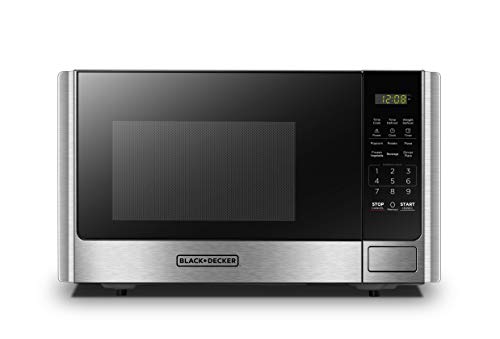
BLACK+DECKER 0.9 Cu. Ft. Countertop Microwave
Badge: Best Overall
Strengths
- A child safety lock reduces the chance of a small child starting the oven empty or unsupervised
- Preset auto menus cover the everyday jobs — popcorn, beverages, frozen items — without memorising times
- Ten power levels give fine control for softening, melting and gentle reheating, not just full-power blasting
Trade-offs
- Mid-range power means large, dense items take noticeably longer than they would in a 1200W-class oven
- The 0.9 cu. ft. cavity handles plates and bowls well but rules out the largest family casserole dishes
- Conventional power cycling pulses full power on and off at low settings, which is less gentle for melting and softening than inverter delivery
- Capacity: 0.9 cu. ft.
- Cooking power: 900W
- Key features: 10 power levels, Push-button door, Child safety lock, 6 auto cook presets
The BLACK+DECKER 0.9 Cu. Ft. Countertop Microwave is built around a 0.9 cu. ft. cavity and 900W of cooking power, and its verified feature list — 10 power levels, push-button door, child safety lock, 6 auto cook presets, stainless steel finish — tells you exactly what kind of daily service it is designed for.
The compact-but-capable brief is what this size does best: a full dinner plate fits, the footprint stays apartment-friendly, and the power is matched to the cavity so everyday reheating does not feel strained. It is the size class we recommend most often to small households.
The child safety lock is worth naming for family kitchens: it prevents the oven being started by small hands, and combined with sensible placement it closes off the most common household accident route for this appliance class.
Judged against the angle of this guide — best microwaves nz — the BLACK+DECKER 0.9 Cu. Ft. earns its badge on the strength of that verified specification, not on any single headline number. Its limitations are listed plainly above: they are the honest cost of its size, power class or design choices, and none of them is hidden in fine print.
Best for: buyers who want best overall performance in a 0.9 cu. ft. countertop oven / Not suited for: buyers whose needs flatly contradict that brief — read the trade-offs above before ordering.

Toshiba 0.9 Cu. Ft. Countertop Microwave
Badge: Best for Apartments
Strengths
- A mute function silences beeps, which matters in shared homes, offices and late-night kitchens
- A child safety lock reduces the chance of a small child starting the oven empty or unsupervised
- Preset auto menus cover the everyday jobs — popcorn, beverages, frozen items — without memorising times
Trade-offs
- Mid-range power means large, dense items take noticeably longer than they would in a 1200W-class oven
- The 0.9 cu. ft. cavity handles plates and bowls well but rules out the largest family casserole dishes
- Conventional power cycling pulses full power on and off at low settings, which is less gentle for melting and softening than inverter delivery
- Capacity: 0.9 cu. ft.
- Cooking power: 900W
- Turntable: 10.6-inch removable turntable
- Key features: 6 auto menus, Mute function, Child lock, Led lighting
The Toshiba 0.9 Cu. Ft. Countertop Microwave is built around a 0.9 cu. ft. cavity and 900W of cooking power, and its verified feature list — 6 auto menus, mute function, child lock, LED lighting, 10.6-inch removable turntable, black stainless steel finish — tells you exactly what kind of daily service it is designed for.
The compact-but-capable brief is what this size does best: a full dinner plate fits, the footprint stays apartment-friendly, and the power is matched to the cavity so everyday reheating does not feel strained. It is the size class we recommend most often to small households.
The mute function sounds minor until the first late-night reheat in a shared home; in apartments, dorms and open-plan houses it is the difference between using the oven freely and apologising for it. It is a small feature with an outsized effect on daily goodwill.
The child safety lock is worth naming for family kitchens: it prevents the oven being started by small hands, and combined with sensible placement it closes off the most common household accident route for this appliance class.
Judged against the angle of this guide — best microwaves nz — the Toshiba 0.9 Cu. Ft. earns its badge on the strength of that verified specification, not on any single headline number. Its limitations are listed plainly above: they are the honest cost of its size, power class or design choices, and none of them is hidden in fine print.
Best for: buyers who want best for apartments performance in a 0.9 cu. ft. countertop oven / Not suited for: buyers whose needs flatly contradict that brief — read the trade-offs above before ordering.

Toshiba 1.2 Cu. Ft. Microwave (Black)
Badge: Best Full-Featured Pick
Strengths
- Sensor cooking watches steam and humidity so reheats and popcorn stop closer to done instead of relying on a guessed time
- A mute function silences beeps, which matters in shared homes, offices and late-night kitchens
- ECO mode trims standby draw, a small but real saving on an appliance that sits plugged in all day
Trade-offs
- Conventional power cycling pulses full power on and off at low settings, which is less gentle for melting and softening than inverter delivery
- Like every countertop model here it needs clear ventilation space around the sides and top, so it cannot be pushed flush into a corner
- The door window and interior light give a limited view; very foamy or splattery foods still need a cover
- Capacity: 1.2 cu. ft.
- Cooking power: 1000W
- Turntable: 12.4-inch removable turntable
- Key features: 12.4-inch removable turntable, Smart humidity sensor, 12 auto menus, Mute function
The Toshiba 1.2 Cu. Ft. Microwave (Black) is built around a 1.2 cu. ft. cavity and 1000W of cooking power, and its verified feature list — 12.4-inch removable turntable, smart humidity sensor, 12 auto menus, mute function, ECO mode, easy-clean interior — tells you exactly what kind of daily service it is designed for.
Sensor cooking is the second headline: the oven reads the steam your food releases and judges doneness from it, which takes the stop-and-check routine out of reheating leftovers and cooking popcorn. It is the feature owners consistently say they would not go back from, because it fixes the cold-centre problem that makes people distrust microwaves.
This is the mainstream size class for a reason: dinner plates, family bowls and medium casseroles all fit, the footprint stays manageable on a normal counter, and the specification is balanced rather than extreme in any direction. For most households this is the shape of the right answer.
The mute function sounds minor until the first late-night reheat in a shared home; in apartments, dorms and open-plan houses it is the difference between using the oven freely and apologising for it. It is a small feature with an outsized effect on daily goodwill.
The easy-clean interior is the feature you will thank monthly rather than daily: splatter releases with a steam-and-wipe instead of a scrub, which is what actually determines whether a microwave stays pleasant to open after a year of curries and soups.
Judged against the angle of this guide — best microwaves nz — the Toshiba 1.2 Cu. Ft. Microwave (Black) earns its badge on the strength of that verified specification, not on any single headline number. Its limitations are listed plainly above: they are the honest cost of its size, power class or design choices, and none of them is hidden in fine print.
Best for: buyers who want best full-featured pick performance in a 1.2 cu. ft. countertop oven / Not suited for: buyers whose needs flatly contradict that brief — read the trade-offs above before ordering.


COMFEE’ 0.7 Cu. Ft. Countertop Microwave
Badge: Best Budget Pick
Strengths
- A child safety lock reduces the chance of a small child starting the oven empty or unsupervised
- ECO mode trims standby draw, a small but real saving on an appliance that sits plugged in all day
- The 0.7 cu. ft. footprint fits counters where a full-size oven simply will not go
Trade-offs
- At 700W it is slower than full-power models; packaged-food times written for higher-wattage ovens need extra minutes
- The 0.7 cu. ft. cavity will not take a full-size dinner plate comfortably, and tall mugs can be a squeeze
- Conventional power cycling pulses full power on and off at low settings, which is less gentle for melting and softening than inverter delivery
- Capacity: 0.7 cu. ft.
- Cooking power: 700W
- Key features: Eco mode, Sound on/off control, One-touch buttons, Child safety lock
The COMFEE’ 0.7 Cu. Ft. Countertop Microwave is built around a 0.7 cu. ft. cavity and 700W of cooking power, and its verified feature list — ECO mode, sound on/off control, one-touch buttons, child safety lock, compact dorm and office sizing — tells you exactly what kind of daily service it is designed for.
Size is the story here, and it cuts both ways. This is an oven for a defined job — drinks, soups, single portions, a small household’s reheating — in the smallest footprint in this guide. Bought for that job it is all most people need; bought for family cooking it would frustrate within a week, so read the verdict line honestly.
The mute function sounds minor until the first late-night reheat in a shared home; in apartments, dorms and open-plan houses it is the difference between using the oven freely and apologising for it. It is a small feature with an outsized effect on daily goodwill.
The child safety lock is worth naming for family kitchens: it prevents the oven being started by small hands, and combined with sensible placement it closes off the most common household accident route for this appliance class.
Judged against the angle of this guide — best microwaves nz — the COMFEE’ 0.7 Cu. Ft. earns its badge on the strength of that verified specification, not on any single headline number. Its limitations are listed plainly above: they are the honest cost of its size, power class or design choices, and none of them is hidden in fine print.
Best for: buyers who want best budget pick performance in a 0.7 cu. ft. countertop oven / Not suited for: buyers whose needs flatly contradict that brief — read the trade-offs above before ordering.


Farberware 1.1 Cu. Ft. Countertop Microwave
Badge: Best for Family Reheats
Strengths
- Multi-stage cooking lets you chain defrost and cook in one program instead of babysitting the door
- Defrost by weight or by time gives you two ways to thaw, which helps with oddly shaped frozen items
- Ten power levels give fine control for softening, melting and gentle reheating, not just full-power blasting
Trade-offs
- Conventional power cycling pulses full power on and off at low settings, which is less gentle for melting and softening than inverter delivery
- No sensor cooking, so reheating relies on your own timing rather than steam detection
- No documented mute option, so end-of-cycle beeps stay on — worth knowing for open-plan living
- Capacity: 1.1 cu. ft.
- Cooking power: 1000W
- Key features: 10 power levels, Multi-stage cooking, 6 preset options, Defrost by weight or time
The Farberware 1.1 Cu. Ft. Countertop Microwave is built around a 1.1 cu. ft. cavity and 1000W of cooking power, and its verified feature list — 10 power levels, multi-stage cooking, 6 preset options, defrost by weight or time, LED display, express cooking — tells you exactly what kind of daily service it is designed for.
This is the mainstream size class for a reason: dinner plates, family bowls and medium casseroles all fit, the footprint stays manageable on a normal counter, and the specification is balanced rather than extreme in any direction. For most households this is the shape of the right answer.
Multi-stage cooking is a genuinely useful extra for weeknight cooking: program defrost followed by cooking in one sequence and the oven walks the dish through both, instead of demanding you return to the door halfway through the evening.
Judged against the angle of this guide — best microwaves nz — the Farberware 1.1 Cu. Ft. earns its badge on the strength of that verified specification, not on any single headline number. Its limitations are listed plainly above: they are the honest cost of its size, power class or design choices, and none of them is hidden in fine print.
Best for: buyers who want best for family reheats performance in a 1.1 cu. ft. countertop oven / Not suited for: buyers whose needs flatly contradict that brief — read the trade-offs above before ordering.

Chefman 0.9 Cu. Ft. Countertop Microwave
Badge: Best Compact Upgrade
Strengths
- A mute function silences beeps, which matters in shared homes, offices and late-night kitchens
- A child safety lock reduces the chance of a small child starting the oven empty or unsupervised
- ECO mode trims standby draw, a small but real saving on an appliance that sits plugged in all day
Trade-offs
- Mid-range power means large, dense items take noticeably longer than they would in a 1200W-class oven
- The 0.9 cu. ft. cavity handles plates and bowls well but rules out the largest family casserole dishes
- Conventional power cycling pulses full power on and off at low settings, which is less gentle for melting and softening than inverter delivery
- Capacity: 0.9 cu. ft.
- Cooking power: 900W
- Key features: 10 power levels, 6 cooking presets, One-touch express cook, Eco mode
The Chefman 0.9 Cu. Ft. Countertop Microwave is built around a 0.9 cu. ft. cavity and 900W of cooking power, and its verified feature list — 10 power levels, 6 cooking presets, one-touch express cook, Eco mode, child safety lock, mute button — tells you exactly what kind of daily service it is designed for.
The compact-but-capable brief is what this size does best: a full dinner plate fits, the footprint stays apartment-friendly, and the power is matched to the cavity so everyday reheating does not feel strained. It is the size class we recommend most often to small households.
The mute function sounds minor until the first late-night reheat in a shared home; in apartments, dorms and open-plan houses it is the difference between using the oven freely and apologising for it. It is a small feature with an outsized effect on daily goodwill.
The child safety lock is worth naming for family kitchens: it prevents the oven being started by small hands, and combined with sensible placement it closes off the most common household accident route for this appliance class.
Judged against the angle of this guide — best microwaves nz — the Chefman 0.9 Cu. Ft. earns its badge on the strength of that verified specification, not on any single headline number. Its limitations are listed plainly above: they are the honest cost of its size, power class or design choices, and none of them is hidden in fine print.
Best for: buyers who want best compact upgrade performance in a 0.9 cu. ft. countertop oven / Not suited for: buyers whose needs flatly contradict that brief — read the trade-offs above before ordering.
Comparison Table
| Model | Capacity | Power | Badge | Listing |
|---|---|---|---|---|
| BLACK+DECKER 0.9 Cu. Ft. Countertop Microwave | 0.9 cu. ft. | 900W | Best Overall | Check on Amazon |
| Toshiba 0.9 Cu. Ft. Countertop Microwave | 0.9 cu. ft. | 900W | Best for Apartments | Check on Amazon |
| Toshiba 1.2 Cu. Ft. Microwave (Black) | 1.2 cu. ft. | 1000W | Best Full-Featured Pick | Check on Amazon |
| COMFEE’ 0.7 Cu. Ft. Countertop Microwave | 0.7 cu. ft. | 700W | Best Budget Pick | Check on Amazon |
| Farberware 1.1 Cu. Ft. Countertop Microwave | 1.1 cu. ft. | 1000W | Best for Family Reheats | Check on Amazon |
| Chefman 0.9 Cu. Ft. Countertop Microwave | 0.9 cu. ft. | 900W | Best Compact Upgrade | Check on Amazon |
Capacities and wattages are the manufacturers’ verified figures. Features such as inverter delivery, sensor cooking, mute and ECO mode are compared in the detailed reviews above, because a table cell cannot carry the conditions that make them matter.
How to Choose the Right Microwave
Every model in this guide to best microwaves nz is a competent countertop oven; the right choice is the one whose specification matches your kitchen and your routine. Work through the five decisions below in order, because each one narrows the field honestly.
Top pick
1. Capacity: size to your largest regular dish
Capacity is the decision owners most often get wrong. A 0.7 cu. ft. cavity reheats mugs, soup bowls and single portions and suits one person. A 0.9 cu. ft. cavity adds comfortable room for a full dinner plate. At 1.1 to 1.2 cu. ft. you gain family bowls and medium casseroles, and at 1.3 to 1.6 cu. ft. the largest dishes fit — if your counter does. Measure the dish you reheat most, then measure the space, including the door swing and the ventilation clearance the manual requires. Buying one size up from your real need costs counter space every day; buying one size down costs you a usable oven.
2. Wattage: match power to the cavity and your patience
Cooking wattage sets the pace. Around 700W is gentle and slow, fine for drinks and small portions. The 900 to 1000W band is the mainstream sweet spot for family reheating. At 1200W and above, large portions heat through noticeably faster. Remember that packaged-food times assume a wattage; a lower-powered oven needs longer, and the honest fix is extra time plus standing time, not frustration. Also match power to cavity: a modest wattage in a big cavity feels slower than the same wattage in a compact one.
3. Power delivery and sensors: the evenness decision
If you defrost often or reheat delicate food, inverter delivery — continuous low power instead of pulsed full power — is the upgrade that changes results. If you reheat varied leftovers daily, sensor cooking, which reads steam and stops at doneness, removes the guesswork that causes dried edges and cold centres. Neither is essential for boiling water and heating soup. Decide by your actual workload, not by the length of the feature list.
4. Cavity design: turntable or flatbed
A turntable rotates food for even results and lifts out for washing; its limit is dish geometry, since oversized rectangular dishes can jam. A flatbed cavity takes those dishes and wipes clean in seconds, but asks you to stir and turn food by hand. Pick by the shapes in your cupboards.
5. Daily-life features: mute, ECO, locks and cleaning
The features that decide year-two satisfaction are unglamorous: a mute function in shared or open-plan homes, ECO mode for standby draw, a child lock in family kitchens, an easy-clean interior if you reheat splattery food, and a control panel you can read at a glance. Score the picks on these before you score them on preset counts.
How to Set Up, Use and Maintain a Countertop Microwave
The technique below applies to every pick in this guide to best microwaves nz and will improve your results more than any single feature.
Setup in the first ten minutes
- Place the oven on a level, sturdy surface with the ventilation clearance its manual specifies on the sides, back and top.
- Remove all packaging from inside the cavity, seat the roller ring and turntable (on turntable models) so they sit flat and centred, and wipe the interior with a damp cloth.
- Plug directly into a wall outlet rather than a power strip, set the clock, and run a cup of water for one minute as a first test: it should come out steaming and the turntable should rotate smoothly.
- Turn on the features you will actually use — mute or sound settings, ECO mode, the child lock if children are in the house — while the manual is still in your hand.
Everyday cooking technique
Arrange food in a ring or an even layer, with the thickest parts toward the outside where energy is strongest. Cover dishes with a microwave-safe lid or vented cover: covering traps steam, speeds cooking and keeps the cavity clean. Stir, rotate or turn food halfway through longer cycles — even turntable models have hotter and cooler zones. Use power levels deliberately: full power for liquids, medium for reheating dense food, low for softening, melting and defrosting. And always observe standing time; a covered dish left for two minutes after the cycle finishes cooking as its heat equalises, and it will be more evenly hot than one blasted for an extra minute instead.
Defrosting without cooked edges
Use the defrost program or a low power level, work in short bursts, and separate pieces as soon as they loosen. Remove portions that have thawed while the rest continues. Let defrosted food stand so the last cold core equalises, and cook meat and poultry promptly after thawing rather than leaving it at room temperature.
Cleaning and maintenance
Steam-clean weekly if you cook daily: a bowl of water with lemon or vinegar, run until the cavity steams, left closed for a few minutes, then wiped down. Wash the turntable and roller ring in the sink. Wipe the door seals and latch area — residue there causes more ‘faults’ than any electronic part. Keep the exterior vents dust-free so the cooling system can breathe.
Troubleshooting
Problem: food heats unevenly, with cold centres → use a lower power level for longer, stir or rotate halfway, and let the dish stand covered after the cycle.
Problem: the oven runs but the turntable does not turn → reseat the turntable on its ring and check for crumbs or a cracked roller ring under the plate; confirm the turntable-off setting has not been engaged if your model has one.
Problem: sparking or arcing inside the cavity → stop the oven; the usual causes are metal trim on a dish, foil too close to the walls, or food residue baked onto the interior or the waveguide cover. Clean the cavity and never use metal or metal-trimmed containers.
Voltage, Plugs and Warranty: Buying These Platforms in New Zealand
New Zealand’s supply is 230–240V at 50Hz, delivered through Type I sockets — the three flat-pin plug shared with Australia. A North American microwave expects roughly half that voltage. Run through a simple pin adapter it will fail immediately; run through a step-down transformer it will work but at the cost of a bulky extra appliance, no local warranty and no local service support. Neither route makes sense when the same brands sell regional versions through New Zealand retailers with the correct plug, voltage and consumer guarantees.
Finding the twin is a matching exercise. Brands rarely keep one global model number, so match on the engineering: capacity in litres or cubic feet (1.2 cu. ft. is roughly 34 litres), cooking wattage, and the headline features — sensor cooking, inverter delivery, auto menus, ECO mode. If the regional model matches on those, you have found the same platform wearing local clothes. Buy from a retailer who can honour the Consumer Guarantees Act, keep your receipt, and register the warranty. Freight to New Zealand makes direct importing of heavy appliances doubly unattractive: a damaged-in-transit oven is a dispute nobody wins quickly.
Sizing and Features for Kiwi Kitchens
New Zealand kitchens span compact city apartments and generous rural homes, and this list spans them too. The 0.7 cu. ft. COMFEE’ and the 0.9 cu. ft. pair suit flats, sleepouts, offices and cribs where the microwave reheats drinks and single meals. The 1.1 cu. ft. Farberware and the 1.2 cu. ft. Toshiba add the family margin: full dinner plates, bigger bowls and multi-stage cooking for defrost-then-cook weeknight dinners. Think in terms of your largest regular dish — the casserole or bowl you reheat most — and buy the smallest cavity that takes it comfortably, because every extra litre is counter space you give up every day.
Feature-wise, the sensor-equipped Toshiba 1.2 earns its keep in family service: humidity sensing takes the guesswork out of reheating varied leftovers, the easy-clean interior shortens the wipe-down after soup explosions, and ECO mode trims the standby draw of an appliance that otherwise sips power around the clock. Households weighing the same pool from a pure value angle will find the complementary view in Best Microwaves Target, which compares retailer-style shopping considerations.
From Shortlist to Kitchen Bench: A New Zealand Buying Walkthrough
The distance between this guide and a working oven on a New Zealand bench is one matching exercise, and it is worth doing methodically. Take the pick whose size and features fit your household — say the Toshiba 1.2 class for a family, or the COMFEE’ 0.7 for a flat or a crib — and write down its four identity markers: capacity, cooking wattage, power-delivery type and headline features. Then search New Zealand retailers for the same brand’s regional range and find the model carrying those markers. Capacity will be quoted in litres; multiply cubic feet by roughly twenty-eight to compare. If two regional models match, let the tie-breakers be local: warranty length, the retailer’s delivery and returns terms to your address, and whether service agents cover your region — a real consideration outside the main centres.
Rural and small-town buyers should add freight reality to the checklist. A microwave is heavy and its turntable is glass; confirm the delivery is to your door rather than a depot, inspect the box before signing, and keep the packaging until the oven has cooked its first week. If you are replacing a dead oven, ask the retailer about recycling the old one, since a microwave should not go in general waste. And if your household is split between a main home and a bach or crib, the compact end of this list earns a second look: a 0.7 or 0.9 cu. ft. oven is the class that travels in a car boot and lives happily on a small bench. Shoppers comparing installation styles before they commit will find the fitted alternative examined in Best Microwaves Over Range Microwave, which is worth reading before a kitchen renovation locks in your choice.
One last sizing note for households feeding a crowd at a holiday home or a marae kitchen: the duty there is bulk reheating — trays of food, successive plates, big bowls — and that workload rewards the largest cavity and the strongest wattage you can place safely, with a turntable big enough to keep dishes rotating. The 1.2 cu. ft. Toshiba pair is the ceiling of this particular list, and if your regular load is bigger than that, treat it as a sign to shop a larger class rather than to overload a countertop oven: an overfilled cavity heats unevenly no matter how honest the wattage, and two sensible batches beat one crammed cycle every time.
Going Deeper: The Details That Decide Satisfaction
Why wattage changes every packaged-food time
Almost every frozen meal and microwave recipe is timed for a particular wattage, and the gap between a 700W compact and a 1250W full-power oven is not a rounding error. Lower-wattage ovens cycle the same total energy over a longer period, which is why the same bowl of soup can need close to double the time at the bottom of the range. The practical habit to build is simple: start with the time printed for the closest wattage, add short bursts, and let food stand for a minute or two afterwards so heat equalises through the dish. Standing time is not dead time — it is when the centre of a dense portion finishes coming up to temperature without the edges overcooking.
Cleaning that prevents the burnt smell
Most microwave odours come from old splatter being reheated dozens of times, not from the food you cooked today. The fix is a weekly steam clean: a bowl of water with a squeeze of lemon or a splash of vinegar, run until the cavity steams, left closed for a few minutes, then wiped down while the residue is soft. Remove the turntable and its roller ring and wash them in the sink; crumbs trapped under the ring are a classic source of mystery smells and arcing marks. Never use abrasive pads on the interior coating, and never run the oven empty to ‘burn off’ a smell — an empty cavity has nothing to absorb the energy and can be damaged.
What inverter power actually does
A conventional microwave can only switch its magnetron fully on or fully off, so power level five means full power for half the time in pulses. An inverter supplies a continuous, genuinely reduced output instead. The difference shows up in foods that punish pulsing: chocolate that seizes, butter that explodes instead of softening, fish that turns rubbery at the edges while the centre stays cold, and defrosting that cooks the thin parts of chicken while the middle is still icy. If you mostly boil water and reheat leftovers, you may never notice. If you defrost and cook delicate food often, inverter delivery is one of the few features that changes results rather than just adding buttons.
Common Buying Mistakes
- Importing a 120V model to chase a headline deal. Transformer cost, freight risk and zero local warranty erase the saving. Buy the regional version from a local retailer.
- Matching models by brand name alone. The same brand sells different platforms in different markets. Match capacity, wattage and features, not just the badge.
- Overbuying capacity for a small kitchen. A family-size cavity in a flat kitchen crowds out prep space daily. Size to your largest regular dish, not your largest imaginable one.
- Skipping the easy-clean question. In a family kitchen the interior gets wiped constantly. An easy-clean coating and a removable turntable save real time every week.
- Forgetting standby draw. An oven plugged in all year idles at a small but constant draw. ECO mode models trim that; use it if your pick offers it.
Final Recommendation
Start with the BLACK+DECKER 0.9 Cu. Ft. Countertop Microwave: it carries the strongest all-round verified specification for the angle of this guide and it is the pick we would buy first for best microwaves nz. If your priorities differ, the Toshiba 0.9 Cu. Ft. Countertop Microwave is the alternative we would shortlist next, and the COMFEE’ 0.7 Cu. Ft. Countertop Microwave is the honest value route for smaller households and tighter counters. Every other pick on this page is a deliberate specialist: choose it when its badge matches your kitchen, and skip it without regret when it does not.
Frequently Asked Questions
Can I buy one of these exact models and use it in New Zealand?
Not directly. These verified listings are North American 120V versions, and New Zealand supplies 230–240V through Type I plugs. Buy the regional equivalent locally — match it on capacity, wattage and features — so you get the right plug, voltage and warranty.
What capacity suits a New Zealand family?
A 1.1 to 1.2 cu. ft. cavity covers most family reheating and cooking, including full dinner plates and family bowls. Singles and couples in flats are well served by 0.7 to 0.9 cu. ft., and the counter will thank them.
Are sensor microwaves worth it?
For households reheating varied leftovers daily, yes: the sensor watches steam and stops closer to done, which means fewer dried-out edges and fewer cold centres. Occasional users who mostly boil water will notice less benefit.
How do I recognise the NZ version of a model in this guide?
Compare the engineering rather than the model number: capacity, cooking wattage, and headline features such as sensor cooking, inverter delivery or ECO mode. If those match, it is the same platform in regional form.
Why are there no prices in this guide?
Prices differ between countries and change with local sales, so a printed figure would be wrong for most readers within weeks. Each pick links to its listing for the current figure, and New Zealand pricing should be checked with local retailers.
Is ECO mode worth using?
It reduces the standby draw of an appliance that stays plugged in continuously. The saving per day is small, but it is free, automatic and adds up across a year — worth enabling on the picks that offer it.


