Disclosure: topratedkitchenware.com is reader-supported. When you buy through links on our site, we may earn an affiliate commission from Amazon and other retailers, at no extra cost to you.
Where to buy
This guide to the best microwaves w carousel — microwaves with a rotating turntable, in plain language — collects six verified countertop models that all use the classic carousel design. Each name below links to its Amazon listing, where you can check the latest price on Amazon, confirm the turntable details, and read recent owner feedback before you decide.
- TOSHIBA Countertop Microwave Oven, 1.2 Cu.Ft, 1000W, Stainless Steel
- Chefman Countertop Microwave Oven 0.7 Cu. Ft., 700 Watts, Black
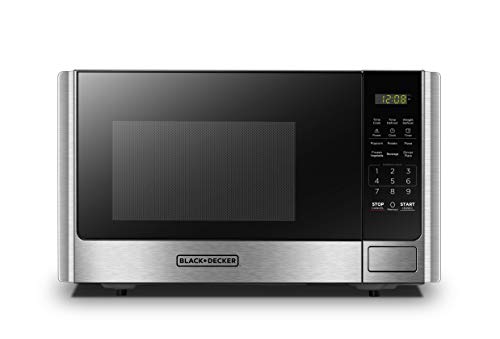
- BLACK+DECKER Countertop Microwave Oven, 0.9 Cu.Ft, 900W, Stainless Steel
- TOSHIBA Microwave Oven, 0.9 Cu.Ft, 900W, Black Stainless Steel
- TOSHIBA Countertop Microwave Oven, 1.2 Cu.Ft, 1000W, Black
- COMFEE’ Countertop Microwave Oven, 0.7 Cu.Ft, 700W, Black
Read the full guide ↓ for how the carousel actually evens your food, which turntable sizes fit which dishes, the small maintenance habits that keep a rotating oven heating evenly for years, and the myths about spinning trays that deserve to be retired before they talk anyone out of the right oven for their kitchen and their cookware.
The best microwaves w carousel are, at heart, an argument for a moving plate. A microwave’s energy field inside a metal box is not uniform: it has hot zones and cool zones set by the physics of the cavity. The carousel — the glass turntable riding on its ring of small wheels, turned by a motor beneath the floor — solves that unevenness mechanically, carrying every part of your dish through the hot zones in turn. It is an old, cheap, and genuinely effective idea, and it remains the standard design for good reason, surviving every fashion the category has tried since. This guide is for buyers who want that design chosen well: the right turntable diameter for their plates, a tray that lifts out for washing, a sensor or a honest timed panel above it, and a cabinet sized for their counter. Six verified models cover the carousel market from dorm compact to family sensor oven, and each is reviewed below with its carousel behaviour treated as a first-class specification rather than a footnote.
Every pick here was confirmed through the Creators API, so capacities, wattages, turntable dimensions where listed, and features come from live listing data rather than from a brochure’s rounding or a retailer’s paraphrase of somebody else’s specification sheet. After the reviews you will find a comparison table, a buying guide that treats the carousel as the decision it is, a how-to section on setup, use, turntable care, and troubleshooting, and answers to the carousel questions buyers ask most. If you want the formal testing view of how rotating models are judged, Best Microwaves W Carousel According To Consumer Reports is the companion read, and Best Microwaves With Keep Warm covers a neighbouring feature set some carousel shoppers also want.
Key Takeaways
- The carousel evens heating mechanically: rotation carries food through the cavity’s hot and cool zones so no single spot bears the whole cycle.
- Turntable diameter is the fit specification that matters — 10.6 inches on the compact Toshiba here, 12.4 inches on the family model.
- A removable turntable and ring make cleaning a two-minute job and are worth prioritising in busy kitchens, because the alternative — scrubbing around a fixed assembly — is how cavities quietly become unpleasant.
- All six picks here are carousel models, spanning 0.7 to 1.2 cubic feet and 700 to 1000 watts, with sensor automation at the family end.
- Carousel care is simple but not optional: a clean, level, correctly seated tray is the difference between even heating and a wobbling, noisy oven.
- Check the latest price on Amazon when you decide; carousel models are staple appliances whose street prices move with promotions.
- Bring one measurement to the purchase — your largest everyday plate — and let it veto any tray it cannot spin on, however attractive the rest of the specification looks.
- Plan the carousel’s housekeeping from day one: a removable tray, a weekly ring wash in busy kitchens, and a clear floor channel are the whole secret of an oven that still heats evenly years from now.
In this guide
Quick Picks
| Pick | Badge | Capacity | Power | Carousel note |
|---|---|---|---|---|
| TOSHIBA 1.2 Cu.Ft Stainless Steel | Best Overall | 1.2 cu ft | 1000W | Family turntable, sensor cooking |
| Chefman 0.7 Cu. Ft. | Best Compact | 0.7 cu ft | 700W | Small carousel, ten power levels |
| BLACK+DECKER 0.9 Cu.Ft | Best Value | 0.9 cu ft | 900W | Balanced size, push-button door |
| TOSHIBA 0.9 Cu.Ft Black Stainless | Best for Apartments | 0.9 cu ft | 900W | 10.6-inch removable turntable |
| TOSHIBA 1.2 Cu.Ft Black | Best for Families | 1.2 cu ft | 1000W | 12.4-inch removable turntable |
| COMFEE’ 0.7 Cu.Ft | Best for Dorms and Offices | 0.7 cu ft | 700W | Compact carousel, ECO mode |
The badges divide the carousel market by household rather than by novelty, because the mechanism itself is shared. What changes between these six is how much food the carousel carries, how fast the oven cooks it, and how much judgement the controls add while it turns. Read the table with your own kitchen in mind: the correct row is the one whose capacity matches your plates, whose power matches your patience, and whose extras — a mute button, a removable tray, a sensor — match the hours and the people the oven will actually serve, rather than the household a brochure imagines for you.
How These Picks Were Chosen
We restricted this guide to verified countertop models that use a rotating turntable, confirmed through the Creators API pool — the keyword asks for the carousel design specifically, so flatbed models, however good, do not belong here. Within that design we selected for range: two compacts, two mid-size all-rounders, and two family sensor models, so a reader can find their size class and then choose within it. Evaluation weighted the carousel-specific facts — turntable diameter where the listing states it, removability for cleaning, and the stability owners report — alongside the usual daily measures of reheating evenness, control clarity, noise, and footprint, with owner feedback patterns read for recurring complaints about tray wobble, ring debris, and latch wear.
This is a research-led guide rather than a hands-on laboratory test, and it prints no prices for any pick; the listing is the only honest price, so check the latest price on Amazon at decision time. Ownership-minded readers will find Best Microwaves Warranty a useful companion, since turntable motors and rings are exactly the kind of small parts whose support story matters in year three, and method-minded readers can compare our criteria with Best Microwaves Wirecutter.
The Best Microwaves W Carousel in Detail
Each review follows the same pattern: what the machine is, its badge, three strengths, three trade-offs, a mini spec box limited to verified facts, and a verdict. Carousel behaviour — size, removability, and what rotation does for that model’s cooking — is assessed in every review.

TOSHIBA Countertop Microwave Oven, 1.2 Cu.Ft, 1000W, Stainless Steel
Badge: Best Overall
Strengths
- Smart humidity sensor judges reheating while the carousel evens it — the two evenness systems working together.
- Family capacity at 1000 watts with twelve auto menus for the standard repertoire.
- Easy-clean interior, mute function, and ECO mode complete a considerate flagship set.
Trade-offs
- The joint-largest footprint in this guide; measure shallow counters first.
- Stainless steel shows fingerprints and asks for a regular wipe.
- Sensor menus judge steaming food best; tiny dry portions are a timer’s job.
Mini spec box: Capacity 1.2 cu ft · Power 1000W · Finish: stainless steel · Carousel turntable design · Smart humidity sensor · 12 auto menus · Mute function · ECO mode · Easy-clean interior.
This Toshiba is the carousel idea with judgement added. Rotation handles the spatial problem — every part of the dish visits the hot zones — while the humidity sensor handles the temporal problem, ending the cycle when the food’s steam says it is ready. For the mixed family plate, which is where microwaves earn their reputation, that pairing is the most complete answer in this guide. Twelve auto menus, an easy-clean interior, and a mute function for the household’s quiet hours make it the oven we would install in a family kitchen and stop thinking about.
Its carousel is family-scaled, swallowing dinner plates and medium casseroles that compacts refuse, and the whole assembly rewards the simple care routine in the how-to section: lift, wash, reseat, and the evenness the design promises is the evenness you get. Buyers whose plates are small and whose counters are smaller should take the same philosophy in the 0.9 cubic foot Toshiba below; buyers who want this exact recipe in black should take its twin, reviewed as the family pick.
Best for: families wanting sensor judgement on a carousel platform / Not suited for: very small counters

Chefman Countertop Microwave Oven 0.7 Cu. Ft., 700 Watts, Black
Badge: Best Compact
Strengths
- A true compact carousel: rotation matters most in small cavities, and this one has it in a dorm-sized cabinet.
- Ten power levels and six presets give compacts rarely offer this much control.
- Mute button and child safety lock suit shared rooms.
Trade-offs
- Seven hundred watts cooks single portions well and everything else slowly.
- The small turntable fits mugs and bowls, not dinner plates.
- No sensor automation at this size.
Mini spec box: Capacity 0.7 cu ft · Power 700W · Finish: black · Carousel turntable design · 10 power levels · 6 cooking presets · One-touch express cook · Child safety lock · Mute button.
In a small cavity the carousel is not a feature; it is the difference between a reheated bowl and a bowl with a cold heart. The Chefman’s rotating tray carries its single portions through the field faithfully, and its control panel — ten power levels where rivals offer a dial — lets the owner exploit that evenness with gentle settings for melting and staged defrosting. For dormitories, offices, caravans, and studio flats, this is the compact carousel done properly.
Its limits are the compact limits, stated plainly in every guide in this programme: pace at 700 watts requires the add-time, stir, and stand routine, and the cavity’s guest list ends at bowls and small plates. Within that list, the Chefman is the most complete small carousel here, and its mute button will make it friends in every shared room it enters.
Best for: dorms, offices, studios, and caravans / Not suited for: family plates
BLACK+DECKER Countertop Microwave Oven, 0.9 Cu.Ft, 900W, Stainless Steel
Badge: Best Value
Strengths
- The balanced carousel size: 0.9 cubic feet takes standard plates and rotates them with room to spare.
- Push-button door opens easily with full hands.
- Ten power levels and six auto cook presets cover the repertoire without fuss.
Trade-offs
- No sensor reheating and no mute function in the verified feature set.
- Stainless front needs fingerprint maintenance.
- Timed cooking rewards owners who learn their portions’ timings.
Mini spec box: Capacity 0.9 cu ft · Power 900W · Finish: stainless steel · Carousel turntable design · 10 power levels · Push-button door · Child safety lock · 6 auto cook presets.
The BLACK+DECKER is the carousel in its most democratic form: a right-sized rotating oven that any household member can use, at a pace that respects packaged timings, in a stainless cabinet that suits most kitchens. Its carousel does the evenness work silently, its push-button door solves the full-hands problem, and its panel asks nothing of guests. For first kitchens and replacement purchases, that combination is the value centre of the rotating market.
What it does not add is judgement: reheating quality is yours to programme, which experienced owners do by habit within weeks. If your household reheats a different plate every night and wants the oven to decide, the sensor Toshibas bracket this guide for that reason. If your meals repeat, this is the carousel to buy and forget.
Best for: first kitchens and no-fuss replacements / Not suited for: sensor automation seekers

TOSHIBA Microwave Oven, 0.9 Cu.Ft, 900W, Black Stainless Steel
Badge: Best for Apartments
Strengths
- The 10.6-inch removable turntable is stated plainly in its listing — the fit fact apartment buyers need.
- Mute function and LED lighting make midnight reheating quiet and visible.
- Black stainless finish hides smudges in busy small kitchens.
Trade-offs
- Six auto menus is a shorter list than the family Toshibas carry.
- No humidity sensor at this size.
- The dark finish advertises dust instead of fingerprints.
Mini spec box: Capacity 0.9 cu ft · Power 900W · Finish: black stainless steel · 10.6-inch removable turntable · 6 auto menus · Mute function · Child lock · LED lighting.
Toshiba’s apartment carousel earns its badge on specifics. The removable turntable is the headline for real life: it lifts out, washes in the sink, and reseats in seconds, which keeps the cavity fresh in a small kitchen where the microwave sits close to where people eat and work. At 10.6 inches it covers the standard plate, and the 900-watt pace behind it matches the BLACK+DECKER’s, so the choice between them is manners — this model’s mute and LED light against the other’s push-button simplicity — and finish.
For singles and couples in flats, those manners are the product. A microwave you can run silently at midnight, watch through a lit cavity, and clean without a contortion act is a microwave that stays welcome in a small home for years.
Best for: apartment dwellers valuing quiet, light, and easy cleaning / Not suited for: oversized plates or sensor seekers

TOSHIBA Countertop Microwave Oven, 1.2 Cu.Ft, 1000W, Black
Badge: Best for Families
Strengths
- The 12.4-inch removable turntable is the widest carousel here — family plates and serving bowls rotate freely.
- Humidity sensor with twelve menus judges the reheating rotation alone cannot finish.
- Mute function, ECO mode, and an easy-clean interior suit a busy family kitchen.
Trade-offs
- A large cabinet that small counters must measure carefully.
- Black finish can make the panel harder to read in dim corners.
- Conventional power delivery rather than inverter steadiness.
Mini spec box: Capacity 1.2 cu ft · Power 1000W · Finish: black · 12.4-inch removable turntable · Smart humidity sensor · 12 auto menus · Mute function · ECO mode · Easy-clean interior.
This is the family carousel at full size. The turntable’s diameter is the specification family buyers should memorise: at 12.4 inches, the big dinner plate, the pasta bowl, and the medium casserole all rotate without kissing the walls, which means the carousel can do its evenness work on the loads families actually cook. Above the tray, the humidity sensor and twelve menus handle judgement; below it, the removable design keeps cleaning proportional to the mess a family makes, which is to say frequent and easy.
In black, it is also the discreet version of this guide’s Best Overall recipe, forgiving splashes between cleans and disappearing into a busy kitchen’s appliance row. Families choosing between the twins should choose by finish and by which cabinet their kitchen’s light flatters — the cooking is the same, and it is the best family carousel cooking in this guide.
Best for: families reheating varied plates daily / Not suited for: tiny counters


COMFEE’ Countertop Microwave Oven, 0.7 Cu.Ft, 700W, Black, ECO Mode
Badge: Best for Dorms and Offices
Strengths
- ECO mode trims standby draw in rooms where the oven waits all day.
- Sound on/off control keeps shared spaces quiet.
- One-touch buttons match the compact repertoire: drinks, bowls, popcorn.
Trade-offs
- Seven hundred watts and a small carousel limit it to single portions.
- A simpler control set than the Chefman compact offers.
- No sensor or family capacity — by design.
Mini spec box: Capacity 0.7 cu ft · Power 700W · Finish: black · Carousel turntable design · ECO mode · Sound on/off · One-touch buttons · Child safety lock · Intended for dorm, apartment, and office use.
The COMFEE’ compact is the carousel as a quiet utility. Its rotating tray gives single portions the evenness that makes compact cooking respectable, its sound control respects the dorm floor and the open-plan office, and its ECO mode addresses the standby hours that dominate a shared appliance’s life. The one-touch panel matches its repertoire exactly, and the child lock covers the family-home second-oven role it often also fills.
Against the Chefman compact, the trade is control depth for simplicity and standby economy. Kitchens that fine-tune should take the Chefman; rooms that want press-and-go basics with a clean conscience about idle power should take the COMFEE’. Both rotate; both reheat single portions honestly; the choice is temperament, not quality.
Best for: dorms, offices, and ECO-conscious small households / Not suited for: control enthusiasts or family duty

Comparison Table
| Model | Capacity | Power | Turntable | Sensor | Link |
|---|---|---|---|---|---|
| TOSHIBA 1.2 Stainless Steel | 1.2 cu ft | 1000W | Carousel | Yes | Check on Amazon |
| Chefman 0.7 | 0.7 cu ft | 700W | Carousel | No | Check on Amazon |
| BLACK+DECKER 0.9 | 0.9 cu ft | 900W | Carousel | No | Check on Amazon |
| TOSHIBA 0.9 Black Stainless | 0.9 cu ft | 900W | 10.6 in, removable | No | Check on Amazon |
| TOSHIBA 1.2 Black | 1.2 cu ft | 1000W | 12.4 in, removable | Yes | Check on Amazon |
| COMFEE’ 0.7 | 0.7 cu ft | 700W | Carousel | No | Check on Amazon |
Every row rotates; the columns that separate them are size, pace, and judgement. Shoppers who prefer the largest, clearest controls on their carousel oven can cross-check Best Microwaves With Big Button before deciding.
How to Choose a Carousel Microwave
Measure your plate, then read turntable diameters. The carousel’s promise is rotation, and rotation needs clearance: a dish must spin without touching the walls. The listings in this guide state 10.6 inches for the apartment Toshiba and 12.4 inches for the family model; where a diameter is not stated, the capacity class is your guide — 0.7 cubic feet for bowls and mugs, 0.9 for standard plates, 1.2 for the big family ware. A plate that cannot rotate turns a carousel oven into a stationary one with a cold side, so this measurement outranks every feature below it.
Prefer a removable turntable if you cook messily. Sauces bubble, soups slosh, and cheese escapes. A tray and ring that lift out for a sink wash keep the cavity fresh with two minutes of effort; a fixed arrangement turns the same spill into a weekend project. Both family Toshibas and the apartment model here offer removable designs — in a busy kitchen that is a flagship feature wearing overalls.
Decide how much judgement you want above the tray. The carousel evens exposure; it does not decide doneness. Timed models leave the decision to you, which suits repeating meals. Sensor models — the two 1.2 cubic foot Toshibas — read the food’s steam and decide for you, which suits varied reheating. Choose by your menu’s variety, not by a general love of features.
Match wattage to the loads the carousel carries. Rotation evens any wattage, but pace still follows power: 1000 watts for family plates at packaged timings, 900 for the balanced middle, 700 for single portions with adjusted times. A big carousel on low power is not wrong, merely slow; a small carousel on high power does not exist in this guide because the class does not need it.
Check the door and the panel as a household, not as a shopper. A carousel oven is operated by everyone who eats, including children tall enough to reach it, grandparents visiting, and guests reheating at midnight. A push-button door that opens without a pull, a panel whose numbers read clearly in dim light, and a child lock where small hands explore are carousel-adjacent virtues that decide whether the oven is loved by its whole household or merely tolerated by its purchaser. The picks in this guide distribute those virtues differently — the BLACK+DECKER’s door, the apartment Toshiba’s light and mute, the compacts’ locks — and a household that names its operators honestly will find its favourite quickly.
How a Carousel Works — and How to Keep It Working
The mechanism, plainly. Beneath the cavity floor, a small motor turns a coupler; the coupler turns the glass tray; the tray rides on a ring whose little wheels let it rotate under load without grinding. As the tray turns, each part of the dish passes repeatedly through the cavity’s stronger and weaker field zones, averaging the exposure over the cycle. That averaging is why a carousel oven can reheat a plate respectably without any electronic cleverness at all — and why a tray that stops turning, however good the oven, immediately produces the cold-patch results the design exists to prevent.
Setup. Unpack, then seat the ring squarely in its floor channel and the tray centred on the coupler, and confirm by hand that the assembly turns smoothly and sits level. Place the oven with its specified clearances, plug it directly into a wall outlet, set the clock, and run the water test while watching the tray: it should rotate steadily, without rocking, clicking, or hesitation. A tray that rocks on day one is a tray seated wrong, not a faulty oven.
Daily use. Centre dishes on the tray, keep loads balanced, and avoid placing heavy items at the tray’s edge where they strain the ring. Cover food to hold steam and protect the walls, stir or turn dense dishes halfway even though the tray rotates — rotation averages exposure across the dish, not through its depth — and let food stand after the cycle so temperatures equalise. Never run the oven empty, and never run it with the tray removed to fit a taller dish: the carousel is part of the cooking system, not an accessory.
Cleaning and care. Lift the tray and ring out weekly in busy kitchens, wash them in warm soapy water, and dry them fully before reseating. Wipe the floor channel where the ring rides — crumbs and dried sauce there are the usual cause of wobble and noise — and steam-clean the cavity with water and lemon before wiping. Inspect the ring’s wheels when you wash it; a wheel clogged with debris makes the tray judder, and a juddering tray heats unevenly and sounds dreadful doing it.
Troubleshooting mini-guide.
- Problem: the tray does not turn → what to do: stop the cycle, reseat the tray on its coupler and ring, and clear debris from the floor channel; if the tray still will not turn with the assembly correctly seated, contact the manufacturer’s support rather than running the oven with stationary food.
- Problem: the tray wobbles or rattles → what to do: check for a warped load placed off-centre, a ring seated outside its channel, or debris under a wheel; wash the ring, reseat everything level, and test with a cup of water before loading food again.
- Problem: food heats unevenly despite rotation → what to do: reduce portion depth, arrange food in a ring, stir halfway, and add standing time; confirm the tray completes full rotations, since a tray that stalls under a heavy, off-balance load cannot average the field.
What Rotation Does to Real Dishes
Abstract claims about evenness become concrete at the level of the dish. Take a plate of leftovers — rice at one side, chicken at another, vegetables between. Stationary, that plate cooks as three separate accidents: the rice nearest a hot zone dries, the chicken’s centre lags, the vegetables steam unevenly. Rotating, each component takes its turn through the strong field, and the plate converges toward a common temperature that a sensor or an experienced timer can call done. This is why the carousel pairs so naturally with the sensor Toshibas in this guide: rotation homogenises the plate spatially, and the sensor then judges a plate that is actually uniform enough to judge.
Take a bowl of soup. Rotation matters less here — liquid convects and a stir does the work — which is why compact carousel owners who live on soup and drinks sometimes wonder what the fuss is about. Take a frozen ready meal in its tray: rotation is doing quiet, essential work, because the tray’s corners and centre would otherwise live in different climates for the whole cycle. Take a mug cake or a baked potato, the classic single items: rotation turns a one-sided result into an even one, and the difference is visible without any instrument. The pattern across dishes is consistent — the more solid, varied, and geometrically awkward the load, the more the carousel earns its place, and the more liquid and uniform the load, the more a stir substitutes for it. Knowing which side of that line your cooking lives on tells you how much of this guide’s premise is about you.
Glass, Rings, and Motors: The Parts List of Even Heating
A carousel is three parts wearing one name, and each has its own failure style. The glass tray is the visible part: heavy, smooth, and tougher than it looks, but capable of chipping at the rim if it meets the sink’s edge carelessly — and a chipped tray should be replaced rather than endured, because its balance and its hygiene both suffer. The ring beneath it is the working part, a circle of small wheels that carries the tray’s load around its channel; it is also the part owners forget exists until it starts to judder, usually because one wheel is packed with dried sauce. The motor and coupler beneath the floor are the hidden part, turning the assembly at a stately, constant pace; they rarely fail, and when an oven’s tray stops with the ring clean and the tray seated, they are the support conversation to have.
The practical consequence is a maintenance order of operations worth memorising. Noise or wobble: clean the ring and channel first. Uneven heating: confirm full rotation under load second. No rotation at all: reseat the tray on the coupler third, and only then suspect the motor. Owners who run that order fix nearly every carousel complaint with soap and patience, and owners who skip it replace ovens that needed a wash. In a category where the mechanism is this simple, nearly every symptom is housekeeping wearing a disguise.
Carousel Versus Flatbed: The Honest Comparison
No carousel guide is complete without its rival. A flatbed oven removes the turntable and distributes energy from beneath a fixed floor, freeing the cavity for rectangular and oversized dishes and making cleaning a single wipe. In exchange, large loads benefit from a manual halfway turn, because nothing moves them for you. The carousel’s bargain is the reverse: automatic evenness for standard dishes, at the price of a shape limit — what cannot spin cannot ride — plus a tray and ring to wash.
Choose by cookware. Kitchens built on round plates, bowls, and standard casseroles are carousel kitchens, and the six picks here serve them completely. Kitchens built on rectangular meal-prep containers and sheet-style dishes are flatbed kitchens, and no badge in this guide should talk them out of it. The mechanism is a means; the dishes are the end; and the best microwaves w carousel are best precisely for the households whose dishes were born to spin.
Turntable Size Across a Household’s Life
Turntable needs change as households do, and the six picks in this guide map that journey unusually well. The first microwave most people own is a compact in a small room, reheating for one: the Chefman and COMFEE’ carousels, sized for bowls and mugs, are that chapter, and their small trays are a feature there — the oven fits the shelf, the shelf fits the room. The second chapter is the first real kitchen, where a standard dinner plate enters the story and the 0.9 cubic foot class — the BLACK+DECKER’s honest middle, the Toshiba’s apartment polish — becomes the correct carousel size, with the removable 10.6-inch tray marking the point where cleaning becomes a designed act rather than an excavation.
The third chapter is the family kitchen, where the tray must carry serving ware and the oven must judge as well as turn: the 12.4-inch Toshiba carousels live here, in either finish, with sensor menus absorbing the variety that family reheating throws at them. None of these chapters is a lesser version of another; each is the right answer to its room. The buying mistake the journey teaches is buying a chapter ahead — a family tray in a dorm room, a dorm tray under family plates — because a carousel’s size is the one specification no setting, preset, or technique can renegotiate after the box is on the counter. Measure the plates you own today, be honest about the household you are today, and let the tray size follow from those two facts.
Carousel Myths, Corrected
Myth: a faster-spinning turntable would heat more evenly. Rotation speed is not the variable; exposure averaging is, and a stately turn averages the field perfectly well across a multi-minute cycle. The trays in this guide turn at the pace the design intends, and no benefit waits at higher speeds — only spilled soup.
Myth: the turntable’s glass is what cooks the food. The tray is a vehicle, not a heating element. It carries the dish through the field and, being microwave-transparent, contributes nothing but transport and the occasional retained warmth. Judging an oven by its tray’s material is judging a bus by its paint.
Myth: if the tray stops for a moment, the oven is broken. Trays pause for mundane reasons — a heavy off-centre load, a ring meeting debris, a dish catching the wall as it turns. The troubleshooting order in this guide resolves the overwhelming majority of stalls with cleaning and reseating. A motor failure is the last explanation, not the first.
Myth: carousel ovens are old technology that flatbeds have replaced. The two designs coexist because they solve different problems, as the comparison above explains. The carousel remains the default across the market — every pick in this guide, from compact to family flagship of its class, uses it — because for standard cookware its automatic evenness is the simplest correct answer yet devised.
Common Buying Mistakes
- Buying a carousel too small for the plate. A dish that cannot rotate defeats the design; measure plates against turntable diameters first.
- Removing the tray to fit a taller dish. The carousel is the evenness system; running without it guarantees a cold side and a hot rim.
- Ignoring the ring during cleaning. Debris under the wheels causes wobble, noise, and uneven heating that owners misdiagnose as electronic faults.
- Expecting rotation to fix depth. A deep mound insulates its centre no matter how faithfully it spins; shallow layers and a stir are still required.
- Choosing by preset count over tray facts. Diameter and removability decide daily satisfaction; the twelfth menu rarely does.
- Skipping the water test at setup. Watching the tray turn under a cup of water catches seating errors in ten seconds that otherwise become a week of complaints.
Final Recommendation
For most families, the TOSHIBA 1.2 Cu.Ft in stainless steel is the carousel to buy: sensor judgement above a family tray, in the guide’s most complete package — or its black twin if your kitchen prefers the finish. Buy it with a cover for the tray’s sake and a weekly minute for the ring’s, and the pairing of rotation and judgement will handle the mixed plates, the ready meals, and the midnight reheats of family life with the calm that made the carousel the standard design in the first place. Small households should take the Chefman 0.7 Cu. Ft. for compact duty or the BLACK+DECKER 0.9 Cu.Ft as the balanced all-rounder, apartment buyers the mute-equipped Toshiba 0.9 with its removable tray, and dorm or office buyers the COMFEE’ compact. Whichever you choose, check the latest price on Amazon on the day you order, and measure your largest plate before the box arrives.
Frequently Asked Questions
What does carousel mean in a microwave?
It means the oven cooks on a rotating turntable: a glass tray on a wheeled ring, turned by a motor, carrying food through the cavity’s hot and cool zones so it heats more evenly. It is the classic countertop design, and all six picks in this guide use it.
Does a turntable really heat food more evenly?
Yes, across the dish. Rotation averages each part of the food’s exposure to the uneven energy field, which removes most of the hot-rim, cold-centre pattern of a stationary load. It does not heat through depth by itself, so thick or dense food still benefits from a halfway stir and a standing rest. The fairest home test is the one testers use in spirit: reheat a plate of mashed potato — a food that shows temperature differences mercilessly — and compare a rotated cycle with the same plate held still in any oven that allows it. The rotated plate arrives as one food; the stationary plate arrives as a map of the cavity’s field, with the geography printed in hot and cold patches.
What size turntable do I need for a dinner plate?
Compare your plate’s diameter with the tray’s. The apartment Toshiba in this guide states a 10.6-inch removable turntable, which covers standard plates; the family Toshiba states 12.4 inches for larger plates and serving bowls. The dish must also clear the walls as it spins, so allow a small margin beyond the plate’s own width.
Can I use a carousel microwave without the turntable?
You should not. The tray is part of the cooking system: without rotation the field’s hot and cool zones print themselves onto your food, and the manufacturer designed the cavity’s behaviour around the tray’s presence. If a dish is too tall with the tray fitted, the honest solutions are a shallower dish, a larger oven, or a flatbed model — not removing the carousel.
How do I stop my turntable from wobbling?
Almost always by cleaning and reseating: wash the tray and ring, clear the floor channel of crumbs and dried spills, seat the ring squarely in its channel and the tray centred on the coupler, and centre your loads. A tray that still wobbles with everything clean and level deserves a support call, since the coupler or ring may be worn.
How long do turntable motors and rings last?
With the housekeeping in this guide — a clean channel, a washed ring, centred loads — the mechanism typically outlasts the oven’s other wear points, because it works at low speed under modest load. The ring is the sacrificial part and the cheapest to replace; the motor is the rare failure. Owners who keep the assembly clean are usually replacing the whole oven, years later, for unrelated reasons, with the carousel still turning.
Why does my carousel oven make a rhythmic clicking sound?
Work through the housekeeping order before worrying: a clicking rhythm usually tracks the tray’s rotation, which points at the ring — a wheel meeting debris in its channel, or the ring seated slightly out of its track. Wash the ring, clear the channel, reseat everything level, and test with a cup of water. A click that survives a clean, level assembly and appears even with the tray turning freely is a support question; the common case ends at the sink.
Is a carousel or a flatbed better?
Neither in the abstract. Carousels even standard round cookware automatically and are the mature, widely available design; flatbeds accept any dish shape and clean faster, but ask you to turn large loads by hand. Your container drawer decides the question more honestly than any reviewer can. Open it before you order: if the top shelf is plates and bowls, you are holding the carousel’s answer; if it is a regiment of rectangles, you are holding the flatbed’s, and both answers deserve to be bought without a moment of doubt or a week of returns.


