Disclosure: topratedkitchenware.com is reader-supported. When you buy through links on our site, we may earn an affiliate commission from Amazon and other retailers, at no extra cost to you.
Where to buy
The best kitchen sinks to keep clean share a short list of design traits: corners a sponge can sweep in one pass, a floor that drains instead of puddling, and a surface that releases grease and pigment instead of holding them. The six sinks below were chosen because their verified listings state those traits outright — rounded corners for easy cleaning, corners that resist buildup, channel grooves that move water to the drain, and glazed fireclay that wipes back to white. Each link lets you check the latest price on Amazon and confirm the exact configuration before you buy.
- Kraus KHU100-30 30-Inch 16-Gauge Undermount Sink — Check on Amazon
- Oxwiser 32×18 Undermount Sink 5-Item Bundle — Check on Amazon
- Kraus KHU640-33 33-Inch 18-Gauge Undermount Sink — Check on Amazon
- SANYCASA 30-Inch Workstation Undermount Sink — Check on Amazon
- Miuara Farmhouse Sink 30 x 18 Inch White Fireclay — Check on Amazon
- Miuara Farmhouse Sink 33 x 18 Inch White Fireclay — Check on Amazon
Read the full guide ↓ for the design details that decide cleaning effort, a realistic daily and weekly routine that takes minutes rather than willpower, and which of these six sinks suits the way your household actually cooks, cleans, and lives with its water supply.
Every sink looks clean in its listing photos, under studio lights, before its first meal. The question behind the best kitchen sinks to keep clean is what the bowl looks like on a wet Tuesday in February, after the pasta water, the turmeric, and the frying pan have all passed through — and how many minutes stand between that scene and a sink that looks cared for again. Cleaning effort is not a mystery or a matter of luck. It is engineered, mostly by three decisions the manufacturer makes before you ever see the product: the shape of the corners, the slope and grooving of the floor, and the surface material itself. Get those three right and a sink nearly cleans itself in the course of normal use; get them wrong and no routine, however diligent, fully compensates.
This guide therefore ranks sinks by their cleaning architecture first and their other virtues — size, steel, style, and price tier — second, in that deliberate order. You will find rounded corners praised repeatedly, because a corner your sponge can sweep is a corner that never grows the grey crescent of old grime that tight, squared corners collect. You will find channel grooves treated as a headline feature, because a floor that sheds water dries faster, spots less, and denies limescale its favourite still ponds. And you will find both stainless steel and fireclay represented, because each material has a genuine cleaning personality — steel forgiving of impacts and quick to rinse, fireclay glazed so smoothly that pigment and grease sit on it rather than in it. Readers whose deeper worry is budget as much as washing effort should pair this guide with Best Kitchen Sinks Under $300, since easy-clean design and honest value reward many of the same specifications and several of the same sinks.
Key Takeaways
The essential points, in brief, before the detailed reviews and reasoning that follow.
- Rounded corners are the single biggest cleaning feature: they sweep clean in one pass and never grow a grime crescent.
- Channel grooves in the bowl floor move water to the drain, so the sink dries faster and spots and scale form more slowly.
- Glazed fireclay releases pigment and grease exceptionally well and wipes back to white; stainless rinses fast and hides daily wear in its grain.
- A bottom grid is a cleaning tool as much as a protector — it keeps soaking pans off the floor so debris rinses beneath them.
- Workstation ledges add capability and one extra surface to wipe; choose them knowingly.
- The easiest sink to keep clean is the one matched to your water: hard-water homes should weight fast-draining floors and simple geometry most heavily.
- A neglected sink is usually recoverable in one short reset session — design plus a small daily habit beats heroic weekly scrubbing every time.
In this guide
Quick Picks
| Pick | Badge | Cleaning advantage | Link |
|---|---|---|---|
| Kraus KHU100-30 | Best Overall | Rounded corners for easy cleaning stated in the listing, channel grooves, 16-gauge steel | Check on Amazon |
| Oxwiser 32×18 Bundle | Best Cleaning Kit Included | Bottom grid, drain assembly, cap and towel in the box; 16-gauge single bowl | Check on Amazon |
| Kraus KHU640-33 | Best Large Bowl | 33-inch bowl with rounded corners that resist buildup and grooved drainage | Check on Amazon |
| SANYCASA 30-Inch Workstation | Best Heavy-Duty | Very thick 11-gauge (3mm) steel, integrated ledge keeps prep mess over the bowl | Check on Amazon |
| Miuara Farmhouse 30 Fireclay | Best Wipe-White Finish | Glazed fireclay listed as resistant to stain, crack, heat and scratch; 30-inch size | Check on Amazon |
| Miuara Farmhouse 33 Fireclay | Best Large Fireclay | Same easy-wipe glaze at 33 inches for big households | Check on Amazon |
How These Picks Were Chosen
We filtered the assigned pool through one lens: what does the verified listing itself say about cleaning? Picks earned their places on stated features, not on reputation. The Kraus models state rounded corners for easy cleaning or corners that resist buildup, plus channel grooves for draining — the two most consequential cleaning features a stainless bowl can have. The Oxwiser bundle earned its place through equipment: a sink that ships with its bottom grid arrives ready to keep food debris suspended and rinsable rather than cemented to the floor. The SANYCASA workstation contributes a different cleaning logic — an integrated ledge that keeps chopping, rinsing, and draining over the bowl, so the mess never migrates to the counter in the first place. The two Miuara fireclay sinks bring the material argument: a glazed, non-porous surface whose listing states resistance to staining, the property that decides whether last night’s curry leaves a souvenir.
Ranking within the six weighs how completely each design removes daily effort. The KHU100-30 leads because it combines the two stated stainless cleaning features at the most common size and the thicker gauge. The bundle follows on completeness. The 33-inch Kraus and the fireclay pair trade places depending on household: big-batch cooks benefit from the larger steel bowl’s grooved drainage, while pigment-heavy cooking — tomato sauces, turmeric, berries, red wine reductions — favours fireclay’s refusal to hold a stain. This is research-led guidance based on verified specifications and established material behaviour, not laboratory testing, and we flag the one honest complication in this category: no sink cleans itself, and the final section of this guide gives the short routine that lets these designs deliver on their architecture.
One more selection note: every pick here is a single bowl. That is partly the pool we were given, but it is also defensible on cleaning grounds — one uninterrupted floor has fewer seams, dividers, and corners to detail than a split bowl, a point readers considering divided layouts in our Best Kitchen Sinks Undermount 60 40 research should weigh against the soaking-versus-washing flexibility a divider offers.
The best kitchen sinks to keep clean, reviewed in detail

Kraus KHU100-30 30-Inch 16-Gauge Undermount Sink
Badge: Best Overall
Strengths
- Rounded corners for easy cleaning are a stated design feature — a sponge sweeps the whole bowl without detailing corners.
- Channel grooves guide water and debris to the drain, so the floor dries instead of puddling.
- 16-gauge TRU16 steel construction is thick, quiet with NoiseDefend pads, and durable.
Trade-offs
- 30-inch width is the standard size, not the generous one; the largest pans sit at an angle.
- No grid included, so add one if you want soaking pans held off the floor.
- Stainless shows water spots in hard-water homes unless wiped or rinsed with the grooves’ help.
Mini spec box: Mount: undermount. Size: 30 in. Steel: 16-gauge TRU16 stainless steel. Corners: rounded, for easy cleaning. Drainage: channel grooves. Soundproofing: NoiseDefend pads.
This is what a cleaning-first stainless sink looks like when a manufacturer sweats the geometry. The rounded corners are the headline: where a tight-cornered handmade bowl demands a brush and a fingertip wrapped in a cloth, the KHU100-30’s curves let a single sponge pass carry debris from wall to floor to drain. The channel grooves complete the system, giving rinse water a path so that the film of pasta starch and dish soap migrates out of the bowl instead of drying where it landed. In a normal week, the difference is measured in seconds per day that compound into a sink that simply never gets ahead of you.
The supporting specifications hold up their end: 16-gauge steel for a solid, damped feel, and pads that keep the cleaning soundtrack civilised. The honest limitations are size and spots. Thirty inches is right for most cabinets and most households, but committed batch cooks should look at the 33-inch model below. And like all stainless, the finish will advertise hard water if you let droplets dry in place — a ten-second wipe or a final rinse down the grooves is the whole price of admission. For the broadest set of kitchens, this is the easiest stainless bowl here to live with.
Best for: most households wanting the lowest-effort stainless sink in a standard size / Not suited for: cooks who need a 33-inch bowl or who refuse any wiping in hard-water areas

Oxwiser 32×18 Undermount Sink 5-Item Bundle
Badge: Best Cleaning Kit Included
Strengths
- The included bottom grid keeps food and pans suspended, so debris rinses underneath instead of baking onto the floor.
- Drain assembly and drain cap included — a sealed, complete system from day one, with a towel in the box for the first wipe-down.
- 16-gauge steel in a 32-inch single bowl suits family-scale washing-up.
Trade-offs
- The grid itself joins the cleaning roster: lift and rinse beneath it or it traps what it was meant to move.
- Bundle drains are functional rather than premium; upgraders may swap later.
- Corner geometry is not a stated feature in the listing, so corner care relies on routine more than design.
Mini spec box: Mount: undermount. Size: 32×18 in. Steel: 16-gauge stainless steel. Configuration: single bowl. Bundle: bottom grid, drain assembly, drain cap, towel.
Cleaning a sink is half architecture and half equipment, and this bundle is the equipment answer. The bottom grid changes the physics of a dirty sink: instead of a lasagne dish sitting in its own cooling film, soaking items rest on rails while water and debris pass beneath, and the bowl floor stays a surface you rinse rather than a surface you excavate. When the grid lifts out, the floor beneath it has been spared the worst of the week’s contact, so the weekly clean is shorter than in an ungridded bowl of the same age.
The rest of the set supports the theme. A matched drain assembly means no ill-fitting strainer leaking food slurry into the cabinet, and the cap lets you fill the bowl for soaking without the slow drain-away that defeats the purpose. The honest trade-off is the grid’s own upkeep — it needs lifting and rinsing, ideally during the daily tidy, or it becomes a shelf for the debris it was intercepting. Build that two-second habit and this is the most forgiving family sink in the group; skip it and you have added a chore instead of removing one. Households comparing total project cost will find this bundle’s completeness relevant to our Best Kitchen Sinks Under $300 analysis as well.
Best for: families who want the cleaning system complete in one delivery / Not suited for: minimalists who dislike lifting a grid during the daily rinse

Kraus KHU640-33 33-Inch 18-Gauge Undermount Sink
Badge: Best Large Bowl
Strengths
- Rounded corners resist buildup — the big-bowl version of the winning cleaning geometry.
- Channel grooves keep the larger floor draining and drying evenly.
- 33-inch single bowl means fewer items stacked in their own grime while waiting to be washed.
Trade-offs
- 18-gauge steel is lighter than the 16-gauge picks; treat it kindly with heavy cookware.
- More surface area is more surface area — the weekly wipe covers a bigger bowl.
- Needs a wide cabinet and matching countertop cut.
Mini spec box: Mount: undermount. Size: 33 in. Steel: 18-gauge stainless steel. Corners: rounded, resist buildup. Drainage: channel grooves. Soundproofing: NoiseDefend pads.
Size is a cleaning feature in disguise. In a small bowl, dirty items stack, soak in each other’s residue, and smear the walls to the rim; in this 33-inch bowl, the roasting pan lies flat, the chopping boards stand apart, and rinse water can actually circulate. Kraus then applies the same hygiene geometry as its smaller sinks — rounded corners that resist buildup and grooves that walk water off the floor — so the larger canvas does not become a larger chore. The result is the big-household pick: capacity first, with cleaning effort held roughly level.
The compromises are plain. Eighteen-gauge steel gives back some of the solidity of the 16-gauge models, and the bowl’s generous floor is still a floor you wipe. Owners in hard-water districts will see spotting across that expanse if they let it air-dry after every use; the grooves reduce the puddling that causes the worst of it, and a squeegee pass or towel swipe finishes the job. If your household’s washing-up volume is the problem, this is the sink that solves it without punishing you at cleaning time.
Best for: big households and batch cooks who need capacity without a cleaning penalty / Not suited for: narrow cabinets or buyers who want the thickest steel
SANYCASA 30-Inch Undermount Workstation Sink
Badge: Best Heavy-Duty
Strengths
- Exceptionally thick 11-gauge (3mm) stainless steel shrugs off the knocks of a hard-working kitchen.
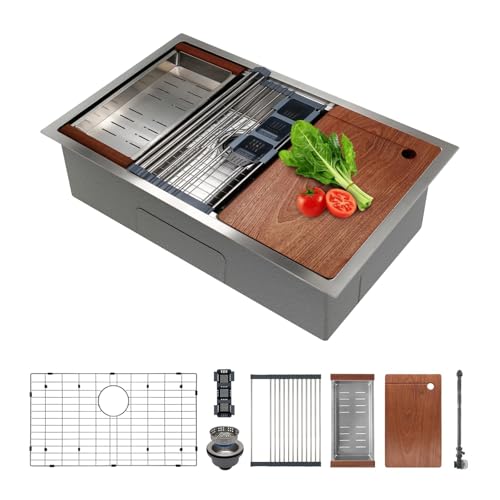
- Integrated ledge keeps chopping, rinsing, and draining over the bowl, so counters stay cleaner to begin with.
- Workstation layout concentrates the mess in the one place designed to be hosed down.
Trade-offs
- The ledge is one more surface to wipe, and its corners need deliberate attention.
- Very thick steel means a heavy bowl; support it properly at installation.
- Superior-drain workstation design suits keen cooks more than occasional ones.
Mini spec box: Mount: undermount. Size: 30 in. Steel: 11-gauge (3mm) stainless steel. Configuration: single bowl with integrated ledge. Type: multifunctional workstation set.
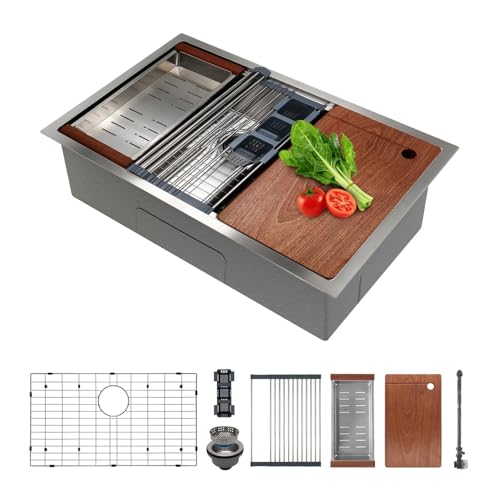
The SANYCASA reframes the cleaning question: the cleanest sink is partly the one that stops the rest of the kitchen getting dirty. Its integrated ledge turns the bowl into the prep surface — boards over the sink, rinsing under the tap, draining above the floor — so vegetable peelings, flour dust, and raw-chicken rinsing all happen inside the one vessel that is plumbed and waterproof. Anyone who has wiped a worktop’s worth of prep debris into a too-small sink will recognise the value immediately.
The steel itself is the thickest in this guide by a wide margin, and while gauge is not a cleaning spec, it buys the confidence to scrub without flex and to treat the bowl as the kitchen’s workhorse. The honest cost is the ledge’s upkeep: a shelf inside a sink collects crumbs exactly as a shelf anywhere does, and this sink asks for a deliberate wipe along the ledge after prep sessions. For keen cooks that is a fair trade for counters that stay clean. For households that rarely prep over the sink, the simpler Kraus bowls above will feel like less furniture to maintain — a distinction our Best Kitchen Sinks Wirecutter style analysis of review criteria also draws out.
Best for: serious home cooks who prep over the sink and want maximum steel / Not suited for: light-use kitchens that would wipe a ledge more than they use it
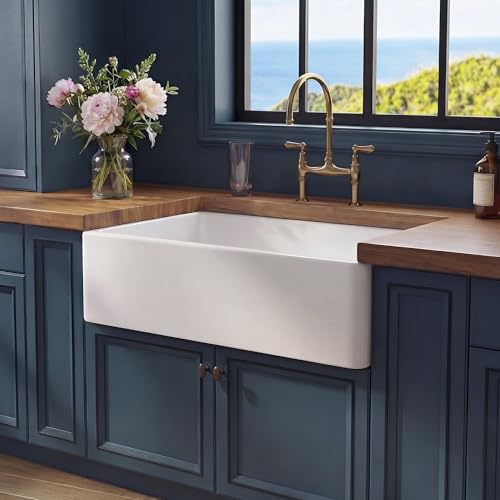
Miuara Farmhouse Sink 30 x 18 Inch White Fireclay
Badge: Best Wipe-White Finish
Strengths
- Glazed fireclay is listed as resistant to stain, crack, heat, and scratch — pigment sits on the glaze, not in it.
- The smooth, non-porous surface releases grease with a sponge and mild detergent, no scrubbing rituals.
- White shows dirt honestly, which paradoxically keeps the sink cleaner: you see the wipe you owe it.
Trade-offs
- Apron-front installation is a cabinet project, not a swap.
- Hard glaze is unforgiving to dropped glassware.
- White demands the wipe it advertises — coffee grounds and turmeric are visible until you pass the sponge.
Mini spec box: Material: white fireclay. Size: 30 x 18 in. Configuration: reversible single bowl. Mount: apron front or drop in (undermount). Stated resistance: stain, crack, heat, scratch.
Fireclay’s cleaning case rests on one physical fact: the glaze is non-porous and glass-smooth, so the substances that stain other sinks — tomato, turmeric, beetroot, red wine, strong tea — have nowhere to soak into. They rest on the surface until a sponge arrives, and then they leave with it. Owners of white fireclay sinks develop a particular confidence: the bowl can host a curry night and a berry bake in the same evening and still photograph white the next morning. The listing states the material’s resistance to stain outright, and daily experience is exactly what that claim promises.
The trade-offs are installation and visibility. Apron-front fitting means cabinet work and proper support for a heavy bowl, and the white that cleans so completely also displays every splash between cleans — this is a sink for people who wipe as they go, rewarded with a bowl that always looks new when they do. If your worktops are laminate, pause before the apron-front plan and read the fitting constraints in Best Kitchen Sinks To Use With Laminate Countertops; fireclay’s cleaning virtues deserve an installation that suits the room.
Best for: pigment-heavy cooking and anyone who wants a sink that wipes back to white / Not suited for: quick retrofits or households that clean in weekly batches

Miuara Farmhouse Sink 33 x 18 Inch White Fireclay
Badge: Best Large Fireclay
Strengths
- All the fireclay cleaning advantages — stain-resistant glaze, non-porous wipe-clean surface — at 33 inches.
- Large single bowl soaks roasting pans flat instead of propping them in their own residue.
- Reversible front lets the installation lean traditional or plain-modern.
Trade-offs
- The heaviest installation in this guide: wide, apron-front, and in need of real support.
- More white surface to keep wiped — the big-bowl version of the visibility bargain.
- Hard surface plus big pans equals care needed when setting down heavy, gritty cookware.
Mini spec box: Material: white fireclay. Size: 33 x 18 in. Configuration: reversible single bowl. Mount: apron front or drop in (undermount). Stated resistance: stain, crack, heat, scratch.
This is the maximum-capacity version of the wipe-white idea. The 33-inch bowl takes the largest cookware flat — a genuine cleaning advantage, because a pan soaking flat in clean water emerges cleaner than one steeped at an angle in its own scum line — and the glaze treats the whole load with the same indifference to pigment. For households that cook big and cook colourful, the combination of capacity and stain refusal is the lowest-effort ownership experience in this guide after installation day.
That installation day deserves respect in the plan: cabinet modification, serious support, and an installer who has fitted farmhouse sinks before. Ongoing care is the fireclay routine — wipe as you go, soften landings for glassware, and use a mat or grid if you regularly soak cast iron, since the same hardness that refuses stains refuses to cushion. Readers outside the US comparing sizes should note the 33 x 18-inch footprint converts to roughly 838 x 457 mm, a conversion our Best Kitchen Sinks Uk guide explores for British cabinet standards.
Best for: large, colour-rich cooking households ready for a proper farmhouse installation / Not suited for: standard cabinets without modification, or light-use kitchens
Comparison Table
| Pick | Material | Size | Cleaning signature | Link |
|---|---|---|---|---|
| Kraus KHU100-30 | 16-gauge stainless | 30 in | Rounded corners for easy cleaning, channel grooves | Check on Amazon |
| Oxwiser 32×18 Bundle | 16-gauge stainless | 32×18 in | Grid keeps debris suspended and rinsable | Check on Amazon |
| Kraus KHU640-33 | 18-gauge stainless | 33 in | Buildup-resistant rounded corners, grooved floor | Check on Amazon |
| SANYCASA Workstation | 11-gauge (3mm) stainless | 30 in | Ledge keeps prep mess inside the bowl | Check on Amazon |
| Miuara Farmhouse 30 | White fireclay | 30 x 18 in | Stain-resistant glaze wipes back to white | Check on Amazon |
| Miuara Farmhouse 33 | White fireclay | 33 x 18 in | Same glaze, largest capacity | Check on Amazon |
How to Choose a Sink That Stays Clean Without Trying
Interrogate the corners first. Corner radius is the highest-leverage cleaning specification and the easiest to verify from listing photos and descriptions. Rounded corners — the stated design of both Kraus picks here — let a sponge travel continuously, while tight handmade corners demand a brush and double the time. Neither is wrong: zero-radius bowls look architectural and suit owners who enjoy detailing. Just do not buy tight corners and a low-effort fantasy at the same time.
Follow the water. A bowl floor should be a landscape that drains: gentle slope, and ideally channel grooves, guiding rinse water to the outlet. Puddling is the root of most sink grime, because standing water deposits its load — minerals, starch, soap film — exactly where it stops. Grooved Kraus floors and the sheer capacity of the larger bowls both attack this problem from different directions. In hard-water districts, drainage quality matters even more, since every dried puddle is a limescale deposit in training.
Match the material to your cooking pigments. Households that cook with turmeric, tomatoes, chillies, berries, and red wine should weight stain behaviour heavily, which is fireclay’s home turf. Households whose loads are mostly crockery, glasses, and the occasional pan will find stainless’s fast rinse and forgiving grain perfectly easy. Neither material is universally “cleaner”; each is cleaner against a different enemy — pigment for fireclay, impact and neglect for steel.
Think about the tap’s reach and the bowl’s splash behaviour. Cleaning effort includes the mess that escapes the bowl. A bowl deep enough for your tallest pans, matched with a tap whose flow lands inside it rather than on its rim, keeps water and food spray where the drainage can deal with them. Overspray onto surrounding counters is cleaning work exported from the sink to the room — and a sink that contains its own weather will always feel easier to keep clean than a shallow bowl under a tall, wild jet, whatever their materials.
Count the accessories as cleaning equipment. A grid is a rinsing platform, a drain cap is a soaking tool, and a ledge is a mess-containment system. When comparing prices across tiers, price the cleaning system, not the bare bowl: the bundle that includes its grid may be the cheaper route to the same daily effort as a bare premium bowl plus a separate grid order. And keep mounting in the picture — undermount fittings wipe straight from counter to bowl with no rim to catch crumbs, an everyday cleaning dividend that our Best Kitchen Sinks Top Mount comparison acknowledges even while making the case for drop-in simplicity elsewhere.
How to Keep Your Sink Clean: The Realistic Routine
Design does the heavy lifting; this routine does the rest, and it is deliberately short. Daily, after the last wash-up: rinse the bowl down, guiding debris to the drain with the tap’s flow along the grooves; lift the grid for two seconds and rinse beneath it; wipe the rim and the counter-to-bowl junction. That is ninety seconds, and it prevents roughly all of the buildup people later scrub at. Weekly: wash the bowl with mild detergent and a soft sponge, including corners and ledge; run the drain cap’s seal under the tap; dry the floor if your water is hard. Monthly: a bicarbonate-of-soda paste for any cosmetic marks on fireclay glaze or early water-spot film on steel, and a check of the drain assembly for the slow film that dulls drainage.
What to avoid matters as much. Steel wool and abrasive powders scratch steel and can dull glazes; undiluted bleach left standing attacks finishes and seals; and the habit of leaving a wet cast-iron pan in the bowl overnight invites rust marks on any material. Soak pans on the grid, in capped water, and lift them out in the morning — the system only works if the water, not the pan, touches the bowl. Add one small courtesy for the bowl’s sake: rinse away the gritty loads first. Soil from root vegetables, sand from shellfish, and the abrasive dust on barbecue grates should be shaken or rinsed off under a running tap rather than ground around the floor during a soak, because grit is the one contaminant that turns cleaning into scratching on any material in this guide.
Problem: a grey crescent forming in the corners → what to do: it is old biofilm in a spot your sponge is skipping; detail it once with a soft brush and detergent, then adjust your daily rinse so water actually reaches that corner — on grooved bowls, aim the tap flow to sweep it. Problem: white limescale patches on stainless → what to do: wipe with a cloth dampened in white vinegar, rinse, and dry; then reduce puddling by checking the bowl sits level and the grooves are clear. Problem: turmeric or tomato tint lingering on any surface → what to do: on fireclay, a bicarbonate paste and patience lifts it from the glaze; on steel, detergent and a non-abrasive pad along the grain; sunlight through the window genuinely helps fade organic pigment on both.
Hard Water, Soft Water: How Your Supply Changes the Answer
Water chemistry quietly rewrites cleaning rankings. In hard-water homes, the enemy is mineral deposit: droplets dry into spots, puddles dry into scale, and brushed steel shows both against its grain. Fast-draining grooved floors, simple geometry, and a wipe-dry habit matter more there than any other factor, and darker or busier finishes hide the evidence between cleans. In soft-water homes, spots largely vanish as a concern, and the ranking shifts toward pigment and grease behaviour — fireclay’s glaze and the sheer rinse speed of a well-sloped steel bowl take the lead.
There is a second, quieter chemistry at work: what your household pours away. Coffee grounds rinsed daily will film a drain; fryer oil tipped warm into the bowl will coat a floor that cold water then cannot rinse; and the fashionable habit of soaking everything in the same standing water concentrates the day’s pigments into one long bath that the bowl must endure. Easy-clean design assumes reasonable inputs. Tip oils into a container for disposal, scrape plates into the bin before they meet the bowl, and refresh soaking water rather than extending it — the sink’s architecture will do the rest, and the weekly clean shrinks accordingly.
If you do not know your water, the kettle knows: furred elements and cloudy glassware announce hard water without a test kit. Choose accordingly, and remember that a water softener, if one is ever fitted, changes your sink’s cleaning personality overnight — one more reason to buy sound geometry that performs under either chemistry, rather than a finish chosen to hide one specific deposit.
Cleaning the Supporting Cast: Grids, Drains, and the Disposal
A sink stays clean as a system, and the bowl is only its most visible member. The bottom grid, where fitted, wants a weekly wash in hot detergent water — dishwasher-safe grids can take the machine’s help where the maker allows it — because its rails collect the same film as the floor it protects. Pay attention to the feet and contact points: grit trapped under a foot is both a hygiene issue and, on steel, a slow scratching mechanism. Rinse the grid’s underside during the daily tidy and the weekly wash becomes a formality rather than an excavation.
The drain assembly decides whether the bowl smells as clean as it looks. Food film builds inside the strainer basket, under the drain cap’s seal, and around the flange — all removable, all quick. A weekly routine of lifting the basket, washing the cap and seal, and wiping the flange keeps odours from ever establishing. The disposal, where fitted, cleans by use: cold water during and after grinding, regular loads of ice cubes to scour the chamber walls, and citrus peel for freshness. What it should never receive is the harsh chemical shortcut; the same mild agents that protect the bowl protect the plumbing, and a system cleaned gently and often never needs the aggressive rescue that damages finishes.
The Five-Minute Reset: Recovering a Neglected Sink
Perhaps you are reading this guide standing in front of a sink that has already lost the daily battle — filmed, spotted, with crescents in the corners and a drain that smells like a secret. Recovery is cheaper than replacement and faster than guilt suggests. Clear the bowl completely, grid out. Wash everything with hot water and mild detergent, using a soft brush for corners and the ledge line; this single pass removes the biofilm that makes all other marks look worse. Treat limescale with a vinegar-dampened cloth laid on the deposit for a few minutes, then rinsed. Treat pigment with bicarbonate paste, given time rather than pressure. Blend early stainless dullness along the grain with a non-abrasive pad. Wash the grid, basket, and cap in the same session, dry the whole bowl, and look at what you actually have: in most kitchens, a sound sink wearing a season of neglect, restored in less time than a load of laundry.
Then protect the investment of those five minutes with the ninety-second daily habit from the routine section, because the reset’s real product is not cleanliness — it is evidence that cleanliness is cheap when it is frequent. Owners who perform one reset usually keep the habit; the sink that stays clean is rarely the one with the most expensive finish, and almost always the one whose owner discovered how little the daily pass actually costs. If your reset reveals genuine damage — a dulled, scored floor or a glaze worn through — that is the honest moment to shop this page’s picks, with the routine already installed in your household before the new bowl arrives.
Common Buying Mistakes
- Choosing tight zero-radius corners for looks, then resenting the brush work. Corner geometry is a cleaning commitment; buy the one your routine can honour.
- Ignoring drainage. A flat, puddling floor manufactures grime daily. Grooves and slope are cleaning features, not styling.
- Leaving cast iron soaking on the bare bowl. Rust marks follow on any material; soak on the grid, in capped water.
- Cleaning with abrasives. Steel wool and scouring powder create the dullness owners then blame on the sink.
- Skipping the grid because the bowl “looks fine without it”. The grid is rinsing infrastructure; ungridded bowls age faster at the floor.
- Buying for the listing photo instead of the February Tuesday. Judge every design by its worst normal day, not its first.
Final Recommendation
For most kitchens, the Kraus KHU100-30 is the easiest stainless sink to keep clean: rounded corners, grooved drainage, thick steel, standard size. If you want the cleaning system complete in one box, choose the Oxwiser 32×18 bundle and build the grid-lifting habit. If pigment is your enemy and a farmhouse fitting suits your kitchen, the Miuara 30-inch fireclay wipes back to white like nothing else here. Whichever you choose, pair the design with the ninety-second daily rinse — architecture plus habit is the whole secret, and neither half works as well alone. Buy the geometry first (corners you can sweep, a floor that drains), the material second (glaze for pigment, steel for forgiveness), and the accessories as the system they are, and your next sink will still look cared for on the February Tuesdays that separate honest designs from listing photographs.
Frequently Asked Questions
What is the easiest kitchen sink material to keep clean?
It depends on your enemy. Against pigment and staining, glazed fireclay leads: its non-porous surface releases turmeric, tomato, and wine with a sponge. Against impact, neglect, and fast rinsing, stainless steel with rounded corners and a grooved floor is equally easy in practice. Choose by what your cooking actually deposits in the bowl.
Do rounded corners really make a difference?
Yes — they are the difference between sweeping a bowl clean in one continuous sponge pass and detailing four corners with a brush. Tight corners collect a crescent of biofilm that darkens over time and resists casual wiping. Listings that state rounded corners for easy cleaning or corners that resist buildup are advertising the single most useful cleaning feature a bowl can have.
How do channel grooves help a sink stay clean?
Grooves give rinse water a defined path to the drain, so the floor sheds water instead of holding puddles. Less standing water means less mineral deposit, less soap and starch film drying onto the surface, and faster natural drying between uses. The effect is quiet but constant — the bowl simply starts each day closer to clean.
Does a bottom grid make cleaning easier or harder?
Both, in different places. It makes the bowl floor far easier — debris stays suspended and rinses away, and soaking pans never cement themselves to the steel. It adds one small task: lifting the grid during the daily rinse so nothing accumulates beneath it. Net, owners who lift it come out well ahead; owners who never lift it have added a shelf for crumbs.
How do I remove turmeric or tomato stains from a sink?
On fireclay, make a paste of bicarbonate of soda and water, spread it on the mark, wait, and wipe — pigment sits on the glaze and lifts off. On stainless, wash with detergent and a non-abrasive pad worked along the grain. Avoid abrasive powders on both materials; they trade a stain today for a dulled, more stain-prone surface tomorrow.
Is a workstation sink harder to keep clean?
Slightly, in one specific place: the integrated ledge is an extra surface that collects crumbs during prep and needs a deliberate wipe. In exchange, prep mess stays inside the bowl instead of spreading across counters, so total kitchen cleaning often falls. Keen cooks usually judge the trade worthwhile; light-use kitchens may not need the ledge at all.
Why does my stainless sink look dirty again an hour after cleaning?
Usually because of water, not dirt. Droplets left on the floor dry into visible spots and film, especially in hard-water homes, so a cleaned sink that was left wet re-presents as a marked sink within the hour. The fix is the final step of the routine: after rinsing, sweep water toward the drain — grooved floors do most of this for you — and give the bowl a quick towel dry when appearance matters. A sink that is left dry stays looking clean; a sink left wet is re-decorated by its own water supply.
Are undermount sinks easier to keep clean than drop-in sinks?
At the junction with the counter, yes: there is no rim or sealant bead above the worktop to trap crumbs and moisture, so the daily wipe travels straight from counter into bowl. The trade is that the undermount’s sealed edge inside the bowl line must be kept sound and wiped, and the fitting itself is a bigger installation. Cleaning effort after installation favours undermount; installation effort favours drop-in — which is why the mounting decision should be made on your project’s full picture rather than on cleaning alone.
How often should a kitchen sink be properly cleaned?
A daily ninety-second rinse-and-wipe, a weekly wash with mild detergent, and a monthly once-over for scale or pigment keeps every sink in this guide looking cared for. The routine matters more than the products: mild detergent, a soft sponge, and bicarbonate paste cover everything, and harsh abrasives should stay out of the sink cupboard entirely.