Disclosure: topratedkitchenware.com is reader-supported. When you buy through links on our site, we may earn an affiliate commission from Amazon and other retailers, at no extra cost to you.
Where to buy
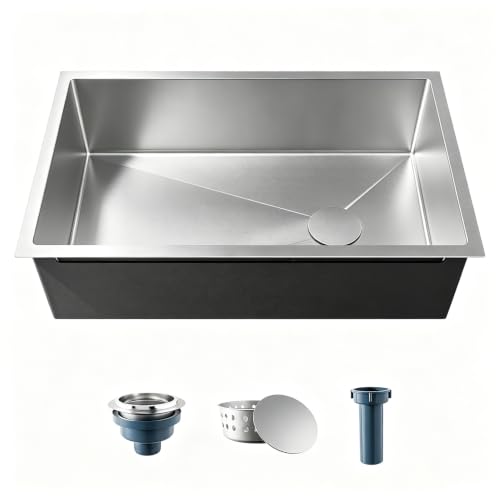
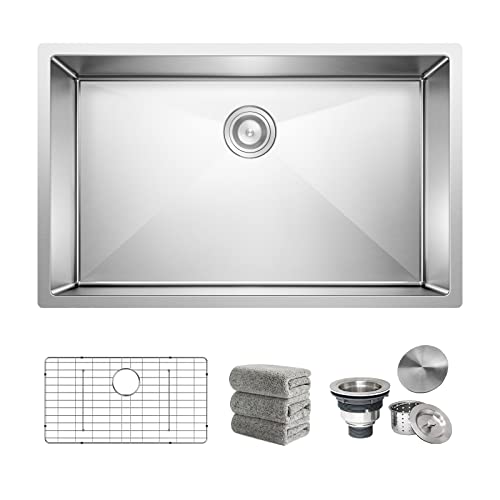
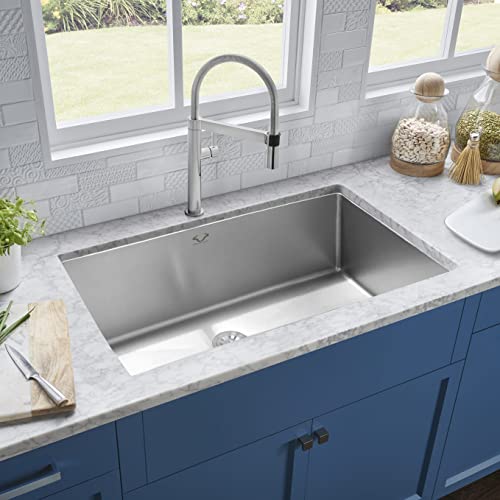
If you are choosing among the best kitchen sinks for islands, start here: the six undermount bowls below are the shortlist this guide stands behind for island installation. Each pick is linked so you can check the latest price on Amazon, confirm the size against your island cabinet, and then read the full review further down before you commit to a cutout you cannot undo.
- SANYCASA 30 Inch Undermount Workstation Sink — Best Overall
- Kraus KHU100-30 30 Inch Undermount Sink — Best Classic Undermount
- cozhao 30 Inch Undermount Sink — Best Budget Pick
- MAYESAR 28 Inch Undermount Sink — Best for Smaller Islands
- Kraus KWU110-32 32 Inch Workstation Sink — Best for Entertaining
- Kraus KHU100-32 32 Inch Undermount Sink — Best Large Bowl
Read the full guide below for the reasoning, the trade-offs, and the fitting advice behind each pick.
Choosing the best kitchen sinks for islands is a different problem from choosing a sink for a perimeter counter, and treating it as the same purchase is where most island regrets begin. An island sink is approached from two, three, or even four sides. There is no wall behind it to hide a backsplash gap, no window in front of it to stare out of, and very often a row of stools a few feet away, which means the sink is not just a work tool — it is furniture in the middle of the room, in full view of everyone sitting down to eat. It has to work hard and look composed while doing it.
The island also changes the plumbing and the workflow. Water and waste arrive and leave through the island itself, the faucet has no wall to lean on visually, and the sink often becomes the social centre of the kitchen: one person preps at it while another perches opposite with a coffee. That is why workstation bowls with integrated ledges perform so well in this setting — they let the island sink absorb prep work that would otherwise spread across the seating side of the counter. If your layout pairs the island with a perimeter run, it is worth comparing this shortlist with our notes on Best Kitchen Sinks For Kitchen Island layouts where the island carries the only sink, because the priorities shift when there is no second bowl to fall back on.
Every pick in this guide is an undermount single bowl, and that is deliberate. Undermount fitting is the island standard because the counter overhangs the bowl on all sides, crumbs and spills wipe straight in from any direction, and the clean line suits a freestanding piece of cabinetry. Sizes run from 28 to 32 inches, which covers the realistic island range: wide enough for sheet pans and stockpots, restrained enough to leave landing space on both sides of the bowl. Material pairing matters too — most of these bowls will sit in stone, and readers weighing up Best Kitchen Sinks For Quartz Countertops will find the same undermount logic applied to that surface in more depth.
Key Takeaways
- Undermount single bowls are the island default: wipe-in cleaning from every side and no rim to interrupt the counter line.
- Workstation ledges earn their keep on islands, where prep space is shared with seating and serving space.
- Match bowl width to island cabinet width first — 28 inch bowls suit compact islands, 30 to 32 inch bowls suit full-size ones.
- Thicker steel (11 and 16 gauge here) sounds and feels better in an open-plan room where sink noise carries.
- Plan the faucet position before the cutout: on an island there is no wall to default to, and the choice is permanent.
- Leave landing room on both sides of the bowl; an island sink with nowhere to set a hot pan is a daily frustration.
In this guide
Quick Picks
SANYCASA 30 Inch Undermount Workstation Sink — Best Overall
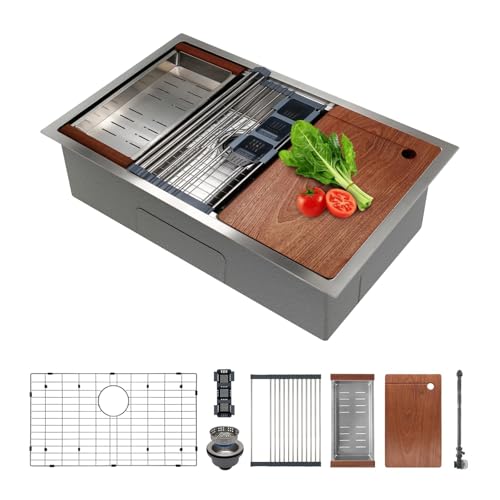
The heavy-gauge workstation: 11 gauge steel and an integrated ledge make the island sink a genuine second prep counter. Key specs: Size: 30 inch; Mount: Undermount; Material: Stainless steel, 11 gauge (3mm). Check on Amazon
Kraus KHU100-30 30 Inch Undermount Sink — Best Classic Undermount
The proven classic: 16-gauge TRU16 steel, rounded corners, and channel grooves in a 30 inch bowl that suits most islands. Key specs: Size: 30 inch; Mount: Undermount; Material: 16-gauge TRU16 stainless steel. Check on Amazon
cozhao 30 Inch Undermount Sink — Best Budget Pick
The modern handmade option: squared lines in 304 stainless with a drain assembly included, in the lightest gauge here. Key specs: Size: 30 inch; Mount: Undermount; Material: 18 gauge 304 stainless steel. Check on Amazon
MAYESAR 28 Inch Undermount Sink — Best for Smaller Islands
The compact fit: 28 x 18 inches and 9 inches deep, bringing 16 gauge steel to islands with smaller cabinets. Key specs: Size: 28 x 18 inch; Mount: Undermount; Material: 16 gauge stainless steel. Check on Amazon
Kraus KWU110-32 32 Inch Workstation Sink — Best for Entertaining
The entertainer: a 32 inch workstation with board and roll-up rack included, built for prep over the bowl. Key specs: Size: 32 inch; Mount: Undermount; Material: 16-gauge TRU16 steel. Check on Amazon
Kraus KHU100-32 32 Inch Undermount Sink — Best Large Bowl
The big classic: 32 inches of rounded-corner, easy-drain bowl for households that wash up in volume. Key specs: Size: 32 inch; Mount: Undermount; Material: 16-gauge TRU16 steel. Check on Amazon
How These Picks Were Chosen
These six sinks were chosen specifically for island duty, not copied from a general sink list. The first filter was mounting: only undermount bowls were considered, because drop-in rims fight the island brief — they interrupt the counter plane, collect debris on the seating side, and look like an afterthought on a freestanding island. The second filter was bowl configuration. Single bowls dominate modern island use because they accept the cookware islands are used for — roasting tins for a crowd, sheet pans, tall pots — without a divider in the way.
Within that frame, the guide compared verified specifications only: steel gauge, bowl dimensions, corner treatment, drainage design, sound treatment, ledge systems, and what each listing actually includes. Gauge mattered more here than it might in a closed kitchen, because islands usually sit in open-plan spaces where a thin, drummy bowl announces itself to the whole room. Included accessories were counted honestly — a workstation whose board and rack are in the box is a different proposition from a bare ledge — and no specification was assumed beyond the verified listing data. This is a research-led guide: picks are ranked by specification fit for island use, documented design, and coherence of the overall package, not by claimed hands-on testing.
The result is a deliberate spread. Two workstations serve prep-heavy islands, two classic Kraus bowls serve owners who want proven simplicity at 30 and 32 inches, one handmade bowl serves the design-led modern island, and one compact 28 inch bowl serves the smaller islands the rest of the market forgets. Readers shopping the sales for an island project may also find the timing notes under Best Kitchen Sinks For Sale useful, since island cutouts are usually scheduled against a counter fabrication date and the sink needs to be on site before the stone is cut.
Our Picks for best kitchen sinks for islands, Reviewed One by One
SANYCASA 30 Inch Undermount Workstation Sink
Badge: Best Overall
Strengths
- The 11 gauge (3mm) steel in the verified title is substantially thicker than the 16 and 18 gauge bowls elsewhere in this guide, which means a denser feel and less flex when a loaded stockpot lands in the bowl.
- The integrated ledge turns the rim into a working surface, so boards and racks sit level with the counter instead of wobbling on the bowl edge.
- A single uninterrupted bowl swallows sheet pans, roasting tins, and large cutting boards flat, with no centre divider forcing you to angle them in.
Trade-offs
- Thick steel is heavy steel: the cabinet and mounting hardware carry more weight, and the undermount clips and support framing need to be planned, not improvised.
- A 30 inch workstation format needs a generously sized base cabinet, so it rules itself out of narrow sink bases.
- Workstation ledges reward owners who actually use ledge accessories; if you never slide anything along the rim, you are paying in complexity for a feature that sits idle.
| Size | 30 inch |
| Mount | Undermount |
| Material | Stainless steel, 11 gauge (3mm) |
| Bowl | Single bowl |
| Work surface | Integrated ledge, multifunctional workstation |
The SANYCASA is the heavyweight of this line-up in the most literal sense. Most residential stainless sinks are built from 16 or 18 gauge sheet, and the verified specification here is 11 gauge at 3mm, a figure you can feel the moment a cast-iron pan is set down rather than lowered carefully. That mass does two useful things: it deadens the hollow drumming that thin bowls produce under a running tap, and it resists the small dents and oil-canning flex that show up over years of heavy cookware. If your kitchen works hard — big pots, stacked roasting tins, a household that cooks from scratch — this is the bowl that shrugs that workload off.
The second defining feature is the integrated ledge, which makes this a workstation rather than a plain bowl. The ledge is a stepped shelf formed into the rim, and accessories sized to it slide front to back so food preparation can happen directly over the sink: produce is washed, moved onto a board, chopped, and swept into the bowl without crossing the counter. In practice the ledge matters most for cooks who prep in volume, because it converts dead air above the bowl into usable work surface and keeps the mess contained over a drain instead of spread across the worktop.
As a single bowl it takes the modern approach to capacity: one wide, uninterrupted volume. A half-sheet pan lies flat for soaking, a tall stockpot stands upright under most faucets, and there is no divider to chip pan corners against. The honest limitation is the flip side of that openness — there is no second compartment, so soaking and rinsing happen in sequence or with a separate tub placed inside the bowl, and households wedded to a dedicated wash-and-rinse split will feel the adjustment. The undermount fitting keeps the surrounding counter wipeable straight into the bowl, with no rim lip to trap crumbs.
On an island, this sink’s ledge does something it cannot do on a perimeter run: it creates prep space that does not compete with seating. A board slid onto the ledge sits over the bowl, so the counter strip behind it stays clear for plates, glasses, and the people sitting opposite. The 11 gauge steel also suits open-plan islands acoustically — a heavy bowl is a quiet bowl, and island noise has nowhere to hide.
Best for: island kitchens where the sink doubles as the prep station and the household cooks in volume / Not suited for: narrow island cabinets or cooks who never use ledge accessories

Kraus KHU100-30 30 Inch Undermount Sink
Badge: Best Classic Undermount
Strengths
- 16-gauge TRU16 steel is the proven residential standard: thick enough to feel solid and resist denting, without the extra weight of heavier specialty gauges.
- Rounded corners genuinely clean faster than tight handmade corners, because a sponge follows the curve instead of digging into a seam.
- Channel grooves in the bowl floor steer standing water toward the drain, so the bowl dries instead of puddling.
Trade-offs
- No integrated ledge, so workstation accessories sit on the rim or the counter rather than sliding in a dedicated track.
- Rounded corners trade a little flat floor space for cleanability; very large pans sit slightly less squarely than in a zero-radius bowl.
- The 30 inch format still needs a mid-size or larger base cabinet, so it is not a small-kitchen shortcut.
| Size | 30 inch |
| Mount | Undermount |
| Material | 16-gauge TRU16 stainless steel |
| Corners | Rounded, for easy cleaning |
| Drainage | Channel grooves |
| Sound | NoiseDefend pads |
The Kraus KHU100-30 is the classic done properly. Its verified specification reads like a checklist of what a decade of stainless sink design settled on: 16-gauge TRU16 steel, rounded corners, channel grooves in the floor, and NoiseDefend sound-absorbing pads underneath. None of that is exotic, and that is precisely the appeal. This is a sink for buyers who want the known quantity — a bowl that behaves predictably, cleans predictably, and does not ask them to learn a new way of working.
The rounded corners deserve more credit than they usually get. Tight, square handmade corners look sharp in photographs and then spend their lives collecting a dark line of residue that needs a brush and patience. A rounded radius lets a sponge or cloth sweep the corner in the same motion as the wall, so the daily wipe-down actually finishes the job. Combined with the channel grooves, which give water a guided path to the drain instead of letting it sheet and settle, the bowl tends to dry cleaner between uses — a small, unglamorous advantage you notice every single morning.
NoiseDefend padding addresses the other stainless stereotype, the echoing clang. Pads under the bowl absorb the vibration of running water and clattering cutlery, keeping the sink sounding like a fixture rather than a drum. The honest limitation is scope: this is a single-purpose bowl with no ledge and no bundled workstation system, so buyers who want to prep over the sink will be adding rim-sitting accessories rather than sliding ones. For everyone else, the restraint is the point.
For an island that seats guests, the KHU100-30’s easy-clean rounded corners and quick-draining floor are social features as much as practical ones: the bowl can be wiped to presentable in seconds when washing up turns into hosting. Its restraint suits islands in traditional or transitional kitchens where a workstation’s hardware would look busy from the seating side.
Best for: island owners who want a proven, easy-clean bowl with no learning curve / Not suited for: cooks who want an integrated workstation ledge

cozhao 30 Inch Undermount Sink
Badge: Best Budget Pick
Strengths
- Handmade construction gives the crisp, modern squared profile that pressed sinks cannot match, suiting contemporary cabinetry and stone.
- 304 stainless steel is the food-contact grade buyers look for, with the corrosion resistance a permanently wet fixture needs.
- A drain assembly is included in the verified listing, so the first fitting step does not start with a separate parts hunt.
Trade-offs
- 18 gauge steel is the lightest in this guide: serviceable, but more prone to flex, noise, and denting than the 16 and 11 gauge bowls here.
- Handmade squared corners look sharp and clean slower; they need a brush routine that rounded corners forgive.
- Beyond the drain assembly the verified title lists no grid or accessories, so budget the extras separately.
| Size | 30 inch |
| Mount | Undermount |
| Material | 18 gauge 304 stainless steel |
| Bowl | Single bowl |
| Build | Handmade |
| Included | Drain assembly |
The cozhao takes the handmade route: instead of being pressed from a single sheet into soft curves, the bowl is fabricated, which produces the flat floor, straight walls, and defined corners of the modern architectural sink. Paired with a stone or quartz counter and flat-front cabinetry, that geometry looks intentional in a way a pressed bowl never quite does. The verified material is 304 stainless steel, the grade specified for food and kitchen use, in an 18 gauge thickness.
That gauge is where the honest conversation starts. Eighteen gauge is the entry thickness for full-size sinks: it keeps the fixture lighter and is perfectly functional, but it gives back some of the solidity the thicker bowls in this guide offer. A heavy pan set down hard is more likely to be felt and heard, and the bowl benefits from a garbage disposal being mounted carefully and from owners who do not treat the sink as an anvil. For average family cooking — daily dishes, produce washing, pots of ordinary weight — it is adequate; for a household of cast-iron enthusiasts, the thicker picks here are the safer match.
The included drain assembly is a practical plus, because it removes the most common first-weekend delay in a sink swap: discovering the old drain parts do not suit the new bowl. What the verified listing does not include is a bottom grid or ledge accessories, so the total project should be planned as sink plus drain, with protection and accessories added deliberately rather than assumed. Squared handmade corners also set the cleaning terms: keep a small brush by the faucet and the corners stay bright; skip it and they will remind you.
The cozhao’s crisp handmade lines flatter the flat-panel, handleless islands of contemporary open-plan homes, where the sink is visible from the living space and has to earn its place visually. On an island its lighter gauge is worth one extra thought: island bowls are often reached from both sides and take knocks from either direction, so households with heavy cookware habits should weigh the thicker picks first.
Best for: modern island designs on a tighter qualitative budget tier, with ordinary family cookware / Not suited for: heavy cast-iron households that need thicker steel

MAYESAR 28 Inch Undermount Sink
Badge: Best for Smaller Islands
Strengths
- At 28 inches it is the most compact full-function bowl in this guide, opening up sink bases that cannot take a 30 or 32 inch model.
- 16 gauge steel matches the thicker standard of the larger Kraus bowls despite the smaller footprint.
- The 9 inch depth contains splashing and stacks a day of dishes without the bowl feeling like a bucket.
Trade-offs
- Two inches narrower than the 30 inch picks is real capacity: the largest sheet pans may need angling rather than lying flat.
- Handmade styling with round corners is a compromise profile — cleaner than square corners, less architectural than true zero-radius designs.
- No ledge or bundled accessories appear in the verified title, so workstation use means rim-level add-ons.
| Size | 28 x 18 inch |
| Mount | Undermount |
| Material | 16 gauge stainless steel |
| Bowl | Single bowl |
| Depth | 9 inch |
| Build | Handmade, brushed finish, round corner |
The MAYESAR exists for the kitchens the 30 and 32 inch sinks cannot serve. At 28 x 18 inches it fits the smaller base cabinet — the condo kitchen, the galley layout, the modest island — while refusing to behave like a compromise once installed. The verified steel is 16 gauge, the same thickness class as the full-size Kraus bowls, and the bowl is a proper 9 inches deep, so capacity is trimmed in width rather than in usefulness.
That depth is the quiet headline. Shallow compact sinks splash, stack badly, and force large items to be washed in the open like a operation on the counter. Nine inches keeps a stockpot’s rim below counter level, contains faucet spray, and lets a day’s plates and glasses accumulate out of sight lines. The handmade build with a brushed finish gives it the tailored look that suits a smaller, design-conscious kitchen, and the round corners split the difference between crisp styling and corners a cloth can actually clean.
The limitation is simple geometry and should be accepted before buying: the very largest catering pans and oversize boards that lie flat in a 32 inch bowl will sit at an angle here. For households whose cookware tops out at standard sheet pans and Dutch ovens, that moment rarely arrives. Measure your biggest pan, compare it honestly with a 28 inch opening, and if it passes, this is the pick that gives a small kitchen a grown-up sink.
This is the pick that makes a sink possible on islands the bigger bowls disqualify — the narrow island in a galley kitchen, the small island in an apartment open-plan. Its 9 inch depth is especially valuable on an island, because island counters are serving surfaces too: a deep bowl keeps the dish stack below counter level and out of the sight line from the stools.
Best for: compact islands and galley-style islands where cabinet width is limited / Not suited for: cooks who need the largest pans to lie perfectly flat

Kraus KWU110-32 32 Inch Workstation Sink
Badge: Best for Entertaining
Strengths
- The integrated ledge plus included cutting board and roll-up rack make it a working station on day one, with no accessory compatibility guessing.
- 32 inches of single bowl takes the largest pans flat and still leaves ledge room to prep over the bowl.
- NoiseDefend soundproofing and 16-gauge TRU16 steel give it the solid, quiet feel buyers expect at this size.
Trade-offs
- A 32 inch workstation needs a wide base cabinet and generous counter run; it overwhelms compact layouts.
- Ledge accessories live somewhere when not in use, so storage for the board and rack needs a plan.
- Owners who never prep over the sink are carrying ledge complexity they will not use; a plain bowl serves them simpler.
| Size | 32 inch |
| Mount | Undermount |
| Material | 16-gauge TRU16 steel |
| Work surface | Integrated ledge for accessories |
| Included | Cutting board and roll-up rack |
| Sound | NoiseDefend soundproofing |
The Kraus KWU110-32 is the workstation concept executed by an established sink maker, and the verified contents show it: an integrated ledge formed into the bowl, a cutting board and a roll-up rack in the box, 16-gauge TRU16 steel, and NoiseDefend soundproofing underneath. Where the SANYCASA leans on sheer steel thickness, the Kraus leans on system completeness — everything needed to work over the bowl arrives together and is guaranteed to fit the ledge it was made for.
In daily use the ledge system changes where cooking happens. The board slides to wherever the work is, the roll-up rack holds washed produce or a hot pan beside it, and trimmings go straight down into the bowl instead of travelling across the counter. For cooks who entertain, batch-prep, or simply hate a cluttered worktop, that contained workflow is a genuine quality-of-life change rather than a brochure feature. The 32 inch bowl underneath remains a full-size single bowl, so the station never costs you soaking capacity.
The trade-offs are about fit and habit. A 32 inch sink demands a wide cabinet and a counter run that can spare the footprint, and the board and rack need a home when the bowl is needed empty. NoiseDefend padding keeps the big bowl from booming, but no padding makes a dropped pan silent. Buy it if you will actually prep over the sink — that behaviour, not the badge, is what repays the choice.
If your island is where parties actually happen, this is the sink designed for it. The roll-up rack holds glasses and washed produce above the bowl, the board gives you a serving-adjacent prep spot, and the bowl underneath still swallows the evening’s pans at the end. Entertaining islands fail when prep, serving, and washing collide; the ledge system is a traffic plan for exactly that collision.
Best for: entertaining islands where prep, serving, and washing up happen in one place / Not suited for: small islands without the cabinet width for a 32 inch bowl

Kraus KHU100-32 32 Inch Undermount Sink
Badge: Best Large Bowl
Strengths
- The largest classic bowl here: 32 inches of uninterrupted single-bowl space for the biggest cookware in the house.
- Rounded corners and channel grooves make a big bowl easy to keep clean and quick to drain.
- 16-gauge TRU16 steel with NoiseDefend pads keeps a large, hard-working bowl feeling solid and sounding muted.
Trade-offs
- Needs a wide base cabinet; in a small kitchen this much sink consumes counter and storage out of proportion.
- No ledge or workstation system, so over-bowl prep uses rim-sitting accessories.
- A very large bowl uses more water to fill for soaking than a compact bowl doing the same job.
| Size | 32 inch |
| Mount | Undermount |
| Material | 16-gauge TRU16 steel |
| Corners | Rounded, for easy cleaning |
| Drainage | Channel grooves |
| Sound | NoiseDefend pads |
The KHU100-32 takes the proven KHU100 formula — 16-gauge TRU16 steel, rounded corners, channel grooves, NoiseDefend pads — and stretches it to 32 inches. That extra width transforms the bowl’s party trick: roasting tins, grill pans, and the largest sheet pans go in flat, and a tall stockpot plus a stack of plates can share the bowl without a balancing act. For big households and serious cooks, capacity is not a luxury; it is the difference between washing in the sink and washing around it.
Kraus’s detailing keeps the big bowl manageable. Rounded corners scale up gracefully — the same sponge-friendly curves, just more of them — and the channel grooves matter even more at this size, because a wide flat floor is exactly where water likes to loiter. Guided drainage means the bowl empties fully and dries faster, which is also a hygiene point in a sink that sees heavy use. NoiseDefend pads under a bowl this large are close to essential; unpadded, a 32 inch steel box is an amplifier.
The honest limits are proportion and simplicity. This sink needs a wide cabinet and earns its keep only where cookware and cooking volume justify it; in a two-person flat it would be counterproductive grandeur. It is also deliberately plain — no ledge, no bundle — a big, well-made hole in the counter for people whose priority is volume and easy cleaning over workstation tricks.
Choose this for the island that serves a crowd: holiday cooking, big-family Sundays, batch baking. The 32 inch bowl keeps the island’s workhorse role credible — everything fits, nothing is washed in shifts — while the rounded corners keep a high-traffic bowl quick to reset between courses. It needs an island with the cabinet width to match, which large entertaining islands usually have.
Best for: large islands serving big households with oversize cookware / Not suited for: compact islands or low-volume two-person cooking
Comparison Table
The table below lines the six best kitchen sinks for islands picks up on the attributes that decide daily use — size, build, and the design details that affect drainage and cleaning. Prices and ratings are deliberately absent: both change constantly, and neither describes the sink. Use the table to shortlist, then read the full reviews before deciding.
| Pick | Badge | Size | Build | Standout detail | Check |
|---|---|---|---|---|---|
| SANYCASA 30 Inch Undermount Workstation Sink | Best Overall | 30 inch | Stainless steel, 11 gauge (3mm) | Integrated ledge workstation | Check on Amazon |
| Kraus KHU100-30 30 Inch Undermount Sink | Best Classic Undermount | 30 inch | 16-gauge TRU16 stainless steel | Rounded corners, channel grooves | Check on Amazon |
| cozhao 30 Inch Undermount Sink | Best Budget Pick | 30 inch | 18 gauge 304 stainless steel | Handmade, drain assembly included | Check on Amazon |
| MAYESAR 28 Inch Undermount Sink | Best for Smaller Islands | 28 x 18 inch | 16 gauge stainless steel | 9 inch depth in a compact bowl | Check on Amazon |
| Kraus KWU110-32 32 Inch Workstation Sink | Best for Entertaining | 32 inch | 16-gauge TRU16 steel | Ledge with board and rack included | Check on Amazon |
| Kraus KHU100-32 32 Inch Undermount Sink | Best Large Bowl | 32 inch | 16-gauge TRU16 steel | Rounded corners, channel grooves | Check on Amazon |
How to Choose a Kitchen Sink for an Island
Start with the island cabinet, because it overrules every preference. Measure the interior width of the sink base and the counter depth front to back, then work backwards: a 32 inch bowl needs a wide cabinet and leaves less landing room on a standard-depth island, while a 28 inch bowl preserves counter on both sides. On islands, landing room is not a luxury — it is where hot pans go when the cook turns around with nowhere else to set them. As a working rule, protect a clear stretch of counter on at least one side of the bowl, and ideally both.
Next, decide the sink’s job in your layout. If the island holds the only sink, it must do everything: prep, washing up, filling tall pots, soaking roasters. That argues for the deepest, widest bowl the cabinet allows, and for a workstation ledge if you prep in volume. If a perimeter sink already handles washing up, the island bowl can specialise — but every pick here is sized as a main sink, so treat this guide as the primary-sink shortlist. Households in compact footprints should also read the sizing discussion under Best Kitchen Sinks For Tiny Homes, because the cabinet maths there is the island maths taken to its limit.
Then weigh steel gauge against your room. Islands live in open-plan spaces, and sink noise — tap drumming, cutlery clatter, disposal rumble — travels. Thicker steel and sound pads are not vanity specifications here; they are how the kitchen end of the room avoids dominating the living end. Finally, decide the faucet before the cutout. Island faucets mount behind the bowl on a narrow strip of counter, on the corner, or occasionally through the counter beside the bowl, and each choice changes the hole drilling, the reach over the bowl, and how splash behaves toward the seating side. A pull-down sprayer with a controlled spray pattern is the island-friendly default, because rinsing a wide bowl from a fixed spout leaves the far corners dry and dirty.
How to Plan, Fit, and Look After an Island Sink
Planning an island sink starts before any product arrives. Confirm the water supply and waste route through the island with your installer, including how the waste connects to the main drain — island drainage often needs a loop vent or an air admittance valve arranged inside the cabinet, and that hardware shares space with the bowl, the disposal, and any bins. Lay the bowl’s template on the island counter and live with the outline for a day: make tea around it, set pans where they would land, sit on the stools. The outline test catches the classic island error — a bowl so wide that nothing can be set down beside it — while it is still pencil, not stone.
Fitting an undermount bowl to an island follows the standard sequence with one island twist: access. The bowl is sealed to the underside of the counter with sanitary silicone, supported by clips or a cradle so the sealant is a seal and not a structural glue, and the counter must be fully supported while the sink’s weight — significant with the 11 gauge SANYCASA — transfers to the cabinet. The twist is that island plumbing connections are made in a confined cabinet with services arriving from the floor, so leave the installer room: do not fill the cabinet design with drawers that the waste and vent hardware will evict.
Daily care on an island is about speed and presentation. Wipe the bowl down after the evening wash while it is still wet, dry the floor with a cloth when you can, and the stainless stays bright without heroics. Keep a small brush for handmade corners and ledge tracks, rinse ledge accessories before food dries on them, and avoid leaving cast iron sitting wet in any steel bowl overnight. Three problems recur with island sinks. Problem: water pooling on the seating side of the counter → check the faucet’s spray pattern and your rinsing angle, and wipe toward the bowl, because island splash travels toward guests. Problem: a drummy, echoing bowl in an open-plan room → add a bottom grid and ensure sound pads are in full contact; thin bowls benefit most. Problem: smells from an island waste that drains slowly → run the disposal with cold water regularly and have the island vent arrangement checked, because island venting done badly announces itself exactly this way.
Island Layouts: Main Sink, Prep Sink, or Both?
Large islands tempt owners toward two sinks, and the honest answer is that most households use one well and neglect the other. A second small prep sink earns its plumbing only in genuinely large kitchens where two cooks work simultaneously at distance from each other. In the far more common layout — one island, one or two cooks — a single generous bowl with a workstation ledge delivers most of the two-sink benefit at one sink’s cost: prep happens over the bowl, washing happens in it, and no second set of taps divides the counter. Every pick in this guide is specified as that single main bowl.
Position matters as much as count. Centre the bowl in the island’s working zone rather than the island’s geometric centre if one end of the island is seating: the sink belongs opposite the stools’ knee space only where the dishwasher and the cook’s standing room align. Leave the seating overhang free of plumbing conflicts below and splash conflicts above. If your island is still on paper, the comparison under Best Kitchen Sinks For Van is a surprisingly useful extreme case — van galleys solve the same problems of compact plumbing and multi-use counters at a fraction of the size, and their discipline about landing space scales up well.
Faucet Placement When There Is No Wall Behind the Sink
A perimeter sink defaults its faucet to the strip behind the bowl, against the wall. An island offers no default, which is a freedom owners often freeze on. Behind-the-bowl mounting on the island counter remains the most practical choice for a main sink: reach is natural, splash is contained over the bowl, and the plumbing stays inside the cabinet run. Corner mounting suits wide bowls washed from an angle, and side mounting — through the counter beside the bowl — appears in chef-style layouts where the faucet serves pots on an adjacent induction hob as well.
Whichever position you choose, test the geometry with the template: the spout should reach at least the bowl’s centre, the sprayer should rinse the far corners without stretching its hose to the limit, and the lever should be operable with wet hands from your natural standing side. Remember that everyone at the stools will look at this faucet all evening — on an island, the tap is a centrepiece whether you planned it as one or not, so its finish and silhouette deserve the attention you would give a pendant light.
Common Buying Mistakes
The most expensive island mistake is sizing the bowl to the island’s outside dimensions instead of its cabinet. Islands look vast; their sink bases are not, and a bowl ordered against the countertop measurement arrives to meet a cabinet it cannot enter. Measure the cabinet interior, confirm the bowl and its clips fit with room for plumbing, and only then fall in love with a width.
Second is forgetting the people sitting opposite. A shallow bowl, a tall splashy faucet, or a workstation habit that spreads prep across the whole counter all push water and mess toward the seating side. Depth, controlled spray, and ledge-contained prep are the island-specific defences, and they are all represented in this shortlist for a reason.
Third is treating the island sink as a styling exercise and under-specifying the steel. In an open-plan room a thin bowl is audible in the next room’s conversation. Fourth is cutting the stone before the sink is on site: undermount cutouts are made to the actual bowl and its template, and fabrication scheduled ahead of delivery is how projects stall. Finally, do not pair an island main sink with a dishwasher location that forces you to carry dripping pans across a walkway — the sink, dishwasher, and bin should form a tight triangle inside the island itself.
Final Recommendation
For most islands, the SANYCASA 30 Inch is the recommendation to start from: its 11 gauge steel brings a quiet, dense feel that open-plan rooms reward, and its integrated ledge gives the island a prep station that does not steal seating counter. If your island entertains more than it preps, the Kraus KWU110-32 workstation, with board and rack included, is the alternative first choice — the system completeness is worth more than raw gauge when the island is a social hub.
Choose the Kraus KHU100-30 if you want the classic island bowl with the easiest daily cleaning, the KHU100-32 if your island and your cookware both run large, the MAYESAR 28 if your island is compact and you refuse to accept a shallow compromise, and the cozhao if a crisp handmade profile matters most and your cookware is of ordinary weight. Any of the six will serve an island well; the right one is the one whose width your cabinet confirms and whose working style matches how your island is actually used — and if your island sits over a laminate-topped base unit rather than stone, pause and read Best Kitchen Sinks For Laminate Countertops before ordering any undermount bowl.
Start your shortlist here: SANYCASA 30 Inch Undermount Workstation Sink, Kraus KHU100-30 30 Inch Undermount Sink, and cozhao 30 Inch Undermount Sink cover the strongest combinations of fit, build, and everyday usability in this guide — check the latest price on Amazon for each and confirm the dimensions against your own cabinet before ordering.
Frequently Asked Questions
What size sink is best for a kitchen island?
For most islands, a 30 inch single bowl is the balance point: wide enough for sheet pans and stockpots, restrained enough to leave landing counter on both sides. Islands with smaller cabinets suit the 28 inch format, while large entertaining islands with wide cabinets can carry 32 inches. The deciding measurement is always the sink-base cabinet interior, not the island’s outside length.
Is a single or double bowl better for an island?
A single bowl suits islands better for most households. Island cooking centres on large items — roasters, sheet pans, boards — that a divider obstructs, and a workstation ledge restores the two-zone working that a second bowl used to provide, without permanently splitting the capacity. Double bowls still suit dedicated wash-and-rinse routines, but no pick in this guide splits its bowl, by design.
Can you put a workstation sink in an island?
Yes — islands are arguably the best place for one. The ledge converts the air above the bowl into prep space, which matters where counter is shared with seating and serving. Both the SANYCASA and the Kraus KWU110-32 in this guide are workstation designs; the Kraus includes its board and roll-up rack, so it works as a station from the day it is fitted.
How much counter should be left beside an island sink?
Protect a clear landing stretch on at least one side of the bowl — enough for your largest hot pan plus a trivet — and ideally both sides. If the template test shows pans would land on the seating overhang or not at all, step down a bowl size. Landing space is a safety feature disguised as a convenience.
Does an island sink need special plumbing?
It needs planned plumbing rather than special plumbing. Supplies and waste route through the island cabinet, and drainage must be vented — commonly with an island loop vent or an air admittance valve inside the cabinet, arranged to local code. That hardware takes cabinet space, so it belongs in the design from the start, not as a surprise during fitting.
Are undermount sinks the only sensible choice for islands?
They are the standard for good reasons: wipe-in cleaning from any side, no rim to trap debris near seating, and a clean line on a freestanding cabinet. Drop-in sinks can work on islands, particularly where the counter material cannot take an undermount, but every pick here is undermount because most island counters are stone or quartz that suit the fitting perfectly.