Disclosure: topratedkitchenware.com is reader-supported. When you buy through links on our site, we may earn an affiliate commission from Amazon and other retailers, at no extra cost to you.
Where to buy
This guide to the best inductin cooktops — the spelling is the search’s own, and the technology is induction — covers the six products in the verified research pool with the fuel test applied strictly. Four are genuine induction cooktops and are linked below. Two are gas cooktops: fine appliances that heat with flame rather than magnetism, so they are reviewed in full as prose-only entries with no link and no photo. If you came here for induction’s speed, precision and cool surfaces, the four linked burners are your shortlist.
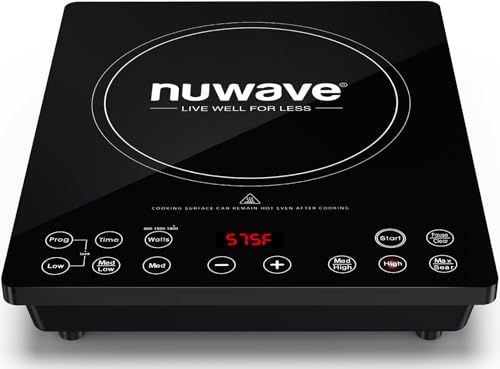
- Nuwave Pro Chef Induction Cooktop — Best Precision. Ninety-four temperature settings in 5°F steps, commercial-grade.
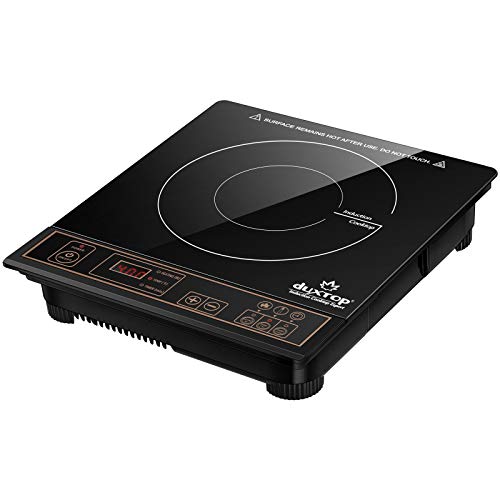
- Duxtop 1800W Portable Induction Cooktop Gold 8100MC — Best Established Design in Gold. The classic portable, in its dress finish.
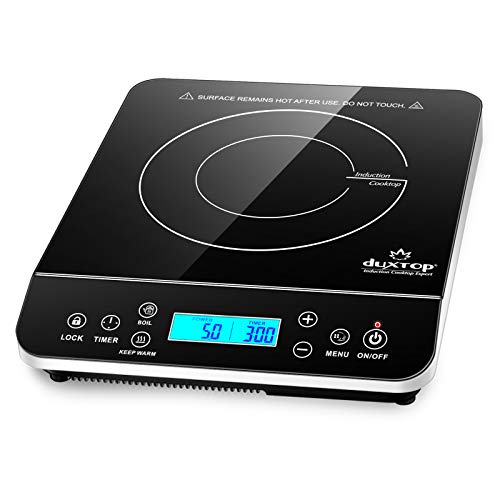
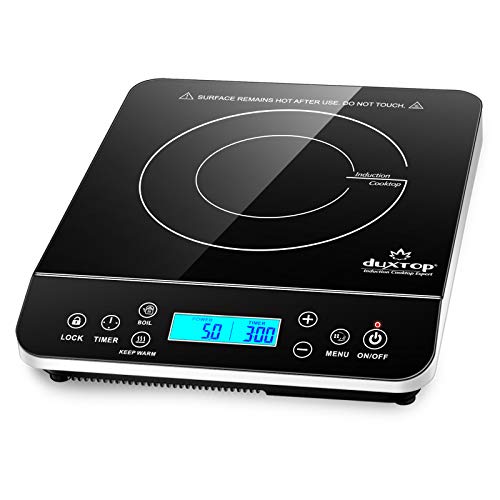
- Duxtop Portable Induction Cooktop Silver 9600LS — Best Touch Control in Silver. LCD sensor touch on the proven platform.
- ISILER 1800W Portable Induction Cooktop — Best Compact for Beginners. Presets, timer and safety lock in a small footprint.
- VEVOR Gas Cooktop 30 Inch 5 Burners — Prose-only: a gas cooktop; it is not induction.
- ThermoMate Heavy 36 Inch Gas Cooktop — Prose-only: a gas cooktop; it is not induction.
Read the full guide ↓ for detailed reviews, a comparison table, and a plain-English explanation of how induction actually works and who it suits.
Induction is the cooking technology that converts sceptics at first boil. A pan of water comes to the boil with startling speed; a knob turned down changes the pan’s behaviour at once, not after an element’s slow cooling; a sauce can be told a temperature and held there; and the surface the pan sits on stays cool enough that spills do not bake and small hands are at far less risk. People searching for the best inductin cooktops usually arrive with one of three motivations — speed, control, or a kitchen where gas is unavailable or unwanted — and this guide is organised around serving all three honestly. It explains the one real cost of admission, the magnetic cookware requirement, before any product is praised; it reviews the four true induction burners in depth; and it treats the two gas interlopers in the pool with respect and clarity, because a reader cross-shopping fuels deserves the comparison made properly, as in Best Induction 30 Inch Cooktops for the built-in formats.
Key Takeaways
- Four of the six researched products are true induction cooktops and are linked; the two gas cooktops are prose-only because gas is not induction.
- The Nuwave Pro Chef leads on precision, with 94 temperature settings in 5°F increments across 100°F to 575°F.
- The two Duxtop models bring the category’s most established portable platform, in gold with classic controls or silver with LCD touch.
- The ISILER is the beginner’s door into the technology: presets, a timer, a safety lock and a compact body.
- Induction only heats magnetic-base pans. The fridge-magnet test, done before ordering, is the most important step in this entire guide.
- Portable induction suits small households, supplementary stations and renters; multi-burner family cooking belongs to built-in induction formats.
In this guide
Quick Picks
| Pick | Badge | Power | Standout feature | Link |
|---|---|---|---|---|
| Nuwave Pro Chef | Best Precision | 1800W | 94 temp settings, 5°F steps | Check on Amazon |
| Duxtop Gold 8100MC | Best Established Design | 1800W | Long-running classic, gold finish | Check on Amazon |
| Duxtop Silver 9600LS | Best Touch Control | 1800W | LCD sensor touch panel | Check on Amazon |
| ISILER Portable | Best Compact for Beginners | 1800W | 7 presets, safety lock | Check on Amazon |
| VEVOR Gas Cooktop 30 Inch | Best Gas Alternative | Gas | 5 burners, NG/LPG convertible | Prose-only — no link |
| ThermoMate Gas Cooktop 36 Inch | Best Wide Gas Alternative | Gas | 5 Sabaf burners, 304 stainless | Prose-only — no link |
Notice the structure: four ways to buy induction, two ways to leave it. Both directions are legitimate — what matters is that the choice is made by fuel and cooking style, not by a search page’s accident. The built-in induction destinations for committed converts are surveyed in Best Induction 36 Cooktops.
How These Picks Were Chosen
These picks were chosen by research, not by hands-on testing, and the method began with the fuel screen this keyword demands. Each pool product was verified through Creators API listing data — exact title, brand, technology, power, temperature structure and format — and classified as induction or not induction. The four induction products passed and were linked. The two gas cooktops, whose listings describe flame burners in built-in formats, failed the screen on the core attribute and became prose-only, with the reason recorded here and in the sources file; they are reviewed in full because they are good products and because naming the boundary clearly is a service to readers comparing fuels.
Among the passing four, ranking weighed temperature architecture first — settings, steps and range — because controlled heat is induction’s reason to exist. It weighed platform maturity second, control design third, and beginner-friendliness as its own axis rather than a defect. Facts absent from a listing were left absent from the reviews; no specification in this guide was borrowed from a sibling model or a category average. Prices and ratings were excluded from the evidence entirely, as both fluctuate and neither measures whether a burner matches your pans, your circuit or your cooking.
A final note on scope. All four linked products are portable single burners, because that is where this keyword’s verified pool concentrates. The guide’s later sections place them honestly against built-in induction — the format a family kitchen ultimately wants — so no reader mistakes a superb portable for a whole kitchen’s stove.
The 6 Best Inductin Cooktops, Reviewed in Detail

Nuwave Pro Chef Induction Cooktop
Badge: Best Precision
Strengths
- Ninety-four temperature settings from 100°F to 575°F in 5°F increments — control fine enough to work by number and repeat results exactly.
- Commercial-grade positioning, a large 8-inch heating coil and a shatter-proof ceramic glass surface.
- Full 1800W power, so delicacy and force live in the same burner.
Trade-offs
- Its granularity is wasted on cooks who never intend to use it; simpler rivals feel friendlier to improvisers.
- The 8-inch coil sets the pan-size ceiling, as with most precision portables.
- One burner, however precise, is one burner.
Mini spec box
- Format: Portable countertop single burner, commercial-grade
- Fuel: Induction (electric)
- Power: 1800W
- Coil: Large 8-inch heating coil
- Temperature: 94 settings, 100°F–575°F in 5°F increments
- Surface: Shatter-proof ceramic glass
Start with the number that defines this product: ninety-four. Ninety-four temperature settings means the space between “warm” and “boiling” is not a dial’s vague sweep but a staircase with a step for every intention — the exact hold for butter, the exact simmer for a stock that should tremble rather than roll, the exact stage for sugar work that punishes approximation. In 5°F increments, a cook can hunt a threshold the way a photographer hunts focus, a click at a time, and — this is the part that changes a kitchen — write the winning number down and return to it forever. Gas cannot do this. Radiant cannot do this. This is induction’s home ground, and the Pro Chef occupies it more completely than any other product in this pool.
The hardware around the control system behaves like it belongs there. A large coil gives precision an even stage to work on; shatter-proof ceramic glass answers the durability question that glass surfaces always raise; and commercial-grade positioning promises a unit built for repetition — the same setting, the same result, on the hundredth use as on the first. Caterers and demonstrators buy this class of burner for exactly that repeatability, and serious home cooks borrow it for sauces, custards, chocolate and eggs, the four horsemen of temperature regret.
Its honest limitation is that precision is a relationship, not a feature: it pays the cook who measures, notes and repeats, and it merely decorates the kitchen of the cook who does not. If your style is a handful and a guess — a noble style with great dinners to its name — a simpler pick below will make you happier for less fuss. But if you have ever stood over a pan thinking “if only this burner would just stay exactly there,” the Pro Chef is the answer this guide was written to find, and its built-in counterparts are compared in Best Induction Cooktops 30 Inch.
Best for: precision cooks, sauce and sugar work, and anyone who cooks by repeatable temperature / Not suited for: improvisational cooks or multi-burner meals

ISILER 1800W Portable Induction Cooktop
Badge: Best Compact for Beginners
Strengths
- A welcoming control scheme: 10 power and 10 temperature settings, touch control and 7 cooking presets for common jobs.
- Timer and safety lock cover the household realities of learning a new technology.
- Compact, portable and even-heating across its 8-inch plate, per the listing — sized for small spaces and single-pan meals.
Trade-offs
- Ten-step control is a beginning, not the precision frontier; keen cooks will outgrow it.
- Presets are approximations that manual cooking eventually replaces.
- Single burner, modest plate: small-scale by design.
Mini spec box
- Format: Portable countertop single burner
- Fuel: Induction (electric)
- Power: 1800W
- Heating plate: 8 inch
- Controls: Touch control, 10 power and 10 temperature settings
- Extras named in listing: 7 cooking presets, timer, safety lock
Every technology needs its friendly front door, and in this pool the ISILER holds that role with unusual clarity about what a beginner actually needs. Not ninety-four settings — ten, clearly divided between power and temperature, so the first lesson of induction (power for force, temperature for finesse) is taught by the control layout itself. Not a blank panel — seven presets that translate “I want to fry” and “I want to keep this warm” into single presses while confidence builds. And not a bare burner — a timer to learn timed work and a safety lock for the households where learning happens around children and elbows.
Its habitats are the small and the temporary: the studio flat where it is the stove, the dorm where it is an education, the holiday rental that turns a socket into a kitchen, the spare burner that lives in a drawer until a dinner party needs it. Compactness is a genuine specification in those lives, and a unit that stores anywhere and asks almost nothing in return earns its place differently from the precision instruments — by disappearing when not needed and performing without drama when called.
The honest limitation is headroom, and it should be stated as a compliment in disguise: this is the burner a cook outgrows by succeeding. Months of preset cooking teach exactly the instincts that make finer control desirable, at which point the ISILER retires gracefully to second-burner duty. As a first induction experience — safe, legible, forgiving — it is the pool’s most sensible recommendation, and many households in Best Induction Cooktops 36 began exactly here before committing to a built-in.
Best for: beginners, students, small flats and anyone wanting a compact, preset-led first induction burner / Not suited for: precision ambitions or family-scale meals
VEVOR Gas Cooktop 30 Inch 5 Burners
Badge: Best Gas Alternative
Strengths
- A genuine five-burner built-in cooktop with NG/LPG convertibility and thermocouple protection in its verified listing.
- Works with every pan ever made — no magnetic-base requirement, no cookware audit.
- Keeps cooking through power cuts, which no induction burner can claim.
Trade-offs
- It is a gas cooktop. It is not induction — the core mismatch that makes it prose-only in this guide.
- It requires a gas supply and professional installation rather than a socket.
- Flame cannot hold a named temperature the way the precision induction above can.
Mini spec box
- Format: 30-inch built-in gas cooktop
- Burners: 5
- Total output stated in listing: 12250 BTU
- Fuel: Natural gas / LPG convertible
- Surface: Stainless steel
- Safety: Thermocouple protection
The VEVOR is here because fuel decisions deserve honest opposition. Everything induction celebrates — precision, cool surfaces, digital repeatability — gas answers with its own ancient virtues: visible flame that any pan can sit on, heat that works when the grid does not, and a multi-burner built-in format that runs a family dinner without a choreography of single burners. A household that reads this guide and chooses gas knowingly has not failed the guide; it has used it. Five burners in a standard 30-inch frame, convertible between mains gas and propane, with flame-failure protection, is a serious specification for that household.
What gas cannot do is be induction, and the distinction is not pedantry. There is no magnetic field, no temperature staircase, no surface that stays cool under the pan — there is fire, with fire’s gifts and fire’s demands: ventilation, installation by professionals, and a cook’s eye developed over years in place of a number on a display. A buyer who orders this unit from an induction search without noticing the fuel line receives a fine appliance and a completely wrong kitchen plan.
So the VEVOR stands prose-only, reviewed with respect and linked nowhere, as the guide’s standing reminder that the first specification is always the technology itself. Its honest limitation, within this keyword, is categorical — and for the reader it converts toward flame, that limitation reads instead as a direction, toward the gas guides where it competes as a leading pick.
Best for: households choosing flame deliberately — multi-burner cooking, any cookware, outage-proof heat / Not suited for: anyone seeking induction’s precision and cool surface
ThermoMate Heavy 36 Inch Gas Cooktop
Badge: Best Wide Gas Alternative
Strengths
- Five Italy Sabaf power burners across a spacious 36-inch built-in surface, in 304 stainless steel.
- NG/LPG convertible with thermocouple protection and CSA certification named in the listing.
- The two-cook, large-pan format that no single portable burner can imitate.
Trade-offs
- Gas, not induction — prose-only here for the same core reason as its 30-inch counterpart.
- A 36-inch installation is a renovation commitment, not a purchase.
- Its strengths are format strengths; they do not include induction’s precision or cool glass.
Mini spec box
- Format: 36-inch built-in gas cooktop
- Burners: 5 Italy Sabaf power burners
- Fuel: Natural gas / LPG convertible
- Material: 304 stainless steel
- Safety: Thermocouple protection
- Certification named in listing: CSA Certified
If the 30-inch gas pick is the standard answer, the ThermoMate is the expansive one: the same flame philosophy given room to breathe. Wide pans stop crowding, a griddle finds its two burners, and two cooks share a hob without a treaty. The named components — Sabaf burners, 304 stainless, CSA certification — give the format a specification with evidence in it, and convertibility plus thermocouple protection cover flexibility and safety in the same breath. For a renovating household committed to gas, this class of product is the destination.
In an induction guide, its role is to mark the far shore. Nothing in its considerable merit makes it an induction cooktop, and the distance between the technologies is the real subject: flame versus field, eye versus number, any-pan versus magnetic-pan, installation versus socket. Readers standing genuinely between the fuels should let their cooking decide — the sauces and custards argue one way, the woks, canners and outage stories argue the other — and then shop within the winning technology properly, as the readers of Best Induction Cooktops 36 Inch do for built-in induction.
Its honest limitation here is the mirror of the induction picks’ limitation in gas guides: total, categorical and no reflection on its quality. It is a very good answer to a different question.
Best for: renovators committed to gas who want width, named burners and certified construction / Not suited for: induction seekers in any circumstance
Duxtop 1800W Portable Induction Cooktop Gold 8100MC
Badge: Best Established Design
Strengths
- The classic portable induction design from the category’s specialist brand, in a distinctive gold finish.
- Full 1800W power in a light, storable countertop unit.
- A known quantity whose behaviour a generation of owners has mapped.
Trade-offs
- Its control structure is the established one — fewer steps than the precision leader in this pool.
- A single burner with a standard coil, like its portable peers.
- The gold finish divides taste; it is a presence, not a neutral.
Mini spec box
- Format: Portable countertop single burner
- Fuel: Induction (electric)
- Power: 1800W
- Model: 8100MC / BT-180G3
- Finish: Gold
There is a stage in every technology’s life when the radical becomes the standard, and portable induction reached it on the back of designs like this one. The 8100MC’s proposition is maturity: the core induction experience — fast, responsive, flat, efficient — delivered by a specialist brand’s long-running model, with nothing experimental left in it. The gold finish is its one flourish, and a shrewd one: a burner that lives permanently on a counter, as supplementary burners in busy kitchens tend to, may as well be a colour its owner enjoys looking at.
Against the pool’s precision leader, the Duxtop trades granularity for provenness, and that trade is rational for a large class of buyers. The household adding its first induction burner beside an existing stove — for fast boils, for an overflow ring, for a teenager’s safe first cooking — does not need ninety-four settings; it needs a burner whose every behaviour is understood and whose purchase is the opposite of a gamble. That is precisely the good being sold here, and years of category history stand behind it.
Its honest limitation is generational rather than qualitative: cooks who discover a taste for exact temperatures will find this design’s steps coarse, and its single coil imposes the usual pan discipline. But as the established answer — the induction burner for people who want induction without a learning curve or a leap of faith — the 8100MC in gold remains a genuinely distinguished choice.
Best for: first induction purchases, supplementary burners and buyers who value a proven design / Not suited for: precision specialists needing fine temperature steps
Duxtop Portable Induction Cooktop Silver 9600LS
Badge: Best Touch Control
Strengths
- LCD sensor touch controls on a completely flat panel — the cleanest interface in this pool to live with.
- The proven Duxtop 1800W platform beneath the modern controls.
- Silver finish and digital, repeatable settings suit bright, methodical kitchens.
Trade-offs
- Touch panels can misread steam and splashes and prefer dry hands.
- Temperature architecture is the established platform’s, not the precision frontier’s.
- Single burner; the portable ceiling applies.
Mini spec box
- Format: Portable countertop single burner
- Fuel: Induction (electric)
- Power: 1800W
- Controls: LCD sensor touch
- Model: 9600LS / BT-200DZ
- Finish: Silver
The 9600LS is what the classic becomes when it puts on modern clothes. The flat LCD sensor panel removes every crevice from the cleaning routine — one wipe restores the whole face of the appliance — and digital settings give the methodical cook a number to remember for every regular dish. In silver, it also solves a small aesthetic problem of the category: black glass disappears into dark kitchens and dominates bright ones, while this finish sits comfortably in the traditional, light-coloured kitchens where many supplementary burners actually live.
The platform beneath is the same proven Duxtop machinery as its gold sibling, which is the right way to buy an interface: novelty in the controls, maturity in the cooking. Cooks who keep settings notebooks, who cook the same dishes to a standard, and who wipe surfaces as a religion will find this the most congenial burner in the pool. It is induction presented at its most civilised — no knobs, no grates, no flame, just a number and a pan behaving exactly as told.
Its honest limitations are touch technology’s familiar ones — steam, splashes and wet hands can confuse a sensor — plus the platform’s established rather than frontier temperature structure. Neither diminishes its role: it closes this guide’s linked four as the modern, tidy expression of a proven idea, and the reader who wants that idea at full kitchen scale should finish with Best Induction Cooktops 36 Inches.
Best for: tidy, methodical cooks wanting flat touch control on a proven portable / Not suited for: wet-handed, high-splash cooking or precision-frontier seekers
Comparison Table
| Pick | Technology | Power | Temperature story | Controls | Link |
|---|---|---|---|---|---|
| Nuwave Pro Chef | Induction | 1800W | 94 settings, 5°F steps | Precision panel | Check on Amazon |
| ISILER Portable | Induction | 1800W | 10 power + 10 temp settings | Touch + presets | Check on Amazon |
| VEVOR Gas 30 Inch | Gas | 12250 BTU total stated | Flame, 5 burners | Knobs | Prose-only |
| ThermoMate Gas 36 Inch | Gas | 5 Sabaf burners | Flame, 5 burners | Knobs | Prose-only |
| Duxtop Gold 8100MC | Induction | 1800W | Established level control | Classic panel | Check on Amazon |
| Duxtop Silver 9600LS | Induction | 1800W | Established level control | LCD sensor touch | Check on Amazon |
The technology column is the table’s verdict before any other column is read: four induction burners competing on control, and two gas cooktops standing as the respected alternative. Everything else is refinement of a choice that column has already framed. Spend a moment with the temperature column as well, because it contains the pool’s whole personality in miniature: one instrument built like a laboratory, one teacher built for beginners, and two benchmarks built for trust. A reader who can point at the row whose personality matches their own cooking has effectively finished shopping; the remaining sections exist to make sure the purchase survives contact with their pans, their circuit and their kitchen.
How to Choose an Induction Cooktop
Before products, the physics — because induction asks one thing of you that no other technology does. It heats only pans with a magnetic base. Cast iron passes, enamelled steel passes, induction-ready stainless passes; aluminium, copper and glass fail unless built with a magnetic layer. So the first step of choosing is not shopping at all: it is standing in your kitchen with a fridge magnet, testing every pan you love. The result decides whether induction is a purchase or a purchase plus a cookware project, and discovering it after delivery is the single most common misery in this category.
With the pans settled, choose by temperature architecture. Count settings, feel the steps, check the range. A cook whose repertoire is sauces, eggs, chocolate and delicate fish should weight fine steps heavily — that is the Pro Chef’s entire argument. A cook whose repertoire is boiling, frying and warming should weight simplicity and presets — the ISILER’s argument. A cook adding a burner beside a stove should weight provenness — the Duxtops’ argument. The technology is the same; the temperaments are different, and matching temperament to architecture is the whole skill of buying well here.
Then respect the two physical disciplines of the format. Coil and pan must match: an 8-inch class coil under a 12-inch pan gives a hot centre and a pale rim, which is a geometry fact no setting can repeal. And the circuit must be respected: an 1800W burner is a serious load that should not share its circuit with a kettle and a microwave at full simultaneous tilt. Neither discipline is onerous; both are simply the price of admission, payable once in attention rather than repeatedly in disappointment.
Finally, place the portable format honestly in your plans. A premium portable is a complete stove for a one-pan household, a precision station for a serious cook, and an overflow ring for a family — three excellent roles. The fourth role, sole cooktop for multi-burner family production, belongs to built-in induction, and the reader whose life is that role should take this guide’s criteria and apply them at built-in scale.
How Induction Works, and How to Cook on It Well
Under the glass sits a coil carrying an alternating current, which creates a rapidly changing magnetic field. Place a magnetic pan in that field and electrical currents are induced in the pan’s base itself — the pan becomes the heating element, generating heat exactly where the food is. Remove the pan and the field has nothing to heat; the glass, touched only by the pan’s residual warmth, stays comparatively cool. That single mechanism explains every famous induction trait: the speed, because energy skips the middlemen; the response, because the heat source is the pan and changes with the setting; the efficiency, because little energy escapes into the room; and the pan requirement, because a non-magnetic base simply does not join the circuit.
Cooking technique adjusts quickly. Preheat with patience on heavy pans — cast iron stores induction’s energy greedily and a violent start can hotspot it — then enjoy control that feels telepathic after gas or radiant. Use temperature mode for repeatable, delicate work and power mode for boiling and brute force. Keep lids on boiling pans and the steam away from touch panels where fitted. Expect a faint hum or buzz from some pans at high power and a small cooling fan’s voice after shut-off; both are normal physics, not faults.
Care is the category’s reward: spills meet a cool surface and wipe away instead of carbonising, sugary spills being the one exception to treat promptly. Lift heavy pans rather than dragging them across the glass, keep vents clear, and use non-abrasive cleaners. Troubleshooting, in the usual pattern. Problem: the burner ignores a pan → the base is non-magnetic or too small; verify with cast iron. Problem: uneven cooking in a big pan → the base overhangs the coil; match sizes. Problem: unexpected shut-down in a long session → check vent clearance and shared circuit load before suspecting the appliance.
Induction Versus Gas: The Decision This Pool Stages
This pool accidentally contains the whole argument, so let it be had cleanly. Gas gives you flame: visible, universal, indifferent to pan material, alive in a power cut, and spread across as many burners as the format holds. Its costs are combustion in the kitchen, cleaning around grates, and low-temperature holding that depends on the cook’s vigilance. Induction gives you the field: speed, exact temperatures, a cool flat surface and flameless safety. Its costs are the cookware audit, dependence on the grid, and — in portable form — a single burner at a time.
Most households, examined honestly, lean one way by the evidence of their own cooking. The sauce-and-custard cook, the small-flat cook, the safety-first household lean to induction. The wok cook, the canning household, the outage-prone rural kitchen lean to gas. The fortunate compromise — a gas range with one induction burner for precision — is chosen by many serious cooks and is exactly the mixed pattern the prose-only reviews above make possible to imagine. Choose by your dinners, not by a debate, and either technology will feel like the right one because, for you, it is.
Working Around the Single-Burner Limit: How Households Actually Live With Portables
Since every linked pick in this guide is a single burner, the practical question deserves a practical answer: how do real households cook real dinners on one ring? The first technique is sequencing — the discipline of ordering a meal by what holds well. Grains and braises, which forgive waiting, go first and rest under lids; sauces hold at a set temperature, which induction makes trivially easy; the fast, last-minute items — the sear, the greens, the eggs — go last and go straight to the table. A one-burner menu is not a smaller menu; it is a menu arranged in time instead of across space, and many cuisines were built on exactly that arrangement long before multi-burner stoves existed.
The second technique is pairing. A portable induction burner rarely lives alone in a real kitchen: it stands beside a microwave that reheats without shame, a kettle that owns boiling water, an oven or countertop oven that roasts while the burner sautés, or a slow cooker that has been quietly handling the stew since morning. Judged as a system, the one-burner household is not under-equipped at all — it has simply distributed the stove’s jobs across specialised appliances, several of which do their single job better than a burner ever did. The third technique, for households that outgrow the pattern, is the honest one already described: two portables, or the step up to built-in. Knowing which technique is yours — sequencing, pairing or scaling — turns the single-burner limit from a flaw in these products into a plan for your kitchen.
Built-In Induction: Where This Guide’s Readers Often Go Next
A portable burner is frequently a household’s first induction experience rather than its last, so it is worth sketching the destination many readers reach. A built-in induction cooktop takes everything this guide has praised — the field, the precision, the cool flat surface — and multiplies it across four or five cooking zones in a permanent installation, often with bridging zones for griddles and zone sizes matched to real pan collections. The criteria travel unchanged: temperature architecture first, surface quality second, control philosophy third, and the magnet test before everything. A reader who has spent a season with a portable already knows their answers to all four, which is why the portable-first path is such a reliable route into a renovation decision.
The sequencing matters practically as well as intellectually. Kitchens are expensive to change and miserable to change twice. A household that learns induction on a countertop unit learns its true pan collection, its true temperature habits and its true feelings about touch controls for the price of a portable — and then specifies its built-in with the confidence of experience rather than the optimism of a showroom. Viewed that way, the four linked burners in this guide are not merely products; they are the cheapest research a renovating household will ever commission, with dinner included.
Induction and the Rest of the Kitchen: Ventilation, Storage and Daily Life
One under-sung consequence of switching to induction is what it does to the room around it. Because no combustion happens at the hob, the extraction burden changes character: a hood still matters — cooking produces steam, grease aerosol and odours whatever the fuel — but it no longer has to clear combustion by-products, and the air above an induction cooktop stays noticeably calmer and cooler. Cooks in small flats feel this first: the kitchen stops heating up with the dinner, summer cooking stops being a negotiation with the weather, and the person at the stove is simply more comfortable.
Storage and daily life adjust in smaller ways. Portables live in drawers and cupboards and travel to rentals, boats and workshops in a way no built-in ever will. The flat surface doubles as counter when cold, which in a small kitchen is not a gimmick but a genuine second workspace for half the day. And the absence of grates, caps and burner rings quietly deletes a whole category of cleaning labour from the household’s week. None of these are reasons to buy induction alone; together, they are why so many households that try it describe the change less as an appliance swap and more as the kitchen becoming easier to live in.
Common Buying Mistakes
Mistake one, eternal and avoidable: skipping the magnet test. Mistake two: ordering a gas cooktop from an induction search — or the reverse — by reading photographs instead of the fuel line; this guide’s prose-only entries exist because that mistake is so common. Mistake three: mismatching pan base and coil size, then blaming the technology for geometry. Mistake four: buying precision you will never use or simplicity you will outgrow in a season, by failing to match the temperature architecture to your temperament. Mistake five: expecting one portable burner to perform a built-in’s job at a family dinner, and judging a fine appliance harshly for a format error that was the buyer’s own.
Final Recommendation
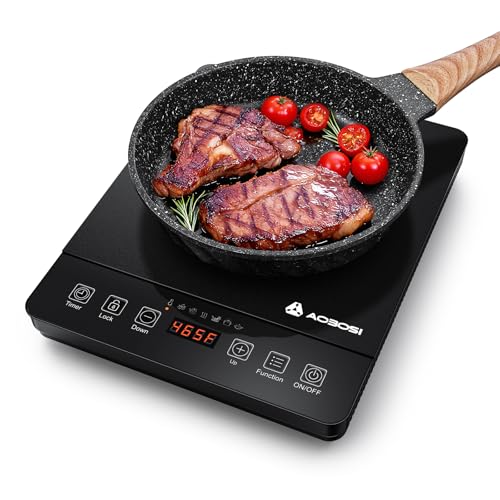
For the precision cook, the answer is the Nuwave Pro Chef (Check on Amazon) — ninety-four settings of exactly the control this technology exists to provide. For the proven, uncomplicated purchase, the Duxtop classic (Check on Amazon) remains the category’s benchmark. For the beginner, the ISILER (Check on Amazon) is the friendliest door into induction. Run the magnet test tonight, choose by your temperament and your pans, and the burner you buy will feel less like an appliance and more like an upgrade to cooking itself.
Frequently Asked Questions
How does induction cooking actually work?
An alternating current in a coil under the glass creates a changing magnetic field, which induces electrical currents in a magnetic pan’s base — so the pan itself generates the heat. That is why induction is fast, responsive and efficient, why its surface stays comparatively cool, and why only magnetic-base pans work on it.
Which of my pans will work?
Cast iron, enamelled steel and induction-ready stainless steel will; plain aluminium, copper and glass will not, unless manufactured with a magnetic base layer. Test every pan with a fridge magnet before ordering: firm attraction to the base means the pan will heat. Five minutes with a magnet prevents the category’s commonest disappointment.
Is induction faster than gas?
For boiling and heating pans, typically yes, because energy enters the pan directly instead of heating the air around it. The more life-changing difference for most cooks, though, is at the low end: holding an exact, gentle temperature indefinitely, which is where the precision models in this guide earn their badges.
Why are two gas cooktops reviewed in an induction guide?
Because they were in the verified research pool for this keyword, and because readers cross-shopping fuels deserve the comparison made honestly. They are good appliances — multi-burner, any-pan, outage-proof — but they are not induction, so they appear as prose-only entries with no link and no image rather than being misrepresented as induction picks.
Can one portable induction burner replace my stove?
For one-pan households — singles, couples, small flats — yes, and many do exactly that with units like these. For family cooking that runs several burners at once, no: the honest destination is a built-in induction cooktop, using the same criteria of steps, range and surface that this guide applies to the portables.
Do induction cooktops make noise?
A little, and normally. A small fan cools the electronics and may run briefly after cooking, and some pans — especially lightweight or multi-layer ones — buzz faintly at high power. Both sounds sit well below ordinary kitchen noise for most households, and neither indicates a fault.
Can I use induction under a range hood or in an RV?
Yes to both, with the ordinary cautions. Under a hood, induction is the easiest technology to ventilate because there are no combustion by-products — the hood’s job shrinks to steam, grease and odours. In an RV or boat, respect the electrical supply: a full-power 1800W burner is a major load on a hookup or inverter system, so models and settings that draw less are valuable, and the burner should sit stable and ventilated while travelling life moves around it. Many of the portables in this category are bought for exactly these settings.
Does induction interfere with medical devices or credit cards?
Induction fields fall off very rapidly with distance, and the cookware itself contains most of the field during normal use. People with implanted medical devices are nevertheless advised, as a standard precaution, to check their device manufacturer’s guidance about induction hobs and to avoid leaning directly over an active burner at close range for extended periods. For everyone else, ordinary cooking distances are the whole story — this is a reason for awareness, not alarm, and it is mentioned here because a complete guide should not skip it.
What pan size suits these burners?
Pans whose flat base matches the coil — an 8-inch class coil serves pans around that base diameter best. Much smaller pans may not register; much larger pans cook with a cooler rim, acceptable for gentle dishes and disappointing for searing. Measure your favourite pan’s base before ordering; it decides your daily experience more than any other dimension.