Disclosure: topratedkitchenware.com is reader-supported. When you buy through links on our site, we may earn an affiliate commission from Amazon and other retailers, at no extra cost to you.
Where to buy
The six picks below are the verified shortlist for this guide to the best mixers for moonshine. Each name links to its Amazon listing, where you can check the latest price on Amazon, confirm the exact bottle or pack size, and read the newest owner feedback before you decide.
- Daily’s Margarita Mix, 64 oz Bottle
- Zing Zang Original Margarita Cocktail Mix, 32 Fl Oz Bottle
- Zing Zang Strawberry Margarita-Daiquiri Mix, 32 Fl Oz
- Master of Mixes Margarita Mix, 1 Liter Bottle
- Fever-Tree Tonic Water Mixer, 24 Pack, 5.1 Fl Oz Cans
- Fever-Tree Light Tonic Water Mixer, 24 Pack, 5.1 Fl Oz Cans
Read the full guide ↓ for the detailed reviews, the honest limitations of every pick, and the ratios that tame a high-proof pour without hiding it.
Moonshine asks more of a mixer than almost any other base spirit, and it is worth understanding why before choosing one. Legal moonshine — unaged or lightly rested corn whiskey, often bottled at a assertive proof — arrives in the glass with three loud characteristics: raw corn sweetness, a hot alcoholic edge, and very little of the softening that barrel age gives bourbon or rum. A mixer for moonshine therefore has a double job. It must be strong enough in acid, fruit or bitterness to stand in front of that heat, and honest enough in flavour not to pretend the spirit is something else. The best mixers for moonshine do not disguise the jar; they give it a frame.
That is why this shortlist is built from the two families that can genuinely do that work. The margarita and daiquiri mixes come first, because the moonshine margarita is an established serve, not a novelty: lime’s acidity is one of the few flavours that cuts corn sweetness cleanly, and a well-built lime mix turns a rough-edged pour into something structured and cold. The tonic waters follow, taking the opposite approach — quinine bitterness instead of citrus — for drinkers who want the spirit lengthened and dried out rather than fruited. Both families share one virtue that matters more with moonshine than with any vodka or gin serve: they are consistent. A high-proof base amplifies every imbalance, so a mixer that pours the same on Friday as it did on Tuesday is worth more than a brilliant but variable homemade batch.
One safety note belongs at the front of any moonshine guide. These pours are stronger than they taste once a good mixer is doing its work. The ratios in this guide start deliberately mixer-forward; strengthen the spirit side only after you have tasted the balanced version.
Key Takeaways
- Moonshine needs acid, fruit or bitterness strong enough to frame raw corn sweetness and high-proof heat.
- Lime margarita mixes are the lead pairing — the moonshine margarita is an established serve, not a gimmick.
- Tonic water is the dry alternative: quinine bitterness lengthens and dries the pour instead of fruiting it.
- Start mixer-forward. A well-mixed moonshine drink tastes weaker than it is, so ratios protect you.
- Consistency matters more at high proof — bottled mixes pour the same every time, which the spirit rewards.
- Flavoured moonshines (apple pie and kin) are a different brief: they need lift and tartness, not more fruit.
In this guide
Quick Picks
| Pick | Badge | Why it earns its place | Listing |
|---|---|---|---|
| Daily’s Margarita Mix, 64 oz Bottle | Best Overall | A big-format lime workhorse for dependable moonshine margaritas, glass after glass | Check on Amazon |
| Zing Zang Original Margarita Cocktail Mix, 32 Fl Oz | Best Flavour Depth | Real fruit juice and no high fructose corn syrup, per its listing, for a fuller lime serve | Check on Amazon |
| Zing Zang Strawberry Margarita-Daiquiri Mix, 32 Fl Oz | Best Fruity Twist | Strawberry daiquiri direction that softens the spirit’s edge for newer moonshine drinkers | Check on Amazon |
| Master of Mixes Margarita Mix, 1 Liter Bottle | Best Classic Lime | The straightforward liter of margarita mix for the canonical moonshine margarita | Check on Amazon |
| Fever-Tree Tonic Water Mixer, 24 Pack, 5.1 Fl Oz Cans | Best Bitter Cut | Real quinine tonic in single-serve cans for a dry, sparkling moonshine highball | Check on Amazon |
| Fever-Tree Light Tonic Water Mixer, 24 Pack, 5.1 Fl Oz Cans | Best Lighter Serve | The lighter tonic at 30 calories per can, per its listing, for a leaner long drink | Check on Amazon |
If your jar is a spiced or flavoured one rather than a straight corn pour, start from the other direction — the serves in Best Mixers For Morgan deal with an already-sweet base and will teach you the restraint this spirit’s flavoured cousins need.
How These Picks Were Chosen
This guide is research-led, and it is worth saying plainly what that means for a topic like the best mixers for moonshine. We did not pour and taste every combination in a test bar, and any guide that implies a laboratory behind a home-bar topic like this one should be read with suspicion. Instead, the six picks below come from a verified pool for this mixer category: each product’s identity, brand, format and listing details were confirmed against the maker’s own listing data before it was allowed into the guide, and the spec boxes in the reviews contain only information present in that verified data. Where a detail is not in the listing — an exact acidity level, a precise botanical recipe — we describe the character in general terms rather than inventing a number.
The comparison itself was built around the questions that decide whether a mixer survives contact with this spirit. First, standing power: does the mixer’s lead flavour — lime, strawberry-lime or quinine — stay present at the dilutions a high-proof base demands, or does it wash out into sweet water? Second, direction: sweet-fruity and dry-bitter are both legitimate answers for moonshine, but they produce entirely different drinks, so the shortlist deliberately carries both rather than crowding one style. Third, format honesty: a 64 oz bottle, a liter bottle and single-serve cans suit different households, and each review says which household that is. Fourth, the flavoured-jar test: every pick was considered against both straight corn moonshine and the sweeter flavoured jars, and the reviews flag where a pick that flatters one will swamp the other.
Two kinds of product were kept out on principle. Cola-style mixers were excluded because their caramel sweetness stacks directly onto corn sweetness and the result is heavy rather than balanced. Energy-style and novelty mixers were excluded because a base this strong deserves a mixer chosen for flavour structure, not for a label joke. What remains is six bottles and cans that treat moonshine as a serious spirit with a rough edge — which is exactly what it is.
The 6 Best Mixers for Moonshine

Daily’s Margarita Mix, 64 oz Bottle
Badge: Best Overall
Strengths
- The 64 oz format is the largest in this guide — a true batch and party bottle.
- A dependable, familiar lime profile that makes the moonshine margarita a repeatable house serve.
- One bottle covers the base, the acid and the sweetness, so the only other ingredient is the jar itself.
Trade-offs
- A big opened bottle lives in the fridge for a while; its brightest lime edge softens over time.
- The profile is crowd-pleasing rather than distinctive — it will not surprise an experienced drinker.
- Its sweetness needs a shorter pour against flavoured moonshines, which are sweet already.
Mini spec box
- Format: margarita mix, bottle (still)
- Size: 64 fl oz
- Brand: Daily’s
The Daily’s bottle takes the top spot because moonshine drinking, in most households, is social drinking — a jar passed around a porch or a kitchen table — and this is the only pick sized for that reality without a second purchase. Sixty-four ounces of lime mix is a full evening of moonshine margaritas for a group, built on a profile that asks nothing of the drinker: pour the mix, pour the spirit, ice, shake or stir, serve. There is a particular virtue in that simplicity with this base spirit. Moonshine’s heat makes drinkers impatient for the drink to be finished and cold; a one-bottle build gets there fastest.
In the glass, start at two parts mix to one part moonshine, taste, and only then consider strengthening it. The lime does the structural work — cutting the corn sweetness, cooling the perception of heat — and the mix’s sweetness rounds the spirit’s raw edges into something that reads as a composed cocktail rather than a dare. A salted rim is optional and genuinely useful here: salt suppresses bitterness and sharpens lime, and against an unaged spirit it adds a savoury note the drink otherwise lacks.
The honest limitation is freshness over time. A bottle this size, once opened, is a fridge resident for weeks in a small household, and lime mixes lose their top note gradually. Groups will never notice; a solo drinker pouring one glass a week should take the smaller Zing Zang bottle below instead and treat this one as the party purchase.
Best for: groups, parties and households that pour moonshine margaritas often / Not suited for: solo drinkers who pour one glass a week

Zing Zang Original Margarita Cocktail Mix, 32 Fl Oz Bottle
Badge: Best Flavour Depth
Strengths
- Made with real fruit juice and with no high fructose corn syrup, per the verified listing.
- A fuller, more characterful lime profile that stands up to high-proof pours without washing out.
- The 32 fl oz size is the right scale for a couple or a small household to finish fresh.
Trade-offs
- A bolder mix can dominate a delicate, lower-proof moonshine if poured at full ratio.
- One bottle is a tasting quantity for a party — groups will need several.
- Made in USA, per the listing — a virtue for some buyers, irrelevant to others.
Mini spec box
- Format: margarita cocktail mix, plastic bottle (still)
- Size: 32 fl oz
- Listing notes: made with real fruit juice; no high fructose corn syrup; made in USA
If the Daily’s bottle is the workhorse, this Zing Zang bottle is the connoisseur’s version of the same serve. The listing’s two claims — real fruit juice, and no high fructose corn syrup — translate in the glass into a lime flavour with more depth and a sweetness that tastes like an ingredient rather than a syrup. Against moonshine that matters more than it would against tequila, because the spirit brings so little complexity of its own: in a moonshine margarita, the mix is most of the flavour architecture, and a better-built mix is tasted immediately.
Pour it at the same two-to-one starting ratio, but expect to adjust upward for the strongest jars: this mix has the standing power to hold its lime line at dilutions where a thinner mix disappears, which makes it the safest pick in the guide for a genuinely high-proof, uncut-style bottling. It also rewards a proper shake with ice — the brief aeration and chill soften the spirit’s edge in a way stirring over ice does not quite match.
The limitation is the mirror of its strength. A lower-proof, gently flavoured moonshine — the kind bottled closer to vodka strength for easy drinking — can be bullied by this mix’s full lime character, and the drink becomes about the mixer. If your jar is a mild one, pour at three to one and let the spirit keep a voice.
Best for: drinkers with full-strength jars who want the best-tasting moonshine margarita / Not suited for: very mild, low-proof moonshines at full ratio

Zing Zang Strawberry Margarita-Daiquiri Mix, 32 Fl Oz
Badge: Best Fruity Twist
Strengths
- Strawberry fruit flavour softens moonshine’s raw edge more gently than pure lime.
- Made with real fruit juices and made in USA, per the verified listing.
- Works in both margarita and daiquiri builds, so one bottle covers two serves.
Trade-offs
- Fruit sweetness stacks onto corn sweetness — this is the sweetest direction in the guide.
- Not the pick for drinkers who want to taste the spirit clearly.
- The strawberry profile is a warm-weather serve; it suits winter sipping less.
Mini spec box
- Format: strawberry margarita-daiquiri mix, bottle (still)
- Size: 32 fl oz
- Listing notes: non-alcoholic cocktail mix; made with real fruit juices; made in USA
Every moonshine shelf needs a gateway serve — the glass you hand to the friend who is curious about the jar but wary of it — and this strawberry bottle is that serve. Strawberry does something lime cannot: it rounds. Where lime cuts the spirit’s heat with acid, strawberry cushions it with fruit, and the resulting drink reads as a daiquiri-style refresher first and a moonshine drink second. For introducing unaged corn whiskey to drinkers raised on vodka cocktails, that ordering is exactly right.
Build it frozen if your blender allows: spirit, mix and ice blended hard produces the texture this flavour was born for, and the cold further mutes the alcoholic edge. On the rocks, keep the pour at two to one and add a squeeze of fresh lime if you have it — a small acid correction stops the fruit and corn sweetness from merging into heaviness, which is this pick’s one real risk in the glass. Garnish is not decoration here; a strawberry or a lime wheel on the rim gives the nose something fresh before the sweet first sip.
The honest limitation is that this is the least spirit-forward drink in the guide. A drinker who bought moonshine to taste moonshine will find the jar politely hidden, and against an already-fruity flavoured moonshine the combination tips into confection. Keep this bottle for straight corn moonshine and for guests; keep the tonics below for yourself.
Best for: introducing moonshine to cautious drinkers, and frozen summer serves / Not suited for: spirit-forward drinkers or flavoured jars
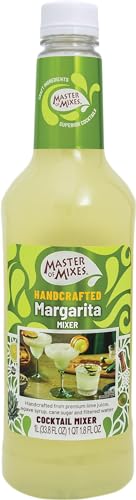
Master of Mixes Margarita Mix, 1 Liter Bottle
Badge: Best Classic Lime
Strengths
- The canonical margarita profile in a practical 1 liter bottle.
- A middle path on sweetness between the big Daily’s bottle and the bolder Zing Zang.
- The liter format suits a household’s standing serve better than party or sampler sizes.
Trade-offs
- Less distinctive than the Zing Zang original — it aims for classic, and hits classic.
- A single bottle, so no variety for a tasting evening.
- Like all still lime mixes, its edge fades slowly once opened; refrigerate it.
Mini spec box
- Format: margarita mix, bottle (still)
- Size: 1 liter
- Brand: Master of Mixes
Not every pick in a guide needs a twist. This liter bottle is the control sample — the straightforward, classic margarita mix against which the others in this list define themselves — and for a large share of moonshine drinkers it will simply be the right answer. The moonshine margarita built on it tastes the way the drink is supposed to taste: lime first, sweetness in support, the spirit’s corn character audible underneath rather than erased.
The liter size is its quiet argument. It is big enough to be a standing fridge bottle for a household that pours this serve weekly, and small enough to be finished while the lime is still bright — the two failure modes of the 64 oz party bottle and the small sampler are both avoided. Readers who stock mixers for aged Barbados rum as well will find the logic familiar from Best Mixers For Mount Gay: with a characterful base spirit, the classic mixer at the right size beats the exotic one at the wrong size, every week of the year.
The limitation is ambition. If you are bored by the classic serve, this bottle will not rescue you — that is the strawberry Zing Zang’s job, or the tonic highball’s. Buy this one when you know the drink you want and want it reliably.
Best for: households with a standing weekly moonshine margarita habit / Not suited for: drinkers shopping for a new flavour experience

Fever-Tree Tonic Water Mixer, 24 Pack, 5.1 Fl Oz Cans
Badge: Best Bitter Cut
Strengths
- Real quinine bitterness, per the verified listing, dries out corn sweetness instead of adding to it.
- Single-serve 5.1 fl oz cans pour fully carbonated every time — sparkle is half this serve.
- Subtle citrus and fruit notes in the listing’s description suit a highball build.
Trade-offs
- Quinine bitterness divides drinkers; tonic sceptics will not be converted by moonshine.
- A dry highball shows the spirit plainly — rough jars have nowhere to hide.
- 24 cans is a stock-up quantity for a serve you should taste before committing to.
Mini spec box
- Format: tonic water mixer, cans (sparkling)
- Size: 5.1 fl oz per can, pack of 24
- Listing notes: real quinine; subtle citrus and fruit notes balanced by quinine bitterness
The moonshine and tonic is the drink this guide most wants you to try, precisely because it sounds wrong. Tonic belongs to gin, the reasoning goes — but the reasoning is really about what quinine does, and what quinine does is exactly what moonshine needs. Corn sweetness is the spirit’s dominant note and its main liability in a long drink; bitterness is the one taste that resets it sip after sip, and carbonation lifts the raw alcoholic edge off the palate. Built tall over ice at three parts tonic to one part spirit, with a lime wedge squeezed in, the result is dry, sparkling and grown-up — the serve for the drinker who finds every margarita build too sweet.
The can format is doing quiet work here. Tonic’s bitterness survives storage, but its fizz does not, and a flat tonic highball is a sad thing; a 5.1 fl oz can opened at the pour guarantees the sparkle this drink is built on. The listing’s mention of subtle citrus and fruit notes matters too — this is not the harshest tonic profile, and its softness keeps the quinine from turning medicinal against an unaged spirit.
The limitation is honesty in both directions. Tonic will not hide a rough jar — it frames it — so this pick flatters a clean, well-made moonshine and exposes a harsh one. And if you simply dislike quinine, no base spirit will change that; the lime family above exists for you.
Best for: drinkers who find margarita builds too sweet and own a clean, quality jar / Not suited for: tonic sceptics or harsh, rough-edged moonshines

Fever-Tree Light Tonic Water Mixer, 24 Pack, 5.1 Fl Oz Cans
Badge: Best Lighter Serve
Strengths
- 30 calories per can, per the verified listing — the leanest long drink in this guide.
- A hint of Mexican bitter orange in the listing’s description adds a citrus lift corn whiskey loves.
- Balanced botanicals give a smooth, crisp taste that keeps the serve refreshing across a full glass.
Trade-offs
- The lighter body can feel thin against the very strongest, hottest jars.
- Shares the quinine divide — it is still a tonic, with a tonic’s bitterness.
- Another 24-can commitment; taste the standard tonic first if you are new to both.
Mini spec box
- Format: light tonic water mixer, cans (sparkling)
- Size: 5.1 fl oz per can, pack of 24
- Listing notes: 30 calories per can; hint of Mexican bitter orange; balanced botanicals
The light tonic closes the list as the session version of the serve above. A moonshine highball is a long drink by design, and long drinks are where sweetness and weight accumulate; a lighter tonic keeps the third glass as crisp as the first, which is why this can, rather than the standard tonic, is the one to stock for a slow evening. The listing’s bitter orange note is a small detail with an outsized effect here — orange citrus against corn sweetness reads almost like the charred-orange garnish on an old fashioned, a flavour rhyme that makes the unaged spirit taste more composed than it has any right to.
Build it identically to the standard tonic serve — three to one over a full glass of ice, lime squeezed in — and notice what the lighter profile changes: the spirit steps forward half a pace. That is the point for drinkers who like their moonshine audible, and the risk for drinkers who do not. With a mild jar it is the best long drink in this guide; with a fiery one, the standard tonic’s extra body is the safer frame.
The limitation, again, is the family trait: this is a bitter, dry, sparkling serve, and a household that runs on fruity drinks will leave twenty cans of a 24 pack untouched. It is a specialist’s stock-up, bought after the serve has proven itself at the table.
Best for: long, lean highballs across a slow evening with a clean jar / Not suited for: fruit-first drinkers or the hottest uncut-style pours
Comparison Table
| Pick | Badge | Key attributes | Listing |
|---|---|---|---|
| Daily’s Margarita Mix, 64 oz Bottle | Best Overall | Still lime mix; largest format at 64 fl oz; batch and party bottle | Check on Amazon |
| Zing Zang Original Margarita Mix, 32 Fl Oz | Best Flavour Depth | Still lime mix; real fruit juice; no high fructose corn syrup | Check on Amazon |
| Zing Zang Strawberry Margarita-Daiquiri Mix, 32 Fl Oz | Best Fruity Twist | Still strawberry mix; real fruit juices; margarita and daiquiri builds | Check on Amazon |
| Master of Mixes Margarita Mix, 1 Liter | Best Classic Lime | Still lime mix; classic profile; household liter format | Check on Amazon |
| Fever-Tree Tonic Water, 24 Pack, 5.1 Fl Oz Cans | Best Bitter Cut | Sparkling tonic; real quinine; single-serve cans, pack of 24 | Check on Amazon |
| Fever-Tree Light Tonic Water, 24 Pack, 5.1 Fl Oz Cans | Best Lighter Serve | Sparkling light tonic; 30 calories per can; bitter orange note | Check on Amazon |
How to Choose the Right Mixer for Moonshine
Begin with the jar, not the mixer. Moonshine is sold across a wider honest range than almost any other spirit: straight unaged corn whiskey at full strength, gentler bottlings made for easy mixing, and a large family of flavoured jars — apple pie, peach, blackberry and their kin — that arrive sweetened and spiced. These are three different mixing problems. The straight jar needs structure: acid or bitterness at full strength. The gentle bottling needs flavour company more than taming. The flavoured jar needs the opposite of what intuition suggests — lift, sparkle and tartness — because its sweetness is already complete. Most bad moonshine drinks come from applying the first case’s recipe to the third case’s jar.
Next, choose your direction and commit to it for the evening. The lime family and the tonic family are not interchangeable versions of one drink; they are two philosophies. Lime builds a cocktail — shaken, salted, composed. Tonic builds a highball — long, dry, sparkling, closer to how the spirit drinks on its own. Households that entertain should stock one anchor from each family rather than three from one: tastes at any real table split down exactly that line, and the Daily’s bottle plus a tonic pack covers a crowd more completely than any single-format purchase.
Format is the third decision, and it is really about freshness arithmetic. Still lime mixes fade slowly once opened — their lime edge dulls over weeks — so bottle size should match your pouring pace: the liter and the 32 oz bottles for regular households, the 64 oz bottle only where a group will finish it across a short span. Sparkling mixers fade in minutes once opened, which is why this guide’s tonics come in single-serve cans: the format is the freshness guarantee. A cheap large bottle of tonic is the most expensive mixer in this category, because most of it is poured flat.
Finally, budget your sweetness across the whole glass, as with any strong base. The spirit brings corn sweetness, the mixer brings its own, and ice melt dilutes both without removing either. If a first build tastes cloying, the fix is almost never a different bottle — it is a shorter mixer pour, a squeeze of fresh lime, or a switch from the fruit family to the tonic family for the next round. Buy for the jar you pour most often, at the pace you actually pour it, and the shelf stays honest.
How to Build a Moonshine Serve, Step by Step
For the moonshine margarita, the house build runs like this. Chill the mix and prepare a rocks glass with a half-salted rim — salt on half the rim lets the drinker choose a salted or unsalted sip, which suits a spirit whose fans disagree about everything. Fill a shaker with ice, add two parts lime mix to one part moonshine, and shake hard for a slow count of ten: the shake is not ceremony, it is chilling and dilution doing the work of softening the spirit’s edge. Strain over fresh ice — never the shaken ice, which is already half-melted — and taste before serving anyone else. If the heat still bites, the correction is a quarter-part more mix, not more ice time. If the drink tastes flat, a squeeze of fresh lime wakes it faster than any other adjustment.
For the tonic highball, the discipline is different: everything cold, nothing shaken. Fill a tall glass completely with ice, pour one part moonshine, then open the tonic can at that moment and pour three parts down the side of the glass so the bubbles survive. Squeeze a lime wedge over the top, drop it in, and stir once, gently, from the bottom. Serve immediately — a highball’s sparkle is a countdown, and the first minute is the best one.
Storage and care for a moonshine mixer shelf is simple but not optional. Opened still mixes live in the fridge, caps wiped clean before resealing so dried lime does not sour the next pour. Unopened cans and bottles live somewhere cool and dark; tonic and lime mix both keep their character far longer away from heat. The spirit itself asks for the same cool darkness, and for its jar or bottle to be resealed promptly — an unaged spirit left open to air loses its fresh corn top note faster than an aged one loses anything.
Troubleshooting, in the pattern that covers most home serves:
- Problem: the drink burns despite the mixer → the ratio is spirit-heavy for that jar’s proof; rebuild at two-to-one or three-to-one and shake longer over more ice.
- Problem: the serve tastes sweet and heavy by halfway → sweetness has stacked (flavoured jar plus sweet mix); switch to a tonic build or add fresh lime and a longer pour of ice melt.
- Problem: the highball is flat and dull → the tonic was warm or pre-opened; chill the cans, fill the glass fully with ice, and pour at the last moment.
Straight Jars and Flavoured Jars: Two Shelves, Two Logics
The flavoured moonshine shelf deserves its own paragraph of honesty, because it is where mixer money is most often wasted. An apple pie or peach jar is a finished drink wearing a spirit’s clothing: sweetened, spiced and ready. Pouring a fruity margarita mix over it does not create a cocktail, it creates a sugar pile-up with the spirit’s heat poking through the middle — the worst of both bottles. The flavoured jar’s correct partners are the driest, brightest things you own: the tonic family from this guide, poured long, or a tart lime mix poured notably shorter than the standard ratio, with soda length if you have it.
The straight jar inverts every one of those instructions. It has heat and corn but no sweetness structure of its own beyond the grain, so it can carry — and genuinely needs — the full two-to-one lime build, the strawberry cushion, the salted rim. A useful shelf rule follows: the sweeter the jar, the drier the mixer; the rawer the jar, the fuller the mix. Write the rule on the inside of the cupboard door and most moonshine mixing mistakes disappear before they are poured. Our wider mixer coverage follows the same rule in reverse for aged spirits — the rum guides elsewhere on this site start sweet and work toward dry — and readers building a general home bar will also find the audio side of the cluster in Best Mixers For Mp3 Streaming Dj and Best Mixers For Multi Person Podcast, where the word mixer means a sound board rather than a bottle.
Proof, Dilution and Drinking Responsibly
A short section on strength belongs in every moonshine guide, because this spirit punishes casual pouring. Bottlings vary widely in proof, and a ratio that makes a gentle drink from one jar can make a fierce one from another — which is why every ratio in this guide is a starting point with an instruction to taste, not a specification. Ice is an ingredient in that equation, not a garnish: a shaken margarita build and a fully iced highball both take on melt water that softens the spirit measurably, and a drink built with three cubes in a warm glass is a stronger drink than the same recipe built properly.
The practical disciplines are unglamorous and effective. Measure the spirit, at least until a ratio is proven for a specific jar. Alternate mixed serves with water across a long evening. And remember that a good mixer makes moonshine taste weaker than it is — that is its job, and it is exactly why the measuring matters more with this spirit than with any other on the shelf.
Moonshine Mixing by Season
The same jar drinks differently across the year, and a shelf stocked from this guide can follow the calendar without a single extra purchase. Summer is the frozen and highball season: the strawberry mix blended hard with ice for the heat of the afternoon, the light tonic poured long over a full glass when the evening stays warm. Heat amplifies alcohol’s bite and dulls subtlety, so summer serves should be the coldest, longest and most diluted you build — the spirit will still be entirely present.
Autumn is the lime family’s best season. The classic moonshine margarita, built on the Daily’s or Master of Mixes bottle with a salted rim, sits naturally beside the season’s food — grilled, smoked and spiced dishes all have the weight to stand beside a full-strength citrus serve. This is also the moment flavoured jars come into their own at gatherings, poured with the dry tonic discipline described above rather than drowned in fruit.
Winter asks for restraint and warmth of flavour rather than temperature: shorter pours, the bolder Zing Zang lime at a two-to-one ratio, served on the rocks in a small glass rather than built long. Cold weather makes drinkers impatient with dilution, and a short, strong, well-acidified serve is more satisfying — and more honest about its strength — than a long drink that invites refills. Spring reverses the flow again: back to sparkle, back to the standard tonic, and back to tasting each jar fresh, because a bottle opened in autumn will not have stood still while it waited.
The seasonal habit worth building is not any single recipe. It is the small ritual of re-tasting the first serve whenever the weather, the jar or the mixer changes — thirty seconds that keep a shelf of six honest products performing like a shelf chosen yesterday.
Common Buying Mistakes
- Pouring fruity mix over a flavoured jar. Sweet on sweet is the category’s classic failure. Flavoured moonshines want the driest, brightest mixers, poured short or long and sparkling.
- Using one ratio for every jar. Proof varies widely between bottlings. A proven ratio for one jar is a guess for the next — taste the first build every time.
- Buying the 64 oz bottle for a one-glass-a-week habit. Opened lime mix fades over weeks. Match bottle size to pouring pace, or the last third of every bottle disappoints.
- Judging tonic from a warm, flat pour. A tonic highball is carbonation plus bitterness; warm and flat, it is only bitterness. Chill the cans and pour over a full glass of ice.
- Skipping the salt on a moonshine margarita. A half-salted rim sharpens lime and adds the savoury note an unaged spirit lacks. It is the cheapest upgrade in this guide.
- Trying to hide the spirit completely. A mixer should frame moonshine, not erase it. If a serve tastes of nothing but mix, the ratio — not the jar — is the problem.
Final Recommendation
Start with Daily’s Margarita Mix in the 64 oz bottle, the Best Overall pick, if moonshine at your house is a group drink — it makes the moonshine margarita a dependable house serve at a scale no other pick matches. Choose Zing Zang Original Margarita Mix when the pours are smaller and flavour depth matters more than volume, and take Fever-Tree Tonic Water as the dry alternative that every moonshine shelf should hold alongside the lime family.
From there, specialise: the strawberry Zing Zang for guests and frozen serves, the Master of Mixes liter as the classic standing bottle, and the light tonic for long, lean highballs. Frame the jar rather than hiding it, measure until the ratio is proven, and every one of these six will do its job.
Frequently Asked Questions
What is the classic mixer for moonshine?
Lime, in margarita form, is the modern classic: the moonshine margarita uses a lime mix’s acidity to cut corn sweetness and cool the spirit’s heat, and it is the serve most of this guide’s shortlist is built around. The older classic is simpler still — the spirit lengthened with something sparkling and bitter, which is the role the tonic picks revive.
What ratio of mixer to moonshine should I use?
Start at two parts lime mix to one part moonshine for a margarita build, and three parts tonic to one part spirit for a highball. Then adjust for the specific jar: proof and sweetness vary widely between bottlings, so the first build with any new jar should be tasted before it is served. Mixer-forward is always the safe direction with this spirit.
Can I mix flavoured moonshine, like apple pie, with these picks?
Yes, but invert the logic. A flavoured jar arrives sweetened and spiced, so it wants the driest options here — the tonics poured long, or a lime mix poured notably shorter than standard. Pouring a fruity mix at full ratio over a flavoured jar stacks sweetness on sweetness and buries both bottles’ character.
Why does my moonshine drink still burn with mixer in it?
Usually the ratio or the dilution, not the mixer. A spirit-heavy build, a short shake, or too little ice all leave the heat exposed. Rebuild mixer-forward, shake a margarita build hard over plenty of ice, and fill a highball glass completely — melt water from proper icing is a real ingredient that softens the edge measurably.
Does tonic water really work with moonshine?
It does, and it is the driest route in this guide. Quinine bitterness resets corn sweetness sip after sip, and carbonation lifts the raw edge — the same mechanics that make tonic work with gin, applied to a spirit that needs them more. It flatters clean jars and exposes rough ones, so taste your jar neat first.
How long does an opened margarita mix keep?
Refrigerated, an opened still mix keeps its character for a good while, but its brightest lime edge fades gradually over weeks. That is why this guide matches bottle sizes to pouring pace: groups finish the 64 oz bottle while it is bright, and smaller households are steered to the liter and 32 oz formats.
Are these mixers non-alcoholic?
Yes — every pick in this guide is a non-alcoholic mixer; the alcohol comes only from the moonshine you add. The same bottles build complete zero-proof serves with soda and ice, and the strawberry daiquiri mix in particular makes a convincing alcohol-free frozen drink for guests who are not touching the jar.


