Disclosure: topratedkitchenware.com is reader-supported. When you buy through links on our site, we may earn an affiliate commission from Amazon and other retailers, at no extra cost to you.
Where to buy
The list below contains the six contenders for the best mixers for pizza dough compared in this guide. The three that are verified for dough work from their listings carry Amazon links so you can check the current configuration. The three hand mixers whose listings do not confirm dough hooks are reviewed in full below without links, because a beater-only hand mixer is not an honest recommendation for stiff pizza dough, and this guide would rather explain that than sell you the wrong tool.
- KitchenAid 5 Ultra Power Speed Hand Mixer, Black Matte — reviewed below, prose-only: its listing confirms beaters, not dough hooks.
- Hamilton Beach 6-Speed Electric Hand Mixer with Easy Clean Beaters — the hand mixer in this list whose listing explicitly includes dough hooks and a whisk.
- Cuisinart 6-Piece 9-Speed Electric Hand Mixer, HM-90BCS — reviewed below, prose-only: its listing does not specify the pieces as dough hooks.
- Proctor Silex Easy Mix 5-Speed Electric Hand Mixer — reviewed below, prose-only: a light mixing tool whose listing gives no dough capability.
- Cuisinart Stand Mixer, 5.5 Quart, White Linen, SM-50NAS — full stand mixer with dough hook confirmed in the listing.
- Cuisinart Stand Mixer, 5.5 Quart, Onyx, SM-50BK — the same stand mixer platform in the Onyx finish.
Read the full guide ↓ for dough capacity, kneading method and the honest dividing line between hand mixers that can help with pizza dough and hand mixers that should never be asked to knead it.
Choosing the best mixers for pizza dough is really choosing how the hardest work in pizza making gets done. Pizza dough is a stiff, elastic, relatively dry dough compared with cake batter or even many bread doughs, and kneading it develops the gluten network that decides whether the finished crust is chewy and structured or slack and bready. A mixer for this job therefore needs three things: a dough hook or an equivalent kneading action, enough motor strength and stability to work a stiff dough without walking across the counter or straining, and enough bowl capacity for the batch sizes a household actually makes. This guide compares six verified mixers against those three tests and reaches a split verdict that reflects the listings honestly.
Two of the six are full stand mixers in the same Cuisinart SM-50 platform, offered in different finishes, with a dough hook, a mixing paddle, a chef’s whisk, a splash guard and a 5.5 quart stainless steel bowl all confirmed in their listings. Those are complete pizza dough answers. One is a hand mixer whose listing explicitly includes dough hooks alongside beaters and a whisk, which makes it a legitimate small-batch helper. The remaining three are capable hand mixers for batters, creams and soft mixtures whose listings confirm beaters but not dough hooks, and for stiff pizza dough that distinction is not pedantry: pushing beaters through pizza dough strains the motor, tears rather than kneads the dough and can end the appliance’s life early. They are reviewed fully and fairly for what they are, and left unlinked for this keyword.
The rest of the guide is built to make you competent with whichever class you own. There is a buying guide on capacity and dough weights, a full how-to on mixing and kneading pizza dough by machine, including flour-in stages, speed discipline and the windowpane check, and a troubleshooting section for the three failures home pizza makers actually meet. Readers working through the wider topic should start with the companion material at Best Mixers For Pizza Making, which frames the same machine choices across the whole pizza process rather than the dough stage alone.
Key Takeaways
- A dough hook confirmed in the listing is the dividing line for this keyword: stand mixers have one, most hand mixers here do not.
- The two Cuisinart SM-50 stand mixers are the same platform in different finishes; choose between them by colour, not capability.
- The Hamilton Beach hand mixer is the one hand-held option verified for dough, thanks to its listed dough hooks, and it suits small batches.
- Beater-only hand mixers should be used for pizza toppings, sauces and desserts, never for kneading stiff pizza dough.
- Machine kneading still needs stages: start the flour in gradually, knead at low speed and rest the dough rather than forcing it.
- Batch size discipline protects every machine in this list; split a large dough rather than overloading a bowl or a hand mixer.
In this guide
Quick Picks
| Pick | Badge | Type | Dough evidence from listing | Link |
|---|---|---|---|---|
| KitchenAid 5 Ultra Power Speed Hand Mixer, Black Matte | Best for Soft Mixtures (Prose-Only for Dough) | Hand mixer, 5 speeds | Turbo Beaters listed; no dough hooks | See full review below |
| Hamilton Beach 6-Speed Hand Mixer, 62636J | Best Hand Mixer for Dough | Hand mixer, 6 speeds | Dough hooks and whisk listed | Check on Amazon |
| Cuisinart 9-Speed Hand Mixer, HM-90BCS | Most Capable Hand Mixer (Prose-Only for Dough) | Hand mixer, 9 speeds | 6-piece set listed; pieces not specified as dough hooks | See full review below |
| Proctor Silex Easy Mix 5-Speed Hand Mixer | Best Light-Duty Helper (Prose-Only for Dough) | Hand mixer, 5 speeds | No dough capability listed | See full review below |
| Cuisinart Stand Mixer SM-50, White Linen | Best Overall | Stand mixer, 12 speeds, 5.5 quart | Dough hook listed | Check on Amazon |
| Cuisinart Stand Mixer SM-50, Onyx | Best Overall, Dark Finish | Stand mixer, 12 speeds, 5.5 quart | Dough hook listed | Check on Amazon |
The table states the guide’s central finding at a glance: dough capability in this list is a property of specific listings, not of the word mixer on the box. If your household makes pizza weekly and in family quantities, the stand mixer rows are your shortlist and the only real choice is a finish. If you make small doughs occasionally, the Hamilton Beach row is the honest hand-held answer. The prose-only rows are good appliances being protected from a job their listings do not equip them for.
How These Picks Were Chosen
This guide is research-led and listing-bound in the strictest sense used on this site. Every specification in the spec boxes comes from the verified listing for that product, and where a listing does not confirm a feature that this keyword turns on, the guide treats the feature as absent rather than assuming it from the model line’s general reputation. That rule is why two respected hand mixer brands appear here without links: their general ranges may contain dough-capable variants, but the specific verified listings supplied for this article confirm beaters and sets, not dough hooks, and a buying guide for pizza dough must grade the listing in front of it.
The evaluation itself weighed kneading action first, because no amount of speed choice compensates for the wrong attachment geometry. It weighed stability and motor information second, using only the figures the listings state, and bowl or batch practicality third. Versatility beyond pizza was recorded honestly for every pick, since a hand mixer that cannot knead still earns its drawer space with cakes, creams and sauces, and a stand mixer that kneads also whips, mixes and, with its paddle, handles cookie doughs and batters that would defeat a hand tool.
No prices, ratings or hands-on claims appear in this guide. Where the two stand mixers are the same platform, the guide says so once and clearly, rather than manufacturing differences between finishes, and the final recommendation treats them as one recommendation with two faces.
The 6 Best Mixers for Pizza Dough
The reviews follow the listing order. Linked stand and dough-hook picks carry images and Amazon links; prose-only picks carry the same depth of review with neither, and each states its dough limitation in plain terms.
KitchenAid 5 Ultra Power Speed Hand Mixer, Black Matte
Badge: Best for Soft Mixtures (Prose-Only for Dough)
Strengths
- Five speeds with a lockable swivel cord and an easy release button make it a tidy, well-mannered hand mixer for everyday soft mixtures.
- Turbo Beaters and dishwasher-safe beaters suit batters, whipped cream and mashed preparations.
- Compact hand format stores in a drawer, which matters in small kitchens that bake occasionally.
Trade-offs
- No dough hooks are confirmed in its listing, so it is not equipped to knead stiff pizza dough.
- Beaters tear and climb in stiff dough rather than folding and stretching it, and the motor is not presented as a kneading tool.
- Hand-held mixing of any heavy mixture transfers the workload to your arm and wrist.
Mini spec box: Brand: KitchenAid. Model: KHM512. Type: hand mixer. Speeds: 5 speeds. Features from listing: lockable swivel cord, Turbo Beaters, easy release button, dishwasher-safe beaters. Finish: Black Matte. Dough hooks: not listed.
As a hand mixer in its own right, this is a well-judged appliance: a respected kitchen brand, a sensible speed range for batters and creams, beaters that release easily and wash in the dishwasher and a cord that locks to either side for left- or right-handed use. In a pizza household it has real jobs to do, from whipping ricotta for a white pizza to making the cake that follows the pizza, and it will do those jobs for years if it is kept to them.
For pizza dough itself, the honest answer is no, and the reason is mechanical rather than snobbish. Kneading requires an attachment that hooks, stretches and folds dough against the bowl. Beaters are designed to move through liquids and soft batters, aerating as they go. Driven into a stiff pizza dough they climb the mixture, strain against its resistance and develop almost no gluten structure, while the motor works at its hardest in exactly the conditions hand mixer motors tolerate worst. The listing for this specific unit confirms the beaters and does not confirm dough hooks, so this guide will not link it as a pizza dough tool.
If you already own it, the correct pizza workflow is to mix the dough by hand or with a dough-capable machine for the kneading stage and let this mixer handle everything around the pizza. If you are buying for pizza dough, keep reading: the verified options begin with the next pick but one, and the stand mixers at the end of the list are the complete answer.
Best for: batters, creams and pizza-night supporting jobs in a compact format / Not suited for: kneading pizza dough, which its listing does not equip it to do
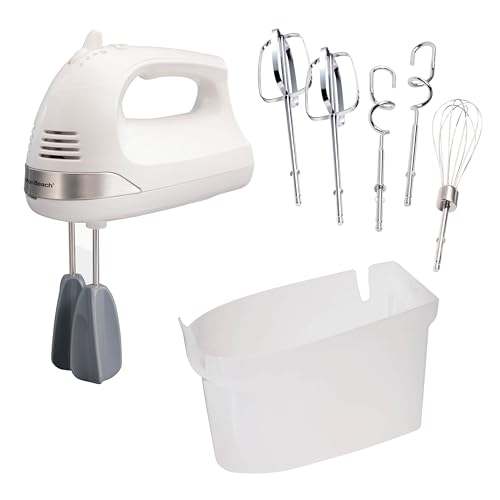
Hamilton Beach 6-Speed Electric Hand Mixer with Easy Clean Beaters, 62636J
Badge: Best Hand Mixer for Dough
Strengths
- Dough hooks are explicitly listed alongside traditional beaters and a whisk, making it the verified hand-held dough option.
- A 275 watt motor, the strongest motor figure stated among the hand mixers here, supports its dough role in small batches.
- Snap-on storage case keeps hooks, beaters and whisk together, and easy clean beaters simplify washing.
Trade-offs
- Hand kneading still means holding the machine against a resisting dough; batches must stay small and speeds low.
- It cannot match a stand mixer for batch size, stability or hands-free kneading.
- Very stiff, low-hydration doughs remain beyond any hand mixer’s comfortable range.
Mini spec box: Brand: Hamilton Beach. Model: 62636J. Type: hand mixer. Speeds: 6 speeds. Motor: 275 watt motor as listed. Attachments from listing: traditional beaters, dough hooks, whisk. Storage: snap-on storage case. Finish: White.
This is the hand mixer that changes the conversation, because its listing does the one thing the others do not: it names dough hooks among its attachments. With hooks fitted, a hand mixer can perform a genuine, if modest, kneading action, walking the hooks through a small, relatively soft pizza dough and developing usable gluten without a stand mixer’s footprint or commitment. For a single pizza, a small batch of flatbread dough or a household that makes dough occasionally and stores everything in one drawer, that is a legitimate and economical way to work.
Technique is the price of the format. Combine the ingredients with the beaters or a spoon only until a shaggy mass forms, switch to the hooks, keep the speed at the low end and move the mixer slowly around the bowl so the hooks stretch different sections of dough in turn. Work in short periods with brief rests, both for the motor and for the dough, and stop at a small batch: one standard pizza dough is the natural unit, two at the outside for a soft, well-hydrated recipe. The moment the dough climbs the hooks repeatedly or the motor note strains and slows, the batch is too large or too stiff for the tool, and finishing by hand for a few minutes is better than forcing the machine.
Judged against the stand mixers below, it loses on capacity, stability and effort, and the guide will not pretend otherwise. Judged against the job it is actually verified for, small-batch dough in a small kitchen, it is the only hand mixer in this list that can be recommended for pizza dough with a clear conscience, a distinction it shares with the fuller discussion of hand versus stand formats in Best Mixers For Pizza Making.
Best for: small-batch pizza dough in compact kitchens, with dough hooks verified / Not suited for: family-size batches, very stiff doughs or hands-free kneading
Cuisinart 6-Piece 9-Speed Electric Hand Mixer with Storage Case, HM-90BCS
Badge: Most Capable Hand Mixer (Prose-Only for Dough)
Strengths
- Nine speeds with SmoothStart anti-splatter technology give it the finest control of any hand mixer in this list.
- A 220 watt motor and a snap-on storage case with a six-piece set make it a complete, well-organised hand mixing station.
- Brushed chrome finish and a full accessory set suit frequent bakers whose work is mostly batters, creams and soft doughs.
Trade-offs
- Its listing describes a six-piece set without specifying dough hooks, so dough capability cannot be verified for this keyword.
- Nine speeds of control do not change attachment geometry; unverified attachments cannot be assumed to knead.
- It is the hand mixer most likely to tempt an owner into overloading it with stiff dough, which is exactly the use to avoid without verified hooks.
Mini spec box: Brand: Cuisinart. Model: HM-90BCS. Type: hand mixer. Speeds: 9 speeds. Motor: 220 watt motor as listed. Features from listing: SmoothStart anti-splatter technology, snap-on storage case, brushed chrome, 6-piece set. Dough hooks: not specified in listing.
This is the strongest hand mixer in the list on general merit, and its prose-only status deserves a careful explanation so it is not misread as a poor review. The nine-speed range with a gentle SmoothStart is genuinely useful engineering for real baking, where splattered batter and over-whipped cream are daily annoyances, and the stored, organised accessory set is the kind of detail frequent bakers appreciate every single time they open the cupboard. For cakes, icings, whipped mixtures and soft enriched doughs of the kind used for buns and sweet breads, it is an excellent tool.
The keyword, however, is pizza dough, and the standard this guide applies is verification from the listing. A six-piece set is listed; the pieces are not itemised as dough hooks in the verified title supplied for this article. Cuisinart’s wider range is well regarded, but a buying guide that assumed the contents of a set it cannot see would be guessing with your money and your motor. On the evidence available here, the dough hook that pizza kneading requires is unconfirmed, and unconfirmed is not linked.
The practical advice follows from that honesty. If you own this mixer and its set does contain hooks, use them exactly as described in the Hamilton Beach review above: small batches, low speeds, short periods and rests. If you are buying from this page for pizza dough, choose a pick whose listing puts the dough hook in writing, because that written confirmation is what separates a recommendation from a hope.
Best for: frequent bakers wanting the most capable, best-organised hand mixer for soft mixtures / Not suited for: a verified pizza dough purchase, since its listing does not specify dough hooks
Proctor Silex Easy Mix 5-Speed Electric Hand Mixer with Bowl Rest
Badge: Best Light-Duty Helper (Prose-Only for Dough)
Strengths
- Compact and lightweight design with a bowl rest feature makes it easy to handle and to park mid-recipe.
- Five speeds cover the everyday soft mixing jobs of a small kitchen without complexity.
- Its simplicity suits occasional bakers who need a helper for batters and toppings rather than a baking station.
Trade-offs
- No dough capability is listed, and its 215 watts of peak power is a light-duty figure not intended for stiff dough resistance.
- Peak power is not sustained working power, so the number should not be read as kneading strength.
- Lightweight construction, an advantage in the hand, is a disadvantage against any heavy mixture.
Mini spec box: Brand: Proctor Silex. Model: 62511. Type: hand mixer. Speeds: 5 speeds. Power: 215 watts of peak power as listed. Features from listing: compact and lightweight, bowl rest. Finish: Black. Dough hooks: not listed.
There is a place in many kitchens for the simplest tool that does the common jobs, and that is this mixer’s place. It is light to lift, easy to rest on the bowl edge while you add ingredients and entirely sufficient for pancake and cake batters, whipped toppings, scrambled preparations and the soft components of a pizza night, such as a whipped ricotta or a quick dessert. Bought for those jobs, it will seem well chosen every time it is used.
Pizza dough is not among those jobs, and this review will not stretch the appliance toward it. The listing gives a peak power figure, which describes a momentary maximum rather than sustained kneading strength, and it lists no dough hooks. A stiff pizza dough would ask this compact machine for sustained resistance work it was never presented as doing, and the likely outcomes, a straining motor, a climbing dough and an under-kneaded base, serve neither the pizza nor the appliance.
Its inclusion in this guide is therefore a boundary marker, included so that the boundary is visible. A household whose pizza dough is made by hand, in a bread machine or in a stand mixer may still buy this as the household’s light mixer with complete justification. A household buying a machine to make the dough should read on to the stand mixers, which are the subject the keyword is actually about.
Best for: light, everyday soft mixing in a compact, simple format / Not suited for: pizza dough in any quantity, which its listing does not equip it for

Cuisinart Stand Mixer, 5.5 Quart, White Linen, SM-50NAS
Badge: Best Overall
Strengths
- Dough hook, mixing paddle and chef’s whisk are all confirmed in the listing, covering kneading, mixing and whipping in one machine.
- A 5.5 quart stainless steel bowl suits family pizza batches, and the splash guard with pour spout keeps flour in the bowl at startup.
- Twelve speeds give the low, controlled kneading range pizza dough needs plus the full range for other baking.
Trade-offs
- A stand mixer is a countertop commitment in size and storage that hand mixers never ask for.
- The same platform is sold in several finishes, so this pick’s advantage over the next one is appearance, not performance.
- Very large or very stiff dough batches still need dividing and low speeds; capacity is generous, not unlimited.
Mini spec box: Brand: Cuisinart. Model: SM-50NAS. Type: stand mixer. Speeds: 12 speeds. Bowl: 5.5 quart stainless steel bowl. Attachments from listing: chef’s whisk, mixing paddle, dough hook, splash guard with pour spout. Finish: White Linen.
This is the complete answer to the keyword. The dough hook kneads with the correct stretching and folding action, the stand format supplies the stability and sustained power that stiff dough demands, the bowl holds a family batch with room for the flour to be incorporated without escaping and the splash guard with a pour spout solves the one messy moment of machine pizza making, the first thirty seconds when flour wants to become airborne. Twelve speeds matter less at the top than at the bottom: pizza dough is kneaded at low speeds, and a machine with a genuinely gentle, controlled low range will incorporate flour without drama and knead without tearing.
The working method is simple and repeatable. Combine water, yeast and most of the flour in the bowl, mix with the paddle or hook at the lowest speed until a shaggy dough forms, add the remaining flour gradually through the guard, then knead with the hook at a low setting until the dough is smooth, elastic and pulling cleanly from the bowl sides, resting it once midway if it climbs or tightens. A dough that passes the windowpane check, stretching thin enough to pass light without tearing, is ready to rise. The full staged method, with troubleshooting, is set out in the how-to section below and applies to this machine exactly as written.
Beyond pizza, the whisk and paddle make this the kitchen’s general baking engine, from whipped cream and meringue to cookie dough and cake batter, which is how a stand mixer justifies its counter space in a real house. Buy the White Linen finish because it suits your kitchen, with the confidence that the capability underneath it is the strongest in this guide, a point the parallel guidance in Best Mixers For Pizza Making reaches from the full-process side as well.
Best for: households making pizza regularly and in family batches, and general baking / Not suited for: kitchens with no counter or storage space for a stand format
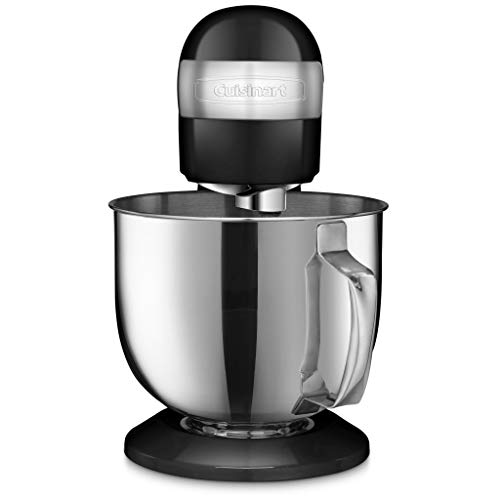
Cuisinart Stand Mixer, 5.5 Quart, Onyx, SM-50BK
Badge: Best Overall, Dark Finish
Strengths
- Identical verified capability to the White Linen model: dough hook, paddle, whisk, splash guard and 5.5 quart bowl.
- The Onyx finish suits darker kitchens and shows flour dust less obviously between cleans.
- Twelve speeds and the stand format deliver the same controlled, low-speed kneading.
Trade-offs
- There is no performance reason to own both finishes; this is an alternative, not an upgrade.
- Dark finishes show grease and fingerprints more readily under bright kitchen lighting.
- All stand mixer considerations of size, weight and storage apply unchanged.
Mini spec box: Brand: Cuisinart. Model: SM-50BK. Type: stand mixer. Speeds: 12 speeds. Bowl: 5.5 quart stainless steel bowl. Attachments from listing: chef’s whisk, mixing paddle, dough hook, splash guard with pour spout. Finish: Onyx.
This review is deliberately short in its claims, because the honest content is a single sentence: this is the same verified stand mixer platform as the previous pick, in the Onyx finish, and every word of method, capacity and verdict written there applies here without alteration. Guides that invent distinct personalities for colour variants waste their readers’ time, and this one will not.
Choose Onyx if your kitchen runs dark, if the machine will live permanently on the counter where its appearance is part of the room, or if flour dust on a white appliance would annoy you weekly, since pale dust is less visible on the darker body while cooking grease is slightly more visible, a trade that depends on whether your kitchen produces more baking dust or more frying vapour. Choose White Linen for the opposite set of preferences. Choose either knowing that the dough hook, the bowl and the twelve speeds, the parts that make pizza, are identical.
For a household equipping itself from this guide, the decision procedure is therefore simple. Decide stand versus hand by batch size and frequency, using the earlier reviews. If the answer is stand, decide the finish by the kitchen in front of you and stop deliberating, because the remaining variable that will actually change your pizza is not colour but technique, and technique is free.
Best for: the same households as the White Linen model, in kitchens that suit a dark finish / Not suited for: anyone seeking a capability difference between the two finishes, because there is none
Comparison Table
| Pick | Type | Dough verdict | Best role | Link |
|---|---|---|---|---|
| KitchenAid Hand Mixer, Black Matte | Hand, 5 speeds | Not dough-equipped in listing | Soft mixtures | See review above |
| Hamilton Beach Hand Mixer 62636J | Hand, 6 speeds | Dough hooks listed | Small-batch dough | Check on Amazon |
| Cuisinart Hand Mixer HM-90BCS | Hand, 9 speeds | Dough hooks not specified in listing | Advanced soft mixing | See review above |
| Proctor Silex Hand Mixer | Hand, 5 speeds | No dough capability listed | Light-duty help | See review above |
| Cuisinart Stand Mixer, White Linen | Stand, 12 speeds, 5.5 quart | Dough hook listed | Family batches, best overall | Check on Amazon |
| Cuisinart Stand Mixer, Onyx | Stand, 12 speeds, 5.5 quart | Dough hook listed | Same role, dark finish | Check on Amazon |
How to Choose a Mixer for Pizza Dough
Begin with the attachment, because it is a pass-or-fail test. Pizza dough needs a dough hook, confirmed in writing in the product listing, or it needs your hands. Beaters mix, paddles cream and fold, whisks aerate, and none of them kneads. A buyer who internalises that single distinction will never make the central mistake of this category, which is purchasing a well-reviewed hand mixer for its batter performance and discovering its dough performance on the first pizza night.
Next, match capacity to your real batch. A single pizza dough is a modest amount of flour and almost any dough-capable machine handles it. A household that doubles and triples recipes for pizza nights, breadsticks and next-day flatbreads needs the stand mixer’s bowl and stability, and should treat the 5.5 quart figure in these listings as working room rather than a target to fill to the brim, since dough needs space to be thrown and folded by the hook. Frequency is the multiplier: weekly pizza justifies a stand mixer in a way that monthly pizza, well served by the dough-hook hand mixer and a small batch, does not.
Then consider the rest of the machine’s life. A stand mixer that only kneads is an expensive specialist; one whose paddle and whisk cover your cakes, cookies and creams is a kitchen engine that happens to make excellent pizza dough. Conversely, a household that rarely bakes beyond pizza should not buy countertop machinery for hypothetical cakes, and the hand mixer with dough hooks plus honest small batches is the proportionate answer. Storage, counter space and the simple question of whether the machine will be lifted in and out of a cupboard, which predicts whether it will be used at all, complete the decision, as the broader process guide at Best Mixers For Pizza Making also emphasises.
How to Mix and Knead Pizza Dough by Machine
The staged method protects both the dough and the machine. Stage one, hydrate: place the water and yeast in the bowl, add roughly two thirds of the flour and mix at the lowest speed with the hook or paddle until no dry flour remains, then rest the shaggy mixture briefly so the flour absorbs water before any real work begins. Stage two, incorporate: add the salt and the remaining flour gradually, through the splash guard’s spout on the stand mixers, keeping the speed low so flour stays in the bowl and the dough forms as a single mass. Stage three, knead: continue with the hook at a low speed, watching the dough rather than the clock, until it becomes smooth, elastic and slightly tacky, clears the sides of the bowl and stretches thin without tearing when a small piece is gently pulled into a windowpane. Stage four, rest and rise: remove the dough to a lightly oiled bowl, cover it and let the yeast, not the machine, do the next stage of the work.
Hand mixer kneading with the verified dough hooks follows the same stages at a smaller scale. Form the dough to the shaggy stage with a spoon, fit the hooks, work at the lowest speeds in short periods, moving the mixer around the bowl so all of the dough is stretched in turn, and rest both dough and motor between periods. Finish with a minute or two of hand kneading on the counter if the dough still feels rough, which is a normal hybrid method rather than an admission of failure.
Cleaning and care are part of the method. Wash bowls, hooks and beaters promptly, because dried dough sets like cement and punishes delay. Wipe the stand mixer’s head and body after flour-heavy sessions, keep vents clear of flour dust, and store hand mixer attachments in their cases where provided so hooks are findable on pizza night. Never immerse a motor body in water, and let a machine that has worked a stiff batch cool before it is asked to work again.
Problem: the dough climbs the hook and rides around without kneading. It is usually slightly too dry or the batch is at an awkward size; stop, push the dough down, add a spoon of water if it is genuinely stiff and restart at a lower speed. Problem: the dough tears when stretched and feels rough after kneading. It needs more time or more rest; knead a little longer in stages with a short rest, which lets the gluten relax and develop without force. Problem: flour erupts at startup. The speed began too high or the flour went in at once; always start at the lowest speed, add flour gradually and use the splash guard, which exists for exactly this moment in the process described in Best Mixers For Pizza Making.
Hand Mixers Around a Pizza Night
It is worth closing the loop on the prose-only picks, because a pizza household uses more than a kneading machine. Sauces are stirred, ricotta is whipped, garlic butter is beaten, desserts are mixed and small batters are made constantly around the main event, and the KitchenAid, Cuisinart and Proctor Silex hand mixers in this list are all legitimately good at that supporting work. The guide’s refusal is narrow and specific: their listings do not equip them to knead this dough. A household that kneads by hand, as many excellent pizza makers do, could buy any of them as its general mixer and lose nothing, provided the purchase is made with that division of labour understood.
Flour, Hydration and Why They Change the Machine’s Job
The same mixer faces a different job depending on the dough in its bowl, and understanding that prevents most machine disappointments. Hydration, the weight of water relative to flour, decides stiffness more than any other variable. A soft, high-hydration dough of the kind used for focaccia-style bases is forgiving work that even the dough-hook hand mixer in this list handles comfortably in small batches. A firm, lower-hydration dough for a crisp, thin crust is the stiffest common dough in home baking, and it is the one that exposes weak motors, wrong attachments and overloaded bowls. When a recipe disappoints, check which end of that hydration range it sits at before blaming the appliance, because the machine may simply have been handed the hardest version of the job at the largest batch size on its first outing.
Flour choice moves the target as well. Strong, high-protein bread flours absorb more water and develop a more elastic gluten network, which means a longer, more resistant knead that rewards the stand mixer’s sustained low-speed work. Softer all-purpose flours knead faster and more gently, suiting the hand mixer’s shorter, staged method, but produce a more tender, less chewy crust. Neither is superior; they are different pizzas. The buying relevance is that a household committed to strong flours and chewy, structured crusts is asking more of its machine every single week, and should weight the stand mixer recommendation in this guide more heavily than a household making soft, quick, all-purpose doughs for weeknight flatbreads.
Salt, oil and enrichment complete the picture. Salt tightens gluten and slightly slows its development, which is why the staged method adds it with the later flour rather than at the first mix. A little oil softens the dough’s resistance and makes any machine’s work easier, one reason enriched and oil-containing doughs are the kindest introduction to machine kneading. Wholemeal flours, with their bran cutting into the gluten network, knead to a different, less elastic result no matter the machine, and expectations should be set accordingly. None of these variables appears on a mixer’s box, yet together they decide whether a given machine feels powerful or inadequate on a given night, which is why this guide insists on technique, batch discipline and honest attachment verification ahead of any specification printed in a listing.
Common Buying Mistakes
The first mistake is assuming every mixer kneads, when kneading is a specific function of a specific attachment that must be confirmed in the listing. The second is reading a peak power figure as kneading strength, when peak and sustained power are different measures and attachment geometry matters more than either. The third is overloading: filling a stand bowl to its nominal limit or asking a hand mixer to knead a family batch, when splitting the dough costs two minutes and saves the machine. The fourth is kneading at high speed, which tears developing gluten and throws flour, when low speeds do the real work. The fifth is buying a second finish of a stand mixer as though it were an upgrade. The sixth is neglecting the rest of the process, the rests, the rise and the windowpane check, and blaming the machine for a dough that was never given its time.
Final Recommendation
Buy the Cuisinart Stand Mixer, White Linen or the Cuisinart Stand Mixer, Onyx if pizza is a regular, family-scale event in your house: they are the same verified platform, so choose the finish your kitchen prefers and consider the question settled. Buy the Hamilton Beach 6-Speed Hand Mixer if your batches are small and your storage is a drawer, because it is the one hand mixer here whose listing verifies the dough hooks the job requires. Treat the remaining three hand mixers as the good soft-mixture tools they are, and do not ask them, or any beater-only machine, to knead pizza dough.
Frequently Asked Questions
Can a hand mixer knead pizza dough?
Only a hand mixer with dough hooks, used on small batches at low speeds in short periods with rests. In this list, the Hamilton Beach model is the one whose listing verifies dough hooks. Beater-only hand mixers cannot knead stiff dough properly and can be damaged trying, so their reviews here are prose-only for this keyword.
How much pizza dough can a 5.5 quart stand mixer handle?
Comfortably, a family batch with room for the hook to work, which in practice means doubling most standard recipes without difficulty. Treat the bowl size as working space rather than a fill target, add flour gradually and split an unusually large or stiff batch rather than forcing a full bowl, because dough needs room to be folded and thrown.
What speed should I knead pizza dough at?
Low speeds, always. Start at the lowest setting to incorporate flour without eruption, then knead at the low end of the range while watching the dough’s texture rather than a timer. High speeds tear developing gluten, overheat the dough’s surface and throw flour, and they shorten the machine’s life in the process.
How do I know the dough has been kneaded enough?
Use the windowpane check: pinch off a small piece and stretch it gently between your fingers. Dough that stretches thin enough for light to pass through without tearing is ready to rise. Dough that tears immediately needs more kneading in short stages, with a brief rest, which often develops the gluten more effectively than continuous forcing.
Are the two Cuisinart stand mixers in this list different?
In capability, no. Both listings confirm the same 12 speeds, 5.5 quart stainless steel bowl, dough hook, paddle, whisk and splash guard. The difference is the finish, White Linen against Onyx, and the model code that follows it. Choose by your kitchen’s appearance and by which finish you would rather clean.
Can I use the prose-only hand mixers for anything on pizza night?
Yes, for everything except kneading the dough. They whip ricotta and cream, beat garlic butter, mix batters for dessert and handle the soft preparations that surround a pizza. The guide’s restriction is deliberately narrow: their listings do not confirm dough hooks, so they are not sold here as dough machines.


