Disclosure: topratedkitchenware.com is reader-supported. When you buy through links on our site, we may earn an affiliate commission from Amazon and other retailers, at no extra cost to you.
Where to buy
Shopping for the best mixers for soylent starts with one choice, and this list is organized around it. Six kitchen mixers, all linked, split into two honest camps: four hand mixers for the daily single-serving shake, and two Cuisinart stand mixers — the same SM-50 in two finishes — for people who batch-prep days of Soylent at once. Read the camp that matches your routine; the detailed reviews explain exactly who each machine serves.
- KitchenAid 5 Ultra Power Speed Hand Mixer, KHM512, Black Matte — Best Overall. Check on Amazon for current availability.
- Hamilton Beach 6-Speed Electric Hand Mixer with Easy Clean Beaters (62636J) — Best for Customized Shakes. Check on Amazon for current availability.
- Cuisinart 6-Piece 9-Speed Electric Hand Mixer, HM-90BCS — Best Speed Control. Check on Amazon for current availability.
- Proctor Silex Easy Mix 5-Speed Electric Hand Mixer (62511) — Best Lightweight Budget Pick. Check on Amazon for current availability.
- Cuisinart Stand Mixer, 5.5 Quart, SM-50NAS, White Linen — Best for Weekly Batch Prep. Check on Amazon for current availability.
- Cuisinart Stand Mixer, 5.5 Quart, SM-50BK, Onyx — Best Dark-Finish Twin. Check on Amazon for current availability.
Read the full guide ↓
The best mixers for soylent solve a problem a shaker bottle only half-solves. Powdered meal replacements are engineered nutrition with an unengineered weakness: the powder does not want to dissolve. It clumps, it floats, it coats the bottle wall, and the last mouthful is a different drink from the first. A mixer — even a modest hand mixer — wets every particle progressively and produces a shake that is the same drink from top to bottom, which is the entire promise of a meal replacement kept properly.
This guide researches six machines against that specific job. Four hand mixers cover the dominant routine: one person, one pitcher, thirty seconds, rinse, drink. Two stand mixers cover the minority routine that is growing fast: batch prep, where several days of shakes are mixed in one 5.5-quart run and bottled. Along the way we deal honestly with customization — the fruit, coffee and nut-butter add-ins that turn a plain shake into a recipe — and with the powder-cloud problem that decides which features actually matter. Nothing here requires special skill, a special kitchen or a special budget tier; it requires only choosing the camp that matches your real routine and then letting a well-matched machine make that routine effortless.
Key Takeaways
- Lumps are the enemy: a mixer wets powder progressively, which is why it beats shaking for texture.
- Hand mixers own the single-serving routine; stand mixers only make sense for genuine batch prep.
- SmoothStart on the Cuisinart HM-90BCS and low first gears everywhere exist to stop the powder cloud.
- Picks 5 and 6 are the same Cuisinart SM-50 in White Linen and Onyx — a finish choice, stated openly.
- The Hamilton Beach’s whisk makes it the customization pick for add-in-heavy shakes.
- Liquid first, powder on top, slowest speed first: technique matters as much as the machine.
In this guide
Quick Picks
Badges match the detailed reviews. Note the split in the table: rows 1–4 are handheld daily tools, rows 5–6 are countertop batch tools, and choosing your camp matters more than choosing within it.
| Pick | Badge | Best for | Where to check |
|---|---|---|---|
| KitchenAid 5 Ultra Power Speed Hand Mixer, KHM512, Black Matte | Best Overall | 5 speeds and Turbo Beaters — the lump-free single-serving specialist | Check on Amazon |
| Hamilton Beach 6-Speed Electric Hand Mixer with Easy Clean Beaters (62636J) | Best for Customized Shakes | 275-watt, 6 speeds, whisk and dough hooks included — the add-in friendly pick | Check on Amazon |
| Cuisinart 6-Piece 9-Speed Electric Hand Mixer, HM-90BCS | Best Speed Control | 9 speeds, 220W motor, SmoothStart — the gentlest powder starts in the guide | Check on Amazon |
| Proctor Silex Easy Mix 5-Speed Electric Hand Mixer (62511) | Best Lightweight Budget Pick | 215 watts peak power, compact and light with bowl rest — the simple, inexpensive routine-keeper | Check on Amazon |
| Cuisinart Stand Mixer, 5.5 Quart, SM-50NAS, White Linen | Best for Weekly Batch Prep | 12 speeds and a 5.5-quart bowl — mix days of shakes in one hands-free run | Check on Amazon |
| Cuisinart Stand Mixer, 5.5 Quart, SM-50BK, Onyx | Best Dark-Finish Twin | The same SM-50 stand mixer as the White Linen pick, in Onyx — a finish decision, stated openly | Check on Amazon |
How These Picks Were Chosen
We evaluated the assigned pool against the way Soylent is actually consumed, which meant two separate tests. For the daily routine, the criteria were lump elimination in a single serving, powder behavior at startup, and total friction — weight, cord management, rinsing — because a tool used three times a day succeeds or fails on friction. For the batch routine, the criteria were bowl capacity, even mixing across a large volume, and powder containment at scale.
Those criteria explain the guide’s structure and its badges. Anti-splatter technology and fine low-speed control scored as primary features, not luxuries, because the powder cloud is the most common mixer complaint among meal-replacement users. Raw motor power scored secondarily, mattering only for add-in-thick shakes. Attachment sets were judged on shake relevance first — whisks yes, dough hooks only as baking bonus value — and we say so in the reviews rather than inflating their importance.
Two disclosures belong here. First, picks 5 and 6 are one model in two finishes; we review the second as a finish decision rather than inventing differences. Second, this is research-led guidance from verified listings and established mixing practice, not laboratory testing, and we print no prices or ratings because both move constantly. Readers who arrived here from the broader smoothie conversation will find the same powder-first technique applied across our kitchen library, and the same research standards run through our audio guides such as Best Mixers For Studios.
The 6 Best Mixers for Soylent, from Daily Shakes to Batch Prep
Read the verdict lines if you are in a hurry: each one names the routine the machine serves and the routine it does not, which is the only decision this purchase really contains.

KitchenAid 5 Ultra Power Speed Hand Mixer, KHM512, Black Matte
Badge: Best Overall
Strengths
- Turbo Beaters pull powder and liquid together evenly, which is the entire Soylent problem in one sentence
- Gentle low speed folds powder in without the dust cloud a shaker bottle avoids but a careless mixer creates
- Lockable swivel cord and one-button beater release suit a routine repeated two or three times a day
Trade-offs
- Five speeds is plenty for shakes but the narrowest range among the multi-role picks here
- Handheld format means you are present for every mix — fine for one serving, tedious for a week’s batch
- Black Matte shows powder dust clearly, so it asks for a quick wipe after each use
At a glance
- Speeds: 5 (Ultra Power)
- Model: KHM512
- Attachments in API title: Turbo Beaters, dishwasher-safe
- Cord: Lockable swivel cord; easy-release button
Soylent mixing lives or dies on one thing: lumps. Powder that meets liquid unevenly forms dry pockets sealed inside wet shells, and no amount of later shaking fully rescues them. The KHM512’s Turbo Beaters attack exactly that failure. Their shape draws the mixture through itself as it runs, so powder is wetted progressively instead of being trapped, and a thirty-second run at a sensible speed produces a shake with the uniform texture that makes meal replacements actually pleasant to drink day after day.
The daily-routine details are why this pick leads the guide. A Soylent habit is not a weekend project; it is two or three mixes a day, every day, often half-awake. The cord locks to the side so it stops falling into the pitcher. The beaters release with one button and rinse in seconds or go in the dishwasher. The machine is light enough that using it never feels like a production, which is precisely the quality that keeps a routine alive in month three.
Its limits are the category’s limits. Five speeds is a modest spread — irrelevant for shakes, noticeable if you also bake seriously. And a hand mixer is a single-serving tool: it will mix a pitcher for two, but it is not how you prep five days of lunches. That job belongs to the stand mixers at the end of this guide. For the core Soylent use — one person, one shake, zero lumps, minimal cleanup — nothing here beats it.
Best for: daily Soylent drinkers mixing one or two servings at a time / Not suited for: weekly batch prep, which belongs to the stand mixers below
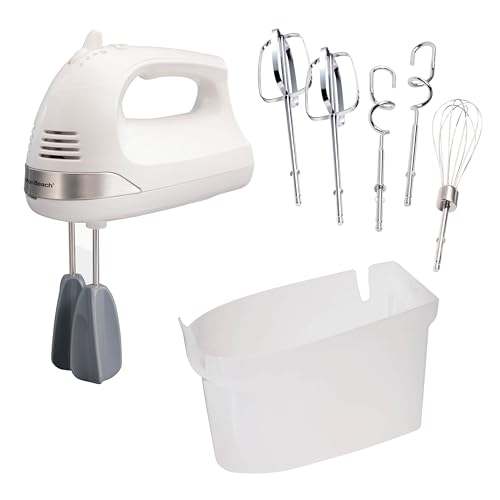
Hamilton Beach 6-Speed Electric Hand Mixer with Easy Clean Beaters (62636J)
Badge: Best for Customized Shakes
Strengths
- Whisk attachment aerates shakes and whips add-ins like coffee or cocoa into the base evenly
- 275-watt motor is the strongest hand-mixer motor in this guide for thicker, add-in-heavy blends
- Easy Clean beaters and a snap-on case fit a multiple-times-a-day routine
Trade-offs
- Dough hooks are dead weight for pure Soylent use — value only if you also bake
- Six speeds still start as a hand mixer: powder discipline (liquid first, slow start) still applies
- Slightly more kit to store than the minimalist picks
At a glance
- Speeds: 6
- Motor: 275 watts (from API title)
- Attachments in API title: Traditional beaters, dough hooks, whisk
- Storage: Snap-on case
Plain Soylent is a starting point for many drinkers, not the destination. Banana, peanut butter, cold coffee, cocoa, cinnamon, a handful of oats — the customized shake is where a mixer earns its keep over a shaker bottle, and this Hamilton Beach is the customization pick. The whisk is the headline: it aerates the base and distributes sticky add-ins like nut butter through the liquid instead of leaving them smeared on the pitcher wall, while the traditional beaters handle the standard powder-and-liquid job with the guide’s strongest hand-mixer motor behind them.
That 275-watt motor matters specifically for thickness. Add-ins push a Soylent shake toward smoothie density, and density is where weaker hand mixers start to feel reluctant. Six speeds let you begin gently — powder etiquette never changes — and then climb to a working speed that keeps a thick blend moving. The Easy Clean beaters live up to their name under a tap, which matters when the mixer runs at breakfast and lunch.
The honest waste in the box is the dough hooks: a pure Soylent user will never touch them, and we count them as value only for households where the mixer doubles for baking. Judge this pick on the whisk and the motor. If your shakes stay plain, the KitchenAid above is the cleaner buy; if your shakes are recipes, this is your machine.
Best for: Soylent drinkers who customize with fruit, nut butter, coffee or oats / Not suited for: plain-shake minimalists who will never use the whisk or hooks

Cuisinart 6-Piece 9-Speed Electric Hand Mixer, HM-90BCS
Badge: Best Speed Control
Strengths
- SmoothStart anti-splatter begins every run gently — the single most Soylent-relevant feature in this guide
- 9 speeds give the finest low-end control for folding powder into liquid progressively
- 6-piece set with snap-on case keeps a daily-use kit organized
Trade-offs
- Control you may not need: plain shakes use two speeds, not nine
- 220W is a step below the Hamilton Beach’s 275W for very thick add-in blends
- Higher qualitative tier than the basic picks, justified by baking range as much as shakes
At a glance
- Speeds: 9
- Motor: 220 W (from API title)
- Feature in API title: SmoothStart anti-splatter technology
- Set: 6-piece, snap-on storage case, brushed chrome
Every Soylent mixer user knows the puff: powder meeting a fast start, half of it airborne, the counter dusted, the shake short on powder and long on regret. The HM-90BCS is engineered directly at that moment. SmoothStart brings the beaters up gently before the selected speed arrives, and the 9-speed spread means the ‘gentle’ zone is not one reluctant gear but several usable ones. Powder folds in, wets evenly, and only then do you climb to mixing speed. It is the most civilized powder routine in this guide.
Beyond the start, the fine speed range serves the texture spectrum of meal replacements. Some drinkers want a thin, fast-drinking shake; others want the thicker, aerated texture that makes a shake feel like a meal. Small speed steps, plus time, let you land repeatable textures — and repeatability is the soul of a meal-replacement habit, where the shake should taste identical on a rushed Tuesday to the one you perfected on Sunday.
The counter-argument is need. A plain shake uses a slow start and one working speed; nine speeds is range bought for other jobs — baking, whipping, frostings — and the 220W motor, while ample for shakes, is not the strongest here for very thick add-in blends. Buy the Cuisinart if you value the gentlest starts and a mixer that moonlights seriously in baking. Buy simpler if your world is powder, liquid, drink, rinse.
Best for: powder-splatter sufferers and baker-mixers who want the finest speed control / Not suited for: buyers who only ever make one plain shake at one speed

Proctor Silex Easy Mix 5-Speed Electric Hand Mixer (62511)
Badge: Best Lightweight Budget Pick
Strengths
- Compact and lightweight — the easiest pick to grab, use and put away three times a day
- Bowl Rest parks the mixer on the pitcher rim instead of the counter
- The lowest qualitative tier in the guide, which suits a single-purpose shake tool
Trade-offs
- 215 watts of peak power is the least here; thick add-in blends will feel it
- 5 speeds with no anti-splatter system — powder technique is entirely on you
- Basic build and kit compared with the KitchenAid and Cuisinart picks
At a glance
- Speeds: 5
- Power: 215 watts peak (from API title)
- Design in API title: Compact and lightweight, bowl rest
- Model: 62511
There is a respectable argument that a Soylent mixer should be the cheapest tool that does the job well, because the job is genuinely simple: wet powder evenly, mix for thirty seconds, rinse. The Proctor Silex is that argument in product form. It is compact, light, has a bowl rest for parking on the pitcher, and costs — in qualitative terms — a fraction of the premium picks. For a student, a first apartment, an office drawer or a travel-adjacent routine, it keeps the habit running without ceremony.
In the pitcher, five speeds cover the shake routine honestly: slow to fold powder, medium to mix, done. The 215-watt peak rating is the lowest here and you feel the difference only when a shake gets ambitious — heavy nut butter, oats and ice-cold thick bases ask more than this motor loves. Plain and lightly customized shakes, the majority of real Soylent use, are well within it.
What you give up is refinement: no SmoothStart, no whisk bundle, no premium feel, and less headroom for the day your shakes get complicated. What you keep is a tool so light and simple that the routine never feels like equipment management. For many meal-replacement drinkers, that trade is the smartest one in this guide.
Best for: students, offices and minimalists who want the simplest shake tool at the lowest tier / Not suited for: thick, add-in-heavy shakes or anyone wanting a premium dual-role mixer

Cuisinart Stand Mixer, 5.5 Quart, SM-50NAS, White Linen
Badge: Best for Weekly Batch Prep
Strengths
- 5.5-quart bowl mixes multi-day batches of Soylent base in a single run
- 12 speeds and hands-free operation free you to portion and prep while it mixes
- Chef’s whisk, paddle and dough hook make it a full baking station beyond shakes
Trade-offs
- Counter-hungry and heavy — a batch tool, not a grab-and-go single-serving tool
- Washing a 5.5-quart bowl for one shake is absurd; this pick only makes sense at batch scale
- Highest qualitative tier in the guide, shared with its Onyx twin
At a glance
- Speeds: 12
- Bowl: 5.5 quart stainless steel
- Attachments in API title: Chef’s whisk, mixing paddle, dough hook, splash guard with pour spout
- Model: SM-50NAS, White Linen
Batch preppers play a different game. Instead of mixing per serving, they mix a large base — several days of Soylent, portioned into bottles — and the tool for that game is a stand mixer. The SM-50’s 5.5-quart bowl swallows a batch that would take a hand mixer four or five pitcher rounds, and it does the work hands-free at any of 12 speeds while you line up bottles and lids. The mixing paddle keeps a large volume moving evenly, so the last bottle poured has the same powder distribution as the first — the consistency problem that ruins hand-mixed batches simply does not arise.
The splash guard with pour spout, easy to overlook in the spec list, is the batch feature that matters most: powder for a multi-day batch is a lot of powder, and the guard keeps the initial low-speed fold contained instead of dusting the kitchen. Start slow, let the powder wet, then climb — the same discipline as a single shake, executed at scale by a machine that does not get tired or distracted.
The trade-offs are physical and obvious. This is a heavy, counter-dominant appliance bought at the guide’s top tier, and using it for one shake is like driving a truck to buy milk. It earns its place only in a genuine batch routine — or in a kitchen that also bakes, where the whisk and dough hook turn it into the hardest-working appliance on the counter. Batch drinkers: this is your pick. Everyone else: admire and scroll back up.
Best for: batch preppers mixing several days of Soylent at once, and bakers / Not suited for: single-serving daily mixing, small counters, or minimal budgets
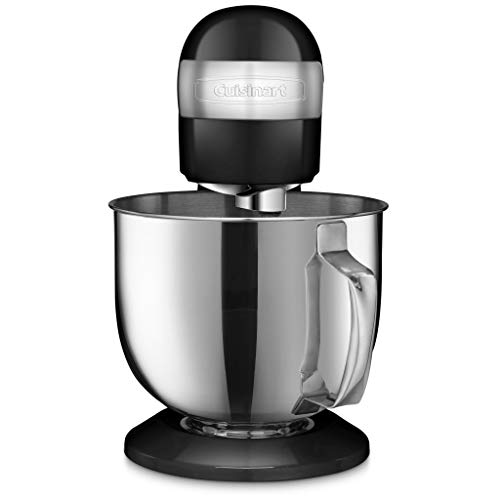
Cuisinart Stand Mixer, 5.5 Quart, SM-50BK, Onyx
Badge: Best Dark-Finish Twin
Strengths
- Identical SM-50 platform: 12 speeds, 5.5-quart bowl, full attachment set
- Onyx finish suits dark and modern kitchens and hides powder dust better between wipes
- Same batch-prep and baking capability as its White Linen twin
Trade-offs
- No functional difference from the White Linen version — choose once, by color
- Same batch-only logic: overkill for single servings
- Same top-tier positioning as its twin
At a glance
- Speeds: 12
- Bowl: 5.5 quart stainless steel
- Attachments in API title: Chef’s whisk, mixing paddle, dough hook, splash guard with pour spout
- Model: SM-50BK, Onyx
Transparency, as with the color twins elsewhere in this site’s guides: the Onyx SM-50BK is the same Cuisinart stand mixer as the White Linen SM-50NAS above. Same 12 speeds, same 5.5-quart stainless bowl, same whisk, paddle, dough hook and splash guard, same batch-prep strengths and the same single-serving absurdity. We review it separately because the pool includes it and because finish genuinely matters for an appliance that will live permanently on a counter — but no reader should imagine a performance difference that does not exist.
The finish case is practical as well as aesthetic. A stand mixer used for powder work lives in a faint climate of dust, and Onyx hides that reality between cleanings far better than a white finish does. In a dark or stainless-heavy kitchen it also disappears visually in a way a large white appliance cannot. White Linen, conversely, brightens a light kitchen and shows splashes honestly, which some cooks prefer. Both clean the same; both mix identically.
So this pick exists to be chosen by eye and by kitchen, once. If the batch-prep argument in the previous review convinced you, the only remaining decision is which of the twins you want to look at every day. Pick the color, place the order, and put the saved deliberation time into planning your first batch.
Best for: batch preppers whose kitchens suit a dark finish / Not suited for: anyone expecting different capability from the White Linen version
Comparison Table
The table compares verified attributes only — speeds, power where the listing states it, attachments and format. The format row is the one to read first: handheld and stand mixers are different answers, not better and worse ones.
| Pick | Speeds | Power / capacity | Attachments | Format | Check |
|---|---|---|---|---|---|
| KitchenAid 5 Ultra Power Speed Hand Mixer, KHM512, Black Matte | 5 speeds | Turbo Beaters | Lockable swivel cord | Black Matte finish | Check on Amazon |
| Hamilton Beach 6-Speed Electric Hand Mixer with Easy Clean Beaters (62636J) | 6 speeds | 275-watt motor | Beaters + whisk + dough hooks | Snap-on case | Check on Amazon |
| Cuisinart 6-Piece 9-Speed Electric Hand Mixer, HM-90BCS | 9 speeds | 220 W motor | SmoothStart anti-splatter | 6-piece set with case | Check on Amazon |
| Proctor Silex Easy Mix 5-Speed Electric Hand Mixer (62511) | 5 speeds | 215 W peak power | Compact, lightweight | Bowl rest | Check on Amazon |
| Cuisinart Stand Mixer, 5.5 Quart, SM-50NAS, White Linen | 12 speeds | 5.5-quart bowl | Whisk, paddle, dough hook | Splash guard with pour spout | Check on Amazon |
| Cuisinart Stand Mixer, 5.5 Quart, SM-50BK, Onyx | 12 speeds | 5.5-quart bowl | Whisk, paddle, dough hook | Onyx finish | Check on Amazon |
How to Choose the Best Mixers for Soylent Routines
Camp first: daily single servings or weekly batches?
Every other decision in this guide is downstream of this one. Daily mixers need a tool that is light, fast to rinse and impossible to dread; that is a hand mixer, and four of our six picks serve that camp. Batch preppers need volume, even mixing across that volume, and containment for a large powder load; that is a stand mixer, and it is worth its counter space only if the batch routine is real — meaning you actually portion multiple days at once, every week.
The failure mode is crossing the camps. A stand mixer used for single shakes becomes an expensive ornament with a big washing-up bill. A hand mixer used for Sunday batch prep becomes an arm workout with uneven bottles. Be honest about which routine you will still be running in three months, and the shortlist halves itself.
Powder behavior: starts, speeds and the cloud
Powder on liquid, beaten too fast, becomes airborne — and a measurable part of your nutrition ends up on the counter. Three defenses exist. Technique: liquid first, powder floated on top, beaters submerged before starting, slowest speed until the powder wets. Technology: anti-splatter starts like Cuisinart’s SmoothStart, and fine low gears like its 9-speed spread. Vessel: a tall pitcher that contains the early seconds. The best results stack all three, which is why the Cuisinart scores so well here despite a mid-pack motor.
Once the powder is wet, the job changes: now you want enough speed and time to fully disperse it. Thirty to sixty seconds at a middle speed is the realistic window for a single serving. Longer mixing aerates the shake, which some drinkers love and others find foamy — another reason fine speed control, and a routine you repeat exactly, produce the texture you actually prefer.
Add-ins change the machine you need
Plain powder-and-water shakes ask little of a motor. The moment banana, peanut butter, oats, frozen fruit pieces or ice enter the pitcher, the shake becomes a light smoothie and the demands jump: stronger motor, whisk for sticky add-ins, and patience at the start. The Hamilton Beach 62636J, with the strongest hand-mixer motor here and a whisk in the box, is built for that direction. Frozen add-ins deserve a warning: a hand mixer can distribute thawed or soft fruit, but it is not a blender and will not crush ice or frozen chunks — blend those separately or thaw them first.
Stand-mixer batch preppers face the add-in question at scale: add-ins must be portioned per bottle after the base is mixed, because banana and fresh fruit shorten a batch’s fridge life unevenly. The cleanest batch system is a plain, consistent base from the stand mixer, customized per serving with a quick hand-mixer pass — which is why some serious Soylent households end up owning one of each camp.
Storage, fridge life and the realism check
Batch drinkers should plan storage before they plan the mixer. A multi-day batch needs bottles that seal well, fridge space that is actually available, and a labeling habit — masking tape and a marker beat every app — because an undated bottle becomes a guess by Thursday. Mixed shakes keep best cold and should be treated like fresh food, not like the shelf-stable powder they came from: the powder’s long life does not transfer to the prepared drink. If your fridge cannot hold the batch, your batch size is wrong, whatever the bowl can mix.
There is also a texture arc to plan around. A well-mixed shake is at its best in the first day or two; by day four, even a perfect batch reads slightly tired, and add-ins like banana shorten that arc further. Many batch preppers settle on twice-weekly medium batches for exactly this reason — a rhythm the stand mixers handle easily and one that keeps every bottle inside the good-texture window. Let taste, not bowl capacity, set the batch size.
Friction is a specification, even if it is not printed
No listing states the most important Soylent number: how annoying the tool is at 7 a.m. Weight in the hand, cord behavior, beater release, rinsing time and storage all decide whether the routine survives. The KitchenAid’s lockable cord and one-button release, the Proctor Silex’s featherweight build, and the snap-on cases on the Hamilton Beach and Cuisinart hand mixers are not cosmetic details — they are the difference between a habit and a phase. When two picks perform alike in the pitcher, buy the one with less friction.
How to Mix Soylent Perfectly: Single Servings and Batches
The single-serving routine (hand mixer)
Ninety seconds, start to finish, once the order is habit:
- Pour the liquid into a tall pitcher — the full serving’s worth of water or milk, cold if you like the shake cold.
- Float the powder on top of the liquid. Do not dump it into an empty pitcher and add liquid over it; that order creates the worst clumps.
- Submerge the beaters before switching on. Start at the slowest speed for ten seconds while the powder wets.
- Climb one or two speeds and mix thirty to forty-five seconds, moving the mixer slowly around and up and down the pitcher.
- Add soft add-ins now if you use them, with a final fifteen seconds. Rest the shake one minute — the texture settles and thickens slightly — then drink or chill.
- Rinse the beaters immediately. Dried meal-replacement residue is the only genuinely annoying cleanup in this entire routine.
The batch routine (stand mixer)
Fit the paddle, add the batch’s liquid to the 5.5-quart bowl, and float the full powder load on top under the splash guard. Start at the lowest speed until no dry powder is visible — at batch scale this takes longer, so be patient — then run at a low-middle speed for two to three minutes, stopping once to scrape the bowl wall. Portion into bottles immediately, refrigerate, and shake each bottle briefly before drinking, since even a well-mixed batch settles over days. Label bottles with the mix date; a batch system without dates becomes a fridge mystery within a fortnight.
Temperature and timing: the two free upgrades
Cold liquid mixes powder slightly more slowly but drinks far better; room-temperature liquid mixes fastest and tastes flat. The practical compromise most daily drinkers land on is cold liquid plus patience: give a cold shake the full forty-five seconds and the one-minute rest, and the texture equals a warm mix while the taste wins outright. Batch preppers should mix with cool liquid and get bottles into the fridge promptly, since a large volume warms slowly and cools slowly too.
Timing matters in a second way: a shake rested for a minute after mixing is measurably thicker and more uniform than one drunk instantly, because the powder finishes hydrating and the foam settles. Drinkers who find their shakes thin often do not need a different powder ratio or a different machine — they need sixty seconds of patience. Build the rest into the routine (mix, rinse the beaters, then drink) and it costs nothing at all.
Troubleshooting: three Soylent-specific problems
Problem: dry lumps survive mixing → what to do: they were created in the first five seconds. Next time, float the powder, submerge the beaters, and hold the slowest speed longer before climbing; lumps are a startup problem, not a power problem.
Problem: the shake is foamy and thin-tasting → what to do: you over-aerated it. Mix at a lower speed for less time, and let the shake rest a minute before drinking; foam settles and the texture reads thicker.
Problem: batch bottles taste inconsistent by day three → what to do: the base was under-mixed or under-scraped. Extend the batch mix, scrape the bowl wall midway, and give each bottle a real shake before drinking rather than a token swirl.
A Word on Words: Why “Mixer” Searches Wander
New Soylent drinkers often arrive at guides like this one after a confusing search, because “mixer” names three unrelated product families and search engines cheerfully blend them. This page is about kitchen mixers. The drink world uses the same word for sodas and tonics poured over spirits — the territory of guides like Best Mixers For Spiced Rum, Best Mixers For Strawberry Vodka and Best Mixers For Svedka. The audio world uses it for the consoles in Best Mixers For Streamers and Best Mixers For Streaming Twitch. If a listing’s price or description looks like it belongs to a different universe, it does — check the family before the features.
The confusion is harmless once spotted, and even useful: it explains why a meal-replacement search can surface a tonic-water multipack or a streaming console. Your family is the kitchen one, and within it, the only real question is the daily-versus-batch camp question this guide is built around.
Making Soylent a Habit Instead of a Phase
The graveyard of meal replacements is full of perfect first weeks. What separates the routines that last is not willpower but friction management: the mixer lives within reach, the pitcher is the same pitcher, the powder order never changes, and cleanup is a ten-second rinse rather than a chore deferred. Every pick in this guide was judged partly on that standard, which is why lightweight builds, storage cases and quick-release beaters earned their mentions alongside motors and speeds.
Texture variety is the second habit-keeper. The plain shake is the baseline, not the ceiling: rotate a coffee version, a cocoa version and a fruit version through the week and the routine stops tasting like a compromise. The Hamilton Beach’s whisk and the stand mixers’ batch base both exist, in this guide, to make that rotation easy. A meal replacement you look forward to is one you will still be mixing next year.
Soylent at the Office and on the Road
The office is where mixer choice gets pragmatic. A full routine at a desk is unrealistic, but a surprising number of Soylent drinkers keep a second, cheap hand mixer in an office kitchen — and that is exactly the Proctor Silex’s natural habitat: light, compact, inexpensive enough that lending it or losing it is not a tragedy, and entirely sufficient for a plain lunchtime shake mixed in a tall mug or pitcher. Paired with a desk-drawer supply of powder, it turns the office lunch into the easiest meal of the day to keep consistent.
Travel is the shaker bottle’s revenge, and we concede it happily: no hand mixer belongs in a carry-on routine. The honest system is mixed — mixer at home where most shakes happen, bottle on trips where portability wins, and no guilt about the texture difference for a few days. Travel also exposes a useful truth about the home routine: if a few bottle-shaken days feel like a relief rather than a downgrade, your home routine has too much friction, and a lighter pick from this guide is the fix. The goal is a system you keep, not a system that wins arguments.
Common Buying Mistakes
Soylent mixing mistakes are mostly order-of-operations mistakes, and they are all cheap to fix:
- Adding liquid over powder in an empty pitcher — the clump factory. Liquid first, powder floated on top, always.
- Starting at a high speed and dusting the kitchen with a measurable part of the serving.
- Buying a stand mixer for single servings, then abandoning it because the bowl is a washing-up project.
- Batch-prepping with fresh-fruit add-ins mixed in, then wondering why day-four bottles taste tired.
- Ordering both Cuisinart stand mixers — picks 5 and 6 are one machine in two finishes.
- Letting residue dry on beaters; the ten-second rinse is the whole secret to painless cleanup.
Fix the order, respect the camps, and the machine differences narrow to preference: speed finesse, whisk versatility, featherweight simplicity, or batch scale.
A final realism note belongs in any honest Soylent guide: the mixer improves texture, consistency and customization, but it cannot change the underlying character of a powdered meal, and it should not be bought as motivation. Buy it as infrastructure for a decision you have already made. Drinkers who frame it that way — tool first, habit supported rather than created — are the ones still mixing, happily and lump-free, a year later.
Final Recommendation
For most Soylent drinkers the answer is the KitchenAid KHM512 in Black Matte: Turbo Beaters that defeat lumps, gentle starts, and the lowest-friction daily routine in the guide — Check on Amazon. Customizers should step to the Hamilton Beach 62636J for its whisk and stronger motor — Check on Amazon — while powder-cloud sufferers and bakers will get the most from the Cuisinart HM-90BCS and its SmoothStart — Check on Amazon.
Choose the Proctor Silex if the routine should cost the least and weigh the least. Choose a Cuisinart SM-50 — White Linen or Onyx, one machine, two finishes — only if batch prep is genuinely your system. Whichever camp you are in, keep the technique from the how-to section taped inside a cupboard door for the first month: liquid first, powder on top, slowest speed first. The lumps never stood a chance.
Frequently Asked Questions
Is a mixer really better than a shaker bottle for Soylent?
For texture, yes. A shaker bottle is portable and adequate, but a mixer wets powder progressively and eliminates the dry-pocket lumps that shaking leaves behind, producing a uniform shake from first sip to last. Many drinkers use both: mixer at home, bottle on the road.
Which pick is best for a single daily shake?
The KitchenAid KHM512. Its Turbo Beaters are the best lump-defeaters here, its low speed handles powder politely, and its cord and beater-release design minimize the daily friction that decides whether a routine survives.
Why would anyone mix Soylent in a stand mixer?
For batch prep: several days of base mixed evenly in one 5.5-quart run, portioned into bottles. The stand mixer’s paddle keeps a large volume consistent in a way hand-mixing pitcher after pitcher cannot. It makes sense only if that weekly batch routine is genuinely yours.
Are the two Cuisinart stand mixers different?
Only in finish — White Linen (SM-50NAS) versus Onyx (SM-50BK). Speeds, bowl, attachments and capability are identical, and the guide reviews the second as a color decision rather than inventing differences. Buy one, by eye.
How do I stop powder from puffing out of the pitcher?
Liquid first, powder floated on top, beaters submerged before starting, and the slowest speed for the first ten seconds. A tall pitcher helps, and the Cuisinart HM-90BCS’s SmoothStart automates the gentle start if the problem persists.
Can I add fruit, coffee or peanut butter to Soylent in these mixers?
Yes — soft add-ins are where a mixer beats a bottle outright. The Hamilton Beach 62636J’s whisk and stronger motor suit add-in-heavy shakes best. Frozen fruit and ice are the exception: thaw them first or blend them separately, because hand mixers have no blades.


