Disclosure: topratedkitchenware.com is reader-supported. When you buy through links on our site, we may earn an affiliate commission from Amazon and other retailers, at no extra cost to you.
Where to buy
“Healthy” is the most abused word in coffee marketing, so this guide defines it before it sells anything: the best healthy coffee makers are the ones that give you a clean brew path you can actually maintain, fresh water, control over what goes into the cup, and as little stale residue and single-use waste as your routine allows. No machine in this list will make claims about your body — coffee makers do not do that, honest guides should not pretend otherwise, and every pick below is judged on hygiene, materials-in-contact practicality, and ingredient control instead. All six verified picks carry links; where a machine is a colour variant of another, the guide says so plainly.
- Keurig K-Express Single Serve Coffee Maker, Black
- Keurig K-Express Single Serve Coffee Maker, Warm Stone
- Elite Gourmet Single-Serve Coffee Maker (EHC111A)
- Keurig K-Mini Mate Single Serve Coffee Maker
- Tastyle Mini Single Serve Hot and Iced Coffee Maker (K310IC)
- Keurig K-Express Single Serve Coffee Maker, Evergreen
Read the full guide ↓ for the hygiene-first review of each machine, the cleaning routines that matter more than any feature, and how to build a home coffee habit with nothing in the cup that you did not choose.
Introduction: What “Healthy” Can Honestly Mean in a Coffee Maker
Shoppers searching for the best healthy coffee makers are usually chasing one of four sensible concerns, even if the search box only fits one word. First: what touches my coffee? — the water path, the filter, and the cup-side materials. Second: how clean does it stay? — because a neglected reservoir or a rancid filter will flavour every cup with yesterday’s residue. Third: what am I actually drinking? — the difference between coffee you dosed yourself and a sweetened, flavoured capsule drink is an ingredient decision, and the machine either supports that decision or makes it for you. Fourth: what does my habit throw away? — a waste question as much as a health one, since single-use formats pile up in a kitchen and a conscience alike.
This guide scores every machine against those four concerns and nothing more mystical. It makes no medical claims, because a coffee maker is a water heater with a brew path, not a health intervention — and because the honest levers are all practical. Machines that brew your own ground coffee score highest on ingredient control. Machines with removable reservoirs and dishwasher-safe parts score highest on cleanability. Machines that fill fresh per cup eliminate the stale-water question entirely. Pod machines score on consistency and on keeping the coffee sealed until the moment of brewing, and lose ground on waste and on flavoured-pod ingredient opacity. Read with your own priority ranked first, and the right pick below will be obvious. Readers setting up a full home routine around these principles will find the companion piece at Best Healthy Coffee Makers To Use At Home a natural next read.
Key Takeaways
- In this guide “healthy” means four practical things: a cleanable brew path, fresh water, control over the ingredients in the cup, and a waste footprint your routine can defend. No medical claims are made for any machine.
- The Elite Gourmet EHC111A leads on ingredient control and waste: a reusable filter for your own grounds or loose-leaf tea, dishwasher-safe parts, and no capsules at all.
- The Tastyle K310IC is the flexible middle: your own grounds when you want control, pods when you want speed, hot or iced.
- The three K-Express models are one machine in three finishes (Black, Warm Stone, Evergreen) with a removable 42oz reservoir — the reservoir’s removability is its main hygiene feature.
- The K-Mini Mate’s fill-per-cup design means the water in every brew is fresh from the tap.
- Cleaning routine beats machine choice: a mid-range machine washed weekly is a healthier appliance than a premium one left to grow a film in its tank.
In this guide
Quick Picks
| Pick | Badge | Healthy-angle strength | Key verified facts | Link |
|---|---|---|---|---|
| Keurig K-Express, Black | Best Overall | Removable reservoir that can be sink-washed; sealed pods until brewing | 3 brew sizes, 42oz reservoir, Strong Brew | Check on Amazon |
| Keurig K-Express, Warm Stone | Best Finish for Bright Kitchens | Same hygiene profile as Black — a colour variant | 3 brew sizes, 42oz reservoir, Strong Brew | Check on Amazon |
| Elite Gourmet EHC111A | Best for Ingredient Control | Your own grounds, reusable filter, dishwasher-safe parts, zero capsules | 14 oz, 600W, reusable filter, auto shut-off | Check on Amazon |
| Keurig K-Mini Mate | Best for Fresh Water Every Cup | No standing water — fill per brew | Up to 12 oz, compact | Check on Amazon |
| Tastyle Mini K310IC | Best Flexible Routine | Grounds control plus pod convenience, hot and iced | 6 to 14 oz, K Cup and ground, recipe book | Check on Amazon |
| Keurig K-Express, Evergreen | Best Reservoir Pick in Colour | Same removable-reservoir hygiene as the other K-Express finishes | 3 brew sizes, 42oz reservoir, Strong Brew | Check on Amazon |
How These Picks Were Chosen
This is a research-led guide, not a hands-on lab test and not a medical review. The six machines were verified against Amazon’s product data on 2026-11-20 — title, brand, and image confirmed for each — and then scored against the four-part definition of “healthy” set out in the introduction: brew-path cleanability, water freshness, ingredient control, and waste. Verified facts drove the scoring. A reusable filter for grounds, stated in a title, is ingredient control you can prove. A removable reservoir, stated in a title, is cleanability you can prove. Dishwasher-safe parts, stated in a title, are a maintenance routine a real household will actually keep.
Two honesty rules shaped the list. First, colour variants are disclosed as variants: the Black, Warm Stone, and Evergreen K-Express models are the same brewer, and their reviews share one hygiene assessment with finish-specific notes, rather than inventing differences. Second, nothing in this guide claims a machine improves your health. Where a format has a genuine downside — pod waste, flavoured-pod ingredient lists you did not write, reservoirs that grow film when ignored — the review says so in the trade-offs. Readers comparing the premium end of the category while keeping the same hygiene lens can cross-check the framing at Best High End Drip Coffee Makers, where larger carafe machines bring their own cleaning maths.
The 6 Best Healthy Coffee Makers, Reviewed

Keurig K-Express Single Serve Coffee Maker, Black
Badge: Best Overall
Strengths
- 42oz removable reservoir: it lifts off and can be washed at the sink, the single most important hygiene feature a reservoir machine can have.
- Coffee stays sealed inside the pod until the moment of brewing — no open bag oxidising on the counter.
- Three brew sizes plus a Strong Brew button let you control strength without adding anything to the cup.
Trade-offs
- Pod format generates single-use waste with every cup.
- Flavoured and sweetened pods put ingredients in the cup that you did not choose; plain coffee pods are the cleaner-label route.
- The reservoir is only hygienic if you wash it — removable is an opportunity, not a guarantee.
Mini spec box
- Format: single serve K-Cup pod brewer
- Reservoir: 42oz, removable
- Brew sizes: 3, plus Strong Brew button
- Compatibility from verified title: works with all K-Cup pods, travel mug friendly
- Colour: Black
The K-Express in Black takes Best Overall on the strength of one verified phrase: removable reservoir. Standing water is the quiet hygiene problem of countertop coffee — a sealed tank of room-temperature water, refilled by topping up, can go weeks between real washes in a busy household, and everything it grows flavours the coffee. A tank that lifts off breaks that pattern: empty it, wash it with warm soapy water, dry it, and the water path starts clean. Pair that with the pod format’s one genuine hygiene virtue — coffee sealed from air and light until the second it brews — and the K-Express offers a defensible freshness story for households that will keep the washing routine.
The ingredient-control ledger is where the reader must participate. A plain coffee pod contains coffee; a flavoured, sweetened pod drink contains a recipe written by someone else. The machine brews both identically, so the healthy choice lives in the shopping basket, not the appliance: buy plain pods, brew the size you will actually drink, and use the Strong Brew button for intensity instead of reaching for sweetened shortcuts. The honest limitation is waste — every cup retires a pod — and readers for whom that weighs heavily should look at the Elite Gourmet and Tastyle below, which is precisely why this guide ranks by routine, not by brand.
Best for: pod households who will wash a removable reservoir weekly and stick to plain coffee pods / Not suited for: anyone whose priority is eliminating single-use waste.
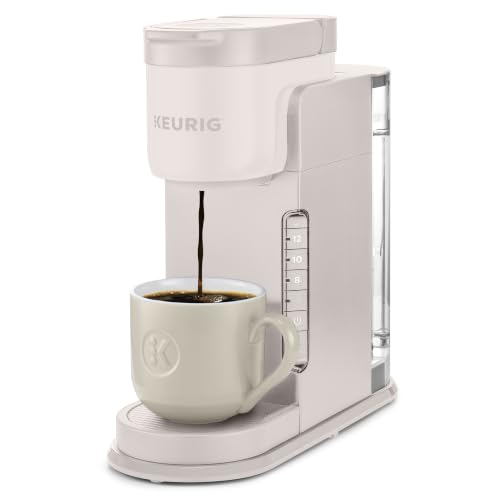
Keurig K-Express Single Serve Coffee Maker, Warm Stone
Badge: Best Finish for Bright Kitchens
Strengths
- Identical hygiene profile to the Black model: removable 42oz reservoir, sealed pods, three brew sizes.
- Strong Brew button for strength control without additives.
- Warm Stone finish hides the light dusting of kitchen wear that shows on gloss black.
Trade-offs
- A colour variant, not a different machine — no feature or hygiene difference from the Black or Evergreen versions.
- Same pod waste per cup as every capsule format.
- Same discipline required: the reservoir must actually be washed.
Mini spec box
- Format: single serve K-Cup pod brewer
- Reservoir: 42oz, removable
- Brew sizes: 3, plus Strong Brew button
- Compatibility from verified title: works with all K-Cup pods, travel mug friendly
- Colour: Warm Stone
This review is deliberately short on new claims, because honesty about variants is part of what makes a guide trustworthy: the Warm Stone K-Express is the Black K-Express in a different finish. Every hygiene-relevant fact — the removable reservoir, the sealed-pod freshness, the three brew sizes, the Strong Brew control — is shared. If you are choosing between them, choose the colour your kitchen wears better, and spend the saved deliberation time on the habits that actually decide whether the machine stays clean: the weekly reservoir wash, the monthly descale, the plain-pod shopping rule.
There is one small practical note in the finish’s favour. Light, matte-toned appliances tend to show less of the fine dust and water-spotting that accumulate around a coffee station, which makes the daily wipe-down quicker to judge — you clean what you can see needs cleaning. It is a marginal point, and this guide presents it as one. The variant reviews in this list exist so that no reader pays a “different machine” premium of attention for what is, verifiably, the same brewer in a new coat.
Best for: buyers who want the K-Express hygiene profile in a light finish / Not suited for: anyone expecting different features from the Black version.

Elite Gourmet 14 oz Single-Serve Coffee Maker (EHC111A)
Badge: Best for Ingredient Control
Strengths
- You supply the coffee: a reusable filter for your own grounds means the cup contains exactly what you put in it — no sweeteners, no flavourings, no surprises.
- The same filter brews loose-leaf tea, extending ingredient control beyond coffee.
- Dishwasher-safe parts and zero capsules: the lowest-waste, easiest-to-deep-clean routine in this guide.
Trade-offs
- No reservoir — water is added per brew, which is fresh but slower.
- Reusable filters demand a rinse after every brew; neglected grounds residue is its own hygiene problem.
- One 14 oz format, one cup at a time.
Mini spec box
- Capacity: 14 oz single serve
- Power: 600W
- Filter: reusable, for grounds and loose-leaf tea
- Features: one-touch, auto shut-off, dishwasher-safe parts
- Model: EHC111A
If the healthy question that brought you here is “what exactly is in my cup?”, this is the strongest answer in the pool. A reusable-filter grounds brewer is an open system: the ingredient list is your coffee bag and your water, full stop. There is no capsule recipe, no flavouring system, no sweetened drink mix wearing a coffee costume. Readers managing their sugar intake through ordinary kitchen choices — a real and common reason behind this search — get more control from this format than from any pod machine, because the default cup is unsweetened coffee and anything added is added by hand, visibly, in a quantity they chose.
The hygiene profile matches the ingredient profile. Dishwasher-safe parts mean the components that touch coffee can be genuinely deep-cleaned on a normal kitchen rhythm, not wiped and hoped for. The trade is effort and attention: grounds residue left in a reusable filter turns stale and then rancid, and the machine has no reservoir, so each cup starts with fresh water measured by you. Judge it as a routine, not an appliance: two minutes of rinsing buys the cleanest ingredient story in this guide. Households building a full at-home version of this routine will find the deeper treatment at Best Healthy Coffee Makers To Use At Home — a companion this pick anchors.
Best for: readers who want total control over what is in the cup and the lowest-waste routine / Not suited for: anyone who wants a reservoir or a zero-effort pod morning.
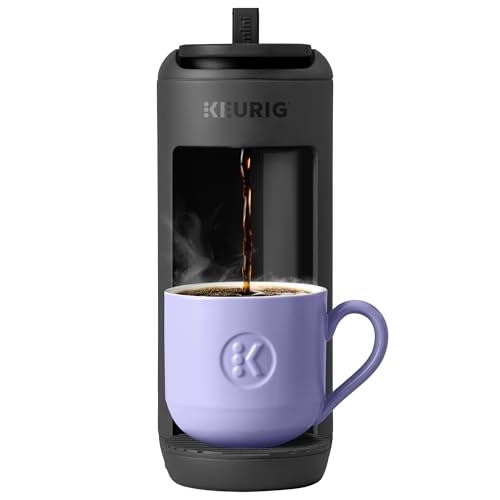
Keurig K-Mini Mate Single Serve Coffee Maker
Badge: Best for Fresh Water Every Cup
Strengths
- No reservoir at all: every brew starts with water you just poured, eliminating the standing-water question completely.
- Compact format for dorms and offices, where shared reservoir machines are at their least hygienic.
- Brews up to 12 oz, covering a full mug.
Trade-offs
- Pod waste with every cup, like all capsule machines here.
- Ingredient control is limited to pod choice — plain pods only, if labels matter to you.
- Refilling per cup is slower for back-to-back drinkers.
Mini spec box
- Format: single serve K-Cup pod brewer
- Capacity: up to 12 oz per brew
- Positioning from verified title: compact and portable, for small spaces, dorms and offices
- Colour: Black
The K-Mini Mate’s health-relevant feature is an absence: there is no tank. Every reservoir machine in this guide asks its owner to maintain water that sits; the Mini Mate removes the variable entirely, because the water in your cup was in the tap a minute ago. In shared environments — the dorms and offices its title names — that matters doubly, since a communal reservoir is only as clean as the least careful person who uses it. A personal fill-per-cup machine keeps your water hygiene in your own hands.
The rest of its ledger is the standard pod ledger: sealed-until-brewing freshness on the credit side, capsule waste and pod-dependent ingredient control on the debit side. Its compactness is a genuine secondary virtue in small spaces, where a big machine crowds the sink and discourages the washing-up that keeps a coffee corner clean. It will not suit a household brewing back-to-back cups, and it offers no grounds route — readers who want fresh-water thinking with ingredient control should pair this review with the Elite Gourmet above and decide which freshness matters more to them: the water’s, or the coffee’s.
Best for: dorm, office, and solo drinkers who distrust standing water / Not suited for: multi-cup households or grounds brewers.
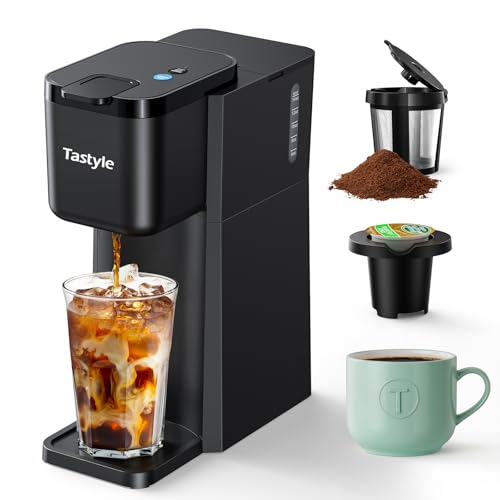
Tastyle Mini Single Serve Hot and Iced Coffee Maker (K310IC)
Badge: Best Flexible Routine
Strengths
- Brews your own ground coffee or K-Cup pods, so ingredient control is available on the days you want it and convenience on the days you do not.
- Hot and iced modes: a proper iced routine at home displaces bottled, pre-sweetened coffee drinks for many households.
- Recipe book included, which helps new owners dial in unsweetened ratios instead of compensating with sugar.
Trade-offs
- Two coffee-contact parts to keep clean — pod holder and grounds basket.
- Mini format, one cup at a time, small water capacity.
- Pod mode carries the usual capsule waste when you use it.
Mini spec box
- Format: single serve, K Cup and ground
- Brew sizes: 6 to 14 oz
- Modes: hot and iced coffee
- Power: 120V
- Model: K310IC, 2.0 version, Classic Black
- Included: recipe book
The Tastyle earns its badge by refusing to make the healthy routine an all-or-nothing commitment. Most households do not fail at ingredient control because they lack willpower; they fail because a rigid routine meets a chaotic Tuesday. A machine that brews your own grounds on a calm morning and a plain pod on a rushed one keeps the week’s average honest, and that average is what a routine actually is. The iced mode extends the logic to the drink most likely to arrive pre-sweetened from a shop: home iced coffee, brewed to a recipe-book ratio and sweetened only if you choose, in the amount you choose.
The cost of flexibility is housekeeping surface. Two components touch coffee, the brew path serves two formats, and the mini format means the routine repeats per cup. Owners who rinse the basket after grounds and the holder after pods will find the Tastyle the most sustainable compromise in this guide; owners who know they will not should choose the simpler Elite Gourmet and let one filter be the whole routine. Readers cross-shopping the premium tier while keeping this flexibility question in view can compare notes at Best High End Single Cup Coffee Makers.
Best for: households that want grounds control with a pod safety net, including home iced coffee / Not suited for: anyone who wants the fewest possible parts to wash.

Keurig K-Express Single Serve Coffee Maker, Evergreen
Badge: Best Reservoir Pick in Colour
Strengths
- Same removable 42oz reservoir and sealed-pod freshness as the other K-Express finishes.
- Three brew sizes and Strong Brew for strength without additives.
- Evergreen finish for kitchens moving away from all-black appliances.
Trade-offs
- A colour variant of the Black and Warm Stone machines — identical hygiene profile, identical duties.
- Pod waste per cup.
- Reservoir hygiene depends entirely on the owner’s washing routine.
Mini spec box
- Format: single serve K-Cup pod brewer
- Reservoir: 42oz, removable
- Brew sizes: 3, plus Strong Brew button
- Compatibility from verified title: works with all K-Cup pods, travel mug friendly
- Colour: Evergreen
The Evergreen K-Express completes the variant set, and its review carries the same message as Warm Stone’s: the healthy-relevant facts are the shared ones. A removable reservoir you can wash, coffee sealed until brewing, portion sizes you select, strength you can raise with a button instead of a sweetener. The finish is a legitimate reason to choose it over its siblings — a machine you like looking at is a machine you keep on the counter and maintain, rather than banishing to a cupboard where routines go to die — but it changes nothing about the cleaning contract.
That contract deserves restating once, because it is the real content of this entire guide: empty and wash the reservoir weekly with warm soapy water, rinse and dry it before refilling, descale on schedule, and buy plain pods if ingredient labels matter to you. A K-Express kept that way is a clean, controlled coffee routine. A K-Express topped up for a month is a science project with a power cord. The machine offers the opportunity; the owner supplies the adjective “healthy.” Shoppers who prefer their coffee retail experience in person can also weigh the high-street angle at Best High Street Coffee Makers, where the same hygiene checks apply to whatever is on the shelf.
Best for: pod households who want the removable-reservoir routine in a green finish / Not suited for: anyone expecting a feature difference from the other K-Express colours.
Comparison Table
| Machine | Ingredient control | Water story | Cleaning story | Waste story | Link |
|---|---|---|---|---|---|
| Keurig K-Express, Black | Pod choice (plain pods best) | 42oz removable reservoir | Reservoir lifts off for washing | One pod per cup | Check on Amazon |
| Keurig K-Express, Warm Stone | Pod choice (plain pods best) | 42oz removable reservoir | Same as Black | One pod per cup | Check on Amazon |
| Elite Gourmet EHC111A | Full — your own grounds or tea | Fresh per brew | Dishwasher-safe parts | No capsules; reusable filter | Check on Amazon |
| Keurig K-Mini Mate | Pod choice | Fresh per brew — no tank | No reservoir to wash | One pod per cup | Check on Amazon |
| Tastyle K310IC | Full on grounds days; pod choice otherwise | Mini format, per-cup rhythm | Two coffee-contact parts to rinse | None on grounds days; pods otherwise | Check on Amazon |
| Keurig K-Express, Evergreen | Pod choice (plain pods best) | 42oz removable reservoir | Reservoir lifts off for washing | One pod per cup | Check on Amazon |
How to Choose a Healthier Coffee Setup
Rank your four concerns before you rank machines. Ingredient control, water freshness, cleanability, and waste do not automatically agree — the lowest-waste machine here (Elite Gourmet) asks the most daily effort, and the freshest-water machine (K-Mini Mate) still uses pods. Decide which concern actually motivated your search. If it was sugar and additives, you are shopping for grounds capability. If it was a grimy tank, you are shopping for removability and washability. If it was plastic guilt, you are shopping for a reusable filter. The machine follows from the motive.
Treat “sealed until brewing” and “freshly ground” as rival freshness philosophies. Pods protect coffee from air and light for months, then brew coffee that was ground long ago. Grounds brewing exposes coffee to air from the moment the bag opens, then brews coffee whose freshness you control by buying small and storing airtight. Neither is automatically superior; the pod wins on consistency, the bag wins on ceiling and on ingredient transparency. Households that drink coffee slowly often do better with pods’ shelf stability; daily drinkers burn through a bag while it is still lively and get more from grounds.
Budget your effort, not just your money. Every routine in this guide has a maintenance price denominated in minutes: reservoir washes, filter rinses, descaling sessions. The healthiest setup on paper is worthless if its routine collapses by week three. Be pessimistic about your future self and choose the machine whose cleaning contract you will still be honouring in November. That is why dishwasher-safe parts and removable reservoirs rank so highly here — they lower the effort price of hygiene, and hygiene that is cheap gets done.
Read pod labels the way you read food labels. If you go the pod route, the ingredient decision moves to the box. Plain coffee pods list coffee. Flavoured and sweetened coffee drinks list a recipe. Neither is forbidden by this guide — but a shopper who searched “healthy” deserves to make that choice with open eyes, and the Strong Brew button on the K-Express line exists precisely so that intensity does not have to come from a sweetened pod.
How to Keep Any Coffee Maker Clean Enough to Deserve the Word Healthy
Daily. Empty and rinse whatever touched coffee — the grounds basket or reusable filter, the pod holder after the spent pod is removed. Wipe the drip tray. Leave lids and reservoirs cracked open when the machine will sit overnight, so surfaces dry instead of staying damp.
Weekly. Wash removable reservoirs with warm soapy water, rinse well, and air-dry before refilling — never just top up a tank that has not been washed. Wash drip trays and any dishwasher-safe parts; the Elite Gourmet’s parts can go straight into the dishwasher, which is the model routine. Wipe the brew head and the area under it, where spray deposits oils that turn stale.
Monthly to quarterly. Descale with the manufacturer’s recommended approach for your water hardness. Scale is not just a mechanical problem: it lowers brew temperature, and under-extracted coffee is the cup most likely to get “fixed” with sugar — a cleaning issue quietly becoming an ingredient issue.
Troubleshooting. Problem: coffee tastes musty or stale despite fresh pods or beans → suspect the water path, not the coffee; deep-clean the reservoir and run plain-water cycles. Problem: a reusable filter’s cups taste muddy and bitter → the filter is carrying old oils; wash it with hot soapy water or run it through the dishwasher, and rinse after every brew from now on. Problem: visible film inside the reservoir → empty, wash, dry, and switch from topping up to a wash-and-refill rhythm.
What This Guide Deliberately Does Not Claim
A word about the word itself. Coffee makers are sometimes marketed with language borrowed from wellness — detox, purity, transformation — and none of it survives contact with what the appliance physically does, which is heat water and pass it through coffee. This guide has used “healthy” only in its defensible kitchen senses: ingredients you chose, water that is fresh, surfaces that are clean, waste you can account for. Those are real goods. They are also the whole list. Any stronger claim for any machine — in this pool or out of it — should be read as advertising, and the premium framing at Best Highend Coffee Makers deserves the same scepticism applied evenly: price buys features and finishes, not virtue. Shop for the routine you can keep clean and the cup whose contents you can name, and you have captured everything honest that this keyword can mean.
The Water Itself: The Ingredient Nobody Shops For
Coffee is mostly water, yet water is the one ingredient buyers never comparison-shop. Two water decisions shape every cup in this guide. The first is source: if your tap water tastes strongly of chlorine or runs very hard, every machine here will brew that flavour faithfully, and the fix lives outside the appliance — a simple filter jug for the fill water changes more cups than an appliance upgrade would. The second decision is freshness discipline, and it is where the pool splits into philosophies. Reservoir machines (the three K-Express finishes) trade on volume: fill once, brew for days. Their water story is only as good as the wash-and-refill rhythm behind it. Fill-per-cup machines (the K-Mini Mate, and the Elite Gourmet in its per-brew filling) trade volume for immediacy: the water is fresh because it was poured a minute ago, and there is nothing standing to manage.
Hard water deserves a specific warning because it connects water to maintenance to flavour in one chain. Mineral-heavy water scales a heating element faster; scale lowers brew temperature; low temperature under-extracts; under-extracted coffee tastes sour and thin; and sour, thin coffee is the cup most likely to be sweetened, flavoured, or abandoned for a shop drink. A household on hard water that filters its fill water and descales on schedule breaks that chain at two points. A household that ignores both will blame the machine, then the coffee, then the format — in that order — for a water problem. Whichever pick you choose from this page, decide your water routine on day one: filtered or tap, wash-and-refill or fill-per-cup, descale dates on the calendar. It is the least glamorous decision in this guide and the one with the longest reach.
Setting Up a Low-Waste Coffee Corner
The waste half of the healthy question is solved at the level of the corner, not the appliance. Start with the format decision the picks embody: a reusable-filter routine (Elite Gourmet, or the Tastyle on grounds days) produces a small daily amount of spent grounds and nothing else — no capsule, no pod, no wrapper — and spent grounds are the rare kitchen waste that composters actively want. A pod routine produces one retired capsule per cup, every cup, forever; households that choose it anyway can soften the footprint by brewing the size they will finish rather than a large cup half-poured away, since wasted coffee is waste too, of water and energy as much as of packaging.
Then arrange the corner so the low-waste choice is the easy choice. Grounds and the scoop live beside the machine, not across the kitchen. A small lidded container for spent grounds sits within arm’s reach of the brew basket, emptied into compost or trash on bin day, so the reusable filter’s rinse-and-tip routine never becomes a dripping walk. The mug you actually use lives there too, which quietly prevents the disposable-cup drift that creeps into rushed mornings. None of this requires buying anything beyond, perhaps, a container — it is arrangement, not equipment. That is the recurring theme of this entire guide: the healthy and low-waste properties of a coffee setup are mostly habits with a machine attached, and the best machine is the one whose design makes those habits cheapest to keep.
A Realistic Week With Each Routine
Abstract hygiene advice is easy to nod at; a week is harder to fake. Picture the reservoir-pod week on a K-Express: Monday starts with a washed tank and fresh water. Tuesday through Thursday are pure convenience — pod in, cup out, a pod shell in the bin each time. Friday is where the routine is decided: the tank gets emptied, washed, dried, and refilled, or it gets topped up “just for the weekend,” and the film that was invisible on day four becomes next week’s stale note in every cup. The machine did not change across that week. The owner’s Friday did.
The grounds week on the Elite Gourmet looks different: slower mornings by a minute or two, every day, with no weekly event at all. Each cup is measure, brew, tip the filter, rinse. The effort is distributed so evenly that there is no single chore big enough to skip — which is precisely the routine’s strength, because skipped chores are how coffee corners decay. Its failure mode is different: not a neglected tank but a neglected filter, one rushed morning where the grounds sit, then another, until the rinse habit quietly dies and every cup carries a stale edge.
The hybrid week on the Tastyle is the honest middle: grounds on the mornings that allow it, a pod on the morning that does not, and two small components to keep rinsed instead of one. Its failure mode is ambiguity — each format’s part waiting for the other format’s user to clean it, in households where the machine is shared. The lesson across all three weeks is the one this guide has pressed from its first section: there is no machine on this page whose routine maintains itself. Choose the week you can actually live, with its specific chores at their specific times, and you have chosen the healthiest coffee maker for your kitchen — whichever badge it wears.
Common Buying Mistakes
- Believing a machine can be healthy so you do not have to be. Hygiene is a routine; the appliance only makes it easier or harder.
- Topping up a reservoir for weeks. Wash-and-refill is the whole point of a removable tank.
- Buying flavoured, sweetened pods on a “healthy” search. Read the pod box like a food label.
- Counting colour variants as separate research. Three of these six picks are one machine; its hygiene profile is one profile.
- Neglecting the reusable filter. Grounds residue left to sit becomes the stale flavour you blame on the coffee.
- Skipping descaling. Scale drops brew temperature and pushes drinkers toward sweetening weak cups.
Final Recommendation
Start from your motive. For ingredient control and the lowest-waste routine, the Elite Gourmet EHC111A is the first choice — your coffee, your filter, dishwasher-safe parts. For a pod household that will keep a washing routine, the Keurig K-Express in whichever finish suits your kitchen is the balanced pick, with its removable reservoir doing the hygiene heavy lifting. For flexibility without surrendering control, choose the Tastyle K310IC and let grounds be the default and pods the exception. And whichever machine lands on your counter, adopt the weekly wash and the descale schedule in the how-to section — that routine, more than any pick on this page, is what makes a coffee maker deserve the word healthy. One last piece of shopping advice: buy for the routine first and the machine second, and be suspicious of any product page — for these picks or any others — that promises a health outcome from an appliance. What a good coffee maker can honestly promise is a clean path from water and coffee to cup, with nothing added along the way that you did not choose. Every pick above keeps that promise in its own way; your job is simply to pick the way that fits your mornings, your household, and the cleaning rhythm you honestly expect to keep when the novelty has worn off and the machine is simply part of the kitchen.
Frequently Asked Questions
Do I need filtered water for a healthier cup?
Only if your tap water needs it. If your tap water tastes clean and is not heavily mineralised, it is a perfectly good brewing water, and freshness discipline — wash-and-refill or fill-per-cup — matters more than filtration. If it tastes strongly treated or scales your kettle quickly, filtering the fill water improves flavour and slows scale at the same time. Judge by your kettle: heavy kettle scale is the visible sign that your coffee maker is collecting the same deposits.
What makes a coffee maker “healthy” in this guide’s terms?
Four practical properties: a brew path you can keep clean, fresh water, control over the ingredients in the cup, and a waste footprint you can defend. The guide makes no medical claims for any machine — a coffee maker heats water and brews coffee, and its health-relevant differences are about hygiene and ingredients, not outcomes in your body.
Are pods or ground coffee the cleaner choice?
They are clean in different ways. Pods keep coffee sealed from air and light until brewing, but generate a capsule of waste per cup and put flavoured-pod ingredients in someone else’s hands. Grounds in a reusable filter produce almost no waste and give you full ingredient control, but the coffee oxidises once the bag opens and the filter needs rinsing after every brew. Your priority — waste, control, or convenience — decides.
How often should I wash a removable reservoir?
Weekly is the rhythm this guide recommends: empty it, wash with warm soapy water, rinse, and air-dry before refilling. The mistake to avoid is topping up — adding fresh water to old water indefinitely — which turns a removable reservoir’s hygiene advantage into a sealed-tank problem with extra steps.
Does descaling really affect the cup?
Yes, mechanically. Scale insulates the heating element and drags brew temperature down, and cooler water under-extracts coffee, producing sour, weak cups. Descale on schedule for your water hardness — every few months for typical tap water — and you protect both the machine and the flavour that keeps you from sweetening the cup to compensate.
Is a fill-per-cup machine like the K-Mini Mate better than a reservoir machine?
On water freshness alone, yes: there is no standing water to manage. On convenience, no: every cup starts with a refill. It is the right trade for solo drinkers, dorms, and offices — especially shared spaces where a communal reservoir’s cleanliness is out of your control — and the wrong trade for households brewing several cups back to back.
What should I do if my reservoir already has a film in it?
Empty it completely, wash it with warm soapy water and a soft brush or cloth that can reach the corners, rinse until the water runs perfectly clear, and let it air-dry before refilling. Then run a plain-water brew cycle or two through the machine. After that, the fix is rhythm rather than rescue: wash-and-refill weekly, and never top up old water with new. If the film returns quickly, look at how long water is standing between uses — a lightly used machine in a warm kitchen may need the tank emptied between brewing days rather than left full.
Can brewing my own grounds help me control sugar?
In the ordinary kitchen sense, yes: a grounds brewer’s default cup is unsweetened coffee, and anything added is added by you, in a visible amount. Flavoured and sweetened pods make that decision for you at the factory. This guide makes no medical claims — but ingredient control is ingredient control, and the Elite Gourmet and Tastyle offer the most of it in this pool.


