Disclosure: topratedkitchenware.com is reader-supported. When you buy through links on our site, we may earn an affiliate commission from Amazon and other retailers, at no extra cost to you.
Where to buy
If you are shopping for the best espresso machines for third wave cafes, read the framing in the next section before the list: the six fully automatic models below are not replacements for a café’s manual bar, and this guide does not pretend otherwise. They are the best automatic options for the roles third wave cafés actually give them — decaf service, a consistency station for milk drinks and filter-style coffees, events and pop-ups, training, and a second point of service. Check the current Amazon listing for full manufacturer detail before ordering.
- Best Automatic for a Third Wave Café: De’Longhi PrimaDonna Aromatic — Check on Amazon
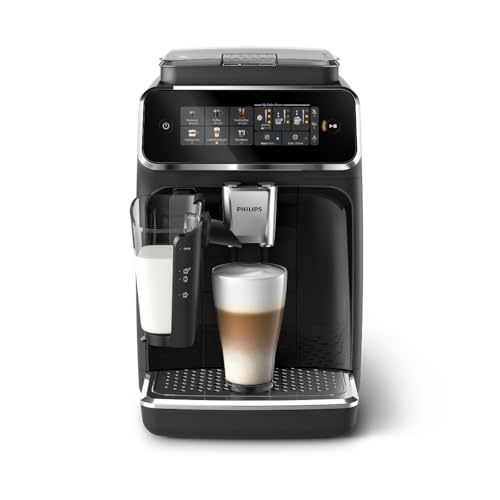
- Philips 5500 Series — Check on Amazon
- Philips 2300 Series — Check on Amazon
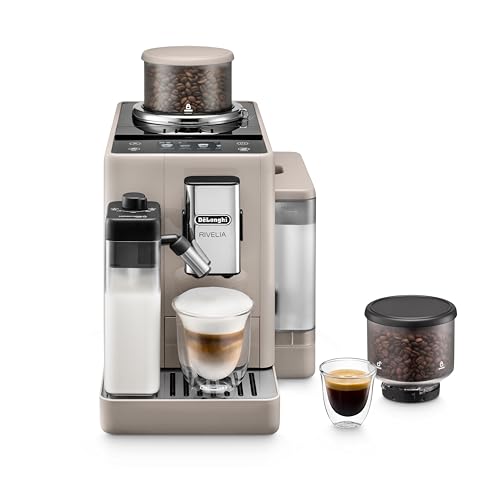
- De’Longhi Rivelia (White) — Check on Amazon
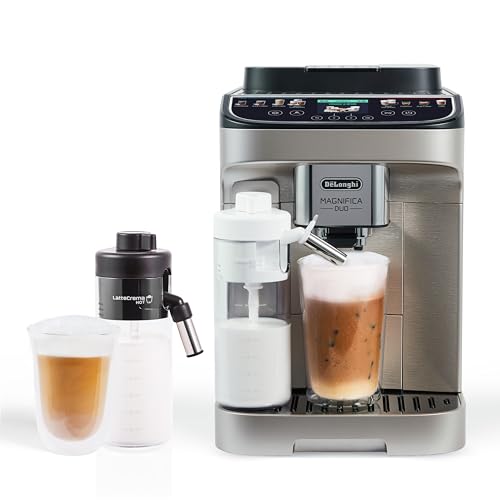
- De’Longhi Magnifica Duo — Check on Amazon
- De’Longhi Magnifica Evo — Check on Amazon
Read the full guide ↓
The best espresso machines for third wave cafes is a phrase that needs honest unpacking, because third wave coffee is defined by the things fully automatic machines deliberately remove: a barista’s hands on the portafilter, extraction adjusted shot by shot, single-origin beans treated as individual ingredients, milk textured by ear and eye. No bean-to-cup machine in this guide — or anywhere — dials in a light-roast Ethiopian the way a skilled barista on a manual machine can, and a café whose reputation rests on that craft should keep its money for its bar, its grinders and its people. This guide serves the other, realer question third wave cafés ask every season: what should make the drinks the bar should not be making?
Every serious café has those drinks. The decaf order that pulls the barista off a queue of signature drinks. The office run of six lattes at 8 a.m. that rewards consistency, not artistry. The event, market stall or pop-up where the full bar cannot go. The new starter who needs to serve something good in week one while their manual skills are still training. The regular who — whisper it — prefers the predictable comfort drink to the rotating single origin. Third wave cafés that handle those moments with a well-chosen automatic protect their bar’s time for the drinks that built their name, and protect their standards on the drinks that would otherwise be an afterthought, made resentfully, inconsistently, or with a stale pre-ground decaf nobody would serve a friend.
The six machines here were therefore judged by third wave criteria translated honestly into automatic terms. Bean respect: can the machine serve more than one bean properly — the Rivelia’s removable hoppers are the standout — and are its grinder and extraction credible, like the Philips models’ ceramic grinders and 15-bar brewing? Adjustability: can a head barista set strength, milk and cup size to a house standard, as the Philips 5500 allows, rather than accepting factory defaults? Milk integrity: is the milk system clean enough, often enough, that an automatic drink never tastes of yesterday — the LatteGo argument? And menu range for the comfort drinks: the PrimaDonna’s thirty-eight recipes and the Magnifica Duo’s twenty, hot and cold, cover the drinks the bar is happiest to delegate.
If you are a home enthusiast arriving from Best Espresso Machines Home Barista, the same honesty applies in miniature: these machines make very good, very consistent coffee, and they will not teach you or reward the craft the third wave celebrates. Many enthusiasts own both kinds of machine — an automatic for weekday mornings, a manual setup for the weekend ritual — and this guide’s cafés are doing the commercial version of exactly that. Readers who want the pure manual path should start with the portafilter world that Best Espresso Machines No Portafilter is defined against; readers equipping a café’s second station should read on.
Key Takeaways
- No fully automatic machine replaces a third wave café’s manual bar — these six are for decaf, consistency drinks, events, training and second stations.
- The PrimaDonna leads the automatic bench: 38 recipes, hot and cold frothing, touchscreen — the broadest delegated menu a head barista can set and forget.
- Bean handling is the third wave test: the Rivelia’s removable hoppers serve house, guest and decaf beans fresh from one machine.
- The Philips 5500’s customisable strength, milk and cup size let a head barista define the house standard an automatic then holds on every shift.
- Milk hygiene is non-negotiable in specialty cafés: LatteGo’s simple clean on the Philips models suits a second station’s rota.
- Used well, an automatic protects the bar: baristas spend their skill on signature drinks while delegated drinks stay consistent.
In this guide
Quick Picks
| Pick | Badge | Its role in a third wave café | Link |
|---|---|---|---|
| De’Longhi PrimaDonna Aromatic | Best Automatic for a Third Wave Café | 38 recipes hot and cold — the full delegated menu on one touchscreen station | Check on Amazon |
| Philips 5500 Series | Best for a Set House Standard | 20 presets, customisable strength/milk/cup size, LatteGo, QuickStart | Check on Amazon |
| Philips 2300 Series | Best Decaf and Tea Station | 3 presets, LatteGo, ceramic grinder, 15-bar, hot water | Check on Amazon |
| De’Longhi Rivelia (White) | Best Multi-Bean Station | Removable hoppers for house/guest/decaf, 18 recipes, bright café finish | Check on Amazon |
| De’Longhi Magnifica Duo | Best Events and Pop-Up Pick | 20 recipes, hot and cold frother, touchscreen — a portable full menu for off-site service | Check on Amazon |
| De’Longhi Magnifica Evo | Best Signature Comfort Drink | 7 recipes plus a personalised signature drink, reproduced identically by any staff member | Check on Amazon |
How These Picks Were Chosen
This guide is research-led and opinionated about its own limits. The six machines come from a verified pool of fully automatic espresso machines; every feature cited comes from the manufacturer’s verified listing for that model; no prices, ratings or review counts are used as evidence; and no hands-on testing is claimed. The ranking lens, however, is specific: these machines were assessed as equipment for cafés that already take coffee more seriously than the machines themselves can.
Four tests were applied. First, delegation range: how much of the non-signature menu — decaf drinks, standard milk drinks, iced drinks, tea-adjacent hot water — can the machine absorb completely? Second, standard-setting: can the café’s head barista define the drinks (strength, milk, cup size, a signature profile) and lock them in, so the machine executes a standard rather than a factory guess? Third, bean respect: grinder quality, and above all multi-bean handling, since a café’s identity is its beans and a single-hopper machine serving yesterday’s decaf fails the movement’s first principle — freshness. Fourth, hygiene: whether the milk system can be kept to specialty standards on a real rota.
Machines were not credited for approximating manual control they do not have. None of the six offers portafilter work, extraction profiling or manual steaming, and the reviews do not use language that suggests otherwise. What they offer — consistency, delegation, freshness for decaf, a full comfort menu — is valuable precisely because a third wave café’s scarcest resource is skilled attention, and attention spent on a routine decaf latte is attention stolen from the drinks the café exists to serve.
The 6 Best Espresso Machines for Third Wave Cafes
Read each review as a job description for a second station. The question is never “is this as good as our bar?” — it is not, and the reviews say so — but “which delegated work does this machine do to a standard our customers will accept from us?”

De’Longhi PrimaDonna Aromatic
Badge: Best Automatic for a Third Wave Café
Strengths
- 38 one-touch recipes absorb the widest delegated menu — the full comfort card, hot and cold, off the bar’s queue.
- Hot and cold milk frother covers the iced and cold-foam drinks that dominate warm-season orders.
- Touchscreen station can be run by any trained café worker, freeing baristas for signature service.
Trade-offs
- No manual extraction control: it will never dial in a delicate single origin like the bar can.
- A 38-drink menu must be curated to the café’s delegated card, or it becomes clutter.
- Fixed hopper: multi-bean service needs the Rivelia’s approach or a second station.
Mini spec box
- Type: Fully automatic espresso machine
- Recipes: 38 one-touch recipes
- Milk: Hot and cold milk frother
- Grinder: Built-in grinder
- Display: Touchscreen display
The PrimaDonna’s case in a specialty café is workload geometry. A third wave menu has two layers: the short list of drinks the café is famous for, and the long tail of everything else a full café day actually contains — decaf lattes, kids’ warm milk drinks, iced coffees in four variations, the office order, the regular’s unchanging comfort drink. Serving the long tail on the main bar costs the café its scarcest asset at its busiest moments. The PrimaDonna absorbs the tail whole: thirty-eight stored recipes, hot and cold milk, one touchscreen, operated by whoever is free. The bar’s queue shortens to the drinks that deserve it, and the tail is served consistently instead of apologetically.
Cold capability is the detail specialty people underestimate. Third wave cafés once treated iced drinks as a summer concession; they are now a year-round category with their own craft — cold foam, iced lattes built on the café’s espresso, seasonal cold specials. A delegated station that can only froth hot forces those drinks back onto the bar or off the menu. The PrimaDonna’s hot and cold frother lets the café delegate the standard cold builds with the same confidence as the hot ones, keeping the bar for the drinks where extraction nuance is the product.
Hold its limit clearly, because the café’s customers will: this machine does not taste like the bar, and the café should not claim it does. Menu honesty — the delegated station’s drinks listed plainly, the signature drinks made where they are made — is what lets a third wave café use automation without diluting its promise. Positioned that way, the PrimaDonna is not a compromise of the café’s values. It is how the café affords to keep them where they matter.
Best for: Specialty cafés delegating a broad hot-and-cold comfort menu off the main bar / Not suited for: Replacing the bar, or single-origin extraction work

Philips 5500 Series
Badge: Best for a Set House Standard
Strengths
- Customisable coffee strength, milk and cup size across 20 hot and iced presets let a head barista define — and hold — the café’s delegated standard.
- LatteGo milk system keeps a second station’s hygiene to specialty standards with the simplest clean in this list.
- Ceramic grinder, 15-bar brewing and QuickStart give it credible fundamentals and immediate readiness.
Trade-offs
- Customisation is a standard only if it is governed; unguided staff adjustment recreates inconsistency.
- Single hopper limits simultaneous bean programmes.
- Automatic extraction remains automatic — fine for delegated drinks, not for featured coffees.
Mini spec box
- Type: Fully automatic espresso machine (EP5544/94)
- Presets: 20 hot and iced coffee pre-sets
- Milk: LatteGo milk system
- Grinder: Ceramic grinder
- Pressure: 15 bars
- Features: QuickStart; customize coffee strength, milk and cup size
The 5500 is the thinking café’s automatic, because its headline feature is not a recipe count but control over the recipes it has. Twenty hot and iced presets would be unremarkable as factory defaults; with coffee strength, milk quantity and cup size all customisable, they become a canvas on which the head barista writes the café’s delegated standard — this extraction strength for the house blend’s latte, this milk ratio, this cup size — once, carefully, tasting as they go. From then on, the machine holds that standard with a fidelity no rota of humans matches. Third wave culture is, at heart, a standards culture; a machine that can be given a standard is philosophically closer to it than a more powerful machine that cannot.
The supporting cast suits café discipline. LatteGo’s milk system is the easiest here to strip and clean to a specialty standard, which matters doubly at a second station, where cleaning ownership blurs unless the job is small. The ceramic grinder and 15-bar extraction are respectable fundamentals for the house blend the station will mostly serve, and QuickStart means the station is ready when the morning’s first delegated order arrives, not warming up while a queue forms at the bar it was bought to relieve.
Governance is its price. A customisable machine in a café needs a rule — profiles are set by the head barista, changes are menu decisions — or its virtue becomes variance. Cafés already run that rule for their manual bar’s settings, so extending it to the automatic station is natural; cafés that will not bother should buy a simpler machine and accept its defaults. With the rule in place, the 5500 is the delegated station a quality manager would design.
Best for: Cafés wanting delegated drinks held to a defined house standard / Not suited for: Featured single-origin service, or cafés unwilling to govern settings

Philips 2300 Series
Badge: Best Decaf and Tea Station
Strengths
- Three presets, ceramic grinder and 15-bar brewing make a focused decaf station whose drinks match the café’s standard.
- LatteGo gives the decaf point the same easy, thorough milk hygiene as the main station.
- Hot water function covers tea service, the other classic interruption of a busy bar.
Trade-offs
- Three presets is a station, not a menu — it delegates specific work, nothing more.
- Customisation runs to strength and cup size only.
- Its beans are whatever the station is assigned; it does not solve multi-bean service alone.
Mini spec box
- Type: Fully automatic espresso machine (EP2330/14)
- Presets: 3 coffee pre-sets
- Milk: LatteGo milk system
- Grinder: Ceramic grinder
- Pressure: 15-bar pressure
- Adjustments: Customizable coffee strength and cup size; hot water function
Decaf is third wave coffee’s open secret: the movement taught drinkers to care about freshness and origin, then served its decaf drinkers — a loyal, growing constituency — from a stale pre-ground tin beside the main grinder. A dedicated station ends the hypocrisy. The Philips 2300, loaded with the café’s chosen decaf beans, grinds them fresh for every drink, brews at 15 bars through a ceramic grinder, and froths through LatteGo — which means the decaf latte is, for once, built to the same freshness standard as everything else on the menu. Three presets is exactly a decaf station’s menu: espresso, long, milk. Nothing is missing because nothing else was the job.
The same station absorbs the bar’s other classic interruption: tea and hot-water drinks, via its hot water function. Every barista knows the rhythm-breaking effect of a tea order landing mid-queue — different equipment, different timing, same pair of hands. A station that owns decaf and tea between them removes a surprising fraction of the bar’s context-switching, and context-switching, more than any single drink, is what makes a busy bar feel chaotic and its queue feel slow.
Small cafés without a main-bar-plus-stations layout can still use the 2300 as the entire delegated offer — the simple machine beside the manual setup, serving the comfort drinks. What it will not do is grow into a menu machine; its three presets are a definition, not a starting point. Bought as a definition — decaf done properly, tea handled, bar protected — it may be the most values-consistent purchase in this guide: the machine that extends the movement’s freshness principle to the customers the movement most often forgets.
Best for: Cafés fixing decaf freshness and absorbing tea service at a dedicated station / Not suited for: A broad delegated menu or a café’s only machine

De’Longhi Rivelia (White)
Badge: Best Multi-Bean Station
Strengths
- Removable bean hoppers are the only true multi-bean system here — house blend, guest roast and decaf each served fresh-ground.
- 18 one-touch recipes give the multi-bean station a full delegated menu to apply those beans to.
- White finish suits the bright, minimal interiors third wave cafés favour.
Trade-offs
- Swapping hoppers is not dialling in: each bean gets the machine’s stored recipe, not a per-bean extraction profile.
- Hopper labelling and storage discipline are staff habits the café must build.
- White shows every splash at a working station; cleaning visibility cuts both ways.
Mini spec box
- Type: Automatic espresso machine
- Recipes: 18 one-touch recipes
- Bean handling: Removable bean hoppers
- Milk: Milk frother
- Grinder: Built-in grinder
- Finish: White (one of 4 unique colors)
If one machine in this list speaks third wave’s native language, it is the Rivelia, because its removable hoppers are about the movement’s first value: beans, treated as distinct, fresh ingredients. A café can keep a hopper of the house blend, a hopper of the rotating guest roast and a hopper of decaf, each labelled, each ground fresh at the moment of the drink. That is a bean programme — limited, automatic, but recognisably a programme — and it lets the café extend its retail bean story into served drinks: the customer who loved the guest roast as a pour-over can meet it again in a flat-white-style drink from the station, brewed from those actual beans rather than from whatever the single hopper happened to hold.
Eighteen recipes give that programme range, and the white finish fits the rooms this movement builds — bright, material-honest, design-conscious spaces where, as in the cafés surveyed in Best Espresso Machines New York, equipment is part of the interior’s argument. A white station at the end of the bar reads as intentional: the café is not hiding its automatic, it is presenting it as what it is, the multi-bean utility station, and that transparency suits a culture built on telling customers exactly how their coffee was made.
The honest caveat is extraction individuality. Swapping a hopper changes the bean; it does not re-dial a grinder and a recipe around that bean’s ideal extraction, the way a barista does at the main bar. The Rivelia serves each bean well and identically in method — it does not serve each bean optimally and individually. Cafés should therefore assign it the beans and drinks where consistency outranks nuance: house blend milk drinks, decaf everything, the guest roast in its comfort builds. Featured, delicate coffees stay at the bar, where they belong, and the station’s existence is what keeps the bar free for them.
Best for: Cafés running house, guest and decaf beans who want each served fresh at a delegated station / Not suited for: Per-bean extraction optimisation or featured single-origin service

De’Longhi Magnifica Duo
Badge: Best Events and Pop-Up Pick
Strengths
- 20 one-touch recipes with hot and cold frothing make a complete café menu that travels to events, markets and pop-ups.
- Touchscreen operation means event staff — not the café’s baristas — can run the station to standard.
- Self-contained format (built-in grinder, no plumbing in its brief) suits temporary sites.
Trade-offs
- Event drinks are the café’s name on an automatic’s work — choose which drinks carry the brand off-site.
- Single hopper limits the bean story at events to one coffee at a time.
- Silver finish needs a wipe-down routine to stay presentable in public.
Mini spec box
- Type: Fully automatic espresso machine
- Recipes: 20 one-touch recipes
- Milk: Hot and cold milk frother
- Grinder: Built-in grinder
- Display: Touchscreen
- Finish: Silver
Third wave cafés increasingly live a second life away from the bar: market stalls, wedding and event coffee, pop-ups inside retailers, festival corners, catering for the design crowd that already loves them. Those gigs pay well and advertise brilliantly, but they cannot take the main bar with them — and sending a top barista off-site for a weekend of standard lattes wastes the café’s scarcest skill. The Magnifica Duo is the event machine for that life: twenty recipes covering the full comfort menu, hot and cold frothing for the iced drinks outdoor events run on, a touchscreen any briefed event worker can operate, and the café’s own beans in its grinder, so the coffee at the stall is recognisably the café’s coffee.
The touchscreen deserves emphasis for temporary staffing. Event teams are assembled fast and rotate; a machine whose menu is pictures and names, whose recipes are stored, turns a fifteen-minute briefing into competent service. The café’s standards travel inside the machine rather than inside a person’s training, which is precisely the property that makes an automatic the right tool off-site even for a business that would never automate its home bar. Back at base, the same Duo serves as the training station — new starters learn the menu, the drinks and the customer conversation on the automatic while their manual technique develops under supervision.
Brand discipline is the condition. An event drink carries the café’s name to people who may never visit the shop, so choose the off-site menu as carefully as the in-shop one: the drinks the Duo does best, from the café’s most forgiving bean, listed honestly. Cafés that treat events as advertising run them that way; cafés that treat them as an afterthought discover that a mediocre cup at a wedding is the one three hundred people remember.
Best for: Café events, pop-ups, markets and staff training stations / Not suited for: Multi-bean programmes or representing the café’s finest extraction work

De’Longhi Magnifica Evo
Badge: Best Signature Comfort Drink
Strengths
- Its personalised signature drink feature lets a café define one house comfort drink that every staff member reproduces exactly.
- 7 one-touch recipes cover the core delegated menu without clutter.
- Built-in grinder and frother in a compact automatic format suit a small station footprint.
Trade-offs
- Seven recipes is the shortest full menu here; variety-led delegation needs the PrimaDonna or Duo.
- No cold-specific frothing is listed, narrowing the iced programme.
- One signature profile is one drink — a house special, not a custom menu.
Mini spec box
- Type: Automatic espresso machine
- Recipes: 7 one-touch recipes
- Milk: Frother
- Grinder: Built-in grinder
- Special feature: Craft a personalized signature drink
- Finish: Silver
Many cafés, however specialty-led, have one drink that functions as the regulars’ comfort signature — the house cappuccino with its particular balance, the café’s named latte, the drink the weekend crowd orders without looking at the board. On a manual bar that drink varies, gently and humanly, with whoever makes it. The Magnifica Evo offers a different proposition: define that one drink once, store it as the machine’s personalised signature, and let the station reproduce it with total fidelity, by anyone, forever. There is a real argument — regulars make it daily — that for this single drink, consistency is the quality, and the Evo is the only machine here built around exactly that idea.
Around the signature sit seven one-touch recipes, the core delegated menu in its most compact form. For a small specialty café whose delegation needs are narrow — decaf versions of the classics, the signature, a couple of standard milk drinks while the bar handles everything featured — seven recipes plus a signature is a complete brief, executed with the least station footprint and the least menu management in this guide. It is the minimalist’s automatic, which suits the movement’s aesthetic instincts more than its size suggests.
Its boundaries are menu breadth and cold drinks. A café wanting to delegate an iced programme or a long comfort card should take the PrimaDonna or the Duo and accept their larger presence. The Evo is for the café that knows exactly which few drinks it wants off the bar — above all, the one with its name on it — a focus that third wave culture, with its short boards and few, perfect offerings, should find familiar. It pairs naturally, in a home enthusiast’s kitchen, with the philosophy behind Best Espresso Machines For Your Registry: one considered machine, chosen for a defined life, rather than a maximal one chosen for a brochure.
Best for: Cafés delegating a short menu anchored by one signature comfort drink / Not suited for: Broad or iced-led delegation

Comparison Table
| Machine | Menu | Milk system | Café role | Link |
|---|---|---|---|---|
| De’Longhi PrimaDonna Aromatic | 38 one-touch | Hot & cold frother | Full delegated menu | Check on Amazon |
| Philips 5500 Series | 20 hot & iced presets | LatteGo | Set house standard | Check on Amazon |
| Philips 2300 Series | 3 presets | LatteGo | Decaf and tea station | Check on Amazon |
| De’Longhi Rivelia (White) | 18 one-touch | Frother | Multi-bean station | Check on Amazon |
| De’Longhi Magnifica Duo | 20 one-touch | Hot & cold frother | Events and pop-ups | Check on Amazon |
| De’Longhi Magnifica Evo | 7 one-touch | Frother | Signature comfort drink | Check on Amazon |
How to Choose an Automatic Station for a Third Wave Café
Start by listing what the bar should stop making. Stand at the bar for a full day and tally the drinks that consume skilled time without needing it: decaf anything, standard milk drinks during the office rush, tea, event orders, the regulars’ unchanging comfort builds. That tally is your delegated menu, and its length chooses the machine — three drinks points at the Philips 2300, a full card at the PrimaDonna, a bean-led subset at the Rivelia. Cafés that skip the tally buy a specification; cafés that do it buy back barista hours.
Decide your bean policy for the station. Freshness is the movement’s non-negotiable, so the station’s beans must be as considered as the bar’s. A single-hopper machine commits you to one bean at the station — often best assigned to decaf, the most abused bean in cafés — while the Rivelia’s removable hoppers support a small programme. Either way: fresh beans, labelled, rotated, and tasted on the same schedule as the bar’s coffees. An automatic fed stale beans betrays the café faster than any manual mistake, because it does so identically all day.
Set standards like a head barista, because you are one. On customisable machines — the Philips 5500 above all — dial the station’s drinks in properly: strength, milk ratios, cup sizes, tasted against the café’s own palate, then locked as house settings. On signature-capable machines, build the signature drink with the same care as a competition recipe. The station’s quality ceiling is set on the day it is configured; everything after is fidelity.
Hold the hygiene line. Specialty cafés clean their manual equipment religiously; the automatic station must live under the same discipline or it will quietly become the dirtiest thing in the building. Prefer the milk system your rota will genuinely maintain nightly — LatteGo’s simplicity is a standards feature — and put the station on the same cleaning checklist, with the same sign-offs, as the bar.
Be transparent with customers. Third wave culture runs on honesty about process. There is no need to announce the station, and no excuse for disguising it: if a customer asks, the answer — “our barista makes the featured coffees; the station handles decaf and classics to the standard we set for it” — is one the culture respects. Cafés lose trust by pretending, never by delegating openly.
How to Run an Automatic Station Without Losing Your Standards
Commissioning day. The head barista owns setup personally: beans chosen and loaded, drinks dialled and tasted, the delegated menu pinned or listed at the station, and a one-page station card written — what it serves, what it never serves, who cleans it, what to do when it alerts. Train every shift on that card, including the sentence staff should say if a customer asks which machine made their drink.
Daily rhythm. The station joins the café’s existing rituals rather than inventing new ones: tasted on the opening round alongside the bar’s dial-in, checked at midday for beans, water, milk and alerts, and cleaned on the closing checklist with a name and a tick. Decaf beans get the same freshness rotation as every other coffee in the building — small quantities, dated, replaced on schedule.
Quality loop. Once a week, someone senior drinks the station’s core drinks blind against the standard set at commissioning. Automatic stations drift slowly — scale, bean age, a setting nudged — and a weekly taste catches drift while it is still a five-minute fix. Log descaling when the machine requests it; hard water is as real at a station as at the bar.
Troubleshooting.
Problem: The station’s drinks taste flatter than the bar’s → first check bean freshness and the descaling prompt; then re-taste the stored settings — a nudged strength setting is a common culprit in shared spaces.
Problem: Customers are asking whether their drink “came from the machine” → the menu or the staff script is ambiguous; clarify which drinks the station serves and brief the team to answer plainly and proudly.
Problem: The milk system smells by mid-afternoon → the station’s milk handling needs the bar’s discipline: fresh milk, correct storage between drinks, and the full clean moved earlier in the day if volume demands it.
What Delegation Does to a Café’s Day
It helps to picture the arithmetic concretely. In a typical specialty café day, a large share of drinks are not the featured coffees the café is known for: they are decaf versions, standard milk drinks for customers in a hurry, teas, second drinks for a table, the office collection order. Each of those drinks, made at the bar, costs the same scarce thing — a trained barista’s uninterrupted minutes — as the signature drink behind it in the queue. Delegating them does not merely speed those drinks up; it decompresses the bar’s queue, which improves the drinks that remain there, because a barista working calmly extracts better than a barista working besieged. Customers experience this as the café feeling more relaxed and more precise at once, and they rarely know why. The station is why.
There is a staff-welfare side to the same arithmetic. Barista burnout in specialty cafés rarely comes from making beautiful drinks; it comes from the unrelenting interleaving of beautiful drinks with routine ones, the context-switching, the tea order in the middle of a pour-over sequence, the decaf that requires a grinder purge while six people watch. A station absorbs the interleaving. Shifts become more sustainable, training becomes staged — station first, bar when ready — and the café’s best people stay longer in the job the café hired them for. Owners evaluating these machines purely as drink equipment miss half their return: they are also rota equipment, morale equipment, and queue-design equipment, and in a labour-scarce trade that is not a soft benefit. It is the business case.
Training New Baristas on the Station First
Specialty cafés invest heavily in training, and the automatic station quietly improves the economics of that too. A new starter can be genuinely useful in their first week — running the delegated station to the café’s set standards, learning the menu, the beans’ stories and the customer conversation — while their manual skills develop over the following months without the pressure of a live queue depending on them. The station becomes the café’s training wheels in the honourable sense: real service, real standards, bounded risk. Cafés that structure induction this way lose fewer good hires in the brutal first month, when a novice on a manual bar can feel publicly incompetent in a way that has nothing to do with their eventual talent.
It also protects the product during the long middle of training. A half-trained barista’s manual drinks vary; the station’s drinks do not. Managers can route a trainee’s service through the station for the drinks where the café cannot afford variance, and reserve their supervised manual work for quieter hours and simpler builds. The result is a café whose floor standard never dips because someone is learning — which, in a business where regulars notice everything, is worth as much as the training benefit itself.
Events, Catering and the Café Beyond Its Walls
One delegated role deserves its own paragraph because it is growing fastest: off-site coffee. Specialty cafés are asked constantly — by galleries, retailers, wedding couples, conference organisers — to bring their coffee somewhere else, and the honest options used to be a compromised travel setup or a refusal. A touchscreen automatic with the café’s beans in its grinder changes the offer: the café can say yes, send the station with a briefed assistant rather than a senior barista, and serve a menu broad enough for a crowd of strangers. The drinks will not be the bar’s best work, and the café should price and describe the service accordingly — but they will be the café’s beans, at the café’s set standard, in places its reputation had never reached before. Several cafés find the events station pays for the in-house one; all of them find it advertises better than anything they have printed.
Common Buying Mistakes
Buying an automatic to be the café. The founding mistake this guide exists to prevent. If the concept is third wave, the bar is the concept; an automatic is staff, not the chef.
Feeding the station second-class beans. Delegated drinks made from the café’s leftovers teach customers that the café has two standards. The station gets the same bean quality, the same freshness rotation, the same tasting schedule — or it should not exist.
Leaving factory settings in charge. An unconfigured automatic serves a manufacturer’s idea of your drinks. Cafés that skip commissioning day have not delegated their menu; they have replaced it.
Hiding the station’s role. Customers forgive automation; they do not forgive feeling deceived. Plain menu language and a straight answer when asked protect the trust the whole movement trades on.
Exempting the station from the cleaning checklist. The bar gleams, the station festers — a pattern customers can taste. Same checklist, same sign-off, same standard.
Final Recommendation
Equip the station, keep the bar. For most third wave cafés, the De’Longhi PrimaDonna Aromatic is the delegated-menu answer — thirty-eight hot and cold recipes absorbing the comfort card whole — while the De’Longhi Rivelia is the bean-led alternative, the only machine here that serves house, guest and decaf as a fresh multi-bean programme. Take the Philips 5500 when a precisely set house standard matters most, the Philips 2300 to fix decaf and tea, the Magnifica Duo for events and training, and the Evo to immortalise one signature comfort drink. None of them will make your café’s reputation. Used honestly, each of them protects the people and the bar that do.
Frequently Asked Questions
Would a serious third wave café really use a fully automatic machine?
Yes — as staff, not as the bar. Decaf service, comfort drinks, events, training and second stations are real work in a specialty café, and a well-set automatic does that work consistently while baristas do the work only they can do.
Can an automatic machine do justice to specialty beans?
It can serve fresh, well-chosen beans consistently — the Rivelia’s removable hoppers even support a small multi-bean programme — but it cannot dial in each bean’s ideal extraction. Featured, delicate coffees belong at the manual bar.
How should a café handle decaf to a third wave standard?
Fresh beans, ground per drink, to a set standard: a dedicated station like the Philips 2300 loaded with the café’s decaf, or a labelled decaf hopper in the Rivelia’s swap system. Never stale pre-ground coffee kept as an afterthought.
Should customers be told a machine made their drink?
They should never be misled. Most cafés simply list drinks plainly and answer questions straight; the culture respects delegation explained honestly far more than craft implied falsely.
Which automatic suits café events and pop-ups?
The Magnifica Duo: twenty recipes, hot and cold frothing and a touchscreen that briefed event staff can run, with the café’s own beans in the grinder so the coffee off-site is recognisably the café’s.
What is the biggest risk of adding an automatic station?
Standards drift — factory settings left in charge, beans treated as second-class, cleaning exempted from the checklist. Commission the machine like a head barista, and govern it like part of the bar, and the risk is managed.
Can one of these machines be a café’s only machine?
Only if the café’s concept is not actually third wave. A comfort-led café can run on an automatic alone; a café selling extraction craft cannot, and should not try to dress the one as the other.