Disclosure: topratedkitchenware.com is reader-supported. When you buy through links on our site, we may earn an affiliate commission from Amazon and other retailers, at no extra cost to you.
Where to buy
If you are shopping for the best espresso machines for less than 200 dollars, the six models below are the shortlist this guide is built around. Listings change often on Amazon, so use the links to check the current listing before you buy. Orders are placed on Amazon, and each listing there carries the full manufacturer detail for its model.
- Best Value Step-Up: Philips 3300 Series — Check on Amazon
- Bosch Series 6 — Check on Amazon
- De’Longhi Rivelia (Beige) — Check on Amazon
- De’Longhi Magnifica Start — Check on Amazon
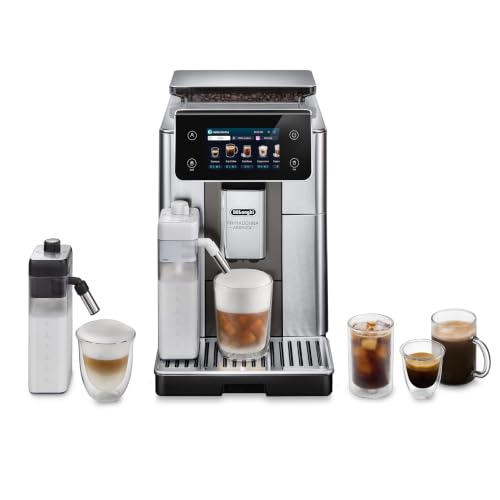
- De’Longhi PrimaDonna Aromatic — Check on Amazon
- Philips 5500 Series — Check on Amazon
Read the full guide ↓
Searching for the best espresso machines for less than 200 dollars is one of the most common ways people start shopping for home espresso — and it deserves a straight answer rather than a dressed-up one. That budget is a sensible target for several types of espresso maker, but the fully automatic machines in this guide, the kind with a built-in grinder and one-touch milk drinks, belong to a more expensive category of appliance. So this guide does two jobs: it explains honestly what a budget of that size usually buys in espresso, and it reviews the six verified automatic machines in our pool as the step-up options, so you can see precisely what extra the step up delivers and decide whether it is worth it to you.
That honesty matters because the alternative — pretending premium automatics are budget machines — helps nobody. What we can do is rank these six by value within their type: which gives the most useful features for the class, which keeps ownership simplest and cheapest to run, and which are splurges to buy only if your household will genuinely use their menus. Check each model’s current listing on Amazon before deciding, because listings and offers change, and a step-up purchase should always be made with the live listing in front of you rather than a number printed in a guide.
If your budget is absolutely firm, read the section later in this guide on what the under-200-dollar band normally buys, and treat these six machines as the comparison set for saving up or catching the right listing. If your budget has some flex — or you are deciding between a cheap machine now and a better one later — the reviews below will help, and our companion guide to Best Espresso Machines For Milk Frothing is worth reading too, because milk capability is one of the main things the step up actually buys.
Key Takeaways
- Fully automatic machines with built-in grinders are a step-up category; check each listing individually and do not assume one fits a 200-dollar budget.
- Within this list, the Philips 3300 is the best value step-up: iced and hot presets, LatteGo milk handling, and a ceramic grinder.
- The Magnifica Start is the simplest automatic here — three recipes and easy cleaning — and simplicity is where ownership costs stay lowest.
- The PrimaDonna Aromatic and Bosch Series 6 are splurges: buy them for menus and features your household will use weekly, not for spec-sheet bragging rights.
- A firm budget usually buys a simpler type of espresso maker; this guide explains what that trade involves so you can choose with open eyes.
- Running costs — beans, milk, descaler, and filters where used — belong in any budget calculation, not just the machine’s listing.
In this guide
Quick Picks
This table needs an honest introduction, because it works differently from most budget guides. The six machines below are the verified fully automatic models in our pool for this search — machines with built-in grinders and automatic milk frothing. Machines of this type are the step-up category in home espresso, and their listings should be checked individually: do not assume any fully automatic model sits inside a 200-dollar budget, because the type itself usually costs more than simpler espresso makers. What this guide does is show you exactly what the step up buys, which of these machines gives the most for the money within the type, and how to judge whether stretching is worth it for your household — or whether a simpler type of machine is the honest answer for a firm budget.
| Pick | Badge | Why it earns its place |
|---|---|---|
| Philips 3300 Series | Best Value Step-Up | Five hot and iced presets, a LatteGo milk system, and a ceramic grinder make it the most balanced step-up in this list. |
| Bosch Series 6 | Best Fully Loaded Option | Twenty-five drinks, XL to-go sizes, a cup warmer, and combined cleaning and descaling — the fullest feature set here. |
| De’Longhi Rivelia (Beige) | Best for Bean Variety | Swappable bean hoppers and eighteen recipes bring a premium idea to households split between regular and decaf. |
| De’Longhi Magnifica Start | Best Simple Automatic | Three one-touch recipes and an easy-to-clean design make it the simplest automatic machine in this guide. |
| De’Longhi PrimaDonna Aromatic | Best Premium Splurge | Thirty-eight one-touch recipes and hot and cold frothing make it the range-topping splurge of the list. |
| Philips 5500 Series | Best for Hot and Iced Variety | Twenty hot and iced presets, QuickStart, and LatteGo convenience for households that want variety without a long routine. |
How These Picks Were Chosen
The six machines here are the verified automatic models assigned to this guide from our researched pool, and we reviewed them exactly as their listings describe them: recipe menus, milk systems, grinder details where stated, controls, and cleaning programs. We did not invent prices for any of them, and this guide deliberately avoids printing figures for the machines themselves, because a budget guide that prints stale numbers misleads the very readers it claims to help. Instead, each review concentrates on the durable question a budget shopper should ask of a step-up machine: what does this model do that a cheaper type of machine cannot, and will my household use that difference often enough to justify it?
We also weighted ownership simplicity heavily, because budget shoppers feel running friction more than anyone. A machine whose milk system is easy to clean, whose descaling is combined into one program, or whose menu is short enough to need no learning, saves its owner time every single week — and time is a real cost. That is why the three-recipe Magnifica Start scores so respectably in this guide despite its short menu, and why the LatteGo models earn their places: they reduce the chores that make people abandon home espresso altogether, which is the worst financial outcome of all. Readers comparing the automatic route with workplace setups will find a useful parallel in our guide to Best Espresso Machines For Office, where total convenience is weighed the same way.
One more methodological note: this guide treats the 200-dollar figure in the keyword as a budget band to discuss, not as a claim about these six machines. Where the text talks about the band, it talks about the espresso market in general terms — the types of machine that band normally covers — without attaching invented prices to any specific product. That keeps the guide honest in both directions: it does not oversell the step-up machines, and it does not undersell what a careful budget shopper can achieve with a simpler machine and good beans.
Best Espresso Machines for Less Than 200 Dollars: The Honest Step-Up Shortlist
Read these reviews as a step-up shortlist. Each one states plainly what the machine adds over simpler espresso makers, where its value sits within the automatic category, and who should skip it — including, where relevant, who should stick with a simpler machine and a firm budget instead.

Philips 3300 Series
Badge: Best Value Step-Up
Strengths
- Five presets cover hot and iced drinks, so one machine serves the whole year instead of just the winter menu.
- The LatteGo milk system is designed for easy handling and cleaning, which keeps weekly ownership friction low.
- A ceramic grinder and adjustable strength and milk settings give real control without buying a separate grinder.
Trade-offs
- As an automatic with a grinder and LatteGo system, it sits in the step-up category — check the live listing rather than expecting a budget-band price.
- Five presets is a focused menu; households wanting a long specialty list should compare the PrimaDonna or Bosch.
- The milk container needs fridge space between uses, like any carafe-style system.
Key specs from the listing: Fully automatic espresso machine, model EP3341/50; LatteGo milk system; 5 hot and iced coffee presets; ceramic grinder; customizable coffee strength and milk settings; hot water function; 15 bars pump pressure. (Listing details as provided by Philips.)
If you are going to step up from a budget machine to an automatic, the Philips 3300 is where the step makes the most sense. It bundles the three upgrades that actually change daily life — a built-in ceramic grinder so you stop buying pre-ground coffee or a separate grinder, a LatteGo milk system that makes lattes and cappuccinos a one-touch routine with easy cleanup, and a preset list that includes iced drinks alongside hot ones — without piling on features you will never touch. In value terms, it is the point in this list where the automatic category’s real benefits are all present.
The adjustable strength and milk settings matter to a budget calculation in a way that is easy to miss: they let one machine satisfy different drinkers and different beans, which reduces the chance of the classic budget mistake — buying a cheap machine, disliking the results, and buying again within a year. A hot water function rounds out the kitchen usefulness for tea and longer drinks. Fifteen bars of pump pressure, as the listing states, is the standard working pressure class for this type of machine.
The honest caveat is the one that frames this whole guide: the 3300 is a step-up machine, and its live listing — not this page — is where you confirm what it currently costs and whether an offer brings it within reach of your plans. If the number you find is beyond a firm budget, the right move is to treat the 3300 as your save-up target rather than to buy a machine you will not enjoy. If you can stretch, this is the stretch we would make first.
Best for: budget shoppers ready to step up once, to a balanced automatic with hot and iced drinks and easy milk cleanup / Not suited for: anyone whose budget is firmly capped — check the live listing and consider simpler machine types if it sits above your band

Bosch Series 6
Badge: Best Fully Loaded Option
Strengths
- Twenty-five drinks with XL to-go sizing is the broadest offering here, useful for households with varied orders.
- Combined cleaning and descaling merges two periodic chores into one program.
- Instant-start and a cup warmer remove two small daily waits that add up across a year of mornings.
Trade-offs
- This is the most feature-loaded machine here, and its listing reflects that class; it is a deliberate splurge, not a budget buy.
- Its menu and to-go sizing are aimed at busy, varied households — a single espresso drinker pays for unused breadth.
- Stainless steel needs a wipe to stay looking its best.
Key specs from the listing: Fully automatic coffee and espresso machine, stainless steel; 25 drinks; XL to-go options; instant-start; 3.7-inch touchscreen; cup warmer; built-in grinder; combined cleaning and descaling program. (Listing details as provided by Bosch.)
The Bosch Series 6 is what the top of the step-up range looks like, and including it in a budget-minded guide is deliberate: it shows you the ceiling, so you can judge everything else against it. Twenty-five drinks, XL to-go sizes for travel cups, instant-start, a cup warmer, a 3.7-inch touchscreen, and combined cleaning and descaling make it the most complete household coffee station in this list. For a large household that would otherwise spend heavily at coffee shops every week, a machine like this can justify itself through sheer throughput — but that is a household-volume argument, not a budget argument.
Its value details are the thoughtful ones. Combined cleaning and descaling reduces the maintenance burden that grows with heavy use, and instant-start respects the reality that home machines work hardest in the rushed first hour of the day. The stainless steel body is built to look like a permanent kitchen fixture, which suits a machine bought as a long-term appliance rather than a trial.
For a shopper whose search began with a 200-dollar band, the Series 6 is best understood as the aspirational end of the comparison — the machine that defines what more money buys, so you can decide whether any of it matters to you. Most budget shoppers will conclude that a third of its menu would cover their lives, and that conclusion is exactly what this guide is for. If, on the other hand, your household fills travel cups daily and hosts often, the Bosch is the one machine here that will never feel undersized.
Best for: large, high-volume households that want the fullest feature set and will use it daily / Not suited for: budget shoppers generally; this is the ceiling of the range, not the value pick

De’Longhi Rivelia (Beige)
Badge: Best for Bean Variety
Strengths
- Removable, swappable bean hoppers solve the regular-versus-decaf problem that otherwise needs workarounds.
- Eighteen one-touch recipes is a generous menu for a household with mixed tastes.
- Four color options, including this beige, let the machine suit a kitchen rather than clash with it.
Trade-offs
- The hopper-swapping idea is premium thinking; households that drink one bean gain little from it.
- Eighteen recipes is more menu than a simple routine needs.
- Color choice is a genuine plus only if the current options suit your kitchen, so check the listing.
Key specs from the listing: Automatic espresso machine with grinder and milk frother, beige finish (one of 4 unique colors); removable bean hoppers; 18 one-touch recipes. (Listing details as provided by De’Longhi.)
The Rivelia earns its place in a value discussion for a specific household problem: two kinds of beans. If one person drinks regular and another drinks decaf, or you keep a weekend roast alongside a weekday blend, most automatic machines force you to empty the hopper and waste beans at every change. The Rivelia’s removable hoppers swap instead, which quietly saves beans, time, and irritation across years of ownership — a running-cost and convenience argument that matters to budget-minded households even though the machine itself is a premium design.
Around that idea, the Rivelia is a complete automatic: eighteen one-touch recipes, a built-in grinder, and an automatic milk frother, in a choice of four colors including this beige finish. Eighteen recipes covers the realistic home menu several times over, and the design-led approach means the machine is meant to live visibly on the counter, which any appliance at this level should be prepared to do.
The value question to ask yourself is narrow: will you actually swap hoppers? If your household drinks one bean, the Rivelia’s signature feature is worth little to you, and the simpler machines in this list deliver the same drinks with less to pay for. If bean variety is your household’s daily reality, the Rivelia stops being a splurge and becomes the machine that fits your life — and fitting your life is the only definition of value that survives contact with your kitchen.
Best for: households split between regular and decaf or two roasts, where wasted beans are a real running cost / Not suited for: single-bean households, which gain nothing from swappable hoppers

De’Longhi Magnifica Start
Badge: Best Simple Automatic
Strengths
- Three one-touch recipes means almost nothing to learn, which keeps the machine in daily use.
- The listing highlights an easy-to-clean design, and fewer systems mean fewer routines to maintain.
- Built-in grinder and automatic frother still deliver the full bean-to-cup upgrade over simpler machines.
Trade-offs
- Three recipes is a short menu — there is no iced specialty or cold foam option here.
- It is the simplest automatic in the guide, so it offers the least headroom if your tastes expand.
- Even as the simplest automatic, it belongs to the step-up category rather than the budget band; verify the current listing.
Key specs from the listing: Automatic espresso machine with milk frother, black finish; 3 one-touch recipes; built-in grinder; easy-to-clean design. (Listing details as provided by De’Longhi.)
The Magnifica Start is the budget shopper’s most natural landing spot within the automatic category. It strips the formula to its essentials — three one-touch recipes, a built-in grinder, an automatic milk frother, and a design the listing describes as easy to clean — and in doing so it keeps both the purchase and the ownership as simple as an automatic machine gets. For someone moving up from pods or a basic machine, the Start delivers the two upgrades that matter most, fresh-ground beans and real milk drinks, without charging you for menus and screens.
There is a genuine running-cost argument for simplicity too. Fewer systems mean fewer parts to clean, replace, or misunderstand, and a machine that stays in daily use because it asks for almost nothing is worth more than a feature-rich machine that gets quietly abandoned. The Start’s black finish and compact brief suit smaller kitchens, and its three-recipe focus matches the way most people actually drink coffee at home: a favorite drink, made well, on repeat.
Be clear about what you are not getting: no iced specialties, no cold foam, no personalization layer, and a menu you will fully explore in the first week. If your tastes grow, you will outgrow it — but many households’ tastes do not grow, and for them the Start is not a compromise at all. As with every machine here, confirm the current listing before buying; within this category, the Start is where we would send a value-first shopper to look first alongside the Philips 3300.
Best for: value-first buyers who want the simplest automatic ownership in this category / Not suited for: variety seekers who want iced drinks, cold foam, or a long menu

De’Longhi PrimaDonna Aromatic
Badge: Best Premium Splurge
Strengths
- Thirty-eight one-touch recipes is the longest menu in this guide by a wide margin.
- Hot and cold milk frothing covers everything from cappuccinos to cold-foam iced drinks in one machine.
- A touchscreen keeps a very long menu navigable instead of burying drinks behind button combinations.
Trade-offs
- Thirty-eight recipes is far more than most households will use, and this is the range-topper of the list.
- Hot and cold milk systems mean more parts in the daily rinse routine.
- Buy it only if a big, varied household will genuinely work through its menu.
Key specs from the listing: Fully automatic espresso machine; 38 one-touch recipes; hot and cold milk frother; built-in grinder; touchscreen display. (Listing details as provided by De’Longhi.)
The PrimaDonna Aromatic is the splurge at the top of this list, and a budget guide should say so without flinching. Thirty-eight one-touch recipes is more drinks than most cafés print on a board, the milk frother works hot and cold, and a touchscreen display keeps the whole menu usable. It exists for the household that wants one machine to be its entire coffee program — every drink, every season, every guest’s order — and is prepared to pay for that completeness.
Judged on those terms, it is coherent: the cold frothing turns it into a summer machine as well as a winter one, the built-in grinder keeps everything bean-to-cup, and the recipe count means nobody in the household has to compromise their order. Large families and enthusiastic hosts are the audience; for them, the per-drink economics of a heavily used premium machine can work out surprisingly well against café spending, which is the only honest way to frame its value.
For the shopper who arrived with a 200-dollar band in mind, though, the PrimaDonna’s role in this guide is as a reference point. It defines the far end of the automatic spectrum, and seeing it clearly helps you decide what you actually need — which for most households will be the 3300’s balance or the Start’s simplicity. If you do buy it, buy it because your household will genuinely use its menu every week, not because the number thirty-eight is impressive on a listing.
Best for: large families and hosts who want one machine to cover every drink, hot or cold / Not suited for: budget shoppers; it is the range-topper and should be bought only for heavy, varied use

Philips 5500 Series
Badge: Best for Hot and Iced Variety
Strengths
- Twenty hot and iced presets give wide variety in a machine designed around quick, easy routines.
- QuickStart shortens the path to the first drink of the day.
- LatteGo milk handling plus customizable strength, milk, and cup size balance convenience with control.
Trade-offs
- Twenty presets still sit within a premium automatic; budget shoppers should treat it as a save-up target, not an impulse buy.
- Customization options reward a little setup time in the first week.
- LatteGo parts need the same fridge-and-rinse routine as any milk carafe system.
Key specs from the listing: Fully automatic espresso machine, model EP5544/94; LatteGo milk system; 20 hot and iced coffee presets; customizable coffee strength, milk, and cup size; QuickStart; ceramic grinder; 15 bars pump pressure. (Listing details as provided by Philips.)
The Philips 5500 is the variety-lover’s step-up: twenty hot and iced presets, QuickStart for a faster first drink, the LatteGo milk system, and customization of strength, milk, and cup size on a ceramic-grinder platform rated in the listing at 15 bars. It sits above the 3300 in Philips’ own range logic — more presets, more adjustment — and for households whose members each have a different regular order, that breadth is the value proposition.
QuickStart deserves a mention in a value context because time is money in the morning too: a machine that is ready sooner gets used on rushed days, and a machine that gets used is the only kind that pays for itself. The LatteGo system keeps the milk side of a varied menu manageable, since a household making many different milk drinks will be rinsing and refilling often; a milk system designed for easy handling pays that household back weekly.
The decision between the 5500 and its smaller sibling is the classic step-up question: count the drinks your household will actually make from the twenty presets. If the answer is most of them, the 5500 is a fair buy and the more future-proof machine. If the answer is the same four drinks every week, the 3300 delivers those with money left over for beans — and in home espresso, the quality of your beans will do more for your cup than any extra preset ever will.
Best for: varied households that want twenty presets and quick starts without a complicated routine / Not suited for: households that make the same few drinks — the 3300 covers those for less within this category
Comparison Table
Compared side by side, these six are all fully automatic machines — the differences are menu size, milk design, and signature features. The table’s real use for a budget shopper is spotting which extras you would pay for and never use.
| Pick | Drink menu | Milk system | Stands out for | Listing |
|---|---|---|---|---|
| Philips 3300 Series | 5 hot and iced presets | LatteGo milk system | The balanced step-up: grinder, milk, and iced drinks in one | Check on Amazon |
| Bosch Series 6 | 25 drinks, including XL to-go sizes | Automatic milk system | The ceiling of the range: volume, warmer, combined cleaning | Check on Amazon |
| De’Longhi Rivelia (Beige) | 18 one-touch recipes | Automatic milk frother | Swappable hoppers that stop bean waste in mixed households | Check on Amazon |
| De’Longhi Magnifica Start | 3 one-touch recipes | Automatic milk frother | The simplest automatic ownership in the category | Check on Amazon |
| De’Longhi PrimaDonna Aromatic | 38 one-touch recipes | Hot and cold milk frother | The splurge: the longest menu and cold foam | Check on Amazon |
| Philips 5500 Series | 20 hot and iced presets | LatteGo milk system | Variety plus QuickStart for busy, mixed households | Check on Amazon |
How to Choose When Your Budget Is Tight: What 200 Dollars Usually Buys
Start by understanding the espresso market’s shape, because it explains this entire guide. At the budget end sit the simpler machine types: manual and semi-automatic pump machines where you grind separately or use pre-ground coffee, steam milk with a wand yourself, and learn a little technique; pod machines, which trade per-cup cost for convenience; and stovetop and portable makers at the simplest end. A budget around the band in this keyword normally shops among those types, and a careful buyer can drink genuinely good espresso from them — what the money does not usually buy is full automation: a built-in grinder, one-touch recipes, and automatic milk frothing in a single appliance. That combination is what the six machines in this guide are, and it is why they sit in a higher category.
So the first decision is type, not model. Ask what you are really buying the machine for. If it is the ritual — learning to tamp, steam, and pull a shot well — a simpler pump machine in budget is not a compromise at all; it is the right tool, and many enthusiasts prefer it. If it is weekday convenience for a household — different people, rushed mornings, milk drinks on demand — automation is the feature that matters, and the honest options are to stretch, to save toward a machine like the Philips 3300 or Magnifica Start, or to watch listings for the right moment. Our guide to Best Espresso Machines For Regular Home Production looks at the same automatic category from a daily-routine angle and can help you judge how much automation your household will actually use.
Second, count the whole cost of ownership before comparing sticker decisions. Any espresso setup spends money after purchase: beans, milk, descaling products, water filters where a model uses them, and replacement parts over the years. Pod systems invert the budget problem — a cheaper machine with expensive cups forever. Automatics use ordinary beans, which is one of their quiet financial strengths, but they ask for descaling and cleaning products and the occasional service over a long life. A machine that is simple to maintain, like the Start, or that combines its cleaning programs, like the Bosch, can be cheaper to own than its category suggests — and a machine abandoned in a cupboard is the most expensive outcome of all, whatever it cost.
Third, if you do step up, spend on the features that map to your household’s actual drinks and stop there. The value ladder in this guide is deliberate: the Start buys automation in its simplest form; the 3300 adds iced drinks, LatteGo convenience, and adjustment; the 5500 and Rivelia add breadth and bean flexibility; the Bosch and PrimaDonna add volume and completeness. Every step is legitimate for somebody and waste for somebody else. The discipline is to climb only as high as your weekly routine reaches — and to put whatever you save into fresh beans, which improve every cup from any machine on this page.
Finally, buy with your eyes open about listings. Prices and offers for appliances move — seasonally, and sometimes briefly — which is why this guide prints no machine prices and sends you to the live Amazon listing for each model instead. Check the listing for the exact model name and configuration, read what is included, and confirm the details there before you commit. Readers weighing a shared-space purchase as well as a home one may also find our guide to Best Espresso Machines For Small Business clarifying: it shows how the value calculation changes when a machine must serve customers, and why home buyers should not pay for capacity they will never use.
How to Get the Most From a Budget Espresso Setup
Whether you end up with a simpler machine in budget or one of the automatics above, the same habits decide whether your home espresso tastes like a bargain or a disappointment. The first habit is calibration: every machine, at every price, needs its first drinks treated as experiments. Adjust one thing at a time — strength or dose, then drink size, then milk texture — and take a week to converge on your settings instead of judging the machine on day one. Budget shoppers especially should resist concluding a machine is poor before its settings match their beans and taste.
- Set up the machine as its manual directs, run the first-use rinse, and fill it with fresh water and fresh beans you enjoy drinking.
- Pull several plain espressos, adjusting strength settings between them, until the basic shot tastes balanced to you.
- Make your household’s main milk drink and adjust the milk and coffee balance to taste; note the settings that work.
- Establish the daily routine from day one: rinse milk parts after use, refrigerate milk, and empty the drip tray and grounds container before they overflow.
- Put descaling in the calendar rather than relying on memory, and use the products the manufacturer specifies.
- Review your bean buying: a fresh, suitable roast improves any machine more than accessories do.
Bean economics deserve a paragraph in any budget guide. Whole beans bought sensibly — a roast you like, in quantities you will use while fresh — cost a fraction per cup of café drinks or pods, and they are the main running cost of an automatic machine. Medium and medium-dark roasts are the forgiving choice for built-in grinders, and storing beans sealed and away from heat keeps them tasting as they should. If your household drinks a lot of milk drinks, milk itself becomes a visible weekly cost too; that is normal, and it is still far below buying the same drinks out.
Water care is the other quiet budget protector. Hard water scales any espresso machine, and scale is what turns a good machine sluggish and eventually expensive. Use the machine’s cleaning and descaling programs when prompted — combined programs like the Bosch’s make this painless — and if your tap water is very hard, filtered water will stretch the intervals. Ten minutes of prevention on schedule is the cheapest maintenance strategy there is, at any purchase price.
Troubleshooting
Problem: Espresso tastes sour or bitter no matter the machine → change one variable at a time: try a different strength setting, then a fresher or different roast; beans cause more taste problems than machines do.
Problem: Milk drinks are costing more than expected at home → check portion sizes — automatic machines let you set drink and milk volumes, and right-sizing drinks to your cups stops milk waste without changing the taste.
Problem: The machine prompts for descaling very often → verify the water hardness setting if your model offers one, complete the full descaling program without interrupting it, and consider filtered water if your supply is very hard.
Step Up Now, or Buy in Budget? A Decision Framework
Here is the decision in its simplest form. Buy in budget, in a simpler machine type, if: your budget is genuinely firm, you drink mostly straight espresso or enjoy a hands-on routine, your household is one or two people, and you would rather spend the difference on beans. There is no failure in that choice — a well-chosen simple machine, used daily, beats a premium machine bought with resentment.
Step up to an automatic if: several people will use the machine, mornings are rushed, milk drinks are the daily order, and the machine will realistically make drinks every day for years. That usage pattern is what repays automation. The guides to Best Espresso Machines For Small Coffee Shop and Best Espresso Machines For Restaurants mark the far end of the same logic — machines bought for volume — and reading where your household sits on that spectrum is the fastest way to size your purchase honestly.
How to Shop the Listings Without Getting Burned
Because appliance listings change, shopping them well is a skill worth having. Always confirm the exact model name and number on the listing — Philips’ 3300 and 5500 and De’Longhi’s Start, Evo, and Duo lines are distinct machines, and similar names hide real differences in menus and milk systems. Check what the listing says is included, whether the configuration matches the description in this guide, and what the current terms are, all on the live page rather than in any summary — including ours.
Be equally careful with comparisons across types. A pump machine and an automatic machine with similar-looking numbers are different appliances doing different jobs, and the cheaper one is not automatically the better value if your household will not use it. The most reliable value test is boring and personal: picture next Tuesday morning, in your kitchen, with your household’s actual routine. The machine that fits that picture — in budget if one truly does, or as a deliberate step up if it does not — is the right buy, and every other consideration is commentary.
Common Buying Mistakes
The classic budget mistake is assuming a category fits your budget because a search box suggested it — which is how shoppers end up either disappointed by a listing’s reality or rushed into a stretch they had not planned. Decide your type and your ceiling first, then shop. The second mistake is the false economy of the abandoned machine: buying the cheapest option that does not make the drinks your household wants, and replacing it within a year. One right purchase is cheaper than two wrong ones, even when the right purchase means saving for longer.
The third mistake is ignoring running costs in both directions — forgetting descaler and filters on an automatic, or forgetting per-cup costs on a pod system — until the budget quietly leaks. The fourth is chasing menu size at the expense of fit: thirty-eight recipes do a two-drink household no good. And the fifth is judging any machine on its first day’s drinks. Settings, beans, and a short settling-in period transform results; give a new machine its calibration week before you conclude anything about its value.
Final Recommendation
Within the step-up category, the Philips 3300 Series is our recommendation for the budget-minded shopper: it concentrates the automatic upgrades that matter — grinder, LatteGo milk, hot and iced presets, real adjustability — into the most balanced package in this list.
Start with the Philips 3300 Series if you want the safest all-round choice from this list. It is the machine we would save toward or stretch to first, because it leaves the fewest reasons to buy again later.
If that first choice does not fit your kitchen, the De’Longhi Rivelia (Beige) is the alternative we would look at next. It offers eighteen recipes and solves the regular-and-decaf shuffle that wastes beans in mixed households — a genuine running-cost saving that suits a value-minded buyer whose home drinks two kinds of beans. Choose the Magnifica Start instead if you want the simplest automatic ownership, the Philips 5500 if your household wants twenty presets and QuickStart, and treat the Bosch Series 6 and PrimaDonna Aromatic as deliberate splurges for high-volume or variety-obsessed homes. And if your budget is truly firm, buy a simpler type of machine without apology — the best espresso machine is the one your household uses every day.
Frequently Asked Questions
Can I really buy a fully automatic espresso machine for less than 200 dollars?
Treat that expectation carefully. Fully automatic machines — built-in grinder, one-touch recipes, automatic milk frothing — form a higher category of appliance than the budget band in this keyword, and the six verified models in this guide are step-up machines. Check each live listing for its current position, and if your budget is firm, look at simpler machine types, which is what that band normally buys.
What type of espresso machine does a 200-dollar budget usually buy?
Generally, simpler types: manual or semi-automatic pump machines where you handle grinding or pre-ground coffee and steam milk yourself, pod machines with low machine cost but higher per-cup cost, and basic stovetop or portable makers. A careful buyer can make very good espresso with these — the trade is your time and technique instead of the machine’s automation.
Which machine in this guide is the best value step-up?
The Philips 3300 Series. It includes the upgrades that change daily life — a ceramic grinder, the LatteGo milk system, five hot and iced presets, and adjustable strength and milk — without charging for a long menu or premium extras. The Magnifica Start is the other value candidate, for buyers who prize the simplest possible ownership.
What running costs should I budget for with an automatic machine?
Beans and milk are the main weekly costs, plus descaling and cleaning products used on the machine’s schedule, and water filters if your model uses them. Bean-based machines are economical per cup compared with pods or cafés, but the honest budget includes these items from the start rather than discovering them later.
Is it better to buy a cheap machine now or save for an automatic?
It depends on your household’s routine. If one or two people drink mostly espresso and enjoy a hands-on process, a simpler machine now can be the right long-term buy. If several people want milk drinks on rushed mornings, a cheap machine that frustrates that routine often gets replaced — and one right purchase costs less than two wrong ones.
Why does this guide not print the machines’ prices?
Because appliance listings change frequently, and a printed figure in a budget guide becomes misinformation the moment it moves. Each review links to the model’s live Amazon listing, where you can see the current position and judge it against your budget with accurate information. That is slower than a printed number, but it is the only honest way to write a budget guide.
Do more recipes mean better value?
Only if your household drinks them. Recipe counts in this list run from three on the Magnifica Start to thirty-eight on the PrimaDonna Aromatic. Value lives in the overlap between the menu and your weekly routine — a machine whose drinks you use daily is good value at almost any tier, and one whose menu you scroll past every morning is not, whatever it cost.