Disclosure: topratedkitchenware.com is reader-supported. When you buy through links on our site, we may earn an affiliate commission from Amazon and other retailers, at no extra cost to you.
Where to buy
If you are shopping for the best espresso machines for regular home production, the six models below are the shortlist this guide is built around. Listings change often on Amazon, so use the links to check the current listing before you buy. Orders are placed on Amazon, and each listing there carries the full manufacturer detail for its model.
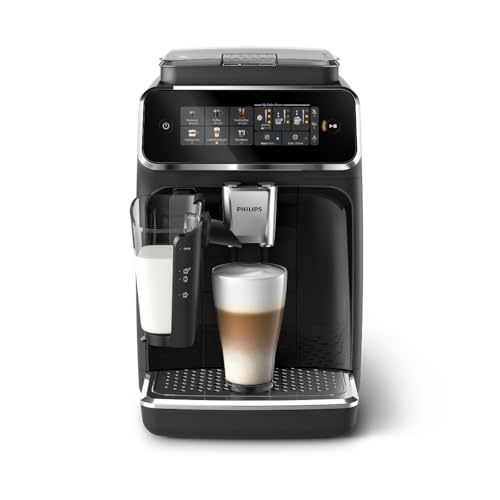
- Best Simple Daily Machine: Philips 2300 Series — Check on Amazon
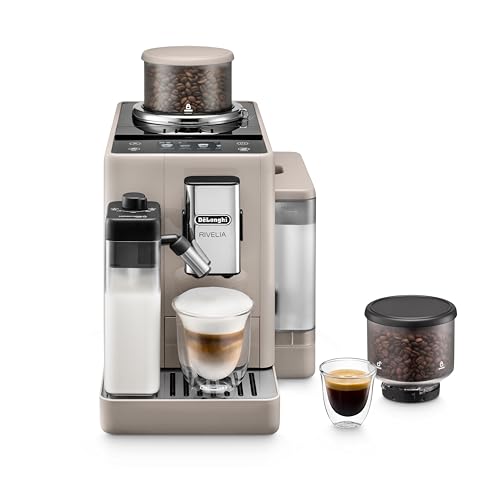
- De’Longhi Rivelia (White) — Check on Amazon
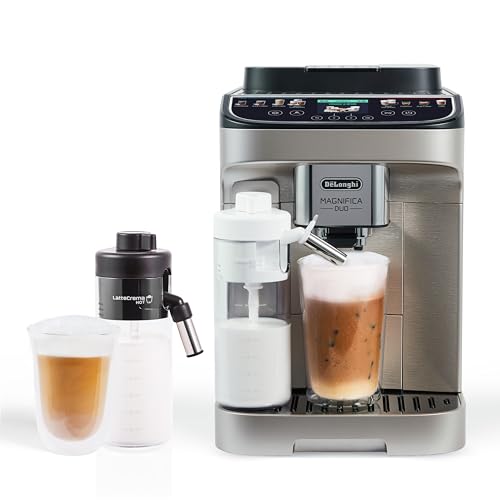
- De’Longhi Magnifica Duo — Check on Amazon
- De’Longhi Magnifica Evo — Check on Amazon
- Philips 3300 Series — Check on Amazon
- Bosch Series 6 — Check on Amazon
Read the full guide ↓
The best espresso machines for regular home production are chosen by a different test than machines for occasional use. When a machine makes drinks every day — two before work, one mid-morning, a decaf after dinner — its virtues are the ones that repeat well: a short, reliable routine, readiness when the household wakes, milk handling that takes two minutes rather than ten, and cleaning programs that arrive on a predictable rhythm and finish without drama. This guide applies that daily-production test to six fully automatic machines from Philips, De’Longhi, and Bosch, and ranks them by how gracefully they sustain a household’s everyday output.
Regular production also changes the economics and the expectations. A daily machine justifies itself quickly against café spending, but it also accumulates wear, scale, and grounds at a pace an occasional machine never sees — so descaling discipline, water care, and the design of the periodic cleaning programs matter here as core features, not fine print. Equally, a daily household’s tastes are usually settled: a handful of drinks made on rotation. Menus are therefore judged in this guide by how well they serve a repeating repertoire, with breadth valued only where a household’s daily orders genuinely vary.
Whether your production is one person’s three daily drinks or a family’s rolling service from dawn to evening, there is a right-sized machine below — from the three-preset Philips 2300 to the twenty-five-drink Bosch. Readers whose production is drifting toward serving people beyond the household should glance at our guide to Best Espresso Machines For Small Business to see where home duty ends; everyone else, start with the Quick Picks and then read the reviews of the two machines closest to your household’s daily count.
Key Takeaways
- Daily production rewards routine design over novelty: readiness, two-minute milk chores, and predictable cleaning programs.
- The Magnifica Duo is the best all-round daily producer here — twenty recipes, hot and cold frothing, and a touchscreen the whole household can run.
- The Philips 2300 offers the lightest daily routine in the guide: three presets and LatteGo milk handling for a settled repertoire.
- Two-bean households produce more happily on the Rivelia, whose swappable hoppers remove the daily regular-versus-decaf shuffle.
- Descaling and water care are production issues, not chores: the Bosch’s combined cleaning and descaling program shows the value of simplified periodic care.
- Count your household’s real daily drinks and buy the tier that covers them with a little headroom — no more.
In this guide
Quick Picks
“Regular home production” is a useful phrase because it names what actually wears a machine out and what actually makes it worthwhile: not the occasional weekend cappuccino, but drinks made every day, in a rhythm, by a household that depends on its machine the way it depends on its kettle. Judged on that duty, the six automatic machines below separate on routine design — how quickly they are ready, how painless the daily milk and grounds chores are, how the periodic cleaning is organized, and whether their menus match a household’s repeating orders rather than its occasional experiments. This table ranks them for daily production first.
| Pick | Badge | Why it earns its place |
|---|---|---|
| Philips 2300 Series | Best Simple Daily Machine | Three presets, a LatteGo milk system, and a ceramic grinder: the lowest-friction daily routine in this guide. |
| De’Longhi Rivelia (White) | Best for Two-Bean Households | Swappable hoppers keep a daily two-bean rhythm — regular mornings, decaf evenings — effortless across eighteen recipes. |
| De’Longhi Magnifica Duo | Best Overall | Twenty recipes and hot and cold frothing make it the complete daily driver for households with several regular orders. |
| De’Longhi Magnifica Evo | Best for a Personal Signature Drink | A saved signature drink turns the household’s most-made coffee into a single touch, every single day. |
| Philips 3300 Series | Best for Hot and Iced Daily Drinks | Five hot and iced presets with LatteGo convenience cover a daily routine that changes with the seasons. |
| Bosch Series 6 | Best for High-Volume Homes | Twenty-five drinks, instant-start, and combined cleaning and descaling for homes producing at near-café daily volume. |
How These Picks Were Chosen
This shortlist was assembled by comparing verified listings of fully automatic machines specifically on production-relevant attributes: the drink menu as it relates to a repeating repertoire, the milk system’s daily handling and cleaning design, readiness features where the listing states them, the grinder arrangement — including the Rivelia’s swappable hoppers for two-bean production — and the structure of each machine’s periodic cleaning and descaling. Machines requiring manual technique were excluded, because daily production by a whole household cannot depend on one person’s barista skills being available at 6 a.m.
We weighted the periodic-maintenance design more heavily than in a general guide, because regular production brings those cycles around often. A machine that merges cleaning and descaling into one program, or whose milk system is designed to come apart and wash simply, saves its household real time every month — and households keep up with maintenance that is easy, which is why ease here is a durability feature and not a luxury. The same production lens shapes our companion guide to Best Espresso Machines For Restaurants, where the duty cycle is harsher again and the same design questions decide which machines survive it.
As always in our guides, we print no prices and no scores, and we claim no specification a listing does not state. Production advice in the sections below — rhythms, routines, water care — is general guidance for this class of machine, while every model-specific statement traces to its verified listing. That separation matters for a purchase you will live with daily: decide on the verified facts about the machine, and use the routine guidance to picture your own mornings with it.
The 6 Best Espresso Machines for Regular Home Production
Each review assesses its machine as a daily producer: the rhythm it imposes, the repertoire it sustains, and the maintenance pattern that comes with real volume. Badges match the Quick Picks table.

Philips 2300 Series
Badge: Best Simple Daily Machine
Strengths
- Three presets mean the daily routine is one touch with no scrolling — the fastest possible path to a habitual drink.
- LatteGo milk handling keeps the daily milk chore as short and simple as this category offers.
- Ceramic grinder with adjustable strength and cup size lets a settled routine be tuned once and then simply repeated.
Trade-offs
- Three presets caps the repertoire — households whose daily orders diversify will feel it within months.
- Its production pace suits a household, not a crowd: back-to-back drinks for many guests will keep it busy.
- Simpler customization than the 3300 and 5500 for drinkers who like to fine-tune.
Key specs from the listing: Fully automatic espresso machine, model EP2330/14; LatteGo milk system; 3 coffee presets; ceramic grinder; customizable coffee strength and cup size; hot water function; 15-bar pressure. (Listing details as provided by Philips.)
The Philips 2300 leads this guide because regular production, honestly examined, is usually a small repertoire repeated faithfully — and no machine here serves that pattern with less friction. Three presets cover the standing orders, the LatteGo system keeps the milk side of the daily routine to its simplest form, and the ceramic grinder with adjustable strength and cup size means the few drinks it makes can be tuned exactly once and then produced identically for months. There is no menu to scroll at 6 a.m., nothing to configure, and almost nothing to teach a partner or a teenager.
Production virtues compound daily. A short routine is a routine that survives tired mornings and busy ones; the machine gets used for the mid-morning drink and the afternoon drink, not just the ceremonial first one, because each use costs almost no effort or cleanup. The hot water function extends the same station to tea without another appliance, which in a production kitchen — where the counter is a workspace — is worth real estate.
The limits are the honest price of focus. Three presets is a ceiling a diversifying household will reach, and the 2300’s pace is household pace: it will produce a family’s drinks happily and a party’s drinks slowly. Buy it when your production is genuinely a settled repertoire for one or two main drinkers, and it may be the most satisfying machine in this guide per unit of attention it asks. Households whose repertoire is still expanding should start one tier up, with the 3300 below.
Best for: one or two drinkers with a settled repertoire who want the lightest daily routine in this guide / Not suited for: households whose repertoire is expanding or who entertain with varied drinks often

De’Longhi Rivelia (White)
Badge: Best for Two-Bean Households
Strengths
- Swappable bean hoppers turn a twice-daily bean change into a few seconds, which is what two-bean production actually needs.
- Eighteen one-touch recipes sustain a varied daily repertoire without flagship complexity.
- The white finish and design-led build suit a machine that lives permanently on the counter, as daily producers do.
Trade-offs
- The spare hopper needs storage, and the swapping habit must be shared by everyone in the household.
- Hot-milk frothing only, so a daily iced habit is better served by the Duo or the Philips models.
- Eighteen recipes is generous for production, but the flagship Bosch still out-scales it for very large households.
Key specs from the listing: Automatic espresso machine with milk frother, white finish (one of 4 unique colors); removable bean hoppers; 18 one-touch recipes; built-in grinder. (Listing details as provided by De’Longhi.)
Daily production in a two-bean household has a hidden tax: the bean change. Regular in the morning, decaf in the evening, perhaps a special roast on weekends — on a normal automatic, every change means scooping, waste, and a drink or two of mixed beans. Multiplied by every day of the year, that tax is the largest friction in two-bean production, and the Rivelia’s removable, swappable hoppers abolish it. Each bean keeps its hopper; production switches in seconds; both repertoires stay fresh-ground. For the household that lives this rhythm, the feature is not a luxury — it is the machine’s whole point, and it delivers it mechanically and reliably.
Around that idea, the Rivelia produces like a complete modern automatic: eighteen one-touch recipes sustain a genuinely varied daily repertoire, the automatic frother handles the milk drinks that dominate most households’ production, and the built-in grinder serves both hoppers equally. This white version is the finish that suits bright kitchens, and a daily producer — permanently resident on the counter — should be a machine the household enjoys seeing.
Weigh the standard caveats: the frother is hot-milk focused, so a household whose daily production includes cold-foam iced drinks should look at the Duo; the spare hopper needs a cupboard; and one-bean households gain nothing here at all. But judged as production equipment for its intended household, the white Rivelia removes the single most repeated friction in its class — and in regular production, removing a daily friction beats adding a weekly feature every time.
Best for: two-bean households producing regular drinks by day and decaf by night / Not suited for: single-bean households and cold-foam devotees, who should look at the Duo or Philips models

De’Longhi Magnifica Duo
Badge: Best Overall
Strengths
- Twenty one-touch recipes sustain several household members’ different daily orders from one machine.
- Hot and cold milk frothing keeps daily production running through summer without a second appliance.
- A touchscreen keeps a twenty-drink repertoire fast to navigate at production pace, even half-awake.
Trade-offs
- Breadth beyond a household’s repertoire is menu you scroll past daily; buy it for real variety, not potential variety.
- Hot and cold milk capability adds parts to the daily rinse, which at production pace must stay disciplined.
- Touchscreen control is the only interface style here, which not every household prefers.
Key specs from the listing: Automatic espresso machine with milk frother, silver finish; 20 one-touch recipes; hot and cold milk frother; built-in grinder; touchscreen display. (Listing details as provided by De’Longhi.)
The Magnifica Duo is the complete daily driver for households whose production is both regular and varied — several people, several standing orders, drinks from morning to evening. Twenty one-touch recipes behind a touchscreen means every member’s usual is present and reachable in seconds, and the hot-and-cold milk frother keeps the same production line running in January and July alike. That all-season, all-household coverage is what earns it Best Overall in a production guide: it is the machine least likely to be supplemented, worked around, or replaced as the household’s habits evolve.
Production is also about the hundredth drink tasting like the first, and the Duo’s design supports that consistency: one-touch recipes remove technique variance between household members, the built-in grinder keeps the input fresh, and the touchscreen makes the correct drink the easy drink to select, which quietly prevents the wrong-drink waste that creeps into busy kitchens. Guests slot into the same system without instruction, which matters in homes where production includes hospitality.
Its costs are the costs of completeness. The milk system has more in its daily rinse than the simplest models, and twenty recipes is breadth a two-drink household will never touch. Production discipline — rinse, refrigerate, empty, descale on prompt — is the household’s side of the bargain. Households that keep that side will find the Duo sustains a heavy, happy daily output for years; households that want the lightest possible routine should take the 2300’s focus instead, and high-volume homes should compare the Bosch below.
Best for: households with several members’ standing orders and an all-season milk-drink habit / Not suited for: households wanting the lightest possible routine — the 2300 asks less of its owners

De’Longhi Magnifica Evo
Badge: Best for a Personal Signature Drink
Strengths
- The signature-drink feature collapses the household’s most-produced drink into one touch, saved exactly as its drinker likes it.
- Seven one-touch recipes cover a settled daily repertoire without menu overhead.
- A complete automatic package sized for households whose production centers on one or two main drinkers.
Trade-offs
- Seven recipes is a settled repertoire only — a diversifying household will outgrow it.
- Personalization centers on one signature drink rather than profiles for the whole household.
- Silver finish only in this listing.
Key specs from the listing: Automatic espresso machine with milk frother, silver finish; 7 one-touch recipes; built-in grinder; craft a personalized signature drink feature. (Listing details as provided by De’Longhi.)
Regular production often revolves around one drink made more than all others combined — and the Magnifica Evo is the only machine here that builds its identity around that fact. Its signature-drink feature lets the household’s main drinker craft their exact coffee — strength, size, milk — and save it, so the most-produced drink in the house becomes a single touch, identical every morning, with no settings repeated and no variation introduced by a half-awake hand. Across a year of daily production, that saved order is used more than every other feature on the machine combined.
The Evo’s seven one-touch recipes form the supporting repertoire: the partner’s drink, the weekend variation, the guest’s cappuccino. The built-in grinder and automatic frother keep everything bean-to-cup and technique-free, and the machine’s focused scale suits households whose production is steady but centered on one or two people. It is, in production terms, a specialist tool for a repertoire with a clear headline act.
Its boundaries follow from that specialization. A household whose production is genuinely democratic — four people, four different daily drinks, all equally weighted — will find seven recipes and one signature profile a tight fit, and should look at the Duo or the Bosch. And like every model here, the Evo rewards the standard production disciplines of rinsing and descaling on schedule. But for the very common household pattern it targets, the Evo’s proposition is quietly excellent: it optimizes the drink you actually produce most.
Best for: households whose production centers on one main drinker’s exact daily drink / Not suited for: democratic households where several drinkers each want equal personalization


Philips 3300 Series
Badge: Best for Hot and Iced Daily Drinks
Strengths
- Five hot and iced presets match a daily repertoire that rotates with the weather, served through the LatteGo system.
- Customizable strength and milk settings let the household tune its standing orders precisely, then repeat them.
- Ceramic grinder and a hot water function round out a practical, everyday feature set.
Trade-offs
- Five presets is a mid-sized repertoire; households wanting a long menu should compare the Duo or Bosch.
- The first week of production involves dialing in settings before the routine becomes automatic.
- LatteGo’s container needs its fridge shelf, as with any milk carafe system.
Key specs from the listing: Fully automatic espresso machine, model EP3341/50; LatteGo milk system; 5 hot and iced coffee presets; ceramic grinder; customizable coffee strength and milk settings; hot water function; 15 bars pump pressure. (Listing details as provided by Philips.)
The Philips 3300 fits the household whose daily production rotates with the seasons: hot drinks through the cold months, iced drinks through the warm ones, all from five presets served by the LatteGo milk system. That hot-and-iced coverage in a mid-sized menu is a production virtue — the machine’s output matches the household’s year without seasonal workarounds — and LatteGo’s handling simplicity keeps the milk side of daily output to a short rinse-and-refrigerate rhythm that a busy household can genuinely sustain.
The adjustment set is the other production strength. Customizable strength and milk settings let the household tune its standing orders during the first week — this person’s stronger latte, that person’s milder one — and then produce them consistently, while the ceramic grinder and hot water function keep the platform practical for everything from a small espresso to tea. Fifteen bars of pump pressure, per the listing, is the standard class for these machines.
Five presets will feel like a ceiling to households whose repertoire keeps growing, and they should compare the Duo’s twenty recipes or the Bosch’s twenty-five before buying. The 3300 also asks for that first calibration week rather than offering a saved signature shortcut. But for the household whose production is a handful of beloved drinks, varying mainly between hot and iced, the 3300 is the most precisely aimed machine in this guide — and precise aim, in daily production, is what satisfaction is made of. Households at the boutique end of home production may also enjoy our guide to Best Espresso Machines For Your Registry, which approaches the same machines as long-term household investments.
Best for: households whose daily repertoire rotates between hot drinks and iced drinks with the seasons / Not suited for: variety seekers who want a long menu to explore beyond a standing repertoire

Bosch Series 6
Badge: Best for High-Volume Homes
Strengths
- Twenty-five drinks with XL to-go options sustain the highest daily volume and variety in this guide.
- Instant-start removes the readiness wait from the production line’s busiest moment.
- Combined cleaning and descaling simplifies the periodic care that frequent production brings around often.
Trade-offs
- It is the largest commitment here in features and upkeep, justified only by genuinely high daily volume.
- A small household will use a fraction of its twenty-five drinks and none of its to-go sizing.
- Stainless steel asks for regular wiping to look its best at a busy station.
Key specs from the listing: Fully automatic coffee and espresso machine, stainless steel; 25 drinks; XL to-go options; instant-start; 3.7-inch touchscreen; cup warmer; built-in grinder; combined cleaning and descaling program. (Listing details as provided by Bosch.)
The Bosch Series 6 is the production ceiling of this guide: twenty-five drinks, XL to-go sizing, instant-start, a cup warmer, and combined cleaning and descaling, in a stainless steel machine built for households whose daily output approaches a small café’s. Its natural home is the large family, the house with adult children and frequent guests, the commuter household filling travel cups at dawn — anywhere the morning peak is a genuine production run rather than a drink or two.
Two features show production thinking. Instant-start attacks the peak directly: the line starts moving when the household wakes, not minutes later. And the combined cleaning and descaling program acknowledges the arithmetic of volume — a machine producing at this rate meets its periodic maintenance often, so merging two programs into one routine is a recurring time saving and, just as importantly, makes the maintenance likelier to happen on schedule. The cup warmer completes the station: at production pace, warm cups stop being a nicety and become part of consistent output.
The discipline this guide applies to every model applies most to the Bosch: buy it for volume you actually produce. A quiet household will scroll past most of its menu daily, never fill a to-go cup, and carry its upkeep for nothing. But where the volume is real, no other machine here sustains it as completely — and in regular home production, the right machine is always the one sized to the household’s true daily count.
Best for: large, high-volume households filling travel cups and hosting often / Not suited for: small, quiet households that would use a fraction of its capacity and menu
Comparison Table
Compare these six as production equipment: repertoire size against your standing orders, milk handling against your daily drinks, and the maintenance design your household will actually keep up with at volume.
| Pick | Drink menu | Milk system | Stands out for | Listing |
|---|---|---|---|---|
| Philips 2300 Series | 3 coffee presets | LatteGo milk system | The lightest daily routine for a settled repertoire | Check on Amazon |
| De’Longhi Rivelia (White) | 18 one-touch recipes | Automatic milk frother | Two-bean production without the daily bean-change tax | Check on Amazon |
| De’Longhi Magnifica Duo | 20 one-touch recipes | Hot and cold milk frother | Complete all-season production for varied households | Check on Amazon |
| De’Longhi Magnifica Evo | 7 one-touch recipes plus a saved signature drink | Automatic milk frother | The most-produced drink in the house, in one touch | Check on Amazon |
| Philips 3300 Series | 5 hot and iced presets | LatteGo milk system | A repertoire that rotates with the seasons | Check on Amazon |
| Bosch Series 6 | 25 drinks, including XL to-go sizes | Automatic milk system | Highest daily volume, with combined cleaning and descaling | Check on Amazon |
How to Choose an Espresso Machine for Regular Home Production
Start by counting, because production decisions made on guesses go wrong in both directions. For one week, tally your household’s drinks: how many per day, at what times, which drinks, whose they are, and whether the count changes on weekends. Most households discover a pattern — a morning peak, a small repertoire of three to five drinks, one or two outliers. That tally is your specification. The Philips 2300 exists for tallies that are small and settled; the Bosch exists for tallies that are large and peaked; the Duo, Rivelia, Evo, and 3300 divide the middle by repertoire style — varied, two-bean, signature-centered, or seasonal. Buy the tier your tally describes, with modest headroom for guests.
Next, audit the routine, not the brochure. Daily production means the milk system is handled daily: filled, rinsed, refrigerated, washed. It means grounds and drip trays cycle at your tally’s pace, and descaling arrives on your water’s schedule, hastened by volume. Read each candidate’s maintenance design with your tally in hand — LatteGo’s handling simplicity, the Bosch’s combined programs — and choose the machine whose routine your household can sustain on its worst week, not its best. A production machine’s real lifespan is set less by its build than by whether its care rhythm fits the household performing it. Our guide to Best Espresso Machines For Third Wave Cafes shows the same principle at professional intensity, where maintenance design is quite literally a business decision.
Beans and water are the production inputs, and both reward system thinking. A two-bean household should seriously weigh the Rivelia’s hoppers, because the daily bean change is the most repeated friction in its class; a one-bean household should ignore them entirely. Water hardness quietly sets your descaling tempo: know yours, set the machine accordingly where it offers a hardness setting, and consider filtered water if your supply is hard — at production volumes, scale management is the difference between a machine that ages gracefully and one that fades. Budget beans as a standing grocery item in rhythm with your tally, stored sealed and fresh.
Finally, think about who produces. If one person makes most drinks, personalization features like the Evo’s signature drink concentrate value exactly where production happens. If production is democratic, interface clarity — the Duo’s and Bosch’s touchscreens — matters more, because every producer must succeed unaided, including guests. And if production includes people beyond the household on any regular basis, pause: you may be drifting from home production toward small-scale service, where our guide to Best Espresso Machines For Small Coffee Shop becomes the more honest comparison. Staying in the right category is the last and most valuable production decision.
How to Run a Smooth Daily Coffee Production Routine at Home
Daily production runs on rhythm, and rhythm is built in the first fortnight. Set the machine up as its manual directs, calibrate your household’s standing orders — strength, size, milk balance — and write the resulting settings somewhere the household can see them, so production does not depend on one person’s memory. Then assign the small recurring jobs explicitly: who fills water and beans, who owns the milk system’s wash day, who runs descaling when it prompts. In production households, named jobs happen; hoped-for jobs drift, and drift is what makes a good machine slowly unpleasant.
- Set up and rinse the machine per its manual, then calibrate each standing order and note the settings that the household agrees taste right.
- Establish the nightly reset: water filled, beans checked, milk container refrigerated, drip tray and grounds emptied if near full, cups staged for the morning.
- Run the morning production in a fixed order — first drinks first, milk drinks with their rinse straight after — so the routine survives half-awake execution.
- Keep a small stock buffer: beans for the coming week, milk in rhythm with the tally, and the manufacturer’s descaling and cleaning products in the cupboard.
- On the weekly wash day, wash the milk-system parts the manual specifies, wipe the dispensing area, and check the bean and water supplies for the week ahead.
- When the machine prompts for cleaning or descaling, run the full program the same day rather than deferring it into the production schedule.
Water discipline deserves emphasis at production volumes. Every litre through the machine carries your tap water’s mineral content with it, and scale accumulates in proportion to production — daily machines simply meet descaling sooner than occasional ones, which is normal and planned for. Use the machine’s prompts as the schedule, complete programs fully so counters reset properly, and if your water is very hard, filtered water is a genuine production investment: it stretches intervals and keeps temperatures and flow where the machine designed them to be.
Finally, review the production quarterly. Compare the tally with reality: has the repertoire grown into a bigger tier’s menu, or settled into a smaller one’s focus? Are beans being bought in rhythm, or are stale beans quietly taxing every drink? Is the signature drink still the household’s most-made order? A five-minute review keeps the machine, the supplies, and the household’s habits aligned — and alignment, sustained over years, is the whole secret of happy regular production.
Troubleshooting
Problem: Drinks gradually taste less bright over months of daily use → check the unglamorous first: bean freshness and storage, then whether descaling is due — at production volumes, scale and stale beans explain most slow declines, and both are cheap to fix.
Problem: The morning peak feels slow even though the machine is capable → use the nightly reset so the first drink needs no setup, and if your model offers faster readiness features, enable them; production bottlenecks are usually preparation, not brewing.
Problem: Maintenance prompts keep interrupting busy days → shift the rhythm, not the maintenance: run wash-day tasks on the household’s quietest day, keep products stocked so programs start immediately, and never skip a cycle — deferred care returns as longer downtime later.
The Arithmetic of Daily Production: Machine, Beans, and Time
Regular production is where home espresso’s economics become undeniable. A household producing several drinks daily spends, per drink, the cost of beans and milk — a small fraction of a café equivalent — and the machine’s purchase spreads thinner with every month of faithful service. But the honest ledger includes time and upkeep: minutes of daily routine, periodic programs, descaler and beans as standing costs. That is why this guide ranks routine design alongside capability — in production, a machine that saves two minutes a day returns weeks of time across its life, which is a real part of its value.
The same arithmetic explains right-sizing. A flagship’s cost per drink only becomes small at high volumes; a focused machine’s stays small at modest ones. Neither is the better buy in the abstract — the tally decides. Households that run their numbers before buying almost always end up satisfied, because they purchased a production tool matched to measured work, and matched tools are the ones still producing happily years later.
When Home Production Outgrows Home Machines
There is a recognizable moment in some households: the machine is producing for book clubs, team gatherings, a home business’s clients, a steady stream of guests who arrive expecting coffee. At that point the honest question changes — it is no longer which home machine, but whether the duty has become service. Signs include queues at your own counter, milk and bean consumption at commercial rhythm, and a machine whose maintenance can never catch up with its use.
Nothing about that moment is a failure; it is production succeeding. The guides to Best Espresso Machines For Small Business and Best Espresso Machines For Restaurants map the territory beyond it, where duty cycles, capacity, and service expectations are specified differently. Most households will never need them — a right-sized machine from this guide will carry years of family production — but recognizing the boundary keeps you from asking a home machine to do a café’s job, and from blaming it when the job wins.
Common Buying Mistakes
The first production mistake is buying for the repertoire you imagine rather than the tally you counted — menus sized for variety a household never orders, or a focused machine bought by a household whose orders diversify within a year. Count first. The second is treating maintenance as an interruption instead of part of production: at daily volumes, descaling and milk-system washing are scheduled operations, and households that plan them keep their machines; households that resent them lose them slowly.
The third mistake is input neglect — stale beans, hard water unmanaged, milk routines drifting — followed by blaming the machine for declining output that its inputs caused. The fourth is single-person dependency: production that only one household member understands collapses the first time that person travels. Share the settings, name the jobs, post the routine. And the fifth is ignoring the peak: a machine adequate across a day can still fail a household every morning at eight o’clock, which is the failure everyone remembers. Size for the peak, maintain for the volume, and production takes care of itself.
Final Recommendation
For regular home production across a typical varied household, our recommendation is the De’Longhi Magnifica Duo: twenty recipes, hot and cold frothing, and a touchscreen production line that every member of the household can run, all year round.
Start with the Philips 2300 Series if you want the safest all-round choice from this list. It sustains the widest range of standing orders without technique, workarounds, or seasonal supplements — which is the definition of a daily driver.
If that first choice does not fit your kitchen, the Philips 2300 Series is the alternative we would look at next. It trades breadth for the lightest routine in this guide — three presets and LatteGo milk handling — and for a household whose tally is small and settled, that trade produces more satisfaction per day than any menu could. Choose the Rivelia in white if your production runs on two beans, the Evo if one signature drink dominates your tally, the Philips 3300 if your repertoire rotates hot-to-iced with the seasons, and the Bosch Series 6 if your household’s daily volume genuinely approaches a small café’s.
Frequently Asked Questions
What does “regular home production” mean when choosing a machine?
It means judging the machine by daily, repeated use rather than occasional drinks: how fast and simple its routine is, how its milk system handles daily rinsing, how predictable its cleaning and descaling rhythm is, and whether its menu matches the handful of drinks your household makes on rotation. This guide applies that test to all six models.
How many drinks a day can these machines handle?
All six are household machines designed for daily family use — multiple drinks a day is their normal duty. Exact capacity varies by model and is best confirmed on the live listing for the model you choose. Households producing at near-commercial volume should look at the Bosch Series 6 in this guide and consider whether their duty has outgrown the home category altogether.
Which machine has the easiest daily routine?
The Philips 2300. Three presets, the LatteGo milk system, and a ceramic grinder give a settled household a one-touch routine with the least to clean, configure, or teach. The Magnifica Evo is the other low-friction option where one person’s saved signature drink dominates production.
How often will a daily machine need descaling?
It depends on your water hardness and your volume — daily production brings the prompt around sooner than occasional use, which is normal. Run the full program when the machine asks, using the manufacturer’s specified products; the Bosch in this guide combines cleaning and descaling into a single program, which simplifies exactly this recurring job.
We drink regular coffee in the morning and decaf at night. Which machine fits?
The De’Longhi Rivelia, in this guide’s white version. Its removable bean hoppers swap between regular and decaf in seconds, so both parts of your daily production are fresh-ground with no scooping or waste. On other machines, that twice-daily bean change is the biggest friction in two-bean production.
Is a bigger menu better for daily production?
Only where the menu overlaps your standing orders. Production households repeat a small repertoire; a twenty-five-drink menu earns its place in large, varied households, while a three-preset machine can be the perfect producer for a settled one. Count your household’s actual drinks for a week and let that tally size your machine.
What is the most important habit for keeping a daily machine performing?
Keeping its care rhythm: rinse the milk system after milk drinks, empty grounds and drip tray before they demand it, and descale on prompt without deferring. Add fresh beans stored properly and attention to your water, and a daily machine will produce its hundredth drink of the month tasting like its first.