Disclosure: topratedkitchenware.com is reader-supported. When you buy through links on our site, we may earn an affiliate commission from Amazon and other retailers, at no extra cost to you.
Where to buy
If you are shopping for the best espresso machines no portafilter required, the six fully automatic models below are the shortlist this guide is built around. Every one of them grinds, doses, tamps internally and brews without a portafilter, a basket or a knock box — you add beans and water, press for your drink, and the machine handles the rest. Check the current Amazon listing for full manufacturer detail before you buy.
- Best Overall No-Portafilter Machine: De’Longhi PrimaDonna Aromatic — Check on Amazon
- Philips 5500 Series — Check on Amazon
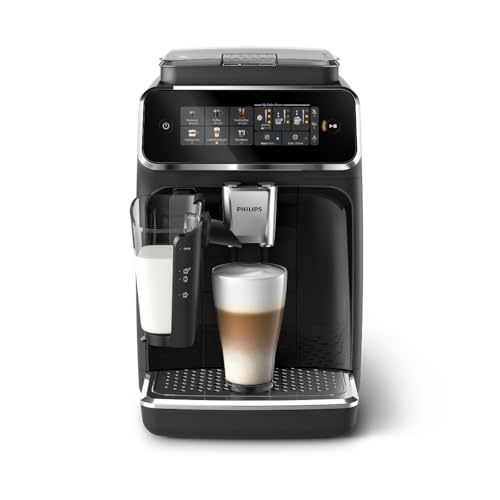
- Philips 2300 Series — Check on Amazon
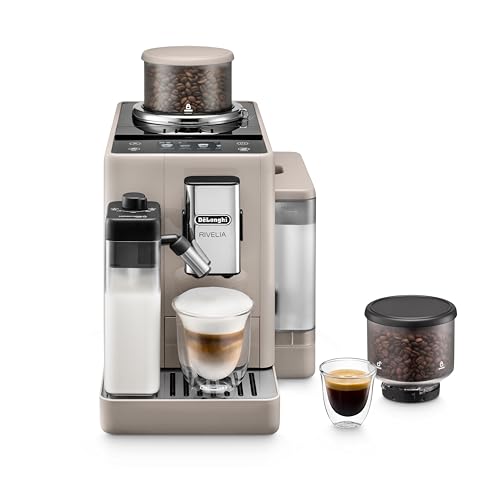
- De’Longhi Rivelia (White) — Check on Amazon
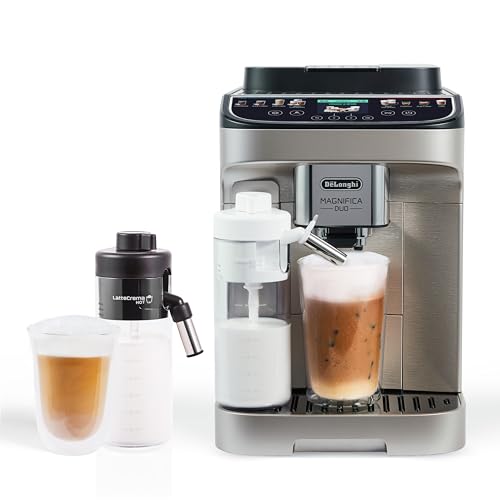
- De’Longhi Magnifica Duo — Check on Amazon
- De’Longhi Magnifica Evo — Check on Amazon
Read the full guide ↓
The best espresso machines no portafilter households choose all belong to one category with a plain name: fully automatic, or bean-to-cup, machines. The portafilter — the handled basket a barista fills with ground coffee, tamps, locks into a group head and knocks out afterwards — is the defining tool of traditional espresso, and everything about the traditional ritual flows from it: the dosing, the distribution, the tamp, the skill, the mess, the accessories, the learning curve. A no-portafilter machine removes the tool and internalises the whole sequence. Beans sit in a hopper; the machine grinds a dose, compacts it inside its own brew unit, forces hot water through it, and deposits the spent puck in an internal container you empty every so often. Milk, where the drink needs it, is frothed by the machine’s own system. Your part is choosing the drink.
People arrive at this category from two opposite directions, and both are right. Some are leaving the portafilter behind: they owned the manual machine, learned that their weekday self does not want to dose and tamp at 7 a.m., and want the drinks without the ritual. Others never wanted the ritual at all — they want café drinks at home, made by anyone in the household, with a counter that holds one machine instead of a machine plus a grinder plus a tamping station plus a knock box. For both, the honest trade is the same, and this guide states it in every review: you give up manual control — no per-shot adjustment, no hand-textured milk, no latte art of your own pouring — and you receive consistency, speed, inclusiveness and a radically simpler counter and cleaning life.
The six machines span what the category offers once the portafilter is gone. The PrimaDonna leads with thirty-eight recipes and hot and cold frothing — proof that removing the handle does not mean removing the menu. The Philips 5500 and 2300 bring ceramic grinders, 15-bar brewing and the LatteGo milk system, at twenty-preset and three-preset scales. The Rivelia adds the category’s cleverest bean trick, removable hoppers for two coffees in one machine. The Magnifica Duo covers twenty recipes with a touchscreen, and the Evo saves a personalised signature drink. What none of them requires is a single accessory, a single lesson or a single tamp — that is the point of the list, and of the keyword.
Community discussion of this category — the threads gathered under searches like Best Espresso Machines Reddit — tends to polarise between ritualists who call automatics soulless and owners who call them liberating. This guide’s position is the owner’s, with the ritualist’s honesty about control kept intact: if the process is your hobby, keep the portafilter and read the guides written for that world, such as Best Espresso Machines Rancilio Silvia. If the drink is your hobby, read on — this is your category, ranked.
Key Takeaways
- No portafilter means fully automatic: the machine grinds, doses, compacts and brews internally; you empty a grounds container instead of knocking out a basket.
- The PrimaDonna leads the category with 38 one-touch recipes and hot and cold frothing — the fullest menu without a handle.
- Philips models add ceramic grinders, 15-bar brewing and LatteGo, the easiest milk cleaning in the bean-to-cup world.
- The Rivelia’s removable hoppers solve the two-bean problem — regular and decaf, or two roasts — that fixed-hopper automatics cannot.
- The trade is control for consistency: no manual extraction adjustment or hand-poured art, in exchange for identical drinks by anyone, in about the time a kettle boils.
- Counter and cleaning simplify together: one machine replaces a manual setup’s grinder, tamping station and knock box.
In this guide
Quick Picks
| Pick | Badge | Why it leads without a portafilter | Link |
|---|---|---|---|
| De’Longhi PrimaDonna Aromatic | Best Overall No-Portafilter Machine | 38 recipes, hot and cold frother, touchscreen — the fullest bean-to-cup menu | Check on Amazon |
| Philips 5500 Series | Best for Customised Drinks | 20 presets, adjustable strength/milk/cup size, LatteGo, QuickStart | Check on Amazon |
| Philips 2300 Series | Best Simple Bean-to-Cup | 3 presets, LatteGo, ceramic grinder, 15-bar, hot water | Check on Amazon |
| De’Longhi Rivelia (White) | Best for Two Beans | Removable hoppers, 18 recipes — two coffees, one portafilter-free machine | Check on Amazon |
| De’Longhi Magnifica Duo | Best All-Round Menu | 20 recipes, hot and cold frother, touchscreen balance of breadth and ease | Check on Amazon |
| De’Longhi Magnifica Evo | Best Signature Drink | 7 recipes plus a saved personalised signature — your drink, no technique required | Check on Amazon |
How These Picks Were Chosen
This is a research-led guide. The six machines come from a verified pool of fully automatic espresso machines — every one confirmed, from its manufacturer’s verified listing, to be a bean-to-cup design with a built-in grinder and no portafilter workflow. Every specification cited (recipe counts, milk systems, grinder types, pressure, adjustability, bean handling) comes from those listings. No prices, ratings or review counts are used as evidence, and no hands-on testing is claimed.
Within the category, four tests separated the ranking. First, menu truth: once the ritual is gone, the stored recipes are the machine’s whole repertoire, so breadth and the hot-and-cold question matter more here than in any other guide in this programme. Second, adjustability: the settings a machine does offer — strength, milk quantity, cup size, a signature profile — are the only control a no-portafilter owner gets, and the reviews weigh them accordingly. Third, milk and cleaning: with no portafilter to rinse, the milk system and the internal brew routine are the entire hygiene story, and LatteGo’s simplicity scores heavily. Fourth, bean handling: a fixed hopper is the category’s quiet limitation, and the Rivelia’s removable hoppers are credited as the structural exception they are.
Machines were not credited with approximating a portafilter experience they do not offer. There is no “almost manual” pick in this list, deliberately: the category’s virtue is that it is not manual, and the reviews argue that virtue on its own terms.
The 6 Best Espresso Machines No Portafilter Required
Each review covers what the machine serves, how it handles beans and milk without a portafilter, what control it returns to the owner in place of the handle, and where its ceiling sits. Badges match the Quick Picks.

De’Longhi PrimaDonna Aromatic
Badge: Best Overall No-Portafilter Machine
Strengths
- 38 one-touch recipes: the broadest menu in the bean-to-cup category here, proving the handle was never the menu’s source.
- Hot and cold milk frother extends the portafilter-free repertoire into iced and cold-foam drinks.
- Touchscreen operation makes the whole repertoire accessible to every drinker in the house.
Trade-offs
- Menu depth exceeds most households’ real rotation; expect to live in a favourite dozen.
- Fixed hopper: two-bean households should compare the Rivelia.
- Flagship size and upkeep are the category’s largest — the trade for breadth.
Mini spec box
- Type: Fully automatic espresso machine (no portafilter)
- Recipes: 38 one-touch recipes
- Milk: Hot and cold milk frother
- Grinder: Built-in grinder
- Display: Touchscreen display
The PrimaDonna is the answer to the first objection every portafilter owner raises against this category: “but the drinks will be limited.” Thirty-eight one-touch recipes is not a limited menu; it is a café board, spanning the hot classics, the milk drinks and — through a frother that works cold as well as hot — the iced and cold-foam repertoire that a manual owner would need a second skill set to serve at home. All of it arrives with no basket to fill, no puck to knock out, and no technique to maintain: the machine’s internal sequence replaces the ritual entire, and the touchscreen puts the menu in pictures for the household members who never asked for a hobby.
What the PrimaDonna demonstrates, better than any other machine here, is where a bean-to-cup machine’s quality actually lives: in the consistency of its stored recipes and the freshness of its beans. Drink twelve is drink one. A guest’s cappuccino at a dinner party equals the owner’s on a Tuesday. For households whose coffee life is social and varied — the ones who in another life would have bought the big manual machine and staffed it like a café — the PrimaDonna delivers the outcomes of that life without its labour, and the counter holds one touchscreen machine instead of a workstation.
Its honest ceiling is the category’s ceiling, unsoftened: there is no shot to adjust, no extraction to rescue, no milk to pour into art. The enthusiast who reads extraction like weather will feel the absence. The household that wants thirty-eight drinks, identically, by anyone, will not feel it at all — and for that household, this is the fullest expression of what removing the portafilter buys.
Best for: Varied, social households wanting a full hot-and-cold café menu with zero technique / Not suited for: Control-seeking enthusiasts or two-bean households

Philips 5500 Series
Badge: Best for Customised Drinks
Strengths
- Customisable strength, milk and cup size across 20 hot and iced presets — the most control this category returns to its owner.
- LatteGo milk system keeps the portafilter-free cleaning story as simple as the brewing story.
- Ceramic grinder, 15-bar brewing and QuickStart give it the fundamentals and the morning manners.
Trade-offs
- Customisation must be set once per drink; untouched, it is just a longer menu.
- Adjustment is by parameter, not by hand — the boundary of the category remains.
- Single hopper limits bean variety at any one time.
Mini spec box
- Type: Fully automatic espresso machine (EP5544/94)
- Presets: 20 hot and iced coffee pre-sets
- Milk: LatteGo milk system
- Grinder: Ceramic grinder
- Pressure: 15 bars
- Features: QuickStart; customize coffee strength, milk and cup size
If the PrimaDonna answers the menu objection, the Philips 5500 answers the control objection — as far as any honest bean-to-cup machine can. Twenty presets would be a fixed repertoire; with coffee strength, milk quantity and cup size all customisable, they become a repertoire the owner tunes. Your cappuccino can be stronger and less milky than the factory’s idea of one, your partner’s latte can be the reverse, and both are stored and reproduced without a portafilter ever being lifted. This is the control the category can offer: not the barista’s moment-to-moment command, but the recipe-writer’s — set deliberately, tasted, adjusted, and then held with a fidelity no human routine matches.
The supporting systems suit the same owner. LatteGo’s milk path is the easiest in this guide to keep clean, which matters more without a portafilter, not less: the milk system is now the whole hygiene story, and a simple one gets told properly every day. The ceramic grinder and 15-bar extraction are the fundamentals an ex-manual owner will check first, and QuickStart respects the morning the machine was bought for. Together they make the 5500 the thinking convert’s machine — the one for the household leaving the ritual behind but keeping its standards visibly intact.
Be clear about what the parameters are not. Adjusting strength is not dialling in a grind for a new bean; choosing milk quantity is not texturing milk by hand. The 5500 narrows the control gap between automatic and manual more than most, and the gap remains. Owners who accept that settlement get, in return, the most personally tuned drinks in the portafilter-free world — which is the settlement this entire category exists to offer.
Best for: Converts from manual machines and varied households who want their drinks tuned, then kept / Not suited for: Anyone who needs hands-on extraction control itself

Philips 2300 Series
Badge: Best Simple Bean-to-Cup
Strengths
- 3 presets with a ceramic grinder and 15-bar brewing: the category’s promise — real espresso, no portafilter — in its purest, simplest form.
- LatteGo gives the small machine the same easy milk hygiene as its big siblings.
- Hot water function adds tea to the station, completing the household’s hot drinks in one footprint.
Trade-offs
- Three presets is a definition, not a starting point; explorers will outgrow it.
- Customisation stops at strength and cup size.
- Its simplicity is its ceiling as well as its charm.
Mini spec box
- Type: Fully automatic espresso machine (EP2330/14)
- Presets: 3 coffee pre-sets
- Milk: LatteGo milk system
- Grinder: Ceramic grinder
- Pressure: 15-bar pressure
- Adjustments: Customizable coffee strength and cup size; hot water function
The 2300 is the purest expression of the no-portafilter idea: three drinks, made from fresh-ground beans at 15 bars, with milk handled by the easiest-cleaning system in the business, and nothing else to learn, buy or maintain. For the household whose coffee life is espresso, a long coffee and a milk drink — a larger share of households than menu sizes suggest — it is not the small version of the category. It is the category, distilled. There is a particular pleasure in a machine with no surplus: every part of it is used daily, every routine is short, and the counter it occupies is the smallest full answer to “espresso at home” in this guide.
Its Philips fundamentals keep the distillation honest. A ceramic grinder and 15-bar extraction mean the three drinks are built like the twenty-preset model’s drinks, not like a lesser appliance’s; LatteGo means the milk drink is as easy to live with as the espresso; and the hot water function quietly annexes tea, so the station serves the whole household’s hot-drink life rather than only its coffee faction. In apartments and shared houses — the roommate-proof station, the guest-proof corner — that completeness in a simple box is worth more than breadth.
Choose it as a definition and it will not disappoint; choose it as a compromise and it will, because three presets do not grow. Households unsure whether they are three-drink people can treat the question empirically — write down a month of actual drinks before buying — and will often find the 2300 waiting at the end of the tally, the right-sized answer in a category that loves to sell range.
Best for: Three-drink households, shared apartments and anyone wanting bean-to-cup at its simplest / Not suited for: Menu explorers or iced-drink-led homes

De’Longhi Rivelia (White)
Badge: Best for Two Beans
Strengths
- Removable bean hoppers break the category’s one-bean rule — regular and decaf, or two roasts, in one portafilter-free machine.
- 18 one-touch recipes give both beans a full menu to be served across.
- White finish suits bright kitchens where the machine is part of the room’s design.
Trade-offs
- Hopper swaps need labelling; the system’s virtue is a household habit.
- White shows splashes and asks for the wipe habit.
- Recipes are shared across beans — the machine does not re-profile per bean.
Mini spec box
- Type: Automatic espresso machine (no portafilter)
- Recipes: 18 one-touch recipes
- Bean handling: Removable bean hoppers
- Milk: Milk frother
- Grinder: Built-in grinder
- Finish: White (one of 4 unique colors)
Every category has one structural limitation its fans learn to live with, and for bean-to-cup machines it is the hopper: one bean at a time, finish the bag to change the coffee. The Rivelia is the machine that refuses it. Its bean hoppers lift out, so a household keeps two coffees — the morning roast and the evening decaf, the house blend and the partner’s favourite — loaded in two hoppers and swaps them in seconds. In a category defined by removing friction, this is the removal of its last daily friction, and it transforms the machine’s relationship with real households, whose bean lives are almost never singular.
Eighteen recipes make the two beans worth having: each can be served across a full menu rather than in a single token drink, and the whole repertoire remains portafilter-free — no accessory appears, no technique returns, the hopper swap is the only manual act and it takes less time than finding a knock box would. The white finish, one of four colours, suits the bright kitchens where a machine this visible will live; in open-plan homes the Rivelia reads as an appliance that was chosen with the room, which, across years of daily visibility, is a real component of satisfaction.
Keep the one honest caveat in view: swapping the bean does not re-tune the recipe around it, so both beans are served by the machine’s stored standards — well, consistently, and identically in method. For the household’s purpose — two good coffees, both fresh, both effortless — that is the right trade, and no other machine in this guide offers it. In the broader Best Espresso Machines Ranked picture across this programme, the hopper system is the feature rival automatics are most often missing when households compare notes.
Best for: Two-bean households — regular and decaf, or two roasts — in bright kitchens / Not suited for: Single-bean homes (save the complexity) or per-bean tuning seekers

De’Longhi Magnifica Duo
Badge: Best All-Round Menu
Strengths
- 20 one-touch recipes hit the category’s sweet spot — full menu, no scroll fatigue.
- Hot and cold milk frother covers both drink seasons without a portafilter in sight.
- Touchscreen makes the breadth genuinely usable by the whole household.
Trade-offs
- Single hopper, as with most of the category.
- Silver finish shows fingerprints in daily family use.
- Less customisation depth than the Philips 5500’s per-drink tuning.
Mini spec box
- Type: Fully automatic espresso machine (no portafilter)
- Recipes: 20 one-touch recipes
- Milk: Hot and cold milk frother
- Grinder: Built-in grinder
- Display: Touchscreen
- Finish: Silver
The Duo is the balanced heart of this list: twenty recipes is where a bean-to-cup menu stops feeling like a selection and starts feeling like a repertoire, without tipping into the PrimaDonna’s maximalism. Hot and cold frothing gives the repertoire its second season, the touchscreen gives it an interface a household of mixed confidence can share, and the whole machine embodies the category’s founding bargain at its most reasonable — no portafilter, no accessories, no lessons, and a drink menu that covers what a household actually orders across a year.
It is also the machine that best serves the mixed household this keyword usually describes: one ex-manual drinker who cares about the coffee, and everyone else who cares about the drink. The touchscreen’s clarity means nobody needs the enthusiast’s mediation to make a cappuccino; the stored recipes mean the enthusiast’s standards survive other people’s mornings. In homes shared across a borough like Best Espresso Machines Queens — multigenerational, hospitable, busy — that combination of breadth and walk-up ease is precisely the household technology that gets used by everyone, daily, for years.
Its compromises are the middle-of-the-road kind: one hopper where the Rivelia has a system, factory-led recipes where the Philips 5500 tunes deeper, a silver finish that asks to be wiped. None of them is a flaw so much as a position, and for the household that wants the category’s balance rather than any single extreme, the Duo is the position most will choose — the all-rounder against which the specialists in this list define themselves.
Best for: Households wanting the balanced bean-to-cup package — broad menu, both seasons, anyone can use it / Not suited for: Two-bean homes or deep per-drink tuners

De’Longhi Magnifica Evo
Badge: Best Signature Drink
Strengths
- A personalised signature drink, saved and reproduced exactly — the household’s own recipe, no technique attached.
- 7 one-touch recipes cover the classics in the category’s most focused full-size format.
- Built-in grinder and frother keep the entire drink inside one machine and one touch.
Trade-offs
- Seven recipes is a focused menu; variety households should take the Duo or PrimaDonna.
- No cold-specific frothing is listed.
- One signature profile serves one defining drink, not a custom menu.
Mini spec box
- Type: Automatic espresso machine (no portafilter)
- Recipes: 7 one-touch recipes
- Milk: Frother
- Grinder: Built-in grinder
- Special feature: Craft a personalized signature drink
- Finish: Silver
The Evo’s idea is the most personal in the category: since the machine holds the technique, let it hold your recipe too. Its signature-drink feature lets a household craft one drink to its exact taste — the balance of coffee and milk that is theirs — and save it, after which that drink is one touch, forever, made by anyone, identically. In portafilter terms, it is the equivalent of a café’s house recipe surviving every change of barista; in household terms, it is the drink a partner makes for you, perfectly, on the first try, because the machine remembers what “your coffee” means.
Seven one-touch recipes around the signature keep the machine honest and focused: the classics, fresh-ground, frothed automatically, with none of the scroll of the long-menu flagships. For a household of settled tastes — and settled tastes are the norm the industry underserves — that focus is the luxury. The Evo also makes a particular kind of sense as the second machine in an enthusiast’s home: the manual setup keeps the weekend, the Evo keeps the signature and the weekdays, and neither machine is asked to be the other.
Its boundaries are breadth and the cold season, both stated in its spec box rather than discovered later. Households that live on variety or on iced drinks should buy accordingly up the list. Households whose coffee life has a centre — one drink, made perfectly, by a machine with no handle and no fuss — will find the Evo the most characterful machine in this guide.
Best for: Settled households with one defining drink, and second-machine duty beside a manual setup / Not suited for: Variety-led or iced-led households

Comparison Table
| Machine | Menu | Milk system | No-portafilter strength | Link |
|---|---|---|---|---|
| De’Longhi PrimaDonna Aromatic | 38 one-touch | Hot & cold frother | Fullest bean-to-cup menu | Check on Amazon |
| Philips 5500 Series | 20 hot & iced presets | LatteGo | Most customisable drinks | Check on Amazon |
| Philips 2300 Series | 3 presets | LatteGo | Simplest bean-to-cup | Check on Amazon |
| De’Longhi Rivelia (White) | 18 one-touch | Frother | Two beans, removable hoppers | Check on Amazon |
| De’Longhi Magnifica Duo | 20 one-touch | Hot & cold frother | Balanced all-round menu | Check on Amazon |
| De’Longhi Magnifica Evo | 7 one-touch | Frother | Saved signature drink | Check on Amazon |
How to Choose a No-Portafilter Espresso Machine
Confirm the category is your settlement. No-portafilter machines trade manual control for consistency, inclusiveness and simplicity. If you will spend ownership resenting the missing handle — if the ritual was the point — this category will disappoint you at any quality level, and a manual machine is the honest purchase. If the drink was the point, proceed with confidence: this is a mature category, not a shortcut.
Size the stored menu to your real repertoire. With no barista improvisation available, the recipe list is the machine’s whole world. Tally a month of drinks: three-drink households are served completely by the Philips 2300; varied households need the 5500’s twenty or the Duo’s twenty; entertainers and flavour explorers justify the PrimaDonna’s thirty-eight. Include the cold season in the tally — hot-and-cold frothing is a dividing line in this list.
Take the control the category offers, deliberately. You cannot adjust a shot, but you can choose machines that let you set strength, milk and cup size (Philips 5500), save a signature (Evo), or swap beans structurally (Rivelia). Decide which form of control your household will actually use, and buy that one rather than a longer menu you will not explore.
Score cleaning as a headline feature. Without a portafilter to rinse, ownership hygiene is the milk system plus the machine’s internal routines and its grounds container. LatteGo’s simplicity is the benchmark; whatever you choose, the routine must fit your household’s real habits, because in this category a neglected milk system is the only way the drinks go wrong slowly.
Feed it like it matters. A built-in grinder grinding per drink is the category’s freshness engine, and stale beans waste it completely. Buy fresh, in household-sized quantities, and let the bean budget carry the ambition the accessory budget used to.
How a Portafilter-Free Machine Works, and How to Live With One
What happens inside. You load whole beans and water. For each drink, the machine grinds a dose, compacts it inside its internal brew unit — the part that replaces your portafilter, basket and tamp — brews under pressure, and moves the spent coffee into an internal grounds container. Milk drinks draw milk through the machine’s frothing system. Your chores are the container-level ones: fill water, add beans, empty grounds and drip tray, clean the milk system, and descale when prompted. Nothing in the sequence needs a tool, a scale or a lesson, which is the entire design philosophy in one paragraph.
Setup day. Run the first-use routine, load fresh beans, and then tune before you judge: set strength and milk quantities where the machine allows, build the signature where it offers one, and taste the core drinks against your café reference. Factory settings are a starting point written for nobody in particular; an hour of setup is what makes the machine yours.
The weekly rhythm. Milk parts rinsed after use and fully cleaned on schedule; grounds and tray emptied before the machine has to ask twice; beans topped up before the hopper runs dry mid-drink. Descaling on the prompt, every time — in a sealed brew system, scale is the invisible enemy, and the prompt is the only warning you get.
Troubleshooting.
Problem: Drinks taste weaker than the café’s → raise the strength setting for that drink and check bean freshness before suspecting the machine; automatics faithfully reproduce their inputs and settings.
Problem: The machine asks for the grounds container to be emptied constantly → in multi-drinker households it is simply counting honestly; empty it on a rota and rinse the tray while you are there.
Problem: Milk drinks have lost their texture → the milk system needs its full clean and fresh cold milk; texture in this category is a hygiene outcome before it is a mechanical one.
Life Without the Accessory Drawer
Portafilter ownership accumulates a geography: the grinder beside the machine, the tamping mat, the distributor, the knock box, the scales, the spare baskets, the cleaning brushes — a workstation that spreads across a counter and a drawer. Removing the portafilter removes the geography. What replaces it, in a bean-to-cup home, is a single machine and a small, calm set of consumables: beans, milk, cups, a cloth. Kitchens feel different organised this way — calmer to look at, faster to clean, easier for anyone else in the house to use without moving someone else’s equipment around. For households in small kitchens, shared kitchens, or simply kitchens that were never meant to be workshops, that spatial peace is not a side benefit of the category. For many owners it is the benefit, the one they mention first a year in: the coffee corner stopped being a project area and became a place where drinks appear.
There is a budget shape to the same point. The manual path’s true cost is a system — machine, grinder, accessories, replacements — assembled over time. The bean-to-cup path concentrates its cost in one complete appliance that needs nothing else to make its full menu on day one. That completeness is why these machines dominate gift lists, first homes and second stations: the purchase finishes the job. Owners should still spend where spending shows — on beans, on milk, on cups they enjoy — but the era of the accessory queue, each item promising to finally make the setup work, is simply over.
Who Should Still Buy the Portafilter: A Fair Word
This guide argues for its category, but it argues honestly, and honesty requires naming the readers who should close it and buy the handled machine instead. If you light up at the idea of learning extraction — if you want to taste the difference a distribution technique makes, chase a difficult bean to its best expression, and pour milk you textured into art you designed — a portafilter machine is not the harder option for you; it is the only option, because the process is the product you are buying. The guides in this programme written for that world, including the one built around Best Espresso Machines Rancilio Silvia, will serve you better than any ranking here.
Likewise, households whose coffee life is a single daily espresso, taken standing, with no milk and no guests, may find even a three-preset automatic more apparatus than the ritual needs. And cafés — real ones, selling craft — belong to the commercial manual world this guide has never pretended to address. The no-portafilter category is not espresso for everyone. It is espresso, complete and consistent, for the large and honest constituency who want the drink without the doctrine — and for them, the six machines above are not compromises awaiting an apology. They are the correct tools, ranked.
The Second Machine Effect: Why Manual Owners Buy These Too
A pattern repeats so often in this category that it deserves documenting: a large share of bean-to-cup machines are bought not instead of a portafilter machine but beside one, by the portafilter machine’s own owner. The manual setup keeps the weekend ritual, the experimenting, the guests-who-appreciate-it drinks. The automatic takes the weekday mornings, the household’s other drinkers, the decaf, the second cups, the days when the ritual’s twenty minutes are the one thing the schedule cannot hold. Owners describe the pairing without embarrassment once they have lived it: the manual machine stopped being a daily obligation and became a pleasure again, precisely because the automatic relieved it of duty. The two machines are not rivals in those kitchens; they are shifts.
The reverse journey exists too, and is just as honourable: households that begin with an automatic, drink happily for years, and eventually feel the pull of the process — buy the manual machine as the second, with their tastes already educated by thousands of consistent drinks. Either direction, the category’s role is the same: it is where espresso becomes a daily household utility rather than an occasional performance. A technology that can be both the enthusiast’s relief and the beginner’s whole answer has earned its place on the counter — and, not incidentally, its place at the top of searches like this one, where households come looking not for a doctrine but for a drink.
Common Buying Mistakes
Buying an automatic while secretly wanting the ritual. The most expensive mistake in this category is philosophical. If tamping, steaming and adjusting are the pleasure, no bean-to-cup machine will satisfy you — buy the manual machine and enjoy it.
Judging the category by its worst old machines. Modern bean-to-cup fundamentals — ceramic grinders, 15-bar brewing, customisable recipes, cold frothing — are not the plasticky automatics of memory. Judge these six on their listings and your tally of drinks, not on folklore.
Forgetting the second bean. Households discover the decaf and second-roast problem in the first month. If two beans are in your life, the Rivelia’s hoppers are not a luxury; they are the fix, bought once.
Leaving factory settings in charge. An untuned automatic serves a stranger’s coffee. The setup hour — strengths set, milk set, signature built — is the difference between owning this category and merely renting its defaults.
Skipping the milk clean because there is no portafilter to blame. The ritual’s mess did not disappear; it moved inside the milk system. Keep its routine and the machine will taste right for years; skip it and no category loyalty will save the drinks.
Final Recommendation
For most households choosing the portafilter-free life, the De’Longhi PrimaDonna Aromatic is the fullest expression of it — thirty-eight drinks, hot and cold, from one touchscreen, with no handle ever lifted — while the Philips 5500 Series is the tuner’s choice, its customisable presets returning the most control the category allows. Take the Rivelia if two beans share your home, the Duo for the balanced menu, the Evo to save your signature, and the Philips 2300 if three perfect drinks are the whole brief. The portafilter had a century’s head start; these six are what espresso looks like when the ritual moves inside the machine — and for the households this keyword describes, that is not the lesser version of espresso. It is the version that fits their lives.
Frequently Asked Questions
What does “no portafilter” actually mean?
It means a fully automatic, bean-to-cup machine: instead of a handled basket you fill and tamp yourself, the machine grinds the beans, compacts the dose inside its own brew unit, brews, and deposits the spent coffee in an internal container. You choose drinks; the machine does the barista’s mechanical work.
Is the espresso from a no-portafilter machine real espresso?
Yes — it is brewed under pressure from fresh-ground beans, at 15 bars in the Philips models in this guide. What differs from a manual machine is control, not category: you cannot adjust each shot, and the machine cannot accept your technique, for better and for worse.
What do I give up compared with a portafilter machine?
Manual control: per-shot extraction adjustment, hand-textured milk and hand-poured latte art, and the ritual itself. What you gain is consistency, speed, a one-machine counter, and drinks anyone in the household can make identically.
How do I clean a machine with no portafilter to rinse?
The chores move, they do not vanish: empty the grounds container and drip tray, rinse and periodically deep-clean the milk system, and descale when prompted. LatteGo models make the milk part simplest, which is why they score so highly here.
Can one machine serve regular and decaf?
The Rivelia can, structurally: its removable bean hoppers let you keep both loaded and labelled and swap in seconds. Fixed-hopper machines serve one bean at a time, so decaf becomes a finish-the-bag or workaround decision.
Which no-portafilter machine is best for beginners?
All six are beginner-proof by design, but the Philips 2300 is the gentlest start: three presets, easy LatteGo cleaning and hot water for tea. The touchscreen flagships are equally usable, with more menu to explore. The deeper truth is that “beginner” in this category means something different from the manual world: there is no technique to be bad at, so a beginner’s first drink and an owner’s five-hundredth are the same drink. What a beginner should actually choose on is the household around the machine — how many drinkers, how many beans, how much menu, how much cleaning patience — because those, and not skill, are the variables this category asks anyone to get right.
Do I need any accessories with these machines?
No separate grinder, tamper or knock box — the grinder is built in and the spent coffee collects inside. You need beans, water, milk for milk drinks, and cups that fit the drinks you make.
How long does a drink take compared with a portafilter machine?
Far less of your attention, which is the honest comparison. A manual drink is several minutes of skilled work — grinding, dosing, tamping, extracting, steaming, cleaning — while a bean-to-cup drink is a button press and a short wait, with the machine doing every step in sequence. The wall-clock difference matters less than the attention difference: the automatic’s drink makes itself while you do something else, and for the weekday mornings this category is bought for, that is the entire point. On a slow Sunday, the manual ritual’s minutes are the pleasure; on a Tuesday, they are the reason the ritual gets skipped — and a skipped ritual makes no coffee at all.