Disclosure: topratedkitchenware.com is reader-supported. When you buy through links on our site, we may earn an affiliate commission from Amazon and other retailers, at no extra cost to you.
Where to buy
The six models below are the picks in this guide to best convection air fryers. Three carry direct listing links, because their verified listing titles state convection in so many words. Three are reviewed in full but kept prose-only, because their titles describe their air circulation in other terms or not at all, and a guide about convection should link only where the maker states the feature it is about. Every pick is reviewed in detail below.
- Breville Smart Oven Air Fryer Pro
- Chefman XL 14-Quart Air Fryer
- Cuisinart French Door Air Fryer Toaster Oven TOA-FD70 — convection not stated in its listing title, reviewed prose-only below
- Cuisinart Air Fryer Toaster Oven Combo TOA-55
- Gourmia French Door Toaster Oven Air Fryer — convection not stated in its listing title, reviewed prose-only below
- Ninja Prestige Smart XL Countertop Oven DT501 — convection not stated in its listing title, reviewed prose-only below
Read the full guide ↓ for what convection actually does inside an air fryer, how the stated-convection picks differ, and how to judge the machines whose makers describe the same physics in different words.
Best convection air fryers is a search with a technical heart. Convection, the circulation of hot air by a fan, is the mechanism that makes air frying work at all, and shoppers who name it are usually asking a sharper question than the category average: not which machine is popular, but which machine moves air best, browns most evenly, and states its method honestly. This guide answers with a strict evidentiary rule. A pick is linked only where its verified listing title states convection directly, as a named setting, a named oven type, or a named capability. Three of the six verified picks do exactly that. The other three are reviewed in full, because they are significant machines whose makers describe their airflow in proprietary or general terms, but they are linked nowhere here, because a technical guide should not convert a brand’s vocabulary into a specification it did not state.
That rule also frames the guide’s central honesty: all air fryers circulate hot air, so the word convection on a title is a statement about how a maker specifies and controls that circulation, not a claim that rival machines cook in still air. The reviews below keep that distinction visible at all times. Readers who want the evaluation-method side of the same machines will find it in Best Convection Oven Air Fryers Consumer Reports; this guide stays with the mechanism itself, what it does to food, and which stated implementations serve which kitchens.
Key Takeaways
- Convection is fan-circulated hot air; it is the working principle of every air fryer, and a stated convection feature describes how a maker specifies and controls that circulation.
- Only picks whose verified titles state convection are linked here: the Breville, the Chefman XL, and the Cuisinart TOA-55.
- Three strong ovens are prose-only because their titles describe circulation in other words or not at all; the guide will not translate brand vocabulary into a specification.
- Even browning, faster cooking, and reliable reheating are convection’s real dividends; they depend on load discipline as much as on the fan.
- No prices are printed; check the latest price on Amazon for the linked picks and confirm configurations on the listings.
- Single-layer loading with air gaps is the owner’s half of the convection bargain, in every machine in this guide.
In this guide
Quick Picks
| Pick | Badge | Why it earns its place | Listing |
|---|---|---|---|
| Breville Smart Oven Air Fryer Pro | Best Overall Convection Pick | A named convection setting the maker quantifies, inside a thirteen-function flagship oven. | Check on Amazon |
| Chefman XL 14-Quart Air Fryer | Best Large Convection Pick | Convection oven stated in the title, with fourteen quarts and a windowed door. | Check on Amazon |
| Cuisinart TOA-FD70 | Best Design, Convection Unstated | French doors and seven functions; convection not stated in its title, so prose-only. | See review |
| Cuisinart TOA-55 | Best Balanced Convection Pick | Convection capability stated, with a crumb tray and a 450°F ceiling. | Check on Amazon |
| Gourmia French Door Toaster Oven | Best Family Size, Convection Unstated | Nine-slice capacity and branded circulation language, but no stated convection, so prose-only. | See review |
| Ninja Prestige Smart XL DT501 | Best Premium, Convection Unstated | Flagship capacity and ten functions; convection not stated in its title, so prose-only. | See review |
Cooks who care about the mechanism usually care about the craft that exploits it, and the technique discussion in Best Cookig Air Fryers is the natural companion to this guide’s physics.
How These Picks Were Chosen
This guide is research-led, and its method matches its subject. The six picks come from a verified pool for this product group, included only where identity, brand, and listing details could be confirmed. The convection screen was then applied to the titles word by word: a linked pick must state convection as a setting, a type, or a capability. Three titles do. Three titles, belonging to machines that unquestionably circulate hot air as all air fryers do, use other language, a branded circulation name, a general oven description, or silence, and those three are prose-only. The screen is about evidence, not about which machines move air, and the reviews say so openly wherever it bites.
Within the linked three, we compared what the titles support: the form of the convection claim, the capacity and format around it, the temperature ceiling where stated, and the cleaning design that keeps airflow paths honest over time, because a fan moving air through a residue-lined cavity is a specification decaying in place. No performance figures were invented, no fan speeds or airflow volumes are quoted because no title states them, and no hands-on testing is claimed. The spec boxes contain only what the verified titles state, which for a technical guide is not a limitation but the entire point.
The 6 Best Convection Air Fryers
Breville Smart Oven Air Fryer Pro
Badge: Best Overall Convection Pick
Strengths
- A convection setting named in its own title, with the maker’s claim that it reduces cooking time by up to thirty percent.
- Thirteen functions built around that circulation, from roast and bake to dehydrate.
- Flagship build and controls that treat convection as a system rather than a badge.
Trade-offs
- Premium tier positioning, the highest in this guide.
- A full countertop oven footprint to plan around.
- More functions than most households will use weekly.
Spec box
- Model: BOV900BSS
- Functions: 13, including roast, bake, and dehydrate
- Convection: setting stated; maker describes it as reducing cook time by up to 30%
- Finish: brushed stainless steel
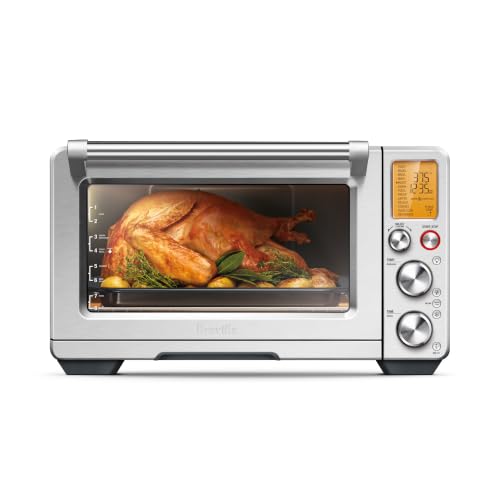
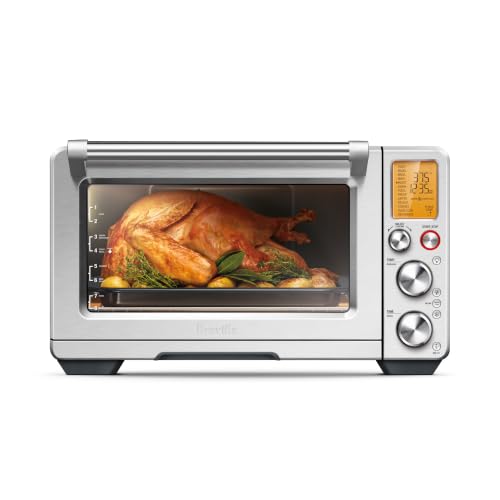
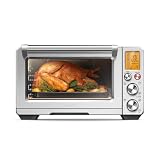
The Breville leads a convection guide because its title does the most complete job of stating the subject: convection appears as a named setting, attached to a quantified effect, inside an oven whose thirteen functions are organised around controlled hot air. That combination, a named mechanism, a stated consequence, and a system built to exploit it, is what a technical shopper is actually hunting. In practice the dividend shows in the foods convection flatters: roasted vegetables with edges, baked items with even colour, reheats that return texture instead of merely temperature. The flagship build sustains the claim over years, because seals, fans, and controls that stay true keep the circulation honest long after a lesser machine’s airflow has gone vague.
Its costs are the familiar flagship ones, tier and footprint, and one specific to this guide: it asks the buyer to value a stated, systematised convection implementation over machines that move air perfectly well without naming it so completely. That is a defensible purchase for the cook who roasts and bakes as much as they air fry, and who will use the dehydrate and bake functions that share the same fan. For a household whose convection needs begin and end with fries and reheats, the TOA-55 below delivers the stated feature at a calmer tier, and this guide links both so the choice can be made on the evidence rather than on adjectives.
Best for: cooks who roast, bake, and dehydrate as much as they air fry / Not suited for: buyers wanting the stated feature at the lowest tier

Chefman XL 14-Quart Air Fryer
Badge: Best Large Convection Pick
Strengths
- Convection oven named in its title, in an XL fourteen-quart windowed format.
- Rotisserie and dehydrator functions that exploit moving air in opposite directions, fast and slow.
- Touchscreen controls that keep the panel wipeable and the settings legible.
Trade-offs
- Fourteen quarts needs counter depth and cabinet clearance.
- The window shows splatter and rewards regular wiping.
- Six functions is a working list, not a deep one.
Spec box
- Capacity: XL 14-quart
- Functions: 6-in-1, including rotisserie, food dehydrator, convection oven, bake, broil, and reheat
- Controls: touchscreen
- Door: windowed
- Colour: black
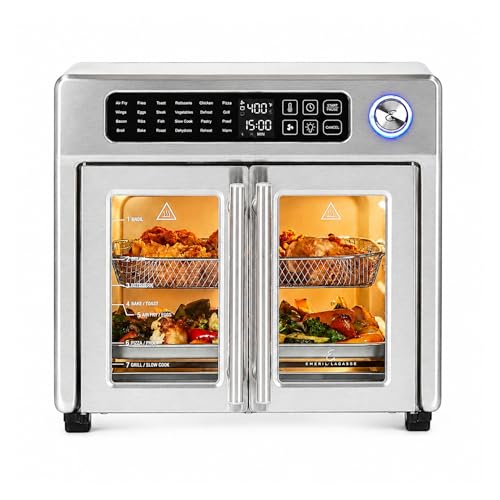
The Chefman states its convection in the most architectural way of the three linked picks: the machine is described as a convection oven outright, one of its six functions, in a fourteen-quart windowed cavity. That framing suits the way the machine is best used, as a visible, single-layer cooking chamber where the fan’s work can be watched happening. The window is a genuine convection tool, because even browning is judged by eye long before it is judged by timer, and the ability to see the surface colour without opening the door and collapsing the airflow is the difference between steering a cook and interrupting one. The rotisserie extends the same logic to a rotating bird, where moving air meets a moving surface and the result is the most even browning this format offers.
At the other end of its range, the dehydrator function uses the fan slowly and gently, which is convection’s second personality and a good test of an implementation’s control. A system that can only blast is a fan; a system that can circulate warm air for hours at low intensity is a convection oven in the full sense, and the Chefman’s function list claims both ends. Its limits are size and depth of menu rather than quality of airflow. Households wanting the stated feature in its largest, most watchable form in this guide will find it here, at a mainstream tier that makes the Breville’s premium a choice rather than a necessity.
Best for: households wanting stated convection at large, visible scale / Not suited for: compact counters or deep function lists
Cuisinart French Door Air Fryer Toaster Oven TOA-FD70
Badge: Best Design, Convection Unstated
Strengths
- French-door design and seven functions in a composed stainless oven.
- Fits a twelve-inch pizza and covers the domestic week from toast to roast.
- Artisan styling that flatters a visible counter.
Trade-offs
- Its verified title does not state convection, so it is prose-only in this guide, whatever its internal design.
- Part of its tier buys design rather than mechanism.
- French doors need clear counter on both sides.
Spec box
- Model: TOA-FD70
- Design: artisan French-door
- Functions: 7 — air fry, toast, bake, broil, roast, pizza, warm
- Capacity note: fits a 12-inch pizza
- Finish: stainless steel
- Convection: not stated in the verified listing title
The TOA-FD70 is this guide’s first lesson in its own rule, and the lesson is worth learning carefully because it recurs across the whole category. This is an air fryer toaster oven; it cooks by circulating hot air, as its function list implies on every line. Its verified title, however, never uses the word convection, and a guide that exists to honour stated specifications cannot promote a machine into a technical category on implication. So the FD70 is reviewed in full, with its genuine virtues intact, French doors that open from the centre, seven well-chosen functions, pizza capacity, a calm stainless presence, and it is linked nowhere in these pages. The machine loses nothing; the guide keeps its word.
For the buyer, the practical meaning is a choice of standards. If your standard is a good oven-style air fryer, the FD70 competes in other guides in this wave on equal terms and links there. If your standard is the stricter one this keyword implies, a maker who states the mechanism in the specification, then the three linked picks are your shortlist and the FD70 is a beautiful near-miss. Neither standard is foolish. What would be foolish is a guide pretending the two are the same, which is why this review exists in its prose-only form, complete and unlinked, as the category’s vocabulary problem made visible.
Best for: design-led domestic buyers reading beyond this technical brief / Not suited for: buyers requiring convection stated in the specification

Cuisinart Air Fryer Toaster Oven Combo TOA-55
Badge: Best Balanced Convection Pick
Strengths
- Convection capability stated plainly in its title, the exact claim this guide exists to verify.
- A four hundred fifty degree Fahrenheit ceiling and a removable crumb tray, performance and maintainability together.
- Balanced nought point six cubic foot interior that fits a twelve-inch pizza.
Trade-offs
- Single-level cavity, so large batches cook in rounds.
- Eighteen hundred watts asks respect from shared circuits.
- Plain styling beside its French-door sibling.
Spec box
- Model: TOA-55
- Functions: 7-in-1
- Power: 1800W
- Interior: 0.6 cu. ft.
- Convection: capability stated
- Maximum temperature: 450°F
- Cleaning: removable crumb tray
- Capacity note: fits a 12-inch pizza
The TOA-55 is the balanced heart of this guide, and its contrast with its own sibling above is the cleanest illustration of the linking rule in action: same maker, same broad format, one title that states convection capability and one that does not. The TOA-55 states it, and surrounds the statement with the supporting cast a convection claim deserves, a temperature ceiling high enough for the fan’s work to become browning rather than drying, strong power, and the crumb tray that keeps the cavity’s airflow environment clean enough for the specification to remain true in month twelve. Convection performance is not a first-week property; it is a maintained property, and this machine is designed to be maintained.
For most technically minded buyers, this is the pick where the guide’s strictness and the market’s value meet. It lacks the Breville’s system depth and quantified claim, and it lacks the Chefman’s scale and window, but it states the feature, supports it, and prices it in the mainstream, which is the combination the keyword most plausibly wants. The wider craft of using that stated convection well, across the whole repertoire from fries to full trays, is the subject of Best Cooking Air Fryers, and the TOA-55 is the kind of honest, specified machine that craft rewards most reliably.
Best for: most buyers wanting stated convection in a balanced oven / Not suited for: crowd-scale single batches
Gourmia French Door Toaster Oven Air Fryer
Badge: Best Family Size, Convection Unstated
Strengths
- Nine-slice family capacity with twelve presets and adjustable time and temperature.
- Dishwasher-safe trays that keep a large oven in daily service.
- A branded circulation system described in its title in the maker’s own terms.
Trade-offs
- Its title names its circulation with a brand term rather than the word convection, so it is prose-only here.
- The largest footprint among the prose-only picks.
- Presets are averages that need supervised first runs.
Spec box
- Capacity: 9-slice
- Display: digital
- Design: French door
- Presets: 12 cooking presets
- Controls: adjustable time and temperature
- Air circulation: FryForce 360°, the maker’s own description
- Trays: dishwasher-safe
- Finish: stainless steel
- Convection: not stated under that word in the verified listing title
The Gourmia presents the subtlest case in this guide, because its title does describe its air circulation, vividly and in proprietary language, as a three hundred sixty degree branded system. A looser guide would file that under convection and move on. This guide does not, for a reason worth stating once and plainly: proprietary circulation names describe a maker’s design intent, while the word convection in a specification makes a comparable claim that can be set beside other makers’ claims. Translating the first into the second is an editorial act that adds information the maker did not state, and technical guides should not add information. So the Gourmia, a genuinely strong family oven with dishwasher-safe trays and nine-slice scale, is reviewed in full and linked nowhere here.
Its domestic case is unaffected, and family buyers who meet it in other guides in this wave will find it linked and recommended for exactly the virtues above. Within this guide it performs a second service: it marks the boundary between description and specification that the whole category blurs for marketing convenience. A reader who finishes this review understanding why a branded full-circle airflow claim and a stated convection capability are cousins rather than twins has learned the single most useful reading skill this keyword can teach, and will shop the next technical claim, in any category, with better eyes.
Best for: families valuing scale and easy cleaning, reading beyond this brief / Not suited for: buyers requiring convection stated in comparable terms
Ninja Prestige Smart XL Countertop Oven DT501
Badge: Best Premium, Convection Unstated
Strengths
- Ten functions and eighteen hundred watts in a stainless XL cavity of serious domestic scale.
- Capacity described in food: twenty cookies, or a twelve-pound turkey.
- Prestige line build for long service.
Trade-offs
- Its verified title does not state convection, so the flagship is prose-only in this technical guide.
- Premium tier and the largest footprint conversation here.
- Capacity most households use occasionally rather than weekly.
Spec box
- Model: DT501
- Functions: 10-in-1, including air fry, bake, toast, pizza, and reheat
- Power: 1800W
- Capacity notes: bakes 20 cookies; fits a 12 lb turkey
- Finish: stainless steel
- Convection: not stated in the verified listing title
The Ninja Prestige closes the reviews as the guide’s most dramatic prose-only case: a flagship oven, ten functions strong, whose title describes capacity in cookies and turkey and never once names the mechanism this guide is about. Nobody familiar with the machine doubts that it cooks with vigorously circulated air; its whole design presupposes it. But a technical guide that links on presupposition has stopped being technical, and the Prestige’s absence from the linked list is therefore the strongest proof the guide can offer that its rule is real. Where the rule is not the question, in premium and capacity guides elsewhere in this wave, the Prestige stands on its considerable merits.
For the convection shopper, the lesson completes the set the FD70 and the Gourmia began. At every tier, from design-led to family to flagship, makers choose whether to state the mechanism in comparable language or to describe their machines in their own. Your money should follow the statement when the mechanism is your stated reason for buying, which is the premise of the keyword itself. Shoppers who arrived here from the seasonal price hunt in Best Cyber Prices For Air Fryers will recognise the same discipline in a different dress: in both cases, the guide links only what it can verify, and says plainly what it cannot.
Best for: premium capacity buyers reading beyond this technical brief / Not suited for: buyers requiring convection stated in the specification
Comparison Table
| Pick | Badge | Convection as stated in title | Format | Listing |
|---|---|---|---|---|
| Breville Smart Oven Air Fryer Pro | Best Overall Convection Pick | Named setting, with a stated time effect | Countertop oven | Check on Amazon |
| Chefman XL 14-Quart | Best Large Convection Pick | Named as a convection oven function | Windowed oven | Check on Amazon |
| Cuisinart TOA-FD70 | Best Design, Convection Unstated | Not stated | French-door oven | Prose-only |
| Cuisinart TOA-55 | Best Balanced Convection Pick | Capability stated | Countertop oven | Check on Amazon |
| Gourmia French Door Toaster Oven | Best Family Size, Convection Unstated | Branded circulation term only | French-door oven | Prose-only |
| Ninja Prestige Smart XL DT501 | Best Premium, Convection Unstated | Not stated | XL countertop oven | Prose-only |
How to Choose a Convection Air Fryer
Begin by deciding what the word must mean in your purchase. If it must be a stated, comparable specification, your shortlist is the three linked picks, and the choice among them is ordinary and pleasant: the Breville for system depth and quantified claims, the Chefman for scale and visibility, the TOA-55 for balance and maintainability. If the word is your shorthand for good air frying generally, the prose-only three rejoin the field on their domestic merits, and you should choose by format and capacity instead. Either decision is coherent; the incoherent purchase is the one that pays a premium for a technical claim nobody stated.
Next, weigh the supports around the fan. A high temperature ceiling lets convection become browning. A cavity you can clean keeps airflow true. A window or a disciplined checking habit lets you steer by colour. Capacity matched to your loads keeps the single-layer rule possible, and the single-layer rule is where convection succeeds or fails in practice, because air cannot circulate through a pile. The Cuisinart TOA-55 assembles those supports most economically, while the Breville assembles them most completely; the distance between those two sentences is the honest distance between the mainstream and the flagship in this guide.
Finish with the standard live checks, sharpened for a technical purchase. Check the latest price on Amazon for your finalists on the same day, open the full specification on the listing, and find the convection claim in the maker’s own words before you pay for it. If the words are there, the purchase is verified. If they are not, you are buying a good air fryer under a technical description it never made, and you should do so, if at all, knowingly and at a domestic price.
How to Cook With Convection, and Keep It Honest
Technique is the owner’s half of the specification. Preheat briefly for foods where the crust is the point, because convection’s advantage compounds when food meets fully moving, fully hot air from the first minute. Load in a single layer with visible gaps; the fan can only work on surfaces it can reach. Turn or rotate food halfway through tray loads, since even good circulation has a geography, hotter near the element and the fan’s path, and rotation is the cook’s correction for it. For reheating, give leftovers a few minutes less than instinct suggests and check early, because moving air restores texture quickly and then begins to dry.
Maintenance protects the mechanism itself. Keep trays, racks, and crumb paths clean so the air’s route stays as designed, wipe the cavity while warm, and never let residue become the cavity’s second lining, because a fan circulating air across old grease is seasoning every dish with the last one. If your machine has a window, keep it clean enough to judge colour through, since colour is convection’s dashboard.
Troubleshooting is airflow reasoning. Problem: browning is strong on top and weak beneath → the load is layered or the tray sits too high; thin the load and use the maker’s recommended air fry position. Problem: food dries before it browns → the temperature is modest and the time long; raise the heat and shorten the cook, letting the fan work at intensity. Problem: results vary across the tray → the geography effect; rotate the tray halfway and leave wider gaps at the crowded edge. Each fix is the same sentence in different clothes: give the air a path, and it will do the rest. Write the fixes that work in your cavity onto the same kitchen note as your calibrated settings, because the second month of ownership is smoother than the first precisely to the extent that the first month’s lessons were recorded rather than remembered, and a convection system, which rewards consistency so visibly, makes the recording habit easier to keep than any other appliance in the room.
Convection, Air Frying, and the Words Between
A short vocabulary lesson belongs in this guide, because the category’s language is genuinely confusing and the confusion is not accidental. Air frying is convection cooking in a compact cavity with a powerful fan, marketed under a name that promises fried results without a fryer. Convection oven is the older, plainer name for fan-assisted oven cooking, and when a countertop machine claims both, as two of the linked picks do, it is describing one mechanism in two dialects. Proprietary circulation names, of which this guide’s prose-only Gourmia carries one, are a third dialect: real engineering, described in language only its maker uses, which prevents direct comparison and is therefore best read as design intent rather than specification.
None of this makes the unstated machines worse at dinner. It makes their claims harder to compare before purchase, which is a shopping problem rather than a cooking one, and shopping problems are what guides exist to solve. The reader who has followed the three prose-only reviews now owns the solution: separate what a maker states in comparable terms from what a maker evokes in its own, pay full value for the first, fair value for the second, and never let a headline translate between them on your behalf. The seasonal version of the same trap, technical language inflated during a promotion, is catalogued in Best Dealson Air Fryers for readers who enjoy watching the pattern repeat.
Convection Across the Repertoire, Dish by Dish
The mechanism earns its name differently on different foods, and a technical buyer should know where the dividend is large, where it is modest, and where it disappears. It is largest on foods with surfaces to transform: roasted vegetables, where moving air strips surface moisture and lets edges caramelise; wings and skin-on proteins, where the fan’s work becomes crispness; and reheated fried or baked foods, where convection restores a crust that a microwave surrenders and a static oven restores too slowly to matter on a weeknight. In each case the fan is not a convenience but the active ingredient, and the difference between a stated, well-supported implementation and a vague one is tasted directly.
The dividend is modest, though real, on the middle repertoire: fries from frozen, where every air fryer performs respectably and the stated machines distinguish themselves mainly in evenness across the tray; baked goods, where circulation evens colour but the cook must still respect the geography near the element; and gentle work like dehydrating, where the fan’s slow personality matters more than its power and where control at low intensity, claimed by the Chefman’s function list, is the relevant virtue. The dividend disappears entirely on the foods convection cannot help: anything cooked in a deep pile, anything sealed in a dish where the air never reaches the surface, and anything whose problem was never heat transfer in the first place. Naming the disappearing case matters, because a buyer who understands it stops expecting the mechanism to rescue technique, and starts using it where it is genuinely the difference between a good result and a great one.
Fan, Element, Cavity: Reading a Convection Design From Its Specification
A convection specification can be read like a sentence with three nouns. The fan is the verb’s engine: its existence is stated, in the linked picks, by the convection claim itself, and its quality is inferred, cautiously, from the system around it, the maker’s willingness to quantify an effect, as Breville does, or to build functions at both ends of its range, as Chefman does with rotisserie speed and dehydrator patience. The element is the heat the fan moves: a stated temperature ceiling, like the TOA-55’s, tells you the top of the working range, and strong stated power tells you how quickly the cavity recovers when a cold tray enters and the temperature dips, which is the moment weak implementations lose their evenness.
The cavity is the room the sentence happens in, and it is the noun buyers underrate. Its size decides the single-layer loads that let the fan work; its tray positions decide the distance between food and element that governs browning; its cleanability decides whether the room in month twelve resembles the room in week one. This is why the TOA-55’s unglamorous crumb tray appears in a technical guide without apology: it is part of the convection system, the part that keeps the system’s environment true. Read the three nouns together on any future listing, fan claimed, element specified, cavity maintainable, and you have read the machine’s convection design as completely as a specification allows, which is the skill this entire guide has been practising on six examples.
There is a last, quieter benefit to buying on stated specifications that deserves a paragraph before the mistakes list, because it compounds over the ownership of the machine. A maker who states the mechanism in comparable language has also, usually, documented it: manuals that name the convection function and its intended loads, support staff who can discuss the fan’s behaviour, and parts lists that include the components of the system by name. When something drifts in year three, that documentation is the difference between a diagnosis and a shrug. The linked picks were chosen on their titles, but the titles are a fair sample of the makers behind them, and a shopper who has learned to read for stated claims in this category will find the same habit paying for itself in every category afterwards, from cookware to major appliances, wherever a specification can either be shown or merely suggested.
Common Buying Mistakes
The first mistake is paying a technical premium for a machine whose title never states the technique, which this guide’s prose-only reviews exist to expose. The second is believing convection excuses crowding; it punishes it, because circulated air still needs a surface to reach. The third is ignoring cleaning until the airflow itself is seasoned with residue. The fourth is comparing proprietary circulation names as if they were specifications. The fifth is assuming a stated convection feature makes format irrelevant, when tray and basket still decide which foods the machine can hold. The sixth is forgetting that a flagship’s quantified claims describe its best case with a proper load, not a guarantee for a piled tray on a tired evening.
Final Recommendation
For most convection shoppers, the Cuisinart TOA-55 is the verified centre of this guide: convection capability stated, a proper temperature ceiling, and the cleaning design to keep the claim true. Choose the Chefman XL for scale and visibility, and the Breville for the deepest stated system at the flagship tier. Treat the FD70, the Gourmia, and the Ninja Prestige as the strong domestic machines they are, to be bought under domestic descriptions at domestic value. Check the latest price on Amazon, find the convection claim in the maker’s own words on the listing, and load your first tray in a single layer; the mechanism will do the rest, because now it is actually the mechanism you paid for. Keep the first week’s notes, the calibration cooks and the settings they settled on, somewhere in the kitchen rather than in your memory, because a convection system rewards the cook who treats its behaviour as data, and the notes are how a stated specification becomes a personal one, tuned to your loads, your tray, and your taste in browning.
Frequently Asked Questions
Does convection change the times and temperatures I already know?
Expect a modest adjustment rather than a new cookbook. Circulating air delivers heat to surfaces more efficiently, so foods generally cook a little faster, and recipes written for static ovens often benefit from a slightly lower temperature or a shorter time, checked early the first time you run them. The makers’ own presets, where a machine offers them, already assume the fan is working. The reliable method is the one this guide recommends for every new machine: cook a familiar food first, watch it through the final minutes, and write down the setting your cavity actually wants. That single calibration teaches you more about your convection system than any conversion chart, because it measures the fan, the element, and the cavity you bought, in the kitchen where they will work. Repeat the calibration once for a tray load and once for a reheated leftover, and you own the machine’s whole personality: how it browns, how it restores, and how much mercy it shows a distracted cook in the final two minutes, which is where convection systems, stated or not, reveal themselves most honestly.
Is every air fryer a convection appliance?
In physical terms, yes: air frying is fan-circulated hot air cooking in a compact cavity, which is convection by definition. The distinctions in this guide are about specification, not physics. Some makers state convection as a named setting, type, or capability in their titles; others describe circulation in proprietary terms or not at all. This guide links only the stated claims, so that a technical purchase rests on comparable words rather than on translation.
Why are three strong ovens prose-only in this guide?
Because their verified titles do not state convection. The Cuisinart TOA-FD70 and the Ninja Prestige do not use the word, and the Gourmia names its circulation with a branded term instead. All three circulate hot air as every air fryer does, and all three are reviewed in full with their strengths intact. They are unlinked because this keyword asks for a stated technical feature, and the guide will not supply the word on a maker’s behalf.
Should I prefer a stated convection claim over a larger unstated oven?
Only if the claim is genuinely your reason for buying. A larger unstated oven, like the prose-only Ninja Prestige in this guide, will cook more food and cook it well, and a household whose binding constraint is capacity should honour that constraint and buy the oven under its domestic description. The stated claim matters when it is the specification you came for, because it is the only version of the feature you can compare, verify, and hold the maker to. Keywords are promises a shopper makes to themselves about what the purchase is for; this guide’s whole method is to keep that promise visible, in the links it grants and in the ones it withholds, until the money moves.
Does a convection setting cook faster?
Circulating air transfers heat to food surfaces more efficiently than still air, so convection cooking is generally faster and more even than the same temperature in a static oven, and one maker in this guide quantifies its convection setting’s time effect in its own title. In practice your load decides how much of the advantage you see: a single, spaced layer realises it fully, while a crowded tray spends it fighting itself.
Convection oven or basket air fryer: which should I choose?
Choose by food shape and by the rest of your week. Oven formats state their convection most often, take flat and tray foods, and consolidate toasting and baking into the same machine. Baskets cook heaped, shaken foods superbly and usually state their mechanism less formally. If the stated specification is your priority, the linked ovens are your field; if two-zone basket cooking is your pattern, buy it under its own honest description in the guides written for it.
How do I keep convection performance from fading over time?
Protect the airflow. Keep trays, racks, and crumb paths clean, wipe the cavity while warm, and never let residue line the surfaces the air crosses. Cook in single layers so the fan’s work is cooking rather than compensating. A convection machine’s specification is a property of a clean, well-loaded cavity; maintained that way, the performance you bought in the first month is the performance you keep in the third year.
What should I verify on the listing before buying?
Find the convection claim in the maker’s own words, in the title or the specification, and note its form: a named setting, a named oven type, or a stated capability. Confirm the capacity, the temperature ceiling where given, the included trays, and the dimensions against your counter. If the claim is present, the purchase is verified; if it is present only in surrounding marketing, treat the machine as a good domestic air fryer and price it as one.