Disclosure: topratedkitchenware.com is reader-supported. When you buy through links on our site, we may earn an affiliate commission from Amazon and other retailers, at no extra cost to you.
Where to buy
All six verified picks are linked in this guide. The keyword asks how toasters are made — which designs were built to a standard rather than to a price — and every model in the pool makes a legitimate construction argument of a different kind, from an insulated cool-touch cabinet to a slim long-slot format that had to be engineered rather than merely assembled.
- Elite Gourmet ECT1027B Cool-Touch Toaster — cool-touch construction, 1.25-inch extra-wide slots, six shades
- Hamilton Beach 22634 Extra-Wide Slot Toaster — seven browning shades, auto shutoff, toast boost, slide-out crumb tray
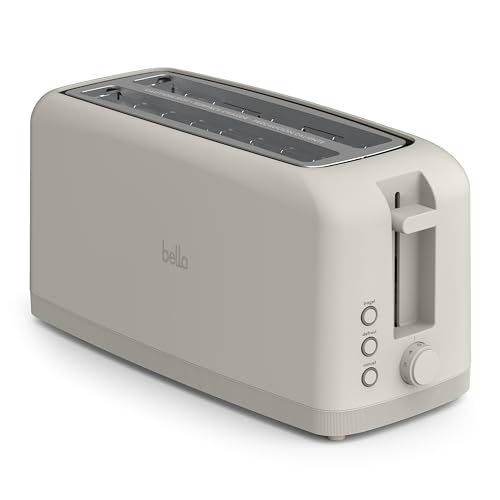
- bella Fits-Anywhere Slim 4-Slice Toaster — four slices in an extra-long, extra-wide slot, slim body
- BLACK+DECKER 2-Slice Toaster with Extra-Wide Slots — bagel mode, seven shade settings, extra lift lever, removable crumb tray
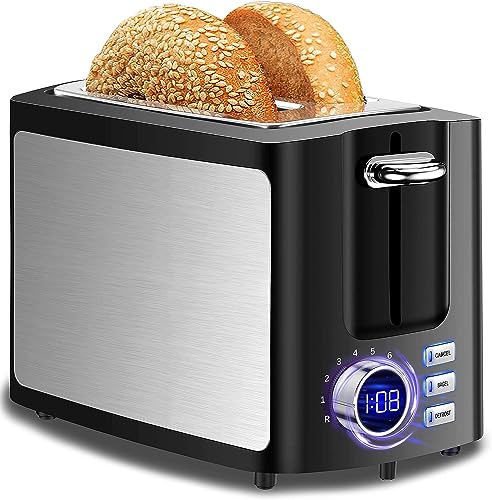
- Hommater 2-Slice Smart Toaster with LCD Digital Countdown Timer — nine shade settings, countdown display, reheat function
- Amazon Basics 2-Slice Toaster — extra-wide slots, stated 900W rating, cord wrap, removable crumb tray
Read the full guide ↓
There is a difference between the best toasters and the best toasters ever made, and it lives in the word made. A toaster can be well specified, well marketed and well reviewed while being built as cheaply as its price allows; another can be built around decisions — an insulated cabinet, a slot machined long enough for real loaves, a lift mechanism that does not rely on fingertips, a tray that slides instead of snapping — that cost the manufacturer effort every single unit. This guide judges the six verified toasters in the pool by their making: what their listings, cross-checked against the Creators API on 2026-11-20, reveal about construction intent. Where a listing states a construction fact, we credit it. Where it is silent about materials or assembly, we say so plainly, because the first rule of judging how anything is made is refusing to invent the parts you cannot see. What emerges is not a single winner but a map of the different ways a simple appliance can be made properly — insulated, formatted, mechanised, specified — and an honest account of which kind of proper matters for which kitchen.
A second honesty runs through the guide: a listing can prove a design decision, but it cannot prove a decade of service, and we make no lifespan promises for any model here. What careful reading can do is separate the signals that correlate with things made well — stated measurements instead of adjectives, mechanisms that solve mechanical problems, cleaning paths designed rather than improvised — from the signals that correlate with things merely sold well. Readers interested in the ownership side of the same question will find it in Best Toasters For Home Use, where build quality meets the daily routine it has to survive.
Key Takeaways
- Judging how a toaster is made means crediting stated construction facts — and refusing to invent unstated materials or assembly claims.
- The Elite Gourmet’s cool-touch cabinet is the pool’s clearest construction decision: an insulated body built into the model’s identity.
- The bella’s slim, four-slice, long-slot body is the pool’s boldest piece of format engineering.
- Hamilton Beach and BLACK+DECKER show mature mechanism design: toast boost, extra lift, auto shutoff and trays that remove cleanly.
- The Hommater integrates electronics — an LCD countdown and nine shade steps — into the classic pop-up mechanism.
- The Amazon Basics is the specification benchmark: the only listing in the pool that states its wattage outright.
In this guide
Quick Picks
| Pick | Badge | Capacity and slots | Construction highlight | Link |
|---|---|---|---|---|
| Elite Gourmet ECT1027B Cool-Touch Toaster | Best Build Idea | 2-slice, 1.25-inch extra-wide | Cool-touch insulated cabinet | Check on Amazon |
| Hamilton Beach 22634 Extra-Wide Slot Toaster | Best Finished Specification | 2-slice, extra-wide | Auto shutoff, toast boost, slide-out tray | Check on Amazon |
| bella Fits-Anywhere Slim 4-Slice Toaster | Best Format Engineering | 4-slice, extra long and wide | Slim long-slot body | Check on Amazon |
| BLACK+DECKER 2-Slice Toaster with Extra-Wide Slots | Best Traditional Build | 2-slice, extra-wide | Bagel mode, extra lift lever | Check on Amazon |
| Hommater 2-Slice Smart Toaster | Best Modern Assembly | 2-slice, wide | LCD countdown, nine shade steps | Check on Amazon |
| Amazon Basics 2-Slice Toaster | Best Honest Specification | 2-slice, extra wide | 900W stated; cord wrap | Check on Amazon |
How These Picks Were Chosen
The six picks are the programme’s verified toasters pool, cross-checked against the Creators API on 2026-11-20, with product names, specifications and images drawn from the API response. For this keyword we read each listing as a manufacturing document. We credited construction evidence: a cool-touch cabinet named as the product’s defining design, a slot dimension given as an actual measurement, a capacity and slot format that required re-engineering the standard box, mechanisms such as toast boost and extra lift that change how the carriage behaves, safety behaviours such as auto shutoff, and specification completeness — most strikingly the single stated wattage in the pool. We discounted adjectives. No listing in this pool states its cabinet material, element type or country of manufacture, so this guide makes no claims about any of those for any pick; a build-quality argument built on invented materials would be worthless, and we would rather show you the evidence we have than decorate the evidence we lack.
The guide is research-led throughout. We did not strip these machines down, and we do not claim to have done so; teardown judgements belong to people holding screwdrivers. What a careful listing analysis can establish — and what buyers can repeat for any model — is whether the manufacturer’s stated decisions cluster around durability, usability and safety, or around appearance and vocabulary. The six picks cluster, each in its own way, around the first set. The performance companion to this build discussion is Best Toasters For Even Toasting, because the finest construction in the world still has to prove itself in the browning.
The Best Toasters Ever Made, Judged by Their Making: Full Reviews
Each review argues its pick’s construction case from the listing evidence, then records the honest limitation — including, where relevant, what the listing does not tell us about how the machine is built.

Elite Gourmet ECT1027B 2-Slice Cool-Touch Toaster
Badge: Best Build Idea
Strengths
- Cool-touch cabinet construction is the model’s stated identity, not an accessory claim
- Slot width given as a real measurement — 1.25 inches, extra-wide
- Six shades, cancel and bagel and thick-bread handling in a focused specification
Trade-offs
- Cabinet material is not stated in the listing, so no material claims can be made
- Six shade settings is the joint-narrowest control range in the pool
- Two-slice format, like five of the six picks
Mini spec box
- Format: 2-slice pop-up toaster
- Exterior: cool-touch construction, black finish
- Slots: 1.25-inch extra-wide, measured
- Shade settings: 6
- Named functions: cancel; bagels and thick bread handling
- Model: ECT1027B
A cool-touch toaster is not a standard toaster with a sticker on it. Keeping an outer shell cool while elements glow a few centimetres away requires the cabinet to be conceived as two structures — a hot inner cavity and a separated outer skin — rather than as a single folded box, and that conception has to survive every unit that leaves the line. The Elite Gourmet puts that construction in its name, which is why it leads this guide: of all the build decisions in the pool, it is the one that most plainly cost the maker something and most plainly pays the owner back, in a cabinet that forgives the steadying hand and the brushing sleeve. The specification around it shows the same habit of concreteness. The slot is not merely called wide; it is measured at 1.25 inches, a number a buyer can test against a bagel with a ruler. Six shades and a cancel function are stated without inflation.
The limitations are about what the listing withholds and what the format caps. No cabinet material is named, so admirers of any particular material story will find nothing here to quote — this guide credits the cool-touch construction because it is claimed, and declines to speculate about what the shell is made from because it is not. Six shades give adequate rather than fine control, and two slices limit throughput. Neither flaw touches the central build verdict: this is the pool’s most deliberate piece of cabinet engineering, and the natural starting point for the safety-minded conversations in Best Toasters For Kids, where forgiving surfaces matter most. Check the latest price on Amazon.
Best for: buyers who value one real construction idea over a long feature list / Not suited for: material purists who need a stated cabinet material
Hamilton Beach 22634 Extra-Wide Slot 2-Slice Toaster
Badge: Best Finished Specification
Strengths
- Auto shutoff engineered into the cycle, not left to the user
- Toast boost modifies the carriage lift for small pieces
- Slide-out crumb tray — a cleaning path designed, not improvised
Trade-offs
- Two-slice capacity
- No reheat function is claimed
- Finish-led naming tells you about colour, not construction
Mini spec box
- Format: 2-slice pop-up toaster, extra-wide slot design
- Shade settings: 7 browning shades
- Named functions: bagel and defrost buttons; auto shutoff; toast boost
- Crumb tray: slide-out
- Finish: Kitchen Makeover Blue
- Model: 22634
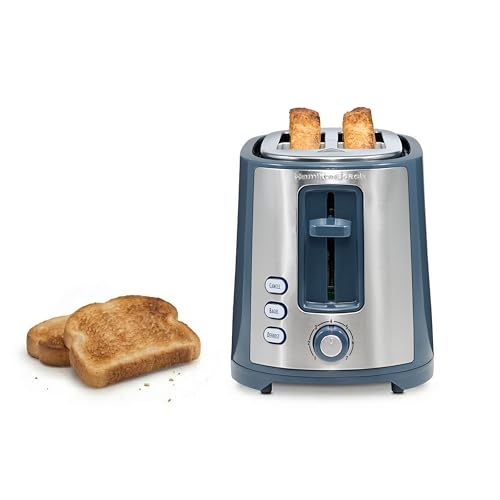
There is a kind of build quality that shows not in exotic decisions but in the absence of unfinished ones, and the Hamilton Beach is its representative here. Consider the three mechanisms its listing confirms. Auto shutoff means the cycle’s failure mode was designed: if the carriage cannot complete its work normally, the machine ends the cycle itself. Toast boost means the lift was designed: small pieces are raised higher at the end of travel, an adjustment to the carriage’s behaviour that exists purely because somebody studied how muffins get retrieved. A slide-out crumb tray means the cleaning path was designed: the tray travels on a track to your hand instead of unclipping, tilting and shedding crumbs across the counter. Add seven browning shades, bagel and defrost buttons and an extra-wide slot, and the specification reads like a list of small manufacturing attentions, each cheap to omit and each present.
Its limitations are modest and mostly about scope. It toasts two slices at a time, claims no reheat function, and its listing leads with a colour story rather than a construction one — the blue finish is the least informative thing about a well-finished machine. But on the evidence available, this is the pool’s most completely finished conventional design, the toaster equivalent of a door that closes with a thunk. Buyers comparing it against the capacity outlier below should read the throughput discussion in Best Toasters For Four Large Pieces Of Bread before deciding which kind of completeness their kitchen needs. Check the latest price on Amazon.
Best for: buyers who judge build quality by finished details / Not suited for: households needing four-slice throughput

bella Fits-Anywhere Slim Toaster, 4 Slice
Badge: Best Format Engineering
Strengths
- A genuinely re-engineered format: four slices in one extra-long, extra-wide slot
- Slim body designed around real counter depth, the Fits-Anywhere brief
- Long-slot geometry that standard two-slice tooling cannot imitate
Trade-offs
- The listing states no shade count, functions or materials — the build story is shape alone
- A long body needs a long counter run despite its slim depth
- No safety or information extras are claimed
Mini spec box
- Format: 4-slice pop-up toaster, slim profile
- Slot: extra long and wide
- Finish: Oatmilk
- Shade settings: not stated in listing
- Named functions: not stated in listing
Most toasters are made by scaling a known box. The bella was made by questioning it. A four-slice machine built around a single extra-long, extra-wide slot, in a body slim enough to carry a Fits-Anywhere name, is a different manufacturing proposition from the standard two-slot layout: the cavity is longer, the carriage travels differently, the whole machine’s proportions are re-solved rather than inherited. That re-solving is exactly what format engineering means, and it produces capabilities no specification tweak can match — whole artisan loaves toasted uncut, four slices in one cycle, a footprint that fits the narrow counter strips of real apartments. In a guide about how toasters are made, the bella is the reminder that the boldest build decision is sometimes the shape of the thing itself.
The honesty paragraph matters more for this pick than for any other. Its listing is the pool’s most silent: no shade count, no named functions, no materials, no safety behaviours. We credit its engineering because the format is stated and visible; we decline to credit anything else, because nothing else is claimed. A buyer is therefore purchasing a confirmed shape with unconfirmed controls, and should do so only when the shape is the point — as it legitimately is for long-loaf and family kitchens. Judge it as architecture, verify the current listing for any control details before ordering, and check the latest price on Amazon.
Best for: buyers whose build priority is format — capacity and loaf shape / Not suited for: buyers who want a fully documented control specification
BLACK+DECKER 2-Slice Toaster with Extra-Wide Slots
Badge: Best Traditional Build
Strengths
- Bagel mode built as a dedicated function, not a shade workaround
- Extra lift lever — a mechanical answer to a mechanical problem
- Removable crumb tray and seven shade settings complete a proven layout
Trade-offs
- Conventional construction throughout; no insulation or electronics claims
- Two-slice capacity
- No auto shutoff claim in its listing
Mini spec box
- Format: 2-slice pop-up toaster
- Slots: extra-wide
- Shade settings: 7
- Named functions: bagel mode
- Convenience: extra lift lever; removable crumb tray
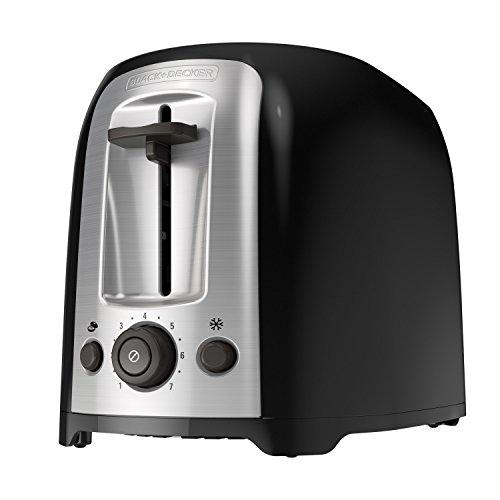
If the bella represents build quality as invention, the BLACK+DECKER represents it as maturity. Every element of its specification is a solved problem executed in the standard way, and there is deep manufacturing virtue in that: tooling refined over long production runs, a mechanism every service network understands, controls whose behaviour a first-time user predicts correctly. The bagel mode deserves its headline — implementing bagel browning as a dedicated mode rather than telling users to fiddle with shades is a design decision that respects the food — and the extra lift lever is the same philosophy in metal, extending the carriage’s travel so small pieces come to your fingers instead of your fingers going to the heat. Seven shade settings and a removable crumb tray finish a specification with no vanity items on it.
Its limitations are the boundaries of traditionalism. Nothing in its listing claims an insulated cabinet, an electronic control or a self-ending cycle; buyers for whom those are the build qualities that matter should look at the Elite Gourmet, the Hommater or the Hamilton Beach respectively. Two slices is two slices. What this machine offers instead is the confidence of the conventional, made by a brand whose name has been attached to household tools for generations — and for the bagel-centred kitchen, the specialised guidance in Best Toasters For Bagels shows why that focus compounds in daily use. Check the latest price on Amazon.
Best for: traditionalists who trust proven layouts and dedicated modes / Not suited for: buyers seeking insulated or electronic construction
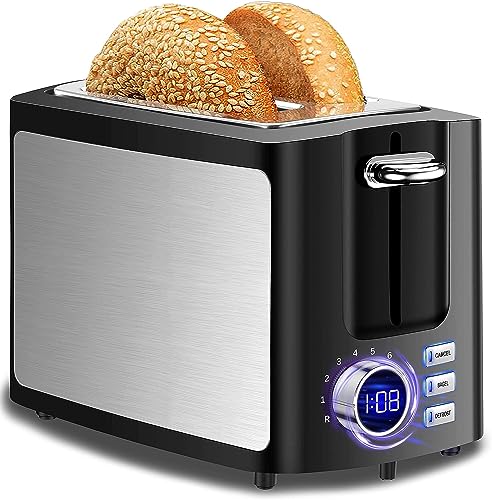
Hommater 2-Slice Smart Toaster with LCD Digital Countdown Timer
Badge: Best Modern Assembly
Strengths
- An LCD countdown integrated into the classic pop-up mechanism
- Nine shade steps — electronic control granularity no dial in the pool matches
- Reheat function included in the assembly of modes, alongside bagel, defrost and cancel
Trade-offs
- Electronics add components whose long-term behaviour no listing can guarantee
- Two-slice, wide-slot format; no long or extra-wide geometry claim
- No cool-touch or auto shutoff claim
Mini spec box
- Format: 2-slice pop-up toaster, wide slot
- Display: LCD digital countdown timer
- Shade settings: 9
- Named functions: bagel, defrost, cancel, reheat
Making a modern toaster is an integration exercise: a radiant cavity and carriage that have been understood for a century must now share a body with a display, electronic shade selection and a countdown, without any of it compromising the heat work. The Hommater’s listing describes exactly that integration — an LCD digital countdown timer, nine shade settings delivered as discrete electronic steps, and a mode set that includes reheat alongside the standard bagel, defrost and cancel. The nine-step range is the tell of genuine electronic control: a dial can be printed with any numbers, but nine usable, repeatable steps is a control system, and repeatability is a manufacturing quality as much as a user convenience, because it means the cycle is governed rather than approximated. For households whose mornings run on coordination, this is the most capably assembled machine in the pool.
The build caveat is inherent and we state it without drama: electronics introduce failure modes that levers do not have, and no listing can certify how a display will behave in year eight. The traditionalist picks in this guide make the opposite trade and will appeal to buyers who weigh that risk heavily. The Hommater also keeps a conventional two-slice, wide-slot format, so its modernity is all in the controls. Its case rests on integration quality — buy it if governed, countable, repeatable cycles are your definition of well made, and check the latest price on Amazon.
Best for: buyers who define build quality as control precision / Not suited for: minimalists who distrust appliance electronics

Amazon Basics 2-Slice Toaster
Badge: Best Honest Specification
Strengths
- The pool’s only stated wattage — 900W, printed where buyers can judge it
- Every function named: defrost, cancel and bagel buttons; removable tray; cord wrap
- Extra-wide slots described by their purpose, for bagels
Trade-offs
- Six browning settings, the joint-narrowest range here
- No lift, shutoff, insulation or display claims
- A specification-led design with no single headline innovation
Mini spec box
- Format: 2-slice pop-up toaster
- Slots: extra wide, for bagels
- Browning settings: 6
- Power: 900W
- Named functions: defrost, cancel and bagel buttons
- Convenience: removable crumb tray; cord wrap
- Finish: black and silver
A guide about how things are made should reserve a place for the virtue of telling the truth about what was made, and the Amazon Basics earns it. Its listing is the pool’s most complete document: slots described by purpose, six browning settings counted, three buttons named, a tray described as removable, a cord wrap included, and — uniquely here — a power rating of 900W stated outright. That last figure is the signature of a specification culture. Wattage is the kind of fact marketing often omits because it invites comparison, and its presence tells a buyer that the maker expects to be compared. The machine underneath the document is a sound conventional design, neither the most innovative nor the most finished here, but arguably the most honestly presented, and honest presentation is a build quality too: it is what the manufacturer was willing to sign.
Its limitations are plain because its own listing makes them easy to see: six settings, no lift assistance, no auto shutoff, no insulation claim, no display. Buyers who need any of those should choose the pick that claims it. But for a second kitchen, a rental, or any buyer who has learned to distrust adjectives, this is the pool’s benchmark of straightforward making — and the loaf-fit discussion in Best Toasters For Big Bread shows its wide slots doing honest work. Check the latest price on Amazon.
Best for: sceptical buyers who read specifications before stories / Not suited for: buyers who need a headline innovation
Comparison Table
| Pick | Capacity and slots | Shade settings | Build signature | Link |
|---|---|---|---|---|
| Elite Gourmet ECT1027B | 2-slice, 1.25-inch extra-wide | 6 | Cool-touch insulated cabinet | Check on Amazon |
| Hamilton Beach 22634 | 2-slice, extra-wide | 7 | Finished mechanisms: shutoff, boost, slide-out tray | Check on Amazon |
| bella Fits-Anywhere Slim | 4-slice, extra long and wide | Not stated | Re-engineered slim long-slot format | Check on Amazon |
| BLACK+DECKER 2-Slice | 2-slice, extra-wide | 7 | Mature traditional layout, bagel mode | Check on Amazon |
| Hommater 2-Slice Smart | 2-slice, wide | 9 | Integrated LCD countdown control | Check on Amazon |
| Amazon Basics 2-Slice | 2-slice, extra wide | 6 | Fully stated specification, 900W | Check on Amazon |
How to Choose a Well-Made Toaster
Judge the making by evidence, in this order. First, look for stated measurements and named mechanisms: a slot width in inches, a lift system with a name, a tray described by how it removes. Makers who solved a problem say what they did. Second, look for designed failure and cleaning behaviour — auto shutoff, a tray that slides or lifts out — because those reveal whether the design process continued past the first successful toast. Third, check specification completeness: a listing that states its power, counts its settings and names its functions is a listing from a maker comfortable with scrutiny, and comfort with scrutiny is the closest proxy a buyer gets for factory confidence. Fourth, treat silence correctly. An unstated material is not a bad material; it is an unknown, and unknowns should be priced as unknowns rather than filled in with hope. Finally, match the kind of making to your kitchen: insulation for tight, busy counters; format engineering for loaves and crowds; finished mechanisms for households that hate small annoyances; integrated electronics for choreographed mornings; traditional layout for buyers who trust the proven; honest specification for everyone furnishing a second space.
Qualitatively, the pool spans a straightforward tier, a finished mainstream and three distinct kinds of step-up — construction, format and control. A step up is worth taking when its specific kind of making answers your specific frustration; it is wasted money and complexity when it answers somebody else’s. The best-made toaster for your kitchen is the one whose manufacturing decisions were made about a kitchen like yours.
Keep the receipt and the model number somewhere findable, and register the product if the maker offers it. These are dull administrative acts, but they are part of owning a made thing properly: the model identifiers stated throughout this guide — ECT1027B, 22634 and their peers — are how manufacturers track revisions, publish guidance and honour obligations, and the owner who can quote theirs is the owner whose decade-old toaster still has a paper trail.
How to Use and Care for a Toaster So Its Making Lasts
Good making deserves competent keeping. Place the machine on a stable, heat-safe surface with clearance on all sides and open air above the slots; route the cord clear of the cabinet. Run one empty medium cycle before first use. In daily service, centre each slice, use bagel mode and defrost as designed rather than improvising with shade settings, and let cycles complete — mechanisms that are constantly interrupted wear their welcome out faster. Retrieve with the lift the maker built in, whether that is a boost, an extra lift lever or the standard carriage raised fully, and never introduce metal utensils into the slots. Keep the exterior wiped and the display, where fitted, clean with a soft cloth so its information stays legible.
Weekly, unplug the machine, let it cool completely, and empty the crumb tray — the single maintenance act that most protects both performance and safety, because accumulated crumbs scorch, smoke and migrate toward the mechanism. Troubleshooting follows three patterns. Problem: browning drifts darker across a morning → heat soak; drop one shade step for later batches. Problem: a slice browns unevenly face to face → it sat off-centre, or a bagel faced the wrong way for its mode; centre and orient the next one. Problem: the carriage will not latch or a cycle behaves erratically → check the outlet, empty the tray, and if the behaviour repeats, retire the machine; a well-made toaster that stops behaving like one has told you its service is over.
Reading Build Quality Without a Screwdriver
Most buyers will never open a toaster, and they do not need to. The listing itself, read properly, is a build-quality document. Count the concrete nouns — measurements, named mechanisms, stated power — against the adjectives, and trust the ratio. Check whether the functions form a coherent philosophy: the Hamilton Beach’s shutoff, boost and tray cohere around finishing; the BLACK+DECKER’s mode, lift and tray cohere around tradition; the Hommater’s display, steps and reheat cohere around control. Coherence suggests a design team with a brief; a random pile of features suggests a marketing team with a quota. Finally, notice what a maker chooses as the product’s name, because names are where manufacturers confess their priorities: a cool-touch cabinet, a fits-anywhere body, a countdown timer. In this pool, the confessions are unusually informative, and they are the soundest basis on which the phrase ever made can be argued at all.
The Anatomy of a Pop-Up Toaster, Part by Part
To judge making, it helps to know the parts. The elements are the heat source, arranged along the cavity walls so both faces of a slice are addressed at once; everything about browning follows from their placement and from how centrally the bread sits between them. The carriage is the moving platform that lowers and raises the bread, and its travel — how low it takes the slice, how high it returns it — is where lift design lives: the standard return, the Hamilton Beach’s boosted return and the BLACK+DECKER’s extra-lift lever are three settings of the same variable, each trading a little mechanism for a lot of fingertip safety. The latch and release govern the cycle’s start and end, and their behaviour is what auto shutoff supervises on the Hamilton Beach. The controls, whether a dial dividing six or seven positions, buttons selecting named modes, or the Hommater’s electronic nine-step system with its countdown, are the user’s contract with all of the above.
The cabinet is the part this guide has discussed most, because it is where construction philosophies diverge visibly: a single skin that simply contains the cavity, or the Elite Gourmet’s separated cool-touch construction that treats the outside as a surface with its own specification. The crumb tray is the humblest part and the most prophetic: trays that slide, lift or drop out cleanly — present in some form on the Hamilton Beach, BLACK+DECKER and Amazon Basics listings — predict a machine that stays sweet inside, while a fixed base predicts a slow accumulation no owner can reach. Read any toaster’s listing as a parts list with some parts described and some omitted, and you will find you have been judging build quality all along — the described parts tell you what the maker engineered, and the omissions tell you what they would rather you not ask about.
A Short History of How Toasters Came to Be Made This Way
The pop-up toaster is one of the oldest electric appliances in the kitchen, and its history explains its present. Early electric toasters browned one side at a time and expected the cook to stand attendance; the pop-up mechanism, when it arrived, was revolutionary precisely because it automated judgement — the machine decided when toast was done and announced it by ejecting the slice. That founding idea, the self-judging cycle, is still the core of every pick in this pool, from the Amazon Basics’ buttons to the Hommater’s countdown, which is really the pop-up’s announcement translated into numbers. The decades since have been a story of the mechanism acquiring manners: wider slots as bread diversified beyond the uniform sandwich loaf, bagel modes as bagels moved from delicatessen to freezer aisle, defrost cycles as bread storage moved into the freezer, lift assistance as pieces got smaller and more various, and insulated cabinets as kitchens got smaller and families cooked within arm’s reach of the machine.
Read against that history, this pool is a fair cross-section of the appliance’s maturity. The BLACK+DECKER embodies the perfected classic form; the Hamilton Beach adds the safety and retrieval manners of the mature era; the Elite Gourmet answers the small-kitchen era with its cabinet; the bella answers the artisan-loaf era with its slot; the Hommater answers the information era with its display; and the Amazon Basics demonstrates that the mature form, honestly specified, remains a complete answer for many homes. Ever made, in other words, is not a single summit but the story of an appliance being re-made, generation by generation, around the changing shape of breakfast — and the best current buys are the ones that understand which chapter their kitchen is living in.
Service, Spares and the End of a Toaster’s Service
How a thing is made shows again at the end of its life. Toasters are rarely repaired in the way larger appliances are, which places a premium on the qualities that postpone the end: mechanisms that are not abused because lift design made abuse unnecessary, interiors that stayed clean because the tray made cleaning easy, cabinets that were never scorched because placement and insulation did their work. When a toaster does begin to fail, the failure vocabulary is consistent — a carriage that will not latch, browning that wanders, a lever that needs holding, a smell that cleaning no longer cures — and the correct response is replacement, not persistence, because a heating appliance that behaves unpredictably has ended its service however willing its owner is. Buyers who care about waste should hear the corollary plainly: the greenest toaster is the one bought once, correctly sized and correctly featured for its kitchen, and kept for its full natural life. Every section of this guide — the fit checks, the coherence test, the refusal to oversell features — serves that single outcome, which is the most practical meaning the phrase best ever made can carry.
There is one more reading skill worth practising: compare what a listing says about its toaster with what it says about its competitors by omission. When one model in a pool states its wattage and the other five do not, the silence of the five is not evidence of inferior elements — it is evidence of a different specification culture, and cultures are what buyers are really choosing between at the margin. When one model measures its slot and others say only wide, the measurement signals a maker who expects to be checked. None of this requires cynicism; it requires only that you let each manufacturer’s own words, and their own silences, carry the weight they can bear and no more. Do that consistently, across this category and every other small-appliance category, and you will find that the phrase best ever made stops being a slogan and becomes a judgement you can defend at your own kitchen table — which is where, in the end, all toasters are finally reviewed.
Finishes, Colour and the Honesty of Surfaces
Three of the pool’s listings name their finishes — the Elite Gourmet and Amazon Basics in black and black-and-silver, the Hamilton Beach in Kitchen Makeover Blue, the bella in Oatmilk — and finishes deserve a paragraph in a build guide because they are the part of the making you touch and see daily. A finish is not a material claim, and this guide treats it as neither: black-and-silver describes how a cabinet looks, not what it is made from, and buyers should hold that distinction firmly, because colour language is where listings most often let imagination do the manufacturer’s work. What a finish does honestly convey is intent about the kitchen the machine will live in: the bella’s soft Oatmilk and Hamilton Beach’s deliberate blue are designs meant to be seen, while the black finishes are designs meant to recede. Neither intent is a quality, but a machine whose looks suit its home is a machine that gets wiped, kept out and used — and appliances that are used and kept are the ones that fulfil their making. Choose the finish you will enjoy living with, credit it as styling, and let the construction judgements rest on the construction evidence.
Common Buying Mistakes
- Inventing the unstated. If the listing does not name a material or a feature, it is unknown — not secretly premium.
- Counting features instead of reading them. Six coherent decisions outbuild twelve random ones.
- Ignoring the cleaning path. A tray you cannot remove easily is a design flaw that compounds weekly.
- Assuming electronics or tradition automatically means quality. Each is a trade; choose the trade your kitchen benefits from.
- Skipping the measurement. A stated slot width beats the word wide; measure your loaf and compare.
Final Recommendation
If one machine must stand for how a toaster should be made, take the Elite Gourmet ECT1027B: a real construction idea, honestly named, with measured slots to match. For finished conventional making, the Hamilton Beach is the pool’s most complete specification; for format ambition, the bella stands alone; for governed modern control, the Hommater; for tradition, the BLACK+DECKER; and for specification honesty, the Amazon Basics. Check the latest price on Amazon for your choice, and re-read its listing’s concrete claims once more before ordering — that habit is the buyer’s half of build quality.
Frequently Asked Questions
How can I judge build quality from a listing alone?
Count concrete, checkable claims — measurements, named mechanisms, stated power, described cleaning paths — and weigh them against adjectives. Then check that the claims cohere into a design philosophy. Listings that survive that reading are the ones whose makers expected scrutiny.
Does a stated wattage tell me a toaster is well made?
Not by itself. The Amazon Basics’ stated 900W is valuable as a sign of specification honesty, not as proof of superior construction. Power describes the elements; build quality lives in the cabinet, carriage, controls and cleaning design around them.
Are electronic toasters worse made than traditional ones?
Not inherently. Electronics trade mechanical simplicity for governed, repeatable control, as the Hommater’s nine steps show. Traditional layouts trade that precision for fewer failure modes. Both are legitimate manufacturing philosophies; the right one depends on which risk your household prefers.
Why does this guide not discuss cabinet materials?
Because no listing in the verified pool states a cabinet material, and this guide does not invent specifications. Where a construction property is claimed — the Elite Gourmet’s cool-touch design — we credit it; where nothing is claimed, we record the silence and let you price it as an unknown.
Is a heavier toaster necessarily better made?
Weight is sometimes offered as a build-quality shortcut, and this guide declines to use it, for a simple reason: no listing in the verified pool states a weight, so any comparison would be invented. Heft can reflect substantial construction or merely dense materials, and lightness can reflect economy or intelligent engineering, as the bella’s slim format shows. Judge the stated decisions instead; they are evidence, while weight folklore is not.
What is the single most telling build detail in this pool?
Arguably the crumb trays. A slide-out tray on the Hamilton Beach and removable trays on the BLACK+DECKER and Amazon Basics show designers planning for the machine’s hundredth week, not just its first morning — and that planning horizon is what ever made really means.
Does a four-slice toaster count as better made than a two-slice?
Not by capacity alone. The bella’s four-slice long slot represents genuine format engineering, which is a build achievement, but a two-slice machine with finished mechanisms and an insulated cabinet is equally well made along different axes. Capacity is a fit question; construction quality is an execution question, and the two should never be averaged into one score.
What should I do if a listing contradicts itself about features?
Trust the most specific statement and discount the rest. A named function in a specification list outweighs a vague suggestion in a headline, and a measurement outweighs an adjective. If the contradiction concerns a feature you are buying for, treat that feature as unconfirmed and choose a model whose listing states it cleanly — several picks in this pool demonstrate how clean statement looks.
Can build quality be judged by brand reputation instead?
Reputation is a starting hint, not evidence. Brands in this pool span heritage names and newer ones, and the listing evidence does not always rank them the way reputation would. Judge the stated decisions model by model; it is slower and it works better.