Disclosure: topratedkitchenware.com is reader-supported. When you buy through links on our site, we may earn an affiliate commission from Amazon and other retailers, at no extra cost to you.
Where to buy
If you are shopping for the best teapots Australia has to offer through Amazon, start here: all six models below are glass teapots with removable infusers. Australian shoppers should check the listing carefully before ordering: some of these pots ship from the United States, so confirm the delivered price in Australian dollars, the estimated delivery window, and whether the seller ships to your postcode. Capacities are listed in millilitres and fluid ounces on each product page, which makes comparing sizes against the metric measurements most Australian kitchens use straightforward.
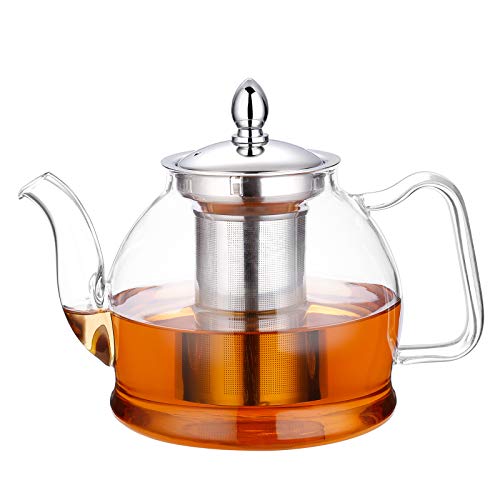
- HIWARE 1000ml Glass Teapot with Removable Infuser — Check on Amazon
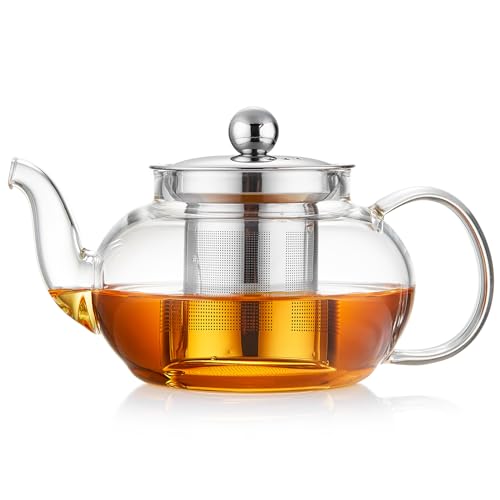
- PARACITY Glass Teapot Stovetop 18.6 oz (550ml)
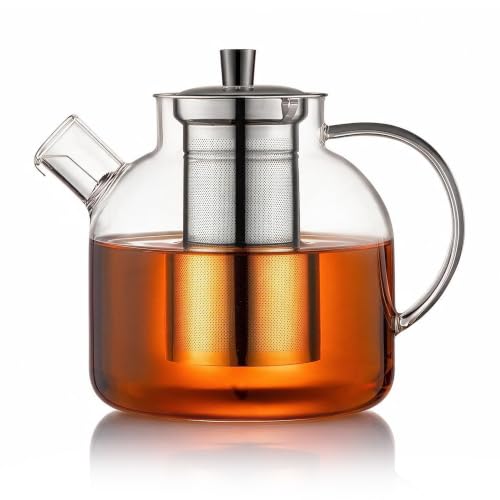
- Ehugos 1500ml (50 oz) Glass Teapot with Removable Infuser
- Teabloom Stovetop & Microwave Safe Glass Teapot (40 oz)
- DOPUDO Small Glass Teapot with Infuser, 18 oz (530ml)
- STNTUS Glass Teapot, 40 oz / 1200ml, 4–6 Cups
Read the full guide ↓
Finding the best teapots in Australia takes a little more homework than it does for shoppers in the United States, and not because the products are different. The pots themselves are the same glass, stovetop-safe designs sold worldwide. The difference is everything around the purchase: international shipping times, prices displayed in a foreign currency until checkout, and the simple fact that a fragile glass vessel has further to travel before it reaches a kitchen in Brisbane, Perth, or Hobart. None of that should put you off. It just means the smartest way to shop for the best teapots Australia has access to is to choose the right pot first, then verify the delivery details before you pay.
This guide compares six glass teapots that suit the way Australians actually drink tea. That includes the morning pot of strong black tea shared at the table, the loose-leaf green tea brewed carefully at lower temperatures, and the blooming teas that turn an ordinary afternoon into a small ceremony. Every pick here is a glass pot with a removable infuser, because glass lets you watch the leaves unfurl and judge the colour of the brew without lifting the lid, and a removable infuser lets you stop the steep exactly when the flavour is right. Sizes run from a compact 530ml single-serve pot to a generous 1500ml pot that can carry a whole family breakfast.
One practical note before the picks: none of these teapots is electric, so Australia’s 230–240 volt power supply and Type I plugs are irrelevant here. These are stovetop and pour-over vessels. Several are described by their makers as stovetop safe, which means they can heat water directly on a gas or electric cooktop, while others are designed to receive hot water from a kettle. We flag which is which in every review, because using a pour-over-only pot on a burner is the fastest way to crack it. If you are still deciding between formats, our companion guide to the Best Teapots For Brewing Tea walks through the brewing fundamentals that apply to every pot in this roundup.
Key Takeaways
- All six picks are glass teapots with removable infusers, suited to loose-leaf and blooming teas; capacities run from 530ml to 1500ml.
- The HIWARE 1000ml is the best all-rounder for most Australian households: a true one-litre pot, stovetop safe, sized for two to four drinkers.
- Stovetop-safe models (HIWARE, PARACITY, Ehugos, Teabloom, STNTUS) can heat water on the cooktop; the DOPUDO is a pour-over brewer, so pair it with a kettle.
- For households of four or more, the Ehugos 1500ml and STNTUS 1200ml avoid the mid-breakfast refill.
- Order fragility matters: choose listings with sturdy packaging and a clear returns path, and inspect the pot the day it arrives.
- Glass shows scale quickly in hard-water areas, so a weekly descale keeps the pot presentable and the flavour clean.
In this guide
Quick Picks
| Pick | Badge | Capacity | Infuser | Link |
|---|---|---|---|---|
| HIWARE Glass Teapot | Best Overall | 1000ml | Removable infuser | Check on Amazon |
| PARACITY Glass Teapot | Best for Travel & Small Households | 18.6 oz / 550ml | Removable 18/8 stainless steel infuser | Check on Amazon |
| Ehugos Glass Teapot | Best Large Capacity | 1500ml / 50 oz | Removable stainless infuser | Check on Amazon |
| Teabloom Glass Teapot | Best for Blooming Tea | 40 oz | Removable glass infuser | Check on Amazon |
| DOPUDO Small Glass Teapot | Best for One Person | 18 oz / 530ml | Removable 18/8 steel infuser | Check on Amazon |
| STNTUS Glass Teapot | Best for Families | 40 oz / 1200ml, 4–6 cups | Infuser with stainless steel strainer | Check on Amazon |
How These Picks Were Chosen
We built this shortlist by comparing glass teapots sold through Amazon on the attributes that decide whether a pot gets used daily or gathers dust: usable capacity, infuser design, whether the maker rates the pot for stovetop use, and how the size maps to real households. Every product named here was verified against the manufacturer’s own listing data, including its stated capacity, materials, and included components, on 2026-11-20. Where a listing describes a pot as stovetop safe, we say so; where it does not, we treat the pot as a pour-over brewer and tell you plainly.
This is a research-led guide, not a laboratory test. We did not boil, drop, or deliberately abuse these pots, and we do not claim hands-on scores we cannot stand behind. Instead, we cross-checked listing specifications against the well-documented behaviour of borosilicate glassware — its resistance to thermal shock, its tendency to show mineral scale, and the fragility of thin spouts and handles in transit. For Australian readers we paid particular attention to sizing in millilitres, because a pot advertised in fluid ounces alone can mislead: a US fluid ounce is slightly larger than the imperial measure some older Australian recipes use, so we give both figures wherever the maker states them.
We also weighted everyday practicality over novelty. A teapot for the Australian market has to survive a long delivery journey, suit both loose-leaf and bagged tea drinkers, and be easy to clean in a normal kitchen sink. Pots that met those tests made the list; the badges reflect the household each one serves best. If your priority is a pot that can also boil the water itself, the shortlist in our guide to the Best Teapots For Boiling Water overlaps heavily with this one, and the overlap is deliberate — stovetop-safe glass is the most flexible format for small kitchens.
The 6 Best Teapots Australia Homes Actually Use
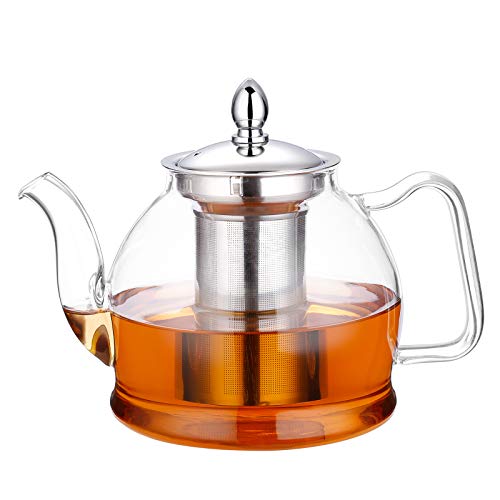
HIWARE 1000ml Glass Teapot with Removable Infuser
Badge: Best Overall
Strengths
- A true one-litre capacity, which maps neatly onto metric measuring jugs and serves two large mugs or about four smaller cups.
- Stovetop safe, so it can heat water on the cooktop and then brew in the same vessel, saving bench space.
- Removable infuser handles both blooming teas and loose leaf, and lifts out cleanly to stop the steep.
Trade-offs
- Glass walls lose heat faster than ceramic or cast iron, so long, slow breakfasts may want a tea cosy.
- The one-litre size is more pot than a single drinker needs, and a half-filled pot steeps less evenly.
- As with all glassware shipped internationally, inspect the spout and handle for transit damage on arrival.
Spec box
- Capacity: 1000ml
- Material: Glass (per manufacturer listing)
- Infuser: Removable infuser included
- Stovetop: Described as stovetop safe by the maker
- Tea types named by maker: Blooming and loose leaf
The HIWARE earns the top spot because one litre is the size Australian households reach for most: enough for a couple’s morning pot with a top-up each, small enough to lift comfortably when full. The stovetop-safe rating makes it a genuine two-in-one — fill it, set it over a low-to-medium burner, and brew where the water heated. That matters in smaller Australian kitchens and granny flats where a separate kettle and pot compete for the same power point and bench corner. The clear walls show the brew colour developing, which is the most reliable way to judge strength with unfamiliar leaves, and the removable infuser means the second cup does not stew while the first is poured.
Its honest limitation is heat retention. Glass is a poor insulator, and a pot brewed at the start of a long weekend breakfast will be lukewarm by the last pour unless you use a cosy or brew smaller amounts more often. Treat it as a brew-and-serve pot rather than a keep-warm pot and it performs exactly as promised.
Best for: Most households wanting one versatile pot / Not suited for: Drinkers who need tea kept hot for hours
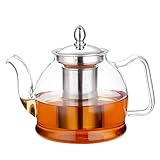

PARACITY Glass Teapot Stovetop 18.6 oz (550ml)
Badge: Best for Travel & Small Households
Strengths
- Compact 550ml size suits one or two drinkers and small benches, caravans, and office desks.
- Borosilicate glass with a removable 18/8 stainless steel infuser, a durable pairing for daily use.
- The maker positions it for camping and travel as well as home use, and the small footprint packs easily.
Trade-offs
- 550ml will not serve a table of guests; expect refills beyond two mugs.
- Small pots cool faster, so delicate teas are fine but long steeps lose temperature.
- Glass remains glass — a travel pot needs a padded bag, not a loose spot in the boot.
Spec box
- Capacity: 18.6 oz / 550ml
- Material: Borosilicate glass
- Infuser: Removable 18/8 stainless steel infuser
- Stovetop: Listed as a stovetop teapot by the maker
- Use cases named by maker: Camping, travel, home brewing
Australia runs on road trips, and the PARACITY is the pot in this roundup sized for them. At 550ml it brews two honest cups, heats on a stovetop or camp burner per its listing, and takes up little room in a caravan kitchen or a share-house cupboard. The 18/8 stainless steel infuser is a thoughtful inclusion at this size: fine enough for most loose-leaf teas, and more forgiving than glass infusers if the pot gets knocked around in transit. Solo drinkers at home will like it for the same reason — a right-sized pot brews a fresher cup than a litre pot filled a third of the way.
The limitation is simply scale. This is not the pot for a family breakfast or a book-club afternoon, and no amount of clever pouring changes the arithmetic of 550ml. Buy it as a personal or travelling pot and it is excellent; buy it as your only pot for a household of four and you will refill it constantly.
Best for: Solo drinkers, couples, caravanners and campers / Not suited for: Entertaining groups

Ehugos 1500ml (50 oz) Glass Teapot with Removable Infuser
Badge: Best Large Capacity
Strengths
- The largest pot here at 1500ml, sized for family breakfasts and entertaining without a mid-service refill.
- Stovetop safe with a removable stainless infuser, so it heats and brews in one vessel.
- Hand-crafted glass body makes it a presentable table centrepiece for blooming teas.
Trade-offs
- A full 1500ml of water is heavy; anyone with limited grip strength should pour with two hands.
- Oversized for one or two drinkers, and tea left sitting in a big pot over-steeps once the infuser is out only if leaves remain in the water — remove the infuser promptly.
- Takes more cupboard room than the compact models.
Spec box
- Capacity: 1500ml / 50 oz
- Material: Glass, hand crafted
- Infuser: Removable stainless infuser
- Stovetop: Described as stovetop safe by the maker
- Tea types named by maker: Blooming and loose leaf
When the whole household drinks tea — or when visitors arrive and the kettle goes on twice — the Ehugos is the pot that keeps up. Fifty ounces covers roughly six standard cups, and because it is stovetop safe you can bring the full volume to temperature in the pot itself rather than shuttling kettle loads. The wide body gives blooming tea flowers room to open fully, which is where a large glass pot earns its keep at the table: the brew becomes part of the occasion. For entertainers comparing capacities across formats, our overview of the Best Teapots For Cafe Use applies similar big-batch logic to commercial settings.
Be honest with yourself about the weight. Water weighs a kilogram per litre, so a full Ehugos plus the glass itself is a serious lift, and the pour needs a steady hand. Households that mostly brew for one should step down to the HIWARE or DOPUDO instead.
Best for: Families and entertainers brewing in volume / Not suited for: Solo drinkers or anyone who finds heavy pours difficult

Teabloom Stovetop & Microwave Safe Glass Teapot (40 oz)
Badge: Best for Blooming Tea
Strengths
- Includes two blooming teas in the box, so the pot’s party trick works from the first brew.
- Stovetop and microwave safe, and works as a 2-in-1 kettle and tea maker.
- Removable glass infuser keeps the all-glass presentation that blooming tea drinkers want.
Trade-offs
- A glass infuser is more delicate than a steel one and needs gentler handling in the sink.
- 40 oz is a mid-size pot — generous for two, a stretch for six.
- Blooming teas are a specialty purchase once the included pair is used.
Spec box
- Capacity: 40 oz
- Infuser: Removable loose tea glass infuser
- Stovetop: Stovetop and microwave safe per maker
- Included: 2 blooming teas
- Format: 2-in-1 tea kettle and tea maker
Teabloom built its name on flowering teas, and this pot is designed around them. A blooming tea ball needs clear walls, room to expand, and water hot enough to open the flower without cooking it; the 40 oz glass body delivers all three, and the pair of blooming teas in the box means an Australian buyer can try the format the day the parcel arrives rather than hunting down a specialty supplier first. The glass infuser suits the aesthetic — no metal in view while the flower opens — and the microwave-safe rating is a quiet convenience for reheating a forgotten cup’s worth of water on busy mornings.
The trade-off sits in that glass infuser. It is the most fragile component in this roundup, and households that wash up in a crowded sink should consider whether the all-glass look is worth the care it asks for. As a gift, though — and blooming tea is a gift format — few pots here present better.
Best for: Blooming tea fans and gift buyers / Not suited for: Rough-and-tumble family kitchens


DOPUDO Small Glass Teapot with Infuser, 18 oz (530ml)
Badge: Best for One Person
Strengths
- Compact 530ml borosilicate body sized for individual loose-leaf brewing.
- Removable 18/8 steel infuser is fine, durable, and easy to rinse.
- Small footprint suits studio apartments, dorm rooms, and desk-side brewing.
Trade-offs
- Not a stovetop model on its listing — it brews with water heated in a separate kettle.
- 18 oz serves one generously or two modestly, and no more.
- Delicate teas brewed in small pots need attention; the margin for a distracted over-steep is thin.
Spec box
- Capacity: 18 oz / 530ml
- Material: Borosilicate glass
- Infuser: Removable 18/8 steel infuser
- Format: Compact teapot for individual loose-leaf brewing
- Stovetop: Not stated in the maker listing — treat as pour-over only
The DOPUDO is the honest solo pot. Most single drinkers who buy a litre teapot end up brewing in a mug instead, because a big pot half-filled steeps unevenly and reheats badly. At 530ml this one is built for the way one person actually drinks: a full pot is two small cups or one large mug, brewed fresh each time. The steel infuser keeps fine leaves out of the cup, and the compact body rinses in seconds. Students and desk workers in particular will appreciate that it asks for almost no bench or cupboard space — a real consideration in Australian inner-city apartments where kitchen storage is measured in centimetres.
Know what you are buying: the listing does not claim stovetop use, so this pot never goes on a burner. Pair it with the kettle you already own and it is a brewer only — which is all a solo drinker needs, but households wanting one vessel to heat and brew should choose the HIWARE or PARACITY instead.
Best for: Solo loose-leaf drinkers, students, desk brewing / Not suited for: Anyone wanting to heat water in the pot itself

STNTUS Glass Teapot, 40 oz / 1200ml, 4–6 Cups
Badge: Best for Families
Strengths
- 1200ml capacity rated by the maker at 4–6 cups, the family-breakfast sweet spot.
- Stovetop safe, with both an infuser and a stainless steel strainer for flexible brewing.
- Dual straining catches leaves whether you brew loose in the pot or in the infuser basket.
Trade-offs
- Two straining components mean two parts to wash and keep track of.
- At 1200ml it is heavier than the mid-size pots when full.
- Families who drink one cup each may find the HIWARE’s litre a closer fit.
Spec box
- Capacity: 40 oz / 1200ml
- Cup rating: 4–6 cups per maker
- Infuser: Infuser basket plus stainless steel strainer
- Stovetop: Described as stovetop safe by the maker
- Tea types named by maker: Loose tea
The STNTUS is the family workhorse of the group. Its 4–6 cup rating matches the reality of a household pot: parents, a teenager or two, and a grandparent on weekends. The combination of an infuser basket and a stainless strainer gives you two ways to brew — leaves contained in the basket for easy removal, or leaves free in the pot with the strainer catching them at the spout for a stronger, more traditional extraction. That flexibility suits mixed households where one person drinks delicate green tea and another wants a robust black brew from the same pot across the day. Readers weighing family-size formats against tighter budgets will find the tier discussion in our guide to the Best Teapots For All Budgets useful alongside this one.
The extra hardware is the cost: an infuser and a strainer are two items to rinse, dry, and not lose down the back of the cutlery drawer. If your household always brews the same way, a simpler pot serves just as well.
Best for: Families of four to six and mixed-tea households / Not suited for: Minimalists who want one-part brewing
Comparison Table
| Teapot | Capacity | Infuser | Stovetop | Best role | Link |
|---|---|---|---|---|---|
| HIWARE | 1000ml | Removable infuser | Yes, per maker | All-round household pot | Check on Amazon |
| PARACITY | 550ml | 18/8 stainless steel | Yes, per maker | Travel, camping, small homes | Check on Amazon |
| Ehugos | 1500ml | Stainless infuser | Yes, per maker | Large gatherings | Check on Amazon |
| Teabloom | 40 oz | Glass infuser | Yes, plus microwave | Blooming tea | Check on Amazon |
| DOPUDO | 530ml | 18/8 steel infuser | Not stated | Solo brewing | Check on Amazon |
| STNTUS | 1200ml | Infuser + strainer | Yes, per maker | Families, 4–6 cups | Check on Amazon |
How to Choose a Teapot When Buying from Australia
Start with capacity, in millilitres. Work out how many drinkers the pot serves at once and how big your cups are. A standard mug holds about 250ml; a smaller teacup, 150–200ml. One drinker needs 500–600ml for a satisfying pot with a top-up. Two drinkers need around a litre. Four or more need 1200–1500ml, or accept a refill. Buying a pot one size up from your daily need is the classic mistake: tea brewed in a half-empty large pot cools quickly and steeps unevenly, because the leaves float in a shallow layer instead of circulating.
Decide whether the pot must heat water. A stovetop-safe glass pot doubles as a kettle, which is valuable in small kitchens, caravans, and offices without a full setup. A pour-over-only pot is usually cheaper in construction and perfectly good when a kettle already lives on your bench. Never guess: if the listing does not say stovetop safe, keep the pot off the burner. Five of the six pots here carry a stovetop claim from their makers; the DOPUDO does not, and we treat it accordingly.
Match the infuser to your tea. Fine stainless mesh suits broken-leaf and smaller teas and is the most forgiving to clean. Glass infusers look beautiful and suit large-leaf and blooming teas, but their slots are wider, so fine leaves can slip through, and the glass itself needs careful handling. If you drink a bit of everything, a pot with both an infuser and a spout strainer — the STNTUS arrangement — covers the most ground.
Factor in the Australian delivery reality. Glass travels badly when it is packed badly. Prefer listings fulfilled with proper protective packaging, check the returns window before ordering, and photograph the unboxing if the box arrives crushed. Also confirm the final price in Australian dollars at checkout and the estimated delivery date; a pot that arrives in four days and one that arrives in four weeks are different purchases even at the same price. If you are buying for a gift deadline, order with a buffer week.
Think about your water. Much of Australia has moderately hard tap water, and glass shows limescale as a white film faster than any other material. That is cosmetic, not dangerous, but it means glass pot owners in hard-water regions should plan on a weekly soak with citric acid or vinegar. If you know you will not do that, be aware the pot will look cloudy within a few months — the tea will taste fine, but the showpiece effect fades. Our broader survey of the Best Teapots For All Tea covers material trade-offs like this across a wider range of pots.
How to Brew, Use, and Care for a Glass Teapot
Brewing step by step. First, warm the pot: swirl a cup of hot water through it and discard. Cold glass steals heat from the brew and can stress the glass with a sudden temperature change. Second, add leaves to the infuser — roughly one teaspoon of loose leaf per 250ml as a starting point, adjusted to taste. Third, pour water at the right temperature: just off the boil for black tea, noticeably cooler — around 75–85°C — for green and white teas, which scorch and turn bitter in boiling water. Fourth, steep with the lid on: two to three minutes for green, three to five for black. Fifth, lift the infuser out and set it in a small dish; leaving it in guarantees an over-extracted second cup. Pour, and enjoy the colour show that is the whole point of glass.
Using a stovetop-safe pot safely. Fill the pot before it goes on the burner, never after it is hot. Use low to medium heat, centre the pot on the element or trivet, and never let it boil dry — a dry glass pot on a hot element is the most common cause of cracking. On gas, keep the flame under the base rather than licking up the sides. Let the pot cool for a few minutes before rinsing; plunging a hot pot under a cold tap invites thermal shock even in borosilicate.
Cleaning and descaling. Rinse the infuser immediately after use; dried leaves stain mesh and are harder to shift later. Wash the pot in warm water with a soft sponge — no scouring pads on glass. For scale, fill with a solution of water and a tablespoon of citric acid (sold in the baking aisle of Australian supermarkets) or a splash of white vinegar, let it sit for an hour, then rinse well. Tea staining on glass responds to a paste of bicarbonate of soda applied gently with a cloth.
Troubleshooting.
- Problem: The tea tastes bitter and stewed → what to do: shorten the steep, remove the infuser as soon as the timer ends, and check your water temperature — green tea in boiling water is the most common culprit.
- Problem: A white film clouds the glass → what to do: it is limescale, not damage. Descale with citric acid as above and rinse thoroughly; repeat weekly if your tap water is hard.
- Problem: Leaves keep ending up in the cup → what to do: check that the infuser is seated fully and the lid is on straight; for very fine teas, pour more slowly so the spout strainer can do its work, or choose a finer-mesh infuser pot for those teas.
- Problem: A crack appears near the base → what to do: stop using the pot for hot liquids. Cracks in glass under thermal load can fail suddenly; retire the pot rather than risk a scald.
Tea Drinking in Australia: What Suits Local Habits
Australian tea drinking is more varied than the billy-tea stereotype suggests. The everyday pot in most homes brews strong black tea taken with milk, which is why the mid-to-large stovetop pots — HIWARE, STNTUS, Ehugos — anchor this guide: they heat, brew, and pour for a table without fuss. Alongside that tradition sits a growing loose-leaf culture in the cities, with specialty tea shops in Melbourne, Sydney, and Adelaide selling single-origin greens, oolongs, and native-ingredient blends featuring lemon myrtle and other local botanicals. Glass pots serve that culture well because delicate leaves reward precise steeping, and precise steeping is easier when you can see the liquor change colour.
Climate matters too. In the northern states, a glass pot often ends up brewing tea destined for the fridge — a strong double-strength brew poured over ice. Glass handles that transition gracefully as long as you let the pot cool slightly before refrigerating it, and the clear body makes judging iced-tea strength easy. In cooler southern winters, the same pot benefits from a cosy. The point is that a single well-chosen glass teapot covers more Australian use cases than almost any other format, provided its size matches the household.
Ordering Glassware from Overseas: A Short Survival Guide
Because several of these listings ship internationally, a few habits protect Australian buyers. Order one pot per parcel where you can — two glass vessels in one box raise the breakage risk. Keep the packaging until you have brewed with the pot twice; returns are far simpler with the original box. Inspect on arrival for the three classic transit injuries: a chipped spout lip, a hairline crack radiating from the handle join, and a lid that rocks instead of seating flat. Test the pour with cold water over the sink before the first brew. And keep expectations realistic about delivery windows in December and around major sales events, when international parcels slow down considerably.
Glass Teapots vs Ceramic, Cast Iron, and Stainless Steel
Every pot in this guide is glass, and that choice deserves a defence, because Australian shoppers will also meet ceramic, cast iron, and stainless steel pots in the same search results. Glass wins on visibility: you can watch leaves expand, judge liquor colour at a glance, and see exactly when a blooming tea has opened. It also wins on flavour neutrality — glass adds nothing to the water, so a delicate white tea tastes of tea and nothing else — and on cleaning honesty, because you can see residue and scale rather than guessing. For new loose-leaf drinkers especially, that visibility is a teaching tool: within a week of brewing in glass, most people can judge steep strength by colour alone.
The other materials win elsewhere. Ceramic holds heat noticeably better and survives knocks that would end a glass pot, which is why it remains the default family material in many homes. Cast iron retains heat best of all and suits long, slow sessions, but it is heavy, costs more, and its enamelled interior still demands care. Stainless steel is the durability champion and the right choice for camping kits and commercial abuse, though it hides the brew entirely and can impart a faint taste to very delicate teas until it is well seasoned by use. None of this makes glass a poor choice — it makes it a deliberate one. Choose glass when the ritual and the leaf quality matter, accept the descaling habit and the careful handling, and it rewards you every brew. Households with toddlers, tile floors, and chaotic benches may reasonably choose ceramic for daily service and keep a glass pot like the Teabloom for occasions when the tea itself is the entertainment.
Sizing Worked Examples for Australian Households
Abstract capacity numbers become clearer with concrete households. A single person in a studio apartment who drinks two mugs of green tea across a work-from-home day is best served by the DOPUDO at 530ml or the PARACITY at 550ml: each brew is fresh, nothing stews, and the pot rinses in the time the kettle takes to boil for the next round. A couple who share a pot of black tea at breakfast and another in the evening should look at the HIWARE’s full litre, which pours two generous mugs and a shared top-up without a refill trip to the kitchen. A family of five taking tea together on weekend mornings needs the STNTUS at 1200ml at minimum, and the Ehugos at 1500ml if the cups are mugs rather than teacups — under-buying here means someone always gets the stewed last pour from a second, rushed brew.
Entertainers should think in rounds rather than cups. A 1500ml pot serves a round of six teacups at once; the second round can brew while the first is poured and discussed, and because the Ehugos is stovetop safe, the refill water heats in the pot itself. Anyone hosting a blooming-tea occasion should size for spectacle as well as volume: the flower needs room to open, so a 40 oz pot like the Teabloom displays one bloom properly, while crowding two blooms into a small pot flattens the effect. When in doubt between two sizes, choose the smaller for daily drinking and borrow capacity by brewing twice for guests — fresh tea in two rounds beats stewed tea in one.
Common Buying Mistakes
- Buying by fluid ounces without converting. US fluid ounces differ slightly from imperial ones; shop by the millilitre figure to know exactly what you are getting.
- Putting a pour-over pot on the stove. If the listing does not claim stovetop safety, the burner is off limits — this is the most expensive mistake glass pot owners make.
- Choosing capacity for guests, not for Tuesdays. The pot you use daily should fit your daily drinkers; borrow or refill for the rare crowd.
- Ignoring the infuser style. Fine teas through a wide-slot glass infuser means leaves in every cup. Match mesh to leaf.
- Skipping the arrival inspection. Transit cracks are easiest to claim within the returns window, ideally documented the day the parcel lands.
A Short Note on Blooming Teas and Loose Leaf in Glass
Two of the formats named across these listings — blooming tea and loose leaf — deserve a word of guidance for buyers new to them. A blooming tea is a hand-tied ball of tea leaves wrapped around a dried flower; dropped into hot water in a glass pot, it slowly opens into a small underwater bouquet. The spectacle is the point, so brew blooming teas in the clearest, widest pot you own — here, the Teabloom and the Ehugos — use water just off the boil, and give the flower several unhurried minutes to open before pouring. One ball typically re-steeps two or three times, with each infusion lighter and more floral than the last.
Loose leaf is the everyday case, and glass rewards it in a practical way: you can see whether the leaves have fully expanded, which is the simplest indicator that the water is circulating properly and the steep is progressing. Rolled oolongs and tightly twisted greens need room to unfurl, so fill the infuser no more than a third full for those teas. Fine, broken leaves extract quickly and belong in the finer steel infusers of the PARACITY, DOPUDO, or STNTUS. Keeping one small habit — warming the pot before brewing, as the how-to section describes — improves both formats more than any accessory you can buy, because temperature stability, not equipment, is what separates a flat cup from a fragrant one.
Final Recommendation
For most Australian households, the HIWARE 1000ml is the pot to buy first: a true litre, stovetop safe, with a removable infuser that handles the full range from breakfast black tea to blooming teas, at a size that suits couples and small families alike. If your household is bigger, step up to the STNTUS 1200ml for family service or the Ehugos 1500ml for entertaining. Solo drinkers should not buy big: the DOPUDO 530ml brews a fresher personal pot, and travellers should take the PARACITY. Blooming tea devotees will get the most joy from the Teabloom, glass infuser and all. Whichever you choose, verify the delivered price and delivery estimate at checkout, inspect the glass on arrival, and the pot should serve you for years.
Frequently Asked Questions
Can these teapots be used on Australian gas and electric cooktops?
Five of the six are described by their makers as stovetop safe and can heat water on gas or electric cooktops over low to medium heat. The DOPUDO’s listing makes no stovetop claim, so treat it as a pour-over brewer and heat water in a kettle. Always fill the pot before heating and never let a glass pot boil dry.
Do I need to worry about voltage or plugs with these teapots?
No. None of these pots is electric; they are glass vessels that either sit on a cooktop or receive hot water from a kettle. Voltage and plug differences between countries do not apply to them at all.
How many cups does a 1000ml teapot really make?
It depends on your cups. At 250ml per mug, a litre pot pours four mugs with nothing left; at 180ml per teacup, it pours about five. Makers’ cup ratings usually assume smaller cups, so measure your favourite mug once and do the arithmetic before choosing a size.
Is glass a good choice in hard-water areas of Australia?
Yes, with a small maintenance habit. Hard water leaves a white limescale film on glass faster than on opaque materials. A weekly soak with citric acid solution keeps the pot clear; the film is cosmetic and does not affect safety or, once removed, flavour.
What should I check when my teapot arrives from overseas?
Inspect the spout lip for chips, the handle join for hairline cracks, and the lid for a flat, stable seat. Pour cold water over the sink to test for drips and leaks. Photograph any damage immediately and contact the seller within the returns window, keeping the original packaging until you are satisfied.
Can I brew tea bags in these pots, or only loose leaf?
Both work. You can place bags directly in the pot and remove them at the end of the steep, or put loose leaf in the infuser. The infuser route gives cleaner pouring and easier cleanup, but nothing about these pots requires loose leaf. Many households use bags on weekday mornings and loose leaf on weekends, and a glass pot with a removable infuser handles both routines without any adjustment beyond removing the basket on bag days.
Should I choose a stovetop-safe pot or keep using my kettle?
If bench space is tight or you camp and caravan often, a stovetop-safe pot that heats and brews in one vessel is genuinely convenient, and five of the six pots here qualify. If you already own a good kettle and mostly brew at the bench, a pour-over pot like the DOPUDO does the same brewing job with one less thing to worry about. The deciding factor is habit, not quality: pick the workflow you will actually follow on a weekday morning.
How do I stop the second cup from tasting bitter?
Remove the infuser as soon as the steep finishes — that single habit fixes most bitterness. If the pot will sit, decant the brewed tea into a second warmed vessel, or brew a smaller amount more often. Leaving leaves in hot water keeps extracting tannins long after the flavour peak.