Disclosure: topratedkitchenware.com is reader-supported. When you buy through links on our site, we may earn an affiliate commission from Amazon and other retailers, at no extra cost to you.
Where to buy
Five of the six teapots below qualify as the best teapots for boiling water because their makers describe them as stovetop safe — the qualification that matters when a teapot must boil its own water. The sixth, the DRNKNSTX steeper, makes no stovetop claim in its listing, so we review it honestly as a steep-only companion and give it no purchase link — it must never sit on a burner. All linked pots are sold through Amazon; verify the stovetop wording on the listing itself before ordering, because that claim is the whole basis of this guide.
- CNGLASS Glass Teapot Stovetop Safe with Removable Infuser, 20.3 oz — Check on Amazon
- DRNKNSTX Enchanted Tea Pot with Tea Infuser, 20 oz — steep-only, reviewed below without a link
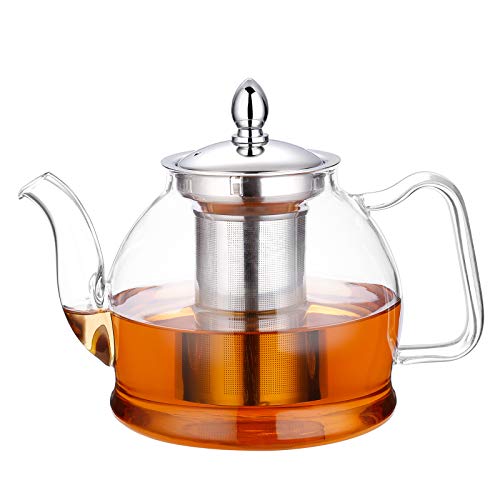
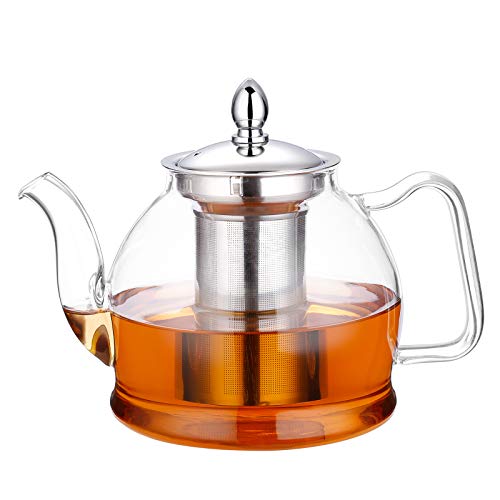
- HIWARE 1000ml Glass Teapot with Removable Infuser
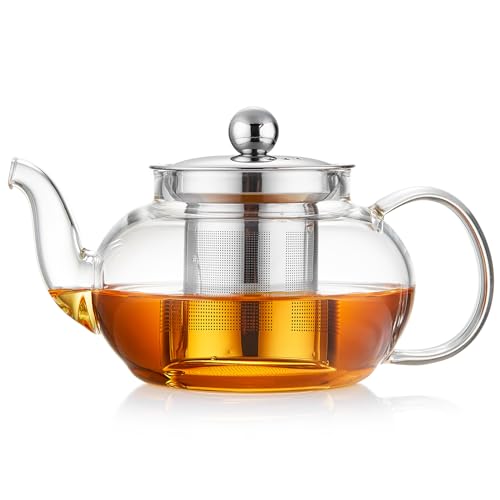
- PARACITY Glass Teapot Stovetop 18.6 oz (550ml)
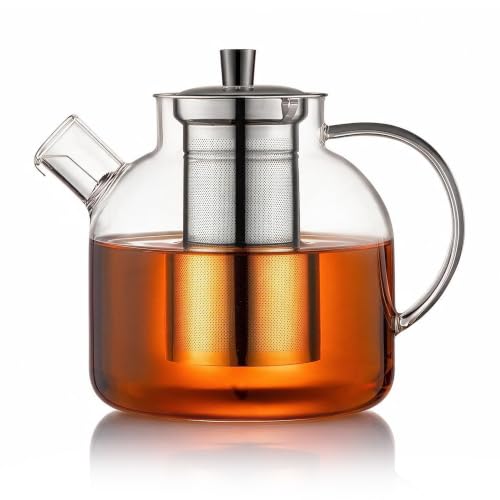
- Ehugos 1500ml (50 oz) Glass Teapot with Removable Infuser
- Teabloom Stovetop & Microwave Safe Glass Teapot (40 oz)
Read the full guide ↓
The best teapots for boiling water answer a deceptively simple need: one vessel that heats the water and brews the tea. Most teapots cannot do it. A standard brewing pot is built to receive hot water, and putting it on a burner invites cracked glass, scorched bases, and in the worst case a pot that fails while full of boiling water. The pots that can do it are built differently — heat-resistant glass, a maker willing to state stovetop safety plainly in the listing, and a shape that sits stably on an element or grate. This guide is strict about that distinction, because with boiling water the difference between a rated pot and an unrated one is not performance. It is safety.
Five of the six pots here carry a stovetop claim from their makers, verified against listing data on 2026-11-20. They range from a compact 20.3 oz pot that boils a personal serving on the smallest burner to a 1500ml vessel that brings a family-sized volume to the boil in the same glass it brews in. The sixth pot, the DRNKNSTX steeper, is included deliberately and labelled honestly: it is a good steeping vessel that must be filled from a kettle, and its presence in this guide is a standing reminder to check the claim before the burner, every time. If your kitchen runs on an electric hob, our companion guide to the Best Teapots For Electric Stove goes deeper on element-by-element compatibility; this guide covers the boiling fundamentals that apply on any heat source.
Why boil in the pot at all, when kettles exist? Three honest reasons. Small kitchens and caravans gain a whole appliance’s worth of space. The water can be caught at the exact moment it suits the leaf — just off the boil for greens, rolling for blacks — without a transfer that sheds degrees. And there is a quiet satisfaction in the single-vessel ritual: fill, heat, steep, pour, done. Against those stand real cautions, which this guide will not minimise: glass on a stove demands attention, moderate heat, and an absolute rule against boiling dry. Choose a rated pot, follow the method section, and the practice is safe and genuinely convenient.
Key Takeaways
- Only pots whose makers state stovetop safety belong on a burner; five of the six here carry that claim, and the DRNKNSTX does not and is reviewed as steep-only.
- The HIWARE 1000ml is the best all-round boiling teapot: stovetop safe, one litre, removable infuser.
- The Ehugos 1500ml boils the largest volume; the CNGLASS and PARACITY boil personal volumes on small burners.
- The Teabloom adds a microwave-safe rating, a second heating route no other pot here offers.
- Boiling in glass safely means moderate heat, a filled pot, no boiling dry, and no cold-water shock afterwards.
- Heat-resistant borosilicate glass tolerates the stove because it expands very little as it heats — but only within the maker’s stated limits.
In this guide
Quick Picks
| Pick | Badge | Capacity | Boils water? | Link |
|---|---|---|---|---|
| CNGLASS Glass Teapot | Best Compact Boiler | 20.3 oz | Yes — stovetop safe per maker | Check on Amazon |
| DRNKNSTX Enchanted Tea Pot | Steep-Only Companion (Prose-Only) | 20 oz | No — no stovetop claim; kettle fill only | Reviewed below, no link |
| HIWARE Glass Teapot | Best All-Round Boiler | 1000ml | Yes — stovetop safe per maker | Check on Amazon |
| PARACITY Glass Teapot | Best Travel Boiler | 18.6 oz / 550ml | Yes — stovetop listed by maker | Check on Amazon |
| Ehugos Glass Teapot | Best Large-Volume Boiler | 1500ml / 50 oz | Yes — stovetop safe per maker | Check on Amazon |
| Teabloom Glass Teapot | Best Boiler for Blooming Tea | 40 oz | Yes — stovetop and microwave safe | Check on Amazon |
How These Picks Were Chosen
The selection rule for this guide was absolute: a pot could only be recommended as a boiling teapot if its own manufacturer’s listing states stovetop safety. We verified every listing on 2026-11-20 and recorded the exact basis for each inclusion — the CNGLASS, HIWARE, and Ehugos are each described as stovetop safe; the PARACITY is listed as a stovetop teapot; the Teabloom is described as stovetop and microwave safe. The DRNKNSTX listing contains no stovetop claim of any kind, so it appears as a clearly labelled prose-only review with no link and no image: a useful steeper, and a useful example of the many pots that must stay off the heat.
This is a research-led guide, not a bench test; we did not boil these pots to failure or measure their heating times, and we invent no performance figures. What careful reading establishes is the claim structure — who states what — and established glass science explains the rest: borosilicate glass expands very little when heated, which is why rated glass pots can sit on a stove that would crack ordinary glass, and why even rated pots have limits around dry heat, maximum flame, and sudden cooling. Where a maker’s listing is silent, we treat silence as a no. That conservatism is deliberate, and it is the only defensible way to write about boiling water.
We also weighed the boiling use case honestly against the kettle alternative throughout. A reader who owns a good temperature-control kettle gains convenience, not capability, from these pots; a reader in a small flat, a caravan, or a stove-first household gains a genuinely simpler workflow. The reviews say which is which, and the technique guidance in our Best Teapots For Brewing Tea companion applies unchanged once the water is hot, whichever vessel heated it.
The 6 Best Teapots for Boiling Water (5 Boilers + 1 Honest Steep-Only Pick)

CNGLASS Glass Teapot Stovetop Safe with Removable Infuser, 20.3 oz
Badge: Best Compact Boiler
Strengths
- Stovetop-safe rating at a compact 20.3 oz size — a personal volume that heats quickly on a small burner.
- Removable infuser covers the loose leaf and blooming teas its maker names.
- Simple construction: nothing to jam, and the whole pot is easy to inspect for scale or damage.
Trade-offs
- 20.3 oz boils for one or two drinkers only.
- Small pots on large burners need care: keep the heat under the base, not up the sides.
- No microwave rating is stated, so the stove is its only heating route.
Spec box
- Capacity: 20.3 oz
- Infuser: Removable infuser
- Stovetop: Described as stovetop safe by the maker
- Tea types named by maker: Loose leaf and blooming tea
The CNGLASS is the boiling pot for the smallest honest use case: one person, one burner, one vessel. A 20.3 oz volume comes to the boil quickly, which matters more than speed alone — less time on the heat means less energy, less waiting, and a shorter window in which a distracted cook can let a pot boil dry. On a small apartment stove or a caravan hob, it sits stably on the smallest ring, heats its own water, and brews in place. For solo drinkers who currently run a kettle for a single mug’s worth of tea, this is the pot that deletes the kettle from the routine entirely.
Its discipline is burner matching. A small base on a large gas ring wastes heat up the sides and can overheat the handle zone; use the smallest suitable burner, moderate flame, and centre the pot. Observed that way, it is the most economical boiler in this guide in every sense.
Best for: Solo drinkers and small stoves / Not suited for: Family volumes
DRNKNSTX Enchanted Tea Pot with Tea Infuser, 20 oz (Prose-Only: Not a Boiler)
Badge: Steep-Only Companion (Prose-Only)
Strengths
- A characterful glass steeper for loose leaf, well suited to herbal and dessert teas brewed from kettle water.
- 20 oz personal size matches an unhurried evening session.
- Gift-oriented presentation makes it an appealing first loose-leaf vessel.
Trade-offs
- Its listing makes no stovetop claim whatsoever — it must never be used to boil water or placed on any burner.
- It depends entirely on a kettle or another vessel for hot water.
- Steeper formats are designed for prompt serving, not heat retention.
Spec box
- Capacity: 20 oz
- Infuser: Tea infuser / steeper design for loose leaf
- Format: Glass tea maker and steeper
- Stovetop: NOT stated by the maker — do not heat on a stove
We include the DRNKNSTX in a boiling-water guide for one reason: to draw the line in public. Its listing describes a glass tea pot with an infuser for loose leaf steeping, and says nothing — anywhere — about stovetop use. Under the rule this guide follows, silence means no. This pot brews with water boiled elsewhere, and used that way it is a pleasant, giftable steeper for the forgiving end of the tea shelf: herbals, dessert blends, and evening tisanes that want nothing more than hot water and time. Used on a burner, it would be a hazard its maker never endorsed. If you own one, enjoy it as a steeper; if you are shopping for a boiler, choose one of the five rated pots around it. Because it cannot serve this guide’s core purpose, it carries no purchase link and no product image here — the honest treatment for a pick that fails the keyword’s central test while remaining a legitimate product in its own category.
Best for: Kettle owners wanting a giftable steeper / Not suited for: Boiling water under any circumstances
HIWARE 1000ml Glass Teapot with Removable Infuser
Badge: Best All-Round Boiler
Strengths
- Stovetop safe at a full one-litre capacity — the family-useful volume that still handles like a teapot.
- Removable infuser for the blooming and loose leaf teas its maker names; lifts out to stop the steep.
- One vessel from cold tap to poured cup, which simplifies every step of the routine.
Trade-offs
- A litre takes longer to boil than the compact pots; plan the breakfast timing accordingly.
- Glass sheds heat after the boil, so brew promptly once the water is ready.
- Full, it is a two-hand pour for smaller hands.
Spec box
- Capacity: 1000ml
- Material: Glass (per manufacturer listing)
- Infuser: Removable infuser included
- Stovetop: Described as stovetop safe by the maker; also described as a tea kettle by the maker
- Tea types named by maker: Blooming and loose leaf
The HIWARE is the pot this guide would hand to most households, because one litre is where boiling in the pot stops being a novelty and becomes the household system. It heats the morning’s water where the tea will brew, serves two large mugs or a small table, and its maker’s own description calls it a tea kettle as well as a teapot — the dual identity this category is about. The removable infuser keeps the workflow clean: water boils with the infuser out or in as you prefer, leaves steep under the lid, and the basket lifts away before the second pour. On gas or electric heat at moderate settings, it behaves exactly as its rating promises.
Its cautions are the category’s cautions at family scale: more water means more time on the burner, which means more minutes in which attention matters, and a full litre of near-boiling water is a serious pour. Treat it with the respect any kettle earns and it is the most complete boiling teapot here.
Best for: Households wanting one vessel to heat and brew / Not suited for: Anyone who regularly boils for one small cup only
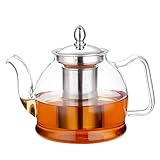

PARACITY Glass Teapot Stovetop 18.6 oz (550ml)
Badge: Best Travel Boiler
Strengths
- Borosilicate glass listed by its maker as a stovetop teapot, at a travel-friendly 550ml.
- Removable 18/8 stainless steel infuser — the finest straining in this group, and durable in transit.
- Its maker positions it for camping and travel, where a single heat-and-brew vessel is worth the most.
Trade-offs
- 550ml boils for one or two; groups will refill.
- Camp stoves vary wildly in heat output; start low and learn your stove’s temper.
- Glass on the road needs padded packing, always.
Spec box
- Capacity: 18.6 oz / 550ml
- Material: Borosilicate glass
- Infuser: Removable 18/8 stainless steel infuser
- Stovetop: Listed as a stovetop teapot by the maker
- Use cases named by maker: Camping, travel, home brewing
Away from a home kitchen, the case for a boiling teapot doubles: every vessel you do not pack is weight and space saved, and a pot that heats its own water on a camp stove or caravan hob replaces both kettle and brewer. The PARACITY is the pot here built for that life — borosilicate glass, a stovetop listing, a steel infuser that shrugs off the knocks a glass infuser would not, and a 550ml volume matched to the two-cup reality of travel brewing. Its maker names camping and travel outright, and the specification supports the claim.
The travel caveat is heat control. Portable stoves often run fierce and uneven; set the pot over the lowest stable flame, keep it centred, and never walk away from water on a camp burner. Do that, and this is the most self-sufficient small pot in the guide.
Best for: Campers, caravanners, and small-space travellers / Not suited for: Family volumes

Ehugos 1500ml (50 oz) Glass Teapot with Removable Infuser
Badge: Best Large-Volume Boiler
Strengths
- The largest boiling capacity here at 1500ml — a full table’s water heated in the brewing vessel itself.
- Stovetop safe with a removable stainless infuser for loose leaf and blooming teas.
- Hand-crafted glass body presents blooming teas beautifully once the water is off the heat.
Trade-offs
- The longest time on the burner of any pot here, so it demands the most sustained attention.
- A full 1500ml is heavy; pour with two hands and a steady grip.
- Oversized for daily solo use, where the compact boilers are quicker and safer.
Spec box
- Capacity: 1500ml / 50 oz
- Material: Glass, hand crafted
- Infuser: Removable stainless infuser
- Stovetop: Described as stovetop safe by the maker
- Tea types named by maker: Blooming and loose leaf
Boiling a litre and a half in the pot is a commitment, and the Ehugos is the pot for households whose tea service justifies it: the family breakfast, the guest afternoon, the shared house at exam time. The alternative workflow — kettle load after kettle load, decanted into a cold pot that steals heat at every transfer — is exactly what this pot abolishes. Its wide body also gives blooming teas the stage they need once the heat is off, so the same vessel that did the utilitarian work does the ceremonial work a minute later. Venues working at this scale daily will recognise the logic from our Best Teapots For Cafe Use guide, where heat-and-hold volume drives the whole equipment choice.
Scale cuts both ways. This pot spends the longest on the flame, holds the heaviest pour, and punishes inattention most. It belongs to confident cooks brewing for groups, not to anyone boiling a single mug.
Best for: Families and entertainers boiling in volume / Not suited for: Solo drinkers

Teabloom Stovetop & Microwave Safe Glass Teapot (40 oz)
Badge: Best Boiler for Blooming Tea
Strengths
- Two heating routes: stovetop safe and microwave safe, a combination no other pot here states.
- A true 2-in-1 kettle and tea maker at 40 oz, with two blooming teas included.
- Removable glass infuser keeps the presentation pure for flowering teas.
Trade-offs
- Microwave-heating a full pot is slower and less even than the stove; it suits top-ups and small volumes best.
- The glass infuser is delicate and dislikes crowded sinks.
- 40 oz is mid-size: generous for two, short for six.
Spec box
- Capacity: 40 oz
- Infuser: Removable loose tea glass infuser
- Stovetop: Stovetop and microwave safe per maker
- Included: 2 blooming teas
- Format: 2-in-1 tea kettle and tea maker
The Teabloom’s distinction in a boiling guide is optionality. On the stove it is a rated boiler like the others; in a microwave-only kitchen — a dorm kitchenette, an office, a bedsit where burners are banned — it can still heat its own water, which none of its rivals here claim. For blooming tea specifically, the workflow is ideal: heat the water in the pot, drop the ball, and watch it open in the same clear vessel, with the included pair of blooming teas making the first performance immediate. The glass infuser suits the format’s aesthetics and the 40 oz body gives a single bloom room to perform.
Use the microwave route with realistic expectations: it heats modest volumes unevenly and slowly compared with a burner, and the pot and water both need a careful hand afterwards. As a stove boiler with a microwave in reserve, though, this is the most adaptable pot in the guide.
There is also a hosting dividend to that adaptability. A Teabloom that has boiled its water on the stove can travel to the table and hold the stage for the bloom’s full performance, then return to whichever heat source the kitchen offers for the second round. Few objects in a kitchen work both the utility shift and the ceremony shift; this one was designed for exactly that double life, and boiling-water households that entertain will feel the benefit first.
Best for: Blooming tea fans and microwave-only kitchens / Not suited for: Drinkers who need maximum volume

Comparison Table
| Teapot | Capacity | Heating claim (per maker) | Infuser | Best boiling role | Link |
|---|---|---|---|---|---|
| CNGLASS | 20.3 oz | Stovetop safe | Removable infuser | Compact solo boiler | Check on Amazon |
| DRNKNSTX | 20 oz | None stated — do not heat | Steeper / infuser | Steep-only, kettle fill | No link — prose-only |
| HIWARE | 1000ml | Stovetop safe | Removable infuser | All-round household boiler | Check on Amazon |
| PARACITY | 550ml | Stovetop teapot | 18/8 steel infuser | Travel and camping boiler | Check on Amazon |
| Ehugos | 1500ml | Stovetop safe | Stainless infuser | Large-volume boiler | Check on Amazon |
| Teabloom | 40 oz | Stovetop + microwave safe | Glass infuser | Blooming tea, flexible heating | Check on Amazon |
How to Choose a Teapot That Can Boil Water
Demand the claim in writing. The first and non-negotiable test is whether the maker’s own listing states stovetop safety. Not a reviewer’s opinion, not a photograph of the pot on a stove, not a similar model from the same brand — the listing’s own words for that exact pot. Five pots in this guide pass; the DRNKNSTX shows what failing looks like, and failing pots stay off the heat no matter how sturdy they feel. When a listing is ambiguous, contact the seller or choose a pot that is not.
Understand the glass. Rated boiling pots are made from heat-resistant glass — borosilicate where the maker names it, as the PARACITY does — whose low thermal expansion lets it tolerate direct heat that would crack ordinary glass. Even so, ratings have edges: moderate heat rather than a maximum blast, a pot that is filled rather than empty, and no sudden cold afterwards. Choosing a boiler means accepting its operating envelope, not just its headline claim.
Match capacity to your burner and your table. Small pots heat fast and suit small rings; large pots need a burner that supports their base and a cook willing to wait and watch. A pot wider than its burner wastes energy and overheats handles; a pot much smaller than a gas ring lets flame climb the sides. The CNGLASS and PARACITY belong on small burners, the HIWARE on a medium ring, the Ehugos on the largest stable base your stove offers. Flame-cooking households will find the detailed treatment in our Best Teapots For Gas Stove guide worth reading alongside this one.
Count the workflow, not just the pot. A boiling teapot deletes the kettle from tea-making but not from the kitchen — pasta, coffee, and hot water bottles still exist. The honest saving is in the tea routine itself: one vessel to fill, wash, and store, and water caught at the perfect moment for the leaf. If your tea routine is once a week, a kettle you already own is the rational boiler; if it is twice a day, the integrated pot earns its place quickly.
How to Boil Water in a Glass Teapot Safely: The Full Method
Before the heat. Inspect the pot: no chips at the spout, no hairline cracks near the handle or base, lid seated properly. Fill with the water you need — never heat an empty or nearly empty glass pot, and do not overfill beyond the maker’s capacity, since boiling water expands its enthusiasm as well as its volume. Place the pot on a clean, dry burner or grate, centred, with the handle turned away from other burners and from the traffic side of the stove.
During the boil. Start at low to medium heat and let the glass warm progressively; a moderate setting brings water to the boil with far less stress than a maximum flame and costs only a minute or two. On gas, keep the flame footprint under the base of the pot. On electric coil or radiant elements, ensure the pot’s base makes flat, full contact. Stay within reach: a boiling pot is an attended appliance, always. Watch for the stage your tea wants — the first lazy bubbles for delicate greens if you are heating brew water with precision, a full rolling boil for black tea and herbals — and take the pot off the heat at that moment rather than letting it rage.
The brew. If the leaves are in an infuser, you can add them once the water is at temperature, lid the pot, and steep off the heat on a mat or trivet — never back on a hot element to “keep warm,” which stewards the tea into bitterness and keeps thermal stress on the glass. Pour promptly when the steep ends, supporting the lid, and set the empty pot on a dry, room-temperature surface: a wooden board or a folded towel, not a cold stone bench and never a wet one.
Cooling and cleaning. Let the pot cool for several minutes before washing, and never plunge a hot pot under cold water — thermal shock is the one insult even borosilicate resents. Wash with warm water and a soft sponge. Descale with a citric-acid soak when a white film appears; scale insulates the base and makes future boils slower and less even, so in hard-water homes a regular descale is a performance habit, not just cosmetics.
Troubleshooting.
- Problem: The pot boils more slowly than expected → what to do: check for scale on the base and descale; confirm the burner matches the pot’s base size; and start with the lid on, which measurably shortens the wait.
- Problem: Water tastes faintly of the stove or the last brew → what to do: wash the pot and infuser thoroughly, boil a pot of plain water and discard it, and check that nothing has spilled and burnt onto the element beneath.
- Problem: A clicking or pinging sound from the glass while heating → what to do: reduce the heat and check the pot is centred with full base contact; persistent noises on a rated pot at moderate heat are a reason to stop, cool, inspect for damage, and contact the maker if it recurs.
- Problem: A crack appears after boiling → what to do: retire the pot. Do not boil in cracked glass again; the next thermal cycle can complete the failure while the pot is full.
Glass on the Stove: What the Science Actually Says
Borosilicate glass earns its place on burners through a single physical property: it expands roughly a third as much as ordinary soda-lime glass when heated. Thermal stress in glass comes from uneven expansion — the hot base growing against the cooler walls — so a low-expansion material can tolerate gradients that would shatter a jam jar. That is the whole trick, and it has boundaries the marketing rarely mentions. The rating assumes the pot is used as directed: filled, on moderate heat, not shocked with cold. It does not make the glass invulnerable to a dry boil on maximum flame, a drop onto tiles, or a cold tap after a rolling boil. Understanding this turns safety from a list of superstitions into a principle: keep the temperature changes gradual and the pot filled, and borosilicate will serve for years; violate the gradient rule in either direction and even the best-rated pot in this guide is living on borrowed time. It is also why this guide treats an unstated rating as a hard no — without the maker’s confirmation of the glass type and the design, you are guessing about the one property that matters.
One more practical corollary follows from the same physics: the pot and the water should always change temperature together, in both directions. Cold water into a hot, just-emptied pot is a shock, just as a hot pot under a cold tap is. The habit that protects a boiling teapot for years is unglamorous — let things cool at their own pace, fill before heating, empty after cooling — and it costs nothing but a minute of patience at each end of the ritual. Owners who internalise that rhythm rarely meet the crack that ends a pot’s life; owners who treat glass like steel eventually do, whatever the rating on the box said.
Boiling Teapot vs Electric Kettle: An Honest Comparison
The electric kettle is the rival every pot in this guide must answer to, and it deserves a fair hearing. A kettle heats faster, switches itself off, holds no ambiguity about its rating, and in temperature-controlled models delivers water at a set degree on demand — a genuine advantage for green and white tea devotees. Against that, the boiling teapot offers integration: one vessel to fill, wash, store, and replace; water caught at the precise visual moment a practised eye prefers; and a ritual economy that small kitchens feel daily. The kettle also asks for counter space and an outlet forever, while the teapot asks for a burner only while it works and a cupboard shelf the rest of the day. Households deciding between them should count their tea sessions honestly. Twice-daily tea drinkers in small kitchens gain the most from the integrated pot. Occasional drinkers, precision-temperature drinkers, and induction households gain more from a good kettle and a brewer pot — which can still be any glass pot in this guide, used off the heat. The worst outcome is the duplicated kitchen: a boiling pot bought beside a kettle, both half-used, each making the other feel redundant. Choose the workflow you will actually live, and let the other appliance go.
Stove-by-Stove Notes for Glass Boilers
Gas. The friendliest heat for glass in one way — visible, instantly adjustable — and the least forgiving in another, because an oversized flame climbs the pot’s sides and overheats everything above the waterline. Match the ring to the base, keep the flame footprint under the pot, and turn the handle away from neighbouring burners.
Electric coil and radiant. Flat, full contact between base and element is the whole game. A pot rocking on a coil heats unevenly and stresses the glass at the contact points; seat it properly or choose a different element. Radiant glass-top hobs suit these pots well, provided the pot is lifted rather than dragged across the surface.
Induction. Plain glass does not heat on induction, full stop — none of these pots claims an induction base. Induction owners heat water in a compatible kettle and brew in the pot, or use the Teabloom in a microwave. Do not place a glass pot on an induction hob expecting the hob’s error message to be a suggestion.
Camping and portable stoves. Output varies from a whisper to a blowtorch, and windscreens concentrate heat unpredictably. Start at the lowest stable flame, shield the pot from direct wind-driven flare, and treat the first boil on any new stove as a calibration exercise. The PARACITY’s maker aims it at exactly this life; even so, the stove’s temper is the variable, never the pot’s rating.
Reading a Stovetop Claim Like a Skeptic
Because the rating is everything in this category, it pays to read claims the way an insurer would. The strongest form is a plain statement in the product title or specification — “stovetop safe,” “stovetop and microwave safe” — attached to the exact model, as the five linked pots here carry. Weaker forms deserve suspicion: a lifestyle photograph of a pot on a stove proves a photographer owned a stove; a claim on a different size of the same product line does not transfer automatically; and phrases like “heat resistant” without the word stovetop describe a property, not a permission. When a listing is silent — the DRNKNSTX case — the correct reading is not “probably fine” but “not claimed,” and the correct behaviour is a kettle. If you already own an unrated pot you love, nothing is lost: it remains a brewer, and brewers are most of what a teapot is. The rating only governs the five minutes the water spends coming to the boil, and a kettle performs those five minutes without asking anything of the glass at all.
Common Buying Mistakes
- Assuming any glass teapot can boil water. Most cannot, including one reviewed in this very guide. The maker’s stated rating is the only evidence that counts.
- Using maximum heat to save a minute. Moderate heat protects the glass and your attention span; a dry boil at full blast is how rated pots die.
- Buying volume you will boil daily for one cup. A big boiler used for small amounts wastes time and energy every single morning.
- Cooling the pot under the tap. The post-boil rinse in cold water is the most common act of glass cruelty in home kitchens.
- Leaving a heating pot unattended. Boiling water and distraction are the pair behind nearly every stove-top incident, glass or otherwise.
Final Recommendation
For most households, the HIWARE 1000ml is the boiling teapot to buy: stovetop safe at the litre size family life actually uses, with an infuser that keeps the single-vessel workflow clean. Solo drinkers and small stoves should take the CNGLASS or the PARACITY — the latter if travel is in the picture — while groups should step up to the Ehugos and its litre-and-a-half. Blooming tea drinkers and microwave-only kitchens are best served by the Teabloom. And the DRNKNSTX stands in this guide as the permanent footnote: a fine steeper that must never meet a flame, and a reminder that in this category, the most important specification is the one that is either stated or absent. Buy the rating, respect the method, and a glass pot on a stove becomes what it should be — the simplest tea workflow in the house, and one of the pleasantest to watch.
Frequently Asked Questions
Can I boil water in any glass teapot?
No. Only teapots whose makers state stovetop safety should ever sit on a burner. Ordinary glass and unrated pots can crack or fail under direct heat, especially if they boil dry or meet cold water afterwards. Five of the six pots in this guide carry the claim; the DRNKNSTX does not and is a steep-only vessel.
Is borosilicate glass really safe on a stove?
Within its rating, yes. Borosilicate expands very little as it heats, so it tolerates the temperature gradients of stovetop use that would crack ordinary glass. The rating still assumes sensible use: a filled pot, moderate heat, no dry boiling, and no sudden cooling. Treat those as operating conditions, not suggestions.
Can I use a stovetop teapot on an induction hob?
Glass is not magnetic, so a glass teapot will not heat on induction unless it has a purpose-built induction-compatible base, which none of the pots here claims. Induction households should heat water in a compatible kettle and use any of these pots — including the stovetop-rated ones — as brewers, or choose the Teabloom’s microwave route.
What happens if a glass teapot boils dry?
A dry pot on a hot element experiences the most extreme thermal stress glass can meet, and cracking is likely — sometimes immediately, sometimes as a weakness that fails later. If it happens, switch off the heat, let the pot cool completely on the stove, inspect it closely, and retire it if there is any sign of damage. Prevention is simple: never leave a heating pot unattended.
Is it better to boil in the teapot or use a kettle?
For a daily tea routine in a small or stove-first kitchen, boiling in a rated pot is simpler: one vessel, water caught at the right moment, less washing. A temperature-control kettle is better for drinkers who brew delicate teas at precise temperatures several times a day. Many households end up using the pot on weekdays and the kettle when hosting, and both workflows are legitimate.
How do I know if my current teapot is stovetop safe?
Check the maker’s listing or packaging for an explicit stovetop-safe statement for your exact model. If you cannot find one, treat the pot as not rated and keep it off the burner. A pot that has survived a burner once has not proved anything except that it has not failed yet.
How long does a glass teapot take to boil?
It depends on the volume, the burner, and the starting temperature, and any guide that printed a single figure would be inventing it. Small pots on matched burners come up in a few unhurried minutes; a litre and a half on a modest element takes noticeably longer than a kettle. The honest planning rule is to start the pot before you prepare the leaves and cups — by the time the table is set, the water is ready, and the wait never feels like one.
Should I boil with the infuser and leaves already in the pot?
Generally no. Boiling the leaves with the water over-extracts almost every tea and can drive fine leaves through the infuser. Heat the water first — the infuser can ride along empty if you like — then add leaves once the pot is off the boil and the water is at your tea’s temperature. The exception is robust herbal blends designed for a decoction, which tolerate and sometimes prefer a simmer.
Can the Teabloom really heat water in a microwave?
Its maker rates it as microwave safe as well as stovetop safe, which makes it the flexible option for kitchens without usable burners, rental flats with temperamental hobs, and offices where the microwave is the only sanctioned heat source in the building. Microwave heating is slower and less even than a stove, so it suits small to moderate volumes and top-ups best; stir or rest the water briefly before brewing delicate teas so the temperature evens out.