Disclosure: topratedkitchenware.com is reader-supported. When you buy through links on our site, we may earn an affiliate commission from Amazon and other retailers, at no extra cost to you.
Where to buy
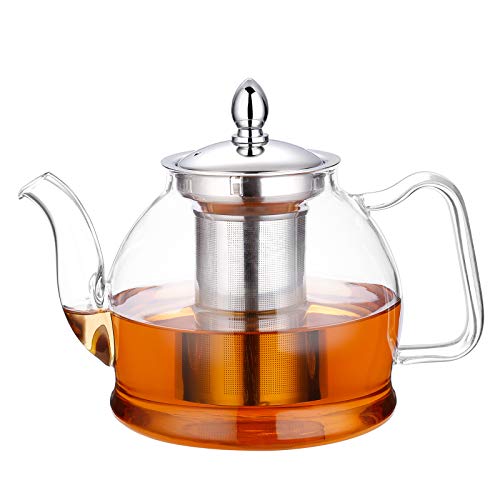
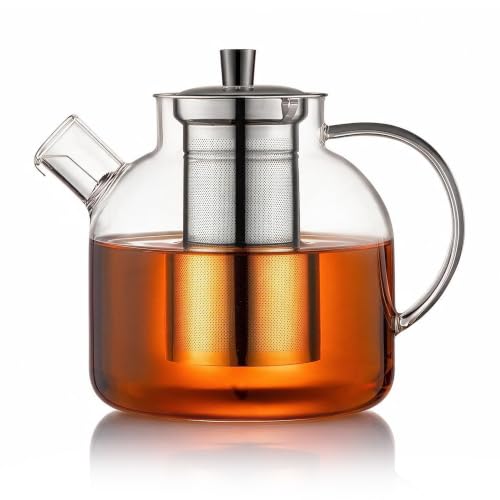
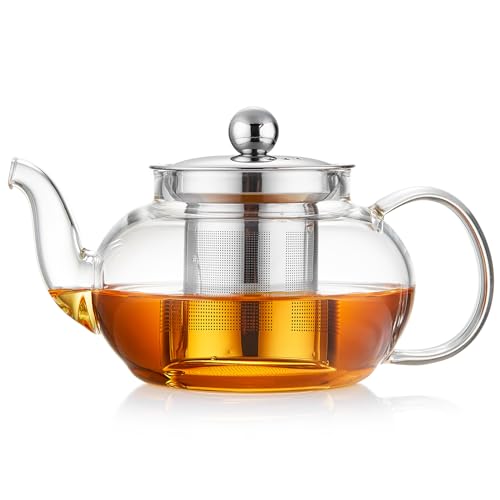
All six pots in this guide to the best teapots for loose tea are sold through Amazon, and every linked pick below goes straight to its product page so you can confirm the current capacity, infuser style, and availability before ordering. Start with the short list, then read the full guide for the practical advice on sizes, baskets, and everyday brewing that follows.
- CNGLASS Glass Teapot Stovetop Safe, 20.3 oz — Check on Amazon
- DRNKNSTX Enchanted Tea Pot with Tea Infuser, 20 oz
- HIWARE 1000ml Glass Teapot with Removable Infuser
- PARACITY Glass Teapot Stovetop, 18.6 oz
- Ehugos 1500ml Glass Teapot with Removable Infuser
- Teabloom Glass Teapot, 40 oz, with Glass Infuser
Read the full guide ↓
Loose tea is how most of the world’s tea has always been made: leaves, hot water, a pot, and a way to keep the leaves out of the cup. No ceremony is required, and no special vocabulary either. The best teapots for loose tea are simply the ones that make that everyday transaction effortless — a basket or strainer that holds the leaves, a size that matches your mugs, and a build you can rinse and reuse twice a day without thinking about it. Every pot in this guide is a glass pot with a removable infuser made for loose tea, so the comparison stays practical: capacity, filtration, heating, and how each pot fits the way you actually drink, whether that is a big breakfast mug at the kitchen table or a pot shared across a workbench afternoon.
There is a quiet quality argument for loose tea worth making plainly. Tea bags prioritise convenience and consistency; loose tea gives you the leaf itself — bigger pieces, fresher turnover at good suppliers, and the freedom to dose stronger or weaker as the day demands. The pot is the only equipment the switch requires, and glass is the friendliest material for it: you see the strength developing, you rinse it neutral between a morning black tea and an evening herbal, and you never wonder what the inside of the pot looks like. The six picks below span 18.6 oz solo pots to a 50 oz family vessel, and the reviews are frank about which drinkers each one serves. Readers who want the more specialised loose leaf perspective will find it in Best Teapots For Loose Leaf Tea; this page keeps its feet in the everyday kitchen.
Key Takeaways
- The CNGLASS 20.3 oz glass teapot is our first choice for everyday loose tea: stovetop safe per its listing, with a removable infuser, in the one-to-two-mug size most drinkers actually use.
- Everyday loose tea needs a basket you can empty in seconds — all six picks have removable infusers.
- Size by mugs, not by ceremony: 18–20 oz for one mug, 1000ml for a household round, 40–50 oz for gatherings and batch brewing.
- Stated steel infusers filter finest; glass infusers trade a little fineness for a fully visible brew — the right choice depends on your teas.
- Glass keeps everyday tea honest: visible strength, neutral flavour, and a rinse-clean routine.
In this guide
Quick Picks
| Pick | Badge | Capacity from listing | Infuser noted in listing | Link |
|---|---|---|---|---|
| CNGLASS Glass Teapot | Best Overall | 20.3 oz | Removable infuser | Check on Amazon |
| DRNKNSTX Enchanted Tea Pot | Best for New Loose Tea Drinkers | 20 oz | Tea infuser / steeper | Check on Amazon |
| HIWARE Glass Teapot | Best Household Pot | 1000ml | Removable infuser | Check on Amazon |
| PARACITY Glass Teapot | Best Fine Filtration | 18.6 oz / 550ml | Removable 18/8 stainless steel infuser | Check on Amazon |
| Ehugos Glass Teapot | Best Large Pot | 1500ml / 50 oz | Removable stainless infuser | Check on Amazon |
| Teabloom Glass Teapot | Best for Watching the Brew | 40 oz | Removable glass infuser | Check on Amazon |
Badges reflect everyday fit — mug counts, filtration, and routine — because loose tea is a daily habit, not an occasion.
How These Picks Were Chosen
This is a research-led guide. We compared the verified listings in this glass teapot group and checked every specification quoted here against the listing title itself. For loose tea, the weighting is deliberately practical: a removable infuser on every pick, a capacity ladder that maps to real mug counts, filtration fine enough for common broken-leaf teas, and heating claims only where a listing states them. Where a listing leaves a detail unstated — several do not name their infuser material — we say so in the review rather than guessing, and we explain whether it matters for everyday teas (usually less than enthusiasts fear, because most everyday blends are not powder-fine).
We also kept a value lens throughout. Loose tea drinkers are often converting from bags for flavour, not shopping for heirloom equipment, so the guide favours pots whose virtues are usable daily: quick emptying, easy rinsing, sensible sizes. Presentation features are noted where a listing includes them, but they never outrank the routine. If your drinking leans traditional, the companion guide to Best Teapots From England explores the classic end of this category; this page is about the pots that get used on Tuesday.
The 6 Best Teapots for Loose Tea

CNGLASS Glass Teapot Stovetop Safe, 20.3 oz
Badge: Best Overall
Strengths
- Listing states stovetop safe — heat the water and brew the tea in one vessel.
- 20.3 oz brews one big mug or two modest cups, the commonest loose tea session.
- Removable infuser, with the listing covering loose leaf and blooming tea.
Trade-offs
- The listing does not state the infuser material.
- Too small for a family breakfast round without a second brew.
- Stovetop convenience suits robust everyday teas best; delicate teas still want cooled water.
Mini spec box: Capacity 20.3 oz · Stovetop safe per listing · Removable infuser · For loose leaf and blooming tea.
The CNGLASS wins this guide on routine design. Loose tea’s whole appeal is that it is ordinary — and this pot makes it as ordinary as boiling a kettle: fill, heat, add leaves to the basket, wait, pour. The stovetop-safe listing removes the kettle from the equation entirely for the robust black teas and blends that make up most loose tea drinking, and 20.3 oz is honestly sized for how people drink at home — one generous mug with a little left, or two smaller cups. The glass keeps the strength visible, which replaces guesswork for drinkers who judge their breakfast tea by colour.
Who it suits: the everyday drinker converting from bags, small kitchens, and anyone who values a one-vessel routine. The honest limitation is scale — this is not a pot for a table of guests — and specification depth, since the basket’s material is unstated. For common loose teas, neither drawback bites often. It is the pot in this guide most likely to be used twice a day without a thought, which is the highest praise everyday equipment can earn.
Best for: daily one-to-two-mug loose tea / Not suited for: family-size serving.

DRNKNSTX Enchanted Tea Pot with Tea Infuser, 20 oz
Badge: Best for New Loose Tea Drinkers
Strengths
- 20 oz steeper format sized for one or two cups — an easy first step into loose tea.
- Listing describes it as a glass tea maker with infuser for loose leaf diffusing.
- Gift-oriented presentation makes the switch feel like an upgrade, not homework.
Trade-offs
- No stovetop or infuser-material claims in the listing; heat water in a kettle.
- Novelty styling will not suit every kitchen.
- Solo-to-pair capacity only.
Mini spec box: Capacity 20 oz · Tea infuser / loose leaf steeper · Glass tea maker per listing · Gift positioning.
Every loose tea household started somewhere, and the DRNKNSTX is designed to be that somewhere. Its 20 oz glass steeper format keeps the mechanics obvious — leaves in the infuser, water over them, watch it brew — and its presentation-led listing makes it the natural gift for someone whose tea life currently runs on bags. New drinkers consistently underestimate how much of loose tea’s advantage is visible: the first time you watch leaves unfurl and the liquor deepen, the method explains itself.
Who it suits: beginners, gift buyers, and the curious. The honest limitation is that experienced drinkers will want specification detail the listing does not provide, and will graduate to the CNGLASS or PARACITY patterns. As a first pot that gets used rather than shelved, it does its job well.
Best for: first steps into loose tea / Not suited for: specification-driven buyers.
HIWARE 1000ml Glass Teapot with Removable Infuser
Badge: Best Household Pot
Strengths
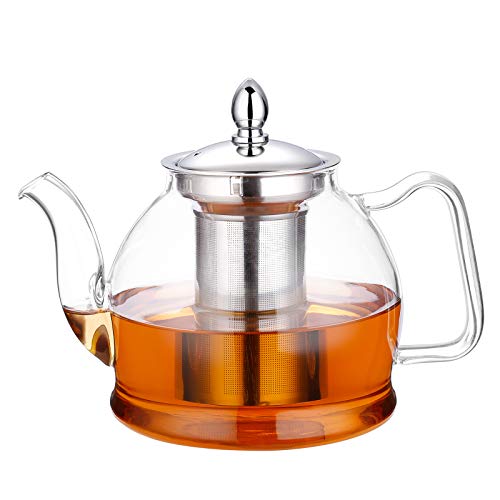
- 1000ml brews a proper household round — three to four mugs from one steep.
- Removable infuser and stovetop-safe glass stated in the listing.
- Listing spans blooming and loose leaf tea, so one pot covers the household’s range.
Trade-offs
- The listing does not state the infuser material.
- Too big for a solo mug routine; half-brews sit shallow in the basket.
- The heaviest pour here when full.
Mini spec box: Capacity 1000ml · Removable infuser · Stovetop safe per listing · Made for blooming and loose leaf tea.
Households drink tea together, and the HIWARE is built for that arithmetic. A litre of loose tea, brewed once and poured in a round, keeps everyone at the same strength — the detail that separates a pot from a mug-by-mug relay. The discipline it asks is the usual one: lift the basket when the steep ends, so the last mug is not the bitter one. Stovetop-safe glass keeps the morning routine compact, and the clear walls let whoever is brewing judge the household’s preferred colour at a glance.
Who it suits: families and shared kitchens whose default is a pot on the table. The honest limitation is the solo case, which it serves clumsily. Pair it with a small pot for individual sessions — a common arrangement, and an inexpensive one at this end of the category — and the household is covered at both scales. See how it compares for the table in Best Teapots For Sale coverage of household picks.
Best for: household rounds / Not suited for: solo mug routines.
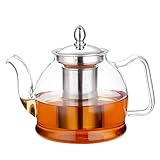

PARACITY Glass Teapot Stovetop, 18.6 oz
Badge: Best Fine Filtration
Strengths
- Removable 18/8 stainless steel infuser stated in the listing — the finest stated barrier here.
- 18.6 oz / 550ml borosilicate pot sized for one generous mug.
- Listing also positions it for camping and travel.
Trade-offs
- One mug at a time; no serving capacity for guests.
- Small basket crowds bulky leaves.
- Small volume cools faster on long steeps.
Mini spec box: Capacity 18.6 oz / 550ml · Borosilicate glass · Removable 18/8 stainless steel infuser · For blooming and loose leaf tea · Camping and travel positioning.
Some everyday teas are finer than others — a broken-leaf breakfast blend will find every gap in a coarse basket. The PARACITY is the answer in this guide: its listing states an 18/8 stainless steel infuser, and steel mesh keeps fine loose tea in the basket and out of the mug. At 18.6 oz it is unapologetically a one-mug pot, which matches the desk, the bedside, and the solo kitchen counter. Its travel positioning makes it the natural second pot for a caravan or an office drawer as well.
Who it suits: solo drinkers of fine-cut teas, and anyone who wants a portable pot. The honest limitation is generosity — it cannot pour for two. But for the drinker it targets, a clean cup and a fresh brew beat capacity every time.
Best for: clean solo cups of fine-cut tea / Not suited for: serving more than one.

Ehugos 1500ml Glass Teapot with Removable Infuser
Badge: Best Large Pot
Strengths
- 1500ml / 50 oz — the largest pot here, for gatherings and batch brewing.
- Removable stainless infuser stated in the listing.
- Stovetop safe per listing; hand crafted large format for the table.
Trade-offs
- Wants to be brewed near full; small sessions belong in smaller pots.
- Large glass is delicate and heavy when full.
- Tea left standing in a big pot loses freshness — brew what will be drunk.
Mini spec box: Capacity 1500ml / 50 oz · Removable stainless infuser · Stovetop safe per listing · Hand crafted · For blooming and loose leaf tea.
The Ehugos exists for the days the other pots cannot cover: visitors at the table, a working party in the garden, a morning batch of loose tea destined for the fridge as iced tea. Fifty ounces from one steep keeps the flavour consistent across every cup, and the stated stainless infuser handles the leaf load at this scale. It is also the pot that makes loose tea feel generous — there is something about a big clear pot on the table that turns an ordinary brew into an occasion without any extra effort.
Who it suits: hosts, big households, and batch brewers. The honest limitation is everyday scale — no two-mug household should brew its daily tea in a 50 oz vessel. Bought as the second, larger pot alongside a daily driver, it is exactly right.
Best for: gatherings and iced-tea batches / Not suited for: daily small sessions.

Teabloom Glass Teapot, 40 oz, with Glass Infuser
Badge: Best for Watching the Brew
Strengths
- Removable glass infuser — the whole steep is visible, leaf to liquor.
- Stovetop and microwave safe per listing; a 2-in-1 kettle and tea maker.
- Includes 2 blooming teas per the listing, extending the pot beyond loose tea.
Trade-offs
- Glass infuser slots are typically less fine than steel mesh for the smallest leaf particles.
- Glass components need gentle handling.
- 40 oz is more than a solo drinker needs.
Mini spec box: Capacity 40 oz · Removable glass infuser · Stovetop and microwave safe per listing · Includes 2 blooming teas · 2-in-1 kettle and tea maker.
The Teabloom sells the simplest pleasure in loose tea: watching it happen. With a glass infuser inside glass walls, leaves swirl, sink, and colour the water in full view — genuinely useful for judging strength with unfamiliar teas, and quietly enjoyable even when it is not useful. Forty ounces serves a small group, the stated stovetop and microwave safety gives it the most flexible heating story in this guide, and the included blooming teas make it a ready gift as well as a working pot.
Who it suits: drinkers who enjoy the visual side of brewing and households serving three or four. The honest limitation is fine filtration — drinkers of powdery small-leaf teas should pour gently or choose a stated steel basket. For standard loose tea, it is a pleasure to use daily. Compare its serving style with the group options in Best Teapots For Tea And Coffee if your pot must cover both drinks.
Best for: visual brewing for small groups / Not suited for: the finest-cut teas or solo mugs.

Comparison Table
| Pick | Capacity | Filtration from listing | Heating noted in listing | Link |
|---|---|---|---|---|
| CNGLASS | 20.3 oz | Removable infuser | Stovetop safe | Check on Amazon |
| DRNKNSTX | 20 oz | Infuser / steeper | Heat water separately | Check on Amazon |
| HIWARE | 1000ml | Removable infuser | Stovetop safe | Check on Amazon |
| PARACITY | 18.6 oz / 550ml | 18/8 stainless steel infuser | Stovetop format | Check on Amazon |
| Ehugos | 1500ml / 50 oz | Stainless infuser | Stovetop safe | Check on Amazon |
| Teabloom 40 oz | 40 oz | Glass infuser | Stovetop and microwave safe | Check on Amazon |
How to Choose a Teapot for Loose Tea
Count mugs, not ounces on a chart. Your mug is the unit that matters. One big mug a day points to the 18–20 oz pots; a couple sharing points to 1000ml; regular company points to 40–50 oz. Pots bought for imaginary occasions sit unused while the daily mug goes wanting — size for the Tuesday, not the dinner party, unless the dinner party is genuinely your Tuesday.
Make the basket do the work. Loose tea’s only real demand is separation: leaves in for the steep, leaves out for the drinking. A removable infuser does both in one motion and empties with a tap. Judge baskets by your finest everyday tea — if it holds that, it holds everything. Stated steel mesh is the safest bet for fine blends; other baskets suit standard leaf perfectly well.
Decide how the water gets hot. A stated stovetop-safe pot is its own kettle — the CNGLASS, HIWARE, Ehugos, and Teabloom listings all make heating claims of one kind or another — while other pots pair with the kettle you already own. There is no wrong answer, only counter space and habit.
Prefer the pot you will rinse without resentment. Everyday equipment lives or dies on cleaning effort. Glass rinses visibly clean, baskets that empty with a tap get emptied, and lids that come off fully let the pot dry properly. Weigh those ten-second details heavily; they compound over hundreds of brews.
Think in tiers qualitatively. Compact steel-infuser pots sit at the accessible end, household all-rounders in the middle, and large or presentation-led pots at the premium end. For loose tea, the middle of the range is usually the sweet spot — this is working equipment, and its value is measured in years of unremarkable, delicious service.
How to Brew Loose Tea: The Everyday Method
- Fill the pot with fresh water if it is stovetop safe, or boil fresh water in your kettle.
- Warm the pot with a splash of hot water if the kitchen is cold; discard it.
- Put the loose tea in the infuser — about a teaspoon per mug to start — and set the basket in the pot.
- Pour the hot water over the leaves. Black teas and most blends take freshly boiled water; greens prefer it cooled a little.
- Steep for the tea’s usual time, judging by colour through the glass.
- Lift the basket out, let it drain for a few seconds, and pour the round.
- Empty the basket into the compost while the leaves are warm, rinse everything, and leave the pot to dry with the lid off.
Troubleshooting. Problem: the last cup is bitter → the basket stayed in; lift it out when the steep ends, every time. Problem: tea tastes weak → add leaf, not minutes; a stronger dose at the right time beats a long stew. Problem: leaves in the mug → the tea is finer than the basket; pour gently, let the pot settle, or move that tea to a stated steel-mesh pot like the PARACITY.
Loose Tea at Work, at a Desk, and on the Move
A surprising amount of loose tea is drunk away from the kitchen table, and the pot choice changes with the setting. At a desk, the virtues are a small footprint, a single-mug size, and a basket that empties into a bin without a trip to the sink — the 18–20 oz class was made for this, and the PARACITY’s travel positioning underlines it. The routine that works is a morning fill, a mid-afternoon second steep from the same leaves for teas that support it, and one proper rinse at the day’s end. In a workshop or studio, hardiness of routine matters more than delicacy: a mid-size pot, robust tea, and a spot where the pot will not be knocked. For travel and camping, the listing that mentions it — the PARACITY, pitched for camping and travel — points the way: compact, self-contained, and happy with water from any kettle or camp stove poured in, whatever heats it.
The common thread is honesty about the setting. A pot that suits your kitchen may be wrong for your desk, and many loose tea drinkers end up with a home pot and a work pot rather than one compromise carried back and forth. At the accessible end of this category, that is a reasonable solution rather than an indulgence.
Breakfast Tea Culture: Why the Big Mug Rules This Category
Loose tea’s heartland is the breakfast table: strong black blends, milk for many drinkers, and mugs rather than cups. That culture explains this guide’s sizing logic. A breakfast blend is forgiving — boiling water, a few minutes, no precision instruments — and it is drunk in volume, which is why household pots anchor the category and why stovetop-safe listings matter: the pot that heats its own water at 7 a.m. earns its place daily. Milk drinkers should brew a touch stronger than they would for black drinking, because milk softens intensity; the glass pot helps here too, since the pre-milk colour is the reliable guide to how the finished mug will taste. And the second mug — the one that decides whether the morning works — is the argument for lifting the basket out: a pot left steeping while the first mug is drunk will punish the second.
Making Loose Tea for People Who Say They Do Not Like Tea
Hosts discover this regularly: a guest who declines tea made from a bag accepts a cup from a glass pot of loose tea and asks what it is. The difference is usually freshness and dose — loose tea brewed at proper strength tastes like an ingredient, not a gesture. If you serve sceptics, brew a friendly tea — a smooth black blend or a genmaicha-style roasted tea if you have one — at honest strength, pour it in a round from a presentable pot like the Teabloom or HIWARE, and let the visible leaves make the case. Do not oversell; the cup does the work. This is also where the larger pots justify themselves socially: a household that serves loose tea to guests a few times a month gets real value from the 40–50 oz class, even if weekday drinking is solo.
Iced Loose Tea and Cold Brewing
Loose tea ices beautifully two ways. The hot-brew method: make a double-strength pot in your largest vessel, lift the basket, chill promptly, and serve over ice — the Ehugos and Teabloom sizes exist for exactly this. The cold-brew method: leaves and cold water in the pot, basket in, and into the fridge for several hours; the result is smoother and sweeter, with almost no bitterness, and it suits green teas and light blends that hot brewing can bully. Cold brewing is also the most forgiving technique in this entire guide — no temperatures, no timers worth the name — and a glass pot is the ideal vessel because you can watch the colour develop through the fridge door. Whichever method you choose, drink iced loose tea within a couple of days; freshness is its whole advantage over bottled drinks.
Care, Cleaning, and Making a Glass Pot Last
Loose tea pots ask little: empty the basket warm, rinse in hot water, dry with the lid off. Black tea films glass over time, and the weekly bicarbonate-of-soda soak — hot water, a spoonful, twenty minutes — lifts it without scratching. Mesh baskets appreciate a soft brush now and then, especially after fine blends. Guard against thermal shock by warming the pot before it meets boiling water and never plunging a hot pot into cold water. Store the pot where it will not be clipped by heavier pans. That is the whole manual — one reason glass infuser pots have become the default loose tea equipment in so many kitchens: the care routine is shorter than the brewing routine.
Storing Loose Tea So the Pot Has Something Good to Brew
A pot can only brew what the caddy gives it. Keep loose tea sealed, dark, dry, and away from the spice rack — tea absorbs neighbouring aromas eagerly, and a caddy stored beside ground coffee will eventually brew coffee-flavoured tea. Buy everyday teas in quantities matched to your pace: a household drinking a pot a day turns stock over quickly, while a solo drinker should buy smaller amounts more often, especially of green teas. Label containers with the tea and the month you opened it. None of this is fussiness; it is the difference between loose tea that outperforms bags and loose tea that makes people wonder why they switched.
Loose Tea Blends Versus Single Teas: What Changes in the Pot
Most loose tea drinking runs on blends — breakfast blends, afternoon blends, flavoured blends — rather than single-estate teas, and blends are engineered to be forgiving: mixed leaf sizes and grades that brew reliably across a range of times and temperatures. That forgiveness is why everyday pots do not need laboratory precision. What blends do ask is consistency from you: the same dose, the same water habit, the same lift-out discipline, so the blend tastes like itself every morning. Single teas, by contrast, reward attention — a particular green or oolong will show you exactly what a degree of temperature or thirty seconds of time does to it, especially through glass. The same pot serves both, but your technique should know which mode it is in: autopilot for the breakfast blend, curiosity for the single tea. Households often discover their preferences by accident here — a drinker who thought all tea tasted alike brews one good single tea in a clear pot, watches it happen, and understands the category differently from that day.
The Two-Pot Household: A Pattern Worth Copying
Spend time in loose tea households and a pattern repeats: one pot for people, one pot for oneself. The people pot is the household size — the HIWARE litre or larger — living near the stove, brewing rounds. The self pot is the 18–20 oz brewer — CNGLASS, PARACITY, DRNKNSTX territory — living where the solo drinking happens: the desk, the reading chair, the kitchen corner at dawn before anyone else is awake. The pattern emerges because the two sessions have opposite virtues: the round wants volume and consistency; the solo session wants freshness and exactly-one-mug honesty. Trying to serve both with one pot produces the familiar compromise — a medium pot too big for the morning mug and too small for Sunday lunch. If your household drinks both ways daily, plan for two pots from the start and buy each without compromise; the category’s accessible end makes the pair cheaper than one premium pot that serves neither session well.
What Loose Tea Costs in Effort: An Honest Accounting
Switchers from bags often ask whether loose tea is more work, and the honest answer is: about a minute more per pot, spent in specific places. Measuring leaf takes seconds once the spoon lives in the caddy. The steep itself is identical waiting. The real additions are at the end — tapping the basket into the compost, rinsing the pot, and leaving it to dry — perhaps forty seconds of active effort. Against that, credit the savings: no tearing, no dripping bag fishing, no string-and-tag management, and a pot that pours a whole round at once instead of mug-by-mug kettle trips. Most converts report the routines feel equal within a fortnight, while the tea tastes noticeably better from the first day. The equipment in this guide was chosen to keep that accounting favourable: baskets that empty with a tap, glass that rinses visibly clean, sizes that match real sessions so no effort is wasted brewing tea nobody drinks.
Reading Reviews of Teapots Like a Loose Tea Drinker
When you check the product pages linked in this guide, read them with a loose tea drinker’s filters. Look for comments about the basket — its size relative to the pot, how it empties, whether fine leaf escapes — because that is the component your daily routine will judge. Look for pour comments: a clean, drip-free pour matters more across a year of breakfasts than any aesthetic detail. Treat comments about glass fragility with context: glass pots ask for ordinary care, and breakage stories usually involve thermal shock or crowded sinks, both avoidable with the warming and rinsing habits described in this guide. And weigh capacity comments against your own mug count rather than the commenter’s household. A pot criticised as too small by a family of six may be exactly right for your desk. The listings give you the facts this guide is built on; the reviews give you the texture — use both, in that order.
Water Temperature Without a Thermometer
Loose tea advice often sounds like it requires laboratory equipment, but generations of drinkers managed with observation, and so can you. Freshly boiled water announces itself; for black teas and breakfast blends, use it as it is. For greens, the old method still works: boil the water, pour it into the empty pot or a jug, and wait — each transfer and each minute of standing takes the edge off the heat in a predictable direction. Through a glass pot you get a second instrument for free: steam behaviour and the leaves’ response. Leaves that dance violently and colour the water almost instantly are meeting very hot water; leaves that drift and colour slowly are in a gentler bath. None of this replaces a thermometer for the truly precision-minded, but it covers the everyday range honestly, and it keeps loose tea what it should be — a kitchen practice, not a science project. The drinkers who sustain the habit for decades are the ones whose method fits on an index card.
When a Pot Is Ready to Retire — and What to Buy Next
Glass pots rarely wear out; they are retired by accidents, by changed households, or by a drinker’s evolving taste. The useful question is what the replacement should fix. If the old pot’s sin was size, measure your current session honestly before reordering — households shrink and grow, and yesterday’s right answer may not be today’s. If the sin was the basket — too coarse, too small, miserable to empty — let the basket drive the new choice and read the listings for exactly that detail. If the sin was routine friction — a pot that lived in the wrong room, needed a kettle you hated, dripped on the counter — name it plainly and buy against it. What you should not do is replace like with like out of habit when the old pot’s flaw is known. The six picks in this guide are arranged so that each represents a distinct answer to a distinct complaint; find your complaint in the reviews and the choice usually makes itself.
Loose Tea Through the Day: A Rhythm That Works
It helps to see how a loose tea day actually flows in a household that has made the switch, because the pot choices in this guide map onto its hours. The day starts with the breakfast pot — robust blend, boiling water, the household vessel if the family drinks together or the solo pot at dawn. Mid-morning often belongs to the desk pot and, for teas that allow it, a second steep of the breakfast leaves rather than a fresh dose. Lunch might be iced tea from a batch brewed that morning in the big pot, or a green tea brewed small and fresh. The afternoon is loose tea’s traditional stronghold — the pot shared across a table or a workbench, where the round matters and the basket discipline keeps the last cup as good as the first. Evenings tilt herbal for many households, and herbals forgive everything except being left on their leaves. No single pot optimises all five moments; the guide’s ladder of sizes exists because the day itself has a ladder of sessions. Choose the pot for the moment you drink most, and let the others be served well enough by second brews and smaller rounds.
Common Buying Mistakes
- Sizing for guests you rarely have. Buy for the daily session; borrow capacity with a second brew on the rare big occasion.
- Leaving the basket in while the pot sits. The single most common loose tea error — it guarantees a bitter last cup.
- Judging strength by time alone. Watch the colour through the glass; teas vary too much for one fixed clock.
- Storing tea near spices or coffee. The pot will faithfully brew whatever the leaves absorbed.
- Heating glass that makes no stovetop claim. Listings that state stovetop safe earn direct heat; others get kettle water.
Final Recommendation
For most loose tea drinkers, start with the CNGLASS 20.3 oz glass teapot: one vessel, one basket, the right size for the daily mug. Then give the new routine a fair month before judging it — long enough for the measuring, steeping, and emptying to become automatic, and for your dose for your favourite tea to settle where your taste actually wants it. Loose tea is a habit that improves with familiarity, and the pot chosen well at the start is rarely the thing that needs changing later. Step up to the HIWARE for a household round or the Ehugos for gatherings and iced batches; choose the PARACITY when your teas run fine and your sessions run solo; pick the Teabloom when you love watching the brew; and give the DRNKNSTX to the person you are converting. Loose tea rewards the drinker who keeps it simple — the right pot is the one that disappears into the routine and lets the tea be the point.
Frequently Asked Questions
What is the difference between loose tea and loose leaf tea?
In practice, very little — the terms are used interchangeably for tea sold as leaves rather than in bags. “Loose tea” tends to be the everyday phrase, covering breakfast blends and herbals as much as connoisseur leaves, and the equipment is identical: a pot with an infuser or strainer.
Do I need a special pot for loose tea?
You need a pot with a way to separate leaves from liquor — in this guide, a removable infuser basket. A plain pot plus a separate strainer works too, but the basket pot is simpler: steep, lift, pour, done.
How much loose tea goes in the pot?
About a teaspoon per mug is the standard starting point. Adjust over a few sessions: stronger is achieved with more leaf at the same steep time, not with a much longer steep, which mostly adds bitterness to black teas.
Can I leave loose tea sitting in the pot?
Only if the basket is out. Brewed tea with the leaves removed holds pleasantly for a while; tea left on its leaves keeps extracting and turns bitter and stewed. Lift the infuser when the steep ends and the pot stays drinkable.
Is loose tea better than bagged tea?
It offers larger leaf, fresher turnover at good suppliers, and control over dose — advantages most drinkers can taste. Bags win on pure convenience. The pot is the only investment needed to find out which side of that trade you prefer.
What size pot is best for one mug of loose tea?
The 18–20 oz class: it brews one generous mug with a small top-up and keeps the session fresh. The CNGLASS, DRNKNSTX, and PARACITY in this guide all sit in that zone.
Can loose tea be re-steeped?
Many can — oolongs and greens most famously, and a good black tea will give a lighter second pot. Herbals usually give one strong brew. Re-steep promptly with fresh hot water rather than leaving leaves sitting wet for hours.
How do I keep a glass teapot from staining?
Rinse it after each session and do not let strong black tea sit in it for hours. A weekly soak in hot water with a spoonful of bicarbonate of soda lifts the film that daily rinsing leaves behind. Glass has the advantage here: you can see the build-up starting and deal with it while it is still a five-minute job rather than a restoration project.