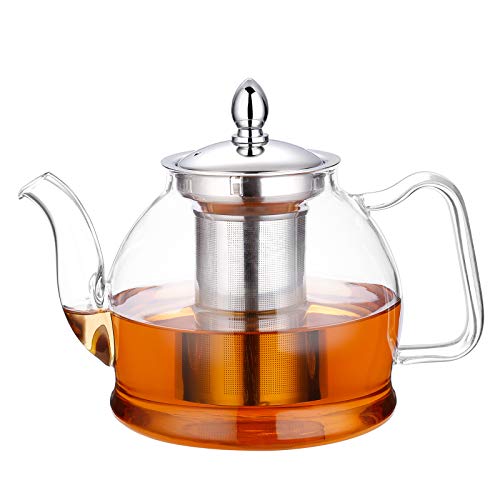
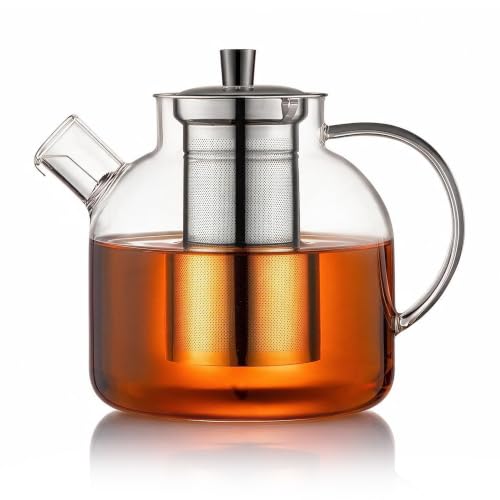
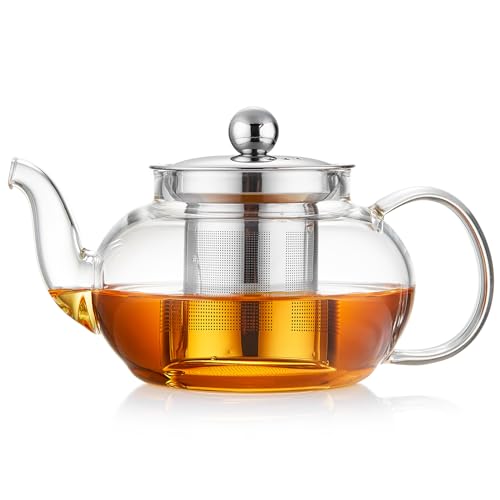
Disclosure: topratedkitchenware.com is reader-supported. When you buy through links on our site, we may earn an affiliate commission from Amazon and other retailers, at no extra cost to you.
Where to buy
Five of the six pots in this guide to the best teapots for stove no rust are sold through Amazon with links below, and each linked pot is described by its maker as stovetop safe, with a glass body that cannot rust because glass contains no iron at all. One pot, the DOPUDO, is reviewed in full but carries no purchase link: its listing makes no stovetop claim, and a guide built around stove use should not sell you a pot whose maker does not claim it. Read the full guide below for how rust actually forms, which parts of a teapot can corrode, and how to heat glass on a burner without cracking it.
- HIWARE 1000ml Glass Teapot with Removable Infuser — Check on Amazon
- PARACITY Glass Teapot Stovetop, 18.6 oz / 550 ml, Borosilicate
- Ehugos Glass Teapot with Removable Infuser, 1500 ml / 50 oz
- Teabloom Stovetop & Microwave Safe Glass Teapot, 40 oz
- DOPUDO Small Glass Teapot with Infuser, 18 oz (covered prose-only below — no stovetop claim in its listing)
- STNTUS Glass Teapot, 40 oz / 1200 ml, Stovetop Safe
Read the full guide ↓
Start with the chemistry, because it decides everything else in this guide. Rust is iron oxide: it forms when iron or ordinary steel sits in water and oxygen, and it is the reason enamel chips, worn plating, and cheap metal infusers eventually stain a pot orange and start flavouring the tea. The best teapots for stove no rust sidestep the problem at the level of materials rather than coatings. A glass body has no iron to oxidise, so the vessel itself can never rust, full stop. What remains is the hardware around the glass — infusers, strainers, lid fittings — and that is where this guide earns its keep: we checked what each pot puts in the water, favoured glass infusers and 18/8 stainless steel where metal is unavoidable, and flagged the one pot whose maker does not claim stovetop use at all. If you are replacing a pot that rusted, you will also find the sections below on why the old one failed and how to keep any metal hardware spotless for years.
Key Takeaways
- Glass cannot rust. Every linked pick here has a glass body, so the vessel itself is permanently rust-proof; only infusers and strainers need scrutiny.
- The Teabloom 40 oz is the purist answer: its infuser is glass too, so nothing metal touches the water at any point.
- Where metal appears, look for 18/8 stainless steel, as in the PARACITY and DOPUDO infusers — that grade resists corrosion far better than ungraded steel.
- Our first choice for most kitchens is the HIWARE 1000ml: stovetop safe, a litre of capacity, and a removable infuser that lifts out for rust-free storage.
- Stovetop-safe glass still needs gentle handling: medium heat, no empty pot on a lit burner, and no cold water into a hot pot.
- The DOPUDO is an excellent small glass pot, but its listing claims no stovetop rating, so it is covered without a link and recommended only for water heated separately.
In this guide
Quick Picks
| Pick | Badge | Capacity | Infuser | Link |
|---|---|---|---|---|
| HIWARE Glass Teapot | Best Overall | 1000 ml | Removable infuser | Check on Amazon |
| PARACITY Glass Teapot | Best for Travel and Camping | 18.6 oz / 550 ml | Removable 18/8 stainless steel | Check on Amazon |
| Ehugos Glass Teapot | Best Large Capacity | 1500 ml / 50 oz | Stainless infuser | Check on Amazon |
| Teabloom Glass Teapot | Best Metal-Free Brew Path | 40 oz | Removable glass infuser | Check on Amazon |
| DOPUDO Small Glass Teapot | Best for Solo Brewing (prose-only) | 18 oz / 530 ml | Removable 18/8 steel | No link — no stovetop claim in listing |
| STNTUS Glass Teapot | Best for Everyday Family Pots | 40 oz / 1200 ml | Infuser with stainless steel strainer | Check on Amazon |
Badges reflect the rust question first and convenience second: a pot only earns a badge here if its body cannot rust and, for linked picks, its maker claims stovetop safety in the listing itself.
How These Picks Were Chosen
This is a research-led guide, not a hands-on laboratory test, and we would rather say that plainly than dress up desk research as bench work. We started from a verified pool of glass teapots, read each maker’s listing line by line, and recorded exactly what each listing claims: capacity, whether the word stovetop appears, what the infuser is made of, and what the pot is positioned for. Those listing claims are the only specifications used anywhere in this article, and each article file is backed by a sources note listing the product title we relied on.
Three filters did most of the work. First, the body material: for a no-rust brief, glass outranks every metal, because enamelled steel rusts at the first chip, plain steel rusts at scratches, and even stainless can tea-stain and pit if the grade is poor. Second, the brew path: we traced everything that sits in the water — infuser baskets, strainers, lid undersides — and scored glass infusers highest, 18/8 stainless next, and ungraded stainless with a small question mark that the care sections below explain how to manage. Third, the stovetop claim itself: five of the six listings claim it in so many words, and one does not. Rather than quietly dropping that pot, we kept it in the guide as a prose-only review so you can see the whole pool and the exact line we drew. Readers comparing wider categories may also want our notes on Best Teapots For Tea And Coffee, where the same glass-first logic is applied to households that brew both drinks from one vessel.
One judgement call deserves its own sentence. A glass body makes a pot rust-proof, but it does not make every glass pot a stovetop pot, and we refused to let the first fact smuggle in the second. That is why this guide’s linked list and its reviewed list are not the same list, and why the difference between them is explained in the open rather than tidied away. A reader who only ever buys from the linked five will never notice the distinction in daily use — but a reader who already owns the sixth pot deserves to know exactly what its maker did and did not promise.
What we did not do matters too. We did not import star ratings or review counts into the scoring, because those numbers drift and say little about corrosion. We did not assume a pot is stovetop safe because it looks sturdy, and we did not treat borosilicate as a magic word — it appears in some listings here and not others, and the stovetop claim, not the glass recipe, is what we scored. Finally, we weighted honesty about limits: every review below names the pot’s real weakness, whether that is a small capacity, an infuser you must dry properly, or glass that will always demand more care than steel.
The 6 Best Teapots for Stove No Rust
Ordered as a shortlist rather than a countdown: start with the all-rounder, then choose by the size of your household and how completely you want metal out of the brew path.
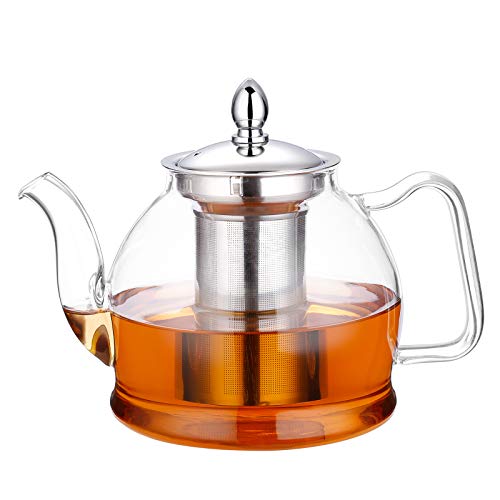
HIWARE 1000ml Glass Teapot with Removable Infuser
Badge: Best Overall
Strengths
- Glass body that cannot rust, in a practical one-litre size that covers two generous mugs or a small round for three.
- Listing claims stovetop safety outright, so the same pot heats the water and steeps the leaves — one vessel to wash.
- Removable infuser lifts out the moment the tea reaches strength, which also lets you dry the hardware separately and store it rust-free.
Trade-offs
- The listing does not grade the infuser’s metal, so the care routine below — rinse, dry, store dry — matters more here than with an 18/8 basket.
- One litre is a ceiling: households brewing for four or more will refill or step up to the Ehugos.
- Like all glass on a burner, it wants medium heat and a moment’s patience rather than a full-blast ring.
Mini spec box
- Capacity: 1000 ml
- Body: glass, stovetop safe per maker listing
- Infuser: removable (material not graded in listing)
- Positioned for: blooming and loose leaf tea
The HIWARE is the pot we would hand to someone whose last teapot died of rust and who never wants the conversation again. The glass body removes the vessel from the corrosion question entirely, and the litre capacity lands exactly where most two-person households live: enough for a proper morning round, not so much that the second half of the pot stews while it waits. Because the infuser removes, the tea stops brewing when you say so, and the hardware can be rinsed and dried on its own — the single most effective anti-rust habit there is, since stainless and ungraded metals alike corrode fastest when left sitting in tea liquor. On the stove it behaves like any stovetop-rated glass: bring it up on medium heat, keep the flame under the base, and let it come off the burner before you pour cold anything near it. The honest limitation is the ungraded infuser. The listing simply does not say what the basket is made of, so we will not guess; treat it kindly, dry it after every use, and it should serve for years — but if the thought of any ungraded metal in the water bothers you, the Teabloom below removes metal from the equation altogether. Readers who entertain often may prefer to browse Best Teapots For Tea Lovers alongside this pick, since the HIWARE’s clear glass shows off blooming teas beautifully.
Best for: most households replacing a rusted pot / Not suited for: brewing for four or more at once
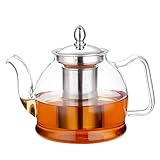

PARACITY Glass Teapot Stovetop, 18.6 oz
Badge: Best for Travel and Camping
Strengths
- Borosilicate glass body — no iron, no rust, and a glass type known for handling temperature change well.
- Removable 18/8 stainless steel infuser: the grade is stated in the listing, and 18/8 is the corrosion-resistant grade you want near water.
- Maker positions it for camping and travel, and the compact 550 ml size suits a single burner and a small packing footprint.
Trade-offs
- 18.6 oz is a one-to-two cup pot; it is not the answer for a family breakfast round.
- Glass and travel are uneasy partners — it needs padding in a bag that a steel pot would not.
- The stainless infuser, while well graded, still wants drying after use in damp campsite conditions.
Mini spec box
- Capacity: 18.6 oz / 550 ml
- Body: borosilicate glass, stovetop per maker listing
- Infuser: removable 18/8 stainless steel
- Positioned for: blooming and loose leaf tea, camping, travel
The PARACITY is the pool’s clearest answer to a specific rust story: the pot that lives in a camper, a cabin, or a rarely used guest kitchen, where a metal pot sits damp and idle for weeks and quietly corrodes between uses. Glass does not care about idle damp. The borosilicate body can sit in a cupboard through a wet winter and come out exactly as it went in, and the one piece of metal in the design — the infuser — is the grade of stainless you would choose on purpose, with its composition stated in the listing rather than left vague. In use it is a small, honest pot: heat the water in it on a camp stove or home burner, drop the basket in, and brew a mug or two of loose leaf or a blooming tea you can watch open through the clear wall. The limitation is simply scale and fragility. It will not serve a crowd, and it asks for a padded corner in your packing. For solo travellers, van-life brewers, and anyone whose second home eats metal pots, those are easy terms.
Best for: campers, travellers, and second homes where pots sit idle / Not suited for: family-size rounds

Ehugos Glass Teapot with Removable Infuser, 1500 ml
Badge: Best Large Capacity
Strengths
- The largest pot in the pool at 1500 ml / 50 oz — a full round for a table of tea drinkers from one brewing.
- Stovetop safe per the maker listing, so the big brew starts in the same vessel it is served from.
- Stainless infuser named in the listing, removable for cleaning and dry storage.
Trade-offs
- A litre and a half of water is heavy in glass; pouring the full pot asks for a steady two-handed lift.
- Big pots tempt you to brew big and let the tail of the pot over-steep; remove the infuser promptly.
- The listing calls the pot hand crafted, which usually means slight unit-to-unit variation in finish.
Mini spec box
- Capacity: 1500 ml / 50 oz
- Body: glass, stovetop safe per maker listing
- Infuser: stainless (grade not stated in listing)
- Positioned for: large pots of blooming and loose leaf tea
Scale changes the rust calculation in one specific way: the bigger the pot, the longer tea liquor tends to sit in it, and sitting liquor is what stains and pits marginal metal. The Ehugos answers with the same glass-body immunity as the rest of this guide, at a size that suits households who brew once for everyone. Fifty ounces covers four ordinary mugs with a little grace, and because the pot is stovetop safe, you are not decanting boiling water from a separate kettle into a cold vessel — the whole ritual happens in one piece of glassware, which then goes to the table looking like it belongs there. Treat the stainless infuser as the one maintenance item: the listing does not grade it, so rinse it as soon as the pot is empty, shake it dry, and leave it out of the pot between uses rather than storing it inside a closed, damp vessel. The honest limitation is weight and momentum — a full 1500 ml glass pot is a two-handed pour, and anyone with limited grip strength should fill it to a comfortable level rather than to the brim. For entertainers, it is the natural first choice in this pool; our guide to Best Place To Find Teapots can help if you want to compare it against larger traditional pots as well.
Best for: families and hosts brewing one big round / Not suited for: anyone who finds a full large glass pot heavy

Teabloom Stovetop & Microwave Safe Glass Teapot, 40 oz
Badge: Best Metal-Free Brew Path
Strengths
- Glass infuser, not metal: nothing in the entire brew path can rust, stain, or flavour the tea.
- Stovetop and microwave safe per the listing — the most flexible heating story in the pool.
- Ships with two blooming teas, and the clear pot is designed to show them off.
Trade-offs
- A glass infuser is more delicate to handle and to clean than a steel basket.
- Glass infuser holes are typically less fine than steel mesh, so very fine-cut teas may shed a little sediment.
- At 40 oz it sits between the solo pots and the Ehugos; big households may still outgrow it.
Mini spec box
- Capacity: 40 oz
- Body: glass, stovetop and microwave safe per maker listing
- Infuser: removable glass infuser
- Includes: 2 blooming teas
- Positioned as: 2-in-1 tea kettle and tea maker
If your rust anxiety is really about purity — no metal taste, no staining, nothing between the leaf and the water but glass — this is your pot. The Teabloom’s infuser is glass, which removes the last corrosion question the other picks ask you to manage with good habits. There is no basket to dry, no strainer to polish, no grade of steel to wonder about; the whole vessel can sit wet on the draining board without consequence, something no metal-hardware pot should be allowed to do. It also carries the pool’s most flexible heating brief: stovetop when you want the ritual, microwave when you want speed, per the maker’s own listing. The included blooming teas are a thoughtful touch, because a clear pot with a clear infuser is the best seat in the house for watching a blooming tea open. The limitations are the honest costs of glass-on-glass: the infuser wants careful handling over the sink, and drinkers of very fine-cut teas may notice a little sediment that a fine steel mesh would have caught. Neither matters much next to the purity brief. Tea purists comparing notes often end up reading Best Teapots Reddit as well, where glass-infuser pots come up frequently in exactly this no-metal conversation.
Best for: purists who want zero metal touching the water / Not suited for: very fine-cut teas or rough handling

DOPUDO Small Glass Teapot with Infuser, 18 oz
Badge: Best for Solo Brewing (prose-only — no stovetop claim in its listing)
Strengths
- Borosilicate glass body — inherently rust-proof, like every pot in this guide.
- Removable 18/8 steel infuser, the well-graded stainless you want, sized for individual loose leaf brewing.
- Compact 18 oz / 530 ml format that suits a desk, a dorm, or one person’s morning ritual.
Trade-offs
- Its listing makes no stovetop claim, so in this guide it is recommended only with water heated separately — the reason it carries no purchase link here.
- Solo capacity only; it will not stretch to a shared round.
- Small glassware is easy to knock; it wants a settled corner of the counter.
Mini spec box
- Capacity: 18 oz / 530 ml
- Body: borosilicate glass (no stovetop claim in listing)
- Infuser: removable 18/8 steel
- Positioned for: individual loose leaf tea brewing
We include the DOPUDO in full because on every rust criterion it is exemplary — borosilicate body, properly graded 18/8 infuser, a size that gets washed and dried after every single use simply because it is small. What it lacks is one sentence in its listing: a stovetop claim. Other pots in this pool state stovetop safety outright; this one does not, and we do not upgrade a pot’s rating on its behalf. So the honest recommendation is narrow: if you heat water in a kettle and pour over, the DOPUDO is a lovely solo brewer that will never rust. If you want to heat in the pot itself, choose one of the five linked picks whose makers say you can. That distinction — between what a pot probably tolerates and what its maker claims — is the whole discipline of this guide, and it is why this review carries no link and no product image.
Best for: solo brewers who heat water separately / Not suited for: anyone who wants to heat in the pot on the stove

STNTUS Glass Teapot, 40 oz / 1200 ml
Badge: Best for Everyday Family Pots
Strengths
- Stovetop safe per the listing, in a 40 oz size the maker frames as four to six cups — the daily family round.
- Two-stage hardware: an infuser plus a stainless steel strainer, so the pour is filtered even for bagged or broken-leaf tea.
- Glass body keeps the vessel itself permanently out of the rust conversation.
Trade-offs
- Two pieces of metal hardware means two pieces to rinse and dry — the daily habit this guide keeps repeating.
- The listing does not grade the strainer’s steel.
- Mid-large glass still asks for medium heat and a trivet rather than a cold wet counter.
Mini spec box
- Capacity: 40 oz / 1200 ml
- Body: glass, stovetop safe per maker listing
- Hardware: infuser with stainless steel strainer (grade not stated in listing)
- Positioned for: loose tea, four to six cups
The STNTUS is the workhorse configuration: a family-size pot that heats on the stove, steeps loose tea in its infuser, and then strains again at the spout, which is a genuinely useful belt-and-braces arrangement for households that swing between loose leaf, broken leaf, and bags. The glass body keeps the rust question confined to the hardware, and the hardware here is honest, ordinary stainless that will stay bright under the one routine that matters — rinse it when the pot is emptied, dry it instead of leaving it to drip inside a closed pot, and store the pot with the lid ajar. Where this pot asks a little more than the Teabloom is exactly there: two metal pieces, neither graded in the listing, both dependent on your habits. In exchange you get the most conventional, family-proof layout in the pool, at the size most breakfast tables actually need. Households drawn to traditional shapes might also glance at Best Teapots From England for the classic serving styles this clear modern pot quietly replaces.
Best for: families brewing loose tea daily / Not suited for: anyone unwilling to dry metal hardware after use
Comparison Table
| Pick | Capacity | Stovetop claim | Metal in brew path | Link |
|---|---|---|---|---|
| HIWARE | 1000 ml | Yes | Removable infuser, grade unstated | Check on Amazon |
| PARACITY | 18.6 oz / 550 ml | Yes | 18/8 stainless infuser | Check on Amazon |
| Ehugos | 1500 ml / 50 oz | Yes | Stainless infuser, grade unstated | Check on Amazon |
| Teabloom 40 oz | 40 oz | Yes, plus microwave | None — glass infuser | Check on Amazon |
| DOPUDO | 18 oz / 530 ml | No claim in listing | 18/8 steel infuser | Prose-only in this guide |
| STNTUS | 40 oz / 1200 ml | Yes | Infuser plus stainless strainer, grade unstated | Check on Amazon |
Read the table by the third and fourth columns together: the stovetop claim tells you how the pot may be heated, and the brew-path column tells you what, if anything, you must maintain to keep the no-rust promise true in your kitchen rather than just in the listing.
How to Choose a Stovetop Teapot That Will Not Rust
Begin with the body, because the body is forever. Glass and glazed ceramic cannot rust; stainless steel resists rust in proportion to its grade and your habits; enamelled steel is rust-proof only until the enamel chips, which on a stovetop pot is a matter of when, not if; and plain or tinned metals should be ruled out for this brief entirely. Within this pool the bodies are all glass, which is why the real choosing happens one level down, in the hardware.
Grade the metal you cannot avoid. Stainless is a family, not a guarantee: 18/8, named for its chromium and nickel proportions, is the food-grade composition that listings in this pool state for the PARACITY and DOPUDO infusers, and it shrugs off tea liquor that would spot lesser steel. When a listing says only “stainless,” as the Ehugos and STNTUS listings do, the pot is not disqualified — but you are being asked to supply with habits what the maker did not supply with specification. The all-glass answer exists too: the Teabloom’s glass infuser deletes the question. Decide which kind of owner you are — a dryer and storer, or a leave-it-on-the-drainer person — and let that honest self-assessment pick between them.
Size the pot to the round you actually brew. Tea for one or two lives happily in the 530–1000 ml band; a family round wants 1200–1500 ml. Oversizing has a hidden corrosion cost beyond stewed tea: a half-empty large pot gets reheated, left, and reheated again, and its hardware spends the day wet. Match capacity to habit and the hardware spends its life either brewing or dry. Finally, read the stovetop claim like a contract. “Stovetop safe” in the maker’s own listing is the claim; silence is not a claim, however sturdy the pot looks — the DOPUDO’s prose-only place in this guide is exactly that principle at work. If you are also weighing where to shop beyond a single listing, our notes on Best Place To Find Teapots cover what to verify on any product page before you buy.
How to Heat a Glass Teapot on the Stove and Keep It Rust-Free
- Start with water in the pot. Never set an empty glass pot on a lit burner; the water is the heat buffer that keeps the base temperature sane.
- Use medium heat, with the flame or element centred under the base and no larger than the base itself. Glass rewards patience with an even, stress-free rise in temperature.
- Let the water come up to temperature, then take the pot off the heat before adding the infuser and leaves, or add them as the water approaches your target if you are watching it. Steeping off the burner protects both the tea and the hardware.
- When the tea reaches strength, lift the infuser out. Do not let leaves sit in the pot through a second and third cup unless you enjoy the bitterness — and remember that sitting liquor is also what stains metal.
- Empty, rinse, and dry the hardware the same hour. A quick rinse, a shake, and air-drying on the counter keeps stainless bright indefinitely; storing an infuser inside a closed, damp pot is how good steel gets tea-stained and, eventually, pitted.
- Set the hot pot on a dry trivet or wooden board, never a cold wet counter, and never run cold water into a hot pot. Thermal shock, not heat, is what kills stovetop glass.
- Store the pot with the lid ajar and the infuser beside it rather than inside it. Airflow is the cheapest rust prevention ever sold, and it is free.
Troubleshooting
Problem: brown or orange spots appear on an infuser → almost always tea stain or early surface corrosion from being stored wet. Scrub with a paste of baking soda and water, rinse, and dry thoroughly; then change the storage habit, which is the actual fix.
Problem: the water tastes faintly metallic → check whether the infuser sat in the pot overnight or whether a previous brew’s liquor dried on the mesh. A deep clean and prompt removal after steeping usually ends it; if it persists with a glass-infuser pot, suspect your water, not the pot.
Problem: a white cloudy film builds on the glass → mineral scale from hard water, not rust. A warm vinegar soak lifts it, and a rinse with filtered water for the final brew keeps the glass clear longer.
Why Metal Teapots Rust and Glass Does Not
Rust needs three things: iron, water, and oxygen. A teapot’s working life supplies the last two generously, so the whole game is denying it the first. Enamelled and coated pots try to wall the iron off, and they succeed until a knock on the stove grate or a chip at the rim opens a pinhole; then corrosion starts underneath the coating and spreads where you cannot scrub it. Stainless steel takes a different approach, mixing chromium into the alloy so the surface forms its own protective layer — effective, but dependent on grade and on not being left stewing in acidic tea liquor. Glass simply has no iron anywhere in its composition. There is nothing to oxidise, nothing to chip through to, and nothing to pit. That is why every pot in this guide is glass-bodied, and why the interesting differences between them are about hardware, capacity, and claims rather than about the vessel itself.
Burner Types: Gas, Coil, Glass-Top, and the Induction Question
Stovetop safe is a family of claims, not a single one, and the burner under the pot changes how you should use it. On gas, the rule is flame discipline: keep the flame licking the base only, never up the sides, because a flame that wraps the wall heats the glass unevenly and wastes gas besides. Medium on a gas ring brings a litre to temperature in a few unhurried minutes, and a heat-diffuser plate — the flat metal disc sold for simmering — is a kind addition under any glass pot on a fierce burner. On electric coil, let the coil come up to temperature evenly and set the pot down gently; coils have hot spots, and a pot parked half on and half off a coil is being heated unevenly by design. Glass-top and ceramic hobs are the kindest surface of all for these pots: flat, even, and easy to centre the base on, with the one caution that you should lift rather than slide, to protect both the hob and the pot’s base.
Induction is the honest exception. An induction hob heats the vessel itself through magnetism, and plain glass is not magnetic, so a glass teapot will simply sit there while the hob waits for a pot it can recognise. None of the listings in this pool claims induction compatibility, and we will not imply it on their behalf. If your kitchen is induction-only, your routes are a separate kettle for heating with one of these pots as the brewer — the DOPUDO’s prose-only arrangement, in effect, applied to the whole pool — or a different pot category altogether with a magnetic base, accepting the metal-body maintenance that comes with it. Naming that limit plainly matters more than this guide’s convenience: a no-rust glass pot that cannot heat on your hob is a vase with an infuser.
One more burner note, because it intersects with rust: whatever your hob, dry the outside base of the pot before it goes on the heat. A wet base on a hot ring flashes to steam and can stress the glass, and on cast-iron trivets and older stove grates, standing water is what rusts the stove itself. The pot will not rust. Do not let it become the reason the grate does.
Keeping Stainless Hardware Bright: A Short Care Guide by Grade
Because the bodies in this guide cannot rust, all remaining maintenance belongs to the hardware, and the right routine depends on what the listing told you. For stated 18/8 stainless — the PARACITY infuser and the DOPUDO infuser — the routine is light: rinse after use, dry rather than drip-dry inside the pot, and give it an occasional baking-soda scrub if tea stain builds. That grade’s corrosion resistance is doing most of the work; you are mostly keeping it cosmetically bright. For stainless whose grade the listing leaves unstated — the Ehugos infuser and the STNTUS infuser-and-strainer pair — adopt the same routine with more discipline, and add one rule: never leave the hardware soaking in tea liquor overnight, because prolonged contact with acidic liquid is the one household condition that tests marginal steel. For the Teabloom’s glass infuser there is no corrosion routine at all; the care it wants is mechanical gentleness, a soft brush rather than a scouring pad, and a vinegar soak if mineral film clouds it.
Two habits protect every grade at once. The first is separation: store infusers outside the pot, or at minimum with the lid ajar, so the microclimate inside your cupboard is dry moving air rather than a sealed damp jar. The second is promptness: the five minutes after a pot is emptied are when its whole maintenance story is written. Hardware rinsed and dried then will look new for years; hardware left until morning will slowly acquire the stains that make people search for guides like this one. Rust, in a glass-pot kitchen, is never really about the pot you bought. It is about the five minutes after the last cup.
Common Buying Mistakes
- Assuming “stainless” means rust-proof forever. Grade and habits decide; ungraded steel left wet in a closed pot will eventually mark.
- Buying a glass pot for the stove without checking that its own listing claims stovetop safety — the DOPUDO in this very pool does not, however well made it is.
- Choosing an enamelled steel pot for a no-rust brief. The first chip converts it into a rust pot with a decorative coating.
- Leaving the infuser in the pot between brews. Sitting liquor stains and pits metal faster than any brewing does.
- Oversizing the pot, then reheating the same brew all day — hard on the tea, the glass, and the hardware alike.
- Quenching a hot glass pot under the cold tap to wash it quickly. Thermal shock cracks more stovetop glass than burners ever do.
Final Recommendation
For most people replacing a rusted pot, buy the HIWARE 1000ml: a glass body that cannot rust, a stated stovetop claim, a litre of capacity, and an infuser that lifts out for the dry storage that keeps hardware honest. If the very idea of metal in the water is what brought you here, step sideways to the Teabloom 40 oz and its glass infuser — the only configuration in the pool with nothing to maintain. Campers and second-home owners should take the PARACITY and its stated 18/8 infuser; families should take the STNTUS or the larger Ehugos and build the rinse-and-dry habit into the routine. And if your heart settles on the little DOPUDO, buy it with open eyes as a pour-over brewer for one, not as a stovetop pot — its maker never claimed otherwise.
Frequently Asked Questions
Can a glass teapot really go on the stove?
Only when its maker says so. Five of the six listings in this guide claim stovetop safety in so many words; one does not, and we treated that silence as a no. Use medium heat, keep water in the pot, and avoid thermal shock, and a rated glass pot handles burner duty well.
Does stainless steel ever rust in a teapot?
It can mark, stain, and in poor grades eventually pit — usually when it is left sitting in tea liquor or stored wet inside a closed pot. Graded 18/8 stainless, rinsed and dried after use, is as close to a non-issue as metal gets; a glass infuser removes the question entirely.
Why did my enamelled teapot rust at the rim?
Because enamel is a glass coating over steel, and rims and spout joints are where coatings chip first. Once the steel underneath is exposed to water and air, rust starts at the chip and creeps under the surrounding enamel. It is the most common failure mode of coated metal pots.
Is borosilicate glass necessary for a stovetop teapot?
It helps with thermal shock, and two pots in this pool state it, but the deciding factor is the maker’s stovetop claim for the finished pot — its shape, thickness, and base design matter as much as the glass recipe. Buy the claim, not just the material word.
How do I remove tea stains from an infuser?
Scrub with a baking soda paste or soak in warm water with a little baking soda dissolved in it, rinse well, and dry completely. Stains are cosmetic; the habit change — never storing the infuser wet inside the pot — is what stops them returning.
My last pot rusted where the handle meets the body. Will these?
That failure point is specific to metal pots: handles and spouts are joined, folded, or riveted, and every joint traps moisture in a crevice the air cannot dry, which is why corrosion so often starts exactly there. The glass pots in this guide are single-material vessels without metal body joints to trap water, so that particular failure has nowhere to begin. The parts that do join — infusers and strainers — are removable, which is the design answer to the same problem: what can be taken out can be dried.
Does tea itself make rust worse?
Tea liquor is mildly acidic and rich in tannins, and both properties matter. Acidity tests the protective layer on stainless steel over long contact, which is one reason hardware should not soak in spent tea overnight. Tannins, meanwhile, lay down the brown film that owners often mistake for rust on steel and glass alike. The film is harmless and scrubs off with baking soda; true rust is orange, rough, and pits the surface. Learning to tell them apart saves good pots from being thrown away and bad habits from being blamed on good steel.
Can I leave water sitting in a glass teapot?
The glass will not mind, but the hardware might, and the water will taste of the room by morning. Empty the pot after use, dry the infuser, and store everything with the lid ajar. Glass forgives; metal keeps receipts.