Disclosure: topratedkitchenware.com is reader-supported. When you buy through links on our site, we may earn an affiliate commission from Amazon and other retailers, at no extra cost to you.
Where to buy
Four of the six faucets below are linked picks for this guide to best manual kitchen faucets; the remaining two are reviewed in full as prose-only comparisons, with no purchase link and no photo, because their titles state touchless, sensor-activated operation — the opposite of the manual control this keyword asks for. Each linked name goes to its Amazon listing, where you can check the latest price on Amazon, confirm the deck configuration, and read the newest owner feedback before you decide.
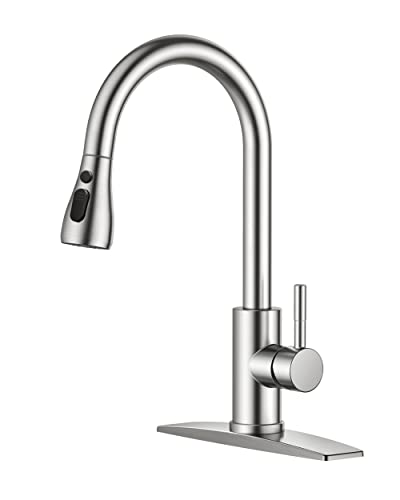
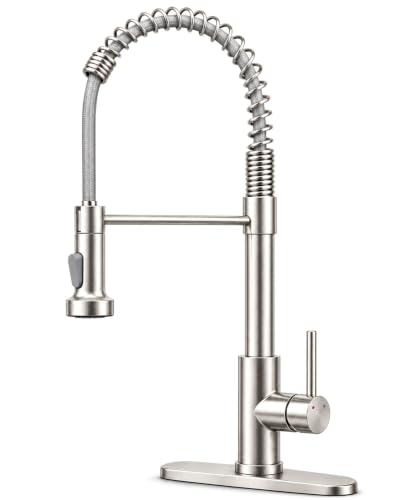
- Lufeidra Kitchen Faucet with Pull-Down Sprayer
- FEELSO Kitchen Faucet with Pull Down Sprayer
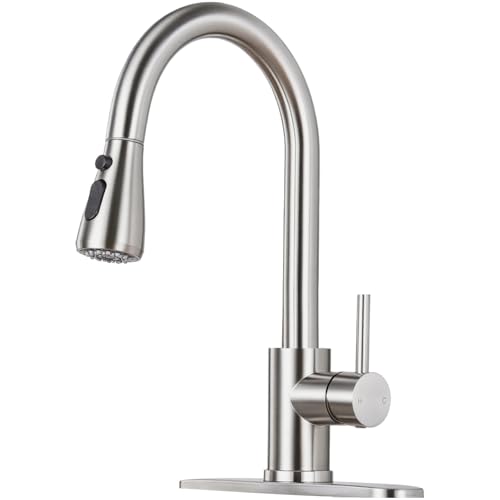
- VFAUOSIT Kitchen Faucet with Pull Down Sprayer
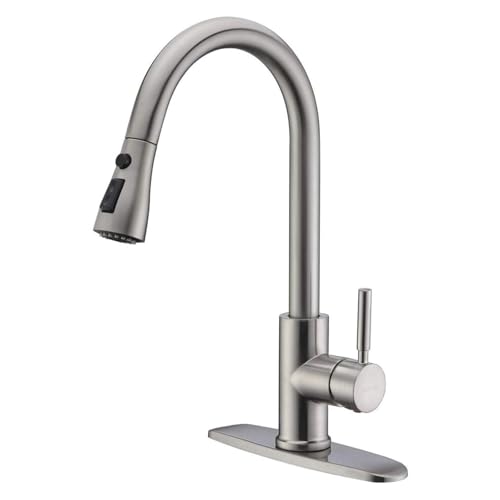
- WEWE High-Arc Pull-Down Kitchen Faucet
Two picks in this guide — WEWE Touchless Kitchen Faucet with Soap Dispenser Set, GIMILI Matte Black Touchless Kitchen Faucet — are covered in full as prose-only reviews with no purchase link and no photo, for the reason explained in their reviews below.
Read the full guide ↓ for the ranking logic, the honest limitations of every pick, and the checks that matter more than any headline claim.
The best manual kitchen faucets make a unfashionable argument: that a lever, a cartridge and water pressure are a complete control system, and that everything a sensor adds — power, electronics, activation logic — is something a kitchen can happily live without. Manual faucets work during power cuts, ignore steam and splashes, ask for no batteries, and fail, when they eventually fail, in ways a homeowner can understand and service. For a growing number of buyers, that simplicity is not a compromise. It is the feature.
This guide reviews six faucets through that lens, and it applies the lens honestly. Four picks state purely manual operation and are linked: the Lufeidra, FEELSO, VFAUOSIT and WEWE high-arc models, each with stated construction worth examining. Two picks — a WEWE touchless set and a GIMILI motion-sensor model — state electronic activation in their titles, so they appear as prose-only reviews: fully described, because their designs illuminate what manual buyers are declining, but carrying no link and no image in a manual-faucet ranking. Readers weighing the electronic path in earnest will find its case made properly in the accessible-design guide to Best Made Kitchen Faucets Ada, where hands-free operation is the point rather than the exception.
Among the manual four, the ranking scores what manual ownership actually depends on: the cartridge that decides lever feel and drip-free years, the body material, the sprayer mechanics, and the installation story. No electronics means the mechanics are the whole product — which makes stated mechanical evidence more important here, not less.
Key Takeaways
- Manual means the whole control system is a lever and a cartridge: no power source, no sensor, nothing to configure, nothing to run flat.
- Two assigned picks state touchless or motion-sensor operation in their titles, so they are reviewed prose-only with no link and no image — a manual ranking cannot link to electronic activation.
- With electronics gone, the cartridge is the product: a stated ceramic cartridge (Lufeidra, WEWE high-arc) is the strongest longevity evidence a manual listing can offer.
- Manual faucets keep working in power cuts and ignore the steam, flour dust and splashes that can confuse sink sensors.
- Every manual pick here is also a repairability pick: the wear items are a cartridge, a hose and a nozzle face, all owner-serviceable on stated designs.
In this guide
Quick Picks
Six faucets are reviewed for best manual kitchen faucets: four linked manual picks and two prose-only touchless comparisons. The table marks which is which; the detailed reviews explain the reasoning for every placement.
| Pick | Badge | Why it stands out | Listing |
|---|---|---|---|
| Lufeidra Kitchen Faucet with Pull-Down Sprayer | Best Manual Overall | A stated ceramic cartridge and SUS304 body in a classic form — the manual mechanism, specified properly. | Check on Amazon |
| FEELSO Kitchen Faucet with Pull Down Sprayer | Best Certified Manual Build | Stated single-handle manual control over a lead-free NSF certified stainless body with a high arc. | Check on Amazon |
| VFAUOSIT Kitchen Faucet with Pull Down Sprayer | Best Convenience-Engineered Manual | Manual operation with the guide’s most precise certification line (NSF 61/372 and cUPC) plus cold-start safety. | Check on Amazon |
| WEWE High-Arc Pull-Down Kitchen Faucet | Best Reach and Upkeep Manual | Ceramic cartridge, SUS 304, full swivel and rub-clean silicone nozzles — manual mechanics specified for the long term. | Check on Amazon |
| WEWE Touchless Kitchen Faucet with Soap Dispenser Set | Prose-Only: Touchless Comparison | Reviewed without a link: its touchless activation is electronic, so it cannot be a manual pick — but its underlying build is worth describing. | Prose-only — see review below |
| GIMILI Matte Black Touchless Kitchen Faucet | Prose-Only: Sensor Comparison | Reviewed without a link: motion-sensor activation is electronic, so it cannot be a manual pick, whatever its other merits. | Prose-only — see review below |
How These Picks Were Chosen
The selection rule for this guide was mechanical and was applied before any quality scoring: a pick is linked only if its title describes manual operation — a handle or lever and no electronic activation. Four picks passed. Two picks state “touchless” or “motion sensor” in their titles, and no reframing can make a sensor faucet a manual one, so both were moved to prose-only status: full reviews, no links, no images, and their electronic operation described accurately rather than minimised.
The four linked picks were then scored on stated construction: cartridge, body material and grade, certification, sprayer and swivel design, and installation claims. Badges mark each pick’s mechanical strength — the classic build, the certified build, the convenience-engineered build and the reach build — so a manual buyer can shop by the kind of simplicity they value.
As throughout this programme, the guidance is research-led from verified listing data. Lever effort and cartridge internals are judged from stated specifications, not invented hands-on claims; where a title is silent about a mechanical detail, the review says so and tells you where to confirm it.
The 6 Best Picks for Best Manual Kitchen Faucets, Reviewed in Detail

Lufeidra Kitchen Faucet with Pull-Down Sprayer
Badge: Best Manual Overall
Strengths
- Ceramic cartridge is stated: the manual valve most associated with smooth action and drip-free service
- SUS304 stainless body states its grade, not just its finish
- Fits 1- or 3-hole decks, suiting the older sinks manual buyers often keep
Trade-offs
- The title does not state the handle count, so confirm the control layout on the listing page
- No water-contact certification is named in the title
- Classic pot-filler styling will not suit a minimal, modern kitchen
Key specifications from the listing
- Body: SUS304 stainless steel
- Cartridge: Ceramic cartridge
- Mounting: Fits 1- or 3-hole
- Style: Classic pot filler form, pull-down sprayer
- Finish: Brushed nickel
A manual faucet stands or falls on its valve, and the Lufeidra is the only linked pick here whose title states both halves of the mechanical story: an SUS304 stainless body around a ceramic cartridge. That pairing is what manual ownership is supposed to feel like — a lever that moves with the same smooth resistance in year five as in week one, and a shut-off that stays shut. The classic pot-filler silhouette is styling, but it is styling with a practical ancestry: pot fillers exist to put water into heavy vessels with minimal handling, and the pull-down sprayer extends that logic across the basin.
Two verifications are owed before purchase, and the review states them rather than smoothing them over. The title does not name the handle configuration, so confirm the control layout on the listing page; and no water-contact certification is named, so buyers who rank certified waterways first should compare the FEELSO below. Neither gap concerns the mechanism itself. For a traditional kitchen, an RV or a laundry sink that wants mechanical honesty in a period shape, this is the manual pick to beat.
Best for: manual buyers who want the cartridge and body grade stated, in a classic form that fits older decks / Not suited for: buyers who need the handle layout and a named certification confirmed in the title itself

FEELSO Kitchen Faucet with Pull Down Sprayer
Badge: Best Certified Manual Build
Strengths
- Single handle is stated explicitly — unambiguous manual, one-lever control
- Lead-free, NSF certified stainless construction states the waterway claim plainly
- High arc suits the tall-pot filling that manual pull-downs do best
Trade-offs
- Cartridge type is not stated, the key mechanical silence in an otherwise clear listing
- The specific NSF standard is not numbered in the title
- No swivel range is stated, so basin coverage needs confirmation
Key specifications from the listing
- Handle: Single handle, as stated
- Body: Stainless steel, lead-free NSF certified, as stated
- Spout: High arc with pull-down sprayer
- Mounting: 1 or 3 hole
- Finish: Brushed nickel
Where the Lufeidra states its valve, the FEELSO states its control: single handle, in so many words. For a manual ranking that distinction matters, because it removes all ambiguity about how the faucet is operated — one lever, moved by hand, blending flow and temperature with no electronics anywhere in the loop. Behind the lever sits a lead-free, NSF certified stainless body, so the waterway claim is stated in certifiable language even though the title does not number the standard.
The mechanical silence is the cartridge, which goes unnamed. A manual buyer choosing between this and the Lufeidra is choosing which stated evidence to prioritise: the FEELSO’s explicit control layout and certified waterway, or the Lufeidra’s named ceramic valve. Both are rational; this guide ranks the valve first, narrowly, because in a purely mechanical product the valve is the part that wears. The high arc, meanwhile, needs no qualification: for stockpots and canning jars it is the most useful geometry a manual faucet can have.
Best for: manual buyers who want stated single-lever control and a certified stainless waterway / Not suited for: buyers who want the cartridge type named before they commit

VFAUOSIT Kitchen Faucet with Pull Down Sprayer
Badge: Best Convenience-Engineered Manual
Strengths
- Certifications are named precisely: lead-free NSF 61/372 and cUPC
- Cold-start safety is a thoughtful manual detail — the lever’s rest position avoids needless hot-water draws
- A 23-inch retractable hose and 3 spray modes give the sprayer real working range
Trade-offs
- Body material and cartridge type are not stated in the title
- Positioned as a modern bar sink faucet, so its scale suits bar and prep sinks best
- The 10-minute tool-free install claim is the maker’s figure and will vary with the sink it meets
Key specifications from the listing
- Certifications: Lead-free NSF 61/372 and cUPC, as stated
- Hose: 23in retractable hose, as stated
- Sprayer: 3 spray modes, pull-down
- Feature: Cold-start safety
- Install: Tool-free install claimed at 10 minutes by the maker
The VFAUOSIT is the thinking person’s manual faucet in this group: fully mechanical, but engineered around the small wastes of manual life. Cold-start safety means the lever’s default position draws cold water, so a quick rinse does not fire the water heater for nothing — a detail that saves energy every single day and that most manual listings never mention. Its certification line is the most precise in this guide, naming NSF 61/372 and cUPC outright, and its 23-inch retractable hose gives the sprayer the longest stated travel here.
Its silences are body material and cartridge type, neither stated in the title — the mirror image of the Lufeidra, which states both and certifies neither by number. Manual buyers therefore face a clean choice of evidences. Positioning matters too: the listing frames this as a modern bar sink faucet, and its proportions will suit prep sinks, bar sinks and compact kitchens more naturally than a vast farmhouse basin. In the right sink, its combination of mechanical purity and thoughtful detail is hard to beat.
Best for: bar, prep and compact kitchens wanting manual control with precise certifications and cold-start economy / Not suited for: large farmhouse basins, or buyers who want body grade and cartridge stated in the title
WEWE High-Arc Pull-Down Kitchen Faucet
Badge: Best Reach and Upkeep Manual
Strengths
- Ceramic cartridge and SUS 304 body are both stated — the manual longevity pair
- Soft silicone nozzles clean with a rub of a finger, the easiest sprayer upkeep in this guide
- 360-degree swivel and a stated 20-inch pull-down reach maximise basin coverage
Trade-offs
- No drinking-water certification is named in the title
- High-arc profile needs the usual clearance check above the deck
- Brushed nickel only, per the title — no alternative finish is stated
Key specifications from the listing
- Body: SUS 304 stainless steel
- Cartridge: Ceramic cartridge
- Nozzles: Soft silicone, easy to rub clean
- Movement: 360-degree swivel; 20-inch pull-down reach, as stated
- Fit: 1- or 3-hole fit
If the Lufeidra wins on the classic pairing of body and cartridge, the WEWE high-arc matches that pairing and adds the upkeep story manual owners actually live with. Its soft silicone nozzles clear scale with a rub of a fingertip — no soaking, no tools, no replacement spray head — which addresses the number one way manual sprayers degrade. A stated 20-inch pull-down reach and a full 360-degree swivel give it the widest stated working envelope in this guide, and its SUS 304 body and ceramic cartridge match the leader spec for spec.
So why fourth? Two reasons, both about evidence rather than quality. Its title names no water-contact certification, where the VFAUOSIT names three standards and the FEELSO claims NSF certification; and its high-arc-only proposition is a narrower fit story than the Lufeidra’s classic versatility. A manual buyer in hard-water country could promote it to first on the nozzle design alone, and this guide would not argue. On the full evidence spread, it closes the linked four — strongly.
Best for: hard-water homes and busy basins wanting stated mechanics plus the easiest nozzle upkeep / Not suited for: certification-first buyers, or low-clearance decks under cabinets
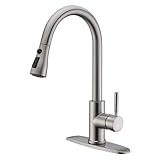
WEWE Touchless Kitchen Faucet with Soap Dispenser Set
Badge: Prose-Only: Touchless Comparison
Prose-only pick: Its title states TOUCHLESS (sensor) activation. A guide to manual faucets cannot link a sensor-operated pick, so it is reviewed in full with no Amazon link and no image.
Strengths
- Under the electronics sits a strong stated build: SUS 304, ceramic cartridge, full swivel
- Hands-free activation genuinely helps when hands are coated in raw-food residue
- Easy-clean nozzles and a 3-mode sprayer match the linked WEWE on upkeep
Trade-offs
- It is not a manual faucet: activation is touchless and electronic, by its own title
- Sensor operation needs a power source and adds components a lever never has
- In a manual ranking it can inform the decision but cannot be the recommendation
Key specifications from the listing
- Activation: Touchless (electronic), as stated — not manual
- Body: SUS 304 stainless steel
- Cartridge: Ceramic cartridge
- Movement: 360-degree swivel; pull-down hose; 3-mode sprayer
- Extras: Soap dispenser set; 1- or 3-hole fit
This review exists so the manual decision is an informed refusal rather than an uninformed one. The WEWE touchless set takes the same platform virtues as its manual sibling — SUS 304 construction, a ceramic cartridge, full swivel, easy-clean nozzles — and replaces the lever’s direct mechanical link with sensor activation. For cooks whose hands are regularly coated in chicken juice or dough, that replacement has a real hygiene argument, and pretending otherwise would make this guide less honest, not more.
But a manual ranking must mean something. Touchless operation depends on power, behaves according to sensor logic that steam and reflective pans can confuse, and introduces electronics into the wettest, hottest workspace in the house. Buyers searching for manual faucets have usually weighed exactly those costs already. This pick is therefore described completely and linked not at all: if its argument persuades you, the accessible-design coverage in this programme treats touchless operation as the feature it is; if it does not, the four linked manual picks above are your shortlist.
Best for: readers who came to compare, and discover hands-free activation solves their actual problem / Not suited for: anyone committed to manual operation — by definition, this is not it
GIMILI Matte Black Touchless Kitchen Faucet
Badge: Prose-Only: Sensor Comparison
Prose-only pick: Its title states MOTION SENSOR / touchless hands-free activation. A guide to manual faucets cannot link a sensor-operated pick, so it is reviewed in full with no Amazon link and no image.
Strengths
- Motion-sensor, hands-free control is stated explicitly — the clearest electronic proposition here
- A single handle is also stated, so a manual control path exists alongside the sensor
- Spring sprayer format is practical and suits modern farmhouse styling
Trade-offs
- Its headline operation is electronic, which disqualifies it from a linked manual ranking
- Single-hole installation only, per the title
- No body material or cartridge type is stated in the title
Key specifications from the listing
- Activation: Motion sensor, hands free (electronic), as stated — not manual as headlined
- Handle: Single handle also stated
- Spout: Spring pull-down sprayer
- Mounting: Single hole installation
- Finish: Matte black
The GIMILI is the more interesting of the two prose-only picks because it straddles the line this guide draws. Its title leads with motion-sensor, hands-free smart control — electronic activation, plainly stated — and also states a single handle, so a manual control exists within the product. A ranking could tie itself in knots over that duality; this one applies the simple rule that a faucet headlined by sensor activation is an electronic faucet, and reviews it prose-only. The handle’s presence is noted fairly, because it is part of the product’s honest description.
As a design, the spring sprayer and matte black finish make a confident modern-farmhouse statement, and the single-hole fit narrows its audience to matching decks. Its title states no body material and no cartridge, so even as an electronic pick its construction evidence is the thinnest in this guide. For the manual buyer, its role here is boundary-marking: it shows exactly where manual ends. Everything above it in this ranking can be operated, serviced and understood with no electricity at all — which is the entire point of the keyword.
Best for: readers deciding between sensor convenience and manual purity, who want the boundary case described fairly / Not suited for: manual buyers — its headline activation is a motion sensor, and no linked recommendation follows
Comparison Table
The table is split by design, and the split is the story. The first four rows are manual faucets you can buy from this guide’s links; the last two rows are electronic faucets reviewed for contrast, marked prose-only in every column that matters. Compare within the manual four on cartridge, certification and reach — and compare across the split only if you are genuinely undecided about electronics at the sink.
| Pick | Badge | Defining traits from the listing | Listing |
|---|---|---|---|
| Lufeidra Kitchen Faucet with Pull-Down Sprayer | Best Manual Overall | Manual; SUS304 body, ceramic cartridge, classic form, fits 1- or 3-hole | Check on Amazon |
| FEELSO Kitchen Faucet with Pull Down Sprayer | Best Certified Manual Build | Manual single handle stated; lead-free NSF certified stainless; high arc; 1 or 3 hole | Check on Amazon |
| VFAUOSIT Kitchen Faucet with Pull Down Sprayer | Best Convenience-Engineered Manual | Manual; NSF 61/372 and cUPC stated; 23in hose; 3 modes; cold-start safety; tool-free install claim | Check on Amazon |
| WEWE High-Arc Pull-Down Kitchen Faucet | Best Reach and Upkeep Manual | Manual; SUS 304, ceramic cartridge, silicone rub-clean nozzles, 360-degree swivel, 20-inch reach | Check on Amazon |
| WEWE Touchless Kitchen Faucet with Soap Dispenser Set | Prose-Only: Touchless Comparison | PROSE-ONLY — touchless electronic activation; SUS 304, ceramic cartridge, 360-degree swivel | Prose-only |
| GIMILI Matte Black Touchless Kitchen Faucet | Prose-Only: Sensor Comparison | PROSE-ONLY — motion-sensor electronic activation; single handle also stated; spring sprayer; single hole | Prose-only |
How to Choose Best Manual Kitchen Faucets
Choosing a manual faucet is choosing a valve. Everything else — arc, finish, sprayer — is geometry and styling, but the cartridge is the machine. Ceramic cartridges earn their benchmark status through hard, polished discs that resist the wear and mineral scoring that make lesser valves drip and stiffen. In this guide the Lufeidra and the WEWE high-arc state ceramic cartridges outright; where a manual listing does not state its cartridge, treat that as the first question to resolve on the listing page, before finish, before price tier, before anything.
Next, decide what “simple” means in your house, because manual spans a spectrum. At one end sits the single-lever pull-down: one control, one sprayer mechanism, a hose and a weight. At the other end, manual spring and pot-filler formats add mechanical theatre without electronics. All of them share the manual virtues — power-cut immunity, splash immunity, owner serviceability — so the choice among them is about mechanics and fit, not philosophy. The build-evidence method behind that statement is laid out in Best Made Kitchen Faucets.
Fit and environment close the decision. Count deck holes and confirm the stated fit (1-hole, 3-hole, deck plate). Measure arc clearance. In hard-water homes, weight nozzle design heavily: rub-clean silicone nozzles turn the most common manual-sprayer failure into a five-second fix. And in homes where the faucet serves an RV, a laundry sink or an outdoor-adjacent bar, manual operation’s indifference to power and temperature extremes stops being a preference and becomes the specification.
Finally, resist the upsell logic that frames manual as the absence of features. A manual faucet is not a touchless faucet minus something; it is a different engineering commitment, in which every function is performed by water pressure and machined parts. The right question is not what it lacks but whether its stated mechanics — cartridge, body, hose, nozzles — are specified like a product meant to be kept. In this guide, four are.
How to Install and Maintain a Manual Pull-Down Faucet
Manual faucets reward owners who install them carefully, because there is no electronics box to blame or adjust later — the installation is the calibration. The steps below cover a standard single-lever pull-down replacement, with the manual-specific checks that decide lever feel and sprayer behaviour for years.
- Shut off the under-sink valves, drain the old faucet, and photograph the existing connections before removal.
- Remove the old faucet and clean the deck to bare, smooth surface; a manual faucet’s base seal depends entirely on this contact.
- Mount the new faucet (with its deck plate if your sink needs one), checking lever travel through its full arc — including full-hot and full-cold extremes — before final tightening.
- Connect supplies hand-tight plus a modest wrench turn. Flush the lines briefly into a bucket before connecting the sprayer hose, so installation debris never reaches the new cartridge.
- Route the pull-down hose in a clear, wide loop, set the weight for a firm dock, and confirm the sprayer pulls and returns smoothly ten times in a row.
- Run every spray mode, swing the swivel through its full stated range, and check every joint with a dry paper towel.
- Record the model and cartridge information from the box in your phone before the packaging leaves the house; manual faucets are serviced by part, and the part is found by paper.
Maintenance thereafter is measured in minutes: rub the nozzles clean when the pattern strays, keep the hose loop clear, and exercise the swivel widely. A manual faucet that receives that much will usually repay it with the longest quiet service of any appliance in the kitchen.
Troubleshooting: three problems owners actually meet
Problem: the lever drips at the base or the spout drips after shut-off → the cartridge is passing water. Flush first if the faucet is newly installed; if the drip persists, the cartridge is the service item, and a stated ceramic cartridge makes identifying the replacement straightforward.
Problem: the sprayer’s pattern fans or spits → scale is distorting the nozzle face. Rub-clean the silicone nozzles where fitted; otherwise soak the face in a vinegar solution if the maker permits, and rinse thoroughly.
Problem: the sprayer will not stay docked → the hose weight has migrated or stored goods crowd the loop. Clear the loop, reposition the weight, and re-test the dock with the cabinet loaded as it normally is, not empty.
The Honest Case for Electronics — Made by a Manual Guide
A manual guide that cannot state the other side’s case is propaganda, so here it is. Touchless activation solves a real problem: hands contaminated mid-recipe, cooks with limited grip, and households where the faucet handle is a cross-contamination hub. The two prose-only reviews above describe capable implementations of that idea, one of which shares its platform with a linked manual pick in this very guide. If those problems are your problems, electronic activation is not a gimmick; it is the correct engineering answer, and the programme’s accessible-design guide treats it that way.
The manual case is equally specific: immunity to power cuts and sensor confusion, zero standby consumption, a control whose behaviour never changes with firmware or battery state, and serviceability measured in one cartridge. Neither case is universal. This keyword belongs to buyers who have weighed both and chosen mechanics — and a guide serves them best by keeping the boundary bright, which is why the electronic picks here carry no links.
Manual Faucets in Rentals, RVs and Second Kitchens
Notice how many listings in this guide name RV, laundry and bar sinks alongside the kitchen. That is manual territory by nature. Rental properties prize faucets a tenant cannot misconfigure and a landlord can service with a cartridge and a wrench. RVs and boats prize indifference to power budgets and vibration. Second kitchens and laundry sinks prize a faucet that works identically after a month of disuse — no flat battery, no sensor recalibration, just water when the lever moves.
If your manual purchase serves one of those settings, weight the stated fit and the cartridge evidence even more heavily than this ranking does, and favour the picks whose listings name your setting outright. A faucet designed and described for the environment it will live in is the closest thing this tier offers to a guarantee.
Manual vs Touchless, Decided Properly: A Side-by-Side Reckoning
Because this guide reviews both families, it owes readers the clean comparison in one place. On activation, the difference is total: a lever answers the hand directly, while a sensor interprets the hand’s presence through electronics and a power supply. On failure behaviour, manual faults are gradual and legible — a drip, a stiffness, a weakened pattern — while electronic faults can be binary: a sensor or power fault can retire an otherwise sound faucet until a part arrives. On hygiene, the honest edge goes the other way: touchless activation keeps contaminated hands off shared surfaces, a point developed for effort-limited cooks in Best Made Kitchen Faucets Ada and true for every cook handling raw poultry.
On specification, interestingly, the two families in this guide are closer than their philosophies. The prose-only WEWE touchless set states the same SUS 304 body, ceramic cartridge and swivel figures as the linked manual models; the GIMILI states less about construction than any manual pick here. The lesson generalises: activation type tells you how a faucet is controlled, not how it is built, and buyers on both sides of the divide should read the construction evidence with the same severity. The materials framework for doing that is laid out in Best Material For Kitchen Faucets, and it applies to sensor faucets exactly as it applies to levers.
On cost of ownership the manual case compounds quietly. No batteries on a replacement cycle, no power pack occupying the cabinet, no sensor window to keep clean and calibrated, and a wear list that ends at cartridge, hose and nozzle face. None of that makes touchless a poor purchase — for the right household it is the correct one — but it does mean the manual buyer is not accepting a lesser product. They are selecting a different, older, fully finished technology, one whose development ended at “works every time, for decades, with parts anyone can fit.” For a great many kitchens, finished is the highest praise available.
The Manual Faucet Abroad: Cabins, Boats, Rentals and Workshops
Notice, once more, how insistently the listings in this guide name secondary settings — RV, laundry, bar — alongside the kitchen. Those settings share a profile the main kitchen only sometimes has: intermittent use, variable power, multiple users of varying care, and long distances from the nearest plumber. Manual operation is not merely compatible with that profile; it is the specification that profile would write for itself. A faucet that sat dry for a month wakes up as a faucet. A faucet in a rental cannot be misconfigured by a tenant, reprogrammed by a child or retired by a flat battery discovered on a holiday weekend.
Workshops and utility sinks add their own verse to the same song. Hands there are gloved, greasy or holding workpieces, and a lever that can be knocked with a wrist — the FEELSO’s stated single handle, the Lufeidra’s classic form — outperforms any control that asks for a clean, deliberate gesture. The VFAUOSIT’s cold-start behaviour even speaks to utility economics: rinse water drawn cold by default, hundreds of times a year, without a thought. When a listing names your setting outright, as several here do, it is telling you the maker designed and warranted the product with that setting’s abuse in mind.
So the manual recommendation widens as it settles. In the primary kitchen it is a philosophy of ownership. In the cabin, the boat, the rental and the workshop it is simply the engineering answer, and the four linked models in this guide — with their stated cartridges, certified waterways and quantified reaches — are specified well enough to serve all of those postings. Choose among them by the evidence each states, install with the care the how-to section describes, and expect the rarest experience a modern appliance offers: nothing to update, nothing to pair, nothing to charge. Just water, when the lever moves, for years.
The Lever Itself: A Small Appreciation of the Manual Interface
It is worth pausing on the interface every linked pick in this guide shares, because the single lever is one of the great uncelebrated controls. One input blends two variables — flow and temperature — along a path the hand learns in a day and remembers for a decade. It can be operated by fingers, palm, wrist or forearm, at any point in its travel, with immediate and proportional response: push a little, get a little. No menu, no mode, no wake gesture, no delay while a system decides what you meant. Interface designers in every other field study controls like this and call them direct manipulation; plumbers just call it a faucet.
That directness is also a safety property. A lever’s position is its state, visible and tactile at once — angled toward hot, it says so; centred for cold-start designs like the VFAUOSIT’s, it says that too. In households with children, guests or anyone unfamiliar with the kitchen, a control whose state can be read at a glance prevents the small scalding surprises that cleverer interfaces occasionally deliver. Manual, in other words, is not the absence of interface design. It is interface design that finished early and has been quietly correct ever since — which is, when you think about it, the exact temperament you want in charge of your water.
Keep one sentence from this guide and the manual choice stays simple for every future purchase: if it needs power to decide, it is not manual — and if its cartridge is stated, its body graded and its hose honest, it does not need to be anything else.
There is a generational footnote, too. A manual faucet installed today teaches everyone who uses the kitchen — children, guests, the next owners of the house — exactly how water is controlled, because the control is visible, mechanical and honest. Nothing about it will be orphaned by an app shutdown, a discontinued cloud service or a battery format’s retirement. In a house increasingly run by systems that expire, the lever’s permanence is not nostalgia. It is continuity, plumbed in.
Common Buying Mistakes
Mistake one: buying a “manual” faucet without checking for electronic activation in the fine print. Sensor models with a manual-looking handle exist — one is reviewed prose-only above. Read the activation line of the title before anything else.
Mistake two: skipping the line flush at installation and then blaming the cartridge for debris drips. New manual faucets inherit the grit of the plumbing work around them; a bucket flush protects the valve you just paid for.
Mistake three: judging a manual faucet by its spray-mode count. Modes are easy to add and rarely used beyond two; cartridge quality, hose travel and nozzle upkeep decide daily satisfaction.
Mistake four: discarding the documentation. A manual faucet may not need a part for six years — at which point the model and cartridge paper you threw away becomes a research project. Photograph it, file it, forget it until needed.
Final Recommendation
Choose the Lufeidra for the manual brief in its purest stated form: SUS304 body, ceramic cartridge, classic shape, broad deck fit. Choose the WEWE high-arc instead if hard water makes nozzle upkeep your dominant concern — its rub-clean silicone nozzles and stated reach are the practical manual package — and choose the FEELSO for stated single-lever clarity with a certified waterway, or the VFAUOSIT for a compact or bar sink where its precise certifications and cold-start economy shine.
Check on Amazon · Check on Amazon · Check on Amazon
And let the two prose-only reviews do their intended work. If, reading them, the touchless argument felt stronger than the manual one, follow it honestly — the WEWE touchless platform is a serious product, reviewed fully above. But if your mind is made up for mechanics, this guide’s four linked picks give you stated cartridges, certified waterways and thoughtful detail with no electricity anywhere in the loop. That is not the absence of technology. It is technology that finished its job and stopped asking for attention.
Frequently Asked Questions
What makes a kitchen faucet “manual”?
Operation by hand through a lever or handle and a mechanical cartridge, with no electronic activation: no sensor, no touch circuitry, no power source. If a title states touchless, motion sensor or hands-free electronic control, the faucet is not manual in the sense this guide uses — which is why two such picks appear here prose-only.
Are manual faucets more reliable than touchless ones?
They have fewer failure modes: no batteries to exhaust, no sensor to confuse, no electronics in a wet environment. Their wear items — cartridge, hose, nozzle face — are mechanical and owner-serviceable. That is a narrower claim than “more reliable” in the abstract, and it is the honest one: manual faucets fail more simply, and simpler failures are cheaper to live with.
Which manual pick has the best cartridge evidence?
The Lufeidra and the WEWE high-arc both state ceramic cartridges in their titles, alongside SUS304 and SUS 304 bodies respectively. The FEELSO and VFAUOSIT do not state a cartridge type, which does not make their valves poor — it makes them unverified from the title, and worth confirming on the listing page.
Can a manual faucet still have multiple spray modes?
Yes. Spray modes are selected mechanically at the spray head and have nothing to do with electronic activation. The VFAUOSIT and WEWE picks here state three modes each, all operated by hand. Modes, swivel and pull-down travel are mechanical features that sit comfortably inside a manual design.
Why are two faucets reviewed without links in this guide?
Because their titles state touchless or motion-sensor activation, and a guide to manual faucets cannot honestly link electronic picks as manual recommendations. They are reviewed in full — accurately, including their strengths — so the comparison is available, and the boundary of the keyword is kept bright.
Do manual faucets work during a power cut?
Yes, completely, as long as water pressure is maintained — which for most homes it is, since municipal pressure and well pumps on backup supply do not depend on the faucet. Nothing in a manual faucet’s operation consumes electricity, which is one of the quiet reasons rentals, RVs and second kitchens default to them.