Disclosure: topratedkitchenware.com is reader-supported. When you buy through links on our site, we may earn an affiliate commission from Amazon and other retailers, at no extra cost to you.
Where to buy
The two electric smokers below are the picks in this guide that carry Amazon links, because they are the only models in our verified pool whose listings describe a true plug-in electric smoker. The four pellet models that follow them are reviewed in full as prose-only alternatives: they are excellent machines, but they burn wood pellets rather than running on an electric element with wood chips, so they do not answer an electric brief and they carry no link and no product image here. Prices move constantly in this category, so use the links to check the current figure against the under 300 band before you commit.
- EAST OAK 30-Inch Outdoor Electric Smoker, Polar Night — Best Overall Electric
- Royal Gourmet SE2805 28-Inch Electric Smoker — Best Simple Analog Electric
- Traeger Pro 22 Wood Pellet Grill and Smoker — prose-only pellet alternative
- Pit Boss 700 Carbon Series Wood Pellet Grill and Smoker — prose-only pellet alternative
- Pit Boss 500 Carbon Series Wood Pellet Grill and Smoker — prose-only pellet alternative
- Pit Boss 850 Navigator Series Wood Pellet Grill and Smoker — prose-only pellet alternative
Read the full guide ↓
Searching for the best smokers electic under 300 — and yes, we are keeping the spelling exactly as shoppers type it — usually means one thing: you want real wood-smoked food without tending a fire, and you want the whole purchase to stay inside a modest budget band. Electric smokers fit that brief better than any other fuel type, because the heating element holds the temperature while a small tray of wood chips supplies the smoke. There is no charcoal to light, no propane tank to swap, and no pellet auger to feed. You plug the cabinet in, set the control, load the chips, and walk away for hours at a time.
The honest complication is that the under 300 band is a moving target. Street prices in this category rise and fall with seasons, holidays, and retailer promotions, and a model that sits comfortably inside the band in spring can drift above it by summer. That is why this guide treats the band as a shopping lens rather than a promise: every linked pick below is a genuine electric smoker of the type that competes in this tier, and your job at checkout is simply to confirm the current price still fits your ceiling. Where a model is a pellet grill instead, we say so plainly and review it without a link, because calling a pellet grill an electric smoker would mislead you about fuel, running costs, and how the machine actually cooks. If you are still deciding between fuel types, our comparison of Best Smokers Electric Or Gas lays out the trade-offs in more depth.
Key Takeaways
- Only two picks in this guide are true electric smokers with links: the EAST OAK 30-inch in Polar Night and the Royal Gourmet SE2805. Both use an electric element plus wood chips.
- The four pellet grills reviewed here are prose-only on purpose. They cook with burning wood pellets, not electricity, so they sit outside an electric brief even when their prices wander near the band.
- The under 300 figure is a tier, not a fixed price. Always check the live price on Amazon before assuming a model still qualifies.
- Cooking area separates the two electric picks: 725 square inches in the EAST OAK against 454 square inches in the Royal Gourmet, which matters more than most feature lists.
- A side chip loader is the single most useful convenience on an electric smoker, because it lets you add smoke wood without opening the door and dumping heat.
- Analog versus digital control is a genuine fork: analog is simpler and cheaper to own, digital holds a set temperature with less supervision.
In this guide
Quick Picks
| Pick | Badge | Why it stands out | Link |
|---|---|---|---|
| EAST OAK 30-Inch Outdoor Electric Smoker, Polar Night | Best Overall Electric | 725 sq in of cooking area, a built-in meat probe, and a side chip loader rated for up to six times longer uninterrupted smoke, on a mobility stand. | Check on Amazon |
| Royal Gourmet SE2805 28-Inch Electric Smoker | Best Simple Analog Electric | A straightforward 1350W vertical cabinet with analog control, three cooking grates, and 454 sq in of space — the uncomplicated end of electric smoking. | Check on Amazon |
| Traeger Pro 22 Wood Pellet Grill and Smoker | Best Pellet Alternative (Prose-Only) | 572 sq in, an 18 lb hopper, and six-in-one versatility — a fine machine, but a pellet grill, not an electric smoker. | Prose-only — see the full review below |
| Pit Boss 700 Carbon Series Wood Pellet Grill and Smoker | Best Mid-Size Pellet Alternative (Prose-Only) | 718 sq in and a wide 180°F to 500°F range under an LCD digital controller, powered by pellets rather than an element. | Prose-only — see the full review below |
| Pit Boss 500 Carbon Series Wood Pellet Grill and Smoker | Best Compact Pellet Alternative (Prose-Only) | The smallest pellet option here at 543 sq in, with the same controller family as its bigger sibling. | Prose-only — see the full review below |
| Pit Boss 850 Navigator Series Wood Pellet Grill and Smoker | Best Large Pellet Alternative (Prose-Only) | 932 sq in, WiFi and Bluetooth, a flame broiler, and a 30 lb hopper — the biggest cooker in this guide, and the furthest from the electric brief. | Prose-only — see the full review below |
How These Picks Were Chosen
We built this guide from manufacturer listings verified through Amazon’s product data, comparing every electric vertical smoker and every pellet grill in our research pool against the same checklist: fuel type first, then cooking area, temperature control style, chip or hopper loading design, included probes, and how the cabinet moves and stores. Fuel type came first because the keyword asks for electric machines. Any model whose listing describes pellet combustion was moved to prose-only status no matter how strong the rest of its specification looked, and any model whose listing does not clearly describe its fuel type was left out entirely rather than guessed at.
A note on method and honesty: this is a research-led guide. We compare verified specifications, listing details, and the patterns that show up across owner feedback, and we do not claim to have cooked on every unit in a test kitchen. Where a specification is not stated in the verified listing — an exact wattage, a temperature range, a rack count — we leave it out instead of filling the gap with a plausible number. Prices are deliberately excluded for the same reason: they change too often to print responsibly, and the under 300 band only means something if you check it live. Readers cross-shopping the tighter tier in Best Smokers For 25000 Or Less will find the same discipline applied there.
The 6 Best Smokers Electic Under 300
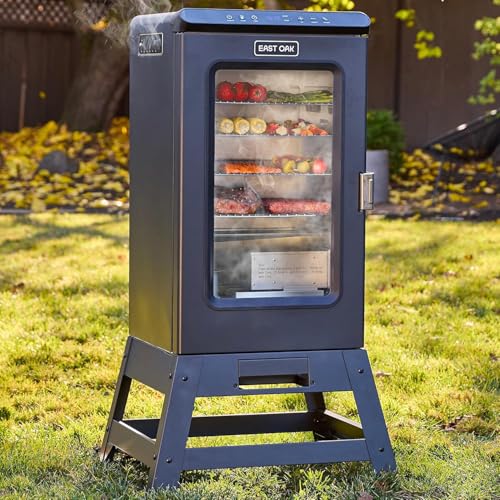
EAST OAK 30-Inch Outdoor Electric Smoker, Polar Night
Badge: Best Overall Electric
Strengths
- 725 sq in of cooking area is the largest figure among the true electric picks in this guide, spread through a 30-inch vertical cabinet that uses height instead of patio width.
- The side chip loader is rated for up to six times longer uninterrupted smoke, which means fewer door openings and steadier cabinet temperatures across a long cook.
- A built-in meat probe is included, so doneness checks do not depend on a separate thermometer purchase on day one.
Trade-offs
- The mobility stand raises the cabinet and adds parts to assemble, clean around, and store.
- Like every electric cabinet, it tops out at smoking and roasting temperatures — there is no searing or grilling function.
- The Polar Night finish is a specific dark look that will not match every patio scheme, if that matters to you.
Mini spec box
- Fuel: electric element with wood chips
- Cooking area: 725 sq in
- Chip loading: side chip loader, up to 6x longer uninterrupted smoke
- Probe: built-in meat probe
- Stand: mobility stand included
- Finish: Polar Night
This is the electric smoker we would point most under-300 shoppers toward first, and the reasoning starts with the chip loader. The recurring frustration of cabinet-style electric smokers is that smoke wood runs out long before the meat is done, and on designs where the chip tray lives inside the cabinet, every refill costs you a door opening, a cloud of escaped heat, and a temperature dip the element then has to recover from. A side loader breaks that cycle: you slide fresh chips in from outside while the door stays shut. EAST OAK rates this loader for up to six times longer uninterrupted smoking, and even treating that as a best-case figure, the practical effect is a cook that needs far less babysitting.
The 725 sq in figure deserves context. In a vertical cabinet, total area is divided across stacked racks, which suits the way most people actually smoke: a couple of pork shoulders on one level, ribs on another, perhaps a tray of wings or a whole chicken taking advantage of the cabinet height. The built-in probe covers the other half of low-and-slow cooking — knowing the internal temperature of the meat without lifting the lid — and the mobility stand means the cabinet sits at a working height and can be rolled aside when the patio is needed for something else. For a household that smokes most weekends and wants the largest, least-interrupted electric cook in this tier, this is the natural first choice. Its honest limitation is the ceiling shared by the whole electric category: if your idea of barbecue includes a hard sear or grilled burgers alongside the smoked ribs, a single-purpose cabinet will always need a partner appliance.
Best for: regular weekend smokers who want maximum electric capacity and minimum door openings / Not suited for: anyone who needs one machine that also grills and sears

Royal Gourmet SE2805 28-Inch Electric Smoker
Badge: Best Simple Analog Electric
Strengths
- Analog temperature control with adjustable heat is about as simple as smoker operation gets — one dial, no menus, no app.
- The 1350W element is clearly stated in the listing, which makes electrical planning straightforward.
- Three cooking grates in a 28-inch vertical body keep the footprint small for tight patios and balconies where rules allow smoking.
Trade-offs
- 454 sq in is the smallest cooking area among the linked picks here, so big batch cooking means smaller loads or more planning.
- Analog control asks more of you: there is no digital set-and-hold precision, so checking in periodically is part of the deal.
- No built-in meat probe is listed, so a separate thermometer is a sensible companion purchase.
Mini spec box
- Fuel: electric element with wood chips
- Power: 1350W
- Cooking area: 454 sq in
- Control: analog temperature control, adjustable heat
- Grates: 3 cooking grates
- Form: 28-inch vertical, black
The Royal Gourmet SE2805 represents the other philosophy of electric smoking: strip the machine down to an insulated box, an element, a chip tray, and a dial, and let the cook supply the judgment. There is a real audience for that. Analog control has no circuit board to fail, no display to wash out in bright sun, and no learning curve beyond turning a dial toward warmer or cooler and watching how your particular cabinet responds. For a first smoker, or a second smoker bought for a cabin, a rental property, or a relative’s house, that simplicity is a feature rather than a compromise.
The compromises are equally clear. At 454 sq in across three grates, this is a smoker for modest loads: a pair of chickens, a few racks of ribs laid with care, a single pork shoulder with room for sides. It is not the cabinet you choose for a party of twenty. Analog control also means the cabinet temperature will wander more than a digital model holds it, and the cook who wants to set a temperature at breakfast and ignore the smoker until dinner will feel that difference. What you get in return is the most direct, repairable, and approachable version of electric smoking in this guide — and a model whose straightforward specification makes it a natural fit for shoppers working to the tighter end of the band. If your cooks are small and your tastes are simple, the SE2805 covers the brief without asking you to pay for electronics you will never use.
Best for: first-time smokers and small households that value simplicity over capacity / Not suited for: large-batch cooks and anyone who wants digital set-and-forget control
Traeger Pro 22 Wood Pellet Grill and Smoker
Badge: Best Pellet Alternative (Prose-Only)
Strengths
- Six-in-one versatility — grill, smoke, bake, roast, braise, and barbecue — from a single machine, which no electric cabinet here attempts.
- An 18 lb hopper feeds long cooks without constant refilling, and a meat probe is included.
- Pellet combustion produces a smoke flavor profile many cooks prefer over chip-based electric smoke.
Trade-offs
- It is not an electric smoker. It burns wood pellets, so it sits outside this keyword’s brief and carries no link in this guide.
- Running costs include a steady supply of food-grade pellets, an ongoing consumable electric cabinets do not need in the same volume.
- The 450°F maximum temperature is a stated ceiling worth knowing if high-heat grilling is a priority.
Mini spec box
- Fuel: wood pellets (prose-only in this electric guide)
- Cooking area: 572 sq in
- Hopper: 18 lb
- Maximum temperature: 450°F
- Probe: meat probe included
- Functions: grill, smoke, bake, roast, braise, BBQ
We include the Traeger Pro 22 because many shoppers who type an electric-smoker query are actually cross-shopping the whole hands-off smoking category, and this is the pellet machine they will inevitably meet. Its appeal is real: pellets automate the fire the way an element does, the hopper holds enough fuel for extended sessions, and the same machine that smokes a brisket on Saturday can grill on Tuesday. For a household choosing its one outdoor cooker, that breadth is a legitimate argument.
But honesty about fuel types matters, because the ownership experience differs. A pellet grill has an auger, a fan, and a fire pot; it consumes pellets by the bag; it needs ash management; and its smoke comes from actual wood combustion, which is precisely why some cooks swear by it. None of that makes it an electric smoker, and presenting it as one — as too many roundups quietly do — sets buyers up with the wrong fuel, the wrong storage needs, and the wrong expectations. Read this review as a signpost: if the versatility tempts you, you are probably shopping for a pellet grill, and you should compare pellet grills against each other rather than against electric cabinets.
Best for: shoppers who realize they want one versatile pellet cooker more than a dedicated electric cabinet / Not suited for: anyone committed to plug-in electric smoking, chip trays, and the under 300 electric brief
Pit Boss 700 Carbon Series Wood Pellet Grill and Smoker
Badge: Best Mid-Size Pellet Alternative (Prose-Only)
Strengths
- 718 sq in of cooking space is generous for a mid-size pellet grill, close to the largest electric cabinet here.
- The stated 180°F to 500°F range covers low smoking through genuinely hot grilling in one machine.
- An LCD digital controller and a meat probe bring the supervision tools pellet cooks rely on.
Trade-offs
- Pellet fuel again places it outside the electric brief — prose-only, no link, no image in this guide.
- The 13.5 lb hopper is smaller than the Traeger’s 18 lb unit, so the longest cooks need a mid-session top-up.
- A barrel-style grill footprint takes more patio width than a vertical electric cabinet of similar capacity.
Mini spec box
- Fuel: wood pellets (prose-only in this electric guide)
- Cooking space: 718 sq in
- Temperature range: 180°F to 500°F
- Controller: LCD digital controller
- Hopper: 13.5 lb
- Probe: meat probe included
The Pit Boss 700 Carbon is the pellet alternative for the cook who looked at the electric cabinets, liked the capacity, and wished the machine could also reach real grilling heat. Its stated range runs from 180°F — squarely in low-and-slow territory — up to 500°F, which is hotter than the Traeger above manages and well beyond anything an electric cabinet attempts. The LCD controller keeps the pellet fire honest, and 718 sq in is enough room for family-scale barbecue without stepping up to the largest machines in the class.
Everything said about the Traeger applies here with equal force: this is a combustion appliance with an auger and a pellet bill, not a plug-in smoker with a chip tray. Shoppers comparing it against the electric picks should compare total ownership — pellet storage, ash cleanout, weather protection for the electronics — rather than headline capacity alone. It earns its prose-only place in this guide as the mid-size benchmark of the neighboring category, the machine that helps you decide which side of the fuel divide you actually live on.
Best for: cross-shoppers who want pellet capacity plus a genuinely wide temperature range / Not suited for: electric-only shoppers, and anyone without dry storage for pellet bags
Pit Boss 500 Carbon Series Wood Pellet Grill and Smoker
Badge: Best Compact Pellet Alternative (Prose-Only)
Strengths
- 543 sq in in the smallest pellet footprint in this guide — the pellet option for tighter patios.
- Shares the family specification that matters: LCD digital controller, meat probe, and the same 180°F to 500°F stated range as the 700.
- The 13.5 lb hopper matches its bigger sibling, so cook duration is not sacrificed for size.
Trade-offs
- Still a pellet grill: outside the electric brief, prose-only, with pellet storage and ash upkeep as part of ownership.
- 543 sq in is the ceiling — holiday-scale cooks will outgrow it faster than any other machine reviewed here except the SE2805.
- No WiFi or Bluetooth is stated, so remote monitoring is not part of the package.
Mini spec box
- Fuel: wood pellets (prose-only in this electric guide)
- Cooking space: 543 sq in
- Temperature range: 180°F to 500°F
- Controller: LCD digital controller
- Hopper: 13.5 lb
- Probe: meat probe included
If the pellet idea appeals but your patio is small, the Pit Boss 500 Carbon is the version of that idea scaled to fit. It keeps the specification spine of the 700 — the controller, the probe, the temperature range, the same hopper size — and trims the cooking surface to 543 sq in. For a couple or a small family whose smoking is a weekend pleasure rather than a production, that trade is rational: less steel to heat, less space to store, the same pellet routine.
Its role in this guide is the same as the other pellet machines: a clearly labeled alternative, not an electric pick in disguise. The shopper who reads this review and feels the pull toward it should take that as useful information about their own priorities — they care about grilling range and combustion flavor more than about the plug-in simplicity the keyword describes — and then shop the pellet category on its own terms, where this model competes on size and value rather than on a technicality.
Best for: small households tempted by pellets who need the compact version / Not suited for: electric-brief shoppers and large-batch cooks
Pit Boss 850 Navigator Series Wood Pellet Grill and Smoker
Badge: Best Large Pellet Alternative (Prose-Only)
Strengths
- 932 sq in is the largest cooking space in this entire guide, electric or pellet.
- A 30 lb hopper is built for the longest cooks without refilling, and WiFi plus Bluetooth monitoring is built in.
- The flame broiler adds direct-flame searing that no other machine here offers.
Trade-offs
- The furthest machine from this keyword: pellet-fired, grill-format, and sized for serious volume — prose-only by a wide margin.
- Its scale brings scale problems: more patio, more pellet consumption, more cleaning surface after every cook.
- Cooks who only ever smoke a single shoulder will be paying — in space and upkeep — for capacity they never use.
Mini spec box
- Fuel: wood pellets (prose-only in this electric guide)
- Cooking space: 932 sq in
- Temperature range: 180°F to 500°F
- Controller: LCD digital controller with WiFi and Bluetooth
- Hopper: 30 lb
- Extra: flame broiler, meat probe included
The Navigator 850 is included as the far shore of the comparison — the machine that shows how large the pellet category gets while the electric category stays cabinet-sized. Thirty pounds of pellets in the hopper, app-level monitoring, a flame broiler for finishing steaks over direct fire, and cooking space that swallows multiple briskets: as a pellet grill specification, it is comprehensive. As an answer to a search for electric smokers in a modest price band, it is a different product for a different buyer, and we would rather say that plainly than stretch the keyword to cover it.
There is still something useful for the electric shopper in reading its specification. Notice what the money and size buy in pellet land — connectivity, hopper endurance, searing hardware — and then notice that the electric picks in this guide buy a different set of virtues with their simpler designs: lower running costs, a chip tray instead of a pellet store, and a cabinet that disappears into a patio corner. Choosing between those virtue sets is the real decision this keyword hides, and it is better made openly.
Best for: high-volume cooks who discover their real brief is a flagship pellet grill / Not suited for: the under 300 electric brief in every respect — fuel, format, and scale
Comparison Table
| Pick | Fuel | Cooking area | Control | Standout feature | Link |
|---|---|---|---|---|---|
| EAST OAK 30-Inch, Polar Night | Electric + chips | 725 sq in | Electric cabinet control with built-in probe | Side chip loader, mobility stand | Check on Amazon |
| Royal Gourmet SE2805 | Electric + chips | 454 sq in | Analog, 1350W | Three grates, simplest operation | Check on Amazon |
| Traeger Pro 22 | Wood pellet | 572 sq in | Pellet controller with probe | Six-in-one versatility, 18 lb hopper | Prose-only |
| Pit Boss 700 Carbon | Wood pellet | 718 sq in | LCD digital | 180°F to 500°F range | Prose-only |
| Pit Boss 500 Carbon | Wood pellet | 543 sq in | LCD digital | Compact pellet footprint | Prose-only |
| Pit Boss 850 Navigator | Wood pellet | 932 sq in | LCD digital with WiFi and Bluetooth | 30 lb hopper, flame broiler | Prose-only |
How to Choose an Electric Smoker in This Band
Start with the fuel question, because it decides everything downstream. An electric smoker is an insulated cabinet with a heating element and a small tray or loader for wood chips. The element provides the heat; the chips provide the smoke; the two jobs are separate, which is why electric cabinets are so steady and so simple. A pellet grill burns compressed wood pellets as its only fuel, using an auger and fan to feed a fire pot. Both are hands-off compared with charcoal, but they are different appliances with different running costs, different storage needs, and different flavor ceilings. Guides that blur the line — including, we would argue, any guide that links pellet grills inside an electric roundup without labeling them — do their readers a disservice. Readers who want the full picture of the neighboring categories can work through Best Smokers For Backyard Bbq after settling the fuel question here.
Next, size the cabinet to your real cooks, not your biggest imagined one. Total square inches in a vertical smoker are spread across stacked racks, so think in loads: how many racks of ribs, how many chickens, what is the largest single item — a whole turkey, a full packer brisket — that must fit on one level with the door closed. A 725 sq in cabinet and a 454 sq in cabinet can both smoke a beautiful pork shoulder; they diverge when the guest list grows. Buying one size up from your normal load is sensible. Buying for the once-a-year feast usually means living with an oversized appliance the other fifty weekends.
Then weigh control style honestly. Digital control holds a set temperature with minimal input and pairs naturally with a built-in probe, which is why the larger electric pick in this guide suits set-and-forget cooks. Analog control, as on the SE2805, trades that precision for simplicity and durability — there is very little to break, and the cook learns the cabinet’s personality within a few sessions. Neither is objectively better; they serve different temperaments. Finally, look at the chip system. A side loader that adds chips without opening the door is worth more in practice than almost any other convenience, because temperature stability is the whole game in smoking. If you are also weighing space-limited options, Best Smokers For Apartments covers the footprint and smoke-management side of the same decision.
How to Run an Electric Smoker: Setup, Smoking, and Cleaning
Setup begins before the first cook. Place the cabinet on a level, non-combustible surface with clearance around it, following the manufacturer’s spacing guidance, and plug it into a suitable outdoor outlet — heavy elements like the SE2805’s stated 1350W deserve a circuit that is not already loaded. Season a new smoker by running it empty with a light load of chips for the manufacturer’s recommended period; this burns off manufacturing residues and teaches you how the control behaves. While it runs, note how long the cabinet takes to reach smoking temperature and how the temperature responds when you adjust the control. That baseline makes every later cook easier to read.
For the cook itself, the routine is deliberately boring. Preheat the cabinet, soak nothing — dry chips smolder more predictably for most electric setups — load the chip tray or side loader, place the meat with the probe in the thickest part away from bone, and close the door. Then leave it closed. Every opening costs heat and time, which is the entire argument for side loaders and built-in probes. Refill chips when smoke output fades, not on a rigid schedule, and expect the heaviest smoke flavor to land in the first hours while the meat’s surface is cool and receptive. Rest smoked meat before slicing, wrapped and held warm, so juices redistribute instead of running onto the board.
Cleaning is where electric smokers repay their owners. Once the cabinet is fully cool and unplugged, empty the chip tray and any ash, wipe the racks and interior walls with a damp cloth or a manufacturer-approved cleaner, and wash removable trays. Never hose down an electric cabinet or immerse any part with wiring. Three recurring problems cover most owner frustration. Problem: thin, bitter smoke that will not settle → the chips are burning too hot or too fast; reduce the load, check that the tray is seated correctly, and let the cabinet stabilize before adding meat. Problem: temperature swinging widely on an analog model → the door is being opened too often or the cabinet sits in wind; reposition it out of the wind and trust the probe instead of your curiosity. Problem: weak smoke flavor on finished food → the cook ran too long on an empty chip tray; use the side loader if your model has one, and front-load chips early when the meat takes smoke best.
Why the Under 300 Band Behaves the Way It Does
Electric smokers cluster in price tiers for structural reasons. The cabinet itself is simple — insulated steel, racks, a drip system — so the money goes into the control system, the chip-loading design, the probe, the stand and wheels, and the finish. That is why the two linked picks in this guide differ the way they do: one spends its budget on capacity, a side loader, a probe, and mobility, while the other strips back to an element and a dial. Neither approach is a trick. The band also explains the pellet temptation: pellet grills carry motors, augers, fans, and controllers, so their prices sit on a different curve, and a pellet grill that appears inside an electric price band is usually there because of a temporary promotion rather than its normal tier. Treat any such appearance as a checkout-time check, not a category fact — the same caution we apply in Best Smokers For A Turkey, where capacity claims deserve the same live verification.
Running Costs and Ownership: The Part of the Budget Nobody Prints
The purchase price is only the first line of what a smoker costs, and it is the line this category’s marketing talks about most. The lines that follow are quieter. An electric cabinet consumes electricity at a rate set by its element — the SE2805’s listing states 1350W, which gives you a concrete basis for estimating what a long cook draws — and a modest, ongoing supply of wood chips, which are sold in small bags and used by the handful. There is no fuel tank to refill, no charcoal to store, and no minimum purchase to keep on hand. For most households the consumable cost of electric smoking is the lowest of any smoker type, and the storage footprint of its fuel is a single small bag in a cupboard.
Pellet ownership inverts that profile. The machines reviewed above carry hoppers of 13.5 to 30 pounds because they burn their fuel continuously, and pellets are bought in large bags that need dry storage — a garage corner, a sealed bin, protection from the humidity that swells and ruins them. None of that is unreasonable, and pellet cooks accept it gladly for the flavor and versatility. But it belongs in the budget conversation for a shopper working to a band: a machine bought cheaply that then requires a standing inventory of bagged fuel, a cover sized to a barrel-shaped grill, and occasional auger and fire-pot maintenance is not the same purchase as a cabinet that asks for a handful of chips and an outlet.
The other ownership cost is attention, and here the electric design quietly wins its category. There is no fire to manage, no ash bed building up under the cook, and no flare risk from rendered fat meeting open flame. The routine is: chips in, probe in, door shut, and periodic glances at a readout. That is precisely why electric cabinets dominate the apartment, first-smoker, and weeknight segments of the market, and why the under 300 band is full of them. When you compare the two linked picks in this guide, compare them on that ownership basis — capacity and chip-loading convenience on one side, simplicity and compactness on the other — rather than on feature lists alone. The machine that fits your storage, your circuit, and your patience is the one that gets used, and a smoker that gets used every week is a better purchase than a theoretically superior one that gathers dust by August.
Common Buying Mistakes
- Buying a pellet grill while shopping for an electric smoker. The two are marketed side by side and reviewed in the same articles, but the fuel, consumables, and maintenance are entirely different. Decide the fuel first.
- Trusting a printed price. Any guide that prints a fixed price for a smoker is out of date on arrival. The band is a filter you apply at checkout with live prices, not a number you memorize from an article.
- Counting total square inches without thinking in loads. Stacked rack area is not the same as usable area for your largest item. Picture the actual food, on the actual rack, with the door closed.
- Ignoring the chip system. A smoker you must open every hour to feed chips will run less steadily than a plainer model with a side loader. Smoke delivery design is a temperature feature in disguise.
- Skipping the probe question. Low-and-slow cooking is judged by internal temperature. If the smoker has no built-in probe, budget the small extra for a thermometer rather than cooking by the clock.
- Placing the cabinet without a plan. Electric smokers need a suitable outlet, a level surface, and clearance. Measure the patio corner and check the circuit before the box arrives, not after.
Final Recommendation
For most shoppers behind this keyword, the answer is the EAST OAK 30-Inch Outdoor Electric Smoker in Polar Night: it is the largest true electric cabinet in the guide, its side chip loader attacks the one real annoyance of electric smoking, and its built-in probe completes the set-and-monitor routine that makes the category appealing. Choose the Royal Gourmet SE2805 instead if your loads are small, your patio is tight, or you simply prefer a dial to a digital control — it is the honest, simple version of the same idea. And if the pellet reviews above were the ones that excited you, take the hint gracefully: step over to a pellet comparison such as Best Smokers For Backyard Bbq Pellet and shop that category on its own terms, with your eyes open about fuel and upkeep. What we would not do is blur the two categories together and call the result an electric smoker — which is exactly why four capable machines in this guide carry full reviews and no links.
Related guides
Frequently Asked Questions
Is a pellet grill the same as an electric smoker?
No. An electric smoker cooks with an electric heating element and gets its smoke from a small quantity of wood chips. A pellet grill burns wood pellets as its fuel, using electricity only to run the auger, fan, and controller. The distinction changes your consumables, your maintenance, and your smoke flavor, which is why this guide reviews pellet grills as prose-only alternatives rather than electric picks.
Why does this guide not print exact prices?
Because smoker prices move with promotions and seasons, any printed figure would mislead within weeks. The under 300 band in the keyword is a tier you verify at checkout: open the linked listing, confirm the current price fits your ceiling, and then decide. That two-minute check is worth more than any number an article could print.
How much cooking area do I actually need?
Work backward from your largest regular load. A 454 sq in cabinet handles a couple of chickens or a few racks of ribs; a 725 sq in cabinet adds room for bigger batches and taller items across its racks. Buy for the cook you make monthly, not the feast you imagine yearly, and remember that in vertical cabinets the height of a single rack level matters for whole birds and large roasts.
Do electric smokers produce real smoke flavor?
Yes — the wood chips genuinely smolder and the food genuinely smokes. The flavor is typically milder and cleaner than offset or pellet combustion smoke, which many people prefer for poultry, fish, and cheese-style cooks, while committed brisket traditionalists often want the heavier profile of burning wood. Neither is wrong; they are different points on the smoke spectrum.
What does a side chip loader actually change?
It changes how often you open the door. On cabinets where chips load from inside, every refill dumps heat and stalls the cook. A side loader lets you add chips from outside while the door stays shut, and the EAST OAK design here is rated for up to six times longer uninterrupted smoke per load. Over a long cook, that stability is the difference between monitoring a smoker and managing one.
Can I grill or sear on an electric cabinet smoker?
Not in any meaningful sense. Electric cabinets are built for low-and-slow smoking and gentle roasting, and their temperature ceilings reflect that. If grilling matters to you, the honest options are a second appliance for high heat or a deliberate move to the pellet category — which is a fine choice, as long as it is made as a fuel decision rather than by accident.
Analog or digital control — which should a beginner choose?
Digital control is more forgiving: set the temperature, watch the probe, and let the cabinet hold its line. Analog control is simpler, cheaper to own, and teaches you to read a smoker’s behavior, at the cost of more checking-in. Beginners who want the gentlest first year usually do better with digital; beginners who enjoy the craft often end up liking analog. Our beginner-focused comparison in Best Smokers For Begineers weighs the same fork from that angle.


