Disclosure: topratedkitchenware.com is reader-supported. When you buy through links on our site, we may earn an affiliate commission from Amazon and other retailers, at no extra cost to you.
Where to buy
If you are shopping for the best quality yixing teapots, the honest starting point is that genuine Yixing clay is only part of this six-pot pool: three pots below are Yixing or zisha clay designs with full product links, and three are cast iron pots that appear alongside them in the same listings and are covered prose-only, with no link and no photo, so you can see exactly where the clay category ends. Start with the linked clay pots, then read the full guide for the clay, sizing, and seasoning advice that separates a serious gongfu pot from a decorative souvenir.
- Yxhupot Yixing Clay Pot, Qingshuini, 10 oz / 320 ml — Check on Amazon
- Handmade Yixing Zisha Teapot, Wrinkled Zhu Clay, 150 cc
- HOHCNA Yixing Zisha Teapot, Purple Clay, 10 oz
- TOPTIER Cast Iron Teapot, Leaf Design, 32 oz (covered prose-only below — cast iron, not Yixing clay)
- Juvale Cast Iron Teapot with Trivet, 32 oz (covered prose-only below — cast iron, not Yixing clay)
- Velaze Cast Iron Teapot Set, Hammered Design, 23 oz (covered prose-only below — cast iron, not Yixing clay)
Read the full guide ↓
Yixing teapots occupy a strange corner of the tea world. The best quality yixing teapots are not the biggest, the shiniest, or the most ornate pots on the shelf; they are small, unglazed clay vessels from a tradition centered on Yixing in Jiangsu, China, where zisha — purple clay — has been dug, aged, and hand-shaped for centuries. A good one pours cleanly, seats its lid with a satisfying precision, and gradually takes on the character of the tea you brew in it. A poor one is a molded ornament with a dribbly spout and clay of unknown origin. The gap between those two experiences is exactly what the word quality has to mean in this guide.
This guide compares six pots from one verified pool. Three are Yixing clay designs that we can link with confidence: a hand-carved Yxhupot pot in Qingshuini clay, a small wrinkled Zhu clay pot with a nine-hole outlet that its listing credits to a named artisan, and an unglazed HOHCNA purple clay pot with engraved calligraphy. The other three are cast iron pots — a TOPTIER, a Juvale, and a Velaze set — included prose-only because cast iron is a different material with a different brewing logic, and pretending otherwise would mislead anyone who came here specifically for clay. If you are still deciding between materials, the wider comparison in Best Sources For Authentic Cast Iron Teapots explains the iron side properly, while this page stays with clay.
A quick word on expectations. Quality in Yixing ware is partly verifiable from a listing — clay type named in the title, capacity stated, construction details like a multi-hole outlet or hand-carved finish — and partly only judgeable in the hand. We are explicit throughout about which is which. Nothing in this guide claims hands-on testing; it is research-led guidance built from the makers’ own listing evidence, cross-checked against what experienced gongfu drinkers consistently say matters: clay honesty, lid fit, pour, and proportion.
Key Takeaways
- Yxhupot Yixing Clay Pot, Qingshuini, 10 oz / 320 ml is the clearest quality signal in this pool: its listing names the clay (Qingshuini, a zisha family clay), states the capacity two ways, and describes hand-carved natural clay rather than hiding behind generic gift language.
- Size is a quality feature, not a limitation. Every linked clay pot here is small — roughly 150 cc to 10 oz — because Yixing pots are built for gongfu brewing: high leaf, small water, many short infusions.
- Unglazed interiors are the point. The HOHCNA pot states an unglazed finish in its title, which is what allows clay seasoning to develop over time.
- Three pots in this pool are cast iron, not clay. They are reviewed prose-only so the comparison stays honest; clay and iron solve different problems.
- A named artisan, a named clay, and a stated hole count in the outlet are the three listing details most worth trusting — vague listings that say none of these deserve more skepticism.
- Season a Yixing pot for one tea family. The clay absorbs aroma over time, so quality includes how you will use the pot for years, not just how it looks on day one.
In this guide
Quick Picks
The table below puts all six pots side by side. Badges reflect the role each pot plays for a clay-focused buyer: the three Yixing pots carry the recommendations, and the three cast iron pots are marked as comparison picks so nobody mistakes them for clay.
| Pick | Badge | Material (from maker listing) | Capacity (from maker listing) | Link |
|---|---|---|---|---|
| Yxhupot Yixing Clay Pot, Qingshuini, 10 oz / 320 ml | Best Overall | Yixing clay (Qingshuini zisha) | 10 oz / 320 ml | Check on Amazon |
| Handmade Yixing Zisha Teapot, Wrinkled Zhu Clay, 150 cc | Best for Collectors | Yixing zisha, Zhu clay | 150 cc | Check on Amazon |
| HOHCNA Yixing Zisha Teapot, Purple Clay, 10 oz | Best Unglazed Traditional Pick | Yixing zisha, purple clay, unglazed | 10 oz | Check on Amazon |
| TOPTIER Cast Iron Teapot, Leaf Design, 32 oz | Comparison Pick — Cast Iron | Cast iron, enameled interior | 32 oz / 950 ml | Prose-only — no link |
| Juvale Cast Iron Teapot with Trivet, 32 oz | Comparison Pick — Cast Iron Set | Cast iron | 32 oz | Prose-only — no link |
| Velaze Cast Iron Teapot Set, Hammered Design, 23 oz | Comparison Pick — Cast Iron for Two | Cast iron, fully enameled interior | 700 ml / 23 oz | Prose-only — no link |
How These Picks Were Chosen
We started from the assigned pool of six teapots and applied one rule before anything else: a pot could only be linked in a Yixing guide if its own listing title identified it as Yixing, zisha, or clay ware. Three pots passed — the Yxhupot, the wrinkled Zhu clay pot, and the HOHCNA. Three did not, because their titles identify them as cast iron. Those three are still reviewed in full, because a buyer comparing materials benefits from seeing them, but they carry no purchase link and no product photo in this guide. That material gate is the single most important methodological choice here, and it is the same gate we apply across the cluster; readers comparing with Best Stainless Steel Teapots will find the same discipline on the metal side.
Within the clay pots, we weighted quality signals in a deliberate order. First, clay identification: a title that names a specific clay — Qingshuini, Zhu clay, purple clay — tells you more than one that just says teapot. Second, construction evidence: a nine-hole outlet, an inner push spout design, hand-carved or handmade descriptions. Third, functional fit for gongfu brewing: small capacity, an infuser or strainer arrangement appropriate to loose leaf, and proportions suited to oolong and puerh. Fourth, honesty of presentation: listings that state capacity in two unit systems and name an artisan are easier to verify than listings built entirely from adjectives.
We also want to be transparent about the limits of listing-based research. Lid fit, pour quality, clay texture, and the sound a lid makes on the rim — the things Yixing collectors talk about most — cannot be confirmed from a product page. Where this guide discusses them, it does so as buying criteria: things to check when your pot arrives and reasons to use the return window if a pot fails them. What we never do is invent specifications. Every capacity, clay name, and design feature attributed to a specific pot below comes from that pot’s own listing title, and our sources file records each title in full.
The 6 Best Quality Yixing Teapots — 3 Clay Picks Linked, 3 Cast Iron Comparisons Prose-Only
The reviews below follow the pool order that makes the most sense for a clay buyer: the three Yixing pots first, in descending order of how completely their listings evidence quality, then the three cast iron pots as clearly labeled comparisons. Each review covers who the pot suits, what its listing genuinely supports, and one honest limitation.
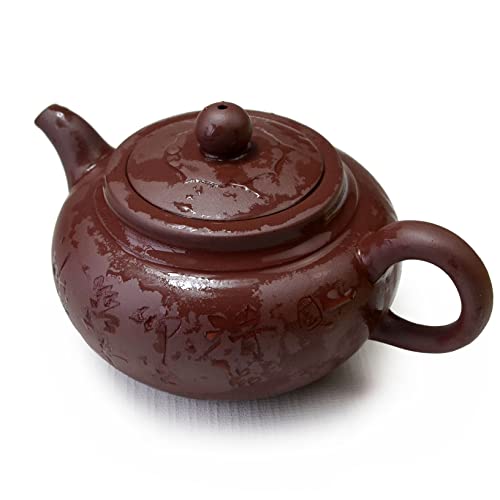
Yxhupot Yixing Clay Pot, Qingshuini, 10 oz / 320 ml
Badge: Best Overall
Strengths
- Clay is named precisely — Qingshuini is a specific zisha-family clay, not a generic clay claim
- Hand-carved natural clay construction, the traditional selling point of Yixing ware
- Capacity stated in both ounces and milliliters, which makes sizing checks easy
Trade-offs
- The 10 oz and 320 ml figures are close but not identical, so treat capacity as approximate
- No artisan is named, so provenance rests on the clay and carving claims alone
- A 10 oz gongfu pot is still a two-person-at-most brewer, not a table pot
| Material (listing) | Chinese Yixing clay, zisha, Qingshuini |
|---|---|
| Capacity (listing) | 10 oz / 320 ml |
| Color (listing) | Red brown |
| Style (listing) | Gongfu tea pot, hand-carved natural clay |
| Use (listing) | Loose tea, with infuser |
The Yxhupot earns the top badge because its listing does the three things quality listings should do: it names the clay, it names the tradition, and it states the size twice. Qingshuini — sometimes rendered as clear-cement clay in translation — is a recognized zisha ore family, and a seller willing to print it in the title is making a checkable claim rather than a mood. The red brown color described in the listing is consistent with that clay family, and the hand-carved finish speaks to the decorative tradition in which a pot is both a brewer and a small piece of craft.
In use, this is a gongfu pot in the true sense: roughly ten ounces of water, a generous hand of oolong or puerh leaf, and a sequence of short steeps that change character as they go. The listing describes the pot as an infuser design for loose tea, which in Yixing practice usually means the leaf is managed inside the pot and the pour is strained at the outlet — the drinker’s job is timing, not hardware. That rhythm is the whole appeal. If your current brewing is a big mug and a tea bag, this pot will feel ritualistic at first and then, for many people, quietly indispensable.
The honest limitation is provenance depth. The listing names clay and craft but no maker, so a collector seeking a documented studio pot will find this an entry point rather than a destination. For a first serious Yixing pot — or a second pot dedicated to a new tea family — that is a reasonable place to stand, and readers who later want a named-artisan piece can compare it with the wrinkled Zhu clay pot reviewed next. Our broader material notes in Best Quality Stainless Steel Teapots show how differently quality evidence reads in metal, which makes the clay-specific signals here easier to appreciate.
Best for: a first serious gongfu pot with a named clay and hand-carved finish / Not suited for: collectors who require a documented named maker

Handmade Yixing Zisha Teapot, Wrinkled Zhu Clay, 150 cc
Badge: Best for Collectors
Strengths
- A named artisan in the listing — the strongest provenance signal in this pool
- Nine-hole outlet is a real functional detail: it strains leaf at the spout and steadies the pour
- True gongfu scale at 150 cc, the size experienced drinkers reach for most
Trade-offs
- 150 cc is one small cup per steep; newcomers used to mugs may find it tiny
- Wrinkled texture is a love-it-or-not aesthetic and can be harder to keep looking clean
- Artisan claims in any listing should be verified against the delivered pot and packaging
| Material (listing) | Yixing zisha, Zhu clay |
|---|---|
| Capacity (listing) | 150 cc |
| Outlet (listing) | 9-hole outlet, inner push spout |
| Maker (listing) | Credited to artisan Sun Jianfang |
| Finish (listing) | Wrinkled texture, handmade |
This is the connoisseur’s pick of the three clay pots, and the reason is evidence density. The listing names the clay (Zhu clay, the red zisha family prized for small pots), names the form (a Xi-style pot), states a precise capacity in the unit Yixing drinkers actually use (150 cc), describes the outlet engineering (nine holes with an inner push spout), and credits the pot to a named artisan, Sun Jianfang, described as national level. Each of those is a separate, checkable claim. Listings for decorative imitation pots almost never stack this many specifics, because specifics can be challenged.
Functionally, the nine-hole outlet matters more than the wrinkled finish. In a small pot brewing rolled oolong, leaves expand against the spout; a multi-hole outlet keeps the pour flowing where a single hole clogs and sputters. The inner push spout design described in the listing is the traditional solution, and at 150 cc the whole pot is tuned for the high-leaf, short-steep method: fill, wait briefly, pour fully, repeat. Zhu clay’s fine texture is traditionally favored for aromatic teas, and a pot this size seasons quickly because it is used often and rinsed simply.
The limitation to state plainly: an artisan attribution in a marketplace listing is a claim by the seller, not a certificate we can independently audit from a product page, and this guide does not present it as verified fact. Treat it as the listing’s representation, check the pot and any included documentation on arrival, and keep the return option in mind. Even with that caution, the combination of named clay, named maker, and real outlet engineering makes this the most collector-credible pot in the pool — the one to choose if the pot itself, as an object, is part of the pleasure. Readers weighing a very different ownership experience can contrast it with Best Stinless Steel Teapots, where quality means durability and easy care rather than provenance.
Best for: experienced gongfu drinkers and collectors who value named-clay, named-maker evidence / Not suited for: anyone who wants a pot that brews a full mug at once

HOHCNA Yixing Zisha Teapot, Purple Clay, 10 oz
Badge: Best Unglazed Traditional Pick
Strengths
- Unglazed finish stated outright — the traditional surface that allows seasoning to develop
- Purple clay is the classic zisha material the whole tradition is named for
- Listing names its teas — oolong and puerh — which signals a maker thinking about gongfu use
Trade-offs
- No clay subtype beyond purple clay and no artisan named, so provenance is thinner than the two picks above
- Engraved calligraphy is decorative; it adds ceremony, not brewing performance
- At 10 oz it is large by strict gongfu standards, suiting a relaxed two-cup session more than rapid-fire steeps
| Material (listing) | Yixing zisha purple clay |
|---|---|
| Finish (listing) | Unglazed |
| Capacity (listing) | 10 oz |
| Decoration (listing) | Engraved calligraphy |
| Teas named (listing) | Loose leaf oolong and puerh |
The HOHCNA pot’s quality case rests on one word in its title: unglazed. Glaze seals clay; an unglazed Yixing pot breathes, in the practical sense that its surface interacts with tea oils over years of use and gradually deepens in color and aroma memory. That is the entire seasoning tradition, and a listing that states the finish plainly is telling you the pot is meant to be used the traditional way. The purple clay body is the namesake zisha material, and the engraved calligraphy places the pot in the literati-influenced decorative tradition where a teapot carries a line of poetry the way a scroll does.
At ten ounces, this pot sits at the generous end of gongfu scale. It suits a drinker who brews for two, or who likes a slightly longer steep and a fuller cup rather than a thimble. The listing names oolong and puerh as its teas, which is the right pairing: those are the teas whose roasted, mineral, and aged characters benefit most from clay, and whose leaves are large enough to pour cleanly without a separate basket. Green tea drinkers and delicate white tea drinkers generally do better in porcelain or glass, where the vessel adds nothing — a contrast worth exploring in Best Porcelain Teapots once that guide’s own material pool is complete.
The honest limitation is documentation. Beyond purple clay and the unglazed claim, the listing offers ceremony language rather than construction specifics — no hole count, no maker, no clay subtype. That does not make it a bad pot; it makes it a pot you judge on arrival by lid fit, pour, and surface feel, with the return window as your safety net. As a gift for a tea lover, the calligraphy and ceremony presentation are genuinely appealing; as a working pot for one dedicated tea, it is a sound traditional choice.
Best for: traditionalists who want an unglazed purple clay pot for oolong or puerh / Not suited for: buyers who want detailed construction specs before ordering
TOPTIER Cast Iron Teapot, Leaf Design, 32 oz
Badge: Comparison Pick — Cast Iron
Prose-only pick: Core material is cast iron with an enameled interior per its API title; a Yixing guide may only link picks whose titles state Yixing/zisha/clay. Reviewed prose-only as a material comparison.
Strengths
- Enameled interior means no seasoning management — rinse and dry, done
- At 32 oz it brews a real sharing pot, unlike the small clay pots above
- Stainless infuser basket handles fine leaf that would escape a clay pot’s outlet holes
Trade-offs
- It is cast iron, not Yixing clay — it cannot season or behave like zisha
- Enameled iron is heavy, and the enamel, not the iron, is the delicate surface
- Stovetop-safe claims for enameled teapots still deserve gentle heat, not a roaring burner
| Material (listing) | Cast iron with enameled interior |
|---|---|
| Capacity (listing) | 32 oz / 950 ml |
| Infuser (listing) | Stainless steel |
| Color (listing) | Light green, leaf design |
| Use (listing) | Stovetop safe per maker |
We include the TOPTIER as a comparison because many shoppers arrive at Yixing pages while actually wanting what this pot does: a handsome, durable brewer that makes a full pot for the table and asks almost nothing in return. Its enameled interior never seasons, never holds aroma, and never needs the one-tea discipline of clay — which is either a relief or a disappointment depending on why you came. The leaf design and light green finish make it a table piece, and the stainless infuser basket is genuinely more practical for broken-leaf teas and rooibos-style fine material than any clay outlet.
Why is it prose-only here? Because this guide’s promise is in its title: quality Yixing teapots. Linking an iron pot as if it belonged in that ranking would break the material honesty that makes the ranking worth reading. If iron is actually your material — for heat retention, for capacity, for zero-fuss care — the dedicated sourcing guide at Best Sources For Authentic Cast Iron Teapots treats pots like this one on their own terms, including how to tell a true tetsubin tradition piece from an enameled brewing pot like this.
Best for: readers who discover they want capacity and easy care more than clay character / Not suited for: anyone shopping specifically for Yixing clay
Juvale Cast Iron Teapot with Trivet, 32 oz
Badge: Comparison Pick — Cast Iron Set
Prose-only pick: Core material is cast iron per its API title; not Yixing/zisha/clay, so prose-only in this guide.
Strengths
- Trivet included — a thoughtful touch that protects tables from a hot iron base
- Heat retention is iron’s genuine advantage for slow, social brewing
- Complete set presentation makes it an easy gift
Trade-offs
- Cast iron, not clay — outside this guide’s material promise
- A 32 oz iron pot is substantially heavy when full
- Heat retention can over-steep delicate tea if the basket is left in
| Material (listing) | Cast iron |
|---|---|
| Capacity (listing) | 32 oz |
| Included (listing) | Stainless infuser basket and trivet |
| Color (listing) | Blue |
| Claim (listing) | Enhanced heat retention |
The Juvale set shows the other end of the teapot spectrum from a 150 cc clay pot: a 32 ounce iron brewer with its own trivet, built for a table, a conversation, and a second round. Iron’s heat retention is real — a preheated iron pot holds serving temperature far longer than thin clay — and the included trivet acknowledges the practical consequence, which is that a hot iron base needs somewhere safe to sit. As a self-contained gift set, it is well judged.
It is prose-only in this guide for the same reason as the TOPTIER: material. Nothing about its listing suggests clay, and our job is to keep the Yixing ranking clean. We describe it fully so that a reader who realizes capacity and warmth matter more to them than seasoning can make that pivot with open eyes — but the pivot should be a decision, not a labeling accident.
Best for: hosts who brew for a table and value warmth over ritual / Not suited for: gongfu drinkers or clay collectors
Velaze Cast Iron Teapot Set, Hammered Design, 23 oz
Badge: Comparison Pick — Cast Iron for Two
Prose-only pick: Core material is cast iron per its API title; not Yixing/zisha/clay, so prose-only in this guide.
Strengths
- The most complete set in the pool: pot, infuser, two cups, and trivet
- Fully enameled interior is stated explicitly, so care expectations are clear
- Hammered design is a classic iron-pot texture with real grip and presence
Trade-offs
- Cast iron again — a comparison here, not a clay contender
- A matched set commits you to one look on the table
- Enameled interiors should not be boiled dry or shocked with cold water
| Material (listing) | Cast iron, fully enameled interior |
|---|---|
| Capacity (listing) | 700 ml / 23 oz |
| Included (listing) | Infuser, 2 cups, trivet |
| Design (listing) | Hammered finish, Japanese style |
| Serves (listing) | 1–2 people |
The Velaze set is the pool’s most giftable object: a hammered iron pot with a fully enameled interior, two matching cups, and a trivet, sized at 23 ounces for one or two people. The hammered texture echoes traditional ironware surfaces, and the explicit fully enameled wording is good listing practice — it tells the buyer exactly what the brewing surface is and how to treat it. For a couple’s evening tea ritual without any clay-keeping obligations, it is a coherent package.
In this Yixing guide it closes the comparison section prose-only. Its presence is useful precisely because it clarifies the choice: iron sets sell completeness and warmth; Yixing pots sell clay, craft, and a relationship with one tea over time. Neither is the better object in the abstract — but only one of them belongs under a Yixing heading with a purchase link, and it is not this one.
Best for: gift buyers and couples who want a complete iron tea set / Not suited for: anyone building a clay collection
Comparison Table
Read the material column first. In a mixed pool like this one, the comparison table’s most important job is preventing a category error: three of these pots are clay and three are iron, and no badge or capacity figure should be allowed to blur that line.
| Pick | Material | Capacity | Infuser / filter | Standout trait (from listing) | Link |
|---|---|---|---|---|---|
| Yxhupot Yixing Clay Pot, Qingshuini, 10 oz / 320 ml | Yixing clay (Qingshuini zisha) | 10 oz / 320 ml | Listed as an infuser pot for loose tea | Hand-carved natural clay, clay named in title | Check on Amazon |
| Handmade Yixing Zisha Teapot, Wrinkled Zhu Clay, 150 cc | Yixing zisha, Zhu clay | 150 cc | 9-hole outlet with inner push spout (built-in straining) | Listing credits a named national-level artisan | Check on Amazon |
| HOHCNA Yixing Zisha Teapot, Purple Clay, 10 oz | Yixing zisha, purple clay, unglazed | 10 oz | No separate infuser described; brews loose leaf directly | Unglazed finish with engraved calligraphy | Check on Amazon |
| TOPTIER Cast Iron Teapot, Leaf Design, 32 oz | Cast iron, enameled interior | 32 oz / 950 ml | Stainless steel infuser | Stovetop safe per listing, leaf design | Prose-only |
| Juvale Cast Iron Teapot with Trivet, 32 oz | Cast iron | 32 oz | Stainless infuser basket | Trivet included in the set | Prose-only |
| Velaze Cast Iron Teapot Set, Hammered Design, 23 oz | Cast iron, fully enameled interior | 700 ml / 23 oz | Infuser included (set) | Two cups and trivet included, hammered design | Prose-only |
How to Choose a Quality Yixing Teapot
Start with clay honesty. A quality listing names its clay the way these do — Qingshuini, Zhu clay, purple clay — because zisha is not one material but a family of ores with different textures, firing behaviors, and traditional tea pairings. Purple clay (zisha proper) is the versatile classic. Zhu clay, denser and redder, is traditionally favored for small pots and aromatic oolongs. Qingshuini sits in the purple family with a smoother, more uniform character. A listing that cannot name its clay at all is asking you to trust a silhouette, and silhouette is the easiest thing to copy. This is also why we insist on title evidence throughout this guide: the clay name in the title is the first authenticity checkpoint, long before the pot reaches your hands.
Then size the pot to your method, not your cupboard. Gongfu brewing inverts Western instincts: instead of a large pot and a long steep, you use a small pot, a lot of leaf, and many brief steeps. A 150 cc pot like the wrinkled Zhu clay pick brews one small cup per round, but that round repeats — five, eight, sometimes more infusions from the same leaves, each slightly different. A 10 oz pot like the Yxhupot or the HOHCNA suits two small cups per round or a more relaxed solo session. The math that matters is leaf-to-water ratio, not total volume: if you drink alone and love high-mountain oolong, the smallest pot here is not a compromise; it is the correct instrument. If you brew for a partner every morning, the 10 oz pots will serve you better than a collector’s 150 cc.
Judge construction by the outlet and the lid. The spout’s internal straining — a single hole, a cluster of holes like the nine-hole design on the Zhu clay pot, or a built-in ball filter — decides whether your pour runs clean or chokes on expanded leaf. Nine holes is a genuinely useful specification, and its presence in a listing is a quality signal in itself. The lid should sit with minimal wobble, and the pot should pour in a smooth arc that stops cleanly when you right the pot; a dribble down the spout is the most common flaw in cheap clay ware. You cannot test these from a listing, which is why our advice is to order from a seller whose return terms you have read, and to water-test the pot the day it arrives: fill it, pour it, tilt it, and decide before the first leaf goes in.
Finally, price the pot qualitatively against its evidence, not against other materials. A named-clay, hand-finished pot with a named maker sits in a premium tier for reasons a buyer can articulate; a molded pot with generic copy sits in a lower tier even if the photograph is beautiful. This guide deliberately prints no prices, because marketplace prices move — use the check-price links on the linked picks and weigh what you find against the evidence stack: clay named, construction specified, maker credited, capacity stated precisely. The more of those a listing offers, the more its tier makes sense. Readers who want the opposite philosophy — a pot whose quality is industrial consistency — will find it in Best Stainless Steel Teapots, and neither philosophy is wrong; they are simply different definitions of quality.
How to Season and Brew With a Yixing Teapot, Step by Step
Seasoning is the rite that turns a new clay pot into your pot. It is simple, unhurried, and worth doing once, properly, before the pot enters daily service.
- Rinse the new pot and lid in plain hot water. No soap, no detergent — ever. Clay absorbs what it touches, and detergent is forever.
- Place the pot and lid separately in a clean pan, cover with water, and add a generous handful of the tea you intend to dedicate the pot to. Bring it slowly to a gentle simmer.
- Hold the simmer for about half an hour, then let everything cool in the liquid. This first bath opens the clay and lays down the first layer of tea character.
- Lift the pot out, rinse it with hot water, and brew a full round of your chosen tea in it. Discard this first brew or drink it with low expectations — it is a working steep, not a tasting.
- Air-dry the pot with the lid off or ajar. From now on, after each session: empty the leaves, rinse with hot water only, and dry the same way.
Daily brewing follows the gongfu pattern. Warm the pot with a rinse of hot water and discard it. Add leaf generously — rolled oolong should loosely cover the base and then some. Rinse the leaf with a flash pour if your tea tradition calls for it, then steep briefly: early infusions may need only a short rest before a full, decisive pour. Pour completely each time; leaving liquor sitting in the pot over-steeps the next round and stains unevenly. Between rounds, the pot waits empty and open. Over months, the surface will deepen in tone and the aroma of a fresh rinse will start to echo your tea. That is seasoning doing its slow work, and it is why the one-tea dedication matters: a pot seasoned on roasted oolong will lend that memory to everything else brewed in it.
Troubleshooting, in the pattern we use across this site. Problem: the pour sputters or slows to a drip → a leaf is blocking the outlet; pour back, swirl gently, and next time use a touch less leaf or a coarser grade. Problem: the pot smells stale between sessions → it was stored closed while damp; leave it open near moving air for a day, then brew a throwaway round of its dedicated tea. Problem: white mineral film after hard-water use → rinse with hot water and wipe with a soft cloth; never reach for vinegar or descaler, which the clay will absorb and return to your tea for weeks.
Yixing Clay Families, Explained Without the Mystique
Zisha means purple sand, and the name covers a family of ores mined around Yixing rather than a single clay. The three names in this guide’s linked picks map onto that family in a way worth understanding before you buy. Purple clay is the broad classic: balanced, forgiving, and suitable for the widest range of teas, which is why the HOHCNA pot’s straightforward purple clay claim reads as honest rather than plain. Zhu clay — zhuni in its prized form — is the red, dense branch, traditionally shaped into small pots because it holds heat in a tight mass and flatters aromatic, high-fired oolongs. Qingshuini, the Yxhupot’s clay, belongs to the purple branch with a finer, more even texture that carvers like because detail holds crisply in it.
Why does any of this matter to a buyer rather than a geologist? Because clay family predicts behavior. Denser red clays are associated with rounder, more focused aroma presentation; more porous purple clays with a slightly softening effect on rough edges in aged puerh. These are tendencies discussed by generations of drinkers, not laboratory guarantees, and this guide presents them as tradition rather than measurement. What is not tradition but plain commerce: a seller who knows which clay is in the pot will say so. The linked picks here all do, and that remains the simplest quality filter a shopper can apply from a screen.
Handmade, Half-Handmade, and Molded: Reading Construction Claims
Yixing pots are made on a spectrum. Fully handmade pots are built from slabs of clay beaten and shaped by hand, the method behind the artisan tradition and the reason a named maker like the one credited on the wrinkled Zhu clay pot carries weight. Half-handmade pots combine hand assembly with mold-formed parts — a legitimate, centuries-old workshop practice that produces consistent shapes at accessible tiers. Slip-cast and fully molded pots are the mass-production end: fine as decorative objects, but they are not what the word quality means in this category, and their listings usually betray themselves with gift language instead of construction language.
The practical takeaway is not to demand fully handmade at every budget; it is to match the claim to the tier. Hand-carved detail, as on the Yxhupot, signals hand finishing at minimum. A nine-hole outlet and an inner push spout signal a workshop thinking about function. Silence on construction, paired with heavy emphasis on gift packaging, signals a molded pot wearing traditional clothes. Buy the pot whose description survives this reading, and you will rarely be disappointed by what arrives.
Common Buying Mistakes
- Buying a Yixing pot by photograph alone. Shape copies are everywhere; clay names, outlet specs, and maker credits are the evidence that separates a pot from a picture of a pot.
- Brewing every tea you own in one clay pot. Seasoning is memory. A pot that hosts green tea on Monday and smoked lapsang on Friday ends up remembering confusion.
- Washing clay with soap or detergent. The clay absorbs it and returns it to later brews. Hot water and air are the entire cleaning system.
- Judging a 150 cc pot as too small to be serious. In gongfu brewing, small is the method. The drinkers this tradition comes from chose these sizes on purpose.
- Expecting an enameled or glazed pot to season. Only unglazed clay develops seasoning; that is why the finish stated in a listing matters as much as the clay name.
- Ignoring the return window. Lid fit and pour quality can only be judged in hand. Water-test a new pot immediately, while returning it is still easy.
Most of these mistakes share one root: treating a Yixing pot like ordinary kitchenware. It is closer to a cast iron pan or a wooden cutting board — an object whose surface is part of its function and whose history accumulates. Buyers who accept that framing almost always end up happy with a pot from the linked three; buyers who want sealed, neutral, dishwasher-easy brewing are honestly better served by the porcelain and steel guides in this cluster, and there is no failure in choosing that path instead.
Final Recommendation
If you buy one pot from this guide, make it Yxhupot Yixing Clay Pot, Qingshuini, 10 oz / 320 ml. Its listing stacks the evidence a quality buyer wants — a named Qingshuini clay, hand-carved natural clay construction, and a capacity stated in two unit systems — in a 10 oz size that suits both solo gongfu sessions and tea for two. It is the most complete balance of credibility and usability in the pool.
Choose the wrinkled Zhu clay pot instead if provenance is your pleasure: the named artisan credit and nine-hole outlet make it the collector’s pick, and its 150 cc scale is the purest gongfu instrument here. Choose the HOHCNA if you want the traditional unglazed purple clay experience with ceremony in its presentation, and you are comfortable judging fit and finish on arrival. And if the prose-only iron pots taught you that capacity and easy care matter more to you than clay character, follow that instinct honestly — just buy the iron pot from a guide that ranks iron, where it will be linked and judged on its own merits.
Frequently Asked Questions
What makes a Yixing teapot high quality?
Four things, in order: honestly identified clay from the zisha family, sound construction (a well-seated lid and a clean, unobstructed pour), functional details like a multi-hole outlet for loose leaf, and credible provenance such as a named maker. A listing that evidences several of these — as the linked picks here do — is a much safer quality bet than one relying on photographs and gift language.
Why are quality Yixing teapots so small?
Because they are built for gongfu brewing, where a high ratio of leaf to water and many short infusions replace the single long steep. A 150 cc to 10 oz pot is not a miniature; it is the correct tool for that method, producing cup after cup from the same leaves as their character unfolds.
Can I brew different teas in the same Yixing pot?
You can, but the tradition advises against it. Unglazed clay absorbs aroma over time, so a pot dedicated to one tea family — roasted oolong, say, or aged puerh — seasons coherently. Most drinkers who own two clay pots dedicate one to each of their two staple teas.
How do I know a Yixing pot is genuine zisha clay?
From a listing, look for the clay named specifically (purple clay, Zhu clay, Qingshuini), construction details, and a maker credit — the evidence pattern the linked picks show. On arrival, genuine unglazed zisha has a fine, slightly sandy matte surface, a clean pour, and a lid that seats precisely. No single screen check is proof, which is why buying where returns are easy matters.
Do Yixing teapots need an infuser basket?
Traditionally, no. Loose leaf goes directly into the pot and the spout’s outlet holes strain the pour — the nine-hole outlet on the Zhu clay pick in this guide is exactly that system. Large-leaf oolong and puerh suit it best; very fine or broken teas are easier in a basket-style pot.
How should I clean a Yixing teapot?
Empty the leaves, rinse with hot water only, and air-dry with the lid off or ajar. Never use soap or detergent — the clay absorbs them. A pot used regularly and dried properly needs nothing more for years.
Is a cast iron teapot a good alternative to Yixing?
It is a different tool rather than a substitute. Enameled cast iron, like the prose-only comparison pots in this guide, offers capacity and heat retention with zero seasoning duties, but it adds nothing of its own to the tea. Choose iron for convenience and table service; choose Yixing for the gongfu method and a pot that develops character with use.